Starting a mineral and rock collection is like stepping into a time machine. It turns what most people see as ordinary stones into personal treasures, connecting you directly to the Earth's deep, geological story. Suddenly, the beauty hidden just beneath your feet is revealed.
Discovering the World Beneath Your Feet
Have you ever walked past an interesting-looking stone and wondered about its journey? Collecting minerals and rocks turns that fleeting curiosity into a genuine adventure.
This isn't just about picking up pretty rocks. It’s about the thrill of finding a unique crystal formation or a stone bearing the faint imprint of an ancient fossil. Each piece you add to your collection is a tangible piece of geological time, a direct link to the planet's past.
This hobby sharpens your eye and deepens your appreciation for the natural world. Curating your finds is like building a personal museum of natural art, where every single specimen has its own origin story and character. It's a journey of discovery that gets richer with every new find.
Why Start Collecting Now
The fascination with minerals isn’t some niche hobby; it’s part of a massive global interest. The demand for minerals across countless sectors is climbing, reflecting just how important they are in our world.
For example, the U.S. Geological Survey (USGS) plays a critical role in tracking this demand. Their annual Mineral Commodity Summaries provide detailed statistics on mineral production and use. This kind of data is essential for understanding the economic importance of the materials you might be collecting.
But what makes collecting minerals and rocks so rewarding is how easy it is to start. You don’t need a fancy lab or expensive gear. Your first adventure can begin in your own backyard, a local park, or a nearby creek bed. This accessibility makes it a perfect activity for anyone, regardless of age or scientific background.
A collection becomes a physical diary of your explorations. Each rock and mineral is a memento of a place you've been and a discovery you've made, creating a rich, personal connection to the earth.
The Benefits of Building Your Collection
Beyond the pure thrill of the hunt, building a collection has so many other perks. It’s a hands-on education in geology, chemistry, and natural history. You'll learn to identify different specimens based on their physical properties—like color, hardness, and crystal structure. To get a head start, you can explore some fascinating facts about minerals that might just surprise you.
Building your collection is also a great way to:
Get outdoors: Rockhounding is the perfect excuse to explore new landscapes, from mountain trails to seaside cliffs.
Develop patience: Finding truly special specimens takes time and a keen eye. It teaches you to slow down and really observe your surroundings.
Connect with a community: There are tons of local clubs and online groups where you can share your finds and learn from experienced collectors.
Assembling Your Rockhounding Toolkit
Showing up to a promising dig site unprepared can turn an exciting adventure into a seriously frustrating day. But don't worry—you don't need a truckload of expensive equipment to get started. Building a practical, effective toolkit is all about choosing the right gear for the job.
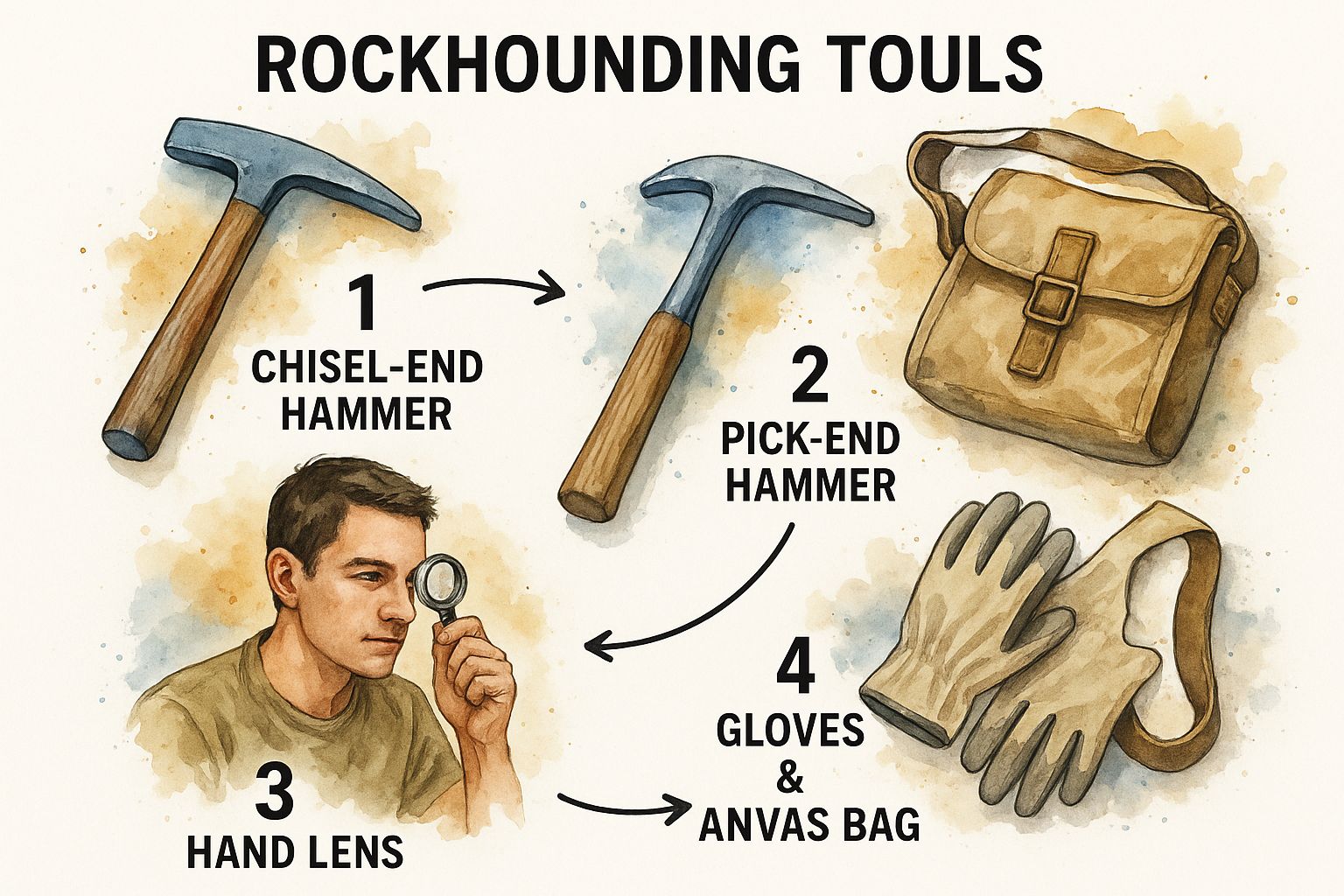
The absolute cornerstone of any kit is a good geological hammer. You'll generally find two main types: a chisel-end hammer, which is perfect for splitting apart layers of shale or other sedimentary rock, and a pick-end hammer, designed for chipping away at harder, crystalline rocks. For most beginners, a pick-end hammer is the more versatile choice.
Beyond the hammer, a few other items are completely non-negotiable. Sturdy gloves are essential to protect your hands from sharp edges, and safety goggles are a must. Seriously, don't even think about chipping at a rock without them—flying fragments are no joke. You'll also need a comfortable, durable backpack or a simple canvas bag to carry your tools and, more importantly, to transport your delicate finds back home safely.
Essential Field Tools for Every Collector
Once you have the basics of safety and transport covered, a couple of key items will dramatically improve your ability to spot promising specimens in the field. A simple hand lens or jeweler's loupe, usually with 10x magnification, is a rockhound's best friend. It lets you examine tiny crystal structures and mineral details that are completely invisible to the naked eye.
The infographic below highlights the essential gear that forms a solid foundation for any aspiring rockhound.
This visual guide shows how each tool—from the hammer to the hand lens—plays a specific role in finding, identifying, and securing your specimens.
Here's a simple trick that experienced collectors swear by: bring a small spray bottle filled with water. A quick spritz can wash away layers of dust and instantly reveal a rock’s true color and patterns, helping you decide if it’s worth hauling home.
Investing in a few quality tools from the start is far more effective than buying a large, low-quality kit. A reliable hammer, a clear hand lens, and good safety gear will serve you well on countless expeditions.
Expanding Your Toolkit for Specific Finds
As your interest in collecting grows, you'll probably want to add more specialized tools to your bag. For example, if you get hooked on finding geodes, you'll want to learn the proper techniques for opening them without shattering the delicate crystals inside. If that sounds like you, you can learn more about how to crack geodes in our detailed guide.
To help you figure out what you need now versus what you might want later, I've put together a quick comparison of essential and optional tools.
Beginner Rockhounding Toolkit Comparison
This table breaks down the core tools every beginner should have, plus a few "good to have" items that make life easier or open up new collecting possibilities.
Tool Category
Essential Item
Purpose
Good to Have
Striking & Breaking
Geological Hammer
Breaking rocks, chipping samples
Crack Hammer & Chisels
Safety & Protection
Safety Goggles, Gloves
Eye and hand protection
Sturdy Hiking Boots
Observation
Hand Lens (10x Loupe)
Examining fine details
Field Guidebook
Transport & Storage
Backpack or Canvas Bag
Carrying tools and specimens
Newspaper/Bubble Wrap
Cleaning & ID
Water Spray Bottle
Revealing true colors
Streak Plate, Magnet
Documentation
Smartphone Camera
Quick location & specimen photos
Field Notebook & Pencils
Ultimately, your toolkit will evolve with your interests. Start with the essentials and add specialized gear as you discover what kind of collecting you enjoy most.
Here are a few other items that can prove incredibly useful as you advance:
Crack Hammers and Chisels: For more precise work or for splitting larger rocks, a set of cold chisels and a small sledgehammer (often called a crack hammer) are invaluable.
Field Notebook and Pencils: Always document where you found a specimen. Recording the location, date, and any notable geological features will make your collection so much more meaningful down the road.
GPS or Mapping App: Pinpointing the exact location of a great find can help you return later or map out promising areas for future hunts. A simple pin drop on your phone's map app works perfectly.
How to Find and Ethically Collect Specimens
With your basic toolkit ready, the real adventure begins—the hunt. There’s a special kind of thrill that comes with finding your own specimens, but it goes hand-in-hand with the responsibility of being a good steward of the land.
Where should you even start looking? The easiest places are often right under your nose. Many collectors get their start by combing through local creek beds or walking the shores of large lakes. For instance, the beaches along Michigan's Keweenaw Peninsula are famous for turning up beautiful Lake Superior agates and even the fluorescent Yooperlites. A good tip? The best time to look is right after a storm has churned everything up.
Pinpointing Promising Locations
Once you've exhausted the easy spots, it's time to get a bit more strategic. You can turn a random search into a calculated expedition by using online geological maps, often provided by state geological surveys or the U.S. Geological Survey (USGS). These maps show you the rock formations in your area, helping you target locations known for specific types of minerals.
Beyond your immediate backyard, consider these classic hunting grounds:
Public Lands: Areas managed by the Bureau of Land Management (BLM) and certain National Forests often permit personal rock and mineral collection. You absolutely have to check the specific district's regulations before you go, as the rules can vary wildly from one place to the next.
Pay-to-Dig Mines: These commercial sites are a fantastic way to find high-quality specimens without the guesswork. Mines known for things like quartz, emeralds, or fluorite let you dig for a fee, practically guaranteeing you'll go home with something special.
Old Mine Tailings: In some historic mining regions, like Michigan's "Copper Country," certain old mine tailing piles are open to the public for surface collecting. It’s a great way to find minerals like datolite, greenstone, and sometimes even bits of native copper left behind from past operations.
The Golden Rules of Ethical Collecting
Ethical rockhounding isn't just a nice idea—it's the core principle of a responsible collector. Following a few simple rules protects the environment, respects property rights, and keeps the hobby alive and well for everyone.
The most important rule to remember is this: thou shalt not trespass. Always, always get explicit permission before setting foot on private land. Ignoring this doesn't just give all rockhounds a bad name, it's also illegal.
Keep these key principles in mind every time you head out:
Know the Rules: National Parks are almost always off-limits for collecting. State lands often have specific limits; for example, Michigan has a 25-pound annual limit per person. Doing your research beforehand is your responsibility.
Leave No Trace: Whatever you bring in with you, you bring out. Fill in any holes you dig and do your best to leave the area looking like you were never there. That means avoiding damage to plants and leaving wildlife alone.
Collect with Restraint: Take only a few good pieces for your personal collection. Honestly, a handful of quality specimens is far more rewarding than a bucket full of mediocre ones. This approach also leaves plenty behind for others to discover.
By collecting responsibly, you become a caretaker of the land. Your mineral and rock collection will be a testament not just to your cool discoveries, but also to your respect for the natural world that produced them.
Identifying and Cataloging Your Finds
Bringing home a haul from a successful hunt is an incredible feeling. Now the real detective work begins, turning those rough stones into identified treasures in your collection. This is where you really start to connect with the science of geology and learn the stories your specimens have to tell.
The great thing is, you don't need a high-tech lab. You can use the same fundamental tests that geologists rely on with just a few simple, everyday tools. These hands-on methods are the key to uncovering the unique physical properties of each mineral.
Simple Tests for Mineral Identification
The first and easiest test is the streak test. This reveals the true color of a mineral in its powdered form, which is often a more reliable clue than its surface color. Just scratch your specimen across an unglazed ceramic tile—a cheap one from any hardware store works perfectly—and look at the color of the line it leaves. A classic example is pyrite, or "fool's gold." It has a brassy yellow shine, but it always leaves a distinct greenish-black streak.
Next up is determining a mineral's hardness using the Mohs scale. The scale ranks minerals from 1 (softest, like Talc) to 10 (hardest, like Diamond). You don't need a full set of minerals to get a good idea of hardness; common objects work just fine.
A fingernail has a hardness of about 2.5.
A copper penny is right around 3.5.
A steel nail or knife blade clocks in at about 5.5.
A piece of quartz (if you have one) is a solid 7.
By trying to scratch your new find with these items, you can quickly narrow down its hardness and get much closer to a positive ID. For a deeper dive, our detailed crystal identification guide walks through other important properties like luster and cleavage.
The real magic of identification happens when you combine these tests. A mineral might be shiny and white, but knowing it has a hardness of 3 and no streak color helps you distinguish calcite from a dozen other look-alikes.
Creating a Catalog for Your Collection
Once you've figured out what you have, the next step is to catalog it. This is a crucial practice. It's what turns a simple box of rocks into a valuable, organized, and scientific mineral and rock collection. Good documentation preserves the story of your find for years to come.
Whether you prefer a dedicated notebook or a simple spreadsheet, your catalog should track a few key details for every single specimen:
Specimen Number: Give each rock a unique number. You can write it directly on a less-visible spot with a fine-tip permanent marker or on a small label you affix to it.
Identification: Note the name of the rock or the primary mineral(s) it contains.
Location: Get as specific as you possibly can. Instead of just "Arizona," write something like "near the King of Arizona Mine, Kofa National Wildlife Refuge, Yuma County, AZ."
Date Collected: Simply the date you found it.
Notes: This is the fun part. Add any other interesting details—who you were with, the weather that day, or specific features of the rock that caught your eye.
This systematic approach is what separates a casual hobby from a curated collection. It mirrors the careful documentation used by geologists and institutions worldwide. Good data transforms a personal memento into a potentially useful scientific record, adding lasting value to your efforts.
So you've brought your finds home—now what? The real magic happens when you transform them from dusty field specimens into brilliant display pieces. Proper cleaning is an art form, a delicate process that can reveal breathtaking colors and crystal structures hidden just beneath the surface.
The single most important rule is to start with the least invasive method first. Think of it like a detective's work, gently uncovering clues without disturbing the scene. For tough, durable minerals like quartz or agate, a simple bath in warm water with a drop of dish soap and a soft-bristled toothbrush is often all it takes. This is the safe starting point for most of your common finds.
But many minerals demand a much lighter touch. Softer or more fragile specimens are easily damaged, so a heavy hand is your enemy here. For these delicate pieces, a light dusting with a dry, soft brush or a quick rinse under cool, running water might be all that's needed. Never, ever assume one cleaning method fits all. What works wonders for a rugged piece of jasper could completely ruin a delicate selenite crystal.
Knowing What To Avoid
Preventing damage is just as crucial as the cleaning itself. Some minerals are water-soluble, while others react badly to common household chemicals. Knowing what not to do is half the battle.
Avoid Hot Water: Sudden temperature swings can cause some crystals to fracture from the inside out. Always stick with lukewarm or cool water.
Steer Clear of Harsh Chemicals: Never use acidic cleaners like vinegar or lemon juice unless you are 100% certain the mineral can handle it. For example, acid will completely dissolve calcite, turning your beautiful crystal into a fizzy puddle.
Be Wary of Water: It sounds simple, but water is the enemy of some minerals. Specimens like halite (rock salt) or gypsum varieties will literally dissolve. For these, dry cleaning with a soft brush is the only safe option.
Your goal is simply to reveal the mineral's natural beauty, not alter it. When in doubt, always research a specific mineral's properties before you try anything beyond a simple dry brushing.
Showcasing Your Mineral and Rock Collection
Once your specimens are clean and sparkling, it's time to give them a home worthy of their journey. The way you display your mineral and rock collection is what elevates it from a hobby into a curated exhibit—a visual story of your adventures.
When you're just starting out, simple and budget-friendly options work beautifully. Partitioned "Riker mount" display boxes or shadow boxes are perfect for organizing and protecting smaller specimens. Even a simple set of shelves arranged by color, location, or type can create a striking and personal display.
As your collection grows, you might want to graduate to more professional setups. A dedicated rock collection display case with glass doors and internal lighting can make your minerals truly pop, highlighting their unique luster and crystalline forms.
Good lighting is everything. LED strip lights are a fantastic choice because they don't produce much heat, which can damage sensitive specimens over time. Think of it as your personal museum—so showcase it with pride.
So, your shelves are starting to fill up. That casual pile of interesting rocks is beginning to look like a real collection, and you can feel the hobby pulling you in deeper. This is the fun part—when you can start to give your collection a focus and turn it into a more curated, personal pursuit.
Giving your mineral and rock collection a theme is a fantastic way to deepen your knowledge. It focuses your hunts and helps you build something truly special.
You might find yourself drawn to specimens from your home state, for instance. I know collectors who have spent years exploring Michigan’s Keweenaw Peninsula, a geologically rich area famous for everything from native copper to the wild, fluorescent Yooperlites. A regional focus like that transforms your collection into a tangible map of your own adventures.
Or maybe you’ll fall in love with a single mineral family. You could spend a lifetime chasing down the incredible variations of garnets or tourmalines from all over the world. Another popular path is collecting fluorescent minerals—rocks that look pretty ordinary in daylight but absolutely explode with otherworldly color under a UV light. It’s a whole hidden world.
Finding Your People in the Collector Community
One of the best parts of this hobby is realizing you’re not alone. There's a whole community of people who get just as excited about a well-formed crystal as you do. Plugging into that community opens up a ton of opportunities to learn and find amazing new pieces.
Join a Local Club: Just about every area has a mineralogical society or rockhounding club. These groups are absolute goldmines of local knowledge. Plus, they often organize field trips to private quarries and locations you could never get into on your own.
Go to Gem and Mineral Shows: These events are basically heaven for collectors. You get to see world-class specimens up close, meet dealers who live and breathe minerals, and find unique pieces to buy or trade. There’s no better place to see a massive variety of material all in one spot.
Get Online: The digital world is buzzing with rockhounds. Forums and social media groups are fantastic for getting help with specimen identification, showing off your latest finds, and connecting with collectors across the globe.
Learning to Spot a Quality Specimen
As you get more serious, you’ll probably want to buy specimens to round out your collection. This is where you need to start developing an eye for quality. You want to look for well-formed crystals with sharp edges and minimal damage. Pay attention to color saturation and how the main crystals are arranged on the matrix (the host rock they grew on)—aesthetics matter.
A piece of advice you'll hear from seasoned collectors over and over is to buy the absolute best specimen you can afford, even if that means buying fewer pieces. One incredible, high-quality mineral will bring you way more joy in the long run than a flat of mediocre ones.
This is also a great time to learn about minerals that are economically and strategically important. The U.S. government, for instance, maintains a list of minerals considered vital for national security and the economy. Researching this list can give your collection a fascinating, real-world dimension and deepen your understanding of how essential these materials are to modern industry and technology.
Got Questions About Rock Collecting? We’ve Got Answers.
As you start digging into the incredible world of mineral and rock collecting, you're going to have questions. It's totally normal. Getting a handle on a few key things right from the beginning will help you build your collection with a lot more confidence and avoid some common rookie mistakes.
Let's start with the basics. One of the first things that trips people up is the terminology. You'll hear "rock" and "mineral" thrown around like they're the same thing, but they're not. Nailing this difference is your first step to identifying finds like a pro.
Think of it this way: a mineral is a single, pure ingredient, like flour or sugar. It’s a naturally occurring solid with a specific chemical recipe and crystal structure (think quartz). A rock is the finished cake—it's made up of a bunch of different mineral ingredients mixed together. Granite, for instance, is a rock made from quartz, feldspar, and other minerals.
Know the Rules Before You Go
Another big one for beginners is figuring out where you can actually collect. It’s not a free-for-all, and knowing the rules isn't just about being a good, ethical rockhound—it's about staying on the right side of the law. Regulations are in place to protect natural spaces and respect property rights.
The number one rule is simple: always, always get permission before setting foot on private land. No exceptions.
When it comes to public lands, things get a bit more varied:
National Parks are almost always a no-go. The rule here is generally "look but don't touch."
Land managed by the Bureau of Land Management (BLM) or the National Forest service can be great spots, as they often allow limited collecting for personal use. But—and this is a big but—you have to check the specific rules for that district before you start digging.
Finding Your Fellow Rockhounds
Once you've got a few cool specimens, you’ll probably get the itch to share what you've found and see what others are discovering. This is one of the best parts of the hobby. Connecting with a community is how you learn about secret spots, get help identifying that mystery rock, and even trade for new pieces.
So, where are all these people? Your best bet is to find a local mineral or gem club. These groups are treasure troves of knowledge and often organize field trips, workshops, and killer annual shows. You can also find some fantastic communities in online forums and social media groups. And if you ever get the chance, go to a regional gem and mineral show. It’s a fantastic way to meet experts, see world-class specimens, and get totally inspired.
At Astro West, we believe every stone tells a story. Whether you're just starting your journey or seeking a museum-quality centerpiece, our curated selection of ethically sourced minerals, fossils, and meteorites has something to inspire every collector. Explore our collection today at https://astrowest.com.