So, you're thinking about hunting for gemstones in Colorado? It's an incredible experience, and yes, it’s absolutely something a beginner can jump into. The state is legendary for the sky-blue aquamarine pulled from the slopes of Mount Antero and the stunning, deep red rhodochrosite found at the Sweet Home Mine. There's a real adventure waiting for you here.
Your Colorado Gemstone Adventure Awaits
Colorado's rugged mountains are hiding some serious treasure, and there's a real pull for anyone with an adventurous spirit. This isn't just about picking up pretty rocks. It’s about the thrill of the hunt, the connection you feel with the wild landscape, and that incredible moment you unearth something that's been hidden for millions of years. The whole state is a geological playground, offering everything from common quartz to some truly rare finds.
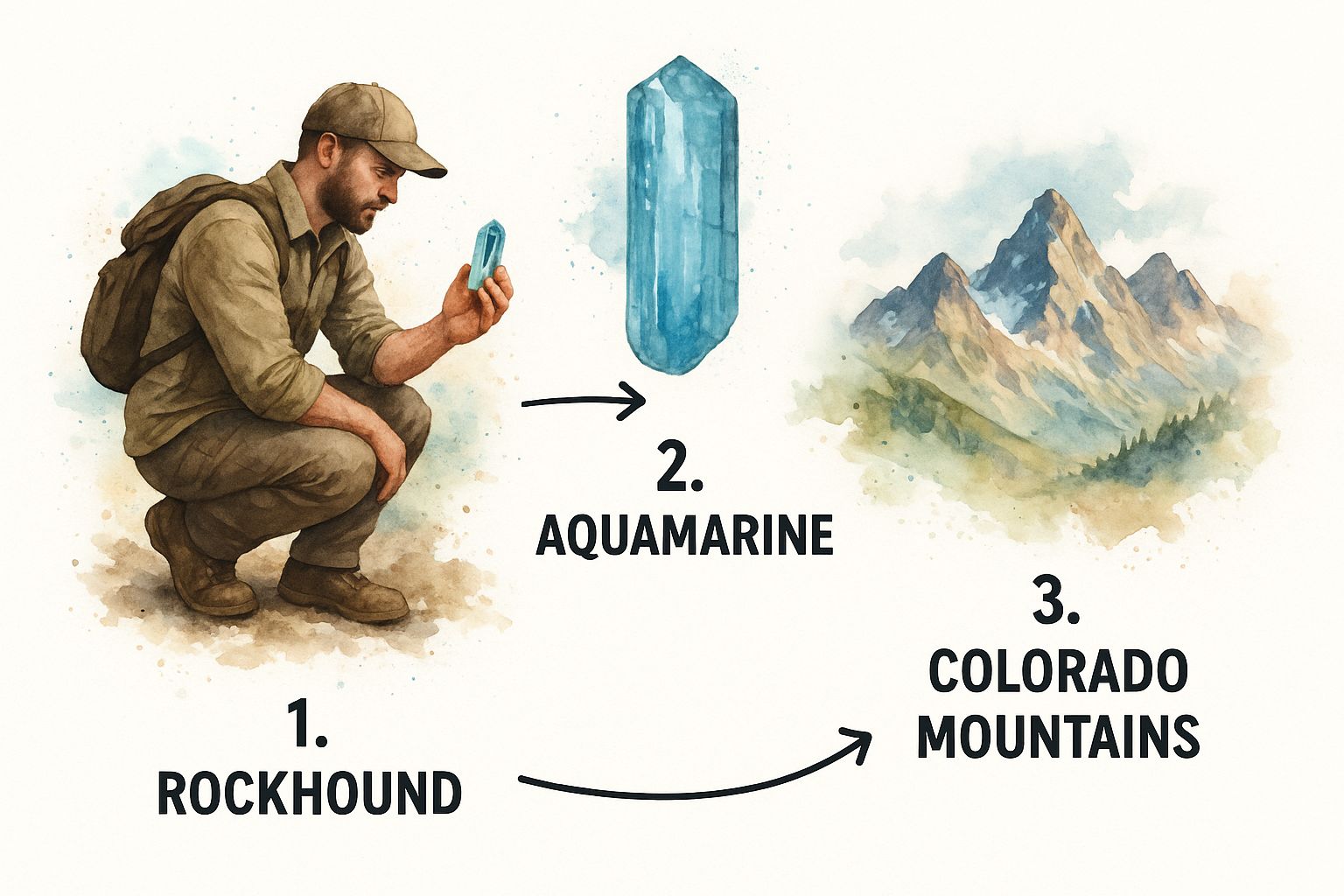
This is what a good day looks like—a rockhound uncovering a beautiful aquamarine, perfectly capturing the spirit of gemstone mining in Colorado.
The image really drives home the connection between the stunning alpine environment and the treasures hidden within it. This is where you'll find some of the best gems, like aquamarine.
A Rich History of Mineral Wealth
Colorado's story is completely tangled up with its mineral riches. The state has a deep, storied history of mining that goes way beyond the famous gold rushes. It’s this geological legacy that makes hunting for gems so exciting today.
Think about this: between 1858 and 1957, Colorado's mines churned out over $6 billion in mineral wealth. That was a mind-boggling amount of money back then. While metals were a huge part of that, the state also became famous for its unique rhodochrosite crystals from the Sweet Home Mine—which are now way more famous than the silver they were originally looking for. You can actually dive into this history yourself through the Colorado School of Mines Geology Museum’s digital archives.
What Treasures Can You Find?
The sheer diversity of minerals is what really sets Colorado apart. Different regions offer different possibilities, so every trip feels like a brand-new adventure. If you're just starting out, it helps to know what you might stumble upon.
The real magic of rockhounding is that you never truly know what the next swing of the hammer will reveal. It could be a common piece of quartz or a flawless, gem-quality crystal that has been waiting millions of years for you to find it.
To give you a better idea of what's out there, here's a quick look at some of the state's most popular gemstones.
Colorado's Top Gemstones at a Glance
This table breaks down some of the top prizes you can find in Colorado, where you're most likely to find them, and how tough it might be for a newcomer to get their hands on them.
Gemstone
Common Locations
Finding Difficulty
Aquamarine
Mount Antero, Mount White
Hard
Rhodochrosite
Sweet Home Mine (Alma)
Very Hard (Fee Dig)
Topaz
Tarryall Mountains, Devil's Head
Moderate
Amazonite
Pikes Peak Batholith, Lake George
Moderate to Hard
Smoky Quartz
Pikes Peak Batholith, Crystal Peak
Easy to Moderate
Garnet
Chaffee County, Nathrop
Easy to Moderate
This is just a starting point, of course. Each of these gemstones has its own unique story and characteristics.
Learning a bit about the stones themselves will make your search that much more rewarding. For a deeper dive, check out these 12 amazing facts about minerals to really sharpen your knowledge before you head out.
Understanding Land Access and Mining Rules
Before you even think about swinging a rock hammer, you need to get the lay of the land—literally. The most critical part of prospecting in Colorado is knowing where you can and can't be. The state is a complex quilt of public lands, private property, and active mining claims.
Getting this right is the difference between an incredible adventure and a frustrating day that could land you in legal trouble. It's not as intimidating as it sounds, though. You wouldn't just wander into a stranger's backyard and start digging, right? The same logic applies here. Different lands are managed by different groups, and each has its own set of rules for rockhounds.
Navigating Public Lands
Most of the good collecting spots are on public land managed by two main agencies: the Bureau of Land Management (BLM) and the U.S. Forest Service (USFS). Both are generally friendly to recreational rockhounds, but you have to know the ground rules.
On most BLM and USFS land, you’re free to collect a reasonable amount of common rocks and gems for your personal collection without a permit. This is what's known as "casual collection," but don't let the name fool you—it comes with some important limits.
Tools: Stick to the basics. Hand tools like picks, shovels, and hammers are usually fine. Anything with a motor is almost always a no-go unless you have a specific permit.
Quantity: You can't just back up a truck and load it to the brim. The general rule is you can take what one person can carry in a single day. If you're looking to sell what you find, you'll need a formal mining claim.
Protected Areas: This is a big one. Wilderness Areas, National Monuments, and certain recreation sites are completely off-limits to collecting. Always, always check the specific rules for the exact area you're heading to.
The most common mistake I see people make is assuming all public land is a free-for-all. A quick check on the local BLM or USFS ranger district's website before you go can save you a world of hurt. They have maps and guidelines that will keep you on the right side of the law.
Private Land and Mining Claims
This is where you need to be extra careful. A mining claim gives an individual or a company the exclusive legal right to pull minerals from that specific piece of land. Stepping onto an active claim without permission is trespassing, and claim owners are understandably protective of their turf.
Don't expect to see big fences and "No Trespassing" signs everywhere. Often, the only markers are small wooden posts or piles of rocks called cairns. It's your responsibility to know where you are. The BLM has a database called the LR2000 that can help you identify claims, but frankly, it can be a beast to navigate.
There's a much easier way to go, especially for beginners: fee-to-dig mines. These are privately owned claims where the owner charges a daily fee for you to come and prospect. This is a fantastic option because it guarantees you're in a legal, productive spot. It’s a controlled environment where you can learn the ropes without the stress of accidentally wandering onto someone else's claim.
Discovering Colorado's Best Gem Hunting Locations
Alright, now that we've got the rules of land access covered, it’s time for the fun part—figuring out where to actually start your hunt. Colorado is a literal treasure chest of gemstone hotspots, with each area offering its own unique geology and potential finds. Let's skip the vague suggestions and get right to the specific, accessible locations known for producing incredible specimens.
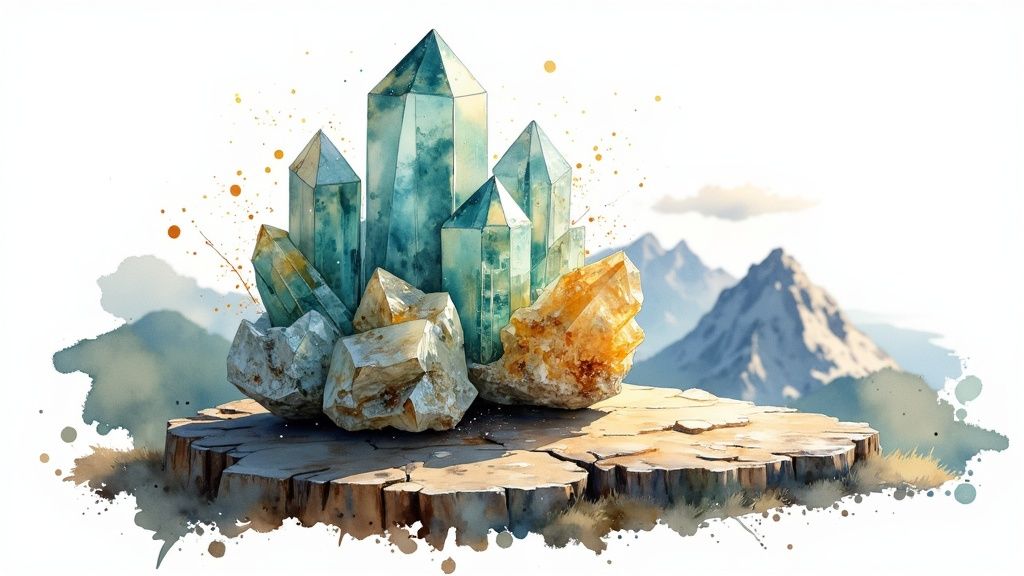
This kind of rugged, high-altitude terrain is exactly where you’ll find some of the state’s most prized gems, especially aquamarine. Understanding the landscape is always the first step toward a successful day of prospecting.
The High Peaks: Mount Antero and Mount White
When people talk about serious gemstone mining in Colorado, Mount Antero is usually the first name that comes up. Towering at over 14,000 feet, this is North America’s top spot for gem-quality aquamarine. The environment up there is harsh and the collecting is physically demanding, but the rewards can be absolutely spectacular.
Prospectors are searching for pegmatite veins, which are basically intrusions of rock where crystals have had the perfect conditions to grow. Besides aquamarine, you can find phenomenal smoky quartz crystals, fluorite, and topaz. Just know, this isn't a casual dig; it requires serious preparation for high-altitude conditions and a good bit of muscle.
If you're looking for something a little less intense, nearby Mount White offers similar geology and opportunities but without the same level of fame or crowds. Both spots are a true test of a rockhound's dedication.
Topaz and Amazonite in the Pikes Peak Batholith
The huge granite intrusion known as the Pikes Peak Batholith is a world-famous area for mineral collecting. It’s especially known for its rich, blue-green amazonite and sherry-colored topaz crystals. Prime hunting grounds include places like the Tarryall Mountains and Devil's Head.
Here, you're looking for pockets or cavities—called "vugs"—in the granite that are lined with crystals. These can be small enough to fit in your palm or surprisingly large, sometimes yielding entire clusters of smoky quartz and amazonite. Some of these finds are even hollow formations, and if that piques your interest, you can learn more by exploring our guide that answers the question, what is a geode?
Fee-to-Dig Mines and Historic Districts
For a more structured experience, you might want to consider a fee-to-dig mine. Places like these provide a family-friendly way to sift through pre-dug material and pretty much guarantee you'll find something cool. It's a fantastic introduction to the hobby without all the heavy lifting.
Colorado's historic mining districts also have their own unique appeal. While many are known for metals like gold and silver, they can also produce beautiful gems. The Turquoise Chief mine in Lake County, for example, saw a ton of activity in the 1940s. At one point, Navajo miners pulled out about a thousand pounds of turquoise over just two years. This rich history adds another layer to the thrill of the hunt.
Gearing Up with Essential Tools and Techniques
The difference between a great day of gem hunting in Colorado and coming home with nothing but dirty hands often boils down to what's in your pack. Having the right tools isn't just about digging faster; it’s about having a smart way to access and pull out crystals without breaking them.
Let's skip the expensive, high-tech gadgets for now and focus on the practical, must-have essentials that will actually serve you well in the field.
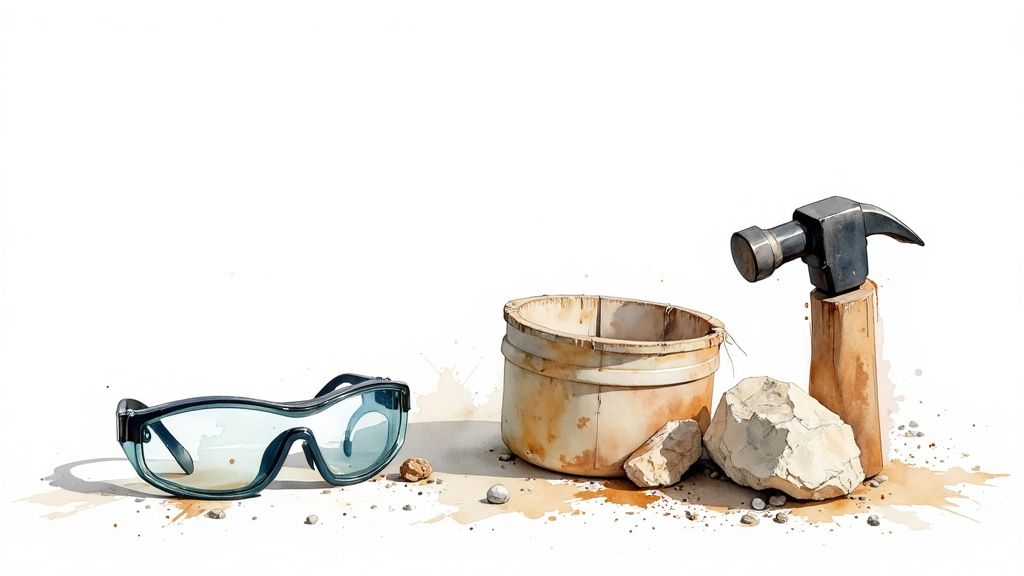
This kind of setup is exactly what you need. It’s simple, effective, and gets the core jobs done: digging, splitting, sorting, and keeping you safe.
Your Core Rockhounding Toolkit
You don't need to haul a whole workshop up the mountain, but a few items are absolutely non-negotiable. Think of these as your go-to tools for getting into the rock and soil.
Rock Hammer and Chisels: A good geologist's pick is your best friend out here. It's built for digging into tough soil and carefully splitting rocks apart. When you pair it with a set of cold chisels, you can work along a rock's natural cracks—a critical skill for freeing delicate crystals without shattering them.
Shovels and Pry Bars: A small, tough trowel or a folding shovel is perfect for moving loose dirt and gravel out of the way. When you run into larger rocks or need to open up a pegmatite pocket, a pry bar gives you the muscle needed to move stubborn boulders.
Safety Glasses and Gloves: This isn't a suggestion; it's mandatory. Rock chips can fly off with some serious speed, and a good pair of gloves will save your hands from getting chewed up by sharp rocks.
These basics will get you started, but to really dial in your search, you'll want some gear designed specifically for sorting through what you've dug up.
Sorting And Sifting Your Finds
Once you've got a pile of promising material, you need an efficient way to go through it. This is where a couple of key pieces of gear come in, helping you separate the potential gems from the tons of worthless rock.
A classifier screen is one of the most useful things you can carry. It’s basically a sieve that pops right onto a five-gallon bucket. You just dump your material in and shake. The fine dirt and sand fall through, leaving the bigger, more interesting stuff behind for you to look at.
A classic rookie mistake is trying to inspect every single rock by hand. Let a classifier do the heavy lifting. You can sift through pounds of material in just a few minutes, which massively boosts your chances of spotting a keeper.
If you're working in riverbeds or streams, a sluice box is gold. It uses the natural flow of the water to wash away lighter gravels, trapping denser minerals like topaz and garnets in its riffles.
Beyond your main digging tools, think about what you’ll need for a longer trip or a hike into a remote area; this ultralight camping gear list has some great ideas for packing smart. That's especially true for high-altitude spots like Mount Antero.
And when you finally have a haul of interesting rocks, you’ll want to see what's hidden inside. For those promising round nodules, our guide on how to crack geodes shows you how to open them up without destroying the crystals. Remember, technique is everything.
Staying Safe in the Colorado Backcountry
Gemstone hunting has a way of leading you into some of the most beautiful—and unforgiving—terrain imaginable. When your eyes are glued to the ground, searching for that perfect crystal, it’s far too easy to let your guard down. But out here, safety has to be your top priority. The Colorado backcountry is no joke, and being prepared is non-negotiable.
The raw beauty of these remote spots is a huge part of the appeal, but it comes with very real risks. Every prospector needs to respect that.
Acknowledge the Real Dangers
Heading out to mine for gems in Colorado means you’re up against more than just a steep hike. The high-altitude weather can flip on a dime, turning a sunny afternoon into a dangerous thunderstorm with almost no warning. You're also a guest in the home of wildlife like bears, moose, and mountain lions. Encounters are rare, but they require caution and respect.
Maybe one of the most overlooked dangers is the ground itself. Many of the best collecting areas are riddled with old, abandoned mine shafts and unstable slopes. These places are not maintained and can be incredibly hazardous.
It’s simple: never enter an old mine tunnel or shaft. They are prone to collapse and can fill with unbreathable air. Just don't do it.
Your Essential Safety Checklist
Before you head out on any trip, run through a mental checklist of what you're packing. Your rock hammer and sifter are important, but it's your safety gear that gets you home.
Navigation: A GPS device or a satellite messenger is a lifesaver, especially in the countless areas with zero cell service. Always, always have a physical map and compass as a backup. Batteries die, screens break.
First-Aid Kit: Pack a solid kit that goes beyond a few bandages. Think blister treatment, antiseptic wipes, pain relievers, and any personal medications you might need.
Extra Supplies: This one is crucial. Always carry more food, water, and layers of clothing than you think you'll need. A sudden storm or a simple wrong turn can extend your trip by hours, or even overnight.
The rule of thumb is simple: plan for the worst-case scenario. It’s far better to carry a few extra pounds of gear you don't use than to be caught without something you desperately need.
While you're hunting for common gems, it’s worth remembering Colorado's wild geological history—it even includes diamonds. Back in 1975, Professor Malcolm McCallum found diamonds in the State Line District, which eventually led to the Kelsey Lake Mine becoming North America's first commercial diamond producer. It's a great reminder of the state’s hidden potential. You can explore more about Colorado's unique gemstone geology to get the full picture.
Your Colorado Gem Mining Questions Answered
Every rockhounding trip comes with its own set of questions, especially when you're just starting out. When you're planning an adventure to go gemstone mining in Colorado, a little inside knowledge can make all the difference between a bust and a great find.
We’ve gathered some of the most common questions we hear to give you clear, straightforward answers. This way, you can spend less time wondering and more time digging.
When Is the Best Time of Year to Go?
The sweet spot for gemstone mining in Colorado is from late spring to early fall. Most of the best spots are way up in the high country, which means they're buried under serious snow for a good chunk of the year.
Access roads and trails often don't become fully passable until June. By late September or early October, they can be snowed in again. For the best weather, aim for July and August, but always keep an eye on the sky—Colorado's afternoon thunderstorms are no joke. A good rule of thumb is to start early and be off the highest elevations by midday.
Can I Sell the Gemstones I Find?
This is a big one, and the answer is pretty specific. Generally, if you’re digging on public lands (like BLM or National Forest areas) under what’s called "casual use," whatever you find is for personal use only.
That means you can add it to your collection or give it away as a gift, but you can’t legally sell it. To go commercial, you have to file and maintain a formal mining claim, which is a whole different ballgame meant for serious, large-scale operations. For most of us, the real reward is in the thrill of the hunt, not the price tag.
How Do I Know If I've Found Something Valuable?
Figuring out what you've found is half the fun, and it's a skill you'll build over time. While everyone dreams of pulling out a flawless, gem-quality aquamarine, the reality is that most of what you'll find will be "specimen-grade." These are pieces that are fascinating for their crystal structure but probably aren't destined for a jeweler's cutting wheel.
A key thing for beginners to remember is that "value" isn't just about money. The value of a crystal you pulled from the earth with your own two hands is something a store-bought gem can never replicate.
To start telling your finds apart, you’ll need a good field guide or a reliable online resource. For a detailed breakdown of how to distinguish different minerals, our comprehensive crystal identification guide is an excellent place to start. It walks you through looking at key characteristics like color, hardness, and crystal shape.
Is Gemstone Mining a Good Family Activity?
Absolutely! While a rugged trek up Mount Antero might be a bit much for the little ones, there are plenty of family-friendly options for gemstone mining in Colorado. Several fee-to-dig mines and trading posts offer a controlled, safe environment for kids to get a taste of the excitement.
These places often provide pre-loaded buckets of "gem dirt" for sifting, which all but guarantees everyone goes home with a few treasures. It’s a fantastic way to introduce kids to geology and the outdoors without the risks of a remote backcountry trip.
What Is "Gem Dirt" and Is It Worth Buying?
You'll probably see bags of "gem dirt" or "paydirt" for sale in tourist shops or online. Think of them as a "prospecting at home" kit. These are bags of soil and gravel that have been sourced from gem-bearing areas and often seeded with extra stones to make sure it's a fun experience.
You won't get rich off a bag of paydirt, but it's a great activity, especially for kids or on days you can’t make it to the mountains. It captures a little piece of the excitement and is perfect for practicing your sifting techniques. It’s more about the joy of discovery than striking it rich.