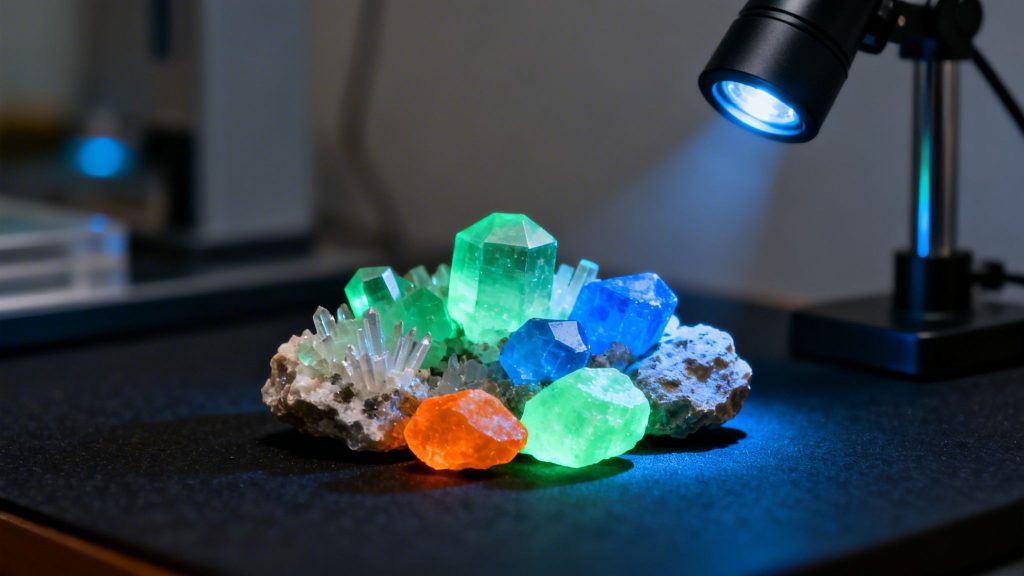
Rocks That Glow Under a Blacklight: A Guide to Value and Rarity
Certain minerals possess a secret life. In ordinary light, they appear impressive enough. However, when exposed to a blacklight, they reveal a hidden, inner fire. This is the world of fluorescent minerals—stones that hold a secret only revealed in the dark.
This captivating glow is not merely a curious phenomenon. It is a powerful driver of rarity, desirability, and market value. Think of it as a hidden layer of beauty that elevates a specimen into a class of its own.
The Hidden Value in Glowing Rocks
The world of natural collectibles contains many superstars. However, a special niche is prized for a secret it only reveals under ultraviolet (UV) light. These are fluorescent minerals, or rocks that glow under a blacklight. Here, aesthetic beauty and scientific rarity converge to create significant value. This phenomenon, known as fluorescence, occurs when a mineral absorbs invisible UV light and instantly re-emits it as a vibrant, visible glow.
This hidden quality is far from common. In fact, only about 15% of all known mineral species exhibit any fluorescence at all. That inherent scarcity immediately places a glowing specimen in a different league than its non-glowing counterparts. As a result, collectors, investors, and high-end interior designers actively seek these pieces, viewing them as both scientific artifacts and natural art.
Why Fluorescence Drives Market Value
The logic behind their premium price is straightforward. It follows the same principles seen in the fine art and luxury watch markets. Value is a blend of rarity, beauty, provenance, and demand. A mineral's ability to glow adds a dynamic visual impact that completely transforms the piece. Several key factors therefore drive up the price:
Intensity and Color: A bright, even glow is always more desirable than a faint or splotchy one. Additionally, certain colors, like the fiery reds of some calcites or the vivid greens of willemite, are rarer and command much higher prices.
Locality: Specimens from classic or exhausted locations, such as the legendary Franklin Mine in New Jersey, carry a historical pedigree. This provenance dramatically increases their market worth.
Aesthetic Composition: Presentation is paramount. For example, a fluorescent mineral perched perfectly on a contrasting matrix creates a natural sculpture. This enhances its display potential and, consequently, its value.
A fluorescent specimen is essentially two collectibles in one. It is a scientifically important mineral in daylight and a breathtaking work of natural art in darkness. This dual identity is a powerful engine for its collectibility and long-term value appreciation.
Ultimately, collecting these glowing rocks is about understanding hidden potential. A seemingly plain stone can conceal an extraordinary secret. Smart collectors know this secret is precisely what turns an interesting rock into a prized, investment-grade asset.
Why Some Minerals Glow Under UV Light
The remarkable glow from a mineral under a blacklight is not magic. It is quantum physics at work. This phenomenon, fluorescence, happens when a rock absorbs invisible, high-energy ultraviolet (UV) light. It then instantly re-emits this energy as lower-energy, visible light. The result is a stunning transformation from an ordinary stone into an object pulsing with otherworldly color.
This process originates deep within a mineral’s crystal structure. Surprisingly, most minerals do not glow on their own. They require a secret ingredient: trace amounts of specific impurities called activators. When UV light strikes the stone, it excites the electrons in these activator elements, forcing them to a higher energy level. They cannot remain there, so they immediately fall back, releasing the extra energy as the visible glow we see.
The Role of Activators and Rarity
The specific type of activator a mineral contains dictates whether it glows and its resulting color. This directly impacts its rarity and value in the market. For instance, manganese is a well-known activator that can give calcite a brilliant red or orange glow, making it far more desirable. You can see how this dramatically affects a specimen by observing a prized piece like our Manganoan Calcite.
This glowing property is exceptionally rare. Only about 15% of all known minerals can fluoresce, making any such specimen an immediate standout. Prospectors have long used this trait as a practical tool. At night, for example, the intense glow of certain fluorite and scheelite veins has literally lit the way for geologists to find valuable ore deposits. This built-in scarcity is a primary driver of their value, setting these minerals apart as tangible assets.
Fluorescence vs. Phosphorescence
While fluorescence is an immediate glow that vanishes when the UV light is turned off, a related and even rarer phenomenon exists. It is called phosphorescence. Phosphorescent minerals continue to glow for a period after the blacklight is removed. They essentially absorb and store the light's energy, releasing it slowly over seconds, minutes, or sometimes even hours.
Phosphorescence is essentially fluorescence in slow motion. The lingering glow is caused by a "forbidden" energy state that traps electrons, delaying their return to a normal state. This afterglow effect makes phosphorescent specimens exceptionally rare and highly coveted.
Specimens that exhibit strong phosphorescence are considered true treasures in the mineral world. This prolonged visual effect is not just mesmerizing; it is also significantly harder to find than standard fluorescence. As a result, phosphorescent minerals often command a significant premium. They represent a top-tier prize for discerning collectors seeking the most unique and valuable natural artifacts.
The Most Prized Fluorescent Minerals
While many minerals show some glow under a blacklight, a small group of A-list specimens generates true excitement among collectors. These are the rocks that erupt with exceptional intensity, display incredibly rare colors, or originate from legendary, exhausted locations.
Their value is a fascinating mix of raw beauty and historical pedigree, much like a masterpiece painting from a famous artist. Owning one is not just about having a rock that glows; it is about possessing a piece of geological history. The best specimens have a glow that is both vivid and consistent across the entire piece. Moreover, a single rock hosting multiple fluorescent minerals can create a stunning natural collage of color, making it exponentially more desirable.
The Franklin-Sterling Hill Legends
When discussing fluorescent minerals, one location is spoken of with reverence: the Franklin and Sterling Hill mines in New Jersey. These long-closed zinc mines are legendary. They produced a staggering variety of fluorescent species, with many found nowhere else on the planet.
For any serious collector, a specimen from this district is a cornerstone piece. These minerals command premium prices, not just for their stunning visual display but for their historical weight.
A specimen with confirmed Franklin, New Jersey provenance is akin to owning a piece of history. The mine’s unique geological conditions created a perfect storm for fluorescence, making its minerals the gold standard against which all others are measured.
This diagram helps visualize what occurs at a microscopic level. The mineral’s basic structure, combined with specific trace elements (activators), triggers that signature glow when exposed to ultraviolet light.
It is a perfect illustration of how fluorescence is a direct fingerprint of a mineral's chemistry and origin—the very factors that make it rare and valuable.
Premier Fluorescent Mineral Examples
A few key players consistently top the list for collectors seeking a mix of stunning aesthetics and solid value. These specimens are prized for their intense and often multi-colored light shows.
Fluorite: As the mineral that gave fluorescence its name, Fluorite is a foundational piece for any collection. It can glow in a spectacular rainbow of colors, from electric blue and green to yellow and even red, depending on its rare earth element activators. Specimens from Weardale, England, are especially famous for their intense blue daylight fluorescence.
Willemite: This is the true superstar of the Franklin-Sterling Hill district. Under shortwave UV light, Willemite explodes in a brilliant, almost neon, apple-green. It is often found with Calcite, which glows a fiery orange, creating one of the most classic and sought-after color combinations. Discovered in Franklin in the 1880s, its glow is sparked by manganese activators.
Scheelite: While highly valued as a primary tungsten ore, Scheelite is famous among collectors for its bright, sky-blue glow under shortwave UV. This property is so reliable that prospectors have used UV lamps to hunt for deposits at night for decades. You can discover more fascinating details about fluorescent minerals on Geology.com. Its practical importance, combined with its striking beauty, makes it a cornerstone for both industrial and private collections.
Each of these minerals tells a story of unique geology, human discovery, and market demand. Their value is a direct reflection of their rarity, historical weight, and the sheer magic of their hidden light. They are not just rocks that glow under a blacklight; they are tangible assets with a documented history of appreciation.
How to Properly Evaluate Fluorescent Minerals
Learning to properly test a fluorescent mineral separates a casual admirer from a serious collector. It is a skill that allows you to see past a rock’s daylight appearance and into its hidden world of color. The tools and techniques you use will completely change what you see. Consequently, they will determine how you assess a specimen's true market value.
Your most essential piece of equipment is a UV lamp. However, not all UV light is created equal. The specific wavelength you use can reveal entirely different fluorescent reactions, unlocking diagnostic clues critical for accurate identification and valuation.
Shortwave vs. Longwave UV Light
The world of fluorescent minerals is divided by the type of ultraviolet light used: shortwave (SW) and longwave (LW). Understanding their differences is non-negotiable for making informed acquisitions. Each wavelength interacts with a mineral's activators uniquely, dictating both the color and intensity of its glow.
Longwave (LW) UV: This is the "blacklight" most people know. It operates around 365 nanometers (nm) and is found in common consumer products. While generally safe to use, and many minerals like Fluorite display well under it, LW only reveals a fraction of a specimen's potential.
Shortwave (SW) UV: This is where the true analysis occurs. Operating at a much more energetic 254 nm, SW light is the key that unlocks the most spectacular and diagnostically important fluorescent responses. It is the go-to tool for geologists and serious collectors. However, SW UV is harmful to your eyes and skin. Therefore, protective UV-blocking eyewear is absolutely mandatory during its use.
A specimen's reaction under shortwave UV is often a primary driver of its value. Many of the most sought-after fluorescent minerals, including those from the famed Franklin Mine, display their most brilliant colors exclusively under SW light.
The Impact on Mineral Value
A mineral’s response to different wavelengths is directly tied to its worth. For instance, a specimen may glow faintly under a common longwave blacklight but erupt in a blazing, intense color under shortwave. This powerful reaction does not just look impressive; it confirms the mineral's identity and massively elevates its desirability among collectors.
Scheelite, a key tungsten ore, is the perfect example. Under shortwave UV light, it transforms into a brilliant blue-white beacon. This specific reaction is so reliable that prospectors have used it to find tungsten deposits since the 1940s. That blend of rare beauty and practical history makes fluorescent Scheelite a prized asset for any serious collection. This is a fundamental step in learning how to identify minerals professionally.
Building and Displaying Your Collection
Acquiring a fluorescent mineral is just the beginning. The real art lies in its display. A well-presented collection of rocks that glow under a blacklight becomes more than a hobby; it becomes a sophisticated design element and a tangible asset.
Proper presentation is everything. It transforms a geological specimen into a piece of natural sculpture. The lighting, casing, and placement you choose are not merely decorative touches. They are deliberate decisions that protect and amplify your investment.
Creating a Professional Display
A professional-grade display distinguishes a shelf of stones from a curated exhibit. The goal is to showcase the mineral’s dual identity: its form in normal light and its secret glow under UV. A high-quality, dust-sealed glass or acrylic case is essential, as it protects specimens from environmental damage and maintains their pristine condition.
For lighting, consider a dual-system setup. You will want ambient, museum-quality white LEDs to highlight the mineral's natural colors. Alongside them, integrate shortwave and longwave UV lamps controlled by a simple switch. This allows for a dramatic, instant reveal of its fluorescence, providing the best of both worlds.
Aesthetics as an Asset Class
A thoughtfully curated collection of glowing minerals functions much like fine art. Its value is tied directly to its rarity, provenance, and raw aesthetic power. Therefore, its display deserves the same serious consideration.
The display is not an afterthought; it is an integral part of the asset itself. A professionally mounted and lit fluorescent mineral commands attention and justifies a higher valuation, appealing to both seasoned collectors and luxury interior designers.
Positioning these specimens can create a stunning focal point. For example, a large, vibrant fluorescent calcite can anchor a minimalist living space with an unexpected burst of color. As you plan your setup, our guide on how to display crystals offers more expert tips for creating powerful visual impact. This strategic approach to display reinforces the specimen’s status as a unique, appreciating asset, primed for long-term value growth.
Bringing Home Authentic Glowing Minerals
When you decide to add a fluorescent mineral to your collection, its history is paramount. That history, or provenance, is what separates a common glowing rock from a true collector’s piece with lasting value. The market is filled with attractive stones, but a serious collector seeks a specimen with a traceable story from a trusted source.
A piece with genuine provenance has a documented past. You know its specific mine of origin, and sometimes even the exact pocket. For example, a Willemite from the legendary Franklin Mine in New Jersey is in a completely different class than an identical-looking stone from an unknown locality. That connection to a famous, historically important location confers a pedigree and a value that cannot be replicated.
Why Expert Curation Matters
Navigating the mineral world requires trust. At Astro West, we have spent decades building direct relationships with miners, geologists, and field collectors. These connections provide us with access to incredible finds, often before they reach the open market. This allows us to guarantee the authenticity and provenance of every piece we offer.
When a fluorescent mineral enters our gallery, it undergoes rigorous verification. We confirm its identity, test its fluorescence under both shortwave and longwave UV light, and document its origin. This is not simply about selling a rock; it is about certifying a piece of natural history.
This deep commitment to science and sourcing sets a premier gallery apart. We handle the complex vetting process so you can focus on the beauty and excitement of your acquisition. If you are just starting, understanding these fundamentals is the first step, which we cover in our guide on how to start a collection of rare rocks and minerals.
Ultimately, acquiring from a trusted source provides confidence. It is the assurance that your investment is sound, the mineral is authentic, and its story is preserved. That peace of mind is the true foundation for building a world-class collection of rocks that glow under a blacklight.
A Few More Things You Might Be Wondering
Let's address some of the most common questions from new collectors. This practical advice helps you navigate the market with confidence and fully appreciate your acquisitions.
Do All Specimens of a Fluorescent Mineral Glow?
No, and this distinction is crucial. Just because a mineral species can fluoresce does not mean every specimen will. The ability to glow depends entirely on the presence of microscopic impurities called activators. If those activators are absent in a particular specimen, it will not react to UV light.
This is precisely why a fluorite or calcite that displays a brilliant, vibrant show under a blacklight is inherently rarer and more valuable than a chemically identical but non-reactive piece. It is a primary driver of price differences within the same mineral species.
How Much Does Fluorescence Affect a Mineral's Price?
The impact can be dramatic. A strong, even fluorescence can easily double or triple a specimen's value compared to a non-fluorescent counterpart of similar size and quality. However, the valuation depends on a few key factors:
Intensity: A vivid, uniform glow will always command a higher price than a faint or spotty one.
Color Rarity: Some fluorescent colors are far scarcer than others. For example, the fiery red seen in some calcites is much more sought-after than the common green glow of many willemites.
Locality: A strong glow in a mineral from a classic or exhausted location, like the Franklin Mine, can increase its value exponentially. It adds another layer of rarity and history to the piece.
Are Blacklights Safe for People and Minerals?
Common longwave (LW) UV blacklights are generally safe for use and will not harm your minerals, making them perfect for casual viewing. However, the more powerful shortwave (SW) UV light is a different matter and demands serious respect.
Shortwave UV radiation can cause severe damage to your eyes and skin, similar to a welder's arc. You must always wear UV-blocking protective glasses when using a shortwave lamp. While it is the key to unlocking the most spectacular fluorescent colors, SW light must be handled with professional care.
At Astro West, we provide the expertise and curation you need to acquire authentic, high-value fluorescent specimens with confidence. Explore our collection of hand-selected, verified minerals at https://astrowest.com and bring home a genuine piece of natural history.