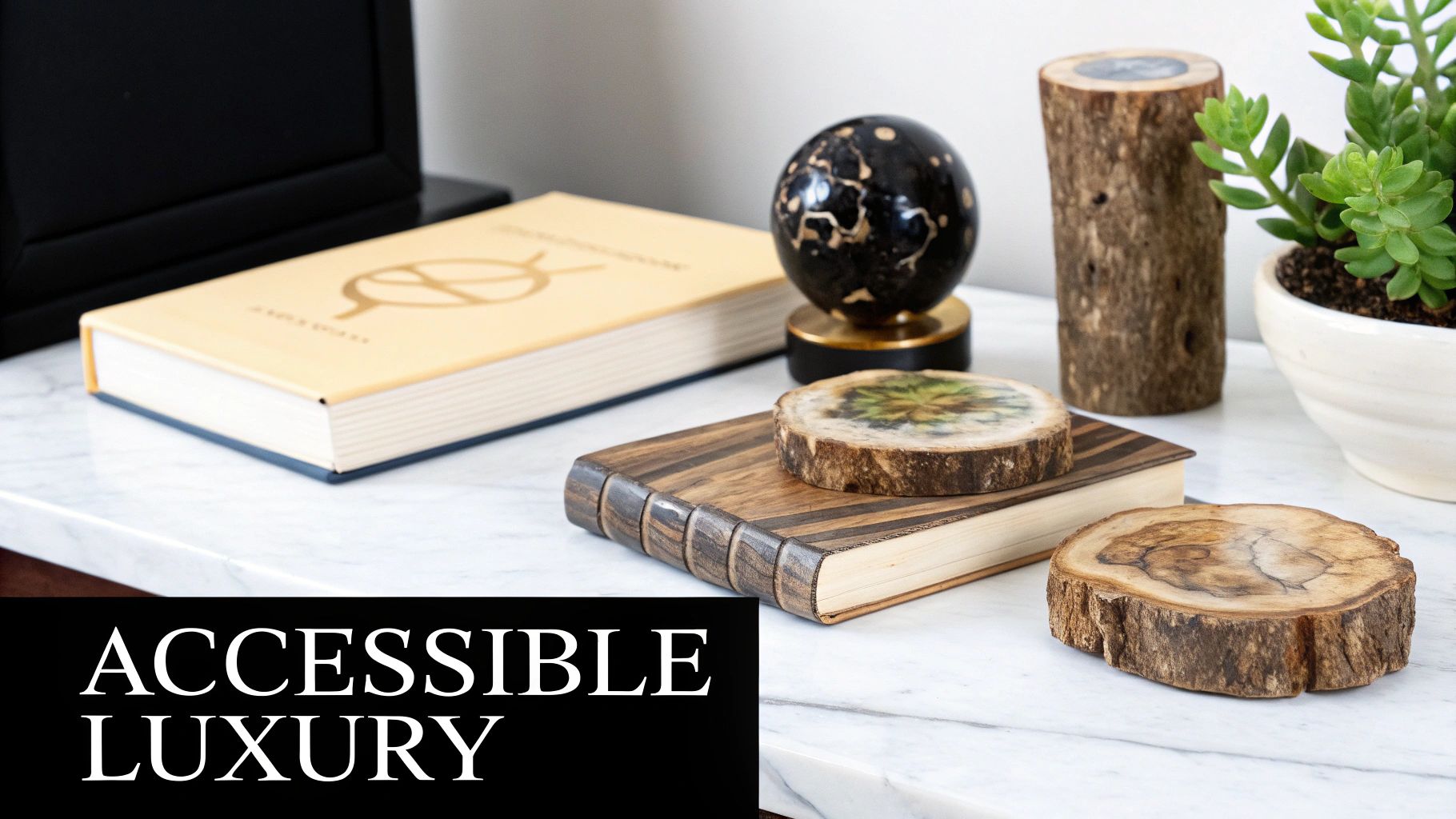
A Timeless Statement: Your Guide to Petrified Wood Decor
Imagine holding a piece of decor that was alive when dinosaurs roamed the Earth. That is the incredible reality of petrified wood decor. It isn't just a material; it’s a conversation starter—a literal slice of our planet’s ancient history, elegantly placed right in your home.
The Enduring Allure of Petrified Wood Decor
Petrified wood is so much more than stone. Each piece tells a story frozen in time, preserving the intricate, organic details of a tree that lived millions of years ago. It’s a fossil, created through a miraculous natural process where wood slowly transformed into mineral. This journey imbues every object with a profound sense of history and permanence that manufactured materials simply can’t replicate.
This unbelievable backstory is precisely why petrified wood has become a go-to for designers and collectors creating high-end, meaningful interiors. It offers a direct, tangible link to the planet's deep past—something truly authentic and singular in its beauty.
Petrified Wood Decor at a Glance
For those new to the material, this table breaks down why petrified wood is such a compelling choice for interior design. It's a quick look at how its unique attributes translate into real benefits for your home.
Attribute
Description
Interior Design Benefit
Ancient Origin
A fossilized tree, millions of years old, transformed into quartz.
Provides a deep sense of history and a powerful, authentic story.
One-of-a-Kind
No two pieces are ever identical due to unique wood grains and minerals.
Guarantees a completely unique, personal statement piece for any room.
Exceptional Durability
As hard as granite (a 7 on the Mohs hardness scale).
Perfect for functional art like tables, sinks, and countertops built to last.
Versatile Aesthetic
Features earthy tones and organic patterns that complement many styles.
Easily integrates into modern, minimalist, rustic, or eclectic designs.
Ultimately, the appeal of petrified wood lies in its ability to be both a stunning natural sculpture and a durable, functional object.
Why Designers and Collectors Choose Petrified Wood
The buzz around petrified wood goes far beyond its striking appearance. For designers and discerning homeowners, it offers a combination of qualities that are hard to find elsewhere:
Unmatched Individuality: You’ll never find two identical pieces. The original wood grain, the specific minerals present during fossilization, and the unique geological conditions all conspire to make every item a one-of-a-kind work of art.
Surprising Durability: Once transformed into solid quartz, petrified wood becomes incredibly resilient. With a hardness comparable to granite, it's more than suitable for functional pieces like tables, countertops, and sinks that are meant to be used and admired for generations.
Timeless Aesthetic: Its organic patterns and rich, earthy color palettes allow it to blend seamlessly into almost any design scheme, from starkly modern and minimalist to cozy rustic and eclectic.
This fusion of natural artistry and functional strength makes petrified wood a compelling choice for those seeking to create spaces that are both beautiful and meaningful. It’s an investment in a piece with a soul.
The market certainly reflects this growing appreciation. The global petrified wood market, valued at approximately $850 million in 2025, is projected to climb at a compound annual growth rate (CAGR) of 5.5% through 2033. This growth is driven almost entirely by its rising popularity in high-end interior design.
It's interesting to compare its raw, elemental beauty with the allure of cement tiles, which also bring a rich, handcrafted history to a space. At Astro West, we celebrate this geological significance by curating pieces that tell the most profound stories—connecting your home to the deep, silent history of the Earth.
From Ancient Forest to Fossilized Stone
The journey from a living tree to a piece of petrified wood decor is one of nature’s most incredible transformations. It’s a slow, almost magical process that turns organic material into permanent stone, capturing a perfect snapshot of deep time. It’s not about decay; it's a perfect, molecule-by-molecule replacement.
This whole metamorphosis kicks off when a tree gets rapidly buried by sediment—think volcanic ash, mud, or silt. This sudden burial is the most crucial step, as it cuts off the oxygen supply. Without oxygen, the wood can't rot away like it normally would. Instead, it becomes a sealed time capsule, waiting for the next phase of its long journey.
The Mineralization Process
Over millions of years, groundwater loaded with dissolved minerals starts to seep through the buried wood. This water is the delivery system for minerals like silica, which often comes in the form of quartz, chalcedony, or even opal.
The process, known as permineralization, is a microscopic exchange. As each individual wood cell slowly dissolves, a mineral crystal takes its place, perfectly replicating the original organic structure. This is why the delicate details—the growth rings, the texture of the bark, and even the cellular patterns—are so exquisitely preserved.
The end result isn't wood anymore. It's a complete stone replica that has the weight, density, and permanence of rock, yet still holds the visual soul of the tree it once was.
Nature's Artistry and Color Palette
Those stunning colors you see in petrified wood? They weren't in the original tree. They come from trace minerals that tagged along with the silica-rich water, acting like nature’s paintbrush and infusing the stone with a totally unique palette.
Iron Oxides: These are the artists behind the most common and beloved hues, creating rich reds, warm browns, golden yellows, and deep oranges.
Copper and Cobalt: Much rarer, these minerals can introduce spectacular shades of green and blue, turning a beautiful specimen into a prized collector's item.
Manganese: This element is responsible for the striking pinks, purples, and sometimes even inky black tones.
Carbon: When pure carbon gets trapped during the process, it creates the dramatic, solid blacks seen in many impressive pieces.
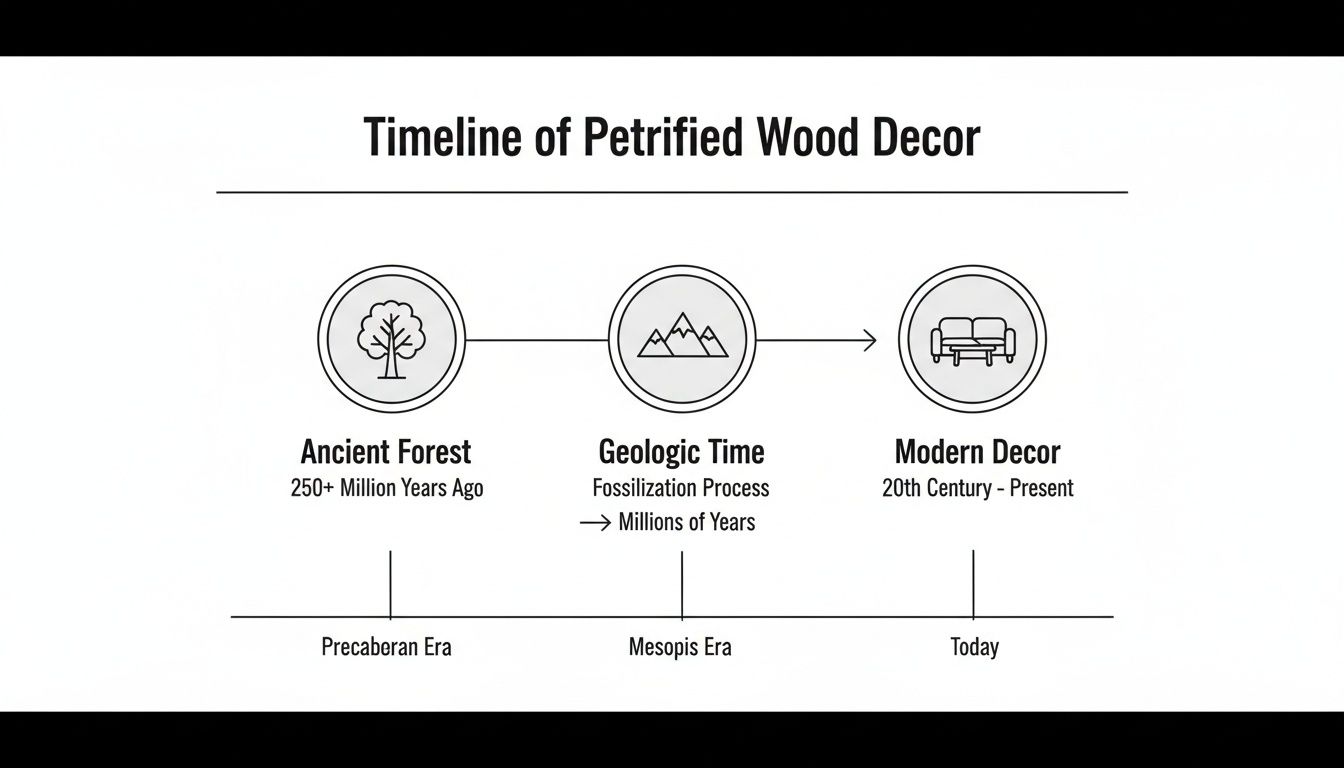
This visual timeline illustrates the incredible journey of petrified wood from an ancient forest to a modern decor element.
Each colorful vein and preserved grain tells the story of this ancient process. Just as no two trees are identical, no two pieces of petrified wood can ever be the same. The specific combination of the original wood, the minerals present in the water, and the unique geological pressures ensures that every single slab, sphere, or tabletop is a one-of-a-kind work of art. The vibrant patterns in this stunning petrified wood slab from Arizona are a perfect example of nature’s inimitable artistry.
A Room-by-Room Guide to Styling Petrified Wood
The real magic of petrified wood decor is its incredible adaptability. It has a unique way of bringing a sense of ancient gravity and raw, organic beauty into just about any space. It’s far from a one-note material limited to a single aesthetic; its versatility is what makes it so exciting to work with.
This guide will give you some practical inspiration for styling these timeless pieces, room by room.
Living Room: The Natural Anchor
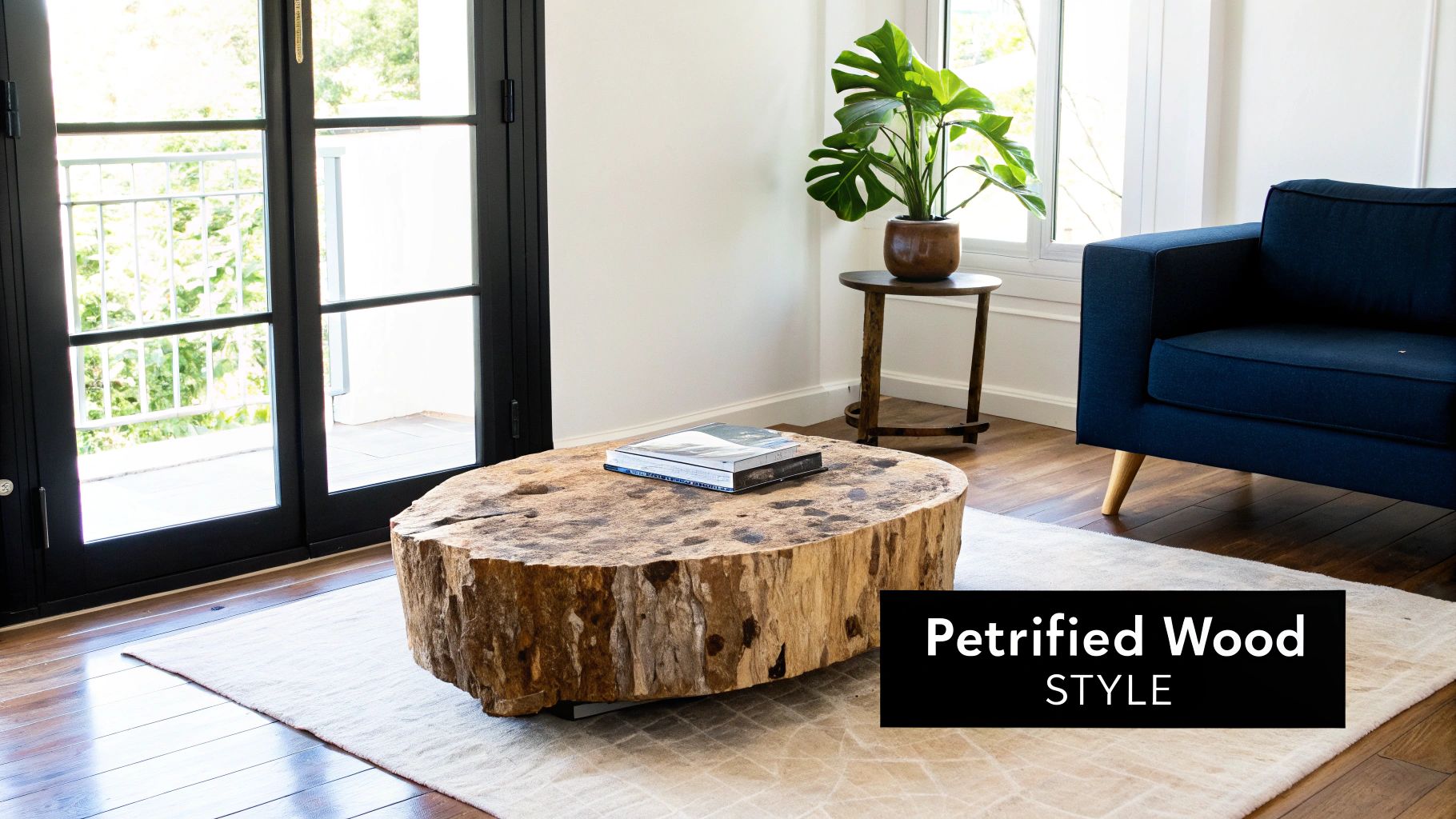
In the main gathering space of your home, petrified wood can be a stunning and functional centerpiece. A polished coffee table or a couple of substantial side tables immediately grounds the room, giving you a focal point that is equal parts art and furniture.
To really make the piece shine, pair it with softer textures. Think a neutral sofa, a plush wool rug, or linen throw pillows. This creates a beautiful contrast against the solid, mineralized surface of the wood and ensures the room feels inviting and sophisticated, not cold or stark.
Dining Room and Kitchen: A Touch of Prehistory
Want to introduce a bit of natural wonder to your dining experience? A sculptural petrified wood centerpiece on the table commands attention, sparking conversation and adding a layer of organic elegance to every meal.
For a more integrated approach, you can go with smaller, functional art. A handsome petrified wood bowl from Indonesia is perfect for holding fruit on a kitchen island, while a set of polished coasters protects surfaces with undeniable style. When you're thinking about unique kitchen elements, exploring other timeless materials like reclaimed wood options can beautifully complement the ancient aesthetic of petrified wood.
Bedroom and Office: Grounding Personal Sanctuaries
Even small touches of petrified wood can make a big impact in more private spaces. They introduce a calming, earthy energy that can enhance both focus and relaxation.
A few accessible yet impactful ideas:
Bookends: A pair of polished petrified wood bookends adds serious weight and sophistication to any bookshelf or desk.
Small Sculptures: A single, artfully chosen piece on a nightstand can act as a personal totem of natural history.
Side Tables: A smaller petrified wood stool or side table placed next to an armchair creates the perfect reading nook with a direct connection to the ancient world.
The key is to let the piece’s unique story and texture stand out. In a minimalist setting, a single item can be a powerful statement. In more eclectic homes, petrified wood adds another layer of rich, natural history to the design narrative.
Bathroom: A Spa-Like Retreat
To transform your bathroom into a personal sanctuary, consider one of the most dramatic applications of petrified wood: a vessel sink. Carved from a single, solid piece, a petrified wood sink is the ultimate fusion of function and natural art.
Its solid stone form and organic contours create an immediate sense of luxury and calm. Paired with minimalist fixtures in matte black or brushed bronze, it becomes the undisputed focal point, turning a daily routine into a moment of awe.
How to Choose High-Quality Petrified Wood
When you decide to bring petrified wood into your home, you're not just buying decor; you're investing in a one-of-a-kind piece of natural art. Knowing what separates a decent specimen from a truly spectacular one will give you the confidence to choose a piece you'll love for a lifetime. Let's walk through the key things to look for.
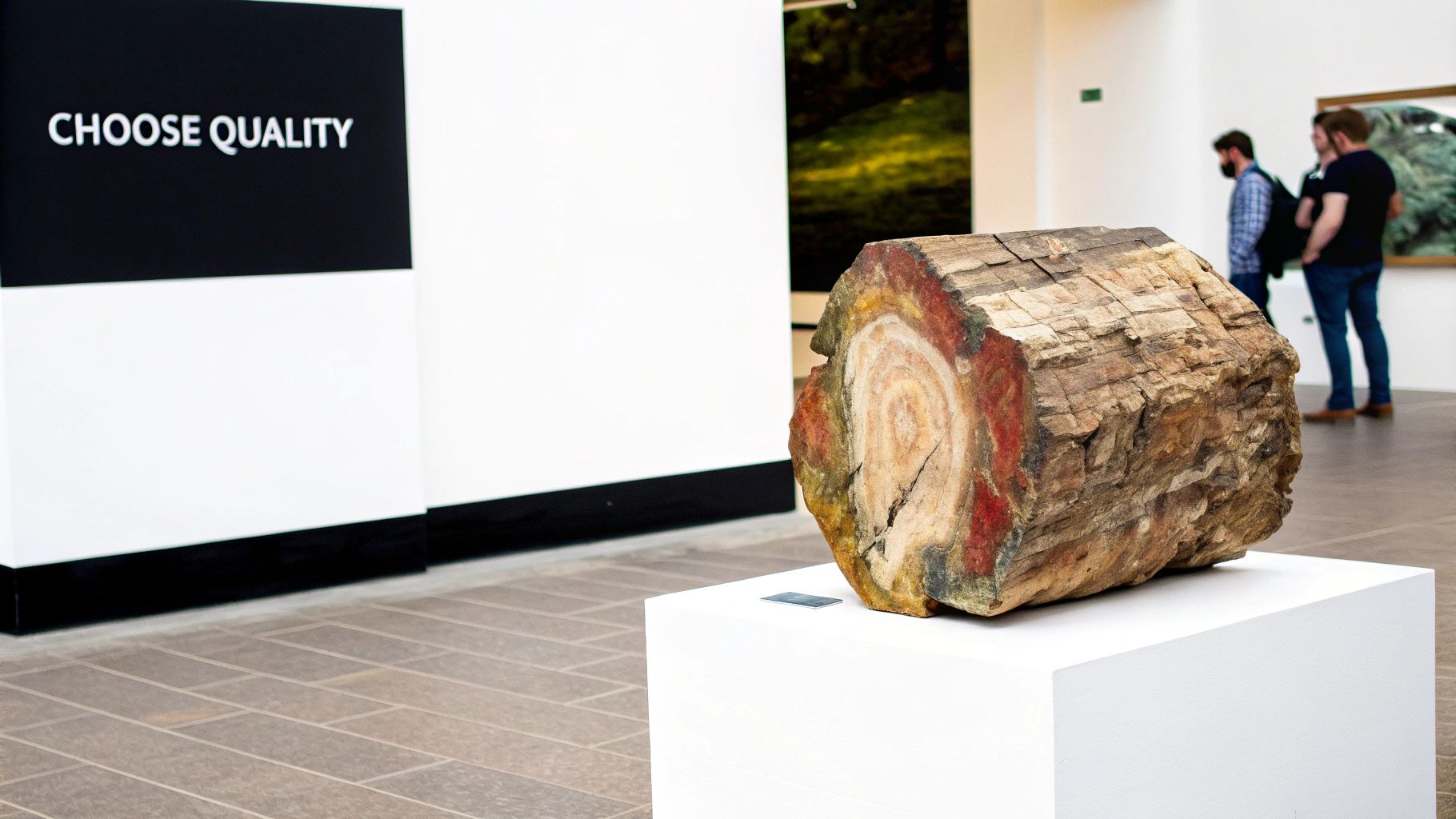
The first thing that always draws you in is the color. Deeply saturated, vibrant colors are usually the first sign of a top-tier specimen. Keep an eye out for rich reds, yellows, and oranges. If you spot blues and greens, you've found something truly special, as those colors are much rarer and highly sought after. These hues tell a more complex geological story, pointing to a strong presence of trace minerals during formation.
But color is only part of the story. The detail of the original wood grain is what truly sets a piece apart. The best examples have clear, well-defined patterns that are unmistakably wood. You should be able to trace the growth rings and even see the cellular structures. This is a sign of a high-fidelity mineralization process, where every bit of organic material was perfectly replaced by stone.
Evaluating the Mineralization and Finish
How completely the wood fossilized is a critical factor. A premium piece of petrified wood should feel dense and solid—completely like a rock. You don't want to find any soft, crumbly, or porous spots. Those are red flags for incomplete fossilization, which could compromise the piece’s structural integrity down the road.
A professional finish can take a great specimen and turn it into a masterpiece. The polish should be perfectly smooth and consistent across the entire surface, creating an almost glass-like sheen that brings out the natural color and depth. A sloppy polish will look dull, uneven, or cloudy, taking away from the stone's natural beauty. This beautifully polished petrified wood slab is a perfect example of how an expert finish makes the material come alive.
When you're looking at a piece, step back and consider its overall harmony. The way the colors play off each other, the clarity of the grain, and the quality of the polish should all work together to create a cohesive and captivating work of art.
Structural Integrity and Ethical Sourcing
Finally, give the piece a good inspection for any major cracks or fractures. Minor, stable fissures are a natural part of any specimen’s long history, but large, unstable cracks are a weak point, especially for functional pieces like tabletops or stools. You want a piece that is structurally sound.
At Astro West, we also believe that knowing where your petrified wood decor comes from is incredibly important. Ethical sourcing adds a crucial layer of value and integrity to your investment. We make sure our collection is curated not just for its visual brilliance but also for its responsible origins, so you can acquire a piece with both lasting beauty and a clear conscience.
Caring for Your Piece of Prehistoric Art
One of the best things about petrified wood is that it’s incredibly durable. After all, it’s a material that has survived for millions of years—this stuff is literally built to last. Caring for your petrified wood decor is surprisingly simple and requires no special tricks. If you can maintain high-end granite or quartz, you're already a pro.
With a hardness of around 7 on the Mohs scale, petrified wood is exceptionally resistant to scratches and everyday wear. This isn't just a beautiful object; it's a functional one, ready to be part of your daily life for generations to come.
Simple Cleaning Practices
Keeping your piece looking its best is straightforward. The main goal is just to gently clean the surface without dulling its professional, high-gloss polish.
For routine dusting, a soft, dry microfiber cloth is all you need. To tackle fingerprints or minor spills, just follow these simple steps:
Use a pH-Neutral Cleaner: Mix a few drops of a gentle, pH-neutral soap (like a mild dish soap) with warm water.
Apply with a Soft Cloth: Dampen a soft cloth in the soapy water, wring it out well, and gently wipe down the surface.
Rinse and Dry Thoroughly: Wipe away any soap residue with a separate cloth dampened with plain water. Then, immediately dry the surface with a clean, dry microfiber cloth to prevent water spots and bring back that brilliant shine.
What to Avoid
While petrified wood is tough, its polished surface can be damaged if you're not careful. The key is to avoid anything harsh, acidic, or abrasive.
Never use cleaners containing vinegar, lemon juice, or other acids. Similarly, steer clear of abrasive powders or scouring pads, as these can etch the polish and permanently dull the finish of your treasured piece.
Stick to gentle, non-abrasive methods, and that lustrous finish will stay pristine.
For functional pieces like tables, sinks, or countertops, a little prevention goes a long way. Using coasters under drinks and placemats under hot dishes will help protect the polish from potential thermal shock or acidic spills. By following these easy guidelines, you can ensure your piece of prehistoric art remains a stunning focal point in your home, its beauty preserved for decades. This simple maintenance routine provides peace of mind, reinforcing that your investment is both magnificent and remarkably easy to live with.
Incorporating Smaller Decor and Accessible Luxury
You don’t need a monumental piece of furniture to invite the profound story of petrified wood into your home. The beauty of petrified wood decor lies in its incredible range, and honestly, some of the smaller, more accessible objects can make just as big of an impact. These pieces are a perfect entry point for new collectors and make for uniquely meaningful gifts, proving that luxury and natural history can be appreciated at any scale.
Think of these items as curated moments of geological art. A set of polished coasters brings a fragment of the ancient world right to your coffee table. A heavy, beautifully figured pair of bookends adds both intellectual and literal gravity to a home office shelf.
Functional Art for Everyday Elegance
What’s really special about these smaller decor items is how they merge utility with artistry, letting you interact with a piece of the prehistoric world every single day.
Serving and Charcuterie Boards: A petrified wood serving board instantly elevates any gathering. You’re not just presenting cheeses and appetizers; you’re displaying them on a surface millions of years in the making.
Decorative Spheres and Sculptures: A polished sphere on a mantelpiece or a small, sculptural freeform piece on a console table acts as a captivating focal point that begs to be picked up and examined.
Bowls and Dishes: Use a small, polished bowl as a catch-all for keys or jewelry. It turns a simple, practical object into a daily touchstone to deep time.
These smaller applications are finding a serious audience in the luxury goods market. High-end tableware made from petrified wood is tapping into what was a $45.6 billion global market back in 2022—a market that keeps growing as people look for premium, story-rich pieces for their homes.
Gifting an item like a small, polished petrified wood heart sculpture offers so much more than just a beautiful object. It’s a tangible piece of Earth’s timeline, an unforgettable way to mark a special occasion with something genuinely timeless.
This approach makes owning a piece of natural history feel attainable. It really highlights the versatility of petrified wood, ensuring that anyone can find a way to bring this remarkable material into their life and home, one beautiful object at a time.
Common Questions About Petrified Wood Decor
Even with its ancient roots, bringing petrified wood into a modern home can spark a few questions. To help you feel completely confident about adding this incredible material to your space, we've put together answers to the questions we hear most often.
Is Petrified Wood Actually Real Wood?
It started out as wood millions of years ago, but what you’re holding today is 100% stone. The original organic fibers have been completely replaced by minerals like quartz in a slow, natural fossilization process. That’s why it has the heft and durability of stone, not the give of wood.
How Rare Is Petrified Wood?
The process itself is incredibly rare. For petrification to happen, a tree needs to be buried lightning-fast in an environment without oxygen, then soaked in mineral-rich water for millions of years. Finding high-quality pieces with brilliant color and perfectly preserved grain is even harder, making them true prizes for collectors and designers.
The specific geological conditions needed for perfect fossilization are a fluke of nature. This is why every high-grade piece of petrified wood decor is a one-of-a-kind natural treasure.
Can Petrified Wood Be Used Outdoors?
Absolutely. Its stone-like nature makes it tough enough to handle the elements. Smaller items like stools or side tables can bring a gorgeous, organic feel to a patio, garden, or pool area. Just be mindful that extreme, rapid temperature swings—like a sudden hard freeze—could potentially stress the material over many years.
Is Petrified Wood an Ethical Choice for Decor?
Yes, as long as it's sourced responsibly. All reputable dealers, including Astro West, get their specimens from designated areas where collection is managed and legal. This ensures that no fragile ecosystems are disturbed. When ethically sourced, petrified wood decor is a way to celebrate natural history without putting a strain on current resources.
At Astro West, our collection is curated to answer not just your questions, but your desire for decor that is authentic, beautiful, and full of stories. Explore our hand-selected pieces and bring a piece of Earth's ancient legacy into your home.