Curating a Legacy: Why One of a Kind Home Decor Accents Are the New Luxury
In the world of interior design, a profound shift is underway. Discerning collectors and homeowners are moving beyond fleeting trends and mass-produced objects, seeking instead pieces with soul, history, and an inimitable presence. When you introduce a genuine natural specimen into your home, you're doing more than decorating—you are curating a legacy. A striking tourmaline formation or a fossilized ammonite becomes a tangible piece of Earth’s history, a story captured in stone that transforms a house into a personal sanctuary of art and wonder.
Beyond Decoration: Finding Accents with a Story to Tell
Choosing decor that resonates on a deeper level is about curating a space filled not just with beautiful objects, but with artifacts that hold a genuine history—a mineral that formed over millions of years, or a fossil from a prehistoric sea. This approach turns your home into a personal museum, where every accent has a story that transcends time and style.
The journey begins with discovering what speaks to you. Are you drawn to the cosmic allure of a Muonionalusta meteorite slice, with its mesmerizing Widmanstätten patterns forged during a journey through space? Or perhaps the vibrant, complex geometry of a fluorite cluster, a perfect crystalline marvel created deep within the Earth, captures your imagination.
The Mark of True Uniqueness
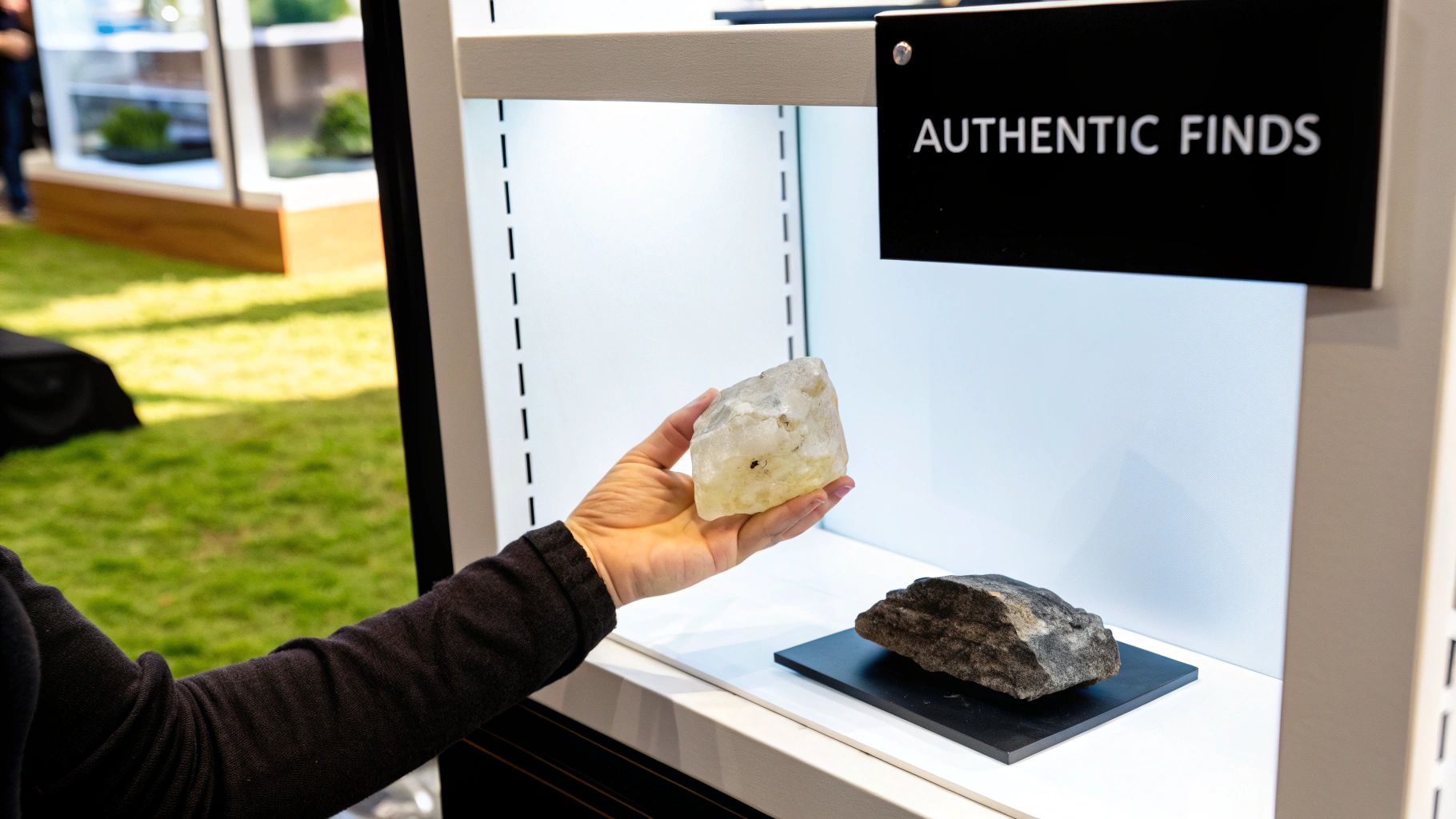
Understanding the distinction between a generic decorative item and an authentic, one-of-a-kind specimen is crucial for any collector or designer. A genuine artifact carries the specific inclusions, imperfections, and structural nuances that narrate its formation. For example, a piece of Baltic amber might contain insects trapped millions of years ago, offering a literal window into a lost world.
The profound beauty of a natural specimen lies in its individuality. No two crystal formations are ever identical; no two fossils preserve the exact same details. This inherent rarity is what elevates each piece to a true work of natural art.
Developing an eye for authenticity means looking for these unique characteristics. When examining a mineral, pay attention to its clarity, color zoning, and natural crystal terminations. For fossils, the quality of preparation and the preservation of fine anatomical details are clear indicators of its value and scientific importance. This knowledge is the foundation for making an informed, personal investment in your home's narrative.
A Market Driven by Meaning
The desire for unique, story-rich interiors is reshaping the luxury goods market. While the broader home decor market is valued at an impressive $802.26 billion in 2025 and is projected to reach $1,097.51 billion by 2032, the luxury segment—which prizes these natural wonders—is growing with even greater momentum. Discerning buyers are prioritizing authenticity and provenance, choosing items with enduring value over disposable trends.
As you begin your search, it helps to ground your choices with some essential home decor tips that can help you integrate these natural wonders seamlessly into your existing space.
Styling Natural Wonders: From Specimen to Statement Piece
Integrating one-of-a-kind home décor into your space is a creative act—an artful process of balancing natural wonder with your design vision. These are not mere objects; they are focal points that command attention and tell a story millions of years in the making. The goal is to create a display that honors the specimen's unique character while seamlessly weaving it into the fabric of your home.
This is not about following a strict set of rules. A minimalist loft, for example, can be instantly grounded by a dramatic fossil, its ancient form creating a powerful contrast against clean, modern lines. Conversely, a maximalist interior gains a new layer of depth from a polished slab of petrified wood, its intricate rings adding an organic, grounding element to a vibrant collection.
Principles of Placement and Impact
Success in styling these natural wonders comes down to three key elements: scale, placement, and lighting. Mastering these will transform a beautiful object into a breathtaking centerpiece.
First, consider the scale of the piece relative to its surroundings. A towering geode demands space to command a room. Placing it in a grand entryway or a living area with high ceilings allows it to establish a powerful presence without overwhelming the space. Smaller, more intricate specimens—like a delicate apophyllite cluster or a single, perfect vanadinite crystal—are better suited for a mantelpiece, bookshelf, or console table where their fine details can be appreciated up close.
Placement is crucial. A common mistake is to push a statement piece flat against a wall. Instead, try angling it slightly or positioning it in a corner. This simple technique creates depth and shadow, making the entire display more dynamic and engaging.
The Power of Illumination
Lighting is, without doubt, the most critical tool for revealing the true beauty of a natural specimen. The right light can transform a seemingly simple stone into a galaxy of color, texture, and brilliance.
Spotlighting: A single, well-aimed spotlight works wonders for highlighting the complex crystalline structures of a mineral. It can make the faces of a pyrite cube gleam with metallic luster or illuminate the deep, vibrant hues within a large citrine geode.
Backlighting: For translucent specimens like agate or certain types of fluorite, backlighting is magical. It creates a stunning, ethereal glow that reveals the stone's hidden internal world and intricate banding.
Natural Light: Never underestimate the power of daylight. Placing a specimen near a window allows it to interact with the sun, changing its appearance as the day progresses. Just be mindful that prolonged, direct sunlight can cause some minerals to fade over time.
A well-lit specimen doesn’t just sit in a room; it converses with the space. The interplay of light and shadow on a fossil’s textured surface or through a crystal's facets brings the piece to life, ensuring it is not just seen, but truly experienced.
A perfect example of a piece that comes alive under focused light is a substantial citrine geode on a custom metal stand, where strategic illumination can make its golden points radiate with energy. By thoughtfully combining scale, placement, and lighting, you can ensure your unique décor creates a lasting impression, turning any room into a curated gallery of natural art.
A Buyer's Guide to Authentic Natural Decor
Bringing a piece of natural art into your home is a significant acquisition, and confidence in your choice is paramount. This is not just another decorative object; it is a tangible piece of Earth's history. Understanding what gives a specimen its value is the first step toward making a purchase you will cherish for a lifetime.
A specimen's value is determined by a blend of four key factors: rarity, condition, size, and origin. A massive, flawless tourmaline crystal from a legendary Brazilian mine that is now closed will always command a higher value than a smaller, more common specimen. Similarly, a complete trilobite fossil with every minute detail preserved is in a different league than a common fragment.
Provenance—the documented history of a piece—is non-negotiable for serious collectors. It verifies the specimen’s origin, confirms its authenticity, and adds layers to its unique story.
Verifying Authenticity and Quality
Distinguishing a genuine treasure from a convincing imitation is absolutely critical. The most reliable way to ensure authenticity is to source from a reputable gallery that stands behind every piece they offer. Experts possess a trained eye for subtle geological signatures, specific preparation techniques, and the unique characteristics that prove a specimen's legitimacy. This assurance protects your investment and deepens your connection to the piece.
Consider the pallasite meteorite—a true collector's prize. When an expert evaluates one, they are looking for intact, gem-quality olivine crystals suspended in the iron-nickel matrix. This signature feature is incredibly difficult to fake and serves as a hallmark of a top-tier extraterrestrial specimen.
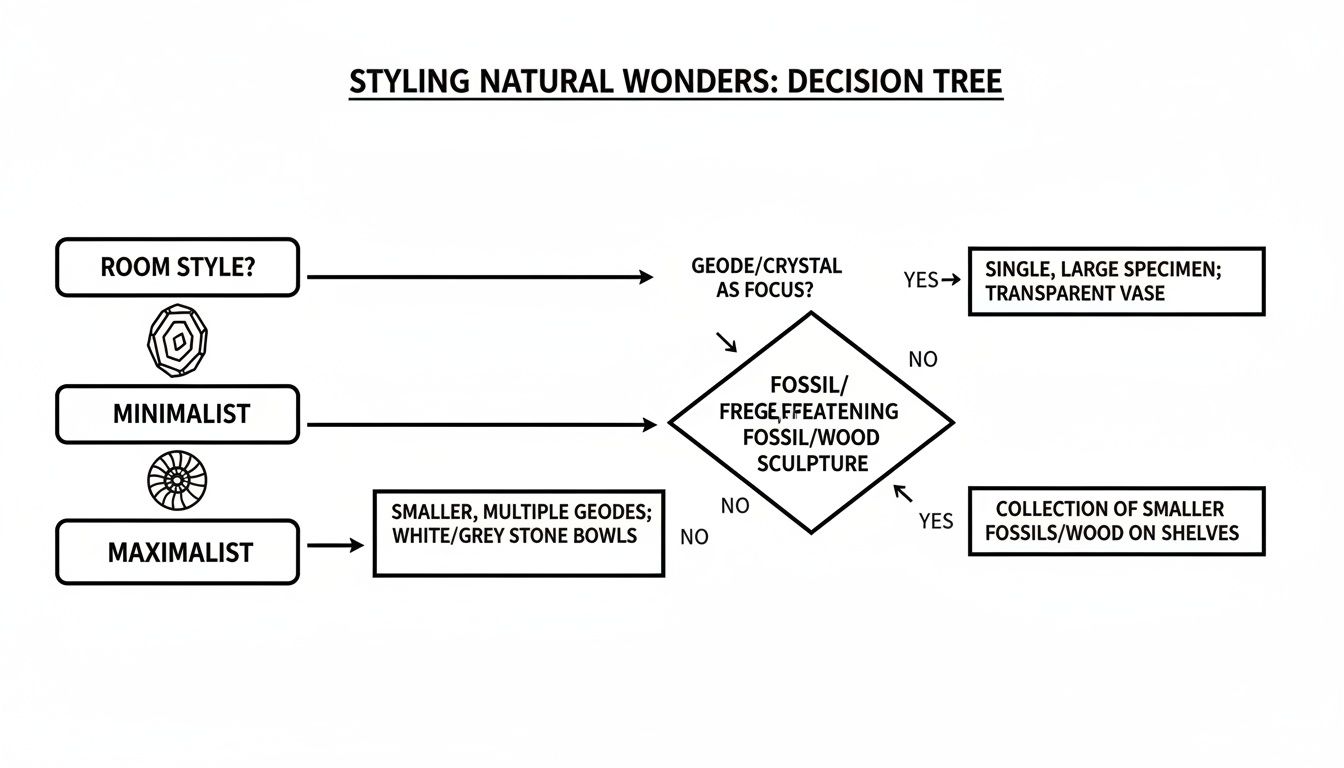
This decision tree offers a quick visual guide for styling natural wonders, whether your home is minimalist and clean or maximalist and eclectic.
As you can see, no matter your personal aesthetic, there is a natural specimen that can serve as either a bold focal point or a quiet, grounding element in your space.
To help you feel more prepared, this checklist breaks down the key value drivers and potential pitfalls for different types of specimens.
Evaluating Your One-of-a-Kind Accent: A Buyer's Checklist
Specimen Type
Primary Value Drivers
Key Authenticity Indicators
Common Pitfalls to Avoid
Crystals & Minerals
Clarity, color saturation, crystal size, lack of damage, aesthetic formation (e.g., tourmaline, fluorite).
Natural growth patterns, specific mineral inclusions, sharp crystal faces, and verifiable origin.
Dyed stones (e.g., agate), lab-grown crystals sold as natural, repaired fractures hidden with resin.
Fossils
Completeness, preservation of fine details (e.g., ammonite sutures), species rarity, and professional preparation.
Natural matrix surrounding the fossil, authentic bone texture and color, lack of composite parts.
"Frankenstein" fossils made from multiple unrelated fragments, heavy restoration, casts sold as originals.
Meteorites
Type (Pallasite, Muonionalusta), weight, presence of fusion crust, documented provenance.
Widmanstätten patterns in etched iron meteorites, chondrules in stony types, high density.
"Meteor-wrongs" (terrestrial rocks like slag or hematite), faked fusion crusts, undocumented origins.
This table is a starting point, but keeping these factors in mind will empower you to ask the right questions and evaluate a piece with a more critical eye.
Investing in Exclusivity
The market for these unique, story-rich pieces is expanding, driven by a collective desire for objects that feel personal and real. The luxury home decor sector is projected to hit $16.58 billion by 2025, fueled by discerning buyers who prefer rare, artisanal items over mass-produced goods. High-net-worth individuals, holding a collective wealth of over $86 trillion, are increasingly focused on home enhancements that tell a unique story.
True value lies not just in what a piece is, but where it has been. A reputable gallery doesn’t just sell an object; it provides a verified history, connecting you to the specimen’s journey from the mine, field, or sky to your collection.
Choosing to invest in natural art is a significant, personal decision. To see a curated selection of authenticated specimens, you can explore the collections available at Astro West and find a piece with a story that resonates with you. Arming yourself with knowledge is the best way to ensure your new accent is not only beautiful but a sound addition to your home.
Caring for Your Piece of Natural History
When you acquire a piece of Earth's—or space's—history, you become its steward. These are not mass-produced items that can be easily replaced. Each one demands mindful care to preserve its beauty and integrity for generations, protecting both its aesthetic appeal and its long-term value.
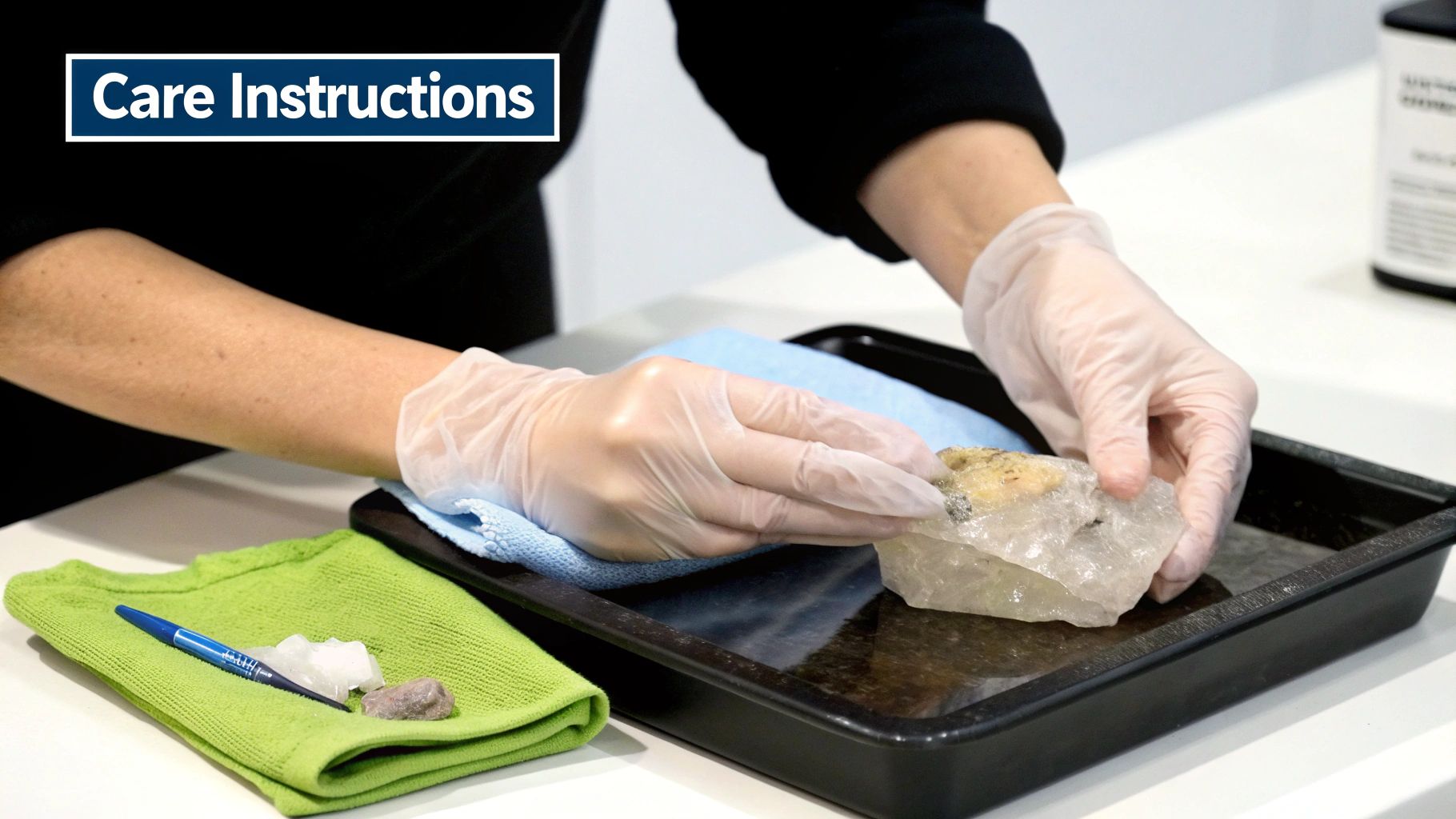
The first rule of conservation is that one cleaning method does not fit all. Every specimen has a unique composition that dictates how it should be handled and cleaned.
A delicate pyrite cluster, for instance, with its intricate cubic crystals, should never be submerged in water. Instead, a soft-bristled brush or a gentle puff of compressed air is all that is needed to clear dust from its crevices and preserve its natural luster without risking damage. In contrast, a hard, non-porous polished stone like an agate slab or a petrified wood round is more resilient. A simple wipe with a soft, lint-free cloth lightly dampened with distilled water is usually sufficient to restore its beautiful sheen.
Environmental Factors and Long-Term Preservation
Beyond cleaning, the environment where you display your piece plays a crucial role in its preservation. Think of it as creating a stable micro-climate for your natural art. This is especially true for specimens sensitive to light and humidity.
Photodegradation can permanently alter the vibrant colors of certain crystals. To keep them safe:
Light-Sensitive Minerals: Keep pieces like fluorite and celestite away from windows that receive intense, direct sunlight. Ambient light is fine, but constant sun exposure can cause fading.
Stable Temperatures: Avoid placing any natural accent near heat sources like fireplaces, vents, or radiators. Drastic temperature fluctuations can cause internal fractures, even in seemingly solid stones.
Humidity is another silent threat, particularly for certain fossils and iron-based meteorites. High humidity can trigger pyrite disease in some fossils, a condition where pyrite inclusions oxidize, causing the specimen to crumble. Similarly, iron meteorites will rust if kept in a damp, humid environment.
A curator's secret is to treat your specimen like a museum piece, because that's what it is. Stable conditions—consistent light, temperature, and humidity—are the most effective tools for ensuring your piece of natural history outlasts us all.
Special Considerations for Unique Materials
Some materials demand an even more specific touch. Fossilized bone, for example, should always be handled with clean, dry hands to prevent oils from staining its porous surface. When cleaning fossils, always begin with the least invasive method—usually a dry, soft brush will suffice.
For truly raw and friable specimens, like a delicate desert rose formation, handling should be kept to a minimum. These pieces are best kept under a glass cloche or inside a display case to protect them from both dust and accidental contact. By understanding the unique needs of your piece, you transition from owner to guardian, safeguarding a remarkable story written in stone for the future.
Beyond Decor: The Investment Value of Natural Art
While the aesthetic beauty of a fossil or mineral specimen is its initial allure, the conversation is shifting. These pieces are increasingly viewed not just as decoration, but as astute investments. These one-of-a-kind home decor accents are more than beautiful objects—they are tangible assets that can appreciate in value, attracting the attention of serious collectors and luxury buyers alike.
The driver behind this trend is the fundamental economics of rarity. There is a finite supply of high-quality tourmaline, museum-grade fossils, and authenticated meteorites. Unlike manufactured goods, you cannot simply produce more. As mines are depleted and fossil sites become protected, specimens already in circulation become increasingly precious, creating natural upward pressure on their value.
Market Dynamics and Appreciating Assets
This phenomenon is supported by market data. The luxury home decor market is booming, projected to jump from $151.82 billion in 2025 to an estimated $238.98 billion by 2034. This growth is fueled by a cultural shift toward authenticity. Affluent buyers—72% of whom state they prioritize authenticity—are actively seeking meaningful, exclusive pieces for their homes.
When curating a personal sanctuary, the allure of a unique, natural artifact far outweighs that of a factory-made item. You can discover more about these market trends and their implications in recent industry analyses, but the conclusion is clear: people desire items with history and soul.
Owning a museum-quality natural specimen is like holding a piece of a non-renewable resource. Its value is tied not to a brand name, but to the unrepeatable history of our planet and solar system.
This is not just theory; it is observable in the market. Certain types of fossils have shown steady annual appreciation for years. Rare meteorites can experience significant value spikes as new finds dwindle. A prime example is the pallasite meteorite, whose slices containing gem-quality olivine crystals are intensely sought after by collectors.
A large, beautifully prepared pallasite meteorite slice from Seymchan is more than a mesmerizing piece of cosmic art. For the right investor, it is a holding in a diversified asset portfolio.
Choosing an Asset with a Story
Ultimately, investing in natural art is a unique proposition. It offers the opportunity to own something visually stunning that also possesses quantifiable rarity and a story that spans eons. This dual value—both aesthetic and financial—makes a compelling case for choosing a piece of natural history for your space. You're not just decorating; you're transforming your living space into a gallery of appreciating assets that bring daily joy and long-term worth.
Your Questions on Natural Decor Accents Answered
Stepping into the world of natural art and collectibles can bring up a few questions. To help you feel completely confident as you begin your curatorial journey, we’ve compiled straightforward answers to the questions we hear most often from new collectors and design enthusiasts.
Are Natural Accents Durable for Homes with Children or Pets?
Many natural specimens are incredibly resilient, especially with mindful placement. Pieces like agate, petrified wood, and most iron meteorites are very hard and can easily withstand the energy of a lively home.
The key is smart positioning. Place them on sturdy consoles, mantels, or pedestals where they can be admired but are not in a direct path of activity.
For more delicate pieces with fine crystal structures, such as a fragile apophyllite cluster, it is wise to place them inside a display cabinet or on a high, secure shelf. A home office or formal living area is often an ideal spot to keep them safe while allowing everyone to enjoy their intricate beauty.
How Do I Know if a Piece Is Genuinely One of a Kind?
True one of a kind home decor accents are guaranteed by nature itself—no two mineral crystals, fossils, or meteorites are ever identical. Authenticity, however, is confirmed when a reputable dealer provides provenance, which is the documented history of the item.
A gallery like Astro West vets every piece, providing detailed information on its origin, geological context, and any preparation work. True natural specimens have unique variations, inclusion patterns, and structural quirks that mass-produced replicas simply cannot imitate.
These natural "fingerprints" are the ultimate proof of authenticity. They tell the story of the piece's formation millions of years ago, a story that is impossible to duplicate.
Can I Use Large Mineral Specimens in a Smaller Space?
Absolutely. In fact, a single, dramatic statement piece often has a much greater impact in a small room than an assortment of smaller decorations. It can anchor the entire design without creating clutter.
The trick is to choose something with verticality, like a tall, slender geode on a custom stand or a sculptural mineral on a pedestal. This technique draws the eye upward, creating an illusion of height and spaciousness. Placing it in a well-lit corner can turn an overlooked spot into a source of functional art that elevates the entire room.
At Astro West, we believe every specimen has a unique story waiting to be told. Explore our curated collections and discover a genuine piece of natural history that speaks to you.