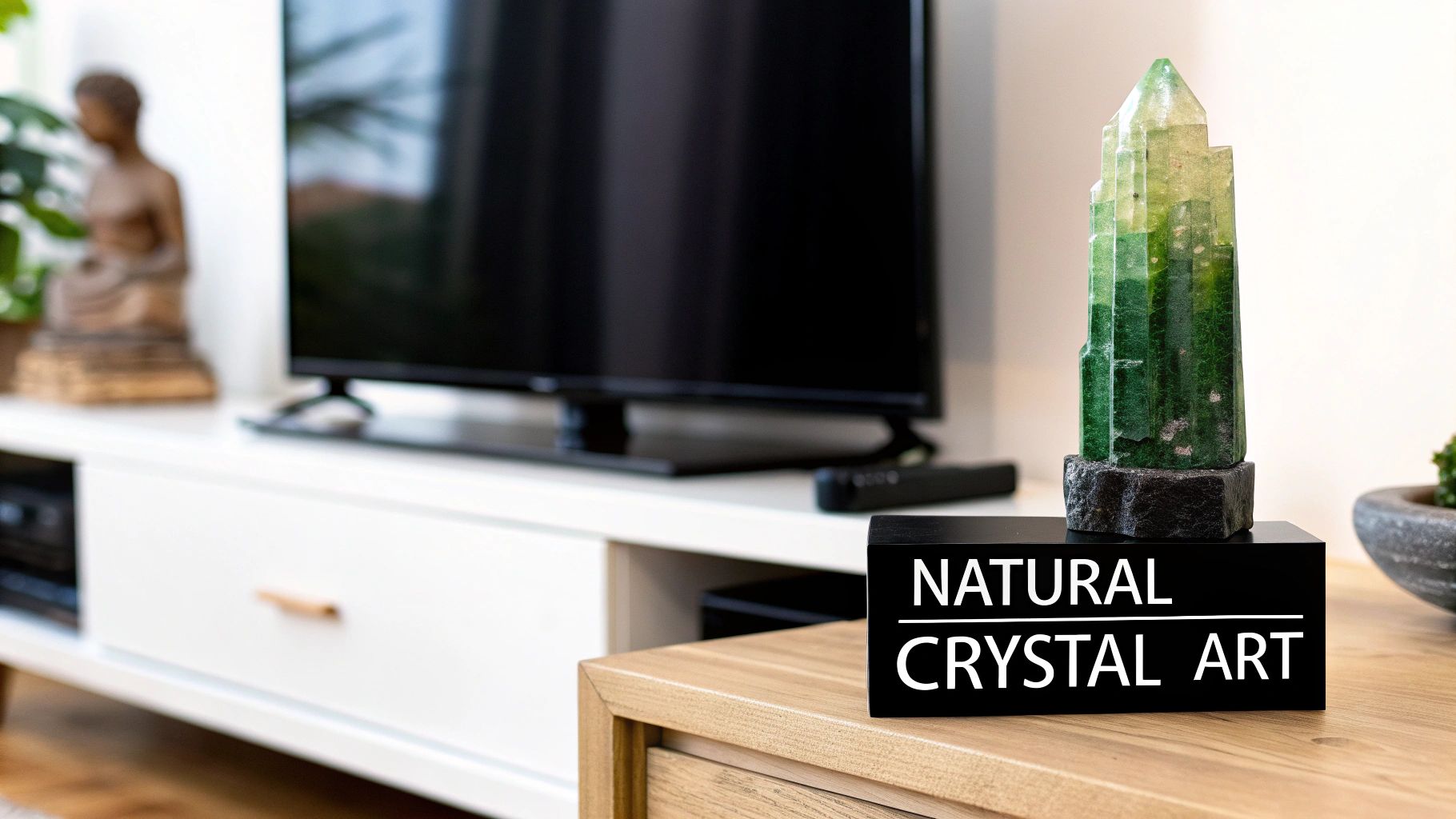
Elevating Your Space: A Guide to the Natural Crystal Centerpiece
A natural crystal centerpiece is so much more than just a decoration. It's a curated piece of geologic art, a slice of natural history brought into your home to become the undeniable focal point of a room. Unlike a floral arrangement that wilts and fades, a stunning mineral like sculptural Tourmaline or a complex, multi-hued Fluorite cluster is a timeless design statement and a fascinating conversation starter.
The Art of the Natural Crystal Centerpiece
When you decide to create a crystal centerpiece, you're moving beyond fleeting décor trends and investing in something with enduring beauty and long-term value. It’s about bringing millions of years of the Earth’s story into your space and transforming your home into a personal gallery.
The right specimen doesn’t just fill a space; it completely redefines it. It adds a layer of depth and sophistication that mass-produced items simply can't touch. This guide is here to walk you through creating a display that feels both intentional and deeply personal, whether you're an interior designer hunting for a unique anchor piece or a new collector drawn to the allure of fine minerals.
Beyond Decoration to Curation
The first step is a mental one: stop thinking of it as "decoration" and start seeing it as "curation." A well-designed arrangement tells a story through the interplay of color, texture, and form.
Imagine, for example, the sharp, metallic luster of a Pyrite cube set against the soft, ethereal glow of an Apophyllite cluster. That kind of thoughtful pairing creates a dynamic contrast that elevates both specimens. It’s not just two rocks on a table; it's a curated vignette, a piece of natural art.
This approach means you're considering:
Aesthetic Harmony: How do the shapes and colors of different minerals play off each other and your surrounding décor?
Geologic Narrative: What are the unique origins and formation processes that make each piece a one-of-a-kind natural artifact?
Personal Connection: Which pieces resonate with your individual style and story?
At Astro West, we believe every mineral has a story to tell. A centerpiece isn't just about visual appeal; it's about curating a tangible piece of natural history that brings wonder and character into your living space.
Why Choose a Mineral Centerpiece?
A natural crystal centerpiece offers a unique blend of art and science that you just don't get with traditional décor. A stunning piece of Vanadinite, with its fiery red, geometric crystals, is not just a beautiful object—it's a hands-on lesson in crystallography and geology.
This dual nature makes it a compelling focal point that sparks curiosity and conversation. It’s an opportunity to own something truly ancient, sculptural, and formed entirely by nature itself.
Selecting the Right Minerals for Your Vision
Creating a truly captivating centerpiece isn't about just gathering pretty rocks; it's about becoming the designer of your own miniature geological landscape. The real secret is to start with a single, commanding specimen that will anchor your entire display.
Think of this as choosing your "hero" mineral. This piece needs enough visual weight and character to stand on its own, drawing the eye and setting the tone for the whole arrangement. A dramatic, dark Schorl Tourmaline from the Erongo Mountains, with its powerful striations and bold form, makes an incredible anchor for a modern, sophisticated space.
On the other hand, a vibrant, gem-quality Fluorite cluster with interlocking cubic crystals offers a completely different vibe—one of color, complexity, and light. Your hero specimen is the foundation, and every other crystal you choose will play off of it.
Building Harmony with Complementary Crystals
Once your hero is in place, it’s time to find complementary minerals that add layers of texture, color, and form. The goal here is harmony, not competition. These supporting pieces should enhance the main specimen without trying to steal the spotlight.
For instance, if your hero is a dark and opaque Tourmaline, you might introduce a cluster of clear, sparkling Apophyllite. The contrast between the dark, solid form and the light, ethereal crystals creates a beautiful visual dialogue. Likewise, a smooth, polished Calcite freeform can add a soft, organic curve that balances the sharp, geometric lines of other minerals.
This process is all about playing with a few key elements:
Texture: Pair rough, natural surfaces with polished, smooth ones. The metallic luster of Pyrite, for example, is stunning next to the fibrous, silky sheen of Selenite.
Color Palette: You can create a monochromatic look using different shades of the same color—like various green tones of Fluorite and Malachite—or go for a high-contrast display with complementary colors.
Form and Shape: Mix sharp, angular crystals with rounded, botryoidal (grape-like) formations to create a more dynamic and natural-looking scene. A perfect example is combining the strong, prismatic form of a large Arkansas Quartz Cluster with the soft, rolling shapes of Smithsonite.
Understanding the Market and Making Informed Choices
The growing appreciation for natural art in home décor has had a huge impact on the market for fine minerals and fossils. Interior designers and collectors are increasingly seeking out authentic, high-quality natural objects that serve as both investments and unique design statements.
This shift underscores a desire for pieces with both scientific authenticity and timeless visual appeal, moving beyond trends to incorporate the Earth's history into luxury design. When selecting a piece, consider not only its beauty but also its rarity, origin, and the story it tells.
A successful centerpiece is a balanced ecosystem of minerals. It’s not just about what each piece looks like on its own, but how they interact—how their unique geological stories come together to create a single, cohesive narrative on your table.
To help you get started with the curation process, I've put together a quick guide to some popular choices and the roles they play best.
Specimen Selection Guide for Your Centerpiece
This table breaks down how different crystals can contribute to your arrangement, based on their look, shape, and overall impact.
Crystal Type
Primary Aesthetic
Common Forms
Best Use in Centerpiece
Tourmaline
Sculptural, Striated
Prismatic, terminated crystals
Hero Specimen: Provides strong vertical lines and a powerful focal point.
Fluorite
Geometric, Colorful
Cubic, octahedral clusters
Hero or Accent: Adds vibrant color and intricate, architectural structure.
Apophyllite
Ethereal, Sparkling
Pyramidal crystals, drusy clusters
Accent Piece: Introduces a delicate texture and light-reflecting sparkle.
Calcite
Soft, Organic
Rhombohedral, dogtooth, freeform
Balancing Element: Offers smooth surfaces and softer forms to contrast with angular crystals.
By carefully selecting a hero specimen and then thoughtfully building around it with complementary pieces, you can design a natural crystal centerpiece that is not only visually stunning but also rich with geological history and personal meaning. Each mineral contributes its unique character, transforming a simple collection into a curated work of art.
Designing Your Centerpiece Arrangement
You’ve picked your crystals, and now the real artistry begins. This is where you move from being a collector to a sculptor, creating a miniature landscape right in your home. The goal isn't just to place stones on a surface; it's to guide the eye through the piece, creating a sense of balance and visual interest from every single angle.
One of the first big decisions is whether you’re drawn to a symmetrical or asymmetrical layout. A symmetrical design, with a big, bold hero specimen right in the middle, flanked by smaller matching crystals, gives off a feeling of formality and classic elegance. This approach works perfectly on a dining table or a mantelpiece—anywhere you want a sense of order and calm.
On the other hand, an asymmetrical design feels more organic, more dynamic. It often follows the "rule of thirds," where you place your main focal point a little off-center and balance it with smaller groups of crystals or even just empty space. I find this works wonders on console tables or sideboards because it invites you to walk around the piece and discover all its little details.
Establishing Hierarchy and Visual Flow
A great centerpiece has a clear visual hierarchy. Think of it like a cast of characters: you have your main star—the hero specimen—and everyone else is a supporting actor. Their job is to make the star look good.
You can create this hierarchy in a few simple ways:
Elevation: Pop your hero crystal on a small stand or riser. Just that little bit of height immediately gives it prominence.
Scale: Make sure your supporting crystals are noticeably smaller. This creates an obvious and pleasing difference in size.
Color Contrast: A fiery, bright hero piece, like a Vanadinite, is naturally going to command more attention than crystals in softer, more neutral tones.
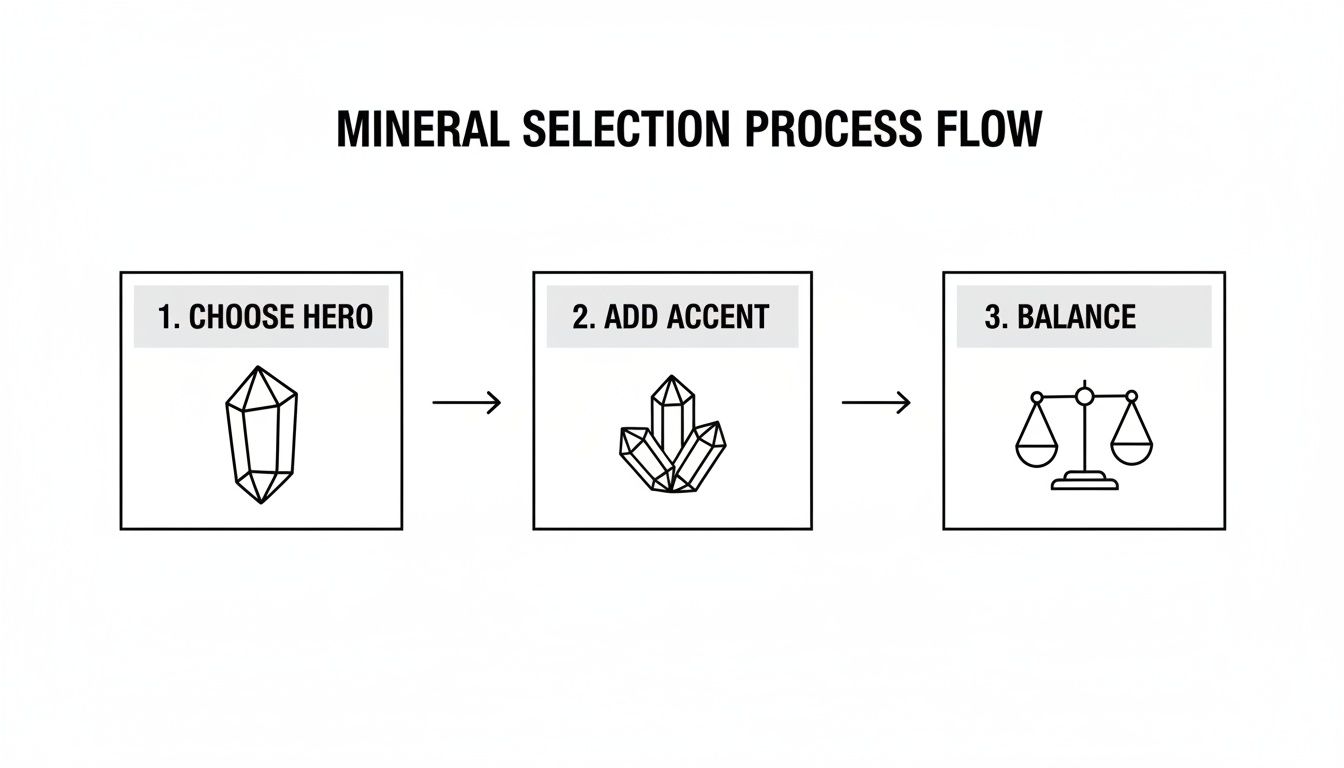
This simple flow helps you visualize how to build a balanced, compelling composition from the ground up.
As the infographic shows, it all starts with a strong anchor piece. From there, you add complementary accents until you strike that perfect visual equilibrium.
The Foundation: Selecting the Right Base
The base you choose is so much more than just a platform; it's a critical piece of the design that frames the entire arrangement. A rustic, polished slab of petrified wood can ground an earthy collection of Tourmaline and Quartz. A sleek, custom-made metal stand, however, can give a sculptural Fluorite a modern, gallery-like feel.
Even a simple, elegant tray can do the trick. A beautiful carved agate bowl, for example, can act as both a container and a complementary mineral element. Its concentric bands add another layer of natural pattern to the whole display.
Don’t underestimate the power of negative space. The empty areas around your crystals are just as important as the crystals themselves. They give each specimen room to breathe, preventing the arrangement from looking cluttered and allowing the unique form of each piece to be fully appreciated.
As you plan the visual impact of your centerpiece, you might also want to explore stunning glass cabinet display ideas to create a truly cohesive and captivating look in your home. By layering specimens to create depth, using a thoughtful base, and respecting the role of negative space, you’ll transform a group of minerals into a curated work of art.
Using Light to Showcase Your Crystals
Strategic lighting is the secret ingredient that takes a beautiful crystal centerpiece and turns it into a showstopper. The right light doesn’t just make your minerals visible; it interacts with them, unlocking hidden colors, internal structures, and textures you might otherwise miss. Without it, even the most incredible specimen is only showing you a fraction of what it can do.
Proper lighting can reveal the ghostly "phantoms" inside a Quartz point, make a Pyrite cluster erupt with metallic fire, or deepen the fiery red of a Vanadinite specimen. It’s the difference between looking at a crystal and truly experiencing it. The trick is to match your light source to the unique personality of your minerals.
Natural vs. Artificial Light
Never underestimate the power of daylight. Placing your centerpiece near a window where it can catch the morning or late afternoon sun will bring out a natural vibrancy that’s hard to replicate. You’ll notice how the look of your arrangement shifts as the light changes throughout the day.
When the sun goes down, or for rooms that don't get much natural light, artificial lighting becomes your best friend. A simple, focused spotlight from above can cast dramatic shadows and highlight the topography of a complex cluster. For translucent crystals like Fluorite or Calcite, backlighting can create a stunning, ethereal glow that makes it seem like the stone is lit from within.
The Power of Warmth and Focus
The type of bulb you use makes a huge difference. Soft, warm-toned LED lights are perfect because they create an inviting atmosphere without the risk of heat damage that older halogen bulbs posed.
Here are a few techniques we use all the time:
Spotlighting: Use a small, adjustable gallery-style light to zero in on your "hero" specimen. This immediately tells the eye where to look and establishes a strong focal point.
Uplighting: Place a small light source underneath a translucent crystal to make it glow. This works wonders on Selenite or certain types of Calcite.
Ambient Lighting: For a softer look, use nearby table lamps to cast a gentle, diffused glow over the entire arrangement. You could even integrate the light source directly into the design. A handcrafted natural Quartz point candle holder blends functional candlelight with the centerpiece itself, creating a warm, dynamic flicker that plays beautifully across the crystal facets.
A well-lit centerpiece does more than just decorate a table—it sets a mood. The interplay between light and mineral can turn a simple dinner into something magical, creating an atmosphere of sophistication and wonder.
This appreciation for integrating natural art into our daily lives is growing. The market for crystal tableware, a close cousin to decorative centerpieces, was valued at USD 18.12 billion and is projected to hit USD 28.3 billion by 2035. You can see the full report on the growing crystal tableware market on MarketResearchFuture.com. This trend shows just how much people value the unique story that a mineral specimen brings into a space, turning a simple table into a curated gallery.
Caring for Your Natural Mineral Collection
Think of your natural crystal centerpiece as an investment in geological art. With the right care, it’s going to be a stunning focal point in your home for decades. But unlike mass-produced decor, every mineral is unique and has its own rulebook for handling, cleaning, and preservation. Getting to know those individual needs is the secret to protecting its beauty for the long haul.
One of the first questions we always get is about cleaning. While it’s tempting to give everything a quick rinse, that can be a disastrous mistake for certain minerals. Some durable crystals, like most types of Quartz and Tourmaline, can handle a gentle wash with lukewarm water and a soft brush just fine. Many others, however, simply cannot.
Water-Safe vs. Dry Cleaning Methods
Knowing which specimens are sensitive to water is absolutely essential. A good rule of thumb is to check if any of your minerals are soft, porous, or have a metallic composition before you even think about turning on the tap.
Water-Safe Minerals (Use with Caution): Hard, non-porous stones like Quartz, Tourmaline, and most Agates are generally okay with a light water cleaning. I always recommend using a soft-bristled brush—think makeup or artist's brush—to gently get dust out of those intricate nooks and crannies.
Water-Sensitive Minerals (Dry-Clean Only): This is a critical list to remember. Specimens like Selenite, Pyrite, and Malachite should never be put in water. Selenite can literally start to dissolve, Pyrite can rust, and Malachite can lose its beautiful polish. For these, a dry, soft brush or a can of compressed air is your best friend for dusting.
When in doubt, always start with the most gentle method: a soft, dry cloth or a light dusting with a brush is the safest first step for any delicate piece. If you have smaller crystals arranged in a container, like a beautiful Selenite Heart Bowl, remember the bowl itself needs care. A simple wipe with a dry cloth is all it takes to protect its delicate, fibrous structure.
Protecting your investment goes beyond just cleaning. Proper storage and handling are just as important for preserving the condition of your collection. To ensure the longevity and pristine condition of your natural mineral collection, consider exploring best practices for protecting valuable collections.
Protecting Against Environmental Factors
Sunlight can be a silent threat to some of your most colorful minerals. Just like it fades a photograph, prolonged direct sunlight can bleach the vibrant hues right out of specimens like Fluorite and Rose Quartz. To keep their colors rich, try placing your centerpiece where it gets plenty of indirect natural light or is primarily lit by softer, artificial sources.
Bringing these natural wonders into our homes is a tradition that connects us to the earth's history. From ancient royal banquets to modern art galleries, natural crystal centerpieces have always symbolized enduring elegance. Following these simple care tips ensures your piece will remain a brilliant part of this timeless tradition for years to come.
Common Questions from Collectors
Whether you’re just starting your journey into the world of fine minerals or you're a seasoned collector, a few questions always pop up. Here are some of the most common inquiries we get, with straightforward answers to help you curate your natural crystal centerpiece with confidence.
How Can I Be Sure the Crystals I Buy Are Authentic and Ethically Sourced?
This is probably the most important question you can ask, and the answer comes down to trust and transparency. Authenticity and responsible sourcing are the foundations of a truly great collection.
The best way to guarantee you're getting the real deal is to buy from an established, reputable gallery like Astro West. We’ve spent years building direct relationships with miners and geological experts around the globe. This isn't just about business—it's about knowing the story behind each stone.
We provide provenance for our most significant pieces and stand behind the authenticity of every single specimen we offer. A good rule of thumb is to always work with suppliers who are open about their sourcing practices. If a deal seems too good to be true, it probably is. Those unbelievable prices often hide misidentified stones, artificially treated minerals, or unethically sourced crystals.
I’m on a Budget. What’s the Best Way to Start?
You don’t need a massive budget to create a stunning centerpiece. The secret is to think quality over quantity.
Instead of buying several small, low-grade pieces, focus your resources on a single, high-quality "hero" crystal that you absolutely love. It doesn't have to be huge. A unique Calcite formation with beautiful geometry or a sparkling Apophyllite cluster can command a room and serve as an incredible focal point.
From there, you can slowly and thoughtfully add smaller, complementary stones over time as your budget allows. One exceptional specimen will always have more visual impact and bring you more joy than a cluttered arrangement of mediocre pieces.
How Do I Make a Crystal Centerpiece Work with My Modern or Minimalist Décor?
This is a great question because the answer is simpler than you might think. Natural crystals are incredibly versatile and can look absolutely stunning in modern and minimalist homes. The trick is all about careful selection and a "less is more" approach.
For a minimalist aesthetic, think of the crystal as a piece of natural sculpture. Choose a single, large specimen with clean, dramatic lines and a simple color palette. A towering Selenite skyscraper or a moody, dark Smoky Quartz cluster adds incredible organic texture without creating clutter.
The key is to let the mineral's natural form be the star. Place it on a simple, unadorned base. The raw, organic texture of the crystal creates a beautiful and necessary contrast to the sleek surfaces often found in modern design, adding warmth and a powerful point of interest. A well-chosen natural crystal centerpiece doesn't just fit into a minimalist space—it elevates it.
At Astro West, we believe every mineral, fossil, and meteorite tells a story that began millions of years ago. We invite you to explore our curated collection to find the perfect, authentic piece to start your own.