A Guide to Fossil Wood Tableware: Art Millions of Years in the Making
Imagine holding a piece of a forest that was alive 20 million years ago. That's the feeling you get with fossil wood tableware. This isn't just a dish or a bowl; it's a genuine artifact from Earth's deep past, transformed by nature into a piece of functional, sculptural art. Each one is a tangible connection to a world that existed long before us.
From Ancient Forest to Modern Art
At its heart, fossil wood tableware comes from a remarkable material called petrified wood. But "petrified" doesn't just mean the wood turned to stone—the process is far more intricate. Think of it as nature performing a perfect, microscopic replacement over an impossibly long time. The journey from organic wood to mineral art is a story written by geology itself.
It all starts when a tree is rapidly buried, often by volcanic ash or sediment. This event cuts it off from the oxygen that would normally cause it to decay. Over millions of years, mineral-rich groundwater slowly seeps through the buried log. One by one, these minerals—usually forms of silica like quartz or chalcedony—begin to replace the original organic wood cells.
This meticulous process is known as permineralization. It’s not just a coating or an infusion; it’s a cell-by-cell substitution that perfectly preserves the tree’s original structure.
The result is a fossil that is a near-perfect replica of the ancient wood, complete with its original growth rings, bark texture, and cellular details, but now composed entirely of durable, beautiful stone.
More Than Just a Rock
It’s important to understand that fossil wood isn't simply a rock that happens to look like wood. It is a true fossil, a natural time capsule that captures the essence of an ancient tree. This unique origin story gives every piece of fossil wood tableware its own identity. No two pieces are ever alike, because the colors and patterns are determined by the specific minerals present during fossilization.
For example:
Iron can create deep reds, warm browns, and sunny yellows.
Manganese often results in shades of pink, orange, and even black.
Copper and cobalt can produce rare and striking blues and greens.
This geological artistry turns a simple natural object into a complex and storied piece of decor. The same forces that create a stunning, polished piece like this hand-carved petrified wood sphere from Arizona are at play in every bowl, plate, and platter. At Astro West, we curate these exceptional objects, celebrating the connection between modern luxury and deep geological time, ensuring each piece is valued not just for its beauty, but for its incredible history.
From Ancient Forest to Elegant Table
Every piece of fossil wood tableware starts with an unbelievable journey—one that spans millions of years and transforms organic wood into polished stone. This isn't something that happens to just any fallen tree; it's the result of a precise and incredibly rare sequence of natural events. For wood to even have a chance, it first has to escape the normal cycle of decay.
The process kicks off when a tree is buried fast. Think of a sudden, dramatic event like a volcanic eruption blanketing the forest in ash, or a massive landslide entombing it in mud. This rapid burial is the make-or-break moment. It seals the wood off from oxygen, starving the bacteria and fungi that would otherwise cause it to rot away.
With decay officially off the table, the stage is set for a much slower, more magical transformation.
The Magic of Permineralization
Protected from the elements, the buried wood becomes a canvas for a process called permineralization. Over thousands and millions of years, groundwater loaded with dissolved minerals—usually silica—starts to seep through the log. This mineral-rich water works its way into the wood’s porous structure, filling every microscopic cell wall and open space.
You can think of it as nature’s most patient art project. As the water flows, these minerals slowly drop out of the solution and begin to crystallize. Bit by bit, tiny crystal by tiny crystal, the original organic material of the wood is replaced. The process is so gradual and precise that it preserves the tree's original structure with jaw-dropping accuracy.
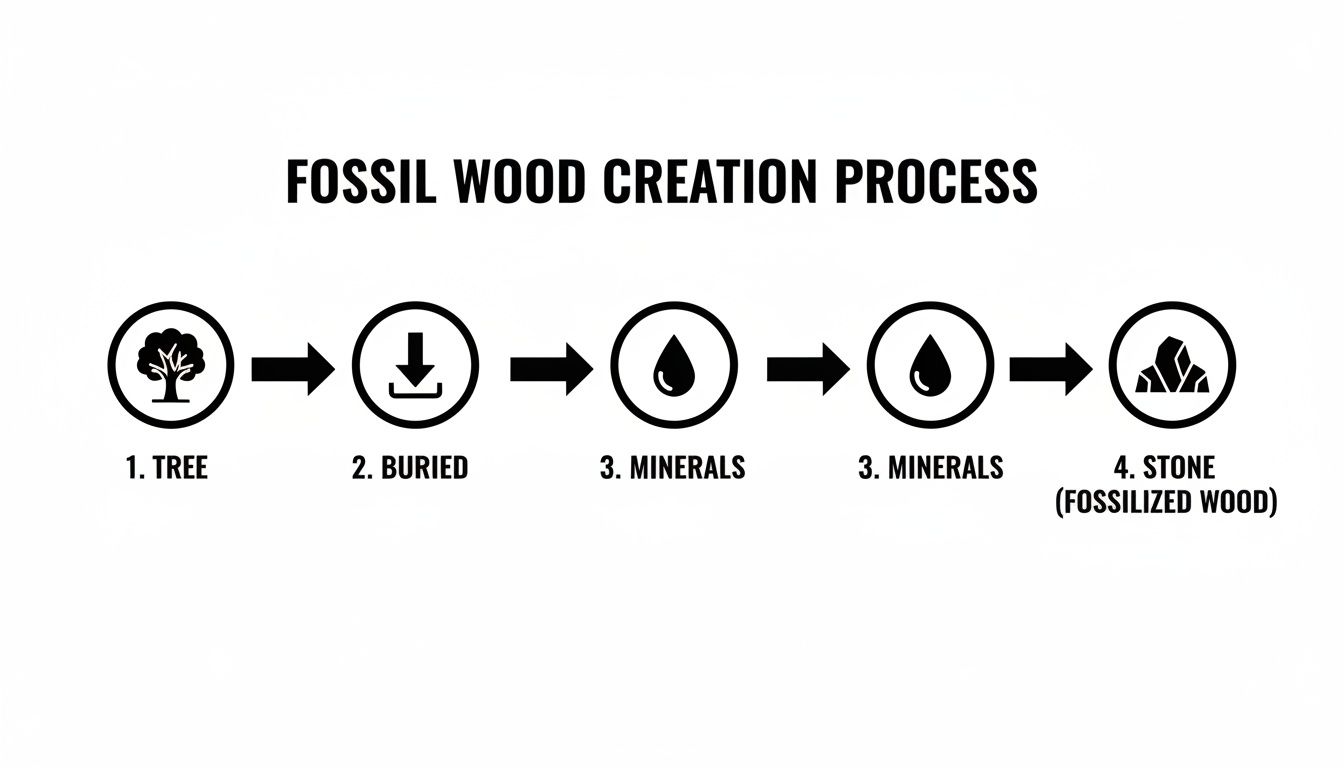
This flowchart gives you a visual of that multi-million-year journey, from living tree to fossilized stone.
As you can see, it all comes down to two key steps: rapid burial to stop decay, followed by a long, slow period of mineral replacement.
What’s left isn’t wood infused with stone—it’s a perfect stone replica of the original tree. Every detail, from the delicate grain to the distinct growth rings, is captured forever in a durable, beautiful mineral form.
The final result is a material that’s both a fossil and a gemstone. It has the soul of an ancient tree but the strength of quartz. The intricate patterns you see in a finished piece, like this stunning petrified wood slab from Arizona, aren't just pretty designs—they are the tree’s actual growth rings, immortalized in stone.
Global Hotspots for Geologic Art
While you can find petrified wood all over the world, only a handful of locations have the specific geological recipe to produce specimens of exceptional quality and color. These hotspots almost always share a history of intense volcanic activity, which provides the silica-rich ash needed for preservation.
Indonesia, in particular, is a powerhouse. The country’s unique geology—a product of tectonic collisions that created volcanic ash-rich soils and anaerobic swamps—was the perfect environment for preserving ancient forests. Deposits from 20 million years ago make up a significant portion of the world's known high-quality reserves. The cellular detail is so perfect that many samples show associations with marine mollusks, giving scientists a clear window into ancient Miocene ecosystems.
This incredible rarity and specific geological history are what make high-quality fossil wood tableware so special. Each piece is a testament to a specific time and place in Earth’s past—a tangible connection to an ancient world, brought right into your home.
Identifying High-Quality Fossil Wood
When you decide to bring a piece of prehistoric art into your home, you want to be sure you're choosing a genuine, high-quality artifact. Learning to distinguish authentic fossil wood tableware from lesser-quality items or outright imitations is actually pretty straightforward once you know what to look for. The key differences are things you can see and feel—the results of millions of years of natural craftsmanship.
The first and most immediate test? Just pick it up. A genuine piece of fossil wood should feel substantial, like solid stone. The permineralization process swaps out lightweight organic wood for dense silica, so a real bowl or plate will have a surprising heft that speaks directly to its geological origins.
Visual Clues of Authenticity
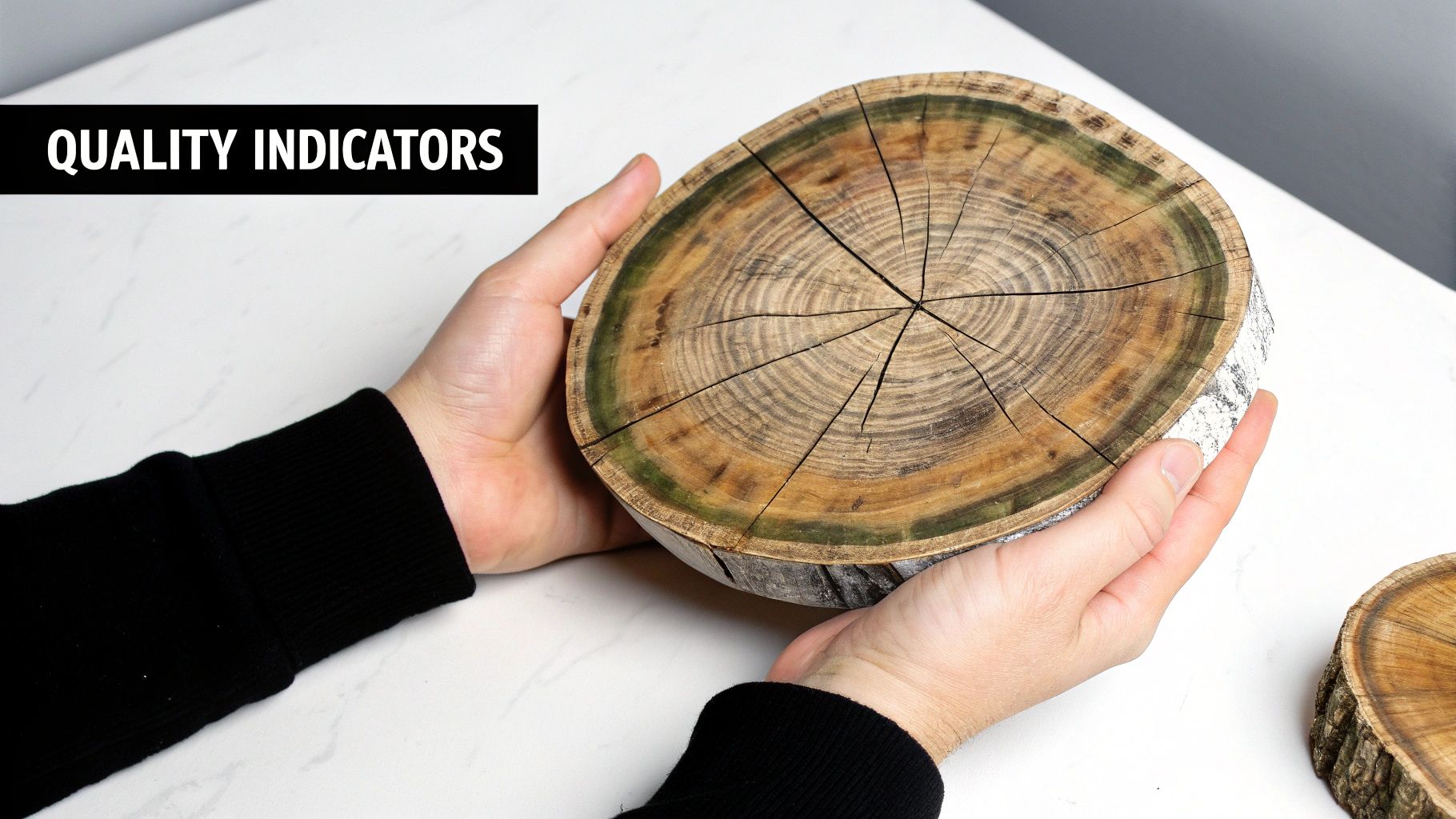
Beyond its weight, the visual details tell the most compelling story. A top-tier specimen will show off intricate, clearly defined wood grain patterns. You should be able to trace the growth rings, see the cellular structures, and even make out the textures of the original bark, all perfectly preserved in stone. This level of detail is the hallmark of slow, complete mineralization.
Another crucial indicator is the polish. Expert artisans bring out the fossil’s natural beauty with a deep, lustrous finish that feels smooth and cool to the touch. This high-gloss surface doesn't just protect the piece; it highlights the depth of its colors and the complexity of its internal patterns. A dull or uneven polish might suggest lower-quality material or less-skilled craftsmanship.
The Science Behind the Sparkle
The durability and color of fossil wood are directly tied to the specific minerals that formed it. These two factors are critical when you're assessing quality.
Hardness: Properly silicified wood has a hardness of around 7 on the Mohs scale, making it just as durable as quartz. This inherent strength ensures your piece is resistant to scratches and will last for generations. If an object feels soft or scratches easily, it's likely not genuine fossil wood.
Coloration: Those stunning colors come from trace minerals that were present in the groundwater during fossilization. Iron oxides create rich reds, yellows, and browns, while manganese can yield deep blacks and soft pinks. Vibrant, well-defined colors are a sign of a mineral-rich environment and are highly prized by collectors.
A truly exceptional piece brings all these elements together: significant weight, clear botanical detail, a flawless polish, impressive hardness, and rich, natural coloration. It’s a harmonious blend of geological history and artistic presentation.
Petrified wood is, at its core, the fossilized remains of ancient trees that have been transformed into stone. The market for these pieces is global, with Indonesia holding one of the largest deposits, formed around 20 million years ago during a period of intense volcanic activity. But not all petrified wood is created equal. Only a small percentage of what's found has mineralized uniformly enough to yield polish-ready slabs suitable for bowls or plates. This rarity makes high-quality pieces tangible links to prehistoric ecosystems.
To help you on your search, here's a quick checklist to spot the real deal.
Authenticity Checklist for Fossil Wood Tableware
Use this quick reference guide to spot the key features of genuine, high-quality fossil wood pieces versus imitations.
Characteristic
High-Quality Fossil Wood
Potential Imitation or Low-Quality Piece
Weight & Density
Feels heavy and dense, like stone.
Surprisingly lightweight or hollow-feeling.
Wood Grain Detail
Clear, intricate patterns; visible growth rings.
Vague, blurry, or repetitive artificial patterns.
Surface Finish
Smooth, high-gloss polish that feels cool.
Dull, uneven, or sticky-feeling surface.
Hardness
Resists scratching (around 7 on Mohs scale).
Scratches easily with a steel knife or nail.
Coloration
Rich, natural, and varied earth tones.
Colors look painted on, garish, or unnaturally uniform.
Keep these points in mind, and you'll be well-equipped to identify a piece that's truly special.
Why Sourcing Matters
Ultimately, the most reliable way to know you're acquiring a genuine, high-quality artifact is to source it from a reputable gallery. An established expert like Astro West provides that essential layer of trust and verification. We guarantee not only the authenticity and ethical provenance of each piece but also the museum-quality craftsmanship used to prepare it. By doing this, we help collectors and designers avoid the common pitfalls of the market, ensuring that every piece—from a large serving platter to a stunning decorative polished petrified wood slab—meets the absolute highest standards of quality and historical significance.
Styling Your Home with Geologic Art
Bringing fossil wood tableware into your home isn’t just about finding a spot for another pretty object. It's about treating each piece as what it truly is: a work of geologic art. These are items shaped over millions of years, and they carry that immense history with them. They can anchor a room, introduce an organic texture you can't find anywhere else, and tell a story that sparks conversation.
Think of them less as accessories and more as focal points that connect the deep, ancient past with modern living.
The beauty of fossil wood is its incredible versatility. The neutral, earthy tones and mesmerizing patterns blend effortlessly into almost any interior style, whether you’re aiming for clean minimalism or a warm, rustic-luxe vibe. The trick is to simply let the piece do the talking and allow its unique character to elevate the space around it.
Creating a Powerful Centerpiece
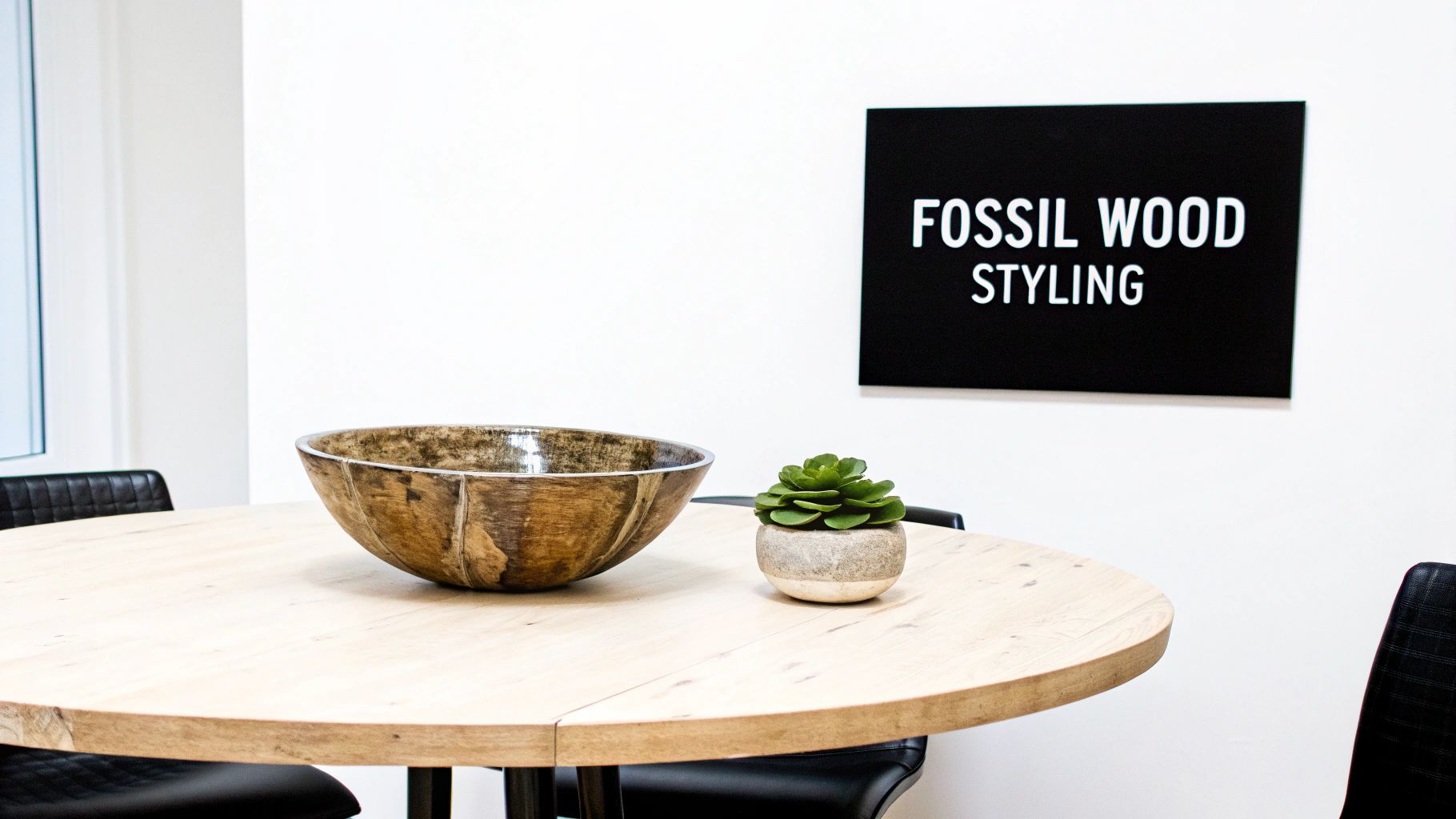
One of the best ways to show off fossil wood is to give it center stage. A large bowl or platter placed on a dining table or kitchen island instantly becomes a natural gathering point. It’s impossible to ignore. The contrast between this ancient, stone-like material and a modern wood or marble surface creates a visual tension that’s both sophisticated and incredibly grounding.
For instance, a polished piece like this stunning petrified wood bowl from Indonesia is far more than a serving dish. It’s a sculpture. Its deep, rich colors and visible growth rings offer a tangible connection to a prehistoric world, adding a layer of depth to your dining experience that manufactured decor just can't match.
Don't be afraid to experiment with how you present these pieces. For more inspiration, exploring diverse table setting ideas can help you find fresh ways to make your geologic art shine.
Functional Elegance in Everyday Spaces
Fossil wood isn't just for the dining room. It brings a touch of organic luxury to even the most functional parts of your home. Here are a few ideas to get you started:
On an Entryway Console: A petrified wood tray makes for a sophisticated catch-all for keys and mail. It sets a powerful, natural tone the moment anyone walks through your door.
As a Standalone Sculpture: Place a piece with a particularly interesting shape on a bookshelf or mantelpiece. Its heavy, substantial presence creates a beautiful textural contrast against books and other objects.
In the Living Room: A smaller bowl on a coffee table can hold decorative spheres or even just the remote controls. Left empty, it’s a piece of art in its own right, adding warmth and history to the heart of your home.
Pairing Fossil Wood with Other Materials
The final touch is creating balance. Fossil wood plays surprisingly well with a wide range of other materials, and each combination creates a completely different mood.
The goal is to create contrast that highlights the unique qualities of the fossil wood. By pairing its ancient, earthy texture with modern, refined elements, you create a look that is both timeless and contemporary.
Try thinking about these pairings:
Brushed Metals: The cool gleam of brass, bronze, or matte black steel against the warm, organic patterns of the wood creates a perfect rustic-luxe feel.
Clear Glass: Placing a fossil wood bowl next to a glass vase or on a glass table makes its solid, earthy form pop, emphasizing its weight and ancient history.
Soft Textiles: Juxtapose the hard, polished surface of the fossil wood with soft materials like linen, velvet, or wool. This interplay of textures adds a sensory depth that makes a room feel curated, comfortable, and inviting.
By thoughtfully placing and pairing your fossil wood tableware, you transform it from a simple object into a vital part of your home’s story—a beautiful and constant reminder of our planet’s incredible history.
Caring for Your Piece of Prehistory
Owning a piece of fossil wood tableware is like being the custodian of a natural artifact. It’s a material that has survived millions of years, and with just a bit of thoughtful care, its beauty will easily last for generations to come. The good news is that its transformation into solid stone makes it incredibly durable and surprisingly easy to maintain.
Fossil wood is impressively hard, typically ranking around a 7 on the Mohs scale—right up there with quartz. This gives it fantastic resistance to scratches and the wear-and-tear of daily life. Still, just like any fine mineral specimen or luxury décor, it deserves mindful handling to protect that gorgeous polished surface and its intricate details.
Simple Cleaning for an Ancient Surface
When it comes to cleaning your fossil wood, the gentlest approach is always the best one. You’ll want to steer clear of abrasive cleaners or harsh chemicals, as they can strip away the protective sealant and dull the stone’s natural luster over time.
For routine cleaning, you only need a few simple things:
A soft, non-abrasive cloth (microfiber is perfect).
Lukewarm water.
A tiny amount of mild, pH-neutral soap.
Just dampen the cloth with a little soapy water, gently wipe the surface to clear off any dust or residue, and then go over it again with a clean, damp cloth to remove any soap. Finish by drying it thoroughly with another soft cloth. This prevents water spots and brings back its beautiful sheen.
Best Practices for Long-Term Preservation
Beyond basic cleaning, a few simple habits will go a long way in protecting your investment. The main goal is to avoid sudden shocks—both physical and thermal—that could potentially compromise the material.
While incredibly strong, fossil wood is still a stone. Treat it with the same care you would give to fine china or crystal, and it will remain a stunning centerpiece for a lifetime.
Keep these key practices in mind:
Avoid Extreme Temperature Changes: Never place your piece in a dishwasher, microwave, or oven. Sudden shifts from hot to cold can cause thermal shock, which could lead to fractures.
Handle with Care: It’s durable, but a hard knock against a granite countertop or a drop onto a tile floor could still cause it to chip or break.
Use for Light or Decorative Purposes: These pieces are best used as sculptural objects or for serving dry, non-acidic foods. This helps protect the polished finish from anything that might etch it.
The market for these unique items is supported by the broader U.S. industrial minerals sector, which was valued at a massive $63.5 billion in 2022. This economic engine helps the artisans and suppliers who bring these ancient wonders to light, with premium sets seeing 15-20% annual demand growth among designers. You can get a better sense of this industry's scale in this comprehensive mineral commodity summary. Following these care instructions ensures your piece of this growing trend stays pristine.
Common Questions About Fossil Wood Tableware
When you’re thinking about bringing a piece of natural history into your home, it’s natural to have a few questions. As experts in fine geological art, we've heard them all. Here are some straightforward answers to help you feel confident as you choose the perfect piece.
Is Fossil Wood Tableware Food Safe?
This is a great question. While petrified wood is a natural stone, its suitability for direct food contact really depends on the sealant used to give it that final, beautiful polish. Most high-quality decorative pieces are sealed to protect the surface and bring out the luster, but not all of those sealants are certified as food-grade.
Because of this, we generally recommend using fossil wood tableware for decorative purposes—it makes a stunning centerpiece—or for serving things that won't directly touch the surface. Think dry, non-acidic foods like nuts in their shells, fruits with peels, or individually wrapped candies. If you want to use a bowl for a salad, for example, just line it with a cloth or place the food in a smaller container inside it. It’s an easy way to get the look you want while keeping the piece pristine.
Why Do Prices for Fossil Wood Vary So Much?
The price of a fossil wood piece is a direct reflection of its rarity and the incredible multi-million-year journey it has taken. It’s not just a stone; it’s a story. Several key factors determine its value:
Quality of Mineralization: How clear and complete was the fossilization? Pieces with exceptionally well-defined wood grain and visible cellular structures are much more valuable.
Color and Rarity: The specific minerals that seeped into the wood create its colors. Rich, vibrant colors or rare hues like deep blues and greens are highly sought after and command higher prices.
Size and Craftsmanship: It's tough to find and excavate large, intact specimens. The level of artistry involved in cutting, shaping, and polishing the piece also plays a huge role in its final value.
Origin: Just like with fine wines, the origin matters. Wood from certain ancient forests known for producing spectacular specimens is more coveted by collectors.
At Astro West, our pricing is a blend of all these elements: the superior quality of the raw material, its verified authenticity, and the expert artistry required to transform a fossil into a timeless work of art.
Can Fossil Wood Pieces Chip or Break?
One of the most remarkable things about fossil wood is just how hard it is. It scores around a 7 on the Mohs scale, which puts it right up there with quartz in terms of durability. This makes it highly resistant to everyday scratches, so you won’t have to worry about damaging it with casual contact.
That said, it is still a stone. Like any fine ceramic or crystal, it can chip or break if it takes a sharp hit or is dropped onto a hard surface like a tile floor or granite countertop. Our advice is to handle your fossil wood with the same care you would any other cherished decorative object. If you do that, your piece of natural history will remain beautiful for generations.
How Can I Be Sure Fossil Wood Is Sourced Ethically?
Ethical sourcing is a cornerstone of our philosophy at Astro West. We believe that respecting the past means respecting the present, too. That’s why we’ve built long-term, direct relationships with trusted miners and suppliers who follow all local regulations and environmentally responsible practices.
This direct connection ensures the excavation process has a minimal ecological impact and that the local communities who are stewards of these lands benefit from the trade. By working closely with our sources, we can guarantee not only the authenticity and quality of our fossil wood but also that it was obtained with the utmost respect for both the planet and its people.
At Astro West, we invite you to explore a curated collection where every piece tells an extraordinary story of time, geology, and artistry. Discover the perfect artifact to bring Earth’s ancient history into your modern home.