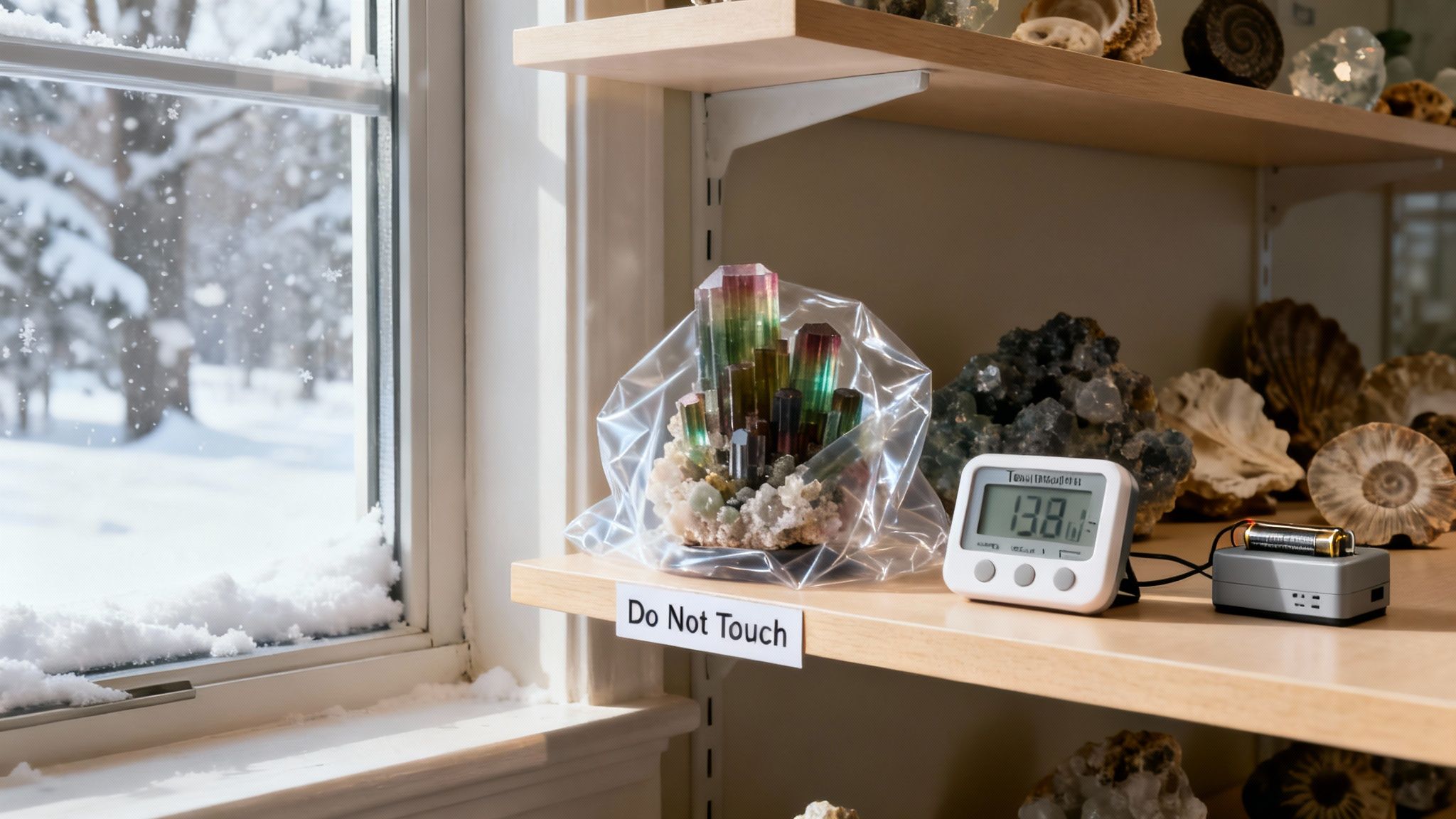
What a Winter Storm Warning Means for Your Home and Collection
When meteorologists issue a winter storm warning, it's their way of telling us to take immediate action. Think of it as the final, most urgent heads-up. It's a world away from a 'watch,' which is more of a "hey, this could happen," or an 'advisory,' which signals a less severe, more inconvenient event.
A warning means a serious, potentially dangerous winter storm is either right on your doorstep or already unfolding. This is the official signal to hunker down, stay home, and prepare for some major impacts.
What Is a Winter Storm Warning?
A winter storm warning is the highest level of alert issued by the National Weather Service. It means a potent mix of hazardous winter weather is happening now or is very likely to start within the next 24 hours. This isn't just about a pretty dusting of snow; it's a direct and urgent call to action because conditions are expected to pose a threat to life and property.
Forecasters don't issue these lightly. A warning is triggered by very specific criteria that can bring a whole region to a standstill. We're talking about conditions like heavy, blowing snow, significant ice accumulations from sleet or freezing rain, or dangerously cold temperatures combined with strong winds that create blizzard-like scenarios.
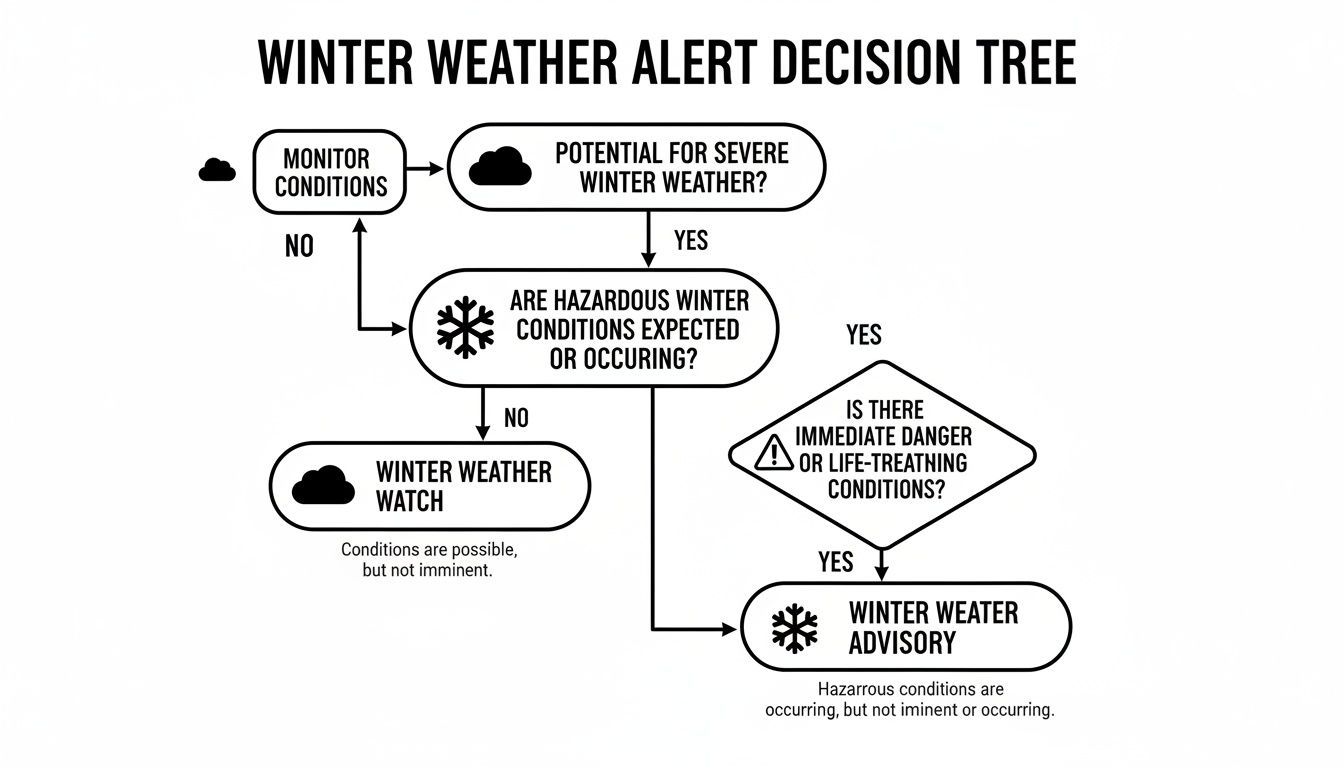
This flowchart gives a great visual of how meteorologists progress from simply keeping an eye on a potential storm to issuing that final, urgent warning.
As you can see, a 'watch' is your cue to get ready. A 'warning' is your cue to take shelter and put your safety plan into action.
Winter Weather Alerts: Watch vs. Warning vs. Advisory
It's easy to get these terms mixed up, but knowing the difference is key to staying safe. Use this quick guide to understand what each alert means and how you should respond.
Alert Type
What It Means
Recommended Action
Timing
Watch
Conditions are favorable for a significant winter storm.
Monitor forecasts, check supplies, and have a plan ready.
Typically issued 12 to 48 hours before the storm.
Warning
A dangerous winter storm is imminent or already occurring.
Take shelter immediately. Avoid all travel.
Typically issued up to 24 hours before the event.
Advisory
A winter weather event is expected but should not be severe enough to be a warning.
Use caution when traveling as conditions may be hazardous.
Typically issued up to 24 hours before the event.
Essentially, a watch tells you to prepare for the worst, while a warning tells you the worst is here. An advisory is a heads-up that travel will be tricky, but conditions aren't expected to be life-threatening.
Understanding the Urgency
The impact of these storms, both socially and financially, is staggering. Winter storm warnings have become an essential tool in modern forecasting, giving millions of people the critical time needed to prepare for blizzards and ice storms.
Between 1980 and early 2025, the United States was hit by 426 billion-dollar weather disasters, with the total cost soaring past $3.1 trillion. Winter storms, the very events that trigger these warnings, account for a huge piece of that damage. For a deeper dive into these numbers, Climate Central's detailed database offers some incredible insights into the rising costs of climate-related disasters.
When a warning is in effect, the advice is almost always the same: stay put. The combination of hazards can quickly make roads impassable, leading to incredibly dangerous situations like multi-car pileups on icy highways or being stranded in your vehicle in freezing temperatures.
A Perfect Opportunity to Stay In
With a storm approaching this Sunday, the 25th, it's the perfect excuse to stay indoors where it's safe and warm. To make your time at home a little more inspiring, Astro West is holding a special storm sale. Starting Saturday the 24th, you can enjoy up to 50% off on select pieces from our collection. It’s a wonderful chance to explore the world of natural art from the comfort of your home.
The Primary Dangers of a Winter Storm
When forecasters issue a winter storm warning, it’s because the incoming weather isn’t just a simple blanket of snow. These events pack multiple, often simultaneous, threats that can impact every part of your immediate environment. Understanding what you’re up against is the first step to keeping your family—and any treasured collections—safe.
Ice Accumulation and Power Outages
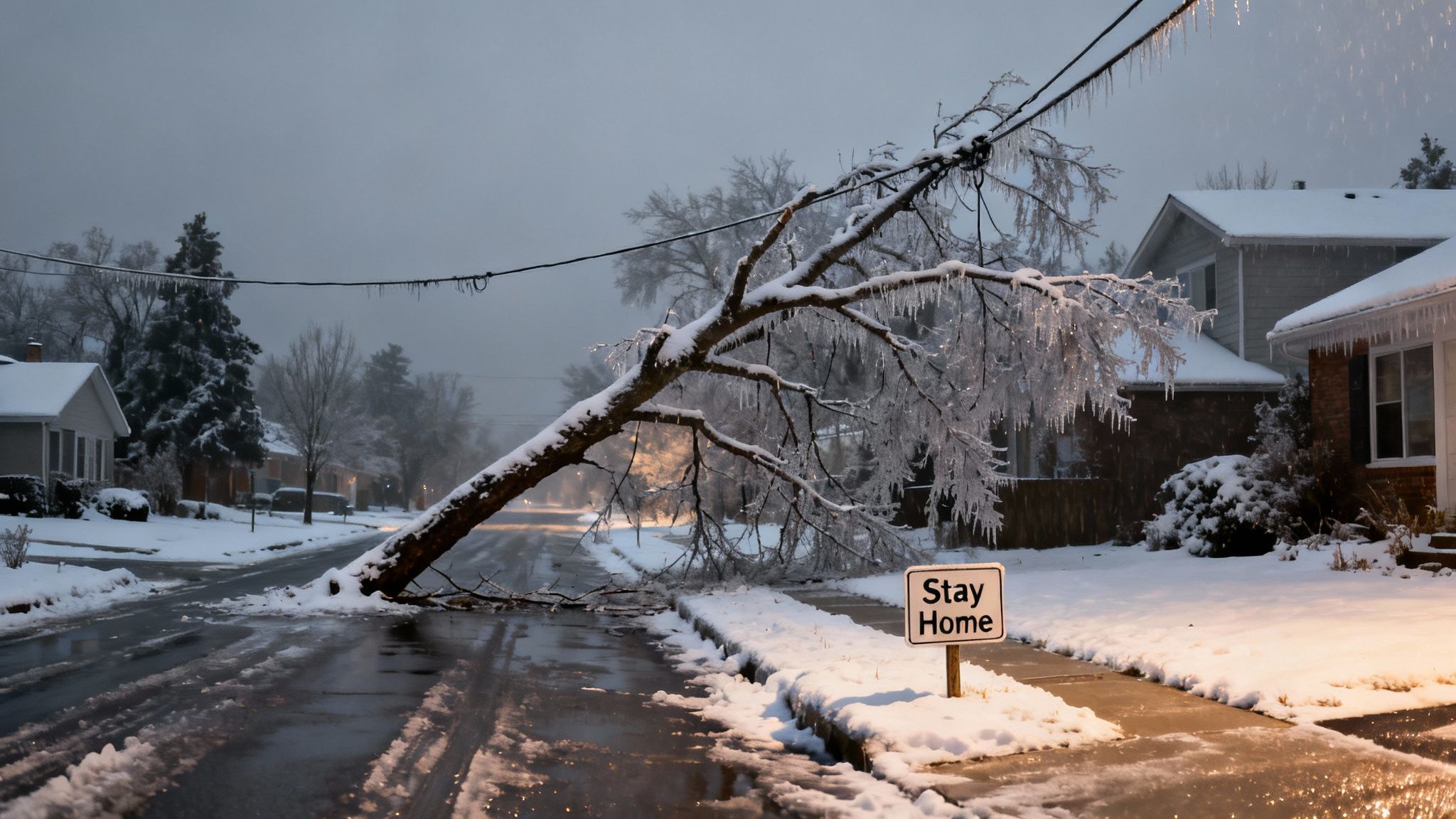
Of all the elements in a winter storm, ice is often the most destructive. Freezing rain coats everything it touches—power lines, tree branches, and roads—in a heavy, slick glaze. It doesn't take much to cause chaos. Just a quarter-inch of ice can add 500 pounds of weight to a span of power line, causing it to snap.
This brings us to the most disruptive consequence of a winter storm: widespread power outages. Without electricity, you’re left in the dark and cold, often without heat or communication. For collectors, this is a critical risk. A power outage can knock out the climate control systems needed to protect sensitive specimens, like a vibrant blue Azurite or a delicate fossil fish, from damaging shifts in temperature and humidity.
Extreme Cold and Structural Risks
The biting cold that accompanies these storms is another major hazard. Plunging temperatures put immense stress on a home’s infrastructure, and frozen, burst pipes are one of the biggest worries. A single burst pipe can release hundreds of gallons of water, causing catastrophic damage to floors, walls, and anything valuable in its path.
Beyond the plumbing, the sheer weight of snow itself poses a threat. That fluffy white stuff is deceptively dense; a single cubic foot of heavy, wet snow can weigh over 20 pounds. That immense load can strain roofs to their breaking point, leading to leaks or even a collapse that endangers everything below.
The dangers of a winter storm warning are interconnected. Ice downs a power line, which cuts off your heat. The lack of heat then allows a pipe to freeze and burst, leading to severe water damage. One problem quickly cascades into another.
Treacherous Travel and Whiteout Conditions
Finally, the storm makes travel profoundly dangerous. Blizzard or "whiteout" conditions can drop visibility to near zero, making driving all but impossible. Icy roads dramatically increase the risk of accidents, turning even a short trip into a life-threatening gamble.
This is exactly why authorities urge everyone to stay off the roads during a winter storm warning. The risk of getting stranded in freezing temperatures is just too high. When you understand these combined threats, it’s clear why heeding the warning and preparing your home to be a safe, self-sufficient shelter is so important.
How to Prepare Your Home and Family for the Storm
When a winter storm warning flashes on your screen, it's the final call to action. This is the moment to shift from planning to doing, ensuring your home and loved ones are secure. It's not about panicking; it's about calmly and confidently running through a checklist so you can ride out whatever the storm throws your way.
Make no mistake, these warnings save lives. A deep dive into decades of data from NOAA's Storm Events Database shows a clear pattern: these alerts are directly followed by storms that cause serious property damage and, tragically, loss of life. History shows that those who take these preparations seriously dramatically reduce their risk. You can explore the historical impact yourself on the NOAA Storm Events Database.
Assemble Your Storm Readiness Kit
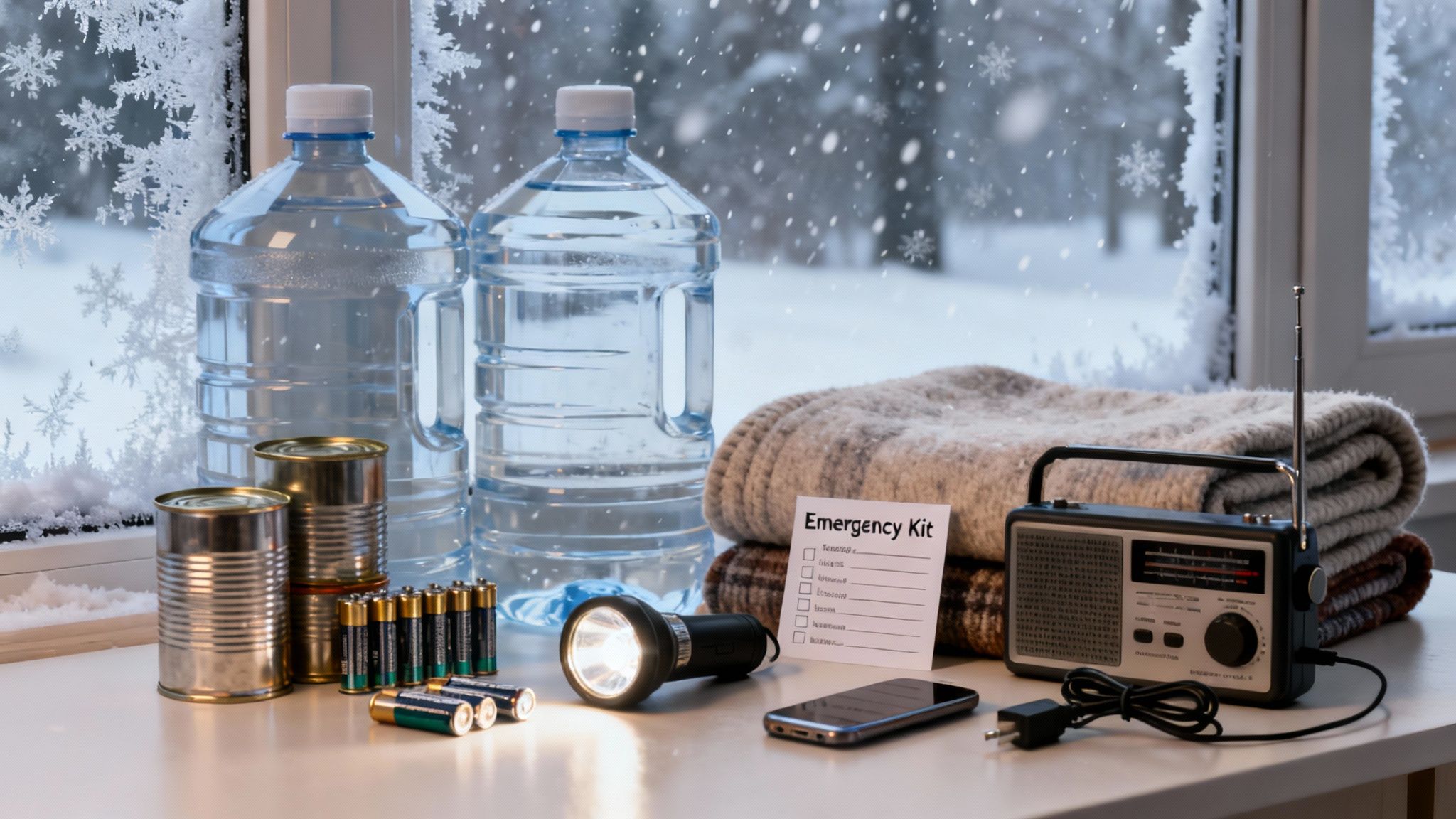
A power outage can stretch from a few hours to several days, so your first move should be gathering essential supplies. Think of it as building a little island of self-sufficiency for your family, one that will keep everyone comfortable even if the utilities go down.
Your kit should be ready to go with:
Water and Food: The gold standard is one gallon of water per person, per day, for at least three days. Pair that with non-perishable foods that don't need cooking—think protein bars, canned goods, and dried fruit.
Light and Communication: Stock up on flashlights, headlamps, and a good supply of extra batteries. A battery-powered or hand-crank radio is your lifeline to emergency broadcasts when the internet is out.
Warmth and Comfort: Pull out the extra blankets, sleeping bags, and warm, layered clothing. When you're settling in for a long, dark evening, a beautiful, high-quality candle can provide a soothing light source and a bit of welcome warmth.
Essential Items: Don't forget a first-aid kit, any necessary medications, a fully charged power bank for your phone, and supplies for your pets or any infants in the house.
Winterize Your Home for Safety
With your supplies gathered, it's time to batten down the hatches. A few small actions now can prevent thousands of dollars in damage later. A critical step to protect your home from major damage is to understand how to winterize a house plumbing system and keep those pipes from freezing solid.
Here are a few key moves to make:
Prevent Frozen Pipes: Let your faucets drip just a tiny bit. This constant movement is often enough to prevent a freeze-up. Also, open the cabinet doors under your sinks to let the warmer air from your home circulate around the plumbing.
Seal Air Leaks: Feel for drafts around windows and doors. You can use weather stripping for a more permanent fix or just roll up towels to block the gaps and keep the cold air out.
Charge Everything: Before the storm hits, make sure every electronic device is plugged in and fully charged—phones, laptops, and especially any backup power supplies you have.
Key Takeaway: Preparation is all about taking control. By methodically working through these steps, you turn a potentially chaotic event into a manageable one, ensuring your home stays a safe shelter for your family.
Finally, make sure you have a clear communication plan with your family, especially if not everyone is at home. Taking these steps will leave you well-prepared to face the storm with confidence and peace of mind.
Safeguarding Your Natural History Collection
If you're a collector of fine natural art, a winter storm warning brings on a whole different level of prep. It's not just about stocking up on bread and milk. While you’re making sure your family is safe and warm, you also need to think about protecting your valuable mineral, fossil, and meteorite specimens.
The biggest threats to these one-of-a-kind pieces come from the classic dangers of a major storm: water damage, wild swings in temperature and humidity, and of course, physical impact.
A burst pipe or a leaky roof can send water where it doesn't belong, potentially staining a porous fossil or wrecking the matrix of a delicate mineral. And if the power goes out for an extended period? Your climate control systems shut down, causing sudden humidity shifts that can wreak havoc on your most sensitive pieces. A little proactive thinking goes a long way in preserving the integrity and beauty of your collection.
Prioritizing Your Most Vulnerable Specimens
Not every specimen in your collection is at equal risk. The first thing you should do is a quick triage—identify and relocate your most vulnerable pieces. Get them away from potential hazard zones like windows, skylights, and any exterior walls.
Think about moving pieces like these:
Delicate Crystalline Structures: Anything with fine, intricate formations—a spray of Tourmaline, a fan of Apophyllite, or a fragile Calcite cluster—is incredibly susceptible to damage from vibrations or falling objects.
Water-Sensitive Minerals: Some minerals, like Halite and certain sulfates, are literally water-soluble. Even high humidity can be enough to cause damage, let alone direct contact with water.
Detailed Fossils: A beautifully prepped Crinoid plate or a fossil fish with its delicate fin structures intact should be moved to a secure, interior spot, far from potential leaks or temperature swings.
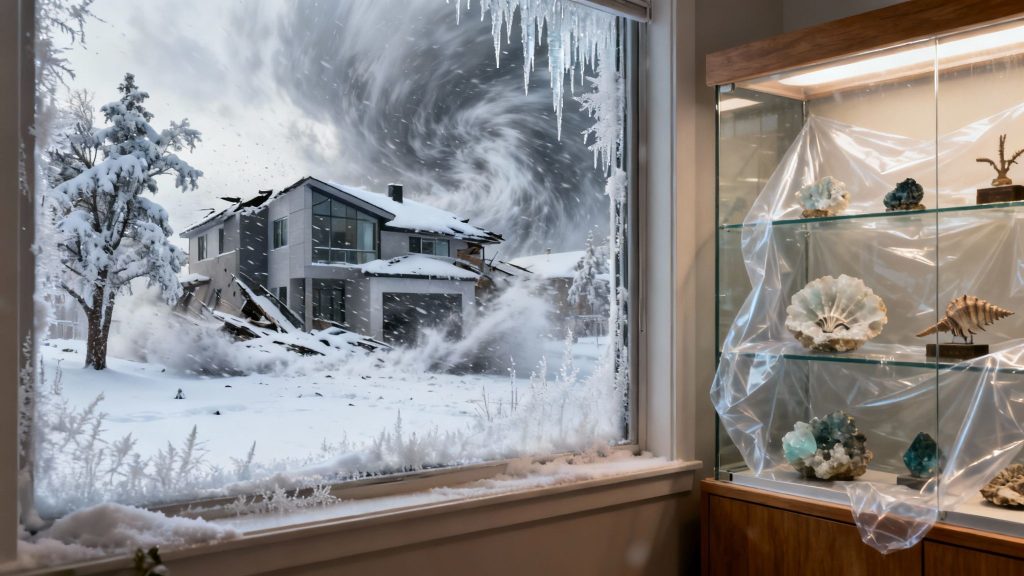
What about those huge, heavy specimens you can't easily move? Grab some heavy plastic sheeting and cover their display cases. It might seem simple, but it can create a crucial barrier against dust, debris, and any unexpected drips from a compromised ceiling.
Checking Your Environmental Controls
If you have a dedicated room for your collection with climate control, a power outage is your worst nightmare. Before the storm rolls in, it’s absolutely critical to check on your backup power systems.
A stable environment is key to long-term preservation. A winter storm directly threatens that stability. Ensure any backup generators or battery backups for your humidifiers and dehumidifiers are fueled, charged, and in perfect working order.
Taking these extra steps will give you peace of mind, knowing that the natural art you've spent years curating is protected. Even smaller decorative items, like a hand-carved malachite box, should be moved to a central, secure location away from windows. By thinking ahead about the risks, you can ensure your collection will emerge from the storm just as pristine as it was before.
Explore Our Winter Sale from the Safety of Home
The number one rule during a winter storm warning is non-negotiable: stay off the roads and stay inside. But being stuck at home doesn't mean your world has to shrink. In fact, it's the perfect opportunity to explore some of the planet's most stunning natural art from the warmth and safety of your armchair.
This weekend, with a major storm in the forecast for Sunday the 25th, Astro West is holding a special sale to make your time indoors a little more inspiring. The event kicks off this Saturday the 24th, with up to 50% off on select museum-quality specimens from our curated collection.
Discover Your Next Centerpiece
Imagine weathering the storm while browsing pieces that have already endured for millennia. This is your chance to discover a breathtaking new centerpiece for your home without ever having to step outside.
Consider adding one of these incredible natural artifacts to your collection:
Muonionalusta Meteorite: Hold a piece of the cosmos. These are stunning slices from an iron meteorite that journeyed through space for billions of years before landing in northern Scandinavia. Its Widmanstätten patterns tell an incredible story of cosmic cooling over eons.
Vibrant Fluorite Crystals: Brighten up a gray winter day with the brilliant color and perfect cubic structure of a high-quality Fluorite specimen. Each piece is a testament to the geometric precision of the mineral kingdom.
Ancient Ammonite Fossils: Connect with Earth’s deep past by exploring the intricate spiral shells of these prehistoric marine creatures, perfectly preserved for millions of years.
Safe and Secure Acquisition
We understand that logistics are the last thing you want to worry about during a storm. When you find that perfect piece during our sale, you can acquire it with complete peace of mind. Our team will handle all the details, making sure your new treasure is securely stored and professionally packed.
We will be monitoring travel conditions closely and will only ship your new acquisition once courier services can operate safely and reliably. Your specimen's security is our top priority from the moment you purchase it until it arrives at your door.
This weekend, turn a necessary precaution into a delightful exploration. You can browse our entire online gallery and find a piece of natural history that speaks to you, all from the comfort of home.
Post-Storm Recovery and Collection Assessment
Once the winter storm warning is finally lifted and the winds settle, the real work begins. Before you do anything else, think safety first. Take a slow, careful walk around your property to check for immediate dangers like downed power lines, shaky tree limbs, or any signs of damage to your roof.
Inside, the first order of business is hunting for water. Check for leaks near windows, up in the attic, and around your foundation. Don't forget to inspect your pipes for any signs they may have frozen or burst. After a big storm, sorting out the damage is a critical step, and you might need some help navigating the process of an insurance claim storm damage settlement.
Assessing Your Collection
When it comes to your collection, the same methodical approach is key. Grab a good, stable light source and carefully examine each specimen, paying extra attention to anything that was stored near exterior walls or windows.
Here’s what to look for:
Subtle Moisture: Check for any condensation that might have formed inside display cases or a feeling of dampness on more porous specimens.
New Fractures: Scan for new cracks or chips. Sudden, intense temperature shifts can put a surprising amount of stress on minerals and fossils.
Surface Changes: Take note of any dullness or "weeping" on minerals that are particularly sensitive to humidity.
This post-storm assessment can be a quiet, reflective moment. The immense power you just experienced is just a tiny taste of the geological forces that created these treasures in the first place. Every perfectly preserved ammonite, like this stunning Madagascar fossil from our collection, is a beautiful reminder of nature's ability to create something enduring, even in the middle of chaos.
Answering Your Questions
When a winter storm warning hits, it’s natural to have a few questions, especially when you’ve got a collection of natural treasures to think about. We’ve put together some quick, clear answers to the most common concerns to help you feel ready for whatever the weather throws your way.
What Is the Most Important Thing to Do During a Winter Storm Warning?
Without a doubt, the single most critical thing to do is stay indoors and avoid all travel. It can be tempting to make a quick trip, but during a warning, roads can become dangerously slick with ice in minutes, and whiteout conditions can reduce visibility to near zero. Your focus should be on staying safe at home, making sure your emergency kit is handy and your space is secure.
How Will My Astro West Purchase Be Delivered During the Storm?
Your specimen’s safety is our absolute priority, especially when severe weather is in the forecast. Here at Astro West, we keep a close eye on weather and shipping conditions across the country. We’ll hold all shipments until we're confident that courier services can operate safely and reliably again. You'll be kept in the loop the entire time, and we'll get your new piece dispatched the moment the routes are clear and secure.
Are Some Minerals and Fossils More Vulnerable to Storm Damage?
Yes, absolutely. Certain specimens in your collection are a bit more sensitive and need extra care when a storm is rolling in.
Porous or water-soluble minerals like Halite are the most vulnerable. High humidity or any direct contact with water from a leak can cause damage, so keep them somewhere dry and protected.
Delicate crystalline structures, like the beautiful formations on Apophyllite or intricate Calcites, are fragile. It's a good idea to move them away from windows or shelves where vibrations, drafts, or falling objects could pose a threat.
Temperature-sensitive items can get stressed by the rapid temperature drops that happen during a power outage. To protect them, move them to the most stable, interior part of your home where the temperature will fluctuate the least.
This weekend, stay safe and explore the wonders of the natural world from the comfort of your home. The Astro West storm sale starts Saturday the 24th, with up to 50% off select pieces. Discover your next treasure at https://astrowest.com.