Picture a slice of summer, perfectly preserved in stone. That’s the feeling you get from watermelon tourmaline, a gemstone famous for its stunning pink center, green outer layer, and often, a crisp white line separating the two. Its name is playful, a direct nod to the fruit it mimics, but its rarity and natural artistry make it a truly serious collectible, positioning it as a masterpiece of natural art.
The Artistry of Geological Time
Watermelon tourmaline is more than just a pretty stone; it's a frozen story of a dynamic geological process. Each piece is a physical record of shifting chemistry deep within the Earth, where mineral-rich fluids cooled and crystallized over countless millennia. This incredible natural phenomenon creates one of the most visually stunning gems out there, a perfect fusion of science and art that fascinates a wide range of people:
Collectors hunt for rare, museum-quality specimens that capture the absolute peak of mineral formation.
Jewelry designers are drawn to its unique color zoning, using it to craft one-of-a-kind pieces of wearable art.
Interior designers use larger slices and crystals as sculptural focal points, bringing a touch of natural history and geological gravitas into luxury spaces.
This gem is a variety of elbaite, which belongs to the larger tourmaline mineral family. While many tourmalines are bi-color, the true "watermelon" title is reserved for crystals that specifically have a pink core and a green rind. This pattern is best seen in cross-sectional slices and is exceptionally rare, making every authentic piece a treasure.
From Natural Wonder to Treasured Collectible
The journey of watermelon tourmaline from a raw mineral curiosity to a prized collectible is all about its unique appeal. Unlike single-color gems, its value is wrapped up in the story it tells—the clean separation and vividness of its colors. To get a better sense of its mineral family, you can explore the broader tourmaline gemstone meaning and its diverse characteristics.
The real magic of watermelon tourmaline is in its perfect imperfection. The inclusions, the subtle color shifts, and the unique geometry of each crystal aren't flaws. They're the fingerprints of its creation, making every single piece a singular work of art.
As the global appetite for unique, ethically sourced gemstones continues to grow, the market for high-quality watermelon tourmaline has gotten much more competitive. Many historic mines are nearing depletion, which means the value of top-tier specimens just keeps climbing. In fact, industry analysis valued the global tourmaline market at around USD 0.2 billion in 2024, with projections showing it could more than double to USD 0.44 billion by 2033. This surge is largely fueled by demand for bi-color and watermelon types, especially in North America where younger buyers are looking for distinctive gems for custom jewelry. At galleries like Astro West, we celebrate this natural masterpiece by curating specimens that showcase the very best of its geological artistry.
How This Remarkable Gemstone Gets Its Color
The incredible color pattern of watermelon tourmaline isn’t some random fluke of nature. It’s the result of a precise geological recipe that unfolds deep within the Earth, with each crystal telling the story of a changing chemical environment. Think of it as a moment-by-moment recording of its own birth, making every specimen a unique piece of natural history.
The story starts in a very specific type of igneous rock known as a granite pegmatite. Picture a pegmatite as the final, mineral-rich pocket of molten rock, or magma, left to cool and solidify. As this fluid cools down over immense periods, it creates the perfect slow-growth nursery for large, well-formed crystals like tourmaline to take shape.
A Recipe Written in Minerals
The creation of that signature watermelon pattern is like a two-act play of mineral chemistry. The process kicks off when the superheated, watery solution is full of manganese, which is the key ingredient for producing those vibrant pink and red hues in tourmaline. As the crystal begins to form, this manganese-rich environment builds the beautiful pink core of the gem.
Then, the geological stage changes. The chemical cocktail feeding the growing crystal shifts, introducing new elements into the mix. For watermelon tourmaline, this means the environment becomes rich in iron or chromium—the elements responsible for tourmaline's gorgeous green shades. This new chemical "bath" begins to crystallize around the existing pink core, forming that distinct green outer layer, or rind.
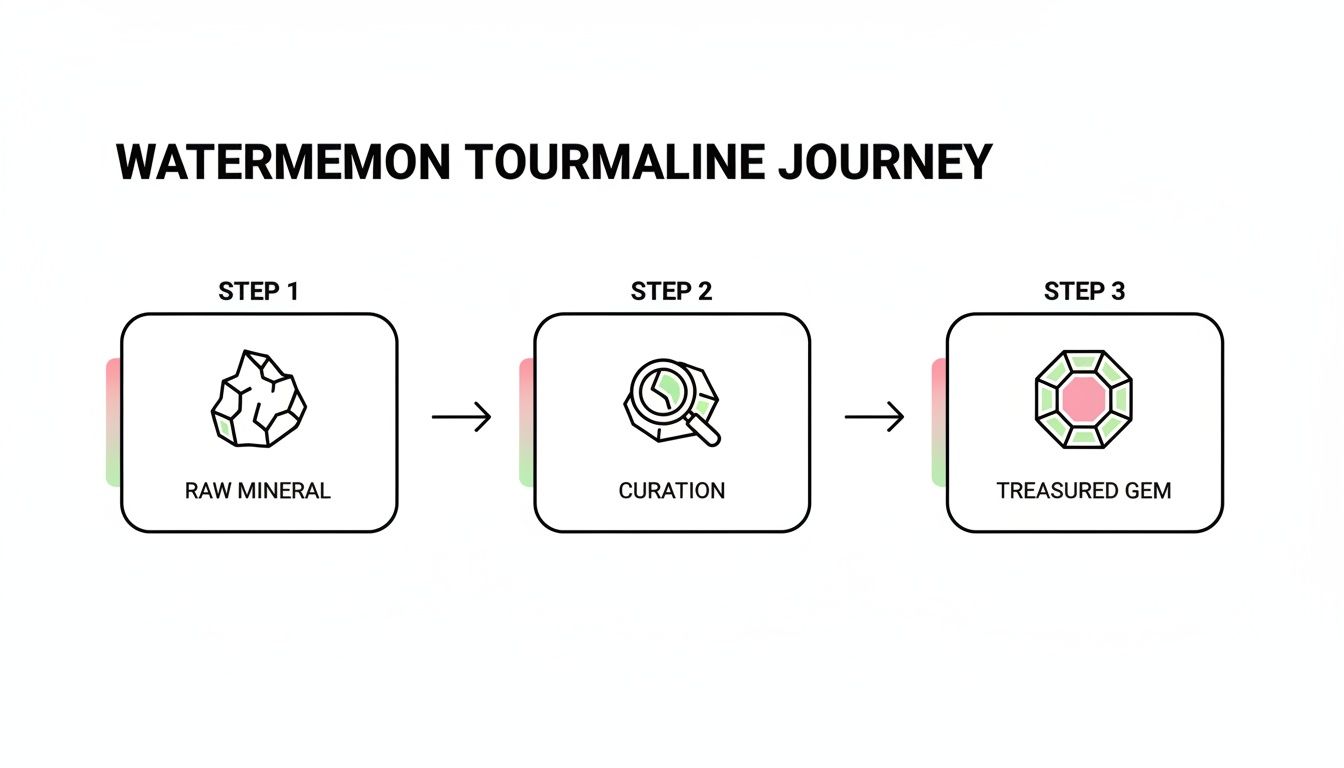
This visual captures the journey from a raw mineral pulled from the earth to a curated, treasured gemstone. It really highlights how a raw, earth-formed crystal is transformed through careful selection and preparation into a piece worthy of a fine collection.
The Perfect Conditions for Color Zoning
For this distinct separation of color to happen, the conditions have to be just right. The temperature and pressure need to stay relatively stable, allowing the crystal to grow without interruption while the chemistry of its environment evolves. If that change is too abrupt or chaotic, the crystal might fracture or develop muddy, indistinct color zones.
This delicate sequence of events is exactly what makes true watermelon tourmaline so rare. While plenty of tourmalines are bi-color, finding that perfect, concentric pink-core-green-rind pattern is a whole different story.
The quintessential "watermelon" pattern is most dramatically revealed when the crystal is sliced perpendicular to its main axis, creating the iconic cross-sections that collectors and designers covet. These slices offer a direct window into the stone’s geological past.
Sometimes, a thin, colorless or even white layer forms between the pink and green zones. This happens during a brief period when neither manganese nor iron is dominant in the fluid, creating a neutral growth phase. This "rind" adds another layer of complexity and is highly prized by collectors. Specimens like this stunning Watermelon Tourmaline from Paprok, Afghanistan showcase the vivid color and sharp zoning that make these gems so sought-after by connoisseurs.
Famous Origins and Provenance
While tourmaline is found all over the globe, only a few locations are famous for producing high-quality watermelon specimens. The historical significance and unique characteristics of a stone's origin, or provenance, add to its story and its value.
Brazil: Specifically the state of Minas Gerais, is the world's most iconic source. It's celebrated for producing large, vibrant slices with classic watermelon zoning.
Afghanistan and Pakistan: These regions are known for yielding exceptionally vivid, high-clarity crystals with intense, candy-like colors.
Nigeria: This African nation produces specimens with excellent, well-defined contrast between the pink core and a thick green rim.
United States: Historic pegmatite mines in Maine and California have also produced watermelon tourmaline, and these American specimens are highly valued for their heritage.
How to Identify and Grade Watermelon Tourmaline
When it comes to assessing a watermelon tourmaline, forget the standard "4 Cs" (carat, cut, color, clarity) that work for diamonds. This stone plays by a different set of rules. For this unique gem, the value is tied to a blend of geological artistry and visual punch. Learning to spot these factors is the key to identifying a top-tier specimen, whether you're a collector hunting for a prized piece or a designer seeking the perfect centerpiece.
The single most important factor is the quality of the color zoning. A truly exceptional watermelon tourmaline doesn’t just have pink and green; it has vivid, deeply saturated colors with a razor-sharp transition between them. Any muddy or brownish tones in the pink core or green rind will diminish a specimen's value. The ideal is a vibrant, candy-pink center encased in a rich, emerald-like green that creates an immediate, striking contrast.
This clear, crisp distinction is what separates a world-class collectible from a more common bi-color stone.
Beyond Color Saturation and Zoning
Once you’ve sized up the color, the next things to look at are the stone's overall form and clarity. These attributes are crucial for both its beauty and its structural integrity.
Symmetry and Proportionality: For slices, the most sought-after pieces show a beautifully balanced, concentric ring structure. A perfectly centered pink core sitting inside an even green rind is the gold standard.
The Coveted Third Zone: The rarest and most valuable examples show off a thin, colorless or white band separating the pink and green. This “rind” is geologic proof of a pause in the crystal's growth, adding a layer of complexity and a story that collectors go wild for.
Clarity and Inclusions: Unlike diamonds, where inclusions are almost always a negative, they can be part of a tourmaline's story. While big, distracting fractures will lower the value, tiny internal features like "growth tubes" can actually help prove its natural origin. The goal is an "eye-clean" translucency where the color and zoning are the stars of the show.
A perfectly terminated watermelon tourmaline crystal, for instance, tells a complete geological story from start to finish. You can see exactly what makes a perfectly terminated watermelon tourmaline so special in our detailed product highlight.
Understanding the Grading Tiers
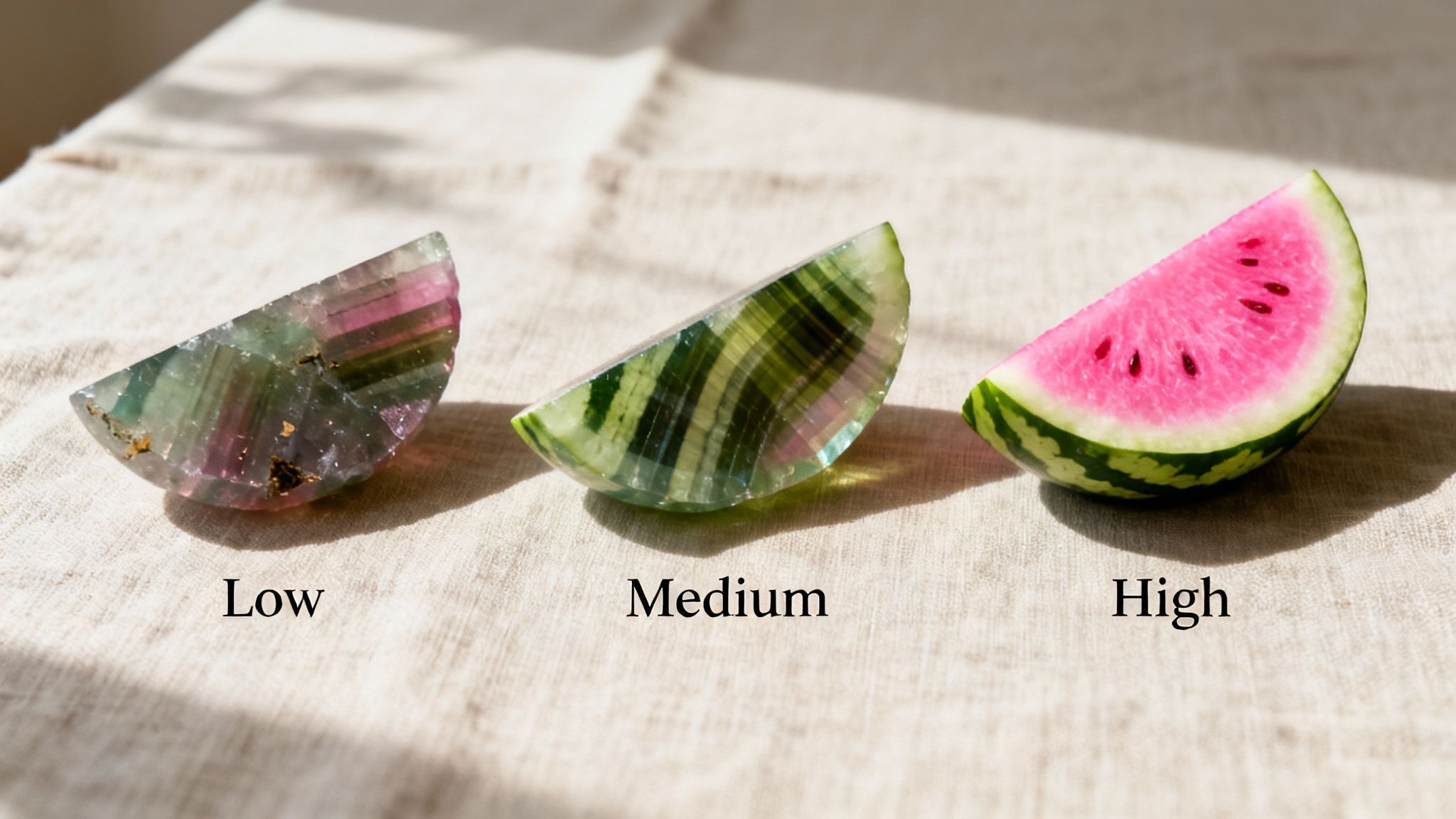
To make sense of the market, it helps to break watermelon tourmaline down into a few quality grades. This simple framework will help you understand pricing and guide you toward the right stone for your needs.
The true value of a watermelon tourmaline isn't just in its size, but in the vibrancy and definition of its story. A small, perfect slice with electric colors can easily be more valuable than a larger, muddier specimen. It's about the quality of the geological art, not just the quantity of the stone.
This grading guide gives a clear overview of what to look for at different levels. It’s a practical tool for collectors, designers, and anyone looking to invest in this remarkable gemstone.
Watermelon Tourmaline Quality Grading Guide
To help you distinguish between a museum-quality piece and a more decorative one, here’s a breakdown of the key characteristics you'll find in each grade.
Quality Factor
Collector Grade (High Value)
Jewelry Grade (Good Value)
Specimen Grade (Entry Level)
Color Saturation
Exceptional vibrancy; deep, pure pink core and rich, saturated green rind.
Good, bright colors with minimal brown or grey tones.
Paler or less distinct colors; may have noticeable brownish modifiers.
Color Zoning
Sharp, crisp, and well-defined transition between the pink and green zones.
Mostly clear separation between colors, though the boundary may be slightly softer.
Blended or indistinct zoning; colors may bleed into one another.
Clarity
High translucency with minimal eye-visible inclusions or fractures.
Moderately included but still translucent; inclusions do not dominate the stone.
Heavily included or opaque; significant internal fractures are common.
Symmetry & Form
Symmetrical, well-proportioned, and often shows a complete crystal cross-section.
Reasonably symmetrical, though may have some irregularities in shape or zoning.
Irregular shape with uneven or incomplete color zones.
Whether you're after a high-impact collectible or a beautiful piece of natural art, understanding these factors will help you choose a specimen you'll be proud to own.
The Investment Value of Watermelon Tourmaline
While the striking beauty of watermelon tourmaline is what first captures your attention, it's much more than just a pretty stone. Think of it as a tangible asset, a piece of natural art with a solid history of appreciating in value. For serious collectors and investors, it’s a compelling opportunity to own something rare, beautiful, and increasingly sought-after on the global stage.
The investment side of things really boils down to simple supply and demand. The supply of top-tier watermelon tourmaline is finite. Many of the legendary mines in Brazil and other key spots are thinning out, which means fewer exceptional specimens are hitting the market each year. This natural scarcity, paired with a growing appetite from collectors, jewelers, and even interior designers, puts steady upward pressure on its value.
Market Dynamics and Price Drivers
A few key factors come together to make watermelon tourmaline a smart addition to any hard asset portfolio. Unlike things that can be manufactured, the earth isn't making any more of this stuff—especially not the quality found in those iconic deposits. This is the bedrock of its long-term value.
At the same time, demand is surging. In the luxury gem world, watermelon tourmaline’s price per carat tells a powerful story. It typically ranges from $50 to $500, but museum-quality pieces can soar far, far higher. Faceted stones perfect for jewelry might average $20-$55 per carat, but you'll see premium cuts with vivid pink-and-green zones and clean clarity fetch anywhere from $80 to $1,000 or more.
Owning an investment-grade watermelon tourmaline is akin to holding a blue-chip stock from nature's own portfolio. Its value is anchored in its rarity, aesthetic uniqueness, and the enduring human desire for objects of profound natural beauty.
As a tangible asset, it’s a great way to diversify away from traditional financial markets. It's a portable store of wealth that isn't tied to the volatility of stocks or digital currencies, making it an attractive hedge for growing capital over the long run. To really showcase a specimen's value, presentation is everything; learning how to photograph jewelry like a pro can make all the difference when it comes to appraisal or sale.
What Defines an Investment-Grade Specimen
Not every slice of watermelon tourmaline makes the cut for "investment-grade." The pieces that command top dollar and have the greatest potential to appreciate share a few key traits that elevate them from pretty objects to serious collectibles.
Exceptional Color and Zoning: You want to see intensely saturated, pure pink and green hues. The boundary between the colors should be sharp and well-defined. A crisp white "rind" separating the pink and green is a major bonus that significantly boosts rarity and value.
Superior Clarity and Form: High translucency with minimal internal fractures is critical. For raw crystals, a complete, well-formed termination is highly prized. For slices, look for symmetry and a balanced, concentric pattern that is pleasing to the eye.
Provenance and Size: Specimens from famous localities, like Brazil's Minas Gerais region, carry a certain prestige and a higher price tag. And, as you might expect, larger sizes with top-tier quality are exceptionally rare and exponentially more valuable.
Understanding these drivers allows you to confidently spot and acquire pieces with real, lasting financial significance.
Using Watermelon Tourmaline in Luxury Decor
While its role in fine jewelry is well-established, the true sculptural power of watermelon tourmaline is unleashed when it's used as a statement piece in luxury interior design. Moving beyond wearable art, larger specimens and polished slices offer a powerful way to infuse a space with color, organic texture, and a tangible piece of natural history.
They serve as more than just objects; they become focal points that anchor a room and tell a story millions of years in the making.
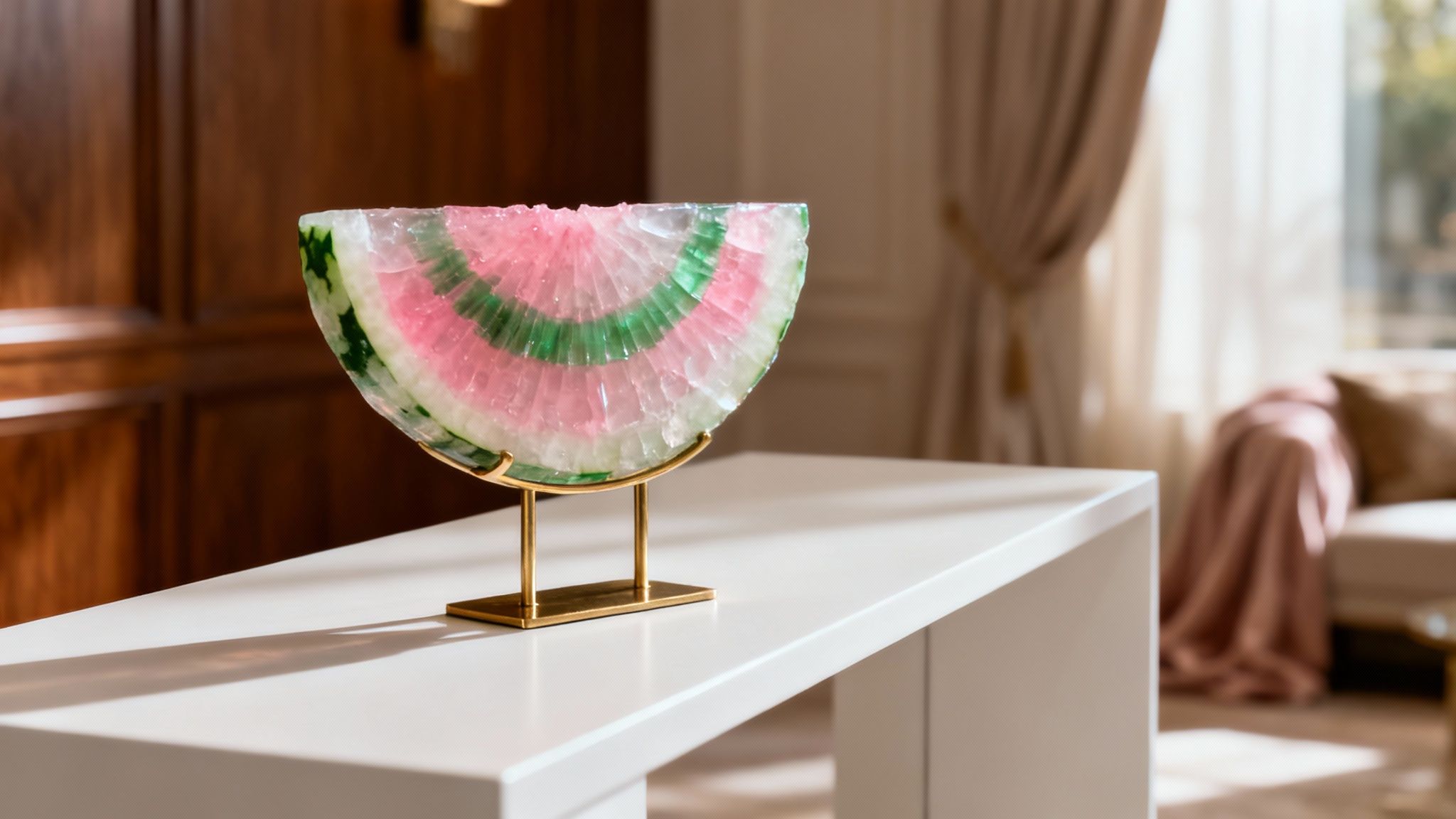
Imagine a thick, polished slice of watermelon tourmaline, its vibrant pink core and deep green rind glowing with life. When placed on a custom-designed stand and backlit, it transforms into a breathtaking natural sculpture. This approach works especially well on a console table in an entryway, on a mantelpiece, or as the centerpiece in a curated display cabinet. The light passing through the translucent crystal illuminates its internal world, revealing subtle inclusions and the crisp boundary between colors.
Creating a Design Focal Point
The key to successfully incorporating watermelon tourmaline into decor is to let the stone’s natural beauty lead the design conversation. It’s all about creating a moment of wonder.
In Minimalist Spaces: A raw, sculptural crystal with its natural striations and trigonal form provides a stunning organic contrast to clean lines and neutral palettes. Its presence adds warmth and a touch of the untamed, preventing the space from feeling sterile.
In Eclectic Interiors: Polished slices can be grouped with other natural objects, books, and art to create a rich, layered vignette. Their vibrant colors can tie together different elements in the room, from textiles to artwork.
A beautiful example can be found in specimens where the watermelon tourmaline crystal grows alongside other minerals. For a deeper look at a piece that combines multiple textures and colors, explore our watermelon tourmaline with quartz and blue muscovite to see how a complex mineral matrix creates a one-of-a-kind decorative object.
Practical and Elegant Applications
Integrating these geological wonders doesn’t have to be complicated. The goal is to present them as the works of art they are, giving them the space and light they need to shine. A single, high-quality specimen often has far more impact than a cluster of smaller, lower-grade pieces.
When used in decor, a watermelon tourmaline does more than just decorate—it grounds the space. It connects a modern interior to the ancient, geological timeline of the Earth, offering a sense of permanence and profound beauty that manufactured objects simply cannot replicate.
Consider placing a well-formed crystal on a bookshelf, where it can be admired up close, or using a pair of matched slices as natural bookends. For designers and architects, larger tourmaline sections can even be inlaid into custom furniture or wall panels, creating an unforgettable and luxurious feature.
By treating each specimen as a unique piece of sculpture, you can elevate any interior from merely beautiful to truly extraordinary, sparking conversation and inspiring awe for the natural world.
How to Care for Your Watermelon Tourmaline
When you own a piece of watermelon tourmaline—whether it’s a raw crystal, a polished slice, or set in a stunning piece of jewelry—you’re the keeper of a small, irreplaceable piece of natural history. To keep that geological treasure looking its best for generations, a little bit of mindful care goes a long way. Fortunately, tourmaline is a relatively tough gemstone, which makes upkeep pretty straightforward.
Watermelon tourmaline clocks in at a respectable 7 to 7.5 on the Mohs hardness scale. That puts it right up there with quartz in terms of durability, making it more than suitable for both display and everyday jewelry. But don’t mistake hardness for invincibility. It's great at resisting scratches, but a hard knock or drop can still cause a chip or fracture, especially along the stone's natural growth lines.
Cleaning Your Watermelon Tourmaline
The best way to clean your tourmaline is also the simplest. All you really need is a bowl of warm water, a couple of drops of mild dish soap, and a very soft brush—a brand-new toothbrush reserved just for your gems is perfect.
Crucial Care Tip: Stay away from ultrasonic and steam cleaners. Watermelon tourmaline is famous for its internal fractures and inclusions; it's part of its character! The intense vibrations and high heat from these machines can easily make those tiny fractures worse or even create new ones, causing permanent damage.
Just follow these easy steps to bring back its shine:
Make the Bath: Stir a little bit of mild soap into a bowl of warm water until it's slightly sudsy.
A Quick Soak: Let your tourmaline sit in the water for a few minutes. This helps loosen up any grime, dust, or oils that have built up.
Gentle Scrub: Use your soft brush to gently clean the stone. Be sure to get into any nooks and crannies, especially around jewelry settings where dirt loves to hide.
Rinse and Dry: Hold the piece under clean, lukewarm running water to rinse away all the soap. Afterward, pat it dry with a soft, lint-free cloth.
The Best Way to Store and Display Your Gems
How you store and display your tourmaline is just as important as how you clean it. For jewelry, the golden rule is to keep each piece separate. Tucking it into a soft pouch or a fabric-lined jewelry box prevents harder gemstones like diamonds or sapphires from accidentally scratching its surface.
For raw crystals or polished slices on display, find a spot away from constant, direct sunlight. While tourmaline's color is generally quite stable, years of intense UV exposure could potentially cause some of those vibrant pinks to fade a bit. More importantly, place it somewhere safe where it won’t get bumped or knocked over. That way, your little piece of natural art can remain a beautiful focal point for years to come.
Common Questions About Watermelon Tourmaline
To round out your understanding of this incredible gem, we’ve put together answers to a few of the questions we hear most often. This quick guide tackles the practical details that both new enthusiasts and seasoned collectors wonder about.
Think of it as the final layer of appreciation for this geological masterpiece, reinforcing everything we've already explored.
Is Watermelon Tourmaline a Rare Gemstone?
Yes, authentic watermelon tourmaline is exceptionally rare. You’ll find plenty of bi-color tourmalines with pink and green, but the true "watermelon" pattern is a geological anomaly that requires a very specific set of circumstances to form.
For a specimen to earn the name, it absolutely must have a pink core surrounded by a green outer rind—a pattern you can really only see in a cross-sectional slice. This radial zoning is far scarcer than the more common top-to-bottom color changes. The precise, fleeting chemical shifts needed for its formation make every genuine piece a significant find.
What Is the Difference Between Bi-Color and Watermelon Tourmaline?
The difference is all in the pattern. Bi-color tourmaline is a broad term for any tourmaline crystal that shows off two distinct colors. This could mean a pink top and a green bottom, or colors that are split vertically down the crystal's length.
Watermelon tourmaline, on the other hand, is a specific and much rarer type of bi-color tourmaline. Its defining feature is the concentric, radial color zoning: a pink center completely wrapped in a green rim. Imagine the difference between cutting a log lengthwise versus slicing it into rounds—that cross-sectional "slice" is what defines a true watermelon specimen.
The term "watermelon" refers exclusively to this core-and-rind structure. All watermelon tourmalines are bi-color, but very few bi-color tourmalines earn the prestigious "watermelon" title.
How Can I Tell if Watermelon Tourmaline Is Real?
Authenticating watermelon tourmaline comes down to looking for the subtle fingerprints of its natural formation. Genuine specimens often contain tiny internal features, like fine, parallel growth tubes or small liquid-filled inclusions. Think of these as its geological birthmarks.
Also, look closely at the transition between the pink and green zones. In natural stones, this line is often sharp but rarely perfectly uniform, and sometimes you’ll even spot a thin, colorless band in between. Be wary of pieces with an unnaturally perfect, almost painted-on color separation—these could be synthetic or assembled fakes. Your best bet is always to work with reputable dealers who provide provenance and gemological details.
The incredible demand for these unique gems is a huge driver in the global tourmaline market's explosive growth. Projections show the market expanding from USD 0.2 billion in 2024 to USD 0.44 billion by 2033, with bi-color varieties like watermelon tourmaline fueling much of that surge. As you can learn more about these market findings, North America currently leads with over 40% of the revenue share, showing just how strong the appeal is in high-end jewelry and collecting circles.
At Astro West, we believe every specimen tells a story of geological time and natural artistry. Our curated collection of watermelon tourmaline is sourced for its exceptional color, clarity, and provenance, ensuring each piece is a genuine treasure.