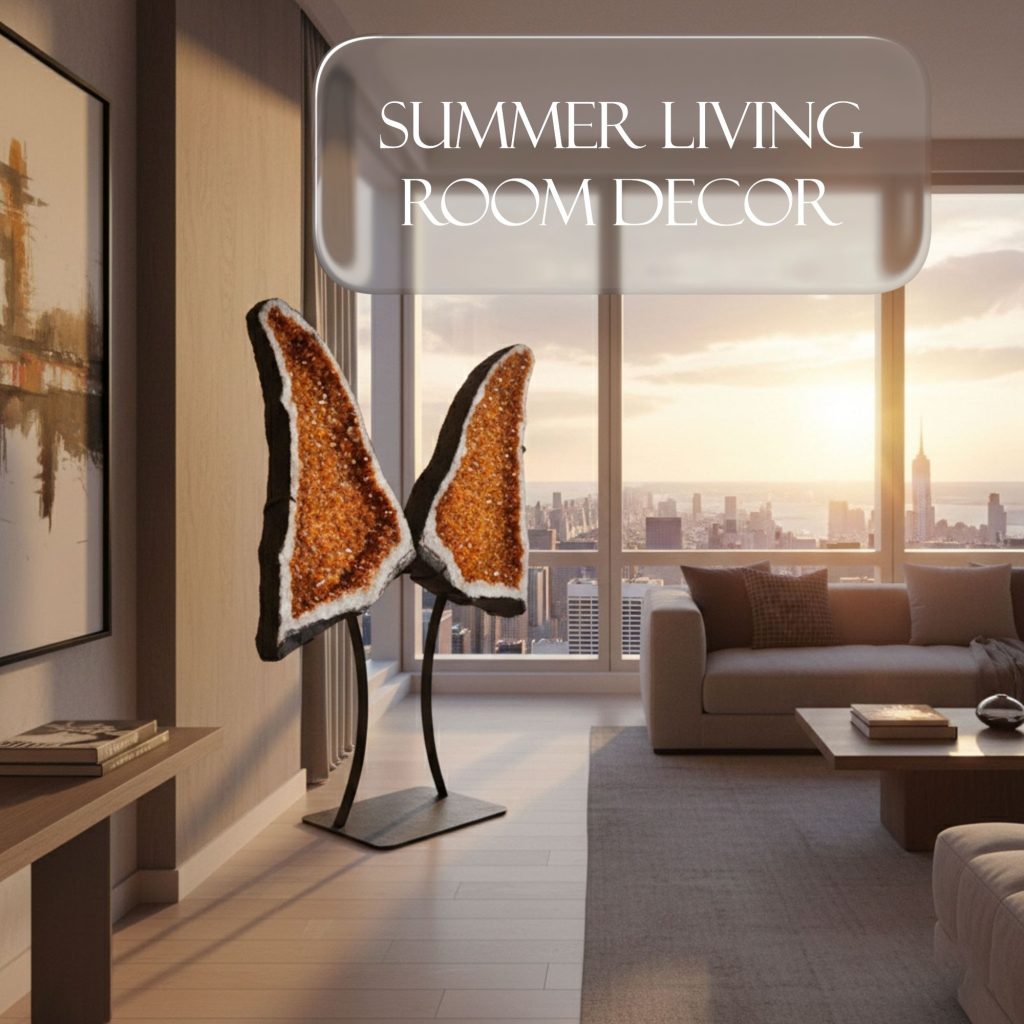
A better approach to summer living room decor is curation. The strongest rooms don't rely on temporary motifs. They use objects with age, provenance, and visual authority. Natural history specimens do that exceptionally well. A polished agate, a quartz geode, or a classified meteorite can refresh a room while also holding collector interest over time.
That shift matters even more now. Design culture has moved away from flat neutrality and toward expressive surfaces, layered texture, and architectural accents, as reflected in current summer trend reporting and renovation demand. For a practical mainstream complement, Groen's summer decor guide covers lighter seasonal updates. This guide takes the collector's route instead. These seven ideas show how to make a summer living room feel brighter, sharper, and more enduring.
1. Swap Heavy Textiles for Natural Stone Accents
Winter rooms often lean on wool, boucle, and dense throws. In summer, that visual weight can make a living room feel slower than it should. A stone accent solves that problem without leaving the room underdressed.
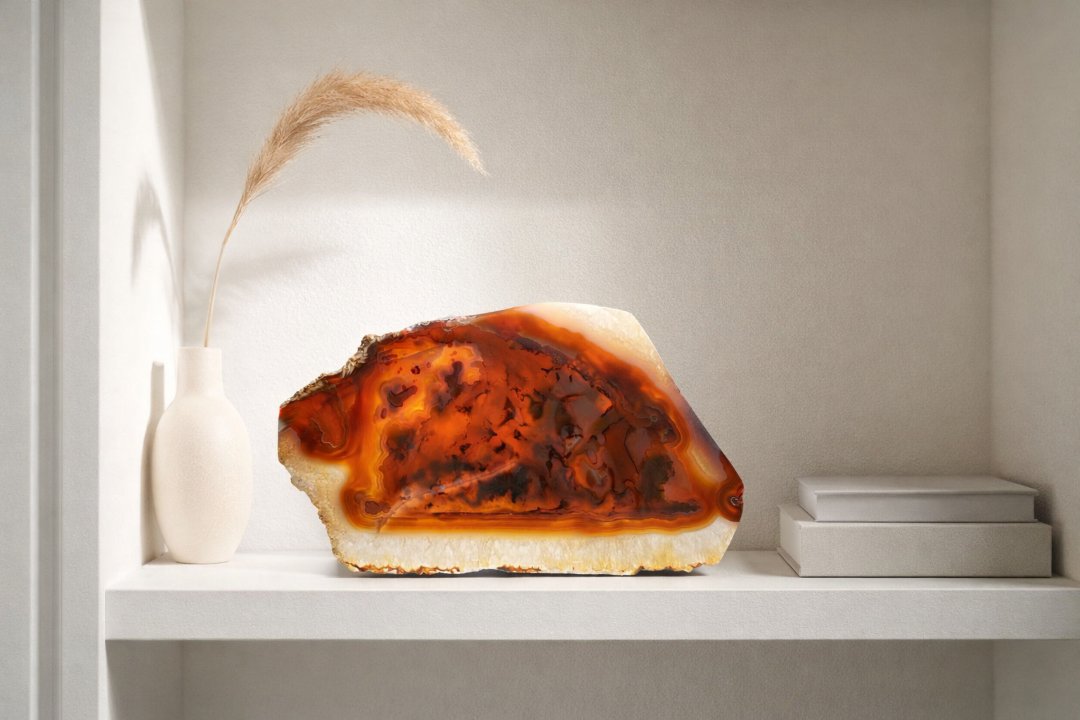
An agate slice or polished mineral slab brings pattern, color, and hardness into the space. That contrast matters. Fabric softens a room, but stone clarifies it. In bright summer light, polished surfaces also reflect more nuance than most printed accessories.
What works best
The most effective swap isn't removing all softness. It's reducing visual bulk. Keep the sofa and rug. Remove the pile of thick seasonal accessories, then replace some of that presence with one disciplined object, such as an agate slice on a cocktail table or a stone-form side table like this sodalite slab side table from Brazil.
Each specimen brings its own banding, inclusions, and edge profile. Therefore, the room gains individuality without relying on trend-driven prints. For broader material context, this complete guide to natural stone is useful background on why stone reads as timeless indoors.
Practical rule: If a room already has linen drapes and a pale rug, add stone for contrast, not more softness.
Best placement: Use stone on coffee tables, consoles, and shelves where light can catch a polished face.
Strong payoff: One substantial specimen creates more authority than several small decorative fillers.
Real trade-off: Larger fine pieces cost more upfront and need a secure, level surface.
What doesn't work is forcing a cold palette around the stone. Agate and sodalite look best when balanced with oak, walnut, brass, or woven natural fibers. Otherwise, the room can feel sterile. Summer living room decor should feel lighter, not clinical.
2. Introduce Coastal Palettes with Lapis Lazuli and Agate
A coastal palette doesn't need shells, rope, or obvious beach references. In refined interiors, blue works better when it comes from a material with depth. Lapis lazuli gives you that depth immediately.
The stone carries dense celestial blue with pyrite flashes that read almost like gold under daylight. It anchors creams, soft grays, and chalky whites beautifully. It also avoids the disposable look of seasonal blue accessories.
Why lapis feels permanent
With lapis, decorative value and collector logic align. Lapis has long-standing aesthetic and historical appeal, and that matters. A blue object with genuine mineral character holds attention long after a summer vignette loses relevance.
The Handcrafted Lapis Lazuli Home Decor Bowl is a strong example. This striking Handcrafted Lapis Lazuli Home Decor Bowl showcases the deep celestial blues and golden pyrite flecks that make this stone so prized. Used on a center table or console, it creates a coastal mood without becoming thematic.
For surrounding context, pair lapis with pale upholstery, warm ivory ceramics, and restrained glass. If you're also refining the room's illumination, this guide to coastal lighting trends helps explain why softer reflective surfaces matter in summer spaces.
Blue is most convincing in a room when the material itself creates the color.
Blue lace agate can work too, especially when the room needs a quieter note. However, softer agates can disappear in dim corners. Lapis does the opposite. It holds its form in changing light and gives the room a clear focal point.
The common mistake is overcommitting to blue everywhere. Keep the palette edited. One or two mineral blues are elegant. Too many, and the room starts to read as staged rather than collected.
3. Add Sculptural Dimension with Geode Displays
Flat surfaces need one object with depth. A geode does that better than most seasonal decor because it changes as light moves through the day. The rough exterior also keeps the piece grounded, which prevents the room from feeling overly polished.
That's useful in summer living room decor, especially when many interiors already have lighter walls and brighter windows. A geode introduces sparkle, but it still feels geologic and substantial.
Placement matters more than size
A modest geode at eye level often performs better than a larger one pushed low into a dark corner. Shelves, mantels, and narrow consoles work well because the crystal interior stays visible from across the room. A well-chosen authentic Moroccan quartz geode can do that with precision.
For larger rooms, cathedral geodes create stronger architecture. They don't just decorate a blank area. They occupy it. The effect is closer to sculpture than accessory, which is why serious collectors and designers keep returning to geodes.
Best in: Rooms with directional daylight or targeted lamp light.
Avoid: Overcrowded shelving where the crystal face gets visually lost.
Watch for: Fragile interiors that collect dust if placed too low or too close to traffic.
What doesn't work is treating a geode like filler. It needs visual breathing room. When given proper space, it becomes an object people approach, inspect, and remember.
4. Use Large Crystal Clusters as Natural Sculpture
Some rooms need a statement piece that isn't furniture and isn't wall art. A large crystal cluster fills that role with far more depth than a seasonal vase or generic sculptural object.
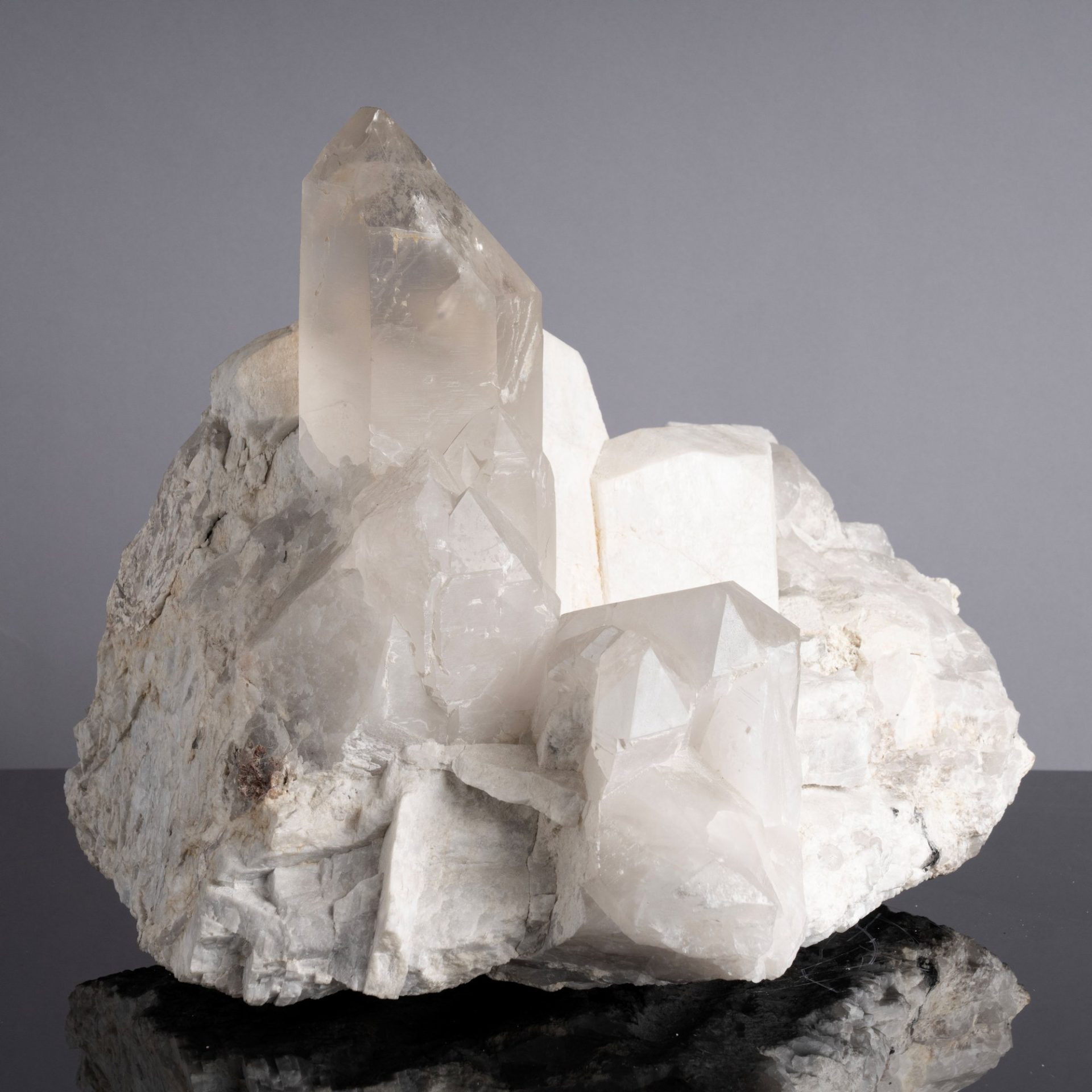
Quartz and amethyst clusters create visual complexity from every angle. Multiple terminations catch light differently. Internal clarity changes from point to point. As a result, the eye keeps moving across the piece instead of stopping at a single silhouette.
When a cluster outperforms framed art
This approach works especially well on a console, pedestal, or low plinth near seating. A substantial large Uruguayan quartz on custom swivel stand brings scale without flattening the room the way framed art can.
Current summer design reporting also points toward stronger texture, darker woods, and more layered surfaces. In one trend overview, deeper wood tones and pattern layering replace the previous white-oak-only mood, while interest in trim and molding painting also rose according to this 2026 summer trend report. A crystal cluster fits that shift naturally. It adds substance and texture without adding more fabric.
Collector insight: High-clarity clusters hold value best when the points are intact and the base presents cleanly.
The main trade-off is practical. Large clusters are heavy, and point damage is difficult to ignore once it happens. They also shouldn't sit in strong direct sun for long periods if color stability is a concern. Still, when a room feels too soft or too polite, a serious crystal cluster often solves the problem immediately.
5. Create Visual Balance with Grounding Stones
A summer room still needs weight. Without it, everything floats. Dark grounding stones give the room that weight without forcing you back into winter textures.
Smoky quartz, black tourmaline, and other darker specimens work best when the rest of the room is light. They sharpen whites, creams, and pale woods. They also help bright objects look intentional rather than scattered.
Where darker specimens belong
Use one grounding stone where the eye naturally pauses. A coffee table corner, the end of a media console, or the base of a bookshelf all work. The aim isn't drama for its own sake. The aim is balance.
Best use: One dark stone near a lighter ceramic, shell tone, or linen element.
Common error: Choosing a specimen that's too small to anchor the arrangement.
Design benefit: Dark stones increase contrast without adding bulk.
A grounding specimen can look dull if it's badly lit. Give it some side light or reflection from a nearby window. Then it reads as depth, not heaviness. In practiced summer living room decor, that's often the difference between a room that feels airy and one that feels unfinished.
6. Style a Console Table with a Curated Mix of Specimens
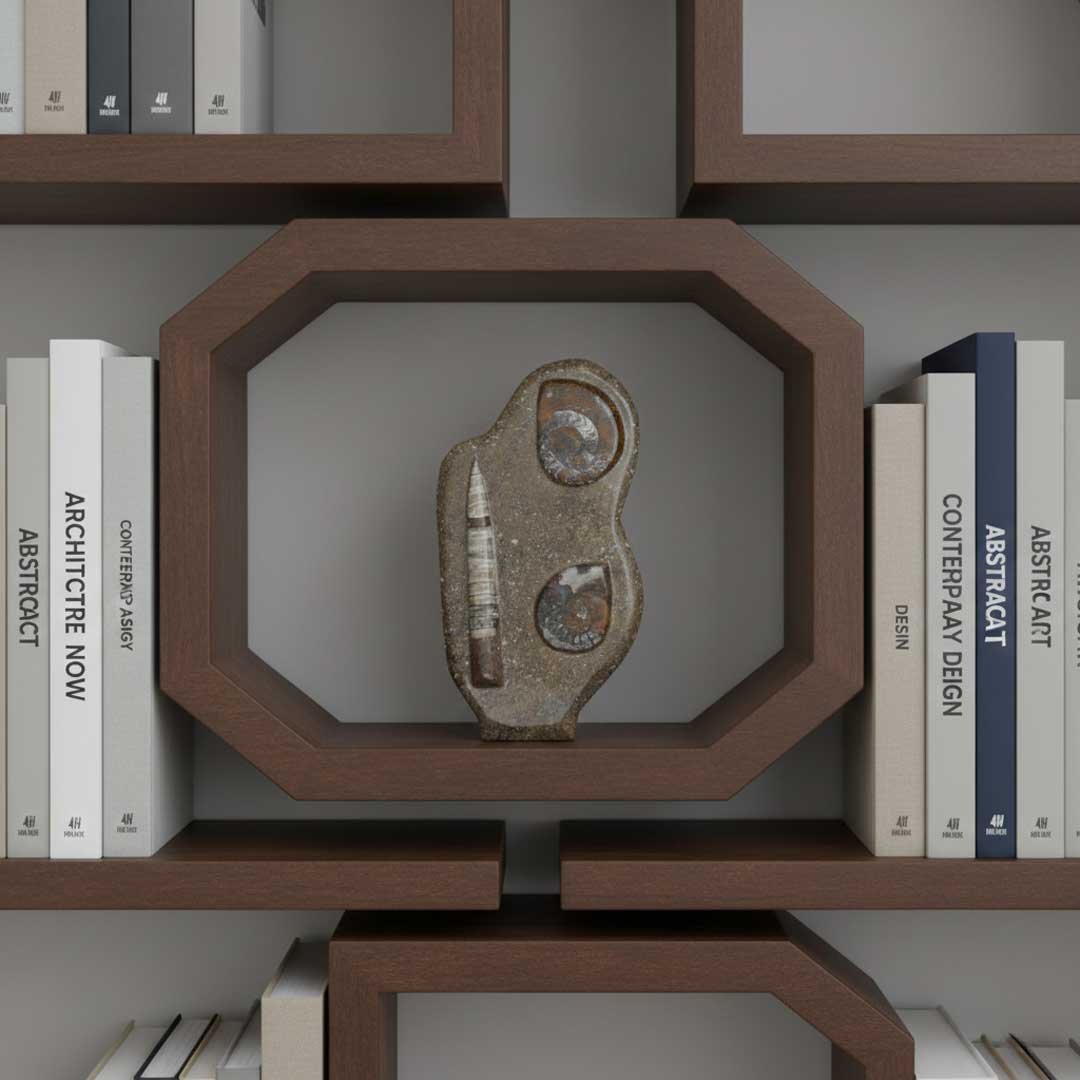
A single object can be elegant. A small group can be smarter. A fossil, a geode, and a polished mineral together create a layered display that feels collected rather than decorated.
This is the most useful strategy for people who want movement across a long console or media cabinet. Different heights and textures keep the eye engaged. The display also gives you a natural place to introduce scientific variety into the room.
Build a vignette with contrast
Start with one anchor piece. That might be a fossil slab or medium geode. Then add a polished stone for surface contrast and a smaller object with sharper geometry. Keep the palette related, but don't force exact matching. Geological displays look strongest when they show difference.
This collector-led approach also aligns with broader trend movement. Summer design coverage has highlighted stronger interest in wallpaper, custom upholstery, and expressive architectural surfaces, including a sharp rise in ceiling and statement door work, as described in this summer 2026 design trend video summary. In that context, a mixed natural specimen display feels current because it embraces texture and character rather than neutrality.
A good console arrangement should look discovered over time, even if it was assembled in one afternoon.
The mistake is crowding. Three pieces are often enough. Five can work. Beyond that, many vignettes lose discipline. Leave negative space between objects so each specimen keeps its identity and provenance visible.
7. Incorporate a Meteorite as an Extraterrestrial Accent
Nothing changes the tone of a living room faster than an object with cosmic origin. A meteorite doesn't just add texture or rarity. It changes the intellectual register of the room.
That matters if you want summer living room decor to feel elevated rather than seasonal. A classified meteorite gives guests a genuine point of inquiry. It also sits comfortably with modern, minimalist, and eclectic interiors because the form is elemental.
Why meteorites belong in serious interiors
Meteorites also make the valuation case clearer than most decorative objects. Martian meteorites can command $1,000 or more per gram because of their scarcity and confirmed origin. Iron meteorites commonly range from $1 to $10 per gram, while rarer or more aesthetic examples can exceed $50 per gram. Those figures don't apply to every specimen, but they show how provenance, classification, and visual character drive market value.
Museum demand reinforces that logic. Rising prices for rare meteorites and fossils have affected institutional buying, just as major fossil sales have done in adjacent collecting categories. One often-cited example is Sue the T. rex, acquired for over $8 million. Different objects, same principle. Scarcity, documentation, and competition shape long-term value.
Best display: On a stand, where the form and fusion crust remain visible.
Non-negotiable: Buy only authenticated, classified material.
Caution: Iron specimens need proper care in humid interiors.
A meteorite is the clearest example of decor becoming acquisition. It functions as design object, scientific artifact, and collectible asset at once.
7-Point Comparison: Summer Living Room Stone & Crystal Decor
A strong summer room should feel lighter now and still deserve its place in the room in November. That is why this comparison matters. Each option below is judged not only by styling impact, but by acquisition logic, placement demands, and long-term relevance as a collectible object.
Item
Implementation complexity
Resource requirements
Expected outcomes
Ideal use cases
Key advantages
Swap Heavy Textiles for Natural Stone Accents
Low to medium. Simple replacement of soft accessories with hard accents
Low to medium cost. Small to medium specimens, no installation
Exceptional rarity, scientific provenance, investment-grade status
Shop Summer Living Room Decor at Astro West
Updating your living room for summer is a chance to buy better, not just buy lighter. The strongest seasonal rooms use objects that remain relevant in October, in January, and years from now. Natural specimens do that because they carry real age, real formation history, and real scarcity.
That also makes them different from ordinary summer accessories. A fine agate slice, a geode, a crystal cluster, a fossil, or a classified meteorite can refresh a room immediately. However, each piece also has a second life as a collectible. Its value depends on authenticity, provenance, preservation, rarity, visual quality, and sustained demand from private collectors, designers, and institutions.
Astro West approaches these objects as curated acquisitions rather than mass-market decor. The gallery works directly with miners, paleontologists, worldwide suppliers, and field experts, which helps support traceability and scientific respect. That matters because in this category, authenticity isn't a finishing touch. It's the foundation of value.
If you're refining summer living room decor with a collector's eye, browse Astro West's selection of minerals, fossils, and meteorites online or visit the Manhattan gallery in person. Each piece comes with expert authentication, documented provenance, and is available for immediate acquisition online or in person. For buyers who want a room to feel fresher now and smarter over time, that's the right place to start.
Browse Astro West to explore authenticated minerals, fossils, meteorites, and natural stone decor for summer living room decor. You can shop online, visit the Manhattan gallery, or contact the team directly for guidance on pieces with documented provenance and immediate acquisition availability.