Meaningful Home Decor: Curate a Home with Story & Value
Meta description: Discover how meaningful home décor transforms your space through intentional design, natural materials, and story-rich accents that bring depth and authenticity.
The most common advice on meaningful home decor gets one thing wrong. It treats meaning as accumulation. More souvenirs, more framed memories, more layered objects, more personality on every surface.
In practice, the opposite usually works better. A home feels more personal when each visible piece has room to speak. Meaning needs composition. It needs scale, restraint, and a clear point of focus.
That matters because decor is no longer a minor finishing category. It's a major global market. Forecasts vary by how broadly analysts define the segment, yet they consistently show enormous scale, from US$126.84 billion in 2026 with 3.34% CAGR through 2031 in Statista's narrower framing to US$716.53 billion in 2026 and US$924.34 billion by 2031 at 5.21% CAGR in Mordor Intelligence's broader view, as noted in Statista's worldwide home decor outlook. That range tells an important story. Home decor now includes far more than utility. Buyers use it to shape mood, identity, and visual atmosphere.
Meaningful home decor sits at the strongest point of that shift. The right mineral, fossil, or meteorite doesn't just fill space. It adds history, symbolism, and in some cases durable collector value. A room becomes memorable when one object carries both presence and provenance.
Why Intentional Decorating Matters
A room can look finished and still feel empty. That usually happens when every object is decorative but nothing is consequential. Intentional decorating corrects that problem. It asks each piece to justify its place through story, symbolism, material integrity, or personal relevance.
This is also why meaningful home decor feels calmer than trend-driven styling. The room doesn't ask the eye to process twenty small signals at once. Instead, it offers a few clear ideas. One object grounds. Another softens. A third introduces contrast.
Meaning creates emotional order
Homes with emotional clarity rarely depend on quantity. They depend on selection. A fossil on a console, a carved stone bowl on a dining table, or a crystal in a quiet reading corner can do more for atmosphere than a shelf crowded with attractive but interchangeable accessories.
Practical rule: If an object has a real story, give it enough visual space that someone can notice it without explanation.
That approach aligns with broader buying behavior. Growth in home decor is being driven by consumer behavior, not only by construction activity. Fortune Business Insights projects growth from US$862.18 billion in 2026 to US$1,299.88 billion by 2034, indicating sustained spending on pieces with permanence and distinction, as referenced in this home decor market analysis.
Meaning, therefore, isn't a niche preference. It's part of a larger cultural shift toward conscious acquisition.
Quiet rooms still need character
Many people now want interiors that feel quieter. However, quiet doesn't mean blank. It means edited. A neutral room becomes more convincing when it includes one object with symbolic weight or historical depth.
For readers drawn to spiritually resonant spaces, the idea of finding quiet presence with Buddha statues offers a useful parallel. The lesson isn't about copying a style. It's about understanding why a single meaningful object can establish tone more effectively than many decorative fillers.
A practical test helps here:
Keep it visible if the piece changes the mood of the room.
Store it away if it only adds visual activity.
Reposition it if it matters emotionally but gets lost in a busy arrangement.
That last decision is often the difference between sentiment and clutter.
Ground Your Space with Natural History
Natural materials bring an authority that synthetic decor rarely achieves. Their textures aren't designed to imitate age. They carry actual time. That distinction matters in meaningful home decor because authenticity changes how an object reads in a room.
A polished fossil or mineral adds more than color and form. It brings geological memory. It reminds the eye that beauty can be slow, irregular, and unrepeatable.
Why petrified wood feels so stabilizing
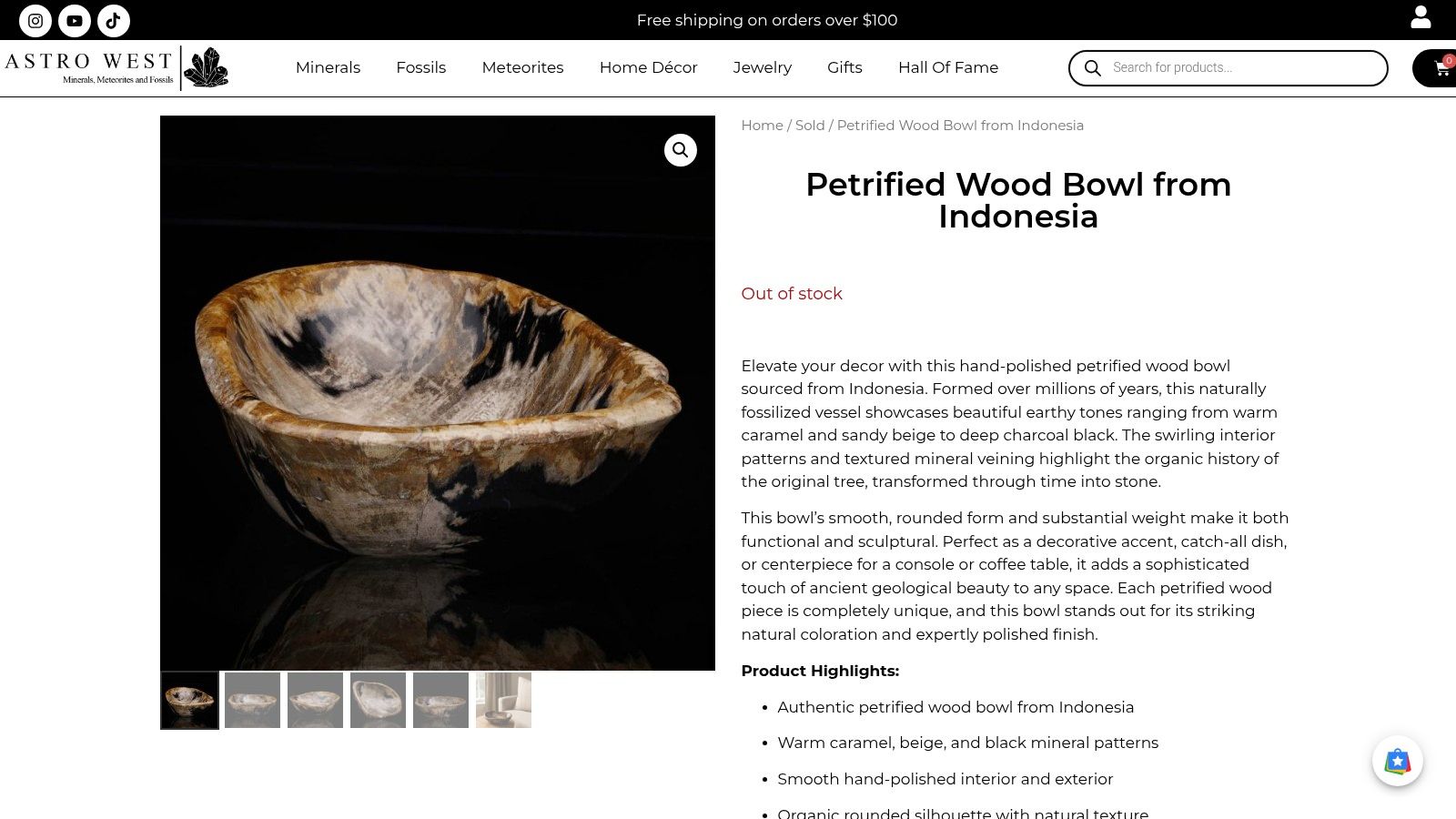
Petrified wood is especially powerful in interiors because it holds two identities at once. It began as living wood. Over immense spans of time, mineral replacement turned it to stone while preserving its structure. That duality gives it unusual emotional range. It feels organic and architectural at the same time.
Grounding decor becomes more than a styling phrase. An object with visible grain, stone weight, and deep-time history naturally slows a room down.
A petrified wood bowl or plate works well because it bridges sculpture and utility. It can anchor an entry table, dining surface, or library shelf without looking ornamental for its own sake. The object has visual mass, but it also has narrative.
For a related example of fossil texture in a decorative context, a crinoid fossil from Morocco introduces marine history in a quieter, more patterned way. It suits shelves or desktops where you want detail rather than monumentality.
Use fewer pieces with stronger material presence
When I place natural history objects in residential interiors, I usually avoid over-grouping them. One petrified wood form often works better than several smaller fossils competing on the same surface.
A good placement framework looks like this:
Entry console: Use one substantial object that immediately establishes tone.
Coffee table: Choose a bowl or low specimen with tactile presence.
Dining table: Let the centerpiece feel elemental, not fussy.
Bedroom dresser: Favor one grounding material over multiple sentimental items.
A meaningful object should feel discovered, not arranged into submission.
There's also room for more unusual combinations. Opal in Petrified Wood from Australia – 108g is described as a stunning fusion of vibrant opal hues embedded within ancient fossilized wood. That combination is compelling because it pairs fossil structure with luminous mineral color. In design terms, it brings both calm and surprise.
If the goal is intentional decorating, natural home decor works best when the material itself carries the story. You don't need to explain why it matters. The object already does.
Infuse Your Home with Natural Symbolism
Some pieces shape a room through history. Others shape it through atmosphere. Minerals often do both, which is why they play such a strong role in decor with meaning.
People don't place amethyst in a bedroom or study by accident. They choose it because the stone has long been associated with calm, clarity, and a more reflective mood. Whether someone approaches that symbolically, spiritually, or aesthetically, the design effect is similar. The room feels steadier.
Amethyst and the language of calm
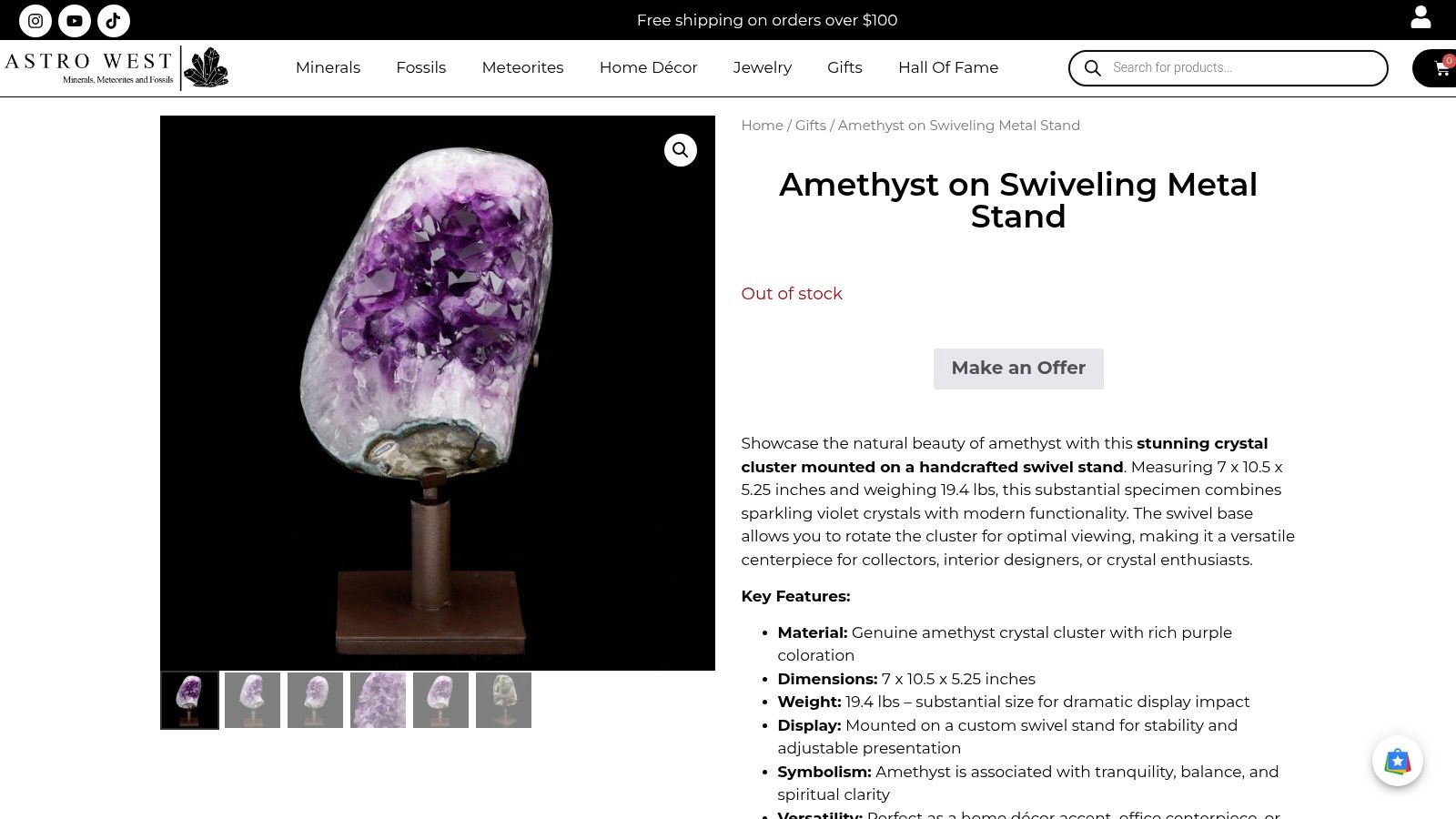
An amethyst geode or cluster works because it has internal drama without visual aggression. The crystalline surface catches light. The violet tone softens hard edges. The natural cavity of a geode also creates a sense of depth, which makes the piece feel contemplative rather than flat.
In practical rooms, placement matters more than quantity. A single amethyst on a nightstand, writing desk, or meditation shelf can establish the emotional temperature of that zone. Several smaller clusters scattered around the room usually dilute that effect.
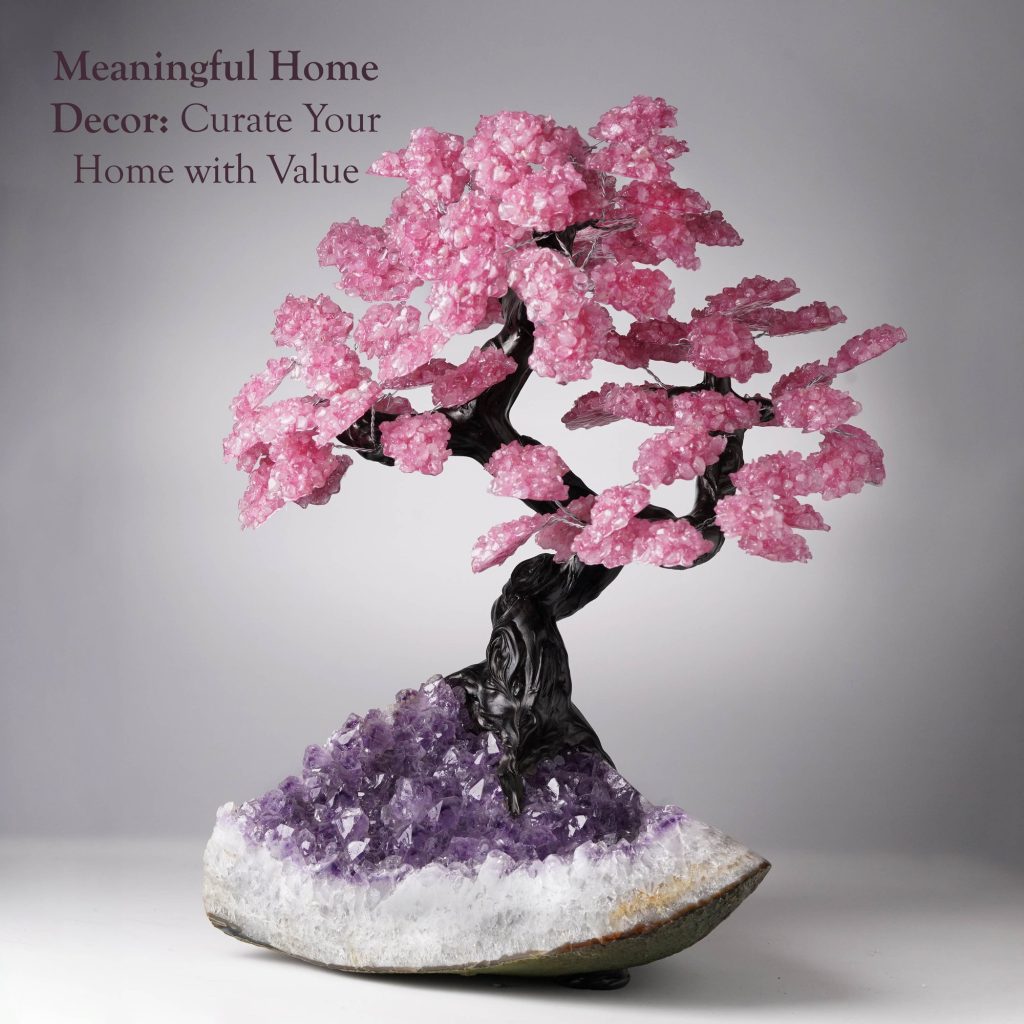
A client once added a large harmonizing gem tree to her home. She smiled the next morning when she walked by it. That reaction is simple, yet it's the right measure. Meaningful home decor should change how a space feels in lived experience, not only how it photographs.
Symbolism needs form, not clutter
Not every symbolic object belongs in every room. The strongest ones match the emotional task of the space.
Consider these pairings:
Bedroom: calming stones with soft color and luminous surfaces
Study: objects that support focus and mental clarity
Entry: forms that feel welcoming and composed
Reading corner: one tactile piece that invites pause
For another symbolic accent with sculptural presence, a hand-carved malachite elephant offers a different kind of meaning. Malachite's banding gives it visual movement, while the elephant form adds associations of memory, stability, and guardianship. The result is both decorative and emblematic.
Design note: Symbolic decor works best when the room can hold its message quietly.
Selenite belongs in this conversation as well. Its pale, luminous quality often suits corners that need lightness rather than emphasis. A candle holder in that material can make a hallway niche or bedside surface feel serene without becoming precious.
This is the advantage of story-driven decor rooted in natural materials. The symbolism doesn't feel imposed. It emerges from the object's color, structure, and long cultural associations.
Choose Decor That Tells a Cosmic Story
The most memorable interiors contain at least one object that opens a larger conversation. In some homes, that's a painting. In others, it's a rare book, a tribal textile, or a historic artifact. In a natural history setting, few objects do this better than a meteorite.
A meteorite changes the scale of a room's narrative. It is not only ancient. It is extraterrestrial. That fact alone gives it a presence that ordinary tabletop sculpture can't replicate.
Why meteorites carry both wonder and value
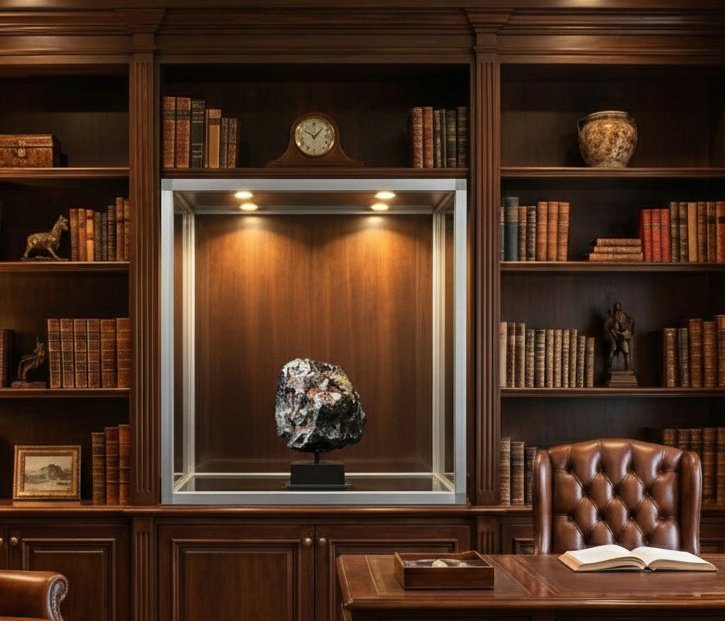
A Campo del Cielo iron meteorite works beautifully in interiors because it is rugged, sculptural, and immediately legible as something unusual. It doesn't need ornate styling. A clear pedestal, a clean plinth, or a well-scaled console is enough.
Its appeal also extends beyond design. Meteorite value depends on type, rarity, and provenance. Common meteorites may be priced at $0.50 to $5 per gram, while exceptionally rare types like Martian meteorites can command $1,000 per gram or more, as explained in this meteorite market guide. That spread matters because it shows how collector logic works. Scientific significance, scarcity, and documentation all influence price.
This is one reason meteorites function differently from generic luxury accessories. They are part decor object, part scientific specimen, part collectible asset.
Place cosmic objects with discipline
A meteorite should feel intentional. It should never read like novelty. The best placements usually share three traits:
Placement
Why it works
What to avoid
Library console
Supports contemplation and conversation
Crowding with many small curiosities
Entry pedestal
Establishes instant focus
Mixing with seasonal decor
Office shelf
Adds intellectual character
Hiding it behind books and frames
If you enjoy celestial themes in a broader decorative scheme, discover cosmic artwork that can complement, rather than compete with, a specimen display. The key is hierarchy. Let the authentic object remain the primary point of interest.
A room becomes richer when it contains something larger than taste alone. Meteorites do that. They connect domestic space to the wider universe, while still rewarding the disciplines of provenance, rarity, and connoisseurship.
Curate with Purpose and Precision
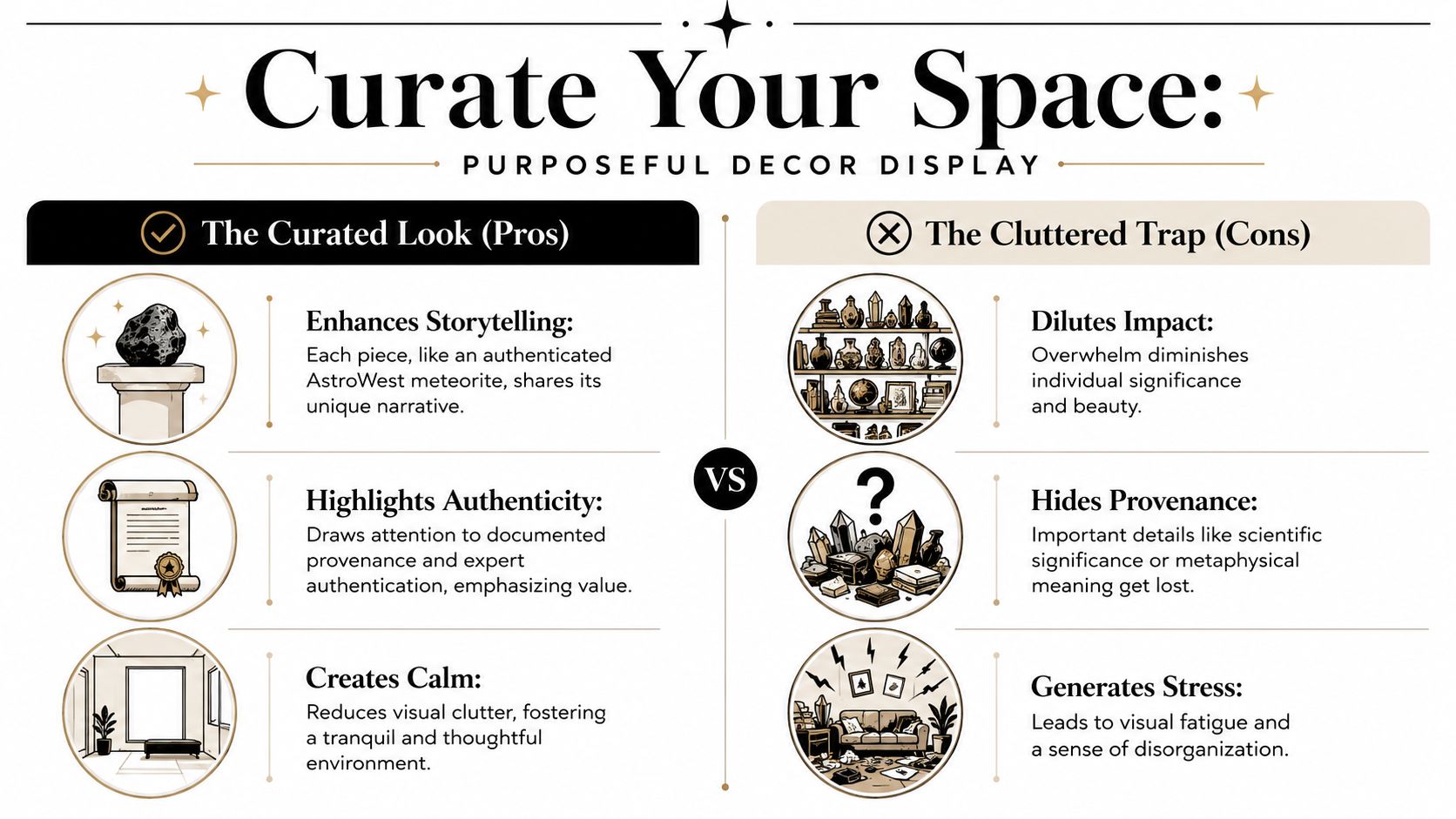
The biggest mistake in meaningful home decor isn't choosing the wrong object. It's failing to edit the right one. Too many rooms burden important pieces with bad placement, visual competition, or sentimental overcrowding.
Good curation demands subtraction. The eye needs silence around a focal object. Without that silence, meaning collapses into noise.
A key design challenge is making meaningful decor feel intentional without looking cluttered. Effective curation often means allowing a single object to anchor a space rather than having many keepsakes compete, giving the piece visual authority and preventing it from becoming noise, as discussed in this design guidance on restraint and focal points.
The one object per zone method
This is the simplest editing method I know. Divide the room into visual zones, then assign one primary object to each zone. A zone might be a console, a coffee table, a mantel section, or one shelf column.
The rule is straightforward:
One anchor per zone: choose the piece with the strongest shape or story
One support element: add a book, small vessel, or candle only if it helps scale
One empty area: leave visible negative space around the anchor
That last step often causes hesitation. Empty space can feel unfinished at first. In reality, it's what gives unique home accents authority.
What works and what usually fails
A few patterns repeat across successful rooms:
Works well: a substantial mineral on a narrow pedestal
Works well: one fossil centered on a low stack of books
Works well: a meteorite displayed alone on a clean surface
Usually fails: many small keepsakes lined up edge to edge
Usually fails: decorative objects grouped only by color
Usually fails: mixing symbolic pieces with unrelated seasonal items
Leave room around the object that matters most. Space is part of the display.
This is also where expertise matters. A curated acquisition source can help match object size, material density, and provenance to the room's scale and purpose. Astro West, for example, works directly with miners, paleontologists, worldwide suppliers, and field experts, which supports authentication and traceability for pieces intended for display and collection.
Intentional decorating isn't about austerity. It's about precision. The room should reveal judgment, not accumulation.
Create Heirlooms with Lasting Value
The best story-driven decor does more than personalize a room. It persists. Over time, a carefully chosen fossil, mineral, or meteorite can move from accent piece to family object, then from family object to heirloom.
That transition depends on more than sentiment. It depends on qualities collectors already recognize. Rarity, provenance, preservation quality, size, aesthetic appeal, and demand all shape how natural history objects hold or lose value. Pieces with weak documentation or compromised condition can depreciate. Pieces with strong traceability and unusual character often remain more resilient.
Why some decor crosses into asset territory
Fine art offers a useful comparison. Buyers don't value a painting only because it fills a wall. They value authorship, condition, exhibition history, and market confidence. Natural history follows similar logic.
Rare fossils can function as investment-grade assets. The record-breaking auction price for the Sue dinosaur fossil showed how collector competition for scarce, famous specimens can raise values enough to affect museum acquisition budgets, according to the University of Notre Dame report on fossil and meteorite prices.
That doesn't mean every decorative specimen will appreciate. It means the right object can do more than decorate. It can store meaning and value at once.
For clients building interiors with longevity in mind, the same care should extend to surrounding materials. Even practical stewardship matters. Fine textiles under important objects benefit from professional maintenance, and resources on expert oriental rug care in Birmingham show how preservation thinking supports a long-term approach to interiors.
A meaningful room rarely begins with a full redesign. It usually begins with one object that changes the emotional center of the space. That might be a petrified wood form on a console, an amethyst geode in a bedroom, or a meteorite that turns a study into a place of curiosity and focus.
Astro West approaches these objects as more than decoration. Each piece sits at the intersection of natural history, design, and collector logic. Minerals, fossils, and meteorites are selected for visual presence, scientific respect, and display value. Just as important, they're sourced through direct relationships with miners, paleontologists, trusted suppliers, and field specialists. That makes authenticity and traceability central to the acquisition process.
For homeowners, designers, and collectors, that matters. A room feels more grounded when the objects in it are real, documented, and chosen with restraint. Meaningful home decor doesn't come from filling space. It comes from acquiring fewer things with greater depth.
Every piece comes with expert authentication, documented provenance, and is available for immediate acquisition online or in person. Browse the collection, visit the Manhattan gallery, or contact the team directly for guidance on selecting natural home decor with story, symbolism, and long-term presence.
Explore Astro West to browse authenticated fossils, meteorites, minerals, and natural décor for immediate acquisition online or at the Manhattan gallery. If you'd like help choosing a piece for a specific room, contact Astro West directly for expert guidance and documented provenance.