A Guide to the Rose Quartz Love Crystal Tree: Natural Art for Luxury Interiors
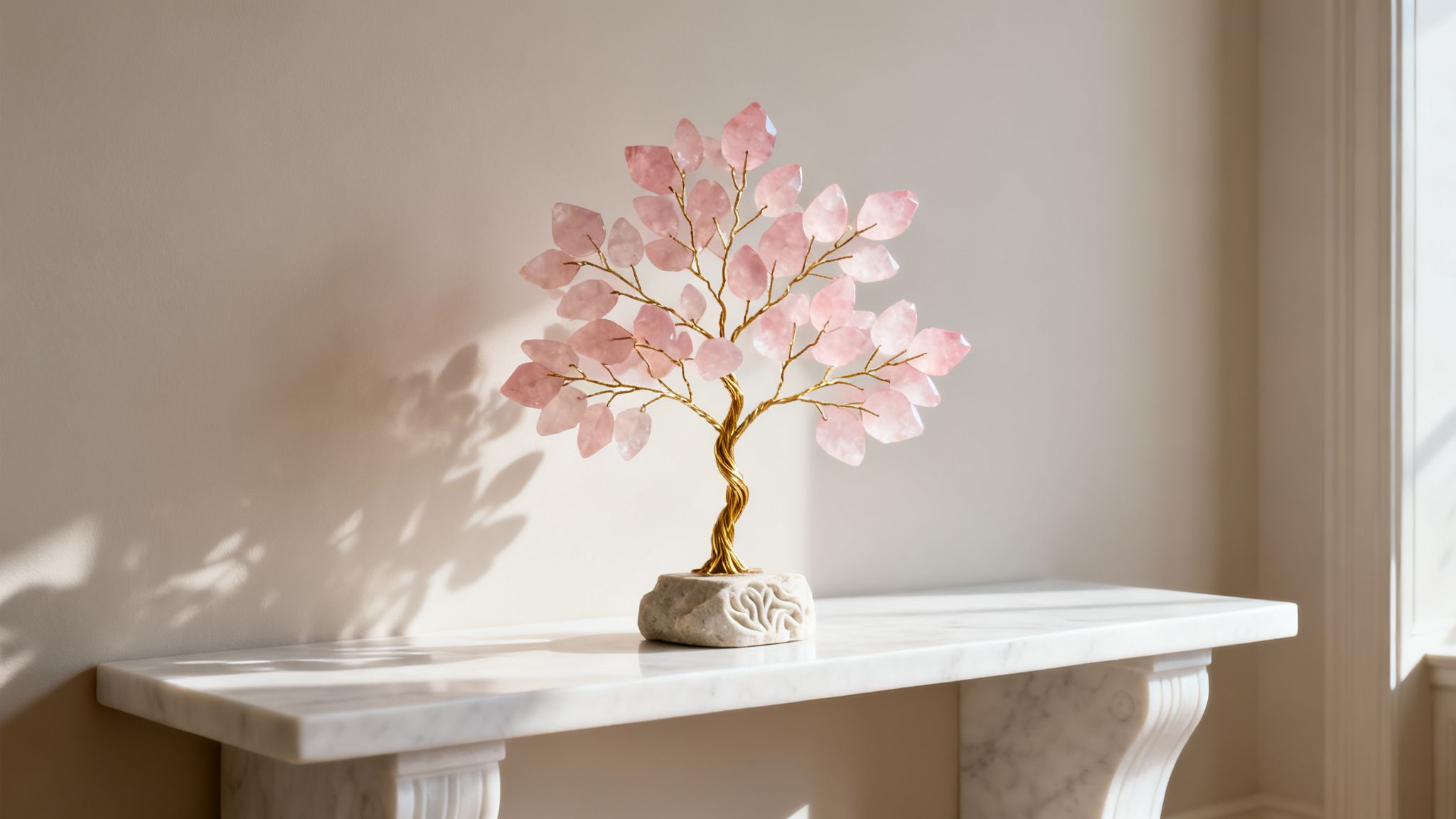
A rose quartz love crystal tree is far more than a decorative object; it is a delicate sculpture that unites the geological beauty of rose quartz with the powerful, ancient symbolism of a tree. Each piece features polished chips of genuine rose quartz—long known as the stone of unconditional love—skillfully attached to wire branches. The result is a stunning work of natural art that serves as both luxury décor and a meaningful emblem of harmony and affection.
The Fusion of Natural Art and Timeless Symbolism
Imagine a sculpture that effortlessly blends millions of years of geological history with meticulous modern artistry. That is the essence of a rose quartz love crystal tree. It is a sophisticated object where raw nature is refined into an elegant statement piece, making it a conversation starter, a focal point, and a bridge between the natural world and curated interior design.
At its core, this unique creation serves a dual purpose. On one hand, it is a stunning example of luxury home décor. The soft, gentle pink of the rose quartz "leaves," often complemented by gleaming wire branches, introduces a touch of organic warmth and color to any space. Its sculptural form adds dimension and texture, making it an ideal accent for a mantel, bookshelf, or executive desk.
On the other hand, the tree is rich with symbolism. The tree form itself is a universal icon of growth, stability, and interconnectedness. Its roots ground it to the earth while its branches reach for the sky, representing a connection between the physical and the spiritual.
A Symbol of Growth and Affection
When this powerful tree symbolism is combined with rose quartz—a mineral revered for centuries for its association with love, compassion, and emotional healing—the object takes on an even deeper significance. This makes the rose quartz crystal tree a particularly meaningful piece for spaces meant to foster connection and harmony, such as a living room or bedroom.
The true value of a rose quartz tree lies in its ability to be both a visually captivating piece of natural art and a profound symbol of love in all its forms—for others, for the world, and most importantly, for oneself.
This guide is crafted for discerning collectors, interior designers, and thoughtful gift-givers. At Astro West, we curate pieces that are not just beautiful but are also rich with authentic geological history and artistic significance. By exploring what makes this unique sculpture so special, you'll discover why the rose quartz love crystal tree has become a cherished item in sophisticated homes worldwide. It is an investment in both timeless design and personal well-being.
Geological Origins and Cultural History of Rose Quartz
To truly appreciate what makes a rose quartz love crystal tree so exceptional, one must journey deep into the earth and far back in time. That soft, captivating pink is not a dye—it is a geological masterpiece. Rose quartz acquires its famous blush from microscopic, fibrous inclusions of a mineral related to dumortierite, which become trapped as the crystal forms within igneous rocks.
These crystals grow over millions of years as magma cools slowly deep beneath the Earth’s surface. This unhurried process allows massive deposits to form, perfect for carving into substantial decorative pieces. At Astro West, our direct relationships with premier mining locales ensure every piece we offer has a verifiable and distinguished provenance.
Key mining operations are found in Brazil, South Africa, India, and especially Madagascar, which is renowned for producing rose quartz of incredible color and clarity. Mines in Brazil, for instance, yield a significant portion of the global supply, making it a primary source for the high-quality stone required for luxury décor.
From Ancient Amulets to Modern Art
The story of rose quartz is not merely geological; it is deeply woven into human history. Its association with love and beauty is an ancient one, stretching back millennia.
As early as 5000 BCE, ancient Egyptians carved rose quartz into heart-shaped amulets, believing the stone held powerful properties that could attract love and preserve a youthful complexion. Later, Roman nobles and officials utilized rose quartz for a different purpose, carving it into intricate seals to denote ownership and authority.
Across nearly every culture, the stone has been a cherished symbol of affection.
Ancient Greeks and Romans: They connected rose quartz to Adonis and Aphrodite (or Venus), their deities of love and beauty, viewing it as a divine gift meant to spread love and passion among mortals.
Medieval Europe: During this period, the stone was often used in healing potions or worn as an amulet to promote faithfulness and reconcile lovers.
Eastern Traditions: For centuries, various Eastern cultures have used rose quartz in carvings and art, valuing its gentle, calming energy and its connection to the heart.
This long history speaks to the stone's timeless appeal. Today, the demand for rose quartz remains robust, a testament to the enduring power of its cultural significance.
The Science Behind the Beauty
While its history is rich with symbolism, the physical properties of rose quartz are equally impressive—and supported by science. It scores a 7 on the Mohs hardness scale, making it a durable, resilient material ideal for creating lasting works of art like crystal trees and obelisks. This durability ensures that a beautifully crafted piece, such as a sleek rose quartz obelisk from Brazil, can be passed down for generations.
Rose quartz is one of those rare minerals where its geological formation and cultural symbolism align perfectly. The slow, nurturing way it grows inside the Earth mirrors the patient, unconditional love it has come to represent throughout human history.
This powerful blend of hard science and deep-seated cultural reverence is what gives a rose quartz tree its unique soul. It is more than just a beautiful object. It's a piece of natural history, a tangible link to our planet’s ancient past, and a timeless symbol of human connection. To explore more about the links between geology and spirituality, one can delve into the cultural history and esoteric significance of sacred sites.
The Artistry Behind a Natural Mineral Sculpture
How does a rugged piece of raw mineral, which took millennia to form deep within the Earth, become transformed into an elegant, lifelike tree? The journey from a rough stone to a finished rose quartz love crystal tree is a story of meticulous human artistry. It is a delicate balance between honoring the natural material and shaping it with precision and skill.
The process begins with the most critical step: selecting the right stone. Not just any rose quartz will suffice. Artisans are highly selective, searching for high-grade material with the perfect balance of color saturation and translucency. They seek that signature soft, milky pink—deep enough to be captivating but gentle enough to feel serene. The natural internal fractures and inclusions are not viewed as flaws; instead, they are prized for the unique character they lend to each finished piece.
From Raw Stone to Polished Form
Once the ideal raw material is secured, the true work begins. The base of the tree is often carved from a larger, solid chunk of rose quartz or another complementary mineral, giving the sculpture a stable and beautiful foundation. This requires expert lapidary skills to shape and polish the stone into a smooth, elegant anchor.
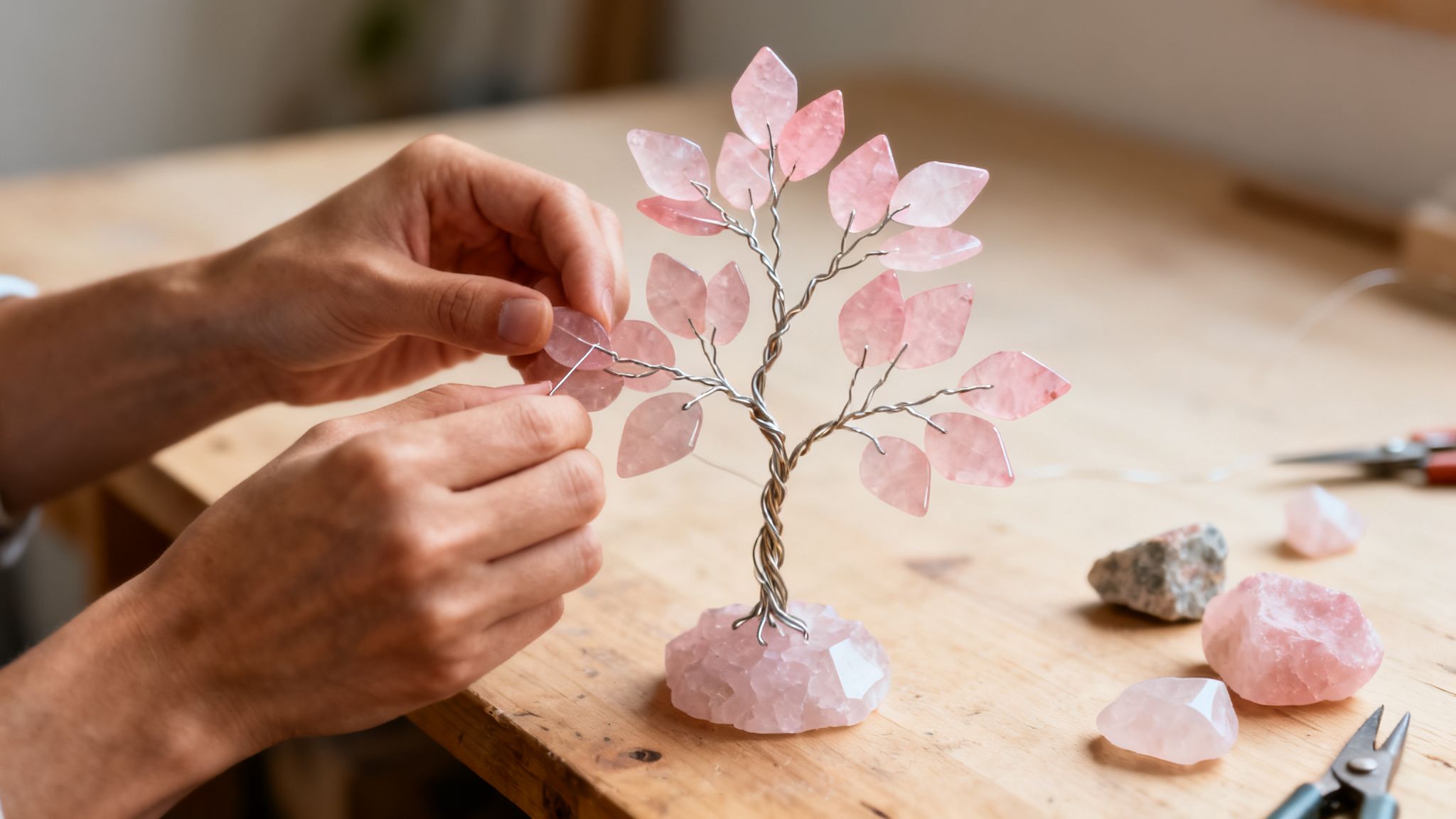
The "leaves" are where the artistry truly comes to life. Smaller pieces of the selected rose quartz are carefully tumbled and polished. This process smooths away any rough edges, enhances the stone's natural luster, and reveals its delicate internal patterns. Each polished chip becomes a tiny, individual gem, ready for placement.
The assembly, however, is the most demanding phase. Artisans painstakingly wrap and twist fine, durable wire—often silver or gold-toned—to create a branching, organic structure. Each polished rose quartz chip is then individually attached to these wire "branches." It is a time-consuming and precise task, as the artist works to ensure the final form is both balanced and lifelike, capturing the essence of a tree.
The creation of a crystal tree is a celebration of both geological time and human skill. It is where millions of years of mineral formation are met with hours of patient craftsmanship, resulting in a sculpture that feels both ancient and contemporary.
At Astro West, we partner with skilled artisans who possess a deep respect for the natural material. They understand their role is not to force the mineral into a shape, but to reveal the beauty already locked within. This commitment ensures that every crystal tree is a one-of-a-kind work of art, elevated by the human touch that guided its creation. For those curious to see this artistic approach applied to other minerals, our large citrine gemstone tree showcases the same exceptional craftsmanship.
This dedication to quality and artistry is reflected in the growing appreciation for quartz in luxury décor. The global quartz market reached $8.0 billion and is projected to climb to $12.5 billion by 2033, a trend fueled by the demand for unique, natural pieces such as these. More insights about the quartz market on researchandmarkets.com are available for those interested in market trends.
Styling Your Rose Quartz Tree in Luxury Interiors
A rose quartz tree is far more than a simple decorative object. It should be regarded as a piece of natural art that introduces texture, color, and a profound sense of tranquility into a home. This is where geology meets design—a sculptural piece that bridges the raw, untamed beauty of the natural world with the curated sophistication of a well-designed interior.
The soft, blush pink of rose quartz is also remarkably versatile. It pairs beautifully with nearly any color palette, from the crisp whites and cool grays of minimalist design to the deep charcoals, navies, and rich jewel tones of a more dramatic scheme. Its gentle hue adds a subtle pop of color and warmth without overwhelming existing décor.
Creating a Serene Focal Point
One of the most effective ways to style a rose quartz love crystal tree is to allow it to serve as a focal point. Place it where the eye is naturally drawn, allowing its delicate form and gentle color to command attention. This simple act elevates the piece from a mere accent to a central design element.
Consider these impactful placements:
On a Marble Console Table: The coolness of marble creates a stunning contrast with the warmth of the rose quartz, creating an aesthetic of understated luxury in an entryway or living room.
As a Centerpiece on a Coffee Table: Surrounded by curated art books and a simple tray, the tree becomes a captivating conversation starter.
Atop a Grand Fireplace Mantel: Flanked by elegant vases or minimalist art, it introduces a soft, organic element to a powerful architectural feature.
A well-placed rose quartz tree does more than just decorate a surface; it infuses the entire area with a calming, harmonious energy. Its presence softens hard lines and brings a touch of nature's serenity indoors, creating a space that feels both luxurious and welcoming.
Integrating with Bookshelves and Personal Spaces
Beyond grand statements, the rose quartz tree excels as a thoughtful detail in more intimate settings. Its sculptural form adds vertical interest and texture to curated displays, breaking up the monotony of linear objects like books. For anyone seeking to enhance their vertical displays, understanding how to decorate shelves can provide fresh ideas for showcasing its beauty.
In a primary bedroom, placing a rose quartz tree on a nightstand or dresser introduces a calming presence. Its association with love and tranquility makes it the perfect addition to a personal sanctuary, promoting a restful atmosphere. In a home office, it can be positioned on a desk to soften the workspace, offering a beautiful, tangible reminder to approach tasks with a calm and focused mind.
For a quick reference, here is a guide to some of the most effective placements.
Rose Quartz Tree Placement Guide
Location
Primary Intention
Styling Tip
Bedroom Nightstand
Promote restful sleep and romantic connection.
Pair with soft lighting and minimalist décor.
Living Room Mantel
Foster harmony and welcoming energy for guests.
Make it a focal point surrounded by books or art.
Home Office Desk
Encourage creativity and calm focus.
Place it beside a computer monitor to soften the workspace.
Meditation or Wellness Space
Deepen spiritual practice and self-love.
Combine with other natural elements like plants or wood.
Ultimately, styling your rose quartz tree is about finding the perfect balance between aesthetics and intention. Whether it serves as a bold focal point or a subtle, personal accent, this piece of natural art has the unique ability to elevate any interior. It brings a sense of timeless elegance and organic beauty that resonates deeply in a thoughtfully designed luxury home.
How to Select an Authentic Rose Quartz Tree
When seeking a rose quartz love crystal tree, one will find a wide range of options available. For the serious collector or anyone looking for a truly special gift, distinguishing a genuine, high-quality piece from an imitation is paramount. This comes down to understanding key indicators of authenticity.
This buyer’s guide empowers you to choose with confidence by focusing on the stone's color, clarity, and provenance.
The first characteristic to evaluate is color. Authentic rose quartz exhibits a gentle, soft pink hue that is often milky or cloudy. Crucially, its color is almost never perfectly even. One should expect to see subtle tonal variations, soft white streaks, or cloudy patches within the stone. A piece displaying a shocking, bubblegum-pink or a completely uniform color is a strong indicator of artificial dyes.
Furthermore, genuine rose quartz is rarely perfectly transparent. Its renowned translucency comes from microscopic mineral inclusions trapped within the crystal millions of years ago. These internal features, such as fine fractures or feathery patterns, are not flaws—they are proof of its natural origin. A piece that appears as flawless as pink glass is likely just that: glass.
Evaluating Craftsmanship and Material Quality
Beyond the stone itself, the construction of the tree speaks volumes about its quality. Look closely at how the crystal "leaves" are attached to the wire "branches." In a well-made sculpture, the work is meticulous and secure, creating a form that appears balanced and organic. The wire should feel sturdy, and the base—whether it is another piece of rose quartz or a different mineral—should be stable and well-carved.
A couple of simple physical tests can also provide clues. Natural quartz is a dense mineral with a distinct tactile quality.
Temperature Test: Real rose quartz will feel cool to the touch initially and will take some time to warm up. Glass or plastic imitations typically feel closer to room temperature and warm up much faster in your hand.
Weight Test: A genuine rose quartz tree will feel surprisingly heavy for its size. If it feels light, it may be made from resin or plastic instead of solid stone.
For a collector, authenticity is everything. The value of a natural art piece lies not just in its beauty, but in its genuine geological origin. Sourcing from a reputable gallery that guarantees provenance is the most reliable way to ensure you are acquiring a true work of natural art.
Knowing the key differences between authentic and imitation rose quartz is critical for making an informed purchase. Here is a quick comparison to help you identify a genuine piece.
Authentic vs. Artificial Rose quartz Comparison
Characteristic
Authentic Rose Quartz
Artificial or Dyed Stone
Color
Soft, gentle pink with natural variations, streaks, or cloudiness.
Overly vibrant, bubblegum-pink, or perfectly uniform color.
Clarity
Translucent with natural internal inclusions, fractures, or "feathers."
Perfectly clear like glass or may contain unnatural-looking air bubbles.
Feel
Feels cool to the touch and substantial/heavy for its size.
Feels room temperature or warms quickly; often surprisingly lightweight.
Surface
May have minor natural imperfections or a waxy luster.
Can feel unnaturally smooth (glass) or plasticky (resin).
Ultimately, while a trained eye can spot these differences, the most certain way to ensure you are getting an authentic piece is to trust your source.
The Critical Role of a Trusted Source
The most important factor in choosing an authentic rose quartz tree is the reputation of the seller. A trustworthy gallery like Astro West builds direct relationships with miners and artisans, enabling us to know the provenance of every piece. We guarantee our trees are crafted from genuine, natural rose quartz—never dyed, synthetic, or glass.
This commitment to authenticity is why collectors, designers, and enthusiasts trust us. For a prime example of the natural variations we value, view our raw Brazilian Rose Quartz specimens.
The global demand for natural quartz makes authentic supply chains more important than ever. Worldwide consumption of natural quartz has reached 412 million tons, with a market valued at $144 billion. In such a massive market, knowing your source is the best protection available. By choosing a dealer who prioritizes authenticity, you are not just buying a beautiful object—you are investing in a genuine piece of Earth's history.
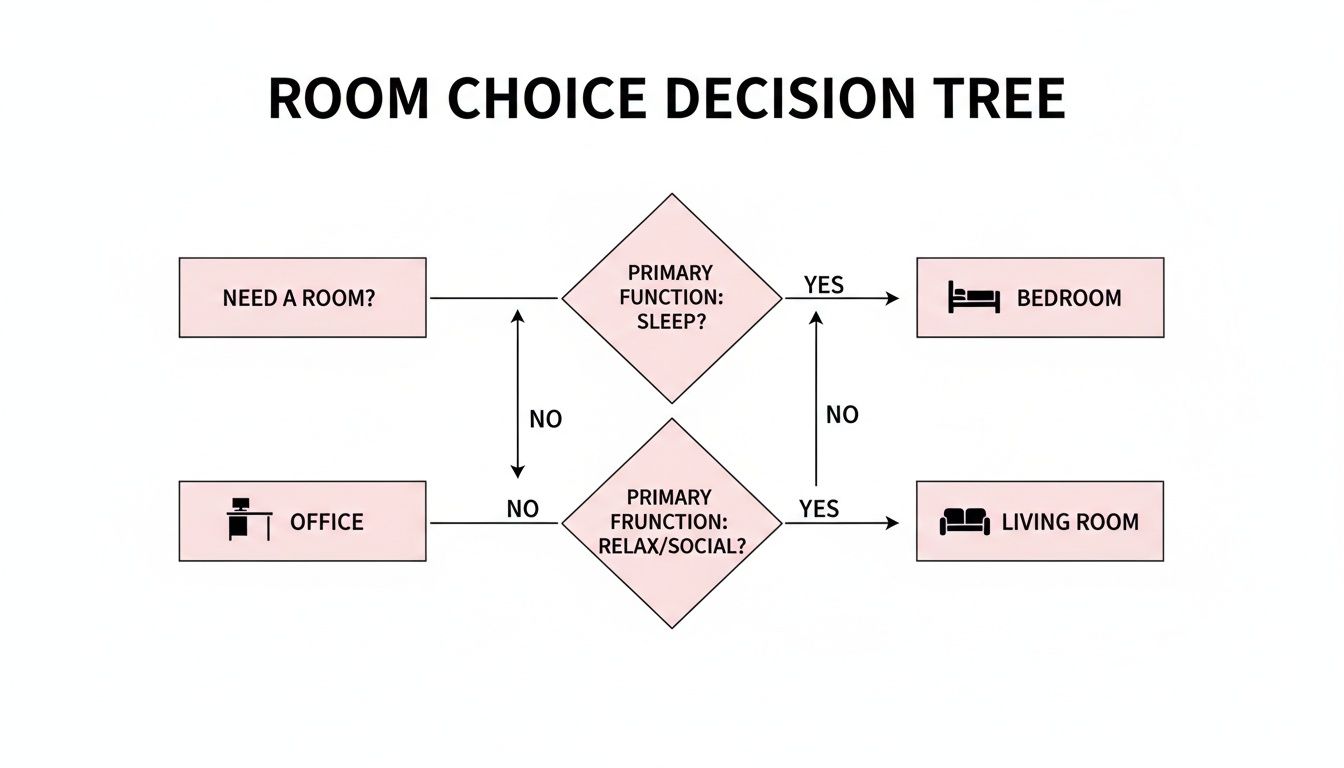
This quick decision tree can help you choose the best room for your rose quartz tree based on your design and wellness intentions.
As you can see, the primary function of a room—whether for rest, work, or social gathering—can guide the ideal placement of your tree to maximize its aesthetic and symbolic impact.
Caring for Your Natural Mineral Art
A rose quartz love crystal tree is more than a decoration; it is a small piece of natural history, and its proper care ensures the preservation of its timeless beauty. A small amount of gentle attention is all that is required to keep your sculpture looking stunning for years—even generations—to come.
The primary task is simple: keep it free of dust. Due to the intricate branches and tiny crystal leaves, dust can settle and dull the stone's natural luster. The best tool for this is a soft, clean paintbrush or a fluffy makeup brush. A light sweep will clear away any buildup without placing pressure on the delicate wirework.
Preserving Color and Integrity
Rose quartz is a relatively durable mineral, but its famous soft pink color requires protection. The most important consideration is to keep your tree out of direct, prolonged sunlight. Over time, UV rays can cause the beautiful pink hue to fade. Select a location where it can receive indirect or ambient light instead.
It is also crucial to avoid harsh chemicals. Never use household cleaners, detergents, or abrasive polishes. These can easily scratch the polished surface of the quartz or tarnish the wire branches. If more than a light dusting is needed, a soft cloth lightly dampened with water is sufficient.
A well-cared-for rose quartz tree is more than just a decorative object; it is a piece of geological history that connects your space to the natural world. Its preservation honors the millions of years it took to form and the artistry required to shape it.
Metaphysical Cleansing Practices
For those who connect with the tree on a symbolic level, energetic "cleansing" is a common practice intended to refresh the piece's presence. One of the simplest and safest methods is with moonlight. Place your tree on a windowsill overnight during a full moon. This is a gentle, traditional approach believed to clear the crystal’s energy without any physical risk.
If you enjoy working with rose quartz in other forms, you can find different sizes and shapes—such as our versatile tumbled rose quartz—which can be cleansed in similar ways. By following these simple steps, you can ensure your beautiful piece of mineral art remains as vibrant and meaningful as the day you brought it home.
Common Questions About Rose quartz Trees
Exploring the world of natural art often raises questions. Whether you are a seasoned collector, an interior designer seeking the perfect accent, or a thoughtful gift-giver, obtaining clear answers is essential. This section addresses the most frequent questions we hear about the rose quartz love crystal tree, providing the details you need to feel confident.
Our goal is to resolve any lingering uncertainties so you can fully appreciate what makes these pieces so special.
Is a Rose Quartz Tree a Meaningful Gift?
Absolutely. A rose quartz love crystal tree is one of the most thoughtful gifts one can give, especially for weddings, anniversaries, housewarmings, or other major milestones. It is not just a beautiful object; it carries a deep, resonant meaning.
Its core symbolism relates to unconditional love, while the tree form itself represents growth and stability—a powerful combination for any relationship. Furthermore, its natural elegance and soft pink hue make it a cherished piece of décor that complements almost any interior style, from modern minimalist to classic luxury. It is a timeless choice that is both beautiful and significant.
Will the Pink Color of My Rose quartz Fade?
This is an excellent and important question for preserving your piece. Natural rose quartz can fade over many months or years, but only if it is exposed to direct, prolonged sunlight. The sun's ultraviolet (UV) rays can slowly dull the microscopic mineral inclusions that give the stone its signature delicate pink color.
The solution is simple: place your crystal tree where it will receive indirect or ambient light. Avoid placing it on a sunny windowsill or any spot that receives intense sun for hours each day. With this one small consideration, the beautiful color of your rose quartz will last a lifetime.
How Does a Rose Quartz Tree Differ from Other Crystal Trees?
While all crystal trees share the universal symbolism of growth and stability, the specific mineral used defines its unique aesthetic and symbolic focus. A rose quartz love crystal tree is singularly connected to the heart—associated with love, compassion, self-care, and emotional harmony.
Other crystal trees, by contrast, carry their own symbolic weight. For instance:
Amethyst Trees are often associated with mental clarity, intuition, and a sense of calm.
Citrine Trees are traditionally chosen for prosperity, success, and positive energy.
Clear Quartz Trees are seen as powerful amplifiers of intention and focus.
The right choice ultimately depends on your personal taste and the specific energy you wish to bring into your space. At Astro West, we offer a curated collection of different mineral trees, each telling its own unique geological and symbolic story.
How Does Astro West Guarantee Authenticity?
Authenticity is the absolute cornerstone of our gallery. At Astro West, we have spent decades building direct, long-standing relationships with miners and trusted sources in the world's most renowned locales, such as Brazil and Madagascar. This allows us to trace every piece directly back to its origin, ensuring its provenance is unimpeachable.
Every rose quartz tree we offer is crafted from genuine, natural rose quartz—we never sell dyed, heated, or synthetic material. Our reputation is built on a foundation of scientific credibility and an unwavering commitment to providing our clients with authentic, high-quality works of natural art. You can invest with total confidence, knowing each piece is exactly what we represent it to be.
At Astro West, we invite you to explore a world where natural history meets luxury design. Discover authentic mineral sculptures, rare fossils, and meteorites curated for the discerning collector. Visit our collection to find a timeless piece for your home.