Rose Quartz Gemstone Tree: A Guide to Natural Art & Luxury Décor
A rose quartz gemstone tree is more than just a beautiful object; it is an artisanal sculpture combining natural history with meticulous craftsmanship. In these pieces, polished chips of genuine rose quartz form the "leaves," each one hand-set and affixed to a wire frame skillfully twisted into a trunk and branches. These handcrafted sculptures merge the organic beauty of a treasured mineral with the delicate art of wire sculpture, creating a unique statement piece for any sophisticated space.
The Art and Allure of the Gemstone Tree
To call a rose quartz gemstone tree a mere decoration would be an understatement. It's a thoughtful fusion of geology and artistic expression. Each sculpture is a testament to painstaking craftsmanship, starting with the careful selection of high-quality rose quartz. The raw stones are tumbled and polished to reveal the signature soft pink hue and subtle translucence that defines this beloved gem.
From there, the polished chips are individually attached to a network of fine, flexible wire—often copper, brass, or silver-toned. An artisan patiently twists and shapes this wire into the lifelike form of a tree. This is not a quick process; it requires immense precision and a keen artistic eye to create a silhouette that feels both balanced and natural.
A Foundation in Nature
To ground the entire piece, the wire trunk is securely mounted onto a natural mineral base. This foundation is often a larger, rough specimen of rose quartz, amethyst, or another complementary stone. Not only does this provide stability, but it connects the sculpture back to its geological roots. The choice of base is what truly ensures no two trees are ever exactly alike, making each one a unique work of art.
This thoughtful combination of elements is what elevates a gemstone tree from a simple ornament to a piece of natural art. While rose quartz is celebrated for its delicate color, other minerals create equally stunning sculptures. For example, collectors and designers can explore the vibrant energy of a large citrine gemstone tree to see how different materials offer their own distinct aesthetic and presence.
The real allure of a rose quartz tree lies in this unique intersection of raw, natural material and intentional human design. It’s both a celebration of geological beauty and a showcase of true artisanal skill.
Ultimately, these sculptures captivate collectors and designers alike because they introduce a sense of tranquility, elegance, and symbolic meaning into an interior. They serve as a constant, beautiful reminder of the intricate connection between the natural world and human artistry.
The Enduring Story of Rose Quartz
To fully appreciate the appeal of a rose quartz gemstone tree, one must understand the story contained within each crystal "leaf." Rose quartz is far more than a pretty pink mineral; its story is a fascinating blend of geology and human history. A variety of quartz, its signature blush color is not derived from its core chemical makeup.
So where does that gorgeous pink come from? Its captivating color is created by microscopic inclusions of a fibrous borosilicate mineral related to dumortierite. These tiny, densely packed fibers scatter light in just the right way to produce the soft, rosy hue we all love. This geological quirk means every single piece is unique, with colors that can range from the palest, almost-white pink to a much deeper, richer rose.
Geological Origins and Cultural Significance
The world’s best rose quartz—material of exceptional quality and color—comes from Brazil and Madagascar, two regions famous for their incredible mineral wealth. For centuries, these localities have been the source for the raw material that artisans and jewelers turn into breathtaking objects. You can see the rich color and quality in fine specimens like this Brazilian Rose Quartz, which showcases why these sources are so prized by collectors.
But it’s not just about geology. Rose quartz has been cherished for thousands of years across different cultures, often earning the title "Stone of Unconditional Love." Its history is woven through myths and legends, from ancient Roman and Greek tales that connected it to love gods, to Egyptian beliefs that it could improve the complexion.
While we might focus more on its aesthetics and symbolic meaning today, this deep historical context adds another layer to its appeal. It shows a long-standing human connection to this mineral, recognizing its gentle energy and tying it to compassion, emotional healing, and harmony.
This enduring legacy is rooted in both its tangible beauty and the universal feelings it represents—a timeless appeal that secures its special place in the world of gemstones. And it's not just rose quartz; other crystals, like those used in a clear quartz crystal diffuser, also carry their own unique stories and energies, opening up a whole world of gemstone appreciation. Ultimately, the story of rose quartz is where geology and humanity meet, transforming a simple mineral into a profound symbol that still resonates with us today.
From Raw Mineral to Sculptural Masterpiece
Ever wonder how a rough chunk of rose quartz becomes one of these intricate little trees? It's a fascinating journey that blends nature's raw beauty with serious hands-on artistry. This is not a factory assembly-line process; each tree is a testament to patience and a deep respect for the stone itself.
It all starts with picking the right material. Artisans are incredibly selective, searching for raw rose quartz that has that perfect, soft pink color and good clarity. This initial choice is crucial—it ensures the finished "leaves" will have that captivating, gentle glow everyone loves.
The Artisan's Touch
Once the perfect stone is chosen, it’s carefully broken into smaller, more manageable pieces. These raw fragments are then placed in a tumbler with abrasives, where they're gently smoothed and polished over time. This process buffs away all the rough edges, transforming them into the gleaming, smooth chips that will soon become the tree's foliage.
While the stones are being polished, the artist gets to work on the tree’s delicate framework. It's a meticulous, multi-stage construction:
Wiring the Leaves: Every single polished rose quartz chip is painstakingly drilled or wrapped with a thin, flexible wire.
Forming the Branches: These individually wired chips are then twisted together into small groups, forming the first delicate branches. It's a repetitive and precise task that requires a steady hand.
Building the Trunk: Finally, multiple small branches are gathered and skillfully twisted together to create a thicker, more substantial trunk, giving the sculpture its natural, treelike shape. Copper or brass wire is often used for its flexibility and warm, complementary color.
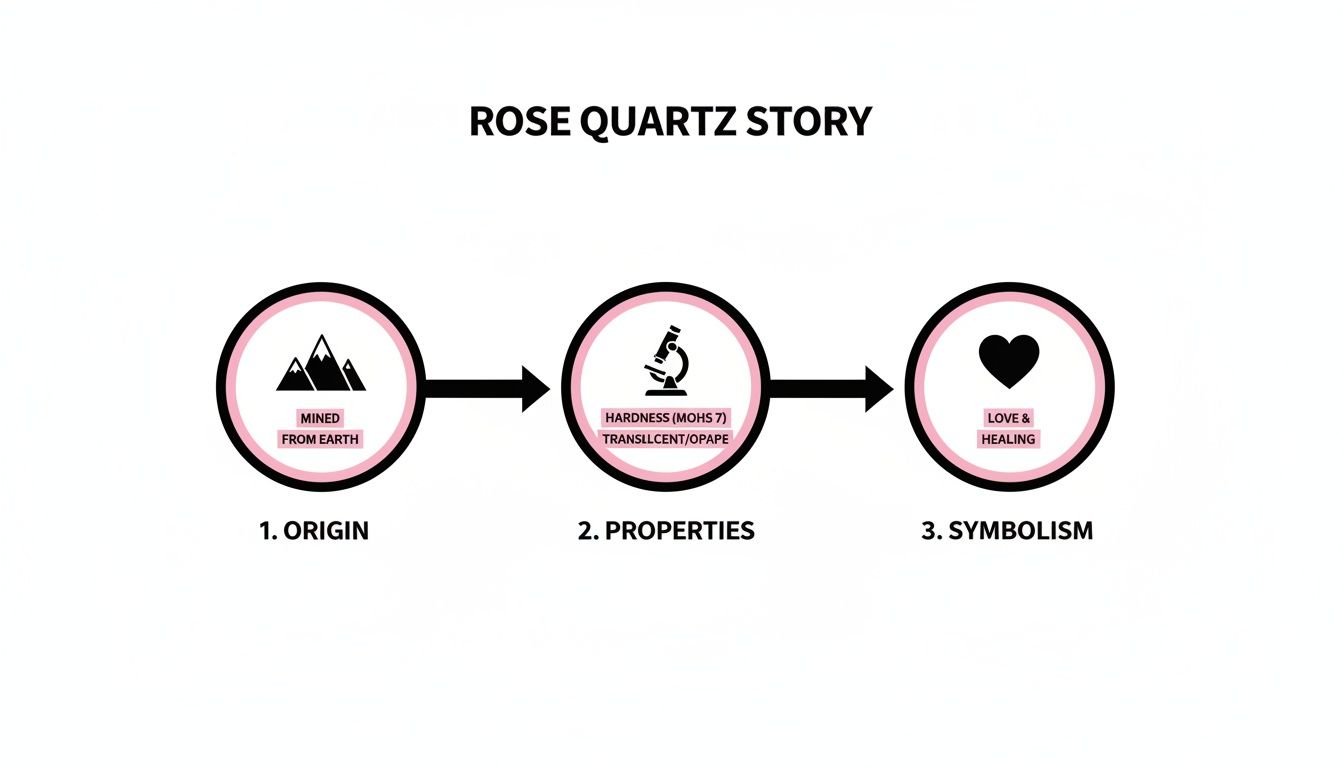
This visual flow shows just how rose quartz makes its way from deep inside the earth to a cherished spot in our homes.
As the infographic shows, the stone's natural properties are what give it such powerful symbolic meaning in art and decor.
Creating a Stable Foundation
The final, and perhaps most important, step is securing the wire sculpture to a solid base. This isn't just any old stand; it’s usually a larger piece of raw mineral like rose quartz, amethyst, or another stone that provides both a beautiful visual contrast and the physical stability the tree needs to stand tall.
This base anchors the entire piece, completing its transformation into a truly one-of-a-kind work of art. You can see this same dedication to craftsmanship in other forms of mineral art, like this incredible hand-carved rose quartz tower from Brazil, where an artist's vision shapes the stone’s natural beauty.
How to Spot an Authentic Gemstone Tree
With so many gemstone trees on the market, it can be tough to tell a genuine, handcrafted piece from a mass-produced imitation. Knowing what to look for is key to investing in a sculpture that will last. When you’re evaluating a rose quartz gemstone tree, it comes down to three things: the quality of the stones, the wirework, and the base.
First and foremost, let’s talk about the rose quartz itself. Authentic, high-quality rose quartz has a soft, almost milky pink color. If you see a tree with stones that are shockingly bright, fluorescent, or perfectly uniform in color, that’s a major red flag for artificial dyes. Real rose quartz is a natural mineral, so it’s going to have subtle internal fractures, feathery inclusions, and cloudy patches that tell the story of its formation.
A completely flawless, glass-like appearance is almost always a sign of something man-made. Those little imperfections inside the rose quartz are signatures of its geological journey and a true mark of authenticity.
Evaluating Craftsmanship and Materials
Once you've looked at the stones, turn your attention to the tree’s construction. The wire should feel sturdy and be wound tightly around the branches. If the wires are loose, flimsy, or twisted unevenly, it’s a good sign the piece was rushed and made with low-quality materials. Most high-quality trees use copper or brass wire—not only are these metals durable enough to hold their shape, but their warm tones also beautifully complement the soft pink of the rose quartz.
Finally, take a look at the base. A genuine gemstone tree should be mounted on a solid, natural mineral specimen. This might be a rough chunk of rose quartz, a cluster of amethyst, or another complementary stone. Be wary of bases made from resin, plastic, or uniformly dyed agate, as these are common shortcuts in lower-quality pieces and lack the organic beauty and weight of a real mineral foundation.
Here's a quick rundown of what to keep an eye on:
Check the Color: Look for a natural, soft pink hue. Steer clear of anything that looks artificially neon.
Inspect for Inclusions: Natural stones have character. A complete lack of any internal variations can be suspicious.
Assess the Wire: Make sure the wire is tightly wrapped, sturdy, and well-formed.
Examine the Base: A genuine piece will have a solid, natural mineral base, not a synthetic one.
To help you tell the difference at a glance, we've put together this simple checklist. It breaks down the key features to look for when you're trying to figure out if that rose quartz tree is the real deal or just a convincing fake.
Authenticity Checklist for Your Rose Quartz Gemstone Tree
Feature
High-Quality (Authentic)
Low-Quality (Potentially Artificial)
Stone Color
Soft, natural pink with subtle variations in tone.
Unnaturally bright, fluorescent, or perfectly uniform pink.
Stone Clarity
Contains natural inclusions, cloudy areas, or feathery lines.
Glass-like clarity with zero internal features.
Wirework
Tightly wound, sturdy copper or brass wire; feels solid.
Loose, flimsy, or unevenly twisted wire; easily bent.
Base Material
Solid, natural mineral like rough quartz, amethyst, or wood.
Lightweight resin, plastic, or dyed agate.
Overall Feel
Has a noticeable weight and a cool, solid touch.
Feels lightweight, plasticky, or artificially smooth.
Keep this checklist in mind, and you'll be much better equipped to find a piece that's genuinely beautiful and built to last.
The price of raw rose quartz itself plays a huge role in the final value of these sculptures. Wholesale prices for good-quality rose quartz rough can range anywhere from USD 5 to USD 50 per pound. On the other hand, lower-grade material with very pale coloring might sell for as little as USD 1 to USD 5 per pound. This is why a tree made with deeply colored, high-quality stones represents a much greater investment. You can find more insights on rose quartz value and pricing on maiyamminerals.com.
Styling Your Rose Quartz Tree Like a Designer
A rose quartz gemstone tree is so much more than a simple collectible—it’s a sophisticated piece of natural art that can shift the atmosphere of a room. Bringing one into your home or office isn't just about finding an empty spot; it's about thoughtful placement and intentional pairing. The goal is to create a curated vignette that feels elegant, harmonious, and elevates your space with its gentle presence.
Forget just sticking it on a table. Think about how the tree can complement the purpose of a space. A smaller rose quartz tree, for instance, finds a perfect home nestled among books on an office credenza. Getting the hang of how to decorate shelves can help you create a display that feels balanced, professional, and calming.
Creating Elegant Pairings and Palettes
The real magic happens when you start pairing your rose quartz tree with complementary materials and colors. Its soft, blush-pink hue is surprisingly versatile and works beautifully across a range of interior styles.
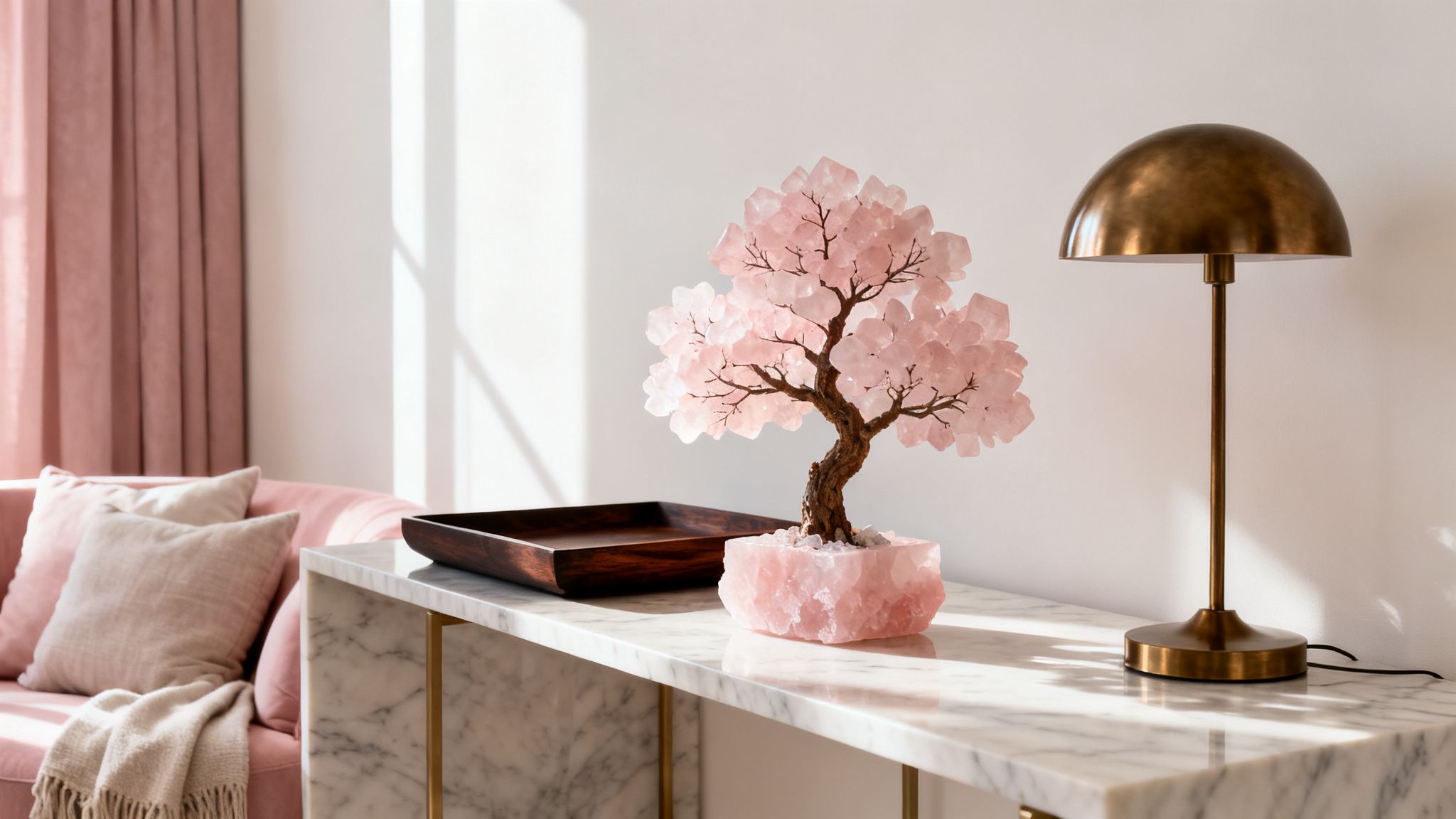
For a minimalist or contemporary look, try placing the tree on a sleek white marble surface. The cool, veined stone creates a stunning contrast against the warm, gentle color of the quartz, making it a clean and modern focal point.
In more traditional or classic spaces, the tree shines when set against rich, dark wood. A polished mahogany console table or a walnut bookshelf allows the delicate pink to pop, adding a touch of softness and organic texture to an otherwise formal setting.
A rose quartz tree paired with brass or bronze elements creates a timeless and luxurious feel. The warm metallic tones echo the twisted wire of the sculpture and enhance the stone's natural warmth, resulting in a cohesive and visually rich display.
Strategic Placements for Maximum Impact
Let the size of your tree guide its placement. You want it to enhance its surroundings, not overwhelm them.
Entryway Console: A larger, more substantial rose quartz tree makes a striking first impression on an entryway table. It immediately sets a tone of tranquility and welcome for anyone walking through the door.
Living Room Mantel: A medium-sized tree looks fantastic on a fireplace mantel, perhaps flanked by elegant candle holders or a few curated books. This creates a balanced, symmetrical focal point that naturally draws the eye.
Bedroom Nightstand: A smaller tree is perfect for a nightstand. It can serve as a calming presence, promoting a serene atmosphere that’s ideal for winding down.
By thinking through its placement and surroundings, you can style your rose quartz tree like a professional designer would. These pieces also work beautifully alongside other natural stone decor. Consider pairing it with complementary items like a hand-carved rose quartz bowl to create a unified and elegant theme throughout your space.
Caring for Your Gemstone Art
Think of your rose quartz tree as a fine piece of art—because it is. To keep it looking stunning for years, a little care goes a long way. Just like any prized collectible, it needs thoughtful handling and placement to protect its delicate form and natural color. The good news? Maintenance is simple.
The most common upkeep you'll need is a light dusting. Over time, dust loves to settle into the intricate wire branches and polished crystal leaves. A soft, clean paintbrush or a can of compressed air (held at a distance) works perfectly to gently clear away any buildup without disturbing the delicate wirework.
Deeper Cleaning and Preservation
For a more thorough clean, all you need is lukewarm water and a couple of drops of a very mild, pH-neutral soap. Dip a soft cloth into the soapy water, wring it out completely, and then carefully wipe down the stones and the base. Never submerge the entire tree. Dunking it in water can weaken the wire structure and compromise any adhesives used in its construction.
After wiping it down, drying it immediately and completely is crucial. Grab a soft, dry cloth and gently absorb any leftover moisture. Pay close attention to the nooks and crannies where the wires twist together. This quick step is your best defense against any potential oxidation or damage to the wireframe, preserving its strength and shine.
The single most important factor for long-term care is placement. Keep your tree out of direct sunlight. Constant, harsh sun exposure will eventually cause the beautiful pink color of rose quartz to fade. To keep that color vibrant, find a spot for your tree that gets plenty of bright, indirect light.
Following these straightforward steps does more than just protect your investment—it honors the natural materials and the artisan's skill that created your unique piece. Proper care ensures your rose quartz gemstone tree remains a captivating element in your home for the long haul.
Common Questions About Rose Quartz Trees
Navigating the world of natural art can bring up a few questions. To help you feel completely confident in your choice, we’ve gathered clear, straightforward answers to some of the most common inquiries we hear from collectors, designers, and gift-givers alike.
Are Rose Quartz Trees Durable?
Absolutely. While they look delicate, these sculptures are crafted to last. The polished rose quartz chips are hard minerals, ranking a solid 7 on the Mohs hardness scale—tougher than steel.
The wireframe, usually made of copper or brass, is both flexible during creation and strong once shaped. As long as it's displayed away from high-traffic areas where it could be bumped or knocked over, your tree will remain a beautiful fixture for decades to come.
Do They Make Good Gifts?
A rose quartz tree is an exceptional gift, perfect for milestones like weddings, anniversaries, or housewarmings. Its timeless beauty and deep-rooted symbolism of love and harmony make it a thoughtful and sophisticated choice.
It’s more than just a decorative object; it’s a unique piece of natural art that carries genuine meaning. This makes it an especially fitting gift for anyone starting a new chapter in their life.
Because each tree is handcrafted with unique stones, you are giving a one-of-a-kind piece. This inherent individuality adds a layer of personalization that makes the gift feel even more special and considered.
Is Rose Quartz a Valuable Gemstone?
Yes, rose quartz holds a stable and enduring value in the global market. Its demand remains consistently strong, driven by its use in everything from fine jewelry and wellness products to luxury home décor.
Market analysis suggests this interest will only grow, with the deeper, richer pink tones becoming increasingly prized by collectors. You can learn more about rose quartz market trends on fatevista.com. This resilience makes a high-quality rose quartz tree not just a beautiful sculpture, but a sound investment in natural art.
At Astro West, we believe that every natural object tells a story of artistry, geology, and timeless elegance. We invite you to explore our curated collection of fine minerals and natural art to find the perfect piece that speaks to you.