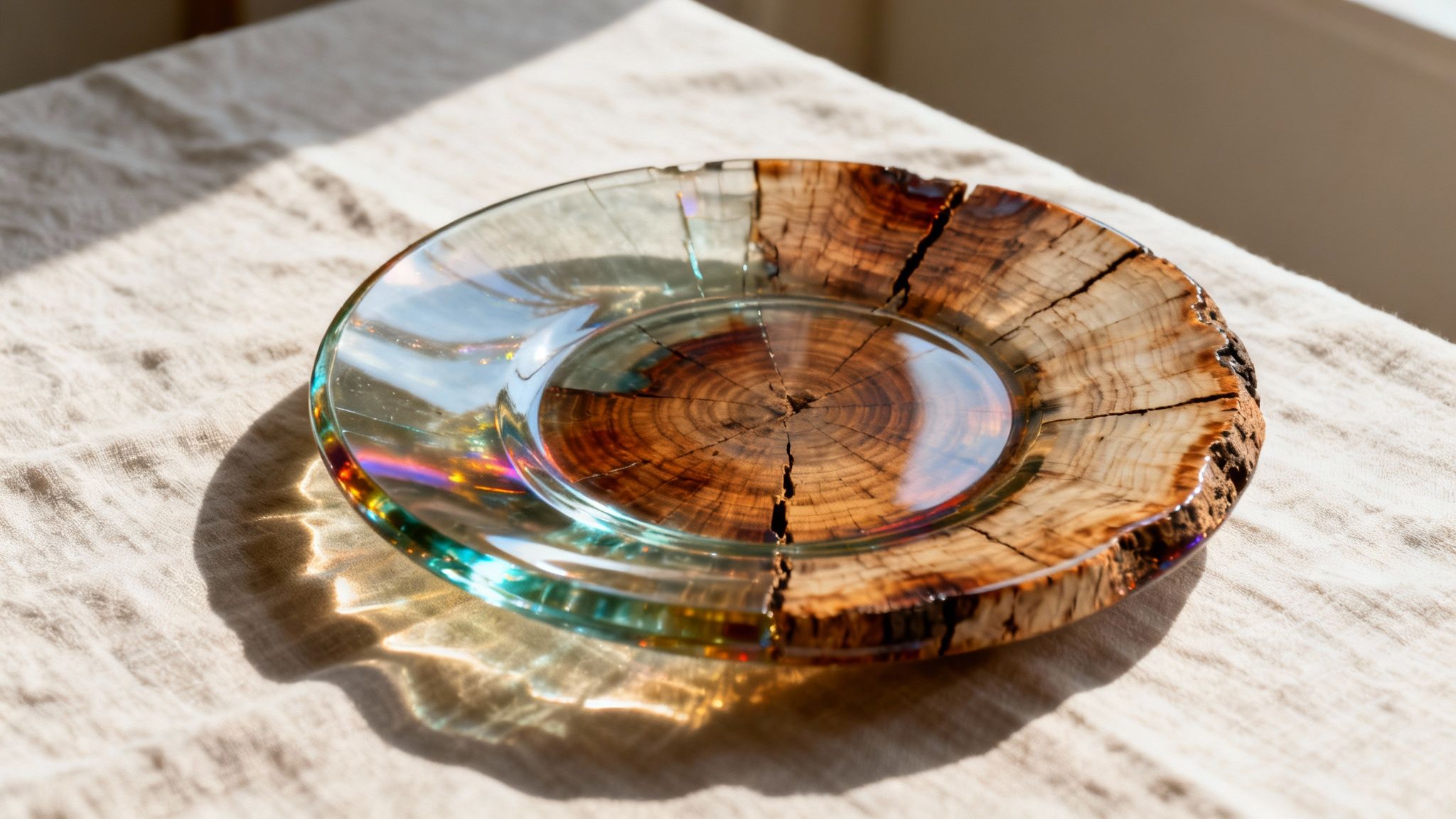
When you hear petrified wood plate set, don't picture a simple wooden dish. Think of something far more extraordinary: functional art crafted from the fossilized remains of ancient trees. These aren't just stone plates; they're genuine pieces of natural history, often over 200 million years old, transformed into something solid and beautiful through a geological process called permineralization.
Each plate is a slice of a prehistoric past, preserving the original wood grain and growth rings. The vibrant, swirling colors you see aren't paint—they're the result of minerals like iron and copper that infused the wood over millennia, creating a unique stone canvas that tells a story of deep time.
Where Ancient History Meets Modern Luxury
A petrified wood plate set is one of those rare objects that beautifully closes the gap between raw geology and refined home décor. This isn't mass-produced tableware. Each plate is a singular statement, a cross-section of a tree that stood when dinosaurs roamed the Earth, transformed by geologic forces into an heirloom-quality artifact.
Their defining characteristic is their absolute uniqueness. No two plates will ever have the same pattern, color bands, or cellular detail. When you acquire a set, you're not just buying a product; you're curating a collection born from nature itself. This is why interior designers, architects, and collectors value them so highly—they bring texture, history, and a grounding, organic elegance into a space, making a powerful design statement.
So, What Makes It a "Set"?
The term "set" can mean anything from a pair of small accent trays to a full collection of dinner-sized plates. The common thread is a shared origin or a cohesive aesthetic that ties the pieces together, elevating them from individual objects to a unified collection.
Often, plates in a set are cut from the very same fossilized log, which ensures their patterns and color palettes flow together harmoniously. This shared lineage creates a visual story that's impossible to replicate. When looking for a petrified wood plate set, you're really looking for:
Shared Origin: Plates sliced from the same ancient tree will naturally share similar colors and grain patterns.
Complementary Aesthetics: Even if they come from different logs, a well-curated set features pieces that complement each other in size, shape, and overall tone.
Functional or Decorative Intent: Some sets are polished as pure art installations, while others are sealed with food-safe finishes to be used as exceptional serveware for luxury entertaining.
A petrified wood plate is a geological masterpiece. It represents a moment in time when a living organism began its transformation into stone, capturing the intricate details of its past life for eternity.
This blend of ancient history and functional artistry elevates a petrified wood plate set from a simple dish to a treasured collectible with long-term value. Each piece is a tangible link to our planet's deep history, a story told in stone that you can hold in your hands.
Whether displayed on a console table or used for a special occasion, these plates are guaranteed to start a conversation. They spark curiosity and admiration, offering a daily reminder of nature’s incredible power to create lasting beauty. Seeing a large, high-quality petrified wood slab from Arizona can give you a real appreciation for the stunning scale and detail found in these remarkable fossils.
The Journey From Ancient Forest to Modern Tabletop
Every petrified wood plate set has an origin story that begins millions of years ago, not in a workshop, but deep within an ancient forest. The journey from a living tree to a polished slice of stone is a true geological masterpiece, a slow-motion transformation driven by the immense power of the Earth. It's an incredible process that turns organic wood into an everlasting mineral artifact.
This remarkable change, known as permineralization, can only happen under a specific set of circumstances. It all kicks off when a tree dies and is rapidly buried by sediment—volcanic ash, river silt, or mud. This quick burial is the most crucial first step, as it cuts the wood off from oxygen and hits the "pause" button on the natural process of decay.
Without oxygen, the microorganisms that would normally break down the wood cannot survive. The tree is now entombed, perfectly preserved and waiting for the next phase of its unbelievable transformation.
The Mineral Infusion
Over countless millennia, mineral-rich groundwater starts to seep through the layers of sediment and into the buried log. This water acts as a natural delivery system, carrying dissolved silica—the main ingredient in quartz—deep into the tree's cellular structure.
Imagine it as a slow, deliberate infusion. The water, loaded with silica, flows through every microscopic channel and fills every empty cell. As the original organic wood fibers eventually break down, they are replaced, molecule by molecule, with tiny mineral deposits.
This process is so incredibly precise that it creates a perfect stone replica of the original wood. The tree's most intricate details are locked in stone forever, from the wide growth rings that tell of its age to the delicate patterns of its cell walls. What's left isn't wood at all, but a fossil that has preserved its original form with stunning accuracy.
A Palette Painted by the Earth
The stunning colors you see in a petrified wood plate set aren't artificial dyes or stains. They are a natural palette painted by whatever trace minerals happened to be in the groundwater during fossilization. Each mineral lends its own unique hue, creating the dramatic and one-of-a-kind patterns we see today.
Iron Oxides: These common minerals are behind the rich reds, deep browns, warm oranges, and golden yellows.
Manganese: This element often creates beautiful shades of pink, purple, and sometimes even black.
Copper and Cobalt: If present, these can introduce spectacular greens and blues into the stone.
Carbon: Pure carbon typically results in deep, solid blacks, which provide a powerful contrast.
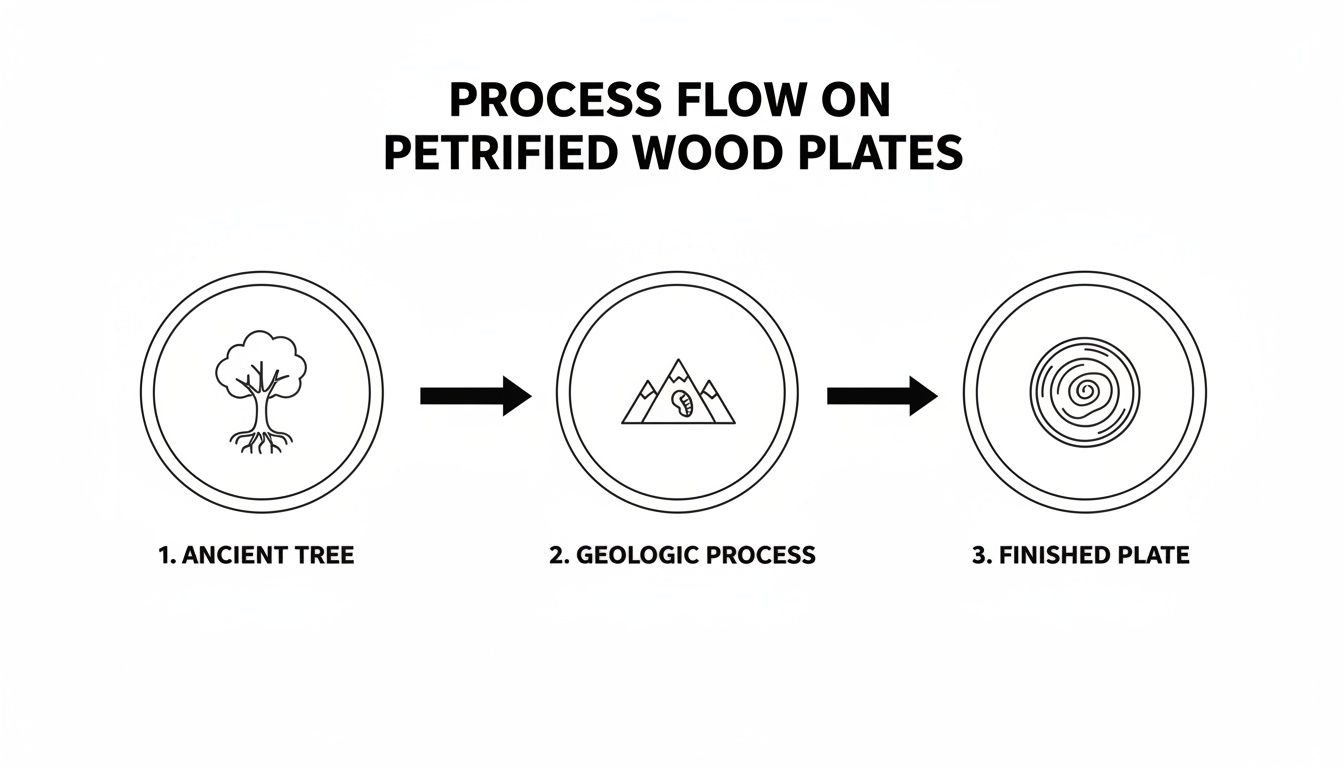
This simple flow chart helps visualize the long journey from ancient tree to modern plate.
As you can see, a living tree has to undergo an immense geological process before it can ever be sourced and finished into the beautiful home decor we enjoy.
Every color, swirl, and line on a petrified wood plate is a direct record of the specific geology of its ancient environment. It's a snapshot of Earth's history, telling a silent story of minerals, water, and time.
This natural artistry is exactly why every single plate is unique. The specific cocktail of minerals in one ancient forest would be completely different from another, guaranteeing that no two pieces will ever be identical. Just looking at a specimen like a petrified palm wood limb shows how dramatically the local mineral environment can shape the fossil's final look.
Finally, after millions of years buried deep within the earth, geological forces like erosion—or human activities like mining—bring these fossilized logs back into the light. From there, skilled artisans carefully slice and polish the stone, unveiling the hidden beauty within and completing its long journey from an ancient forest to your modern tabletop.
Identifying a High-Quality Petrified Wood Plate Set
Not all petrified wood is created equal. While every piece tells a remarkable geological story, certain characteristics elevate a simple fossil into a collector-grade work of art.
Learning to distinguish between a mass-market item and a high-quality petrified wood plate set is the key to making a sound investment in natural décor. It’s all about training your eye to notice the subtle details—the color, the pattern, and the finish—that separate the good from the truly exceptional.
Thinking about what makes a great piece of petrified wood isn't so different from weighing other material choices for kitchen items. Understanding the unique qualities of the material helps you appreciate what makes each plate both a functional object and a genuine piece of natural history.
Color and Pattern Clarity
The first thing you’ll notice is the visual impact. A superior specimen will pop with vibrant, well-defined colors that feel deep and integral to the stone. You want to see rich reds, deep oranges, and striking blacks or blues, which tell you the fossilization environment was rich with interesting minerals.
Lower-quality pieces often look muddy, washed-out, or have blurry colors. Just as important is the clarity of the original wood grain. In a top-tier plate, you should be able to clearly see the growth rings and the cellular structure of the ancient tree—a sign of exceptional preservation.
The Quality of the Polish
The finish on a petrified wood plate is a direct reflection of the craftsmanship that went into it. A great test is to simply run your hand across the surface. A high-quality piece should feel as smooth as glass, with a deep, reflective luster that plays beautifully with the light.
This mirror-like polish is no accident. It’s achieved through a painstaking, multi-stage process of sanding and buffing with progressively finer grits.
High-Quality Polish: A lustrous, flawless surface that feels cool and solid. It reflects light evenly without any distortion.
Lower-Quality Polish: Might feel slightly gritty, dull, or have tiny pits on the surface. The reflection could appear hazy or uneven.
The polish doesn’t just enhance a plate's beauty; it protects the stone. A superior finish helps seal the material, making it less porous and more resistant to staining, which is crucial if you plan to use the set for serving food.
A poor polish often indicates a rushed production process and can leave the underlying stone vulnerable. It's a critical detail that separates true artisan pieces from mass-produced items.
Structural Integrity and Authenticity
Finally, give the plate a good inspection for its physical soundness. A collector-grade piece should feel solid and be free of major fractures. While some natural mineral veins or tiny, stable hairline cracks add character, large, unstable cracks are a red flag.
Be wary of pieces with obvious signs of resin or epoxy fillers used to patch up significant gaps or hold crumbling sections together. A truly authentic piece will also feel heavy and dense for its size, like a solid piece of stone. If it feels unusually light, something might be off.
To help you spot the difference at a glance, here’s a quick comparison of what to look for versus what to avoid.
Quality Indicators for Petrified Wood Plates
Quality Factor
High-Quality (Collector Grade)
Lower-Quality (Mass Market)
Color Vibrancy
Deep, rich, and well-defined colors (reds, blues, blacks).
Muddy, faded, or washed-out colors.
Pattern Detail
Clear visibility of wood grain, growth rings, and cellular structure.
Indistinct or blurry patterns; wood structure is hard to see.
Surface Polish
Glass-smooth, highly reflective, and even luster.
Dull, slightly gritty, or hazy finish with visible pits.
Structural Soundness
Solid, dense, and free of major, unstable cracks or fillers.
Noticeable epoxy/resin fillers, large unstable cracks, feels light.
Overall Feel
Feels substantial, cool to the touch, and expertly crafted.
Can feel brittle, rough, or hastily produced.
Ultimately, focusing on these three areas—color, polish, and structure—will give you the confidence to identify a petrified wood plate set that is not only visually stunning but also built by nature to last for generations.
Styling Your Home With Petrified Wood
A petrified wood plate set is more than just serveware; it’s a powerful design element capable of transforming a space. By incorporating these ancient artifacts into your home, you're creating moments of unexpected beauty and texture. They have a way of grounding a space, connecting a modern interior to the deep, timeless patterns of the natural world and positioning each piece as art.
What makes these plates so compelling for interior design is their versatility. They aren’t confined to a single style or room. Instead, they adapt, adding a touch of organic sophistication and a rich historical narrative wherever they are placed.
Centerpiece and Serveware
The most obvious use for a petrified wood plate set is on the dining table, where it instantly elevates any gathering. A large, polished plate serves as a dramatic centerpiece. Its intricate growth rings and rich, earthy colors create a stunning contrast with clean, minimalist porcelain or sleek glassware.
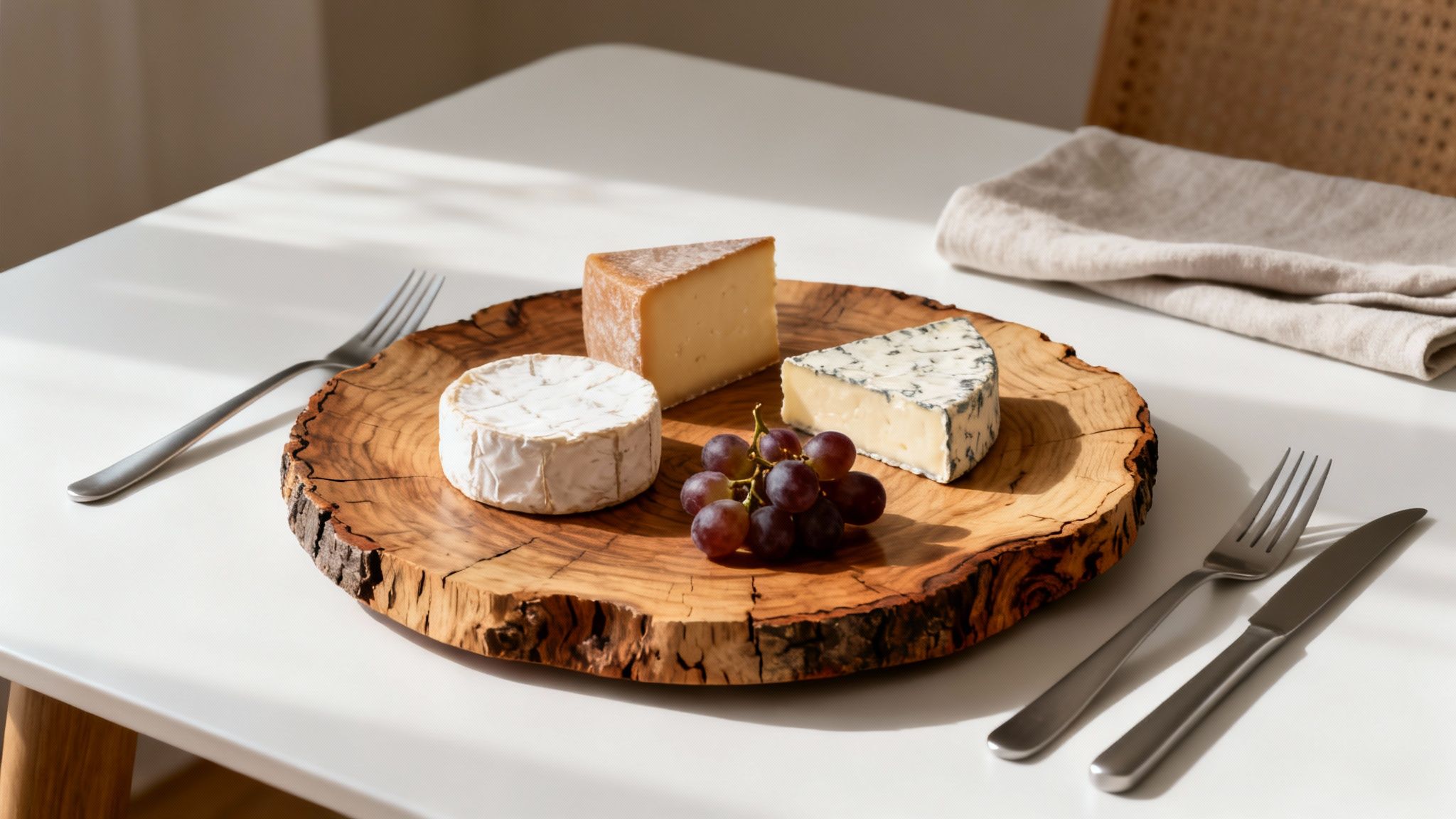
When you're entertaining, these plates can turn a simple charcuterie spread or a dessert platter into a truly memorable event. The deep, stone-like presence of the plate makes cheeses, fruits, and pastries pop with color. It’s a guaranteed conversation starter that impresses guests with its unique blend of function and prehistoric art. Along the same lines, a smaller, exquisitely patterned petrified wood bowl from Indonesia can be an elegant vessel for nuts or candies.
Decorative Accents and Art
But don't limit these plates to the dining room—they shine as standalone decorative objects. A single plate placed on a coffee table or an entryway console works beautifully as a sophisticated catch-all for keys or jewelry. Its natural texture provides the perfect counterpoint to smoother surfaces like metal, glass, or polished wood.
A petrified wood plate is a piece of sculptural art. By displaying it on a stand or easel on a bookshelf or mantel, you invite viewers to appreciate its form, color, and history, just as they would a painting or sculpture.
For a more ambitious approach, try mounting a curated group of smaller plates on a wall. This creates a one-of-a-kind art installation that feels both organic and deeply personal, showcasing the subtle variations in color and pattern across the different pieces.
Complementing Different Design Styles
The wonderful thing about a petrified wood plate set is how easily it harmonizes with a wide range of interior design styles. Its raw, natural beauty is a perfect fit for so many different aesthetics.
Minimalist Interiors: In a clean, modern space, a petrified wood plate introduces a much-needed element of warmth and texture, keeping the room from feeling cold or sterile.
Rustic and Farmhouse: Here, the plates feel completely at home, complementing other natural materials like reclaimed wood, linen, and stone.
Bohemian and Eclectic: In these vibrant, collected spaces, the plates add another layer of history and global curiosity, mixing perfectly with textiles, plants, and other treasures.
Industrial Design: The organic, swirling patterns of the wood provide a gorgeous and effective contrast to the hard lines of metal, concrete, and exposed brick.
To see another fantastic example of how petrified wood can be integrated into home decor, just look at how designers are using larger pieces like this striking petrified wood cocktail table. By thoughtfully placing these items, you can bring a timeless, grounding energy into your home, transforming everyday spaces into curated galleries of natural art.
How to Care for Your Petrified Wood
Your petrified wood plates have survived for millions of years, weathering immense geological forces to reach your home. With the right care, these remarkable pieces of natural history will continue to inspire awe for generations. Thankfully, keeping a petrified wood plate set looking its best is simple and just requires a gentle touch.
The key is to avoid anything harsh or abrasive. These plates are incredibly dense and durable—they are stone, after all—but their highly polished surfaces need protection to maintain their deep, reflective shine.
Daily Cleaning and Maintenance
For routine cleaning, less is more. A soft, damp microfiber cloth is usually all you need to wipe away dust or fingerprints. This simple approach prevents you from accidentally scratching the mirror-like finish that makes each piece so visually stunning.
If you've used your plates for serving food and they need more attention, a pH-neutral cleaner is the perfect solution.
What to Use: Mix a few drops of a mild, pH-neutral soap (like a gentle dish soap) with warm water.
How to Clean: Dip a soft cloth into the soapy water, wring it out well, and gently wipe down the plate.
Rinsing and Drying: Follow up with a separate damp cloth rinsed in plain water to remove any soap residue. To finish, dry the plate completely with a soft, dry towel to prevent water spots.
Critical Tip: Never use acidic cleaners like vinegar or lemon juice, abrasive sponges, or harsh chemical detergents. These can permanently etch, dull, or even strip the sealant from the polished surface, ruining its beautiful finish for good.
Preventing Scratches and Damage
While petrified wood scores a solid 7 on the Mohs hardness scale (similar to quartz), its polished surface isn't scratch-proof. Sharp objects like knives or even rough-bottomed ceramics can leave permanent marks if you're not careful.
Storage and Display Best Practices:
Avoid Stacking: Don't stack your plates directly on top of one another. The weight, combined with any tiny debris caught between them, can easily cause scratches.
Use Soft Dividers: If you have to stack them, place a soft fabric divider—like felt, flannel, or another microfiber cloth—between each plate.
Secure Display: When displaying a plate on a stand, make sure it's stable and placed away from high-traffic areas where it could get bumped or knocked over.
Just as you would handle a large, polished petrified wood slab with care to protect its vast, beautiful surface, your plates deserve the same thoughtful treatment.
Special Considerations for Food Use
Many high-quality petrified wood plates are finished with a food-safe sealant, making them perfectly safe for serving. However, it's always a good idea to confirm this with the seller before you use them for food.
Even when sealed, it's best to serve items that don't require cutting, such as cheeses, fruits, charcuterie, or pastries. This not only protects the polish from knife marks but also helps the sealant last as long as possible.
Following these simple steps will ensure the breathtaking beauty of your petrified wood plate set remains a treasured and captivating centerpiece in your home for years to come.
Why Trust Astro West for Your Petrified Wood?
When you’re bringing a piece of natural history into your home, the source matters just as much as the specimen itself. A petrified wood plate set isn't just another piece of décor; it’s a tangible link to a world that existed millions of years ago. At Astro West, we understand that. With over six decades of experience in fine minerals and fossils, we do the meticulous work of vetting for you.
Our process is anything but casual. Every petrified wood plate set considered for our collection is closely examined by our in-house experts for authenticity, structural integrity, and that "wow" factor that defines a collector's piece. We look beyond the surface, seeking out specimens with exceptional color, clearly preserved grain, and a superior polish that speaks to true craftsmanship. We turn away pieces loaded with fillers or those with a dull, uninspired finish, ensuring our collection represents only collector-grade artifacts.
A Commitment to Authenticity and Quality
This dedication is what sets us apart. We believe that connecting you with a genuine piece of Earth's story is a serious responsibility. Choosing Astro West means you’re not just buying a beautiful object—you’re partnering with a trusted authority to acquire a vetted, authenticated fossil.
This commitment touches every part of your experience with us:
Ethical Sourcing: We ensure every piece is sourced responsibly, respecting both the environment and the local communities where these incredible fossils are found.
Expert Curation: Our collection isn't just an inventory; it's a handpicked selection of the finest specimens available on the market.
Transparent Information: We provide you with all the details about each piece’s origin and unique characteristics, so you can make a decision you feel great about.
From Our Gallery to Your Home
This careful curation is more important than ever. While a petrified wood plate feels like a modern luxury, the global market for it is booming, with some analyses projecting it to reach over $11 billion by 2032. This growth highlights how critical it is to know you're getting real quality in a crowded field. You can explore more about the petrified wood market to see its impressive scale.
At Astro West, our goal is to give you absolute confidence. We bridge the gap between the ancient world and your modern home, delivering not just a product, but a piece of history you can trust.
Our transparent approach is backed by practical assurances, including secure, professionally insured shipping and a straightforward return policy. We package every item with the utmost care, ensuring your investment arrives safely. This isn’t merely a transaction for us; it’s the beginning of a relationship built on expertise, trust, and a shared passion for the incredible treasures our planet has created.
Your Petrified Wood Questions, Answered
Thinking about bringing a piece of ancient history into your home? It's natural to have questions. To help you feel confident in your choice, we've put together answers to some of the most common things people ask about our petrified wood plate sets.
Are Petrified Wood Plates Food Safe?
Yes, but it really comes down to the finish. High-quality petrified wood plates, like the ones we source, are coated with a food-safe resin. This sealant creates a non-porous barrier, making the surface safe for serving.
Still, it’s always smart to check with the seller about a specific piece. We generally suggest using them for things like cheese boards, fruit platters, or charcuterie spreads rather than for cutting on or serving hot, steamy dishes.
How Can You Tell if Petrified Wood Is Real?
Authentic petrified wood has a few tell-tale signs that fakes just can't replicate. The first thing to look for is detail. You should be able to see remnants of the original tree—faint wood grain, growth rings, and sometimes even the cellular structure.
Real petrified wood also feels heavy and cool to the touch, just like any other solid stone. The colors should look like they are part of the stone, not painted or stained on the surface. Any reputable dealer will always stand behind the authenticity of their pieces.
Where Does the Best Petrified Wood Come From?
Incredible petrified wood is found all over the globe, but a few locations are famous for producing truly spectacular specimens.
Arizona, USA: Home to the famous "Rainbow Petrified Wood," known for its absolutely stunning spectrum of colors.
Madagascar: Prized for its deep, rich colors and exceptionally preserved details and patterns.
Indonesia: A major source for much of the high-quality decorative petrified wood you see today, offering a huge variety of beautiful pieces.
Ultimately, the "best" is in the eye of the beholder. It often comes down to your personal taste in color and pattern, but pieces from these regions are consistently collector favorites for a reason.
Is Petrified Wood a Good Investment?
Absolutely. High-quality petrified wood is widely seen as a solid investment. It's a finite natural resource—they aren't making any more of it—and truly exceptional pieces are becoming harder to find. Top-tier specimens with vibrant colors, amazing preservation, and a flawless polish tend to hold their value or even appreciate over time. This makes a petrified wood plate set not just a beautiful object, but a tangible asset.
The market reflects this growing interest. North America is a major hub, with spending on petrified wood items projected to climb from an estimated $400 million in 2024 to $540 million by 2035. This trend is fueled by a desire for unique home décor and sustainable, lasting materials—positioning these ancient artifacts as timeless heirlooms in a world of disposable goods. You can read more about petrified wood market trends and its projected growth on wiseguyreports.com.
At Astro West, we invite you to explore a collection where natural history meets timeless design. Each piece is authenticated and chosen for its exceptional beauty, ready to become a treasured part of your home. Discover your piece of ancient history today at Astro West.