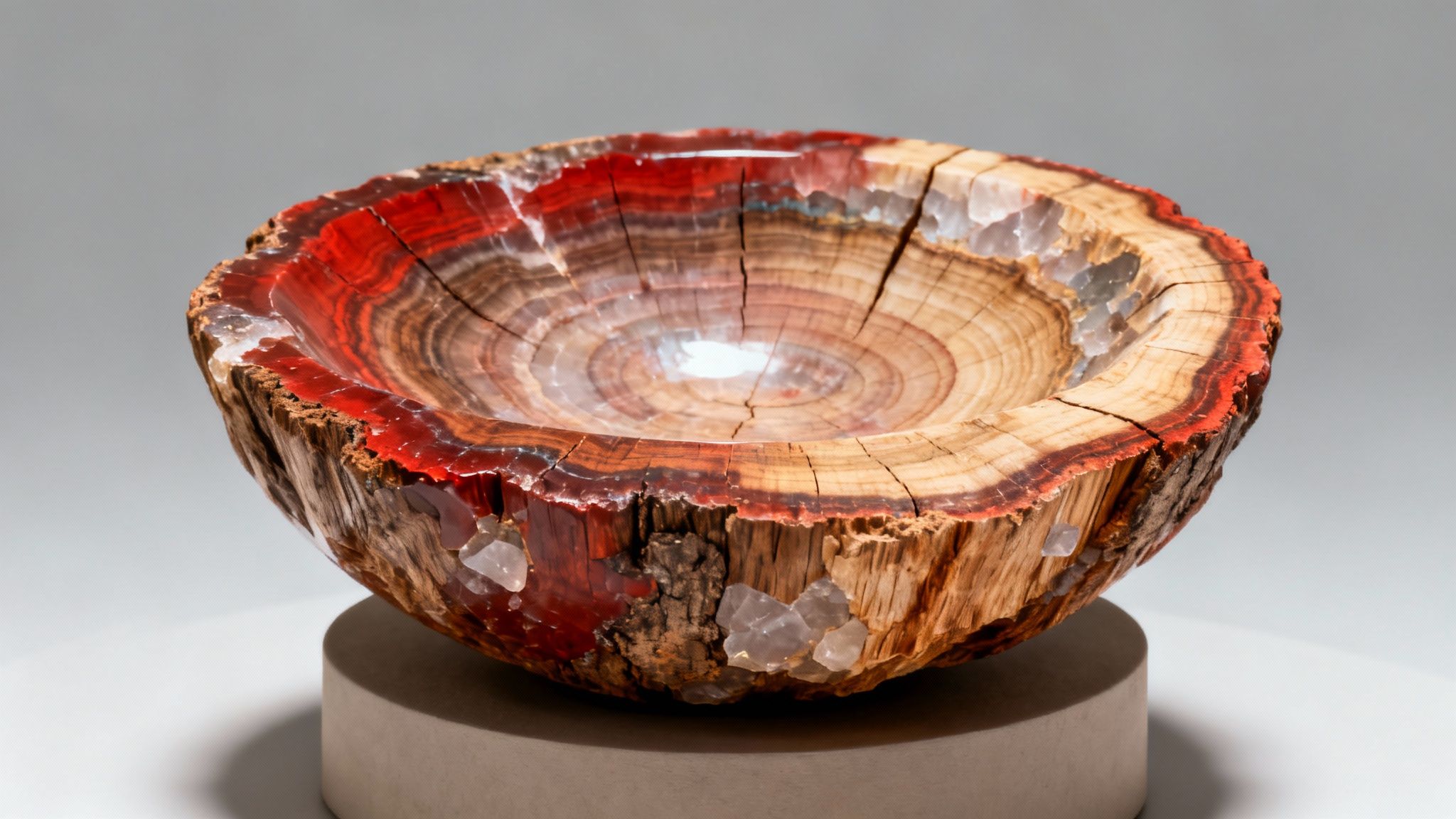
A petrified wood bowl set is far more than a decorative accessory. It is a curated collection of functional sculptures, each carved from an ancient tree that turned to stone over millions of years. These singular pieces are tangible connections to Earth's deep history, bringing the texture and narrative of a prehistoric forest into the modern home. It is for this blend of sheer beauty and geological significance that collectors and interior designers prize them—every bowl is a one-of-a-kind work of natural art.
From Ancient Forest to Modern Art Piece
To hold a piece of petrified wood is to hold a fragment of a forest that thrived long before the first humans walked the Earth. That is the profound experience a petrified wood bowl offers. These objects are not merely carved from stone; they are the direct mineralized descendants of ancient trees, transformed over eons through a remarkable natural process. They bridge the gap between an organic past and a mineral present, making each one a unique artifact of deep time.
The journey from a living tree to a stone bowl is a testament to nature's incredible artistry. It begins with a cataclysmic event, typically a volcanic eruption, that buries a forest under a thick blanket of ash and sediment. This rapid burial is the critical first step, as it seals the wood from oxygen and halts the decay that would normally break it down.
The Miraculous Process of Permineralization
Over millions of years, mineral-rich groundwater slowly seeps through the sediment and into the buried logs. Here, the true transformation occurs—a process called permineralization. Instead of dissolving the wood, the minerals crystallize within the cellular structure, molecule by molecule.
This intricate replacement process is so precise that it preserves the most delicate details of the original tree. Growth rings, bark texture, and even the microscopic cellular patterns remain perfectly intact, frozen in stone.
The result is a fossil that is both wood and mineral—a natural time capsule. The specific minerals present in the groundwater determine the final color and pattern of the stone, creating an endless variety of stunning aesthetics. Each piece tells a unique geological story, not just of the tree it once was, but of the specific environment where it was fossilized.
Artistry Meets Natural History
From these incredible raw materials, skilled artisans carve and polish each bowl, revealing the intricate beauty hidden within. It is a careful balance of respecting the material's natural form while shaping it into an elegant, functional object. This synthesis of natural history and human craftsmanship is precisely why a high-quality petrified wood bowl set is treasured by collectors and designers alike.
While bowls are a popular form, this ancient material is also shaped into other stunning display pieces, like this large petrified wood slab from Arizona. At Astro West, we personally curate only the finest examples, ensuring every piece we offer is a genuine, high-quality specimen worthy of any distinguished collection.
How to Identify a High-Quality Petrified Wood Bowl
Not all petrified wood is created equal. While every piece carries a story millions of years in the making, certain characteristics elevate a simple fossil into a museum-quality work of art. Becoming a discerning buyer means learning to recognize these hallmarks of excellence.
This guide will help you identify a superior petrified wood bowl set, teaching you to look beyond the surface beauty and appreciate the finer details that define an exceptional piece.
Think of it as appreciating a fine diamond or painting: you must consider its color, clarity, and the skill of the artist—or in this case, the artisan who finished the piece. The most coveted bowls are those where the geological process and human craftsmanship align perfectly.
Color and Mineral Composition
The first element to capture the eye is almost always the color. These vibrant, swirling hues tell a fascinating story about the bowl's geological journey. They are not dyes or stains but the direct result of trace minerals present in the water that fossilized the wood eons ago.
A rich and varied color palette is a strong indicator of a high-quality piece. Look for deep, saturated tones, not dull or washed-out shades.
Deep Reds, Oranges, and Yellows: These warm, fiery colors originate from iron oxides like hematite and goetite. They are some of the most common and beloved palettes in petrified wood.
Rich Blacks and Browns: The dramatic, dark patterns that provide stunning contrast come from carbon (from the original wood) and manganese oxides.
Pinks and Purples: Manganese is also responsible for delicate pinks and sometimes deeper purples, which are often highly sought after by collectors.
Greens and Blues: These are the true rarities. Elements like copper, chromium, or cobalt can introduce striking greens and blues, making any piece containing them exceptionally valuable.
A bowl that displays multiple distinct colors flowing together harmoniously is generally more desirable than a monochrome specimen. It points to a complex and dynamic mineralization process, which makes for a more compelling narrative and a more beautiful object.
Clarity and Preservation of Wood Grain
Beyond color, the most critical factor for a serious collector is how well the original wood structure has been preserved. A truly exceptional piece is one where the details of the ancient tree are clearly visible. It is like a high-resolution photograph of the past, captured in stone.
The gold standard for quality is the clear visibility of the cellular structure. A top-tier specimen will show not just the growth rings but also the finer details of the wood grain, medullary rays, and even the bark.
When examining a potential purchase, get close. Can you trace the lines of the growth rings? Is the texture of the grain visible, or is it muddled and indistinct? A blurry or homogenous appearance suggests a less-than-perfect fossilization process, which lowers its value as a natural artifact. This clarity is what separates a decorative stone from a true, high-quality fossil. Just as it's important to identify high-quality petrified wood, collectors can benefit from learning tips for identifying genuine natural art investments in other forms as well.
The Art of the Polish
The final element separating a good piece from a great one is the quality of the finish. A masterful polish doesn't just make the bowl shine; it reveals the depth of the color and the clarity of the grain. A superior finish should be smooth and reflective, almost like glass, without any dull spots, scratches, or visible tool marks.
Run your hand over the surface—it should feel cool, solid, and perfectly smooth. An inconsistent or poor-quality polish can hide the natural beauty of the wood grain and seriously detract from the bowl's aesthetic appeal and value. This finishing touch is a testament to the artisan's skill and their respect for the ancient material. You can see this level of exceptional polish on display pieces like this polished petrified wood slab.
To help you on your search, here's a quick checklist to keep in mind.
Petrified Wood Quality Checklist
Use this quick reference guide to evaluate the key characteristics of a high-quality petrified wood bowl.
Quality Factor
What to Look For (High Quality)
What to Avoid (Low Quality)
Color Saturation
Deep, vibrant, and rich colors (e.g., fiery reds, deep blacks).
Dull, faded, or washed-out tones.
Color Variety
Multiple, distinct colors that blend harmoniously.
Monochromatic or muddy, indistinct color patterns.
Grain Clarity
Clearly visible growth rings, medullary rays, and wood texture.
Blurry, homogenous appearance with no visible wood structure.
Structural Integrity
Solid, dense feel with no significant cracks or fissures.
Obvious cracks, large filled-in areas, or a porous texture.
Polish & Finish
Glass-like, perfectly smooth, and highly reflective surface.
Dull spots, visible scratches, tool marks, or an uneven feel.
Rarity
Presence of rare colors like blue or green; preservation of bark.
Common colors with no unique features.
Ultimately, acquiring a piece from a trusted gallery is the surest way to obtain a genuine, high-quality specimen. With decades of expertise, we at Astro West guarantee the provenance and authenticity of every item, ensuring your investment is not only beautiful but also a verifiable piece of natural history.
Understanding the Value of Your Natural Art Investment
Have you ever wondered why one petrified wood bowl set carries a much higher price tag than another? The answer lies in its unique geological resume. When you begin to see your purchase as an investment in natural art, the pricing becomes clear. It is not just a fossil; it is the convergence of rarity, geological beauty, and expert craftsmanship that transforms it into a treasured heirloom with real, lasting worth.
Just as a diamond is judged by its cut, color, and clarity, a petrified wood bowl is graded on its own set of distinct criteria. These factors work in concert to tell the story of its ancient past and determine its desirability among collectors and designers.
Rarity of the Original Species
The story of a piece’s value begins with the tree it came from. Most petrified wood originates from common ancient conifers, which are beautiful in their own right. However, specimens that fossilized from rarer species, such as palm or fern trees, are incredibly sought after.
It takes a trained eye to identify these less common botanical origins, and their scarcity significantly boosts a piece's collectible value.
Color Intensity and Distribution
As we touched on earlier, the minerals in the groundwater during fossilization give a piece its final color. The more vibrant, saturated, and rare those colors are, the more valuable the piece becomes. A specimen with a rich spectrum of deep reds, blacks, and yellows is impressive, but find one with hints of rare blues or greens, and you are looking at something truly exceptional.
The arrangement of those colors is just as important. A bowl with distinct, clean bands of color or intricate, artistic swirls is always more prized than one with muddy, blended tones. The aesthetic merit of the pattern plays a huge role in its final value.
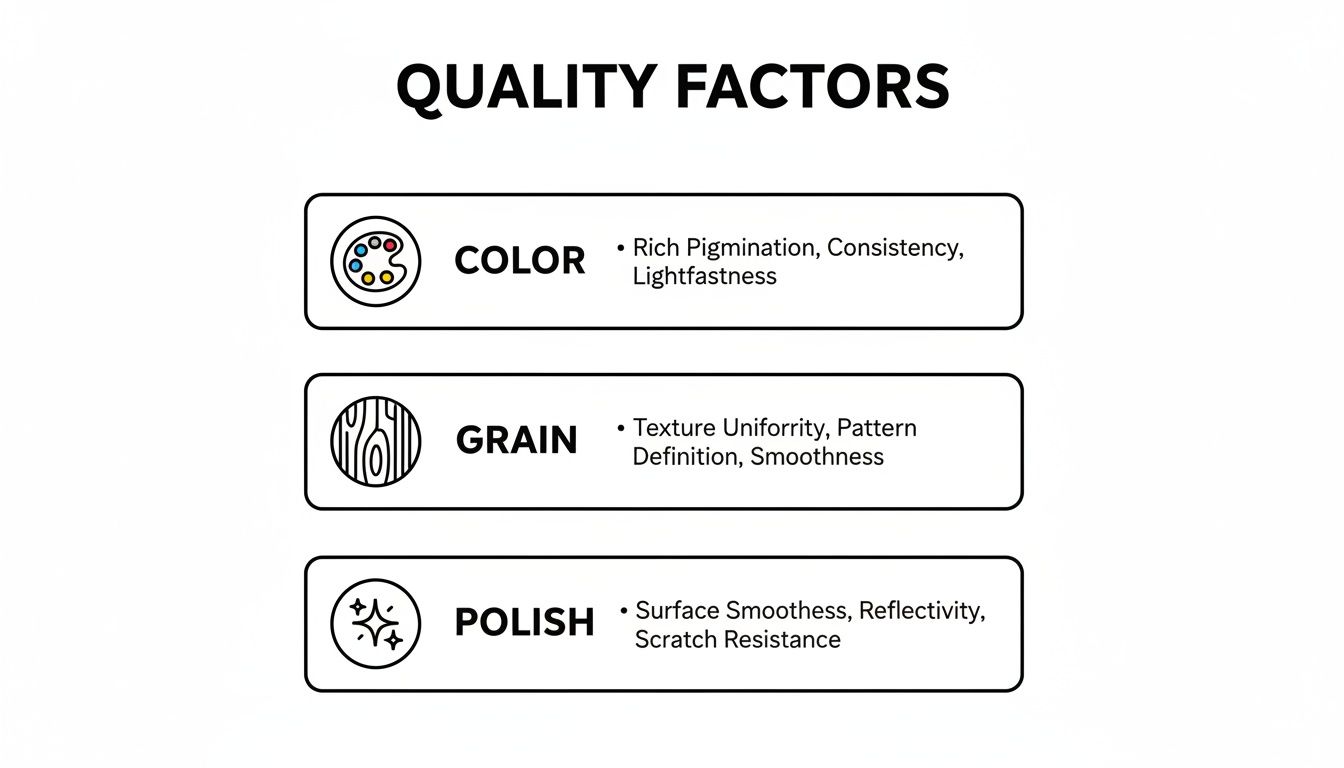
As the infographic shows, it’s the combination of brilliant color, sharp grain definition, and a perfect polish that defines a museum-quality piece.
Preservation and Craftsmanship
Ultimately, the best measure of a fossil's quality is how perfectly it was preserved. A top-tier specimen is one where you can clearly see the wood grain, growth rings, and even the microscopic cellular structure. This level of detail is like a clear window into an ancient world, a sign of a flawless fossilization process.
The final piece of the value puzzle is the human touch: craftsmanship. A master artisan knows exactly how to cut and polish the raw fossil to reveal its natural beauty—its color, grain, and form. A flawless, glass-like polish that brings out the inner depth of the stone is the hallmark of a high-value piece.
The market for these natural treasures is growing. Market research shows the global petrified wood market was valued at approximately $1,053.5 million USD, with projections showing continued strong interest from both collectors and designers. This steady expansion highlights the rising appeal of these ancient specimens. You can read more about the growth of the petrified wood market to see the data for yourself.
Buying a valuable piece requires trust. At Astro West, our in-house experts meticulously vet every single specimen, confirming its authenticity, ethical sourcing, and accurate valuation. This is our guarantee that your investment isn't just a beautiful object, but a genuine piece of natural history with enduring worth.
Styling Your Petrified Wood Bowl Set at Home
A petrified wood bowl set is not just another accessory. It is a powerful design element, a piece of geologic history that brings an organic, grounding presence into your home. These are functional sculptures, bridging the gap between the raw beauty of the natural world and a refined interior space. When you bring one home, you are not just decorating; you are showcasing its unique story.
The remarkable versatility of these pieces is one of their greatest strengths. Whether your home is a minimalist sanctuary with clean lines or a cozy, rustic retreat filled with warm textures, a petrified wood bowl integrates seamlessly. It instantly becomes a focal point, drawing the eye and starting conversations.
Modern and Minimalist Aesthetics
In a modern or minimalist space, a petrified wood bowl provides the perfect organic counterpoint to sleek surfaces like metal, glass, and concrete. The warm, earthy tones and intricate patterns of the wood break the monotony of a neutral palette, adding depth and character without creating clutter.
Place a single, striking bowl on a polished concrete coffee table or a lacquered console. The contrast between the ancient, raw texture of the bowl and the crisp, clean lines of modern furniture creates a dynamic, sophisticated look. In this context, less is more; allow the bowl to be the star.
Rustic and Eclectic Interiors
For homes with a warmer, more layered aesthetic, a petrified wood bowl set feels as if it was always meant to be there. Its earthy character connects seamlessly with other natural materials like reclaimed wood, linen, leather, and stone. For inspiration on how a set might fit into your home, it's worth exploring different rustic interior design styles.
Here's a secret from interior designers: use petrified wood as a "textural anchor." Its substantial weight and one-of-a-kind grain can ground a room, unifying a space filled with diverse patterns, colors, and objects.
In these spaces, you can be more playful. A nested set of bowls makes a stunning centerpiece on a large wooden dining table. Alternatively, place individual bowls on bookshelves and side tables to carry the natural theme throughout the room.
Functional Art for Everyday Elegance
Beyond their aesthetic appeal, these bowls are crafted for practical elegance. Their robust, stone-like quality makes them perfect for uses that blend form and function, elevating everyday routines into moments of beauty.
Here are a few ways to put them to work:
An Entryway Catch-All: A medium-sized bowl on a console table is a beautiful, durable spot for keys, wallets, and mail. It makes a statement of natural luxury the second you walk through the door.
A Living Room Centerpiece: On a coffee table, a large bowl can hold decorative spheres, dried botanicals, or simply stand on its own as a sculptural piece. A single, impressive petrified wood bowl from Indonesia can easily command the center of a living space.
Bookshelf and Mantle Décor: Smaller bowls from a set are excellent for breaking up the straight lines of books on a shelf. Their organic shape adds visual rhythm and a touch of the unexpected.
A Sophisticated Office Accessory: On a desk, a small bowl can be an elegant holder for business cards or paperclips, bringing a calming, natural element to your workspace.
Ultimately, styling a petrified wood bowl set is about celebrating its unique history and form. Let its natural colors and patterns guide you, and do not be afraid to let it stand alone. It has a presence powerful enough to command attention, turning any corner of your home into a testament to timeless design.
Caring for Your Piece of Geologic History
Consider this: your petrified wood bowl set has already survived for millions of years, transforming from a living tree into a stunningly resilient stone. With minimal care, this piece of deep time will be a source of wonder in your home for generations. While impressively hard—often rating a 7 on the Mohs scale, similar to quartz—its polished surface still requires thoughtful handling to maintain its beautiful luster.
Keeping your investment pristine is surprisingly straightforward. No specialized tools or complicated routines are necessary. The goal is simply to protect the meticulously polished finish that allows the stone's inner beauty to shine through. Gentle, consistent care is all it takes to keep your bowl looking as incredible as the day you acquired it.
Routine Cleaning and Maintenance
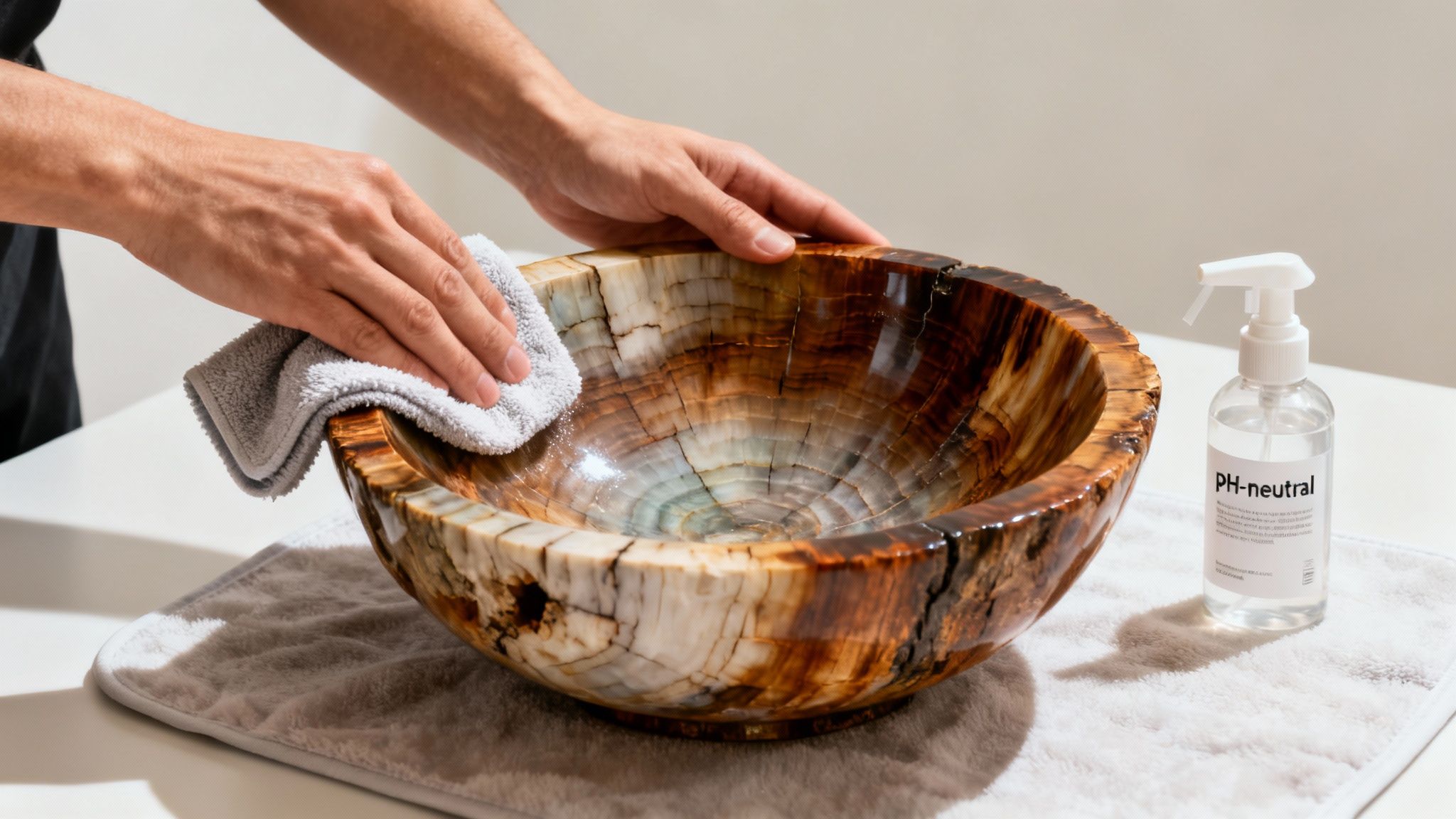
When it comes to cleaning, simplicity is key. For routine dusting, a soft, dry microfiber cloth is your best friend—it lifts away particles without any risk of scratching the surface.
If a more thorough cleaning is needed, follow these simple steps:
Mix a Gentle Solution: Use a pH-neutral cleaner or a mild, non-acidic soap mixed with warm water.
Wipe It Down: Lightly dampen a clean microfiber cloth with the solution and gently wipe the entire surface of the bowl.
Rinse with a Damp Cloth: Use a separate, clean cloth dampened with only water to wipe away any soap residue.
Dry It Immediately: This is a crucial step. Use another soft, dry cloth to dry the bowl completely. This prevents water spots and restores its high-gloss shine.
Crucial Tip: Never use abrasive scrubbers, steel wool, or harsh chemicals. Avoid bleach, ammonia, or anything acidic like vinegar or lemon juice. These substances will permanently etch and dull the polished surface, ruining the finish.
Smart Placement and Handling
Where you display your petrified wood bowl is just as important as how you clean it. A little foresight in placement can protect it from accidents and environmental stress.
Avoid High-Traffic Areas: Keep your bowl away from busy hallways or the edges of tables where it could be bumped or knocked over.
Use Protective Pads: It is a wise practice to place small felt or silicone pads on the bottom of the bowl. This prevents any chance of scratching your furniture.
Limit Direct Sunlight: Your bowl is durable, but years of prolonged, intense, direct sunlight can potentially cause some of the natural mineral colors to fade subtly.
These pieces of natural art are increasingly popular, making a significant impact in the luxury décor world. Industry analysts have noted the global market for decorative petrified wood is growing at a compound annual rate of 5.27%. The sector, currently valued at $7.63 billion USD, is expected to continue its expansion, demonstrating the strong appeal these unique items hold for designers and collectors. You can dive deeper into the numbers on this growing market trend here.
Finally, we are often asked if these bowls are food-safe. While they look magnificent holding decorative items like spheres or dried botanicals, we advise against using them for wet or acidic foods. The sealants used to create the brilliant polish are not typically rated as food-grade, and direct contact with food could compromise the finish. By following these simple guidelines, you can ensure your treasured piece remains a magnificent testament to natural history.
Begin Your Collection with Astro West
Throughout this guide, we have followed the incredible journey of a petrified wood bowl set—from a living tree in a prehistoric forest to a stunning treasure for your home. Each bowl is a genuine artifact of natural history, a powerful statement piece, and a meaningful addition to any curated space. They are not just objects; they are conversations with deep time.
Now begins the most rewarding part: finding the perfect set that speaks to you. A real connection occurs when you encounter an object that has existed for millions of years. The right one will feel as if it has been waiting for you all along.
Why Choose Astro West for Your Investment
When you are ready to acquire a geological masterpiece, confidence in your source is paramount. At Astro West, we have built our legacy on more than 60 years of expertise in the world of fine minerals and fossils. We do not just sell interesting objects; we present authenticated pieces of Earth's history, each one hand-selected for its exceptional quality and aesthetic power.
Our commitment to our collectors is the foundation of our business:
Ethical Sourcing: We go to great lengths to ensure every specimen is sourced responsibly, respecting both the environment and the communities where they are found.
In-House Authentication: Our team of experts meticulously vets every single piece that enters our gallery, guaranteeing its authenticity and provenance. You can be absolutely certain you are acquiring a genuine geological artifact.
Curated Selection: Unlike a mass-market supplier, our collection is hand-picked. We actively seek out specimens with the most stunning colors, clearest grain preservation, and the finest finishing craftsmanship.
Choosing Astro West means investing with certainty. You are not just buying a beautiful object; you are acquiring a verified piece of natural art, backed by decades of authority and a genuine passion for the extraordinary.
We invite you to discover the piece that speaks to you. Explore our curated Astro West collection online or, better yet, visit our gallery to experience the timeless allure of these natural wonders firsthand. It’s time to begin your journey and own a true geological masterpiece.
Frequently Asked Questions
When exploring the world of geological art, it is natural to have questions, especially concerning an object as unique as a petrified wood bowl set. To help you feel completely confident as you start or grow your collection, we have compiled answers to the questions we hear most often from new enthusiasts and seasoned collectors alike.
Consider this your straightforward guide to understanding and appreciating these incredible pieces of natural history.
Are Petrified Wood Bowls Food Safe?
This is one of the most practical questions we receive. While petrified wood is an incredibly dense and hard stone, our advice is unequivocal: these bowls are strictly for decorative use only.
The fossilization process involves a complex mixture of minerals seeping into the wood over millions of years, some of which should not come into contact with food. Furthermore, the gorgeous high-gloss finish is achieved with polishing compounds and sealants that are not rated as food-grade.
They are fantastic for holding decorative items like polished stones or dried botanicals, or simply displayed empty as a sculptural piece. However, to preserve the finish and ensure safety, avoid using them to serve anything, especially wet or acidic foods.
Why Do the Colors and Patterns Vary So Much?
The incredible diversity in color and pattern is the geological fingerprint of each piece—it is what makes every bowl one-of-a-kind. This variation comes directly from the specific minerals dissolved in the groundwater during the fossilization process millions of years ago.
It is as if nature was painting with a rich, earthy palette:
Fiery reds, warm browns, and sunny yellows are from Iron Oxides.
Dramatic blacks and soft, delicate pinks are created by Manganese Oxides.
The original Carbon from the tree itself also contributes to deep, inky black tones.
In rare cases, elements like Copper, Cobalt, or Chromium were present, introducing the highly sought-after greens and blues.
Because the mineral composition at every fossilization site was unique, no two pieces of petrified wood will ever look exactly alike. This natural artistry is a huge part of their magic.
How Can I Tell if Petrified Wood Is Real?
Spotting authentic petrified wood comes down to a few key sensory checks. First, genuine petrified wood feels heavy for its size and cool to the touch, just like any other stone. A fake made from resin or plastic will feel noticeably lighter and will warm up in your hand much faster.
But the real giveaway is the preservation of the original wood structure. Look closely. You should be able to see details like growth rings, wood grain, or even the texture of the bark. These organic patterns are incredibly difficult to replicate well.
Of course, the surest way to know you are acquiring an authentic piece is to purchase from a trusted, knowledgeable dealer. Here at Astro West, our experts personally vet every specimen for authenticity and provenance, so you can collect with the confidence that you're acquiring a true piece of Earth's ancient history.
Ready to discover your own piece of deep time? The curators at Astro West have hand-selected an exceptional collection of petrified wood bowls, each a testament to nature's artistry. Explore our gallery to find the perfect natural sculpture for your home or collection. Visit us at https://astrowest.com to begin your journey.