Fossil Store Near Me: Discover Authentic Treasures and Expert Galleries
Searching for a "fossil store near me" isn't just about finding a shop—it's the first step on a journey into deep time. For collectors, designers, and the curious in New York City, that search culminates at Astro West, a premier gallery where you can literally hold a piece of natural history in your hands. It transforms an online query into a tangible, awe-inspiring experience.
Your Adventure into Earth’s Deep Past Begins Here
There’s a world of difference between seeing a fossil on a screen and encountering one in person. A digital image can show you a shape, but it can't convey the intricate, stony texture of a 100-million-year-old ammonite or the sharp, serrated edge of a Spinosaurus tooth. Visiting a physical gallery like Astro West turns an abstract concept into a multi-sensory discovery, positioning each fossil not just as a specimen, but as a unique piece of natural art.
This guide is your map for navigating this captivating world. It’s designed for everyone, from curious newcomers looking for an educational adventure to serious collectors and interior designers hunting for an unparalleled statement piece.
More Than a Store—A Curated Museum
A top-tier fossil gallery operates like a private museum where every piece is available to become part of your own story. Unlike a vast, sometimes overwhelming museum hall, a specialized store offers a focused and intimate experience. Here, the collection is hand-selected not just for its scientific importance but for its exceptional aesthetic beauty and the stories locked within it.
You also get to learn directly from experts who can share the unique history of each specimen. They can walk you through details like:
Geologic Age: Understand the specific era a creature lived in, from the Paleozoic to the Mesozoic.
Location of Origin: Discover where on Earth the fossil was unearthed, from the deserts of Morocco to the plains of Wyoming.
Preservation Quality: Learn what makes a particular fossil exceptional, like the fine detail in a fish's fins or the intact structure of a trilobite.
This direct interaction elevates shopping into an enriching educational experience. It’s a chance to ask questions, compare different specimens side-by-side, and develop a discerning eye for quality and authenticity. With each visit, your appreciation for our planet's immense timeline deepens.
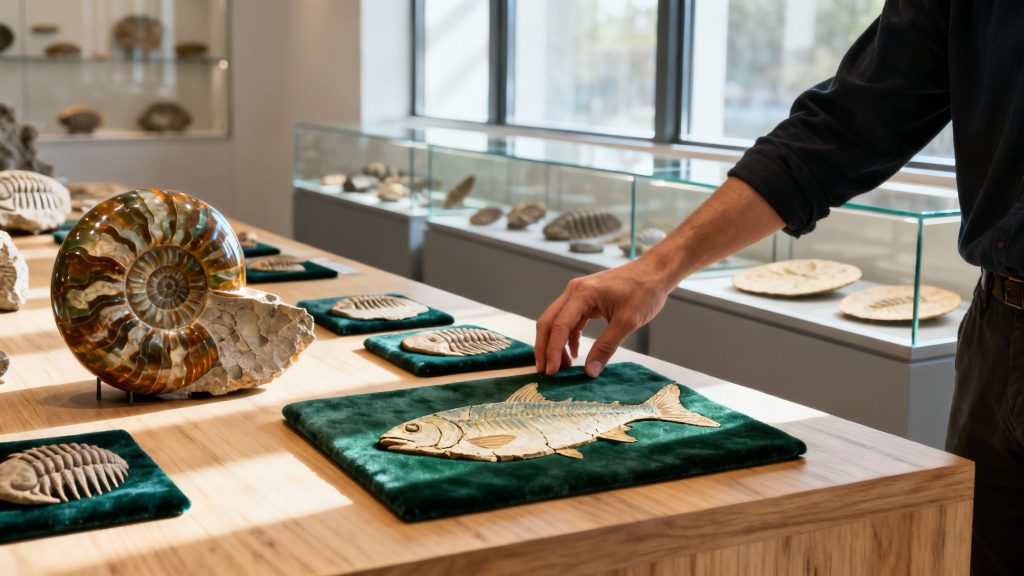
Stepping into a high-end fossil gallery for the first time is a unique blend of a museum visit and a treasure hunt. This isn’t a typical shop. A premier gallery like Astro West presents natural history as an immersive art form, where every specimen tells a story that stretches back millions of years.
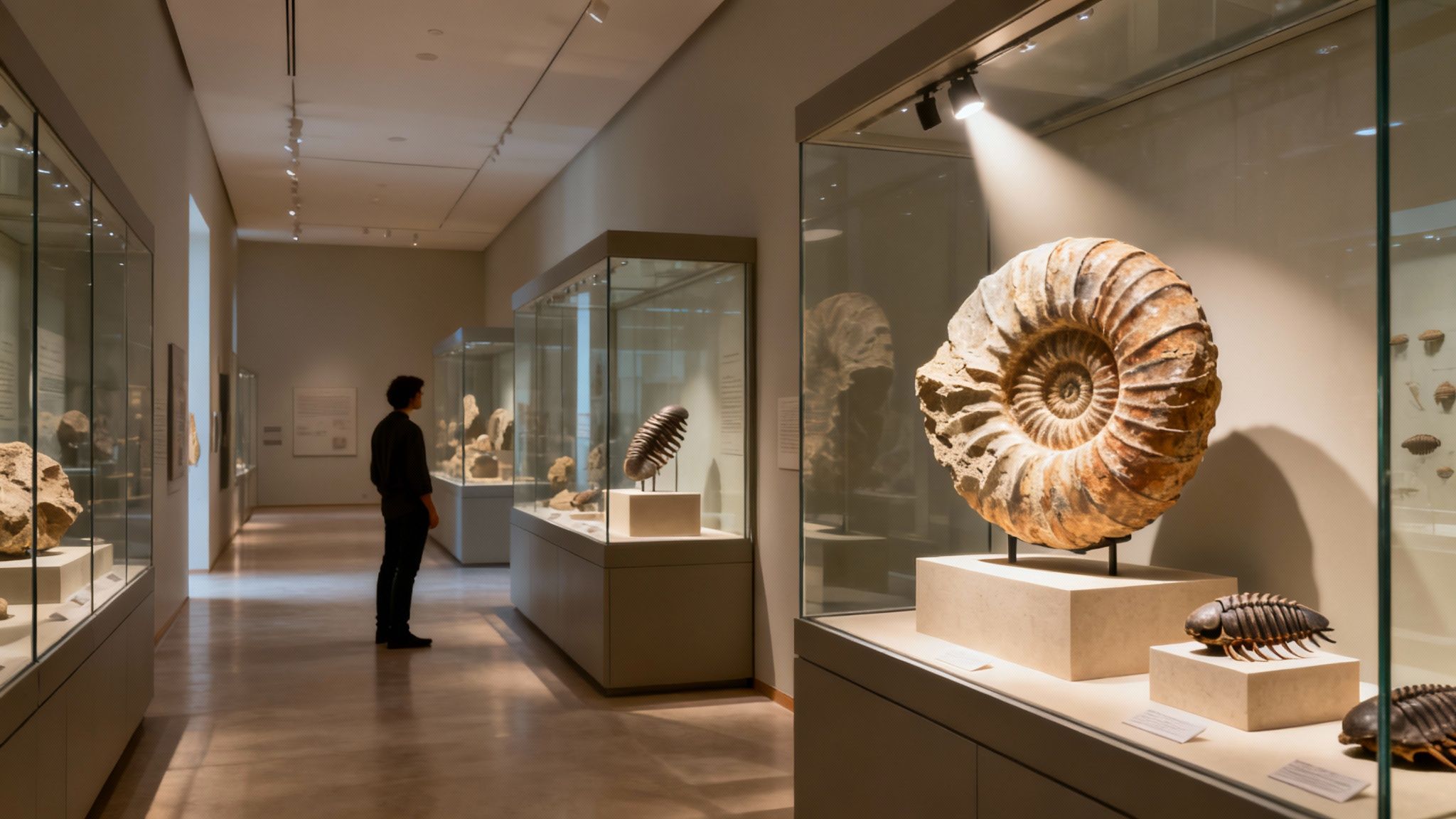
Forget about dusty, cluttered shelves. Instead, imagine thoughtfully lit displays that showcase the incredible diversity of Earth’s past. You’re not just looking at rocks—you’re looking at the actual preserved remains of ancient life, with each piece acting as a window into a completely lost world.
The experience is designed to feel approachable and genuinely exciting. Whether you’re a seasoned collector hunting for a specific piece or a curious visitor, the layout and expert guidance are there to help you explore with confidence and find something that truly resonates with you.
A Journey Through Geologic Time
The moment you walk in, you’ll notice the collection is often organized to guide you through different eras and even by purpose. It’s a carefully curated journey meant to spark wonder and a deep appreciation for the sheer scale of natural history.
You can expect to encounter a wide range of authentic fossils, including:
Iconic Starter Fossils: Discover accessible yet classic specimens like trilobites from the Paleozoic Era or the beautifully detailed fish from the Green River Formation. These are absolutely perfect for starting a new collection.
Mesozoic Marvels: Come face-to-face with the age of dinosaurs. This is where you might find the formidable teeth of a Spinosaurus or the spiraled shell of a massive ammonite that once roamed prehistoric seas. You can explore a beautifully prepared Spinosaurus tooth in a display box to see the incredible detail up close.
Natural Sculptures: Marvel at large, museum-quality pieces that blur the line between science and art. Think sprawling crinoid plates that look like underwater gardens frozen in stone or polished petrified wood slabs that serve as powerful interior design elements.
A premier gallery's role is to connect people with Earth's history in a tangible way. It’s about transforming a fossil from a simple object into a piece of a much larger, more profound narrative about life on our planet.
More Than a Hobby—A Global Passion
Fossil collecting has absolutely exploded into a global phenomenon, driven by a deep human fascination with the past. In the U.S. alone, 35% of adults have engaged with fossils by visiting stores or dig sites, fueling a seriously thriving market.
This interest has propelled the luxury natural history décor segment, which grew an impressive 18% year-over-year as designers increasingly use these ancient artifacts in high-end projects. You can explore more about these trends and their economic impact in the latest statistical reviews.
How to Identify Authentic Fossils and Avoid Fakes
Authenticity is everything in the world of fossil collecting. When you're searching for a "fossil store near me," what you're really looking for is a place that guarantees its specimens are genuine pieces of natural history. Unfortunately, the market has its share of fakes, composites, and heavily restored pieces that are sometimes passed off as pristine.
Learning to tell the real from the fake isn't about being cynical—it’s about protecting your investment and ensuring the ancient story your fossil tells is a true one. From overly perfect Moroccan trilobites glued together from fragments to "dinosaur teeth" carved from modern bone, forgeries can be shockingly convincing. A reputable gallery will always be upfront about restoration work, but knowing the fundamentals yourself is your best line of defense.
Reading the Signs in Stone
Every authentic fossil holds clues about its incredible journey through deep time. Unlike a manufactured replica, a real specimen will have subtle imperfections and textures that speak to its natural origins. It just takes a little practice to train your eye.
Start by looking closely at these key areas:
Texture and Surface Detail: Real fossils usually have a grainy, stone-like texture. If a piece feels unnaturally smooth, waxy, or lightweight like plastic, that’s a major red flag. Look for the fine, natural details—the delicate growth lines on an ammonite’s shell or the porous, web-like structure of fossilized bone.
The Matrix: The matrix is simply the rock surrounding the fossil. In an authentic piece, the fossil should look naturally embedded. Be wary if the color or texture of the rock changes abruptly right around the fossil. This can be a sign that a real fossil fragment was artificially set into a new slab of rock to make it look more complete or impressive.
Coloration: Natural fossil colors come from the minerals that replaced the original organic material over millions of years. Think earthy tones—browns, grays, blacks, and tans. Unusually bright or perfectly uniform colors might mean paint or dye has been used to hide repairs or enhance a low-quality specimen.
Repair and Restoration Lines: Most fossils need some repair—they're incredibly old and fragile, after all. An honest dealer will always point out these restorations. You can often spot them by looking for fine crack lines filled with epoxy or areas where the color and texture don't quite match. These can also be signs of a composite piece, where fragments from different fossils have been cobbled together.
The single most reliable way to ensure authenticity is to build a relationship with a trusted dealer. Galleries like Astro West stake their entire reputation on meticulous sourcing, working directly with paleontological experts and preparation labs to verify every single piece they offer.
Provenance Is Paramount
Beyond a visual inspection, the most important factor in verifying a fossil is its provenance—its documented history. This is the story of where it was found, its geological age, and who has owned it.
A reputable fossil store will always provide this crucial information. This documentation is your assurance that the piece is not only real but also ethically and legally sourced.
When you invest in a specimen like a professionally prepped ammonite from Madagascar, you're also investing in its verifiable history. That level of detail is what transforms a beautiful object into a true historical artifact, giving you complete confidence in what you're adding to your collection.
Building Your Collection, From First Find To Museum-Grade
Every great natural history collection, whether it’s sitting in a museum or a private study, started with a single piece that sparked a sense of wonder. That journey from a first fossil to a curated display is a personal adventure, and knowing where to start makes all the difference. A good local fossil shop isn't just a store; it’s a guide that can help you build a collection that reflects your passion and grows with you.
For anyone just dipping their toes into the prehistoric world, the key is to start with iconic, accessible fossils. These are the pieces that give you a real, tangible connection to the deep past without being overwhelmingly complex or expensive. Think of them as the cornerstones of your collection.
Starting Your Journey into the Past
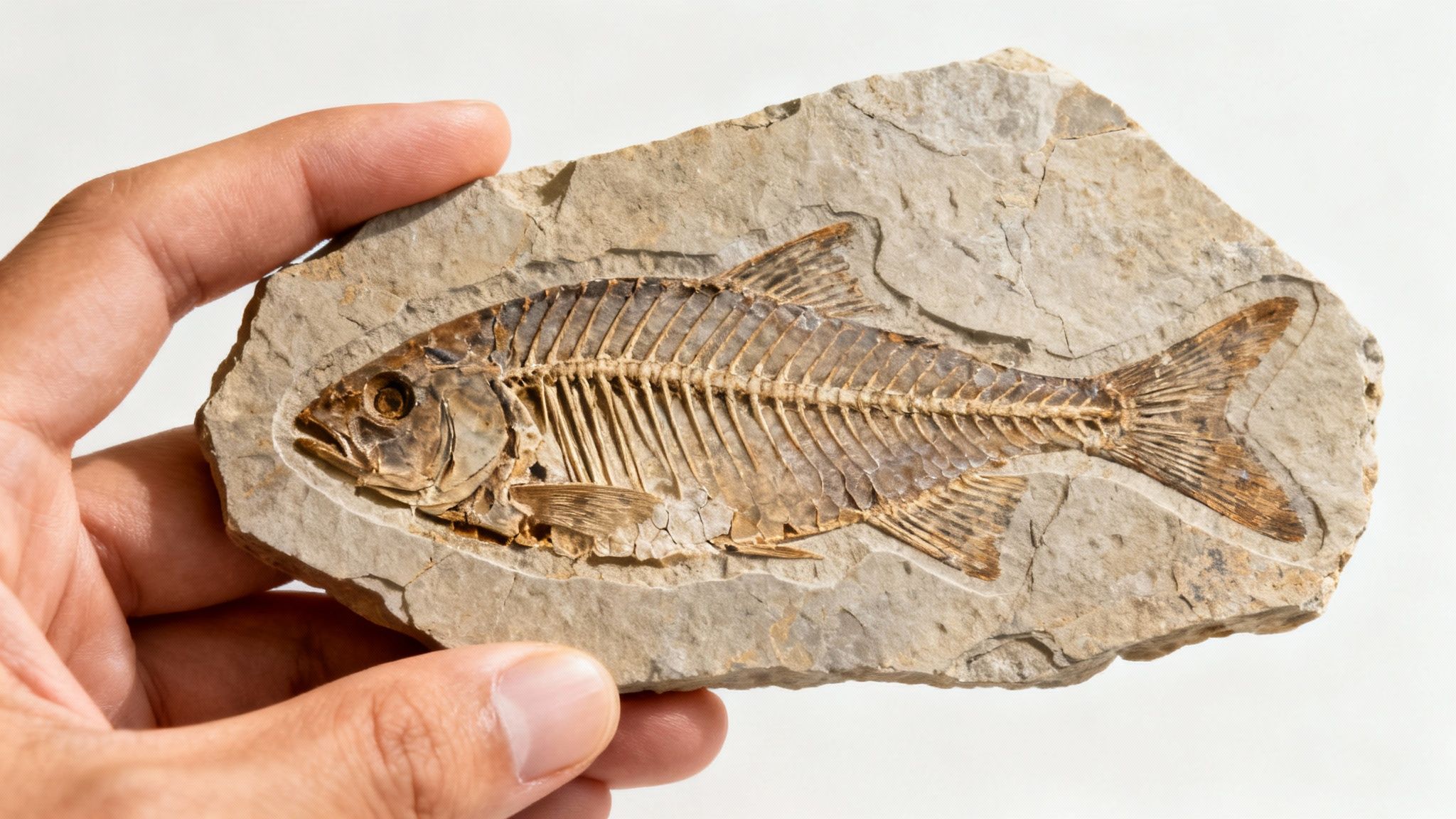
An excellent starting point is a beautifully preserved ammonite. With their intricate spiral shells, these ancient marine cephalopods are like natural sculptures that tell a story of prehistoric oceans. You could also look at the fish fossils from Wyoming's Green River Formation, which offer an incredible snapshot of a 50-million-year-old ecosystem frozen in time. Both are fantastic examples of fossils that blend visual appeal with major historical importance.
As your knowledge and passion grow, you can move on to more specialized pieces. This is where seasoned collectors start hunting for specimens that are rarer or tell a more specific paleontological story. At this stage, you might start looking for:
Fearsome Predators: A genuine Spinosaurus tooth from Morocco is a direct link to one of the largest carnivores to ever walk the Earth. Its sharp point and conical shape are unmistakable.
Ancient Sea Lilies: Intricate crinoid plates look like underwater gardens carved in stone. They often preserve entire communities of marine animals and are prized for their stunning complexity.
Fossilized Forests: Large, polished sections of petrified wood are breathtaking. They showcase stunning colors and patterns created as minerals replaced wood over millions of years, turning natural history into pure art.
Fossils as a Tangible Asset
Beyond the sheer wonder of owning a piece of history, collecting fossils has also become a serious investment. The global fascination has exploded, with the market growing at an average of 6.2% each year since 2015. North America is the epicenter of this trend, accounting for 42% of all fossil transactions, thanks in large part to over 1.2 million amateur collectors in the U.S. alone.
While you can get started with a nice trilobite for around $50, museum-grade items can easily top $100,000. On average, quality fossils appreciate by about 8.4% annually, making this a hobby that blends education with real financial value. You can dig into more of the numbers and learn about the growing global fascination with fossils through detailed market analysis.
To help you get started, here is a simple guide to choosing fossils that fit your experience level and budget.
Aesthetics, accessibility, and learning foundational concepts.
Intermediate
Spinosaurus Teeth, Crinoid Plates, Dinosaur Bone Fragments
$500 – $5,000
Rarity, preservation quality, and building a themed collection.
Advanced
Museum-Grade Dinosaur Skulls, Complete Skeletons, Rare Amber with Inclusions
$5,000 – $100,000+
Scientific significance, provenance, and investment potential.
This table is just a starting point, of course. The best fossil to collect is always the one that captures your imagination.
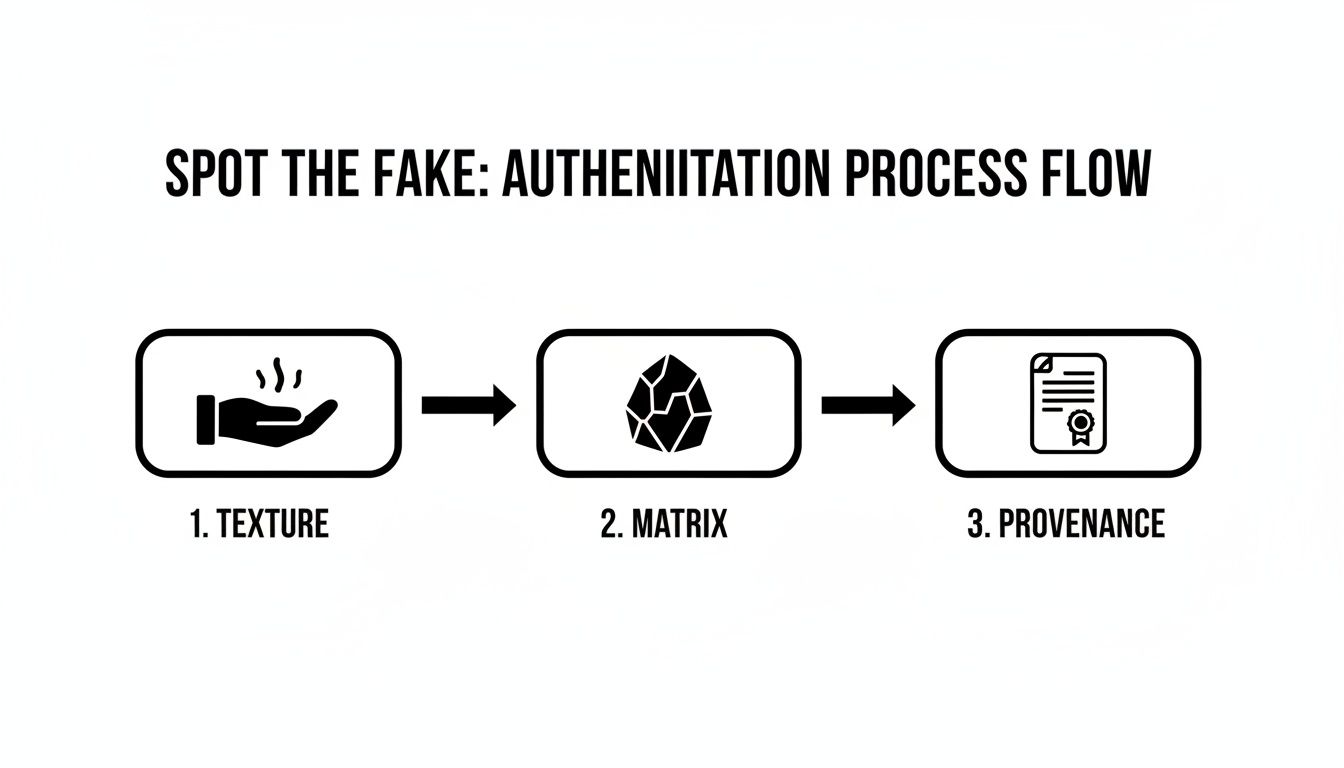
Authenticity is everything in this field. This diagram shows the three core steps—texture, matrix, and provenance—that experts use to spot fakes and verify that a fossil is the real deal.
Learning to think like an expert and following this process ensures every piece you add to your collection is a genuine artifact, protecting both its historical story and its long-term value.
Integrating Ancient Art into Modern Interior Design
Fossils aren't just specimens for a museum; they are Earth’s original sculptures. For interior designers, architects, and anyone with a keen eye, these ancient artifacts infuse a space with a story and character that simply can't be manufactured. They ground a modern room in a history that stretches back millennia, creating a profound sense of permanence and soul.
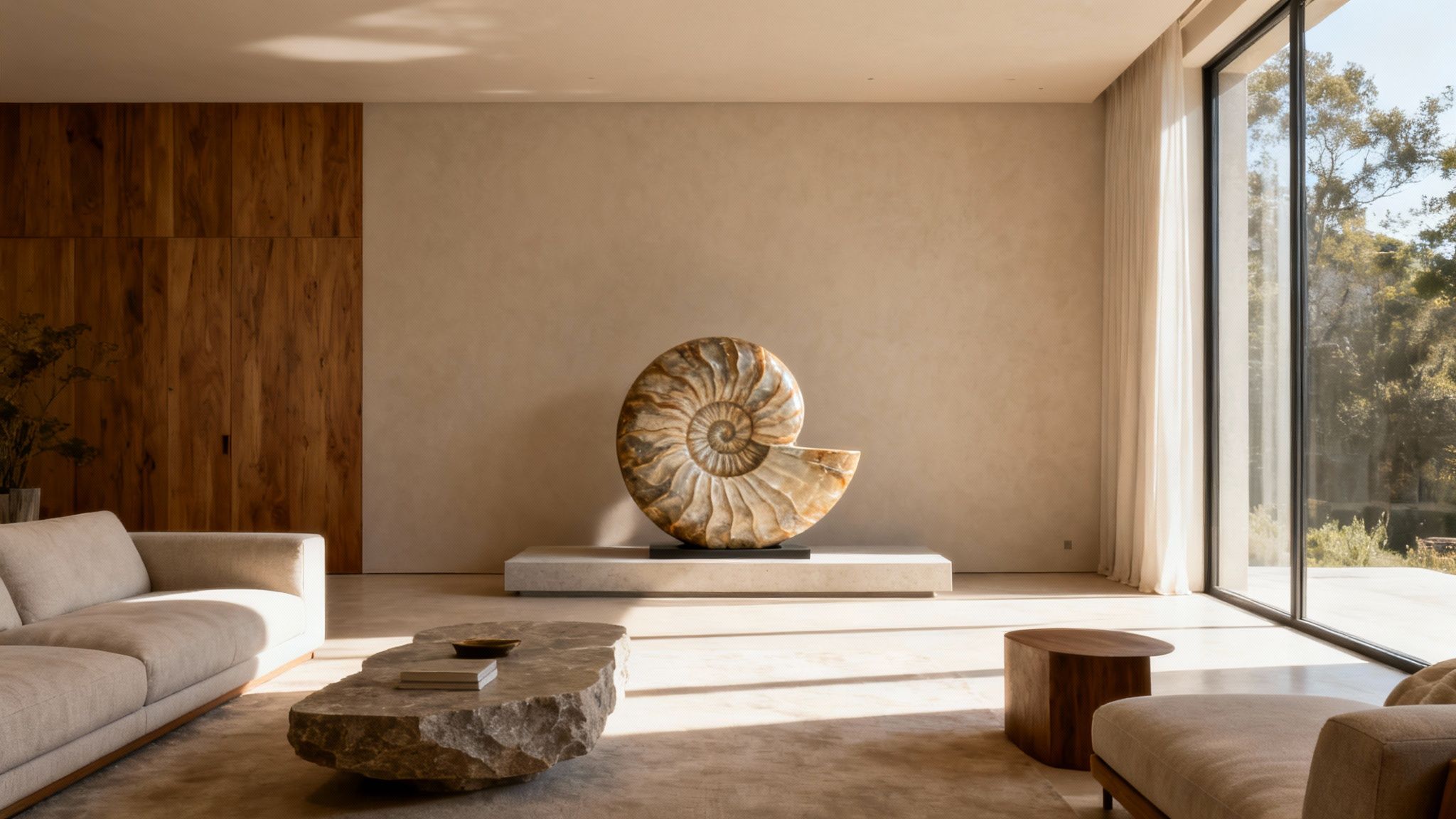
Picture a large, sculptural ammonite with its perfect logarithmic spiral. Set it as the dramatic focal point in a minimalist living room. Its organic form and stony texture create a stunning contrast against clean lines and contemporary materials like glass or steel. It’s more than decoration—it’s a conversation piece that tells a story of prehistoric oceans.
From Natural History to High Design
Bringing these pieces into your home is all about creating a dialogue between the ancient and the modern. The trick is to treat each fossil like the unique piece of art it is, giving it the space and attention it deserves.
Here are a few ways to style them:
Create a Focal Point: A single, large specimen can anchor an entire room. Think of a polished slab of petrified wood used as a coffee table or a striking crinoid plate mounted on a wall.
Strategic Lighting: Use focused spotlights to highlight the intricate details, textures, and natural colors of a fossil. This transforms it from a simple object into a dynamic feature of the room.
Thoughtful Placement: Group smaller fossils, like a collection of trilobites or dinosaur teeth, on bookshelves or a mantlepiece. They add layers of historical intrigue without overwhelming the space. Unique pieces like these fossil nautilus framed prints can also add a distinctive, curated touch.
Fossils bridge the gap between natural history and luxury design. They remind us that the most beautiful and compelling materials are not man-made but have been sculpted by time itself. A fossil doesn’t just occupy a space; it inhabits it with a story millions of years old.
Pairing with Contemporary Materials
The real magic of using fossils in design comes from juxtaposition. The raw, organic texture of a fossilized bone fragment or the deep, earthy tones of petrified wood create a beautiful tension when set against sleek, modern elements.
Imagine placing a dark, polished ammonite on a crisp white marble console. Or setting a detailed fish fossil against a backdrop of raw concrete. This contrast highlights the unique beauty of both materials, making each one pop.
Even smaller decorative items, like this stunning ammonite and belemnite oval dish, can bring a touch of ancient elegance to a modern tabletop. By choosing a reputable fossil store near me, designers and homeowners alike can find curated pieces guaranteed to elevate any interior project.
Why Astro West is New York's Premier Fossil Destination
For anyone in New York City typing “fossil store near me” into a search bar, the journey inevitably leads to Astro West. We’re more than just a retail space; our Manhattan gallery is a curated experience, a true intersection of natural history, art, and design.
Step inside, and you'll find a world-class collection where authentic fossils stand alongside investment-grade fine minerals and rare meteorites from across the cosmos. This unique blend makes our gallery a vital resource for a wonderfully diverse crowd—from serious collectors hunting for scientifically significant specimens to interior designers seeking a showstopping sculptural element that no one else has.
A Commitment to Authenticity and Expertise
At Astro West, our reputation is built on an unwavering commitment to authenticity. We meticulously source every single artifact, ensuring each piece has a verifiable story and provenance. It's something we take very seriously.
Our expert team is genuinely passionate about sharing the deep history behind every fossil. A visit here isn't just shopping; it's an educational adventure filled with personalized guidance. This dedication to quality, knowledge, and storytelling is what truly sets us apart.
We believe that holding a piece of natural history is a profound experience. Our mission is to make that experience accessible, educational, and inspiring for every person who walks through our doors, ensuring they leave with a deeper appreciation for our planet’s incredible story.
Whether you're just beginning your collection or searching for that perfect museum-quality centerpiece, Astro West provides a trusted, immersive environment. We invite you to visit our gallery and discover for yourself why we are New York's premier destination for fine natural collectibles.
Answering Your Fossil Finding Questions
Whether you're holding your first trilobite or hunting for a museum-quality showpiece, a few questions always come up. Here’s what every fossil enthusiast, new or seasoned, should know.
How Can I Tell If a Fossil Price Is Fair?
A fossil's value is a delicate balance of its rarity, size, the quality of its preservation, and the painstaking professional labor needed to prepare it. If a price seems too good to be true, it likely is.
Extremely low prices can be a major red flag, often pointing to a fake, a composite piece cobbled together from unrelated fragments, or a specimen with heavy, undisclosed restoration. A reputable gallery doesn't just pull numbers out of thin air; they price pieces based on expert valuation. That cost reflects the fossil's true market value, scientific importance, and its incredible journey through geologic time.
Do I Need a Certificate of Authenticity?
While a small, common fossil might not come with a formal certificate, any trustworthy gallery or fossil store near me will always provide detailed provenance. Think of this as the fossil's birth certificate and passport all in one. It’s your guarantee.
This documentation should always include:
The fossil's species name
Its specific geologic age
The exact location where it was discovered
For any significant purchase, this information is non-negotiable. It validates what you're buying, becomes a permanent part of the specimen's history, and is crucial for securing its long-term value as a collectible.
What Is the Best Fossil for a Beginner or a Child?
Hands down, an ammonite or a trilobite. They are the perfect gateway into the world of fossil collecting—instantly recognizable, visually captivating, and generally affordable.
They're also surprisingly sturdy, which makes them great for hands-on learning without the constant worry of them crumbling to dust. An ammonite or trilobite can easily spark a lifelong fascination with natural history, making them fantastic gifts for curious minds of any age.
At Astro West, we believe in complete transparency. Every world-class fossil we offer is fully authenticated and comes with detailed provenance, so you can collect with confidence. Explore our curated collection of natural history today.