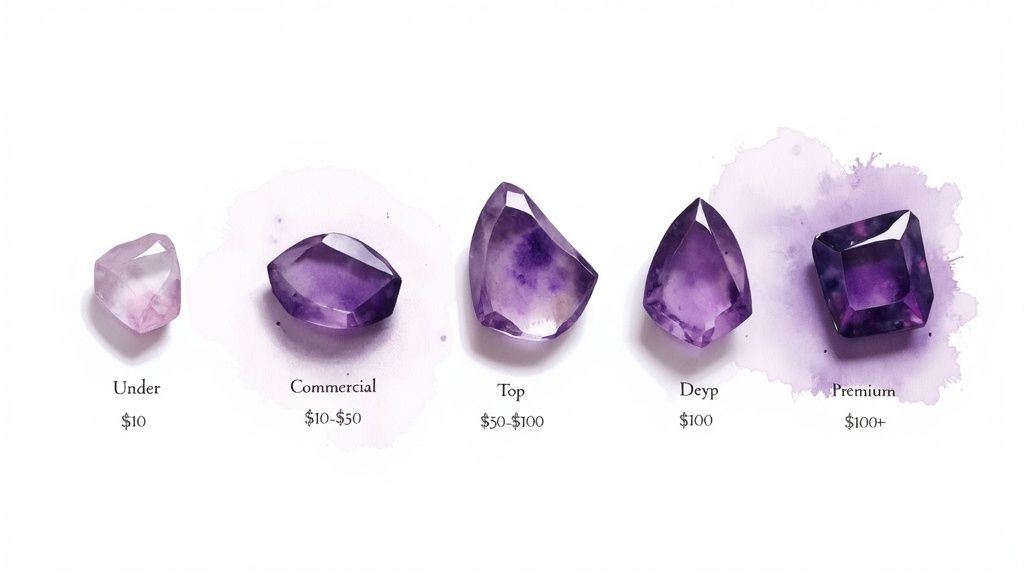
When you hear “amethyst,” you might think of an affordable, accessible gemstone. And while that can be true, the real price per carat isn’t one simple number. It’s a spectrum, stretching from under $10 to well over $100, and the final cost all comes down to a few critical factors: color, clarity, and origin.
Unpacking the Price of Amethyst
Amethyst is one of the world’s most recognizable gems, but its widespread popularity can be a little misleading. It’s classified as a semi-precious stone, but that label doesn’t mean all amethyst is created equal. The huge price differences you’ll see all boil down to the quality grade of the individual stone.
Think of it like buying coffee. You can grab a simple, budget-friendly cup from a diner or opt for a premium, single-origin pour-over from a specialty café. Both are coffee, but the quality of the beans, the roast, and where they were grown create a massive price gap. It works the exact same way with amethyst.
A paler, commercial-grade stone might be perfect for a simple everyday piece of jewelry. But a deeply saturated purple gem with brilliant flashes of red? That’s a true collector’s item. The most sought-after variety, often called ‘Siberian’ amethyst (a nod to its historic prestige, not necessarily its modern origin), represents the absolute pinnacle of quality and commands the highest prices.
A Quick Look at Price Tiers
To put some numbers on it, the price of amethyst per carat can vary dramatically based on its quality. For instance, top-tier ‘Siberian’ amethyst, with its signature deep purple hue and red secondary flashes, can range anywhere from $15 to $100 per carat once faceted.
On the other hand, attractive medium-colored amethysts are much more affordable, typically priced between $10 to $30 per carat for faceted stones. Size also plays a big role here—larger, high-quality stones are exponentially rarer and, therefore, more valuable per carat. You can see this principle in action with a beautifully crafted piece like this 14k Gold Amethyst Bangle Cuff Bracelet, where the quality of the gem is central to the design.
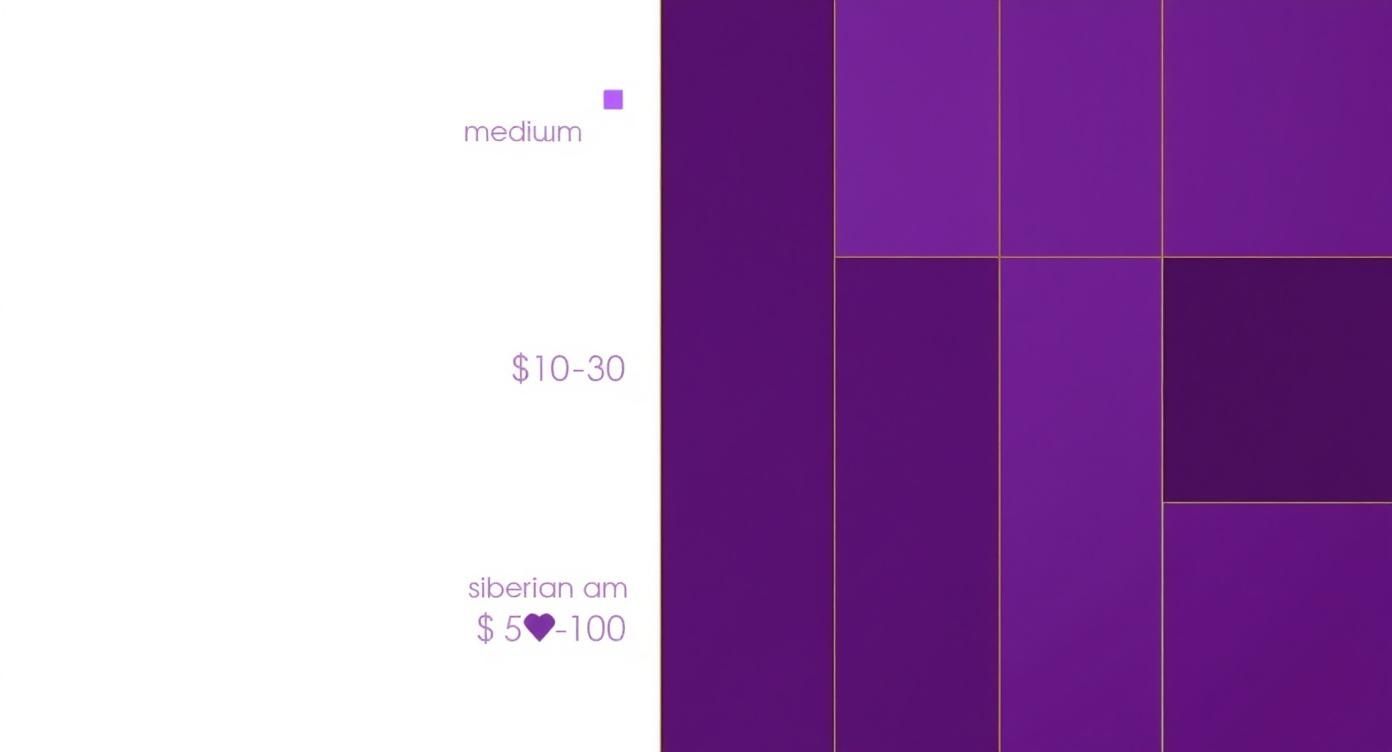
This chart gives you a quick visual of the price ranges you can expect for a standard medium-grade amethyst versus a premium ‘Siberian’ quality stone.
As you can see, that jump in price for ‘Siberian’ quality is substantial. It’s a perfect illustration of just how much a stone’s color and rarity can influence its final cost per carat.
Quick Guide to Amethyst Price Per Carat by Quality
To make things even clearer, here’s a simple table breaking down the estimated price ranges based on common quality grades. Think of this as a cheat sheet for spotting value.
Quality Grade
Typical Color
Clarity
Estimated Price Per Carat
Commercial Grade
Light lilac, pale violet, often with visible zoning
May have visible inclusions
$2 – $10
Medium Grade
Medium purple, good saturation, even color
Eye-clean (no visible inclusions)
$10 – $30
Fine (‘Siberian’)
Deep, rich purple with secondary red or blue flashes
Flawless or nearly flawless
$30 – $100+
This breakdown should give you a solid starting point for understanding what you’re looking at, whether you’re browsing online or in a jewelry store. The difference between a $5-per-carat stone and a $50-per-carat one is all in these details.
The Four Cs That Shape Amethyst Value
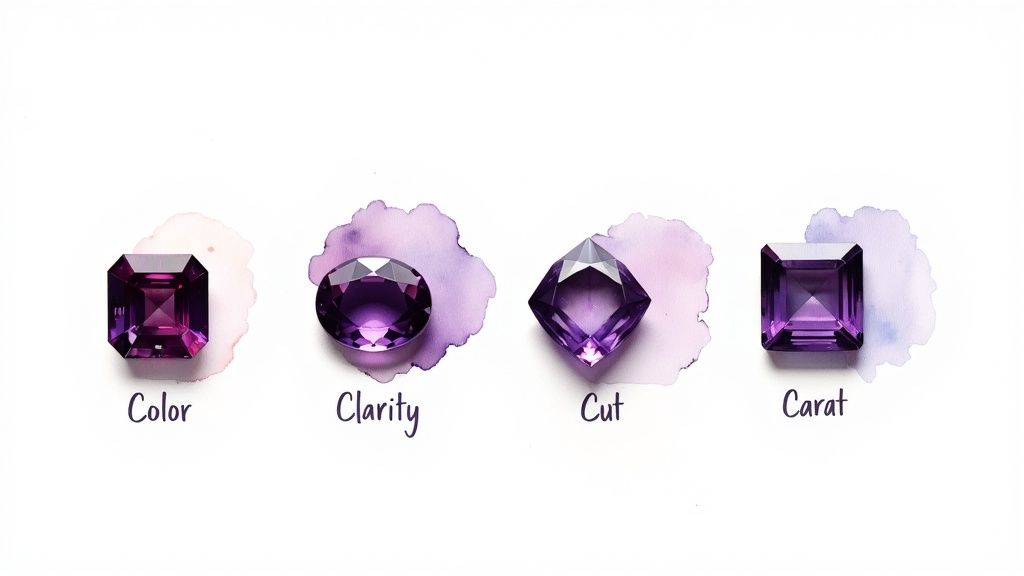
If you’ve ever dipped your toes into the world of diamonds, you’ve probably heard of the “Four Cs.” Well, the same universal standard applies to amethyst, giving us a framework for judging its quality. These four factors—Color, Clarity, Cut, and Carat—all work together to tell a stone’s story and, ultimately, determine its price tag.
Think of them as the ingredients in a recipe. While all are important, one stands out as the star of the show for amethyst. That star is, without a doubt, color.
Color: The Undisputed King
For amethyst, color isn’t just a factor; it’s the factor. It’s the single most dominant force driving the amethyst price per carat. The ideal amethyst isn’t merely purple; it’s a specific, breathtaking shade that gem lovers dream about. The most coveted stones show off a deep, rich, royal purple with secondary flashes of red or blue—a stunning combination known in the trade as ‘Siberian’ color.
To get a little more technical, we break color down into three parts:
Hue: This is the gem’s primary color. For amethyst, you want a pure, unapologetic purple, free from any muddy brownish or grayish tints that can drag down the price.
Tone: This describes how light or dark the color is. The sweet spot is a medium to dark tone—not so dark that it looks black in most lighting, but deep enough to feel rich and saturated.
Saturation: This is all about the color’s intensity. The best amethysts have vivid, strong-to-vivid saturation that makes the color practically jump off the stone.
Find an amethyst that nails all three of these, and you’ve found something special—and priced accordingly. A pale lilac stone is still lovely, of course, but it’s far more common and much more affordable.
Clarity: What “Eye-Clean” Really Means
Clarity is all about the absence of internal flaws (called inclusions) and external blemishes. Picture looking through a windowpane—the fewer smudges and specks, the clearer the view. For amethyst, the gold standard is being “eye-clean,” which simply means you can’t see any inclusions just by looking at it.
Luckily, amethyst is a type of quartz that often forms with fantastic natural clarity, so finding eye-clean stones isn’t a huge challenge. However, gems that are flawless even under a jeweler’s loupe are much rarer and more valuable. Any significant inclusions can disrupt how light travels through the stone, making it look cloudy or dull and lowering its value. Our crystal identification guide can help you learn to spot these kinds of features in different minerals.
In the world of colored gemstones, clarity is about practicality. While a diamond’s value plummets with visible flaws, an amethyst’s price is only significantly impacted if inclusions are large, numerous, or detract from the stone’s overall beauty.
Cut: Unlocking Inner Brilliance
A gemstone’s cut isn’t just its shape, like an oval or a pear. It’s about the artistry and precision of the gem cutter who facets the stone to bring out its best. A great cut maximizes brilliance, shows off the color, and creates that sparkle we all love.
A masterful cut can elevate a good stone to greatness, while a sloppy cut can make even the finest raw crystal look lifeless.
When you look at a well-cut amethyst, you’ll see symmetrical facets that bounce light evenly across the surface, creating a dazzling display. Poorly cut stones, on the other hand, might have “windows”—dead spots that look right through the stone—or “extinctions,” which are dark patches that kill the sparkle. A custom cut from an expert lapidary will add to the price, but it also unlocks the gem’s full potential.
Carat Weight: And the Surprise Twist
Finally, there’s carat weight. This is simply a measure of how much the amethyst weighs, where one carat equals 200 milligrams. Now, here’s where amethyst differs from a lot of other gems. For most commercial-grade stones, the price per carat doesn’t skyrocket as the size increases.
Why? Because large, clean amethyst crystals are relatively abundant in nature. But there’s a twist.
When we’re talking about that top-tier, ‘Siberian’ quality amethyst, the rules change entirely. A huge amethyst with perfect color and clarity is incredibly rare. For those stones, the price per carat will leap dramatically compared to a smaller gem of the same quality. These same principles apply across the gem world, as you can see in a guide to natural diamonds, which explores how these factors determine price in other precious stones.
Why A Gemstone’s Origin Story Matters
Just like a fine wine reflects its terroir—the unique soil, climate, and geography of its vineyard—a gemstone’s value is deeply tied to its birthplace. An amethyst’s origin is far more than a fun fact; it’s a critical piece of its story, influencing everything from its color and clarity to its final price per carat.
Think of it this way: while the Four Cs give us a universal language for gem quality, a stone’s provenance adds a layer of prestige and tells you what to expect. Certain locations are legendary for producing amethyst with very specific, highly sought-after characteristics.
Brazil: The Prolific Producer
When you think of amethyst, chances are you’re picturing a stone from Brazil. This South American giant is the undisputed champion of amethyst mining, yielding enormous quantities of beautiful, clean crystals. It’s the world’s largest producer, bar none.
But volume doesn’t always equal top-tier color. Brazilian amethyst typically shows a lighter, more delicate lavender or lilac hue. While these stones are absolutely stunning and make for accessible, affordable jewelry, they rarely hit those deep, saturated tones that command the highest prices. Their sheer abundance keeps the amethyst price per carat relatively modest for most Brazilian material.
Uruguay: The Color Connoisseur
Right next door, Uruguay has built its reputation on quality over quantity. Amethyst from the Artigas region is world-renowned for its exceptionally deep, vibrant purple color, often with a richness you just don’t see anywhere else.
Uruguayan amethyst is the benchmark for top-tier color, frequently showing off those coveted reddish secondary flashes. Because this intense saturation is so prized and far less common, amethyst from Uruguay consistently fetches a premium price. If color is your number one priority, “Uruguayan” is a name you want to see.
For serious gem collectors, a stone’s origin can be just as important as any of the Four Cs. Its birthplace carries a legacy of quality, rarity, and beauty that is absolutely reflected in its market value. A top-quality Uruguayan amethyst isn’t just a purple gem; it’s a piece of a legendary source.
Zambia and the Raspberry Hues
Moving across the Atlantic, another major player in high-quality amethyst is Zambia. African amethyst, particularly from Zambia, is celebrated for its unique and beautiful color profile. These gems are famous for their superb, highly saturated purple hues, often described as having distinct raspberry or reddish overtones.
This unique color signature makes Zambian amethyst a favorite among collectors and designers looking for something with a special character. The quality is often right up there with the finest stones from Uruguay, placing it in a similar price bracket. For those curious about where these gems come from, our guide on where to find amethyst offers a deeper look at its global sources.
The Legend of Siberian Amethyst
No discussion of origin is complete without mentioning the almost mythical Siberian amethyst. Historically mined in Russia’s Ural Mountains, these gems set the gold standard for quality with their perfect deep purple hue and powerful red and blue flashes.
Today, the original Siberian mines are long depleted, but the name lives on. “Siberian” is now a trade term used to describe any amethyst—regardless of its actual origin—that meets this exceptional color standard. It represents the absolute pinnacle of quality and commands the highest amethyst price per carat on the market, simply because of its incredible rarity and beauty.
Navigating Market Trends and Price Shifts
The price of amethyst isn’t set in stone. Like any natural resource, its value ebbs and flows with the tides of supply, demand, and even fleeting cultural moments. Getting a feel for the economics behind the amethyst price per carat gives you a massive advantage, whether you’re a buyer or a serious collector. It’s a fascinating story of geological discovery, shifting tastes, and what modern consumers truly value.
Believe it or not, amethyst was once considered as rare and precious as ruby or emerald. But in the 19th century, the discovery of massive deposits in Brazil completely changed the game. This sudden flood of supply transformed amethyst from a treasure reserved for royalty into a gem the public could actually own and love. That single event permanently shifted its market position, making it far more affordable.
This history lesson highlights a fundamental rule in the gem world: rarity dictates price. When supply is high, prices naturally come down. It’s the reason why amethyst, for all its stunning beauty, is more accessible than gems found in smaller, more limited deposits.
Modern Influences on Amethyst Prices
Today, the factors shaping the amethyst price per carat are a lot more complex than just supply. A few modern trends are adding new layers of value that go far beyond the traditional Four Cs.
Ethical Sourcing: A growing wave of buyers wants to know the story behind their stones. They’re demanding transparency, asking where their gems come from and whether they were mined responsibly. As conscious consumerism grows, amethysts with a documented, ethical provenance are starting to command a premium.
Fashion and Pop Culture: Trends can create sudden spikes in demand. If a particular shade of purple is crowned the “color of the year” or a major celebrity is spotted wearing a show-stopping amethyst piece, interest can surge overnight. That kind of buzz has a direct, if sometimes short-lived, impact on pricing.
Metaphysical and Wellness Interest: The rising popularity of crystals for wellness and spiritual practices has opened up a huge new market for amethyst. We’re not just talking about small tumbled stones, either. High-quality specimens are now sought after for their perceived energetic properties, adding another stream of demand.
These factors create a dynamic market. In recent years, the cost of amethyst has ranged anywhere from $10 to $200 per carat, depending on its quality and what’s happening in the market at that moment. This wide range is heavily influenced by the availability of top-tier amethysts from places like Uruguay, which are famous for their deep purple color and can fetch premium prices. As you can imagine, surges in demand for amethyst jewelry also play a huge role in pushing prices up. You can find more great insights on amethyst costs over at Crystal Spiritual.
Ultimately, the amethyst market is a living, breathing system. It responds not just to geological discoveries but to our collective tastes, values, and cultural trends. An amethyst’s price tag tells the story of its journey from the earth and its place in our world right now.
How to Buy Amethyst and Get the Best Value
Okay, you’ve learned about the Four Cs and have a feel for the market. Now it’s time to shift from student to savvy buyer. This is your playbook for sizing up a stone, asking the right questions, and walking away with a great deal. A smart purchase really just comes down to training your eye to see what matters.
When you first lay eyes on an amethyst, just take in its overall vibe. You want to see bright, lively stones that sparkle all the way across. A well-cut gem will throw light back at you brilliantly, with none of those dull, dead spots that gemologists call “windows.”
Spotting Quality with Your Own Eyes
You don’t need a gemology degree to spot the important stuff. The first and most critical thing to look for is color consistency.
Hold the stone up to a light source. Are you seeing uneven patches or bands of lighter and darker purple? That’s called color zoning. A stone with rich, uniform color is always going to be more valuable than one with obvious zoning.
Next, check its clarity. The good news is that most amethyst on the market should be eye-clean, which means you shouldn’t see any distracting flaws with just your naked eye. If you can spot little specks, cloudy areas, or tiny fractures, it’s going to pull down the stone’s value. While you’re at it, check out our guide on the best gemstones for jewelry to see how clarity standards differ from stone to stone.
Understanding Treatments and Enhancements
This is a big one: heat treatment. It’s an extremely common and totally accepted practice where amethyst is gently heated to bring out the best in its color and clarity. Often, this is done to lighten up darker stones to get that perfect royal purple.
This process is permanent and doesn’t hurt the stone, but a seller should always tell you about it. An untreated amethyst with top-tier natural color is incredibly rare and commands a much, much higher price. So, always ask if a stone has been treated—it directly impacts the amethyst price per carat.
A reputable seller will be totally upfront about any treatments a gemstone has had. If they get dodgy with their answers or claim a stone is “all-natural” without any certification to back it up (especially at a low price), consider it a major red flag.
Where You Buy Matters
The place you buy your amethyst from can make a huge difference in both price and quality. Each option has its own trade-offs.
Local Jewelers: The big plus here is getting to see the stone in person and getting expert advice. The downside? Prices might be a bit higher to cover their overhead.
Online Marketplaces: You’ll find a massive selection and some very competitive prices. But you have to rely on photos and the seller’s reputation, which makes a solid return policy non-negotiable.
Gem Shows: This is a fantastic place to hunt for unique pieces and haggle directly with dealers. It can also be a bit overwhelming if you’re new to the scene.
Globally, big players like Brazil, Uruguay, and Zambia really drive the market. In these regions, you can expect to pay anywhere from $20 to $50 per carat for good quality amethyst. Digging into these global price dynamics can give you a much better sense of what a fair market value looks like.
Essential Questions for Every Seller
Before you even think about pulling out your wallet, have a few key questions ready. This simple step is your best protection and ensures you know exactly what you’re getting.
Where did this stone come from? (Is it Brazilian, Uruguayan, etc.?)
Has this amethyst been heat-treated or enhanced in any way?
Can you point out any visible inclusions or color zoning to me?
What’s your return policy if the stone isn’t what you described?
Asking these questions puts you in the driver’s seat. It transforms what could be a confusing purchase into a confident, informed decision.
Your Amethyst Value Questions Answered
As you get deeper into the world of amethyst, a few common questions always seem to pop up. Think of this as your quick-reference guide to the most frequent queries we hear, designed to clear up any lingering confusion and help you feel totally confident about amethyst value.
Does a Bigger Amethyst Always Cost More Per Carat?
Not really, which surprises a lot of people. For most commercial-grade amethyst, the per-carat price stays pretty consistent for stones up to 10 carats. In this range, quality—especially color—is a much bigger driver of price than size alone. A small stone with knockout color will easily fetch more per carat than a larger, paler one.
The game changes, however, when you get into exceptionally large gems. For huge amethysts over 50 carats that also boast top-tier color, the rarity factor kicks in hard and drives the amethyst price per carat way up.
How Can I Know if an Amethyst Is Heat-Treated?
Honestly, for the average person, you can’t tell just by looking. It takes professional gemological tools to spot the signs. Heat treatment is a standard, completely stable, and accepted practice in the industry to bring out the best color in an amethyst.
Your best bet is simply to ask. Any reputable dealer will be upfront and transparent about treatments. While heating doesn’t drastically change the value for most commercial stones, an untreated gem with that perfect, top-tier color is a true rarity and significantly more valuable.
Is Uruguayan Amethyst More Expensive Than Brazilian?
Typically, yes. Uruguayan amethyst has earned a premium reputation for a reason. The material coming out of Uruguay is famous for its deep, rich purple hues, often with those coveted red flashes that collectors go crazy for.
Brazil is a powerhouse producer and offers plenty of beautiful amethyst, but the stones often have a lighter, more delicate tone. Because Uruguay consistently produces that top-tier, saturated color, it generally commands a higher per-carat price on the market.
What Makes Siberian Amethyst So Special?
“Siberian” is the trade name for the absolute best of the best—the pinnacle of amethyst quality. It’s not just about being purple; this grade is defined by a deep, velvety purple body color that shows strong flashes of red and blue as you turn the stone.
“Siberian” is a trade name for the absolute finest amethyst, defined by a deep purple color with strong red and blue flashes. Today, the term describes any amethyst that meets this exceptional color standard, regardless of its origin.
These legendary gems originally came from Russia’s Ural Mountains, but those mines are now depleted. Today, the “Siberian” label is used to describe any amethyst from any location that meets this incredibly high color standard. It’s the most expensive variety because that perfect storm of color is exceptionally rare and highly sought-after.
At Astro West, we believe that understanding a gemstone’s story is the key to appreciating its beauty. For over 60 years, we’ve curated a collection of fine minerals and ethically sourced gems for collectors and enthusiasts alike. Explore our hand-selected amethyst pieces and other natural treasures by visiting our website.