A Definitive Guide to Agate Slices Blue for Home Decor
Imagine holding a piece of the sky or a frozen ocean wave—that's the unique magic captured within blue agate slices. These polished stones are a favorite among designers and collectors for their captivating beauty, with each one displaying a pattern as unique as a fingerprint.
The Allure of Agate: A Window into Earth’s Artistry
Agate isn't just another pretty stone; it's a specific variety of microcrystalline quartz, known scientifically as chalcedony. Think of it as a geological painting created over millions of years inside volcanic rock cavities. Its defining feature is the mesmerizing, concentric bands that form in microscopic layers, giving the stone its signature look.
When you see blue agate slices, you're looking at a perfect blend of natural structure and, often, a touch of human artistry.
The spectrum of blue found in these slices is truly remarkable. It can range from the delicate, whisper-soft tones of a clear sky to the deep, intense hues of an indigo twilight. This incredible versatility is what makes them so appealing for everything from striking home décor to one-of-a-kind jewelry.
What Makes Each Slice Unique
No two blue agate slices are ever identical. This individuality comes from the specific conditions under which they formed deep within volcanic rocks. A few key characteristics give each slice its own distinct personality:
Banding Patterns: The layers can be wide, thin, wavy, or circular, creating an endless variety of visual textures. Some look like ripples in a pond, while others are bold and graphic.
Translucency: High-quality slices allow light to pass through them, making the colors glow from within. This effect is especially beautiful when they're placed near a window or light source.
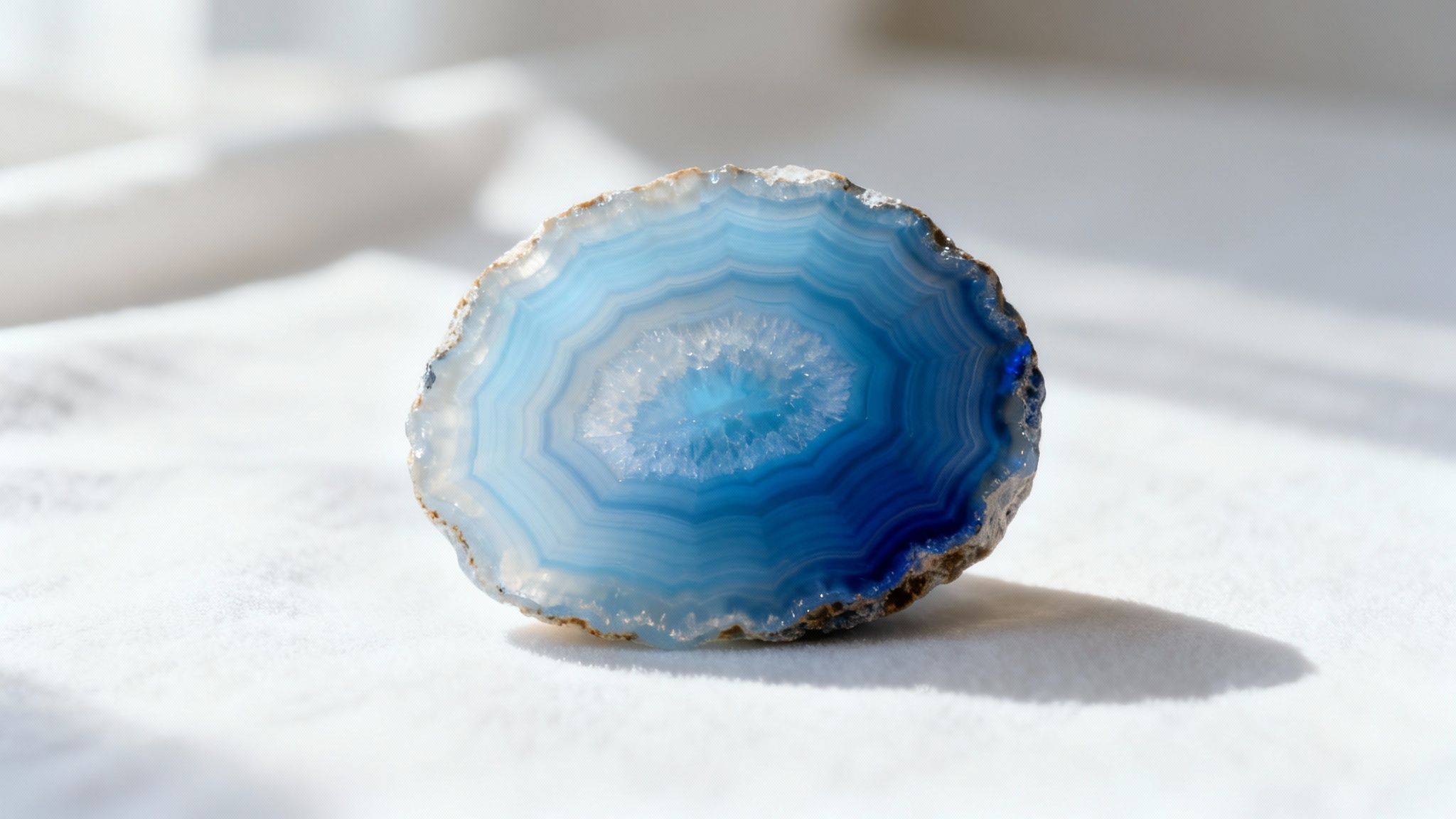
Crystalline Centers: Many slices feature a sparkling "drusy" pocket in the middle where tiny quartz crystals formed, adding a glittering contrast to the smooth bands. You can see this subtle beauty in natural pieces like this stunning Blue Lace Agate slice.
A single agate geode can yield dozens of slices, yet each one tells a slightly different part of the same geological story. The slice you choose is a snapshot of a moment that occurred eons ago.
This inherent uniqueness ensures that whether you use it as a coaster, a piece of art, or a focal point in jewelry, your blue agate slice is truly a one-of-a-kind treasure from the earth.
How Volcanic Rock Transforms Into Vibrant Blue Agate
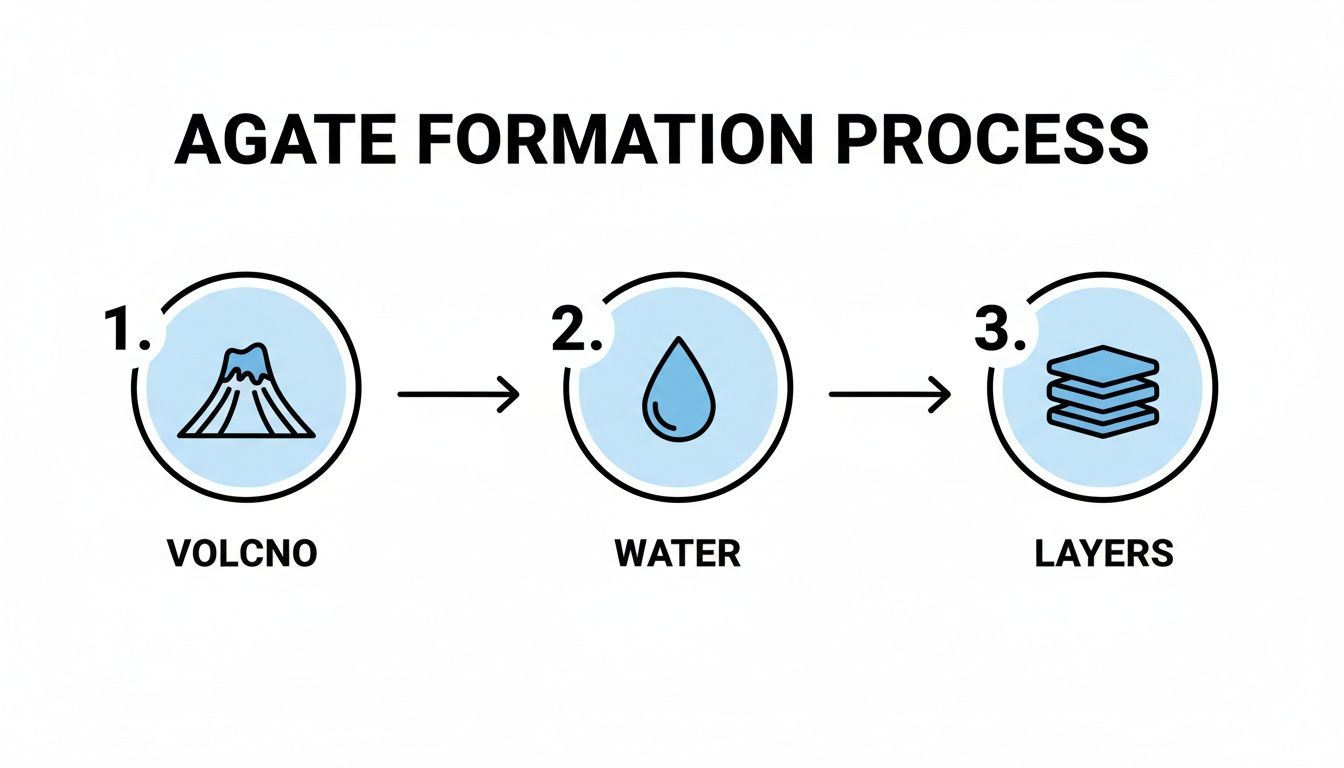
The story of every blue agate slice is an ancient one, starting millions of years ago inside fiery volcanoes. You can think of it as a slow-motion geological masterpiece, with nature as the artist and volcanic rock as the canvas. It all kicks off when gas bubbles get trapped in cooling lava, forming hollow pockets and cavities.
These empty spaces become the perfect nurseries for agate to take root. Over thousands, sometimes millions of years, silica-rich groundwater—basically, water loaded with dissolved quartz—seeps through the porous volcanic rock. This mineral-filled solution slowly makes its way into the hollow pockets, and a patient process of creation begins. To get a real feel for this, it helps to understand how crystal geodes are formed, as they share a similar origin story.
The Slow Art of Layering
Once inside these cavities, the real magic starts. The silica solution doesn't just flood the space all at once. Instead, it deposits microscopic quartz crystals in incredibly thin, successive layers. Each new wave of water might have a slightly different mineral content or temperature, creating subtle shifts in color and transparency.
It’s this slow, repetitive layering that gives agate its iconic banding. Over eons, layer after delicate layer builds inward from the outer wall, gradually filling the cavity and capturing a unique geological history in its mesmerizing patterns.
Natural Blues Versus Enhanced Hues
A key question for anyone looking to buy blue agate slices is whether that stunning color is natural or man-made. The truth is, it can be either, and it's important to know the difference between the two main types you'll find.
Naturally Blue Agate: Some agate, like the much-loved Blue Lace Agate, forms with a naturally soft, pale blue or periwinkle hue. These gentle colors come from specific mineral inclusions that were present during its formation.
Dyed Blue Agate: The vast majority of intensely colored, vivid blue agate slices you see on the market are dyed. Agate is a porous type of chalcedony, which means it can absorb liquids almost like a sponge. Artisans take advantage of this natural trait to infuse slices of plain or less colorful agate with a permanent blue dye, achieving those incredible sapphire and electric blue tones.
Knowing the difference between natural and dyed agate is crucial for any collector. While dyed slices offer breathtaking color, naturally blue specimens like this beautiful hand-polished chalcedony slice put the subtle, quiet artistry of the earth on full display.
Whether its color came from the earth or an artist’s hand, the underlying banded structure is always a testament to agate’s incredible volcanic origins. This journey from a simple hollow rock into a vibrant, patterned gem is a perfect example of nature’s slow and deliberate beauty.
How to Select High-Quality Blue Agate Slices
Picking out the perfect blue agate slice is half the fun, and knowing what to look for will help you find a piece you’ll absolutely love. Real quality isn't just about a pretty color; it's a mix of clarity, the intricacy of the pattern, and how solid the stone feels. Once you learn to spot these signs, you can buy with total confidence.
Start with translucency. A top-notch agate slice lets light filter through its layers, giving the colors an inner glow. Just hold it up to a light source. The more luminous it seems, the better the grade. This little test doesn't just show off the depth of the blue—it also reveals all the beautiful, complex banding inside.
Next, take a close look at the banding itself. You want to see crisp, well-defined lines that form an eye-catching pattern. Whether the bands are in concentric circles, gentle waves, or look like a tiny landscape, their clarity is a huge sign of quality. If the transitions between layers look murky or blurred, it's likely a lower-grade piece.
Distinguishing Features from Flaws
It’s really important to know the difference between a desirable natural feature and an actual flaw. Many blue agate slices have gorgeous inclusions that make them even more special, while others might have damage that brings down their value.
Here are the key things to check:
Drusy Pockets: See those little cavities lined with sparkly quartz crystals? That’s a drusy center. Far from being a flaw, it’s a highly sought-after natural feature that adds texture and a glittering focal point.
Cracks and Fissures: Look over the surface and edges for any deep cracks that could make the slice unstable. While tiny internal fractures are pretty common in agate, big fissures can weaken the whole stone.
Chips and Polish: Gently run your finger along the edge. A high-quality slice will feel smooth and uniformly polished, without any chips or rough patches left over from the cutting process.
The thickness of the slice is also something practical to think about. Slices that are around 1/4 inch or thicker tend to be more durable and less likely to break, which makes them a great choice for things you'll actually use, like coasters or small serving platters.
To help you on your hunt, here’s a quick checklist to keep in mind.
Blue Agate Quality Checklist
This table is a simple reference guide to help you quickly assess the quality of a blue agate slice before you make a purchase.
Quality Factor
What to Look For (High Quality)
What to Avoid (Low Quality)
Translucency
Allows light to pass through, creating a luminous, glowing effect.
Opaque or dull; very little light passes through.
Banding
Crisp, well-defined, and intricate patterns. Clear separation between layers.
Blurry, indistinct, or muddy-looking bands.
Color
Rich, vibrant blue (natural or evenly dyed). Consistent color saturation.
Faded, patchy, or uneven color distribution.
Surface Finish
Smooth, high-gloss polish across the entire surface and edges.
Rough spots, dull patches, visible scratches, or chipped edges.
Inclusions
Desirable features like drusy crystal pockets or unique mineral patterns.
Deep cracks, large fissures, or unappealing internal marks.
Thickness
Generally 1/4 inch or thicker for durability, especially for functional use.
Very thin slices that feel fragile and may break easily.
Using these simple checks, you can feel much more confident that you're picking a piece that is not only beautiful but also well-crafted and built to last.
Understanding Market Value
The world of decorative minerals is surprisingly robust, and agate is a major player. Within North America's agate market—valued at a cool USD 2,678.82 million in 2023 and projected to hit USD 4,748.18 million by 2031—blue agate slices are carving out a solid niche. The U.S. market is particularly dominant, holding a 71.60% share.
Slices from well-known sources like Brazil, Uruguay, and Madagascar are especially prized. Larger pieces with really unique patterns often command premium prices, reflecting the artistry that goes into cutting and polishing them. You can dive deeper into the numbers by reading the full report on the agate market from Fortune Business Insights.
The journey from a raw, unassuming volcanic rock to a polished slice is pretty amazing.
This simple diagram shows how ancient volcanic rock cavities, filled over thousands of years with silica-rich water, slowly built up the stone layer by tiny layer. When you understand this incredible natural process, you can really appreciate the quality and the unique story behind every single slice.
Decorating Your Home With Blue Agate
Bringing a blue agate slice into your home is like hanging a piece of natural art. These aren't just for coasters anymore. With their deep, calming colors and mesmerizing organic patterns, these geological wonders can become stunning focal points, blending earthy charm with a touch of pure sophistication.
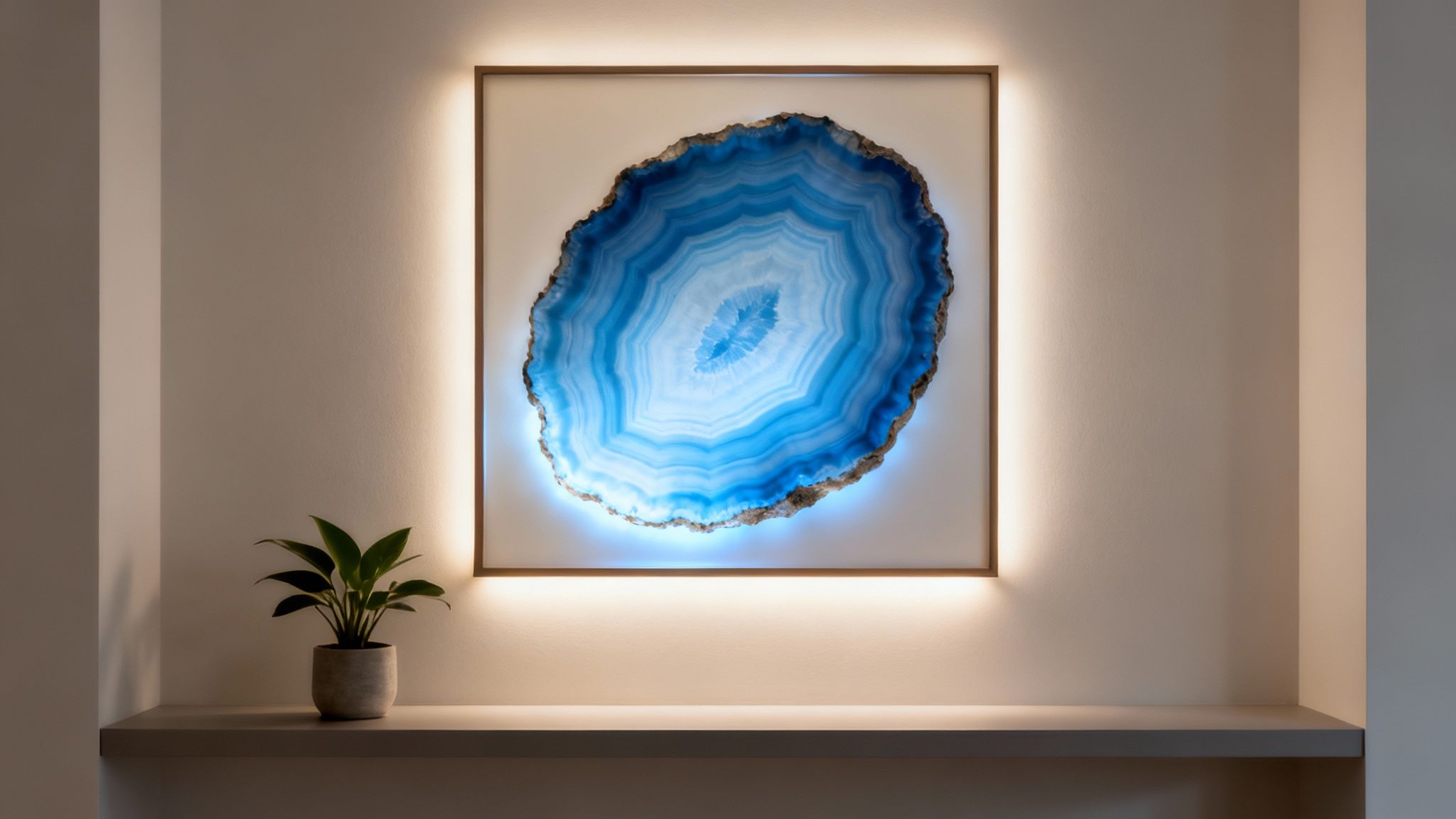
One of the best ways to show off an agate slice is with light. Thanks to their natural translucency, blue agate slices absolutely come alive when you put a light source behind them. Imagine mounting a larger slice inside a shadow box with a simple LED strip. It instantly transforms the stone into a luminous piece of wall art, highlighting every delicate band and casting a soft, ambient glow perfect for an entryway or living room.
Styling Ideas for Every Room
The beauty of blue agate is its versatility. It works just as well in a modern, minimalist space as it does in a bohemian-chic room. The trick is simply to let the stone's natural character take center stage.
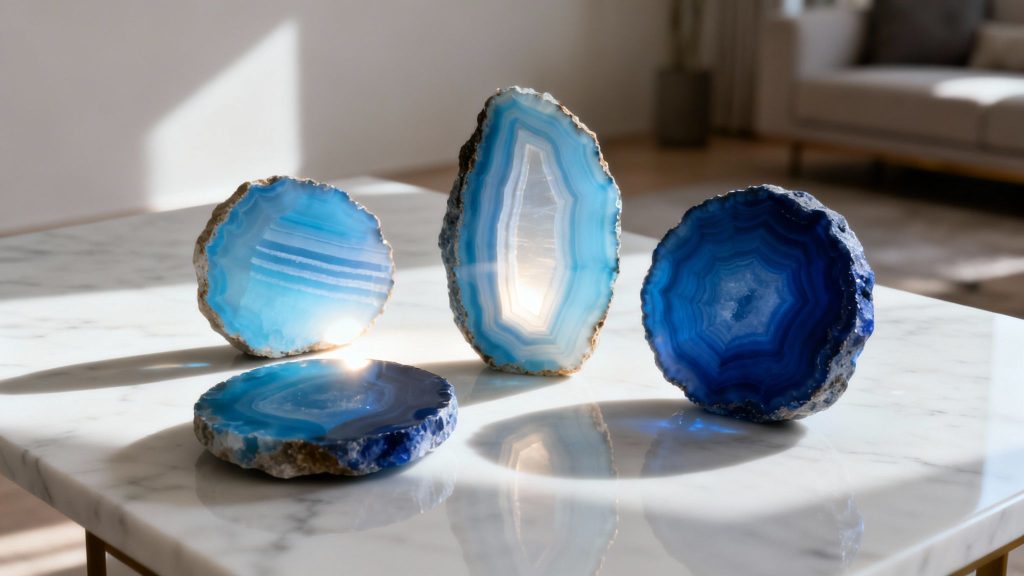
For the Living Room: Go beyond wall art and make blue agate the star of your perfectly styled coffee tables. A single large, polished slice placed on a stack of books creates an immediate conversation starter. Or, a set of four can serve as a functional yet artistic coaster collection.
For the Office: A smaller slice propped up on a miniature easel adds a serene pop of color to a desk without creating clutter. It can work as a unique paperweight or just be there as a beautiful object to help you focus.
For the Bathroom: Try grouping a few small slices on a vanity tray next to a candle. The stone’s water-like patterns instantly create a spa-like atmosphere, turning a purely functional space into a personal retreat.
For a bolder statement, why not group several slices of different sizes to create a gallery wall? It's a fantastic way to turn a blank wall into a dynamic, textured feature that really showcases the unique story of each individual piece.
Integrating Agate as a Statement Piece
While the small slices are wonderfully versatile, bigger is sometimes better. A thick, substantial slab of agate can serve as a stunning top for a small side table, instantly elevating the piece. You can also find incredible decorative objects carved from the stone, like an impressive agate bowl from Madagascar. These larger applications turn the mineral from a simple accent into a true centerpiece of a room's design.
The secret to decorating with blue agate is balance. Use it as a powerful pop of color and natural texture against neutral backgrounds to let its intricate patterns truly shine.
The popularity of agate in interior design is exploding. The global agate market, valued at USD 8,856.35 million in 2023, is projected to soar to over USD 15,827.27 million by 2031. It’s clear that designers and homeowners are falling in love with the stone’s unique blend of raw beauty and polished elegance. Whether you go big or small, a touch of blue agate brings a timeless piece of the natural world right into your home.
Sourcing and Caring For Your Agate Slices
So, you’ve found the perfect blue agate slice. Now what? Knowing a little about its value and how to care for it will make sure your natural treasure stays beautiful for years to come. The price tag on an agate slice usually boils down to a few key things: its size, how rich the color is, and the intricacy of its banding patterns.
A small, coaster-sized slice might run you between $5 to $20. But for larger, more dramatic pieces with incredible patterns or those coveted sparkling drusy centers, you can expect a range from $50 to $200 or even more. The real showstoppers—the ones with unique, landscape-like scenes or a perfect balance of deep color and translucency—are often the most valuable.
When you're ready to find your own, a great first step is to explore a curated collection from a reputable source, like the Astro West online mineral shop. It’s a fantastic way to see a wide variety of quality pieces all in one place.
Preserving Your Agate’s Beauty
Taking proper care of your blue agate slice is surprisingly simple, but it’s absolutely essential—especially for the dyed varieties that are so common. Just a little bit of attention will go a long way in keeping its color vibrant and its finish gleaming.
The best way to clean your slice is with a soft, damp microfiber cloth. A gentle wipe is all it takes to remove dust and fingerprints without scratching that beautiful polished surface. Steer clear of harsh chemical cleaners, anything abrasive, and ultrasonic cleaners. They can damage the finish and, over time, cause the dye to fade.
One of the most important things to remember for dyed agate slices blue is to keep them out of direct, prolonged sunlight. Think of it like a photograph—the UV rays from the sun can slowly bleach the dye, causing that brilliant blue to lose its punch.
By following these simple guidelines, you’re not just cleaning a rock; you’re protecting your investment and ensuring your slice remains a captivating piece of natural art.
Simple Steps for Long-Lasting Vibrancy
To keep your agate looking its absolute best, just remember these three easy steps. This little routine takes only a minute but makes a huge difference in the long run.
Gentle Wiping: Use a slightly damp, soft cloth to wipe away dust. If you run into tougher spots, a mild soap and water solution works perfectly. Just be sure to rinse it well and dry it completely afterward.
Strategic Placement: Display your agate away from windows that get blasted with intense, direct sunlight for hours every day. An interior wall, a bookshelf, or a coffee table is a much safer, happier home for it.
Careful Handling: While agate is a tough stone—it has a Mohs hardness of 7—it's not indestructible. It can still chip or crack if it takes a tumble onto a hard surface. Always handle it with care, especially the thinner slices.
Common Questions About Blue Agate Slices
To help you feel completely confident in choosing and caring for your stone, let's go over a few of the most frequently asked questions about blue agate slices. Think of this as your quick-start guide to clear up any lingering doubts before you start your collection.
Are Most Blue Agate Slices Dyed?
Yes, the vast majority of intensely colored blue agate slices you see on the market are dyed. This is a standard and totally accepted practice in the gem and mineral world.
Natural blue agate, like the beautiful Blue Lace Agate, has a much softer, more delicate pale blue or lavender hue. The vibrant, electric blues are achieved because agate is naturally porous. This quality allows it to permanently absorb a color-enhancing dye, resulting in those stunning, deep tones that are so popular in home décor. A reputable seller will always be upfront about whether a piece is dyed or has its natural color.
How Can I Tell if Blue Agate Is Real?
Even if a slice is dyed, you can still easily tell if the agate itself is the real deal. A genuine agate slice will feel cool and substantial in your hand—it has a satisfying heft to it because of its density. Its most telling feature is the intricate banding; these unique, slightly irregular layers should be visible right through the color.
Imitations made of glass or plastic will often have a uniform, flat color with no natural patterns. You might also spot tiny air bubbles trapped inside, a dead giveaway of a fake. Ultimately, they just lack the subtle translucency and complex beauty of authentic agate.
What Makes One Agate Slice More Expensive?
The price of a blue agate slice comes down to a few key factors that speak to its overall quality and rarity.
Size: This is a big one. Larger, intact slices are much harder to come by and require more labor to cut and polish, so they naturally command a higher price.
Pattern Complexity: Slices with exceptionally intricate, clear, or unique banding—especially those that look like a tiny landscape—are far more valuable than those with simpler, less defined patterns.
Unique Features: The presence of a sparkling drusy quartz center or other interesting mineral inclusions can significantly increase a slice's desirability and cost. It adds that extra "wow" factor.
Craftsmanship: The quality of the cut and the smoothness of the polish play a huge role. A perfectly finished piece with no chips or rough edges is the mark of a high-quality artisan.
Ready to discover the perfect piece of natural art? Astro West offers a curated collection of ethically sourced minerals and fossils, including stunning agate specimens.