The Ultimate Guide to Amethyst, Citrine; Rose Quartz Gemstone Trees
A gemstone tree is more than just a decorative object; it's a handcrafted sculpture designed to channel the natural energy of crystals into your space. These enchanting trees are meticulously made with a twisted wire trunk and branches, adorned with polished chips of genuine gemstones that serve as "leaves." Among the most beloved varieties are those crafted from amethyst, citrine, and rose quartz, each chosen for its unique beauty and metaphysical significance.
Discovering the Allure of Gemstone Trees
The world of crystal decor is full of incredible beauty, but few items capture the blend of natural artistry and serene energy quite like a gemstone tree. Every single piece tells a story of craftsmanship and geology, with polished gemstone chips creating a vibrant canopy on a wire frame. This unique visual appeal has made them a fast favorite for home decor, wellness spaces, and as thoughtful gifts for occasions like Mother's Day or Valentine's Day.
Their rising popularity is no surprise—they are incredibly versatile. A radiant citrine tree can brighten a workspace, a calming amethyst tree can create a serene atmosphere in a bedroom, and a gentle rose quartz tree can bring loving energy to a living room. These stunning pieces bring a touch of natural elegance anywhere they go, making them powerful decorative and symbolic elements.
The Trio of Power: Amethyst, Citrine & Rose Quartz
When exploring gemstone trees, it's essential to understand the unique properties of the crystals they feature. While many minerals can be used, amethyst, citrine, and rose quartz form a classic trio, each offering distinct symbolic benefits.
Amethyst: Known for its stunning violet hues, amethyst is a variety of quartz prized for its connection to tranquility and intuition. As a gemstone tree, it is believed to promote a calm mind and spiritual awareness. According to the Gemological Institute of America (GIA), its color comes from iron impurities and natural irradiation.
Citrine: This sunny yellow to brownish-orange quartz gets its cheerful color from traces of iron. Natural citrine is rare, and much of the citrine on the market is heat-treated amethyst. It is celebrated for its association with abundance, positivity, and success.
Rose Quartz: With its delicate pink tones caused by microscopic inclusions of dumortierite, rose quartz is universally known as the stone of unconditional love. A rose quartz tree is thought to foster compassion, self-love, and harmony in relationships.
Understanding these distinctions allows you to appreciate the unique qualities of each type and make an informed choice, whether you’re drawn to the serene purple of amethyst, the joyful glow of citrine, or the gentle warmth of rose quartz.
The Science and Symbolism Behind the Gemstones
Think of the creation of these gemstones as a geological masterpiece, formed over millions of years. The process begins deep within the Earth's crust, where silica-rich fluids cool and crystallize within rock cavities.
Over vast stretches of time, these mineral-rich solutions slowly form macroscopic crystals. The specific conditions, such as temperature, pressure, and the presence of trace elements, determine which type of quartz will grow. This is how we get the distinct colors of amethyst, citrine, and rose quartz.
From Clear Silica to Vibrant Hues
So where do those gorgeous colors come from? It’s all about the secret ingredients—trace elements present during crystal formation.
Amethyst (Purple): The purple in amethyst is primarily due to iron impurities within the quartz crystal lattice that have been exposed to natural gamma radiation. This geological process creates shades ranging from soft lilac to deep, royal violet.
Citrine (Yellow/Orange): Natural citrine's sunny color is also caused by iron, but in a different state of oxidation. Most commercial citrine is created by heating amethyst, which alters the iron impurities to produce the signature yellow and orange tones.
Rose Quartz (Pink): For years, the source of rose quartz's color was debated. Modern mineralogical sources like Mindat.org confirm it is due to fibrous inclusions of a mineral related to dumortierite, which lend it a soft, hazy pink appearance.
This is why finding high-quality, naturally colored gemstones requires a precise geological recipe. The vibrant amethyst from Brazil, for instance, is a fantastic example of what happens when these unique conditions align perfectly.
The Art of Craftsmanship
Once mined, these raw crystals are tumbled and polished into small chips. Artisans then painstakingly attach each chip to a network of flexible wires, which are twisted to form the trunk and branches of the tree. The finished piece is often mounted on a natural crystal cluster or a polished wood base.
This intricate craftsmanship turns a natural mineral into a work of art. The quality of a gemstone tree depends on the authenticity and grade of the crystals, the skill of the artisan, and the overall aesthetic balance of the final sculpture.
In essence, every gemstone tree is a collaboration between geological history and human artistry. The crystals you display are a tangible connection to an ancient world, shaped by pressure, time, and creative hands.
How to Choose the Right Gemstone Tree
Distinguishing between high-quality and mass-produced gemstone trees is one of the most important skills any buyer can learn. While both can be beautiful, knowing what you’re looking at is key to understanding its craftsmanship, authenticity, and value.
Here's the bottom line: a well-crafted gemstone tree will feature genuine, vibrant crystals and sturdy, artful construction. Learning to spot the difference is easier than you might think. It’s all about training your eye to look for a few tell-tale clues that reveal the quality of the materials and the care taken in its creation.
Key Visual Cues to Look For
When you're examining a gemstone tree, the first thing to check is the quality of the gemstones themselves. Authenticity is paramount.
These are the most reliable indicators:
Gemstone Quality: Look for vibrant, consistently colored chips. High-quality amethyst should be a rich purple, not pale or greyish. Citrine should have a warm, sunny glow. Be wary of unnaturally bright or neon colors, which could indicate dyed stones.
Craftsmanship: The wire wrapping should be tight, neat, and secure. Branches should be well-formed and artfully arranged, not flimsy or haphazardly twisted. The base should be stable and complementary to the tree.
Gemstone Density: A high-quality tree will have a full, lush appearance, with a generous number of gemstone chips creating a dense canopy. Skimpy branches with sparse "leaves" are often a sign of a lower-quality product.
The most reliable giveaway of quality is the combination of authentic stones and meticulous craftsmanship. Nature provides the beautiful minerals; a skilled artisan transforms them into a balanced, durable piece of art.
The crystals on an authentic tree should be genuine amethyst, citrine, or rose quartz. By contrast, low-quality versions may use dyed glass or plastic, which lack the natural energy and beauty of real gemstones.
Identifying a Quality Gemstone Tree
To make it even clearer, here’s a quick side-by-side comparison. This table breaks down the essential differences to help you make confident decisions, whether you're buying a small tree for your desk or a large one as a centerpiece.
Characteristic
High-Quality Gemstone Tree
Low-Quality Gemstone Tree
Gemstones
Genuine amethyst, citrine, or rose quartz with good color and clarity.
May use dyed quartz, glass, plastic, or very low-grade, pale minerals.
Construction
Sturdy, neatly twisted wire; branches are full and well-shaped. The base is stable and of good quality.
Flimsy, loose wire; branches are sparse and poorly formed. The base may be cheap or unstable.
Value
Higher, valued for genuine materials, skilled craftsmanship, and symbolic meaning. A great gift for events like New Year's or anniversaries.
Lower, valued primarily for its decorative appeal. Often mass-produced with less attention to detail.
Keep these pointers in mind, and you'll quickly develop an eye for spotting a well-made piece. An authentic, beautifully crafted gemstone tree is a true prize, while a lower-quality one may disappoint. Knowing the difference empowers you to choose the right tree for the right reason.
Styling with Gemstone Trees in Your Home
Beyond their fascinating origins and symbolism, the real magic of amethyst, citrine, and rose quartz trees comes alive when used to style a sophisticated home or office. These aren't just pretty objects; they are remarkably versatile decor pieces that can enhance the ambiance of any room. Their unique blend of natural texture and vibrant color makes them a fantastic choice for adding a touch of intention and beauty to your space.
A gemstone tree offers a whole spectrum of design potential. An amethyst tree can introduce a sense of calm to a meditation corner or bedroom. On the other hand, a radiant citrine tree can energize a home office, making it an ideal gift to celebrate a new job or business venture.
Bringing Natural Art into Your Home
The appeal of gemstone trees flows naturally into interior design, where they become compelling pieces of natural art. These aren't just decorations; they're conversation starters that bring a tangible piece of the earth’s beauty right into your living space.
Focal Points: A large, well-crafted gemstone tree can anchor a room's decor, placed on a mantle, console table, or bookshelf.
Energetic Accents: Place a rose quartz tree in the living room or bedroom to promote a loving atmosphere. A citrine tree on a desk can inspire creativity and abundance, making it a perfect New Year's decor item to welcome prosperity.
Seasonal Styling: Incorporate gemstone trees into your seasonal decor. A rose quartz tree is a beautiful addition for Valentine’s Day, while a vibrant citrine tree can complement summer or autumn color palettes.
You can find more ideas on how to weave unique elements like gemstone trees into your home by checking out helpful general home decor tips.
A Meaningful Gift
It's no surprise that gemstone trees are popular gifts. They are perfect for special occasions like Mother's Day, anniversaries, or housewarmings. Giving an amethyst tree can symbolize a wish for peace and tranquility, while a rose quartz tree is a beautiful gesture of love and friendship.
When you bring a gemstone tree into your life, you’re not just picking a beautiful object. You're connecting with the natural world and setting an intention for your space, creating a calm and inspiring atmosphere wherever you place it.
What Is a Gemstone Tree Worth?
So, what makes one gemstone tree a prized collector's item while another is an inexpensive trinket? Unlocking the value of these handcrafted pieces is less about a single feature and more about understanding the combination of material quality, craftsmanship, and overall design.
Think of it like evaluating jewelry—you look at several distinct characteristics. For gemstone trees, the big ones are the quality of the gemstones, the intricacy of the wirework, the size, and the type of base. A tree made with high-grade, vibrant amethyst will always be more sought-after than one made with pale, low-quality stones.
The authenticity of the stones is the real game-changer. A tree featuring genuine, untreated rose quartz is in a completely different league from one made with dyed glass or plastic.
Key Factors Determining Price
To really get a feel for what you’re investing in, it helps to break down the main drivers of its worth. Each of these attributes plays a role in the final price tag.
Gemstone Quality: The color, clarity, and authenticity of the amethyst, citrine, and rose quartz chips are paramount. Trees with vibrant, high-grade stones from renowned locations like Brazil will command a premium.
Craftsmanship: The skill of the artisan is a huge value indicator. Tightly wound wires, a balanced and full shape, and a sturdy, aesthetically pleasing base all contribute to a higher value.
Size and Gemstone Count: It’s simple—bigger trees with more gemstone chips are worth more. They require more materials and significantly more labor to create.
Base Material: The base of the tree also matters. A tree mounted on a beautiful, large crystal cluster or a hand-carved wooden base will be more valuable than one on a simple piece of rock or a plastic stand.
When it comes down to it, the most valuable gemstone tree is one that hits all the right notes. We're talking about a large, well-constructed tree featuring high-grade, authentic gemstones, intricate wirework, and a beautiful, stable base. That's the perfect storm for a gift or a centerpiece.
By keeping these factors in mind, you can better appreciate the unique artistry and inherent value of each piece you see. It ensures that whatever you choose—perhaps during a Black Friday or Cyber Monday sale—it’s a purchase you’ll treasure for both its beauty and its worth.
How to Care for Your Gemstone Tree
Keeping your amethyst, citrine, or rose quartz tree looking vibrant is surprisingly simple. With a Mohs hardness of 7, quartz is a pretty tough mineral. However, a little TLC goes a long way in preserving the beauty of your handcrafted tree for a lifetime.
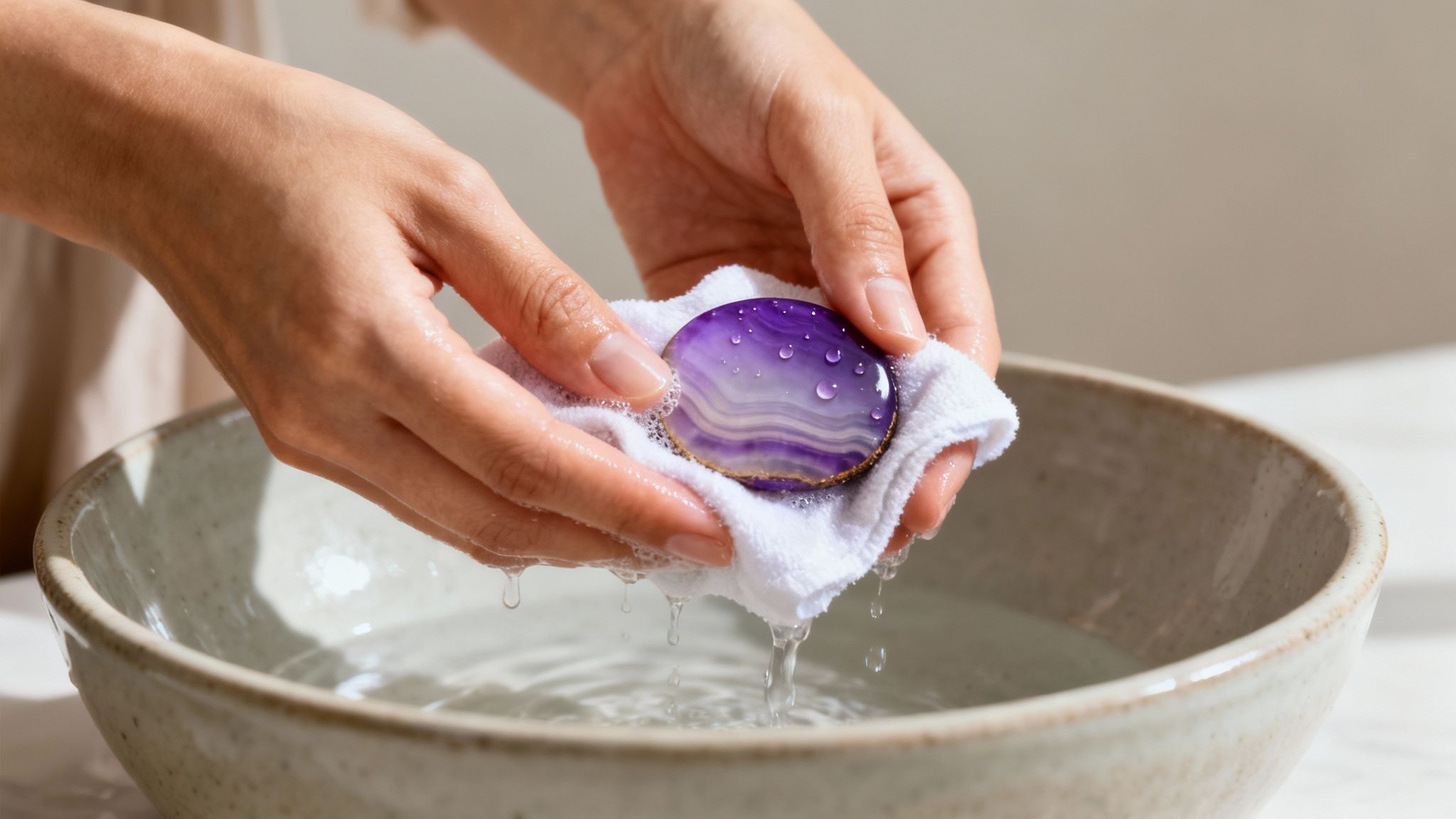
When it's time for a cleaning, you don't need anything fancy. The best method is gentle dusting. Use a soft, dry paintbrush or a can of compressed air to carefully remove dust from between the gemstone chips and wire branches. For a deeper clean, you can use a soft cloth dampened with water to gently wipe the stones.
What to Avoid When Cleaning
While quartz is durable, it's not indestructible, and some cleaning methods can do more harm than good. It’s crucial to know what to steer clear of.
To keep your tree safe, make sure you never use these:
Harsh Chemicals: Stay away from bleach, ammonia, and acidic cleaners. These aggressive substances can damage the wire and may dull the polish on the gemstones over time.
Submerging in Water: Do not soak your tree in water. Moisture can get trapped in the wire twists and potentially cause rust or damage to the base, especially if it's made of wood.
Ultrasonic and Steam Cleaners: These are not suitable for decorative items like gemstone trees. The intense vibrations can loosen the stones or damage the delicate wire structure.
When in doubt, remember this simple rule: treat it like any other delicate piece of art. Gentle dusting is truly all you need to keep it looking its best.
It’s also smart to think about where you display your gemstone tree. Just like a fine painting, prolonged exposure to direct sunlight can cause the colors of some gemstones, particularly amethyst and rose quartz, to fade.
Finally, handle your tree with care. When moving it, hold it by the base rather than the branches to prevent bending the wires or dislodging the gemstone chips.
Your Gemstone Tree Questions, Answered
Jumping into the world of crystal decor can bring up a lot of questions. Here are clear, straightforward answers to some of the most common things we get asked about gemstone trees made from amethyst, citrine, and rose quartz. Our goal is to help you build your knowledge and shop with complete confidence.
Is All Citrine in Gemstone Trees Natural?
No, most of the citrine available on the market, including that used in many gemstone trees, is heat-treated amethyst. Natural citrine is quite rare. The heating process turns amethyst's purple color into the warm yellow, orange, and brownish shades characteristic of citrine. According to the GIA, this is a stable and permanent treatment and is widely accepted in the gem trade.
What Are the Metaphysical Properties of These Trees?
In the world of crystal healing, each tree carries the symbolic energy of its stones:
Amethyst Tree: Known for promoting calm, intuition, and spiritual connection. It's often placed in bedrooms or meditation spaces to create a tranquil atmosphere.
Citrine Tree: Celebrated as a stone of abundance, joy, and manifestation. It's popular for offices and workspaces to attract success and positivity.
Rose Quartz Tree: Considered the stone of unconditional love. It is used to foster compassion, self-love, and harmonious relationships, making it perfect for living rooms or as a Mother's Day gift.
Where Do These Gemstones Come From?
The best-quality amethyst, citrine, and rose quartz are sourced from several key locations around the world. Brazil is a world-renowned source for high-quality amethyst and is also a major supplier of the amethyst used to create heat-treated citrine. Other significant sources include Uruguay, Madagascar, and parts of Africa. Sourcing from reputable mines ensures the quality and authenticity of the gemstones used in the trees.
How Can I Ensure My Gemstone Tree Is Ethically Sourced?
The single best way to make sure the gemstones are sourced responsibly is to buy from a reputable, transparent dealer. A trustworthy seller has spent years building solid, long-term relationships with their suppliers and won't hesitate to be open about their sourcing practices.
Never be afraid to ask questions about where the minerals came from. Ethical dealers are committed to responsible practices and can often provide information on the origin of their materials. This gives you peace of mind and confidence in the integrity of your purchase.
At Astro West, we're proud of our 60-year legacy of sourcing authentic, high-quality minerals from trusted partners worldwide. We invite you to explore our curated collection of ethically sourced gemstone decor and other natural treasures at https://astrowest.com.