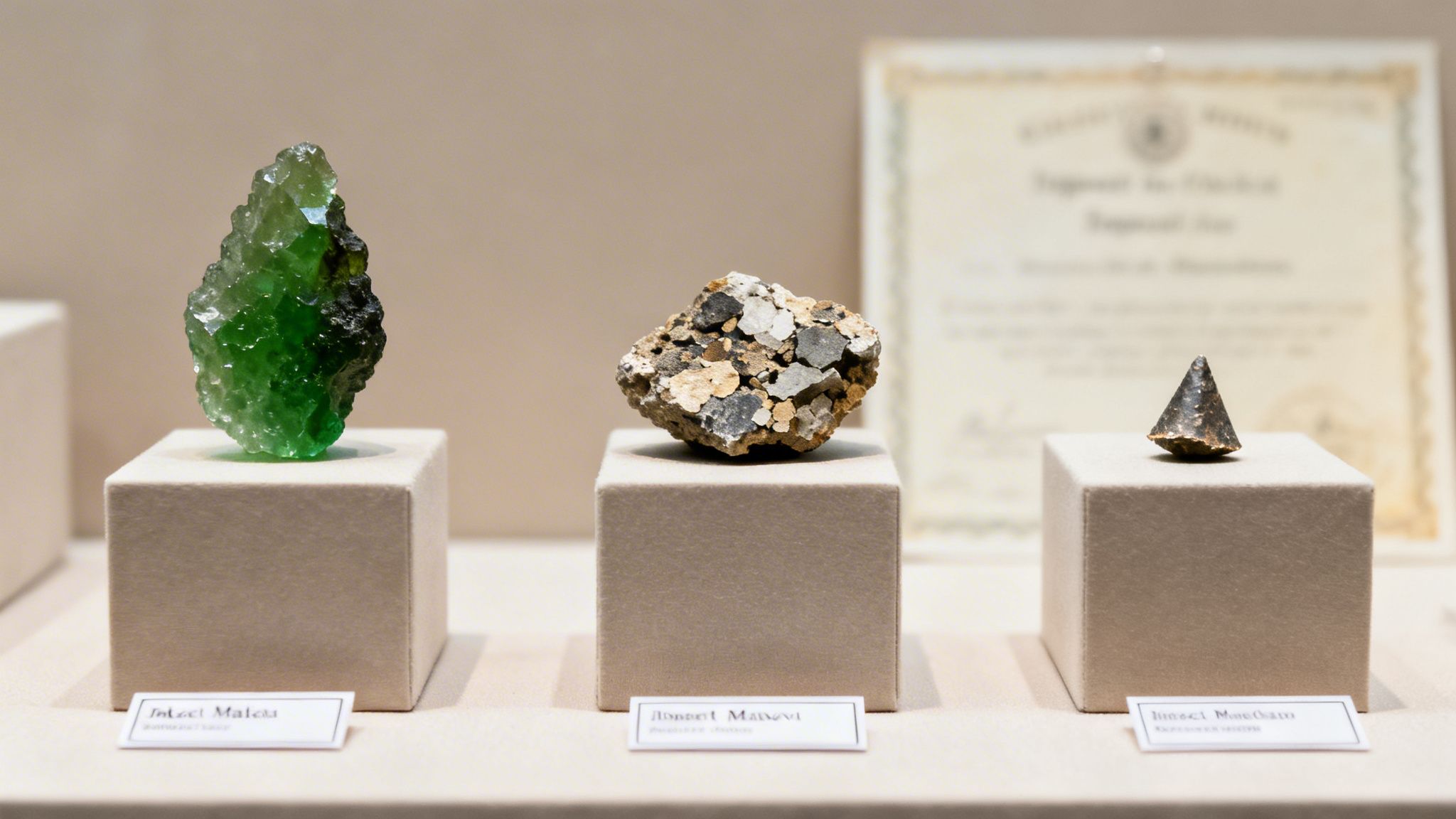
Why the Biggest Crater on Earth Matters to Collectors
Most people imagine Earth’s biggest crater as a vast, circular bowl. They picture a landmark like Arizona’s famous Meteor Crater. However, the true titleholder is a geological feature so ancient it has been almost erased by two billion years of time and erosion.
The real champion is the Vredefort impact structure in South Africa. It is the colossal, ghostly remnant of a cataclysm that rocked our planet in its deep past. For collectors, its story is not just about size; it is about rarity, provenance, and long-term value.
Uncovering Earth's Largest Impact Structure
To discuss the biggest crater, we must first clarify a key distinction. There is a huge difference between a visually impressive crater and an ancient impact structure. These structures are the deeply buried scars left by gargantuan asteroid collisions from billions of years ago. As a result, you cannot simply stand on the rim of an ancient impact structure.
Scientists must painstakingly piece them together from subtle geological clues. This distinction is absolutely critical for collectors and designers. A specimen from a scientifically verified, multi-billion-year-old impact structure like Vredefort is a tangible piece of Earth’s history. Therefore, its value is driven by immense rarity and profound significance.
Impact Structures vs. Volcanic Calderas
It is also crucial not to confuse impact structures with volcanic calderas. Both can be huge, basin-like features. However, they form in completely different ways.
Impact Structures are the direct result of a hypervelocity collision with an object from space. This creates unique shock-metamorphic features in the rock that cannot be formed any other way.
Volcanic Calderas form when a volcano’s magma chamber empties and the ground above collapses. They are born from the Earth's own internal heat.
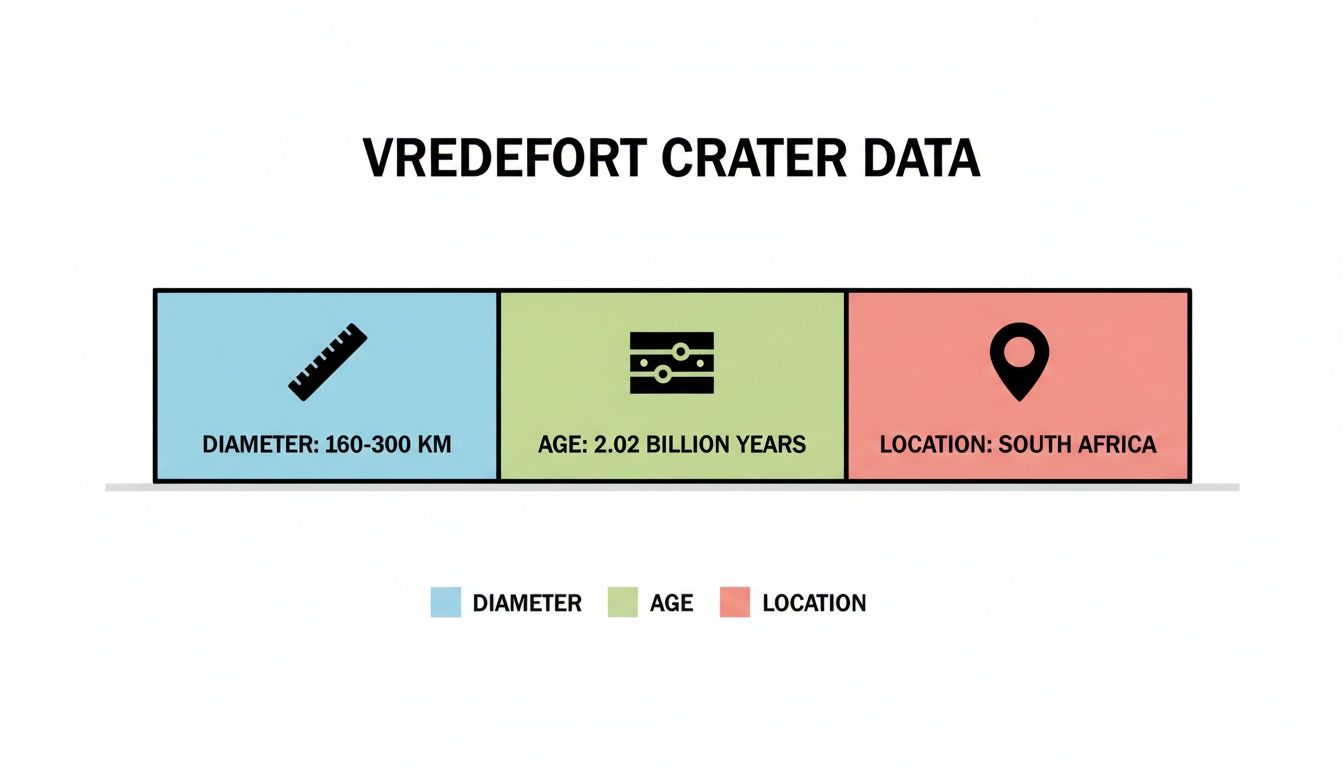
The Vredefort impact structure is the largest confirmed crater found so far. It formed over 2 billion years ago. Its original diameter is estimated to have been a staggering 170 to 300 kilometers (110 to 190 miles). You can learn more by exploring the details of the Vredefort impact structure on Wikipedia. This scientific verification elevates materials from Vredefort from mere rocks into collectible assets.
How Science Authenticates Ancient Impact Craters
You cannot find the world’s biggest crater by just spotting a giant hole. Over billions of years, erosion and geology bury all but the most subtle clues. For a truly ancient structure like Vredefort, the original crater is long gone. So, how do we prove it ever existed?
Scientists become geological detectives, using advanced tools to find the damage. These techniques do more than confirm a scientific theory. Additionally, they establish the provenance and, ultimately, the value of any specimen connected to the site.
One of the first clues comes from gravity anomaly mapping. A massive impact shatters deep, dense rock, replacing it with lighter, broken material. This change creates a subtle gravitational "low spot" that reveals the ghostly outline of a buried structure.
The Definitive Proof in the Rocks
While a gravity map might point to an impact, the smoking gun is found in the rocks themselves. The unbelievable energy of an asteroid collision creates pressures and temperatures found nowhere else on Earth. These extreme forces leave behind unique geological fingerprints known as shock-metamorphic features.
Finding these features is the undeniable proof of an extraterrestrial impact. Two of the most important are:
Shatter Cones: These are distinctive, cone-shaped fractures that riddle the rocks around an impact site. They are created by the pure shockwave of a hypervelocity collision and are considered indisputable field evidence.
Shocked Quartz: Under a microscope, quartz from an impact site can show fine, parallel lines called planar deformation features. These tiny lines are only formed by the instantaneous, mind-boggling pressure of a massive impact.
This infographic gives a sense of the sheer scale of the Vredefort impact structure.
The data here confirms Vredefort's place as a world-class geological feature. Its immense age and size are directly tied to its value.
The discovery of shocked quartz or a well-formed shatter cone does more than confirm a theory. It transforms a stone into a coveted asset. For collectors, these features are the certificate of authenticity, elevating a specimen from a mere rock to a piece of planetary history.
This scientific validation is the bedrock of value in the collector's market. A rock specimen with verifiable shock-metamorphic features commands a significantly higher price. It holds a direct connection to a powerful event. To learn more, explore our guide on what a meteorite is made of.
Vredefort Crater: A Source of Unique Geological Assets
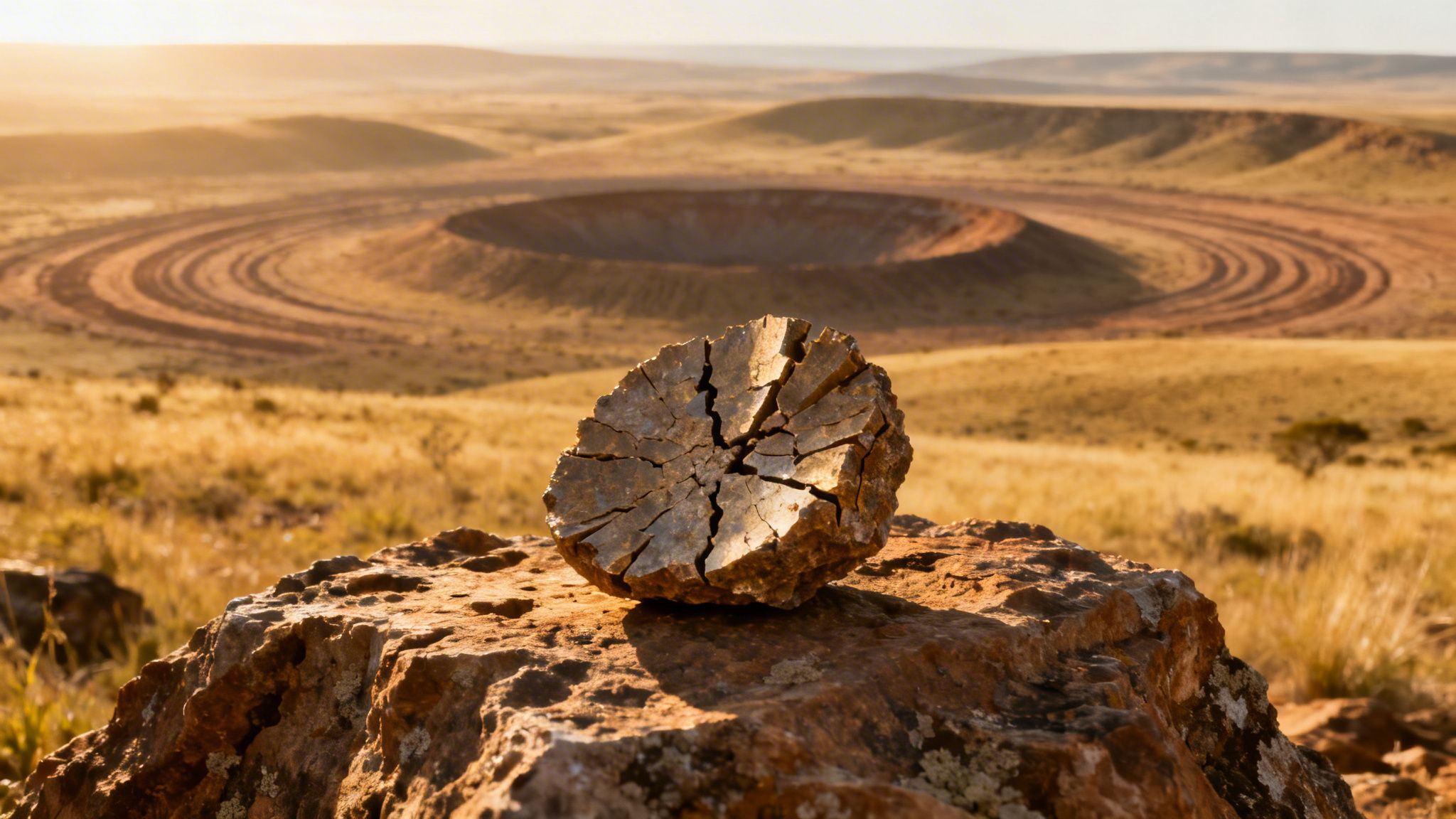
The sheer size of the Vredefort impact structure is staggering. The real significance, however, is tied to the cataclysm that created it over two billion years ago. The collision acted as a planetary-scale forge. It unleashed pressures and temperatures that instantly rewrote regional geology.
For collectors and designers, these transformed materials are the real prize. The Vredefort impact created unique geological specimens that are scientifically priceless and visually stunning. These are not just rocks; they are historical artifacts from a moment when cosmic forces reshaped our world.
The Legacy Forged in Fire and Pressure
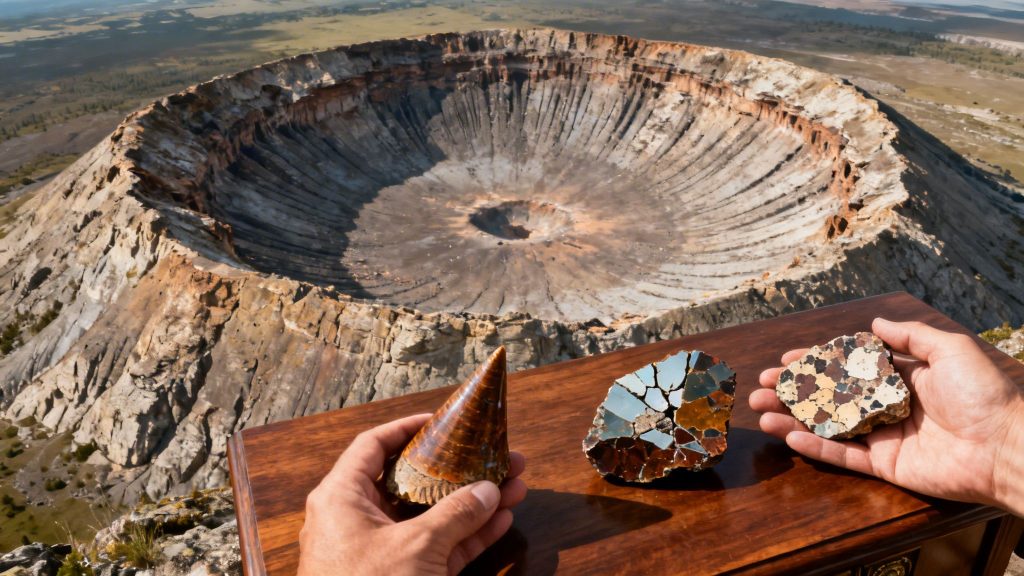
The most sought-after materials from the Vredefort site are its impactites. These are rocks created or fundamentally altered by the collision. They include iconic shatter cones and distinctive impact breccias, which are broken fragments fused by intense heat.
Owning a Vredefort shatter cone is like holding an echo of the ancient shockwave. Its unique, striated pattern is a direct, frozen record of that force. These pieces are coveted for their rarity and profound history. As a result, they are tangible assets with a proven history of long-term value appreciation.
Sizing Up a Planetary Cataclysm
The scale of the Vredefort event is almost impossible to comprehend. Recent research suggests the impactor was even larger than previously imagined. Scientists now believe the object was truly colossal.
New simulations determined that to create a crater of this magnitude, the impactor would have needed to be between 20 and 25 kilometers (12 and 16 miles) in diameter. It likely struck Earth at speeds up to 20 kilometers per second. You can explore the full research on the Vredefort impactor size from the University of Rochester.
This updated perspective adds to the structure's mystique. It also enhances the value of its authenticated remnants. The more significant the event, the more valuable its geological signature becomes. This direct lineage from a verified super-event drives their market value.
Chicxulub and Other Contenders for the Title
Vredefort officially holds the record for sheer size. However, no discussion of giant impacts is complete without mentioning the Chicxulub crater. Buried beneath the Yucatán Peninsula, this is arguably the most famous impact structure on Earth. This is the catastrophic event linked to the mass extinction that wiped out the dinosaurs 66 million years ago.
Despite its historical importance, Chicxulub is smaller than Vredefort. Its diameter is estimated at around 180 kilometers (112 miles). Its fame, however, has created an incredibly robust market for connected materials. The narrative power of the dinosaur extinction story makes any associated specimen uniquely compelling.
The Value of Scientific Certainty
This brings us to a crucial point for collectors: the difference between confirmed, speculative, and disproven impact sites. A fascinating example of speculation is the Wilkes Land anomaly in Antarctica. Detected by gravity surveys, this massive feature is potentially up to 500 kilometers across. Some have theorized it could be a monster impact crater.
However, the scientific consensus is not there. Without physical rock samples showing definitive shock-metamorphic features, Wilkes Land remains an unproven idea. This highlights a core principle of asset value: scientific certainty and verified provenance are paramount. A specimen's worth is tied directly to a confirmed event, not a theoretical one.
The market absolutely reflects this fact. For example, you can learn how impactor fragments are valued in our guide to the famous Canyon Diablo meteor, the asteroid that created Arizona’s Meteor Crater.
Collectibles from Different Impacts
Each major impact event creates its own family of collectible materials. This, in turn, gives rise to distinct markets with their own pricing logic.
The Chicxulub impact, for instance, is famous for creating a specific type of tektite—natural glass formed from terrestrial debris ejected during an impact. These tektites landed across Central Europe and are now known to collectors as Moldavite.
Moldavite’s stunning green color and direct connection to the end of the dinosaurs make it highly sought-after. Its value is a powerful mix of aesthetic appeal, historical weight, and market demand. As a result, collectors navigate different segments of the impactite market, from Vredefort's geological assets to Chicxulub's iconic green gems.
How Impactites Are Valued in the Collector Market
Once scientists verify a major impact structure, the conversation shifts from geology to market value. The materials forged in these cosmic collisions become tangible assets. Their worth is decided by a clear set of factors, much like fine art or luxury watches.
At the heart of this market are impactites. This is the official term for any material created or radically changed by a meteorite strike. Unlike a standard mineral, an impactite’s value is wrapped in the story of its violent creation.
The Pillars of Impactite Valuation
The market does not treat all impactites equally. A collector must understand the drivers that separate a common stone from an investment-grade piece. An impactite’s value is built on its unique origins and physical characteristics.
Several critical factors determine an impactite’s price:
Significance of the Parent Crater: A specimen from a famous crater like Vredefort or Chicxulub will command a higher price. Its connection to a major event in Earth’s history provides an unmatched story.
Material Rarity: Some impact materials are far scarcer than others. For example, a well-formed shatter cone is significantly rarer than a common chunk of impact breccia.
Aesthetic Quality: Beauty and form play a huge role. The vibrant green color and delicate texture of Moldavite make it a perennial favorite for both collectors and jewelry designers.
Scientific Importance: Specimens that clearly show shock-metamorphic features, like shocked quartz, are highly prized. They are the physical proof of the impact itself.
Provenance: The Cornerstone of Asset Value
Above all else, provenance—the documented history of a specimen—is king. An unverified rock claimed to be from an impact site holds little collector value. A shatter cone with documented proof of its discovery within the Vredefort structure, however, is a verifiable piece of planetary history.
In the world of high-end collectibles, authenticity and traceability are non-negotiable. A specimen’s value is directly proportional to the confidence in its origin story. Much like a signature on a masterpiece, verified provenance authenticates the asset and secures its long-term worth.
This is where expert curation becomes essential. Galleries like Astro West build direct relationships with field experts to ensure every impactite is what it claims to be. This rigorous verification process protects the collector and underpins the specimen’s investment potential. You can learn more about what a tektite is and see how their value is shaped by origin and appearance.
Building a Premier Collection of Impact Geology
Understanding the incredible story behind impactites is one thing. Holding a real, authenticated piece in your hand is something else entirely. For anyone looking to build a collection, the market can be tricky to navigate. It takes a good eye, geological know-how, and, most importantly, a trusted source.
When it comes to impact geology, authenticity is everything. The market is unfortunately filled with mislabeled rocks and even artificial fakes sold to unsuspecting buyers. Therefore, every specimen you consider should come with rock-solid verification tracing it to its crater of origin. This provenance is the bedrock of its value.
Guiding Your Acquisition Journey
Once you have authenticity covered, you can focus on what elevates a specimen. The best pieces are judged by their physical traits. These characteristics tell a story and contribute directly to their visual power.
Here’s what to look for in a potential specimen:
Defined Features: Does the piece show its story clearly? On a shatter cone, you want to see sharp, well-defined striations. For an impact breccia, look for a distinct contrast between the angular fragments and the matrix.
Integrity and Preservation: A great specimen should feel stable and solid. Avoid pieces that are crumbling or overly fractured, unless that is a natural feature of the material itself.
Aesthetic Form: While beauty is subjective, form and proportion matter. A piece that presents its key features in a balanced, visually striking way will always be more desirable.
A truly exceptional collection isn’t just bought; it’s built through a partnership with a source you trust. It’s about getting access to specimens that have been vetted not just for their authenticity, but for their quality, their story, and their sheer aesthetic power.
At Astro West, our expertise is built on decades of working directly with geologists and field experts. Our authentication process is rigorous. We ensure every piece in our gallery—from a Vredefort shatter cone to a glassy tektite—has a verified history. We guide collectors through the process, helping them acquire a genuine piece of cosmic history with confidence.
If you are considering your next acquisition, our experts can help. You can also get foundational insights from our primer on where to buy meteorites.
Final Questions on Craters and Collectibles
To conclude, let's address some common questions that arise when collecting these cosmic artifacts. This practical advice helps you navigate the market with confidence. Moreover, it deepens your appreciation for what you acquire.
What Is the Most Famous Impact Crater?
While Vredefort is the biggest crater on Earth, the Chicxulub crater is undoubtedly the most famous. It is the one directly tied to the extinction of the dinosaurs 66 million years ago. This story captures everyone's imagination.
That incredible historical weight makes any connected material so sought-after. A classic example is Moldavite, a tektite formed from the superheated ejecta of the Chicxulub impact. It remains a must-have for any serious collector.
What Makes an Impact Rock Valuable?
An impactite's value is determined by a few key factors. First is its connection to a major event. A rock from a famous impact like Chicxulub carries a narrative value that is impossible to replicate.
Beyond the story, value comes down to rarity, aesthetics, and scientific importance. However, the one factor that rules them all is provenance. Without clear, documented authenticity that traces its history, an impactite is just a rock. Verified provenance is what turns it into a true asset.
How Can I Start a Collection?
Every great collection begins with a single, trusted source. Your first step should be to find specimens with clear, verified provenance. This leaves no doubt about their authenticity.
The best way to do this is to partner with an established gallery whose experts can guide your choices. This ensures you are not just buying a stone. Instead, you are investing in a genuine piece of Earth’s cosmic history.
At Astro West, we provide the expertise and verified specimens necessary to build a premier collection with confidence. Explore our curated selection of impactites and other geological treasures at https://astrowest.com.