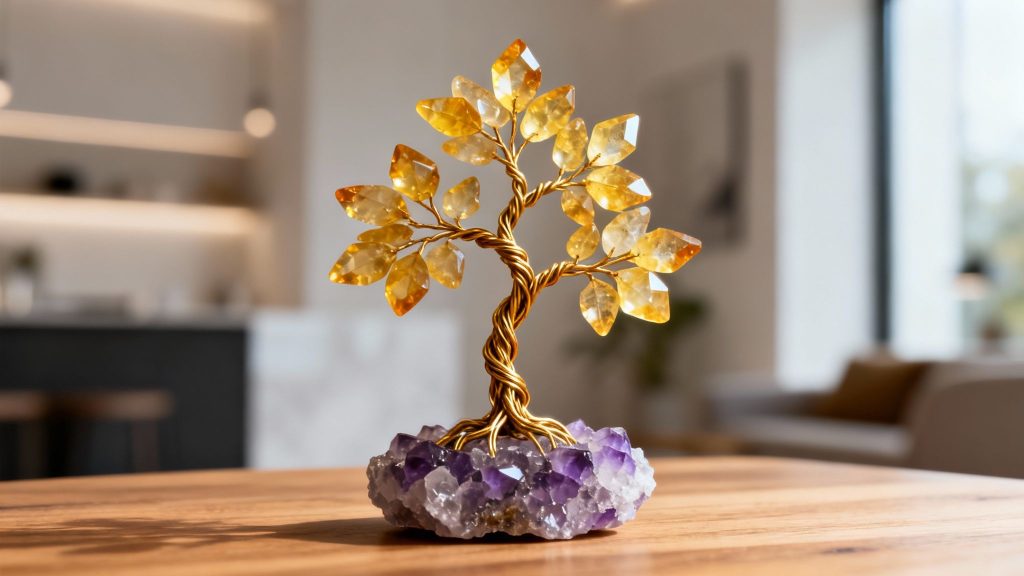
A citrine gemstone tree is far more than just a pretty object. It's a handcrafted sculpture, where polished citrine chips are meticulously twisted onto wire branches to create a stunning, bonsai-like form. These trees, along with their amethyst and rose quartz counterparts, are created to do more than just decorate a room; they’re symbols of prosperity and joy, designed to bring a warm, positive energy into your space.
The Anatomy of a Citrine Gemstone Tree
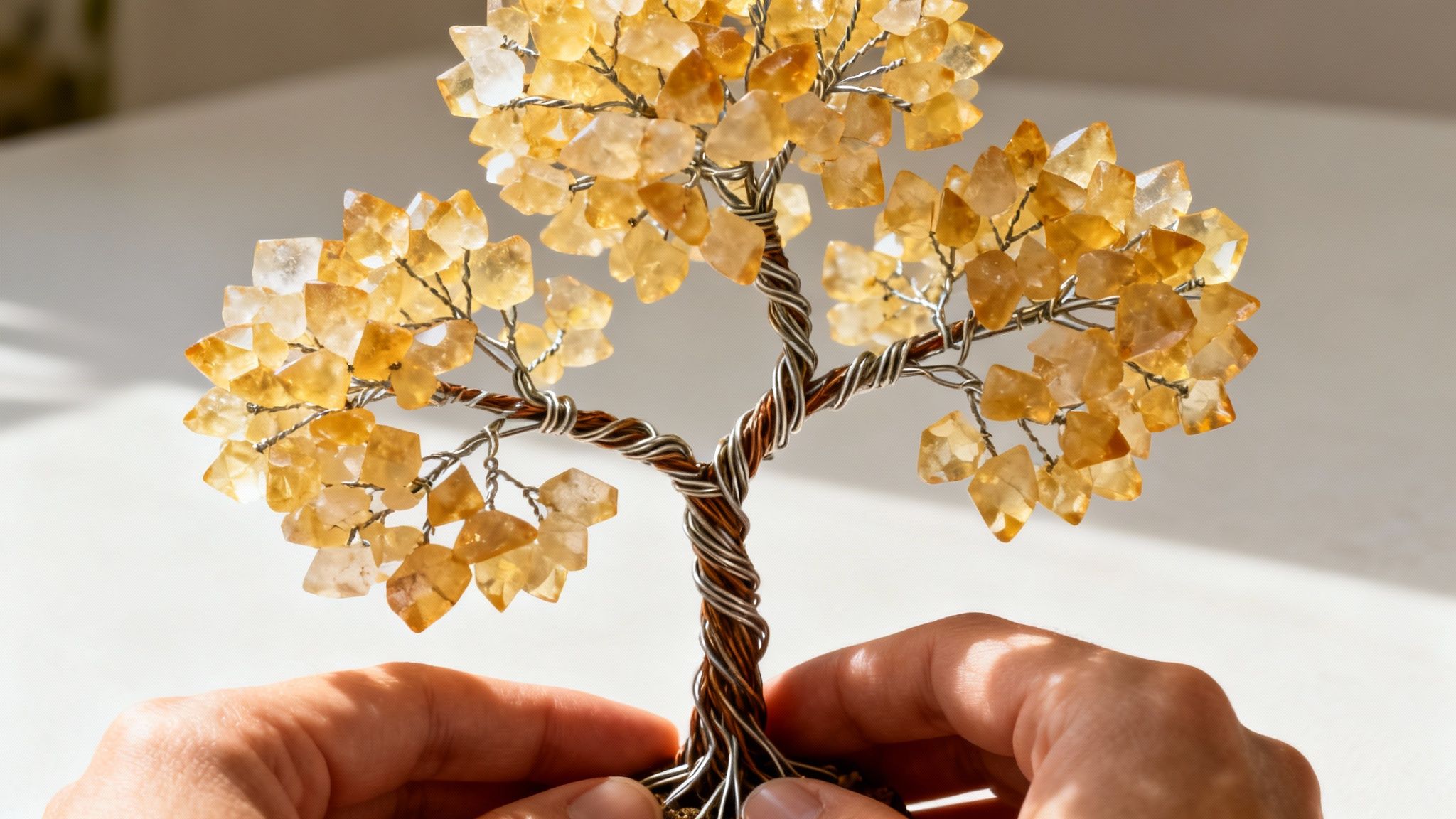
Each citrine tree is a unique work of art, a small monument designed to channel warmth and abundance. While no two are exactly alike, they all share a similar structure. Artisans spend hours hand-wrapping hundreds of small, polished citrine chips—the "leaves"—onto flexible wire "branches." These branches are then skillfully twisted together into a trunk and secured to a solid base.
The base isn't just for stability; it’s an integral part of the tree's beauty and energy. You'll often see citrine trees mounted on a raw amethyst cluster, which provides a gorgeous color contrast and grounding properties. Another popular choice is rose quartz, adding a layer of gentle, loving energy. It’s this combination of elements that creates such a harmonious and visually captivating piece.
Natural vs. Heat-Treated Citrine
When you’re looking at a citrine tree, it’s helpful to know a little about the stone itself. Citrine really comes in two main forms you’ll encounter: natural and heat-treated.
Natural citrine gets its pale yellow to smoky honey color from the earth's own geothermal heat while it forms. As a variety of quartz, finding it is exceptionally rare. This rarity, of course, makes it highly sought after by collectors.
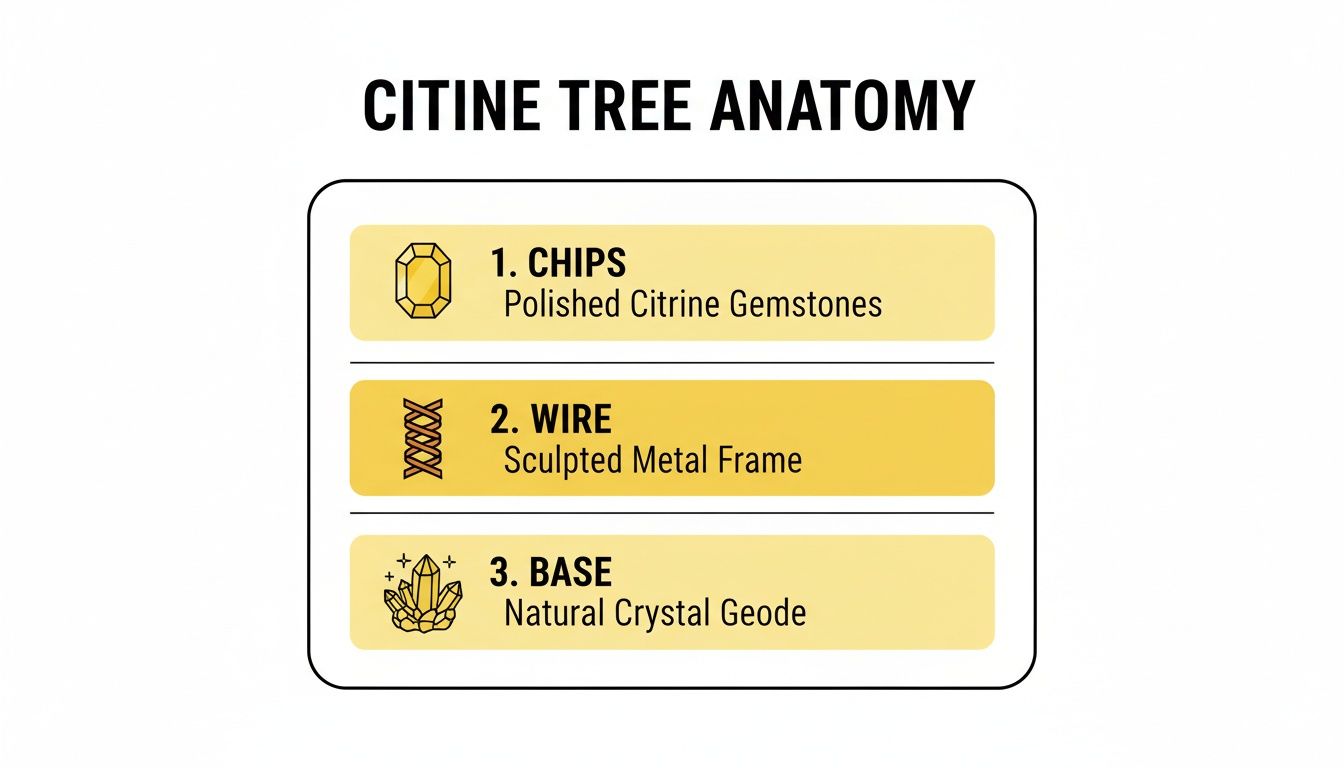
This infographic breaks down how these beautiful trees are constructed.
As you can see, the gemstone leaves, wire frame, and crystal base all come together to create the final, stunning piece.
The vast majority of citrine on the market is actually amethyst that has been carefully heated. This process mimics the natural forces of the earth, transforming the purple amethyst into that vibrant, golden-orange hue we associate with citrine. It’s a common and accepted practice in the gem world, with Brazil being the source for almost all genuine, untreated stones.
To help you tell the difference, here’s a quick breakdown of what to look for.
Natural vs Heat-Treated Citrine at a Glance
Use this quick comparison to understand the key differences between natural citrine and heat-treated amethyst, helping you make a more informed choice.
Characteristic
Natural Citrine
Heat-Treated Amethyst (Often Sold as Citrine)
Color
Pale yellow, smoky honey, or light brown. Color is usually even throughout the crystal.
Intense golden yellow, reddish-orange, or deep amber. Often has a white base.
Clarity
Can have natural inclusions. Tends to be more transparent and less "toasty" in appearance.
Typically very clear but may show internal fractures from the heating process.
Rarity
Extremely rare and highly valued by collectors.
Very common and widely available on the market.
Price
Significantly more expensive due to its scarcity.
Much more affordable and accessible.
Origin
Primarily Brazil, but also found in Spain, Madagascar, and Russia.
Amethyst from various locations (especially Brazil) is heated to create this variety.
Both types create absolutely beautiful trees, but they offer a different feel. The choice really comes down to what you’re drawn to—the subtle, earthy tones of natural citrine or the fiery brilliance of its heat-treated cousin.
While gemstone trees are a fantastic way to display citrine, you can also appreciate the stone in its more raw, powerful forms. A large statement piece like a stunning citrine cathedral geode showcases the gem's massive, awe-inspiring beauty in a completely different way.
Unlocking the Symbolism of Your Crystal Tree
A citrine gemstone tree is so much more than a beautiful object to display on a shelf. It’s a powerful symbol, steeped in centuries of belief about abundance, positivity, and success. This vibrant yellow quartz didn't get its nicknames—the "Success Stone" or "Merchant's Stone"—by accident. For ages, it's been the go-to crystal for attracting wealth and prosperity.
That radiant, sunny energy is thought to be a magnet for opportunity and good fortune. It's no wonder it’s a favorite for entrepreneurs, artists, and anyone taking a leap into a new venture.
But the meaning behind a citrine tree isn't just about financial gain. It's a stone of pure joy and light, believed to cut through negativity and emotional fog without holding onto any of it. Think of it as a spiritual air purifier; its sunny disposition encourages optimism, sparks creativity, and gives you that boost of self-confidence needed to chase down your goals.
Manifesting Ambition with Form and Energy
The design of the gemstone tree itself amplifies its meaning. The structure is a beautiful metaphor for growth and making things happen, where every single part plays a role.
The tree's form is a clever blend of grounding and expansive energies:
The Branches: The countless wire branches, each tipped with a citrine chip, spread out like rays of sunshine. They're believed to send positive, success-focused energy into a room, filling the space with motivation and creative inspiration.
The Trunk: Made of twisted wire, the trunk represents strength, resilience, and the path you take to reach your goals. It draws energy up from the base and distributes it out through every branch.
The Base: A solid base, often a raw crystal cluster like amethyst or rose quartz, acts as an anchor. It grounds the tree's big energy, reminding you that your ambitions need to be rooted in reality to build success on a solid foundation.
When you combine citrine’s metaphysical reputation with the powerful symbolism of a tree, you get a tool for focusing your intentions. It acts as a constant visual cue to stay positive, go after what you want, and keep your feet on the ground while you do it.
A Beacon for Personal and Professional Growth
Placing a citrine tree in your home or office is like setting up a small beacon of positive reinforcement. It doesn't just sit there looking pretty—it's thought to actively encourage success by fostering a mindset of abundance and sweeping away self-doubt.
Whether you're aiming to boost sales, find inspiration for your next big project, or simply invite more joy and optimism into your life, the citrine gemstone tree is an ally. Its warm, golden glow is a constant reminder to grow, flourish, and bring the success you envision for yourself to life. It’s more than just decor; it's a partner on your journey.
How to Spot a Genuinely Well-Made Gemstone Tree
When you're choosing a citrine gemstone tree, you’re not just picking up a decorative item. You’re investing in a piece of handcrafted art. Knowing how to tell a high-quality tree from a mass-produced imitation is the key to making sure it lasts, and a quick look at its core parts—the stones, the wire, and the base—will tell you everything you need to know.
A well-made tree just feels right. It should be substantial and balanced, not flimsy or top-heavy. The overall shape should be pleasing, with branches that spread out naturally instead of looking sparse or all clumped together. This first impression is often your best clue about the craftsmanship behind the piece.
Evaluating the Citrine Leaves
The heart and soul of any citrine gemstone tree are its "leaves." These small, polished chips are what give the tree its vibrant energy and visual punch. When you're looking them over, pay close attention to a few specific details.
First, check out the color saturation. High-quality citrine chips will have a rich, consistent golden-yellow or warm honey color. You’ll want to be wary of stones that look dull, washed-out, or have an unnatural, almost-burnt orange tint—that can be a sign of lower-grade material or a clumsy heat treatment job.
Next up is clarity and polish. The stones should have a bright, glossy finish that really catches the light. While a few natural internal fractures are totally normal, you should avoid trees where most of the chips look cloudy, are heavily cracked, or feel rough to the touch. Each little stone should feel smooth, which tells you that real care was taken during the tumbling and polishing.
Assessing the Wirework and Structure
The wire is the skeleton of your tree. It provides the structure, but it’s also a huge part of the artistic flair. It needs to be both strong and elegant. Gently give a branch a little test; it should be flexible enough to shape but sturdy enough to hold its form without drooping.
Here’s what to look for in superior wirework:
Securely Fastened Stones: Every single citrine chip should be locked in tight. If stones feel loose or wobble easily, that’s a red flag for poor construction, and you can bet they'll start falling off over time.
Artistic Twisting: The wires that make up the trunk and branches should be twisted tightly and evenly. This doesn't just create a more realistic and beautiful look—it adds a ton of strength and durability to the whole tree.
Balanced Proportions: The trunk should look and feel substantial enough to support the weight of the branches, creating a silhouette that’s harmonious and balanced.
A well-crafted gemstone tree is a testament to the artisan's patience. The wire should look intentional and graceful, not messy or haphazardly clumped together. This attention to detail is what separates a true keepsake from a disposable decoration.
Judging the Quality of the Base
Finally, don't forget to inspect the base. This is the anchor for the entire piece, giving it stability and completing the overall aesthetic. Whether it's a raw crystal cluster like amethyst or rose quartz, the base must be solid and proportionate to the tree's size.
Make sure the tree is mounted securely to the base with absolutely no wobbling. If you’re looking at a crystal base, check for vibrant color and interesting natural formations. A beautiful, high-quality amethyst or rose quartz base adds serious value and an extra layer of energetic synergy to the whole piece. Understanding what goes into a single, high-quality crystal can also help you appreciate its value; you can learn more by exploring the characteristics of a natural citrine point to see how clarity and formation are judged.
Placing Your Tree for Abundance and Style
A citrine gemstone tree is a beautiful fusion of spiritual intention and sophisticated decor. Knowing where to place it can amplify both its aesthetic impact and its energetic benefits, transforming any room into a hub of positivity and style. Whether you're guided by ancient principles or modern design, there's a perfect spot for your tree.
Many people turn to the principles of Feng Shui, an ancient Chinese practice focused on harmonizing the energy in a space. In this tradition, the southeast corner of your home or a specific room is known as the "wealth corner" or Xun. Placing a citrine gemstone tree here is believed to activate this area, attracting prosperity, success, and abundance.
Modern Styling for Any Space
Feng Shui aside, your citrine tree is simply a stunning design element that works in almost any setting. Its warm, golden hues bring a touch of natural elegance and vibrant color to a room, making it an incredibly versatile piece.
Here are a few modern ideas for placement:
The Office Desk: Place a smaller tree on your desk to serve as a beautiful focal point. Its sunny presence is thought to inspire creativity and focus, helping you tackle projects with renewed energy.
The Bookshelf: Tuck your tree among your favorite books and other treasured objects. It adds a pop of color and texture, breaking up the linear arrangement with an organic, sculptural form.
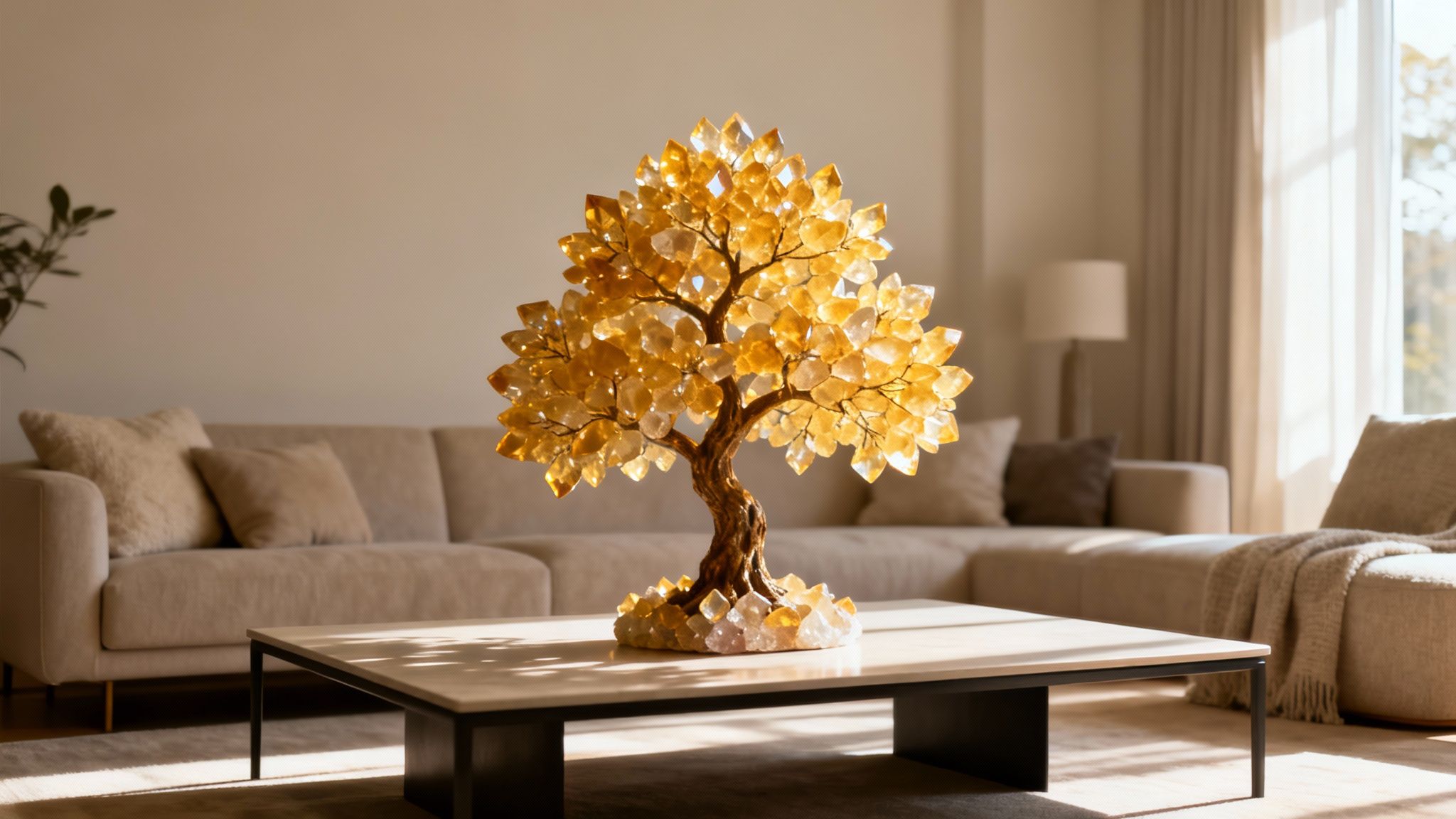
The Living Room Centerpiece: A larger citrine tree makes a magnificent centerpiece. If you're wondering how to really make it pop, there are great guides on how to decorate a coffee table that can spark some inspiration.
Ultimately, the best location for your citrine gemstone tree is wherever it brings you the most joy. Trust your intuition—if a spot feels right and looks beautiful to you, it's the perfect place for it.
Durability for Everyday Beauty
There's a reason decorative stones like citrine, amethyst, and rose quartz are so popular. These varieties of quartz are admired for their beauty and resilience.
With a Mohs hardness of 7, citrine is tough enough for everyday display, ensuring your tree will remain a lasting fixture in your decor—unlike more delicate objects. This resilience is a key factor in its widespread use and rising popularity.
Whether you choose a tree made with polished chips or a larger, more dramatic piece like a citrine geode on a custom metal stand, its placement can define a room's atmosphere. By thoughtfully integrating this symbol of abundance into your home or office, you create a space that feels both stylish and spiritually uplifting.
Keeping Your Citrine Tree Vibrant and Cleansed
To keep its sunny glow and bright energy, your citrine gemstone tree will need a little gentle care from time to time. This is pretty simple stuff—we're talking about both physical cleaning and what many believe is energetic cleansing. A little attention ensures it stays a stunning centerpiece for years to come, preserving both the delicate wirework and the shine of the stones.
For a broader look at maintaining decorative pieces, this guide to caring for decorative sculptures shares some similar principles. A few minutes of upkeep goes a long way in keeping your treasure looking its best.
Physical Cleaning and Upkeep
Over time, dust is bound to settle on the intricate branches and crystal leaves of your tree. The most important thing to remember is to stay away from harsh chemical cleaners, soaps, and even water. Moisture is the enemy here—it can corrode the wire frame, and certain mineral bases can be damaged by water.
The safest method is just a simple dusting.
Gentle Dusting: Grab a soft, dry paintbrush or a can of compressed air. If using compressed air, hold it at a distance to gently puff away dust from between the citrine chips and the wire twists.
Careful Reshaping: The wire branches are designed to be flexible. Don't be afraid to carefully bend and rearrange them if you want to refresh the tree’s look or create a fuller, more balanced shape.
Energetic Cleansing Techniques
Many people who own crystal trees believe in periodically clearing away any accumulated energy to restore their positive vibrations. Now, citrine has a reputation for being one of the few crystals that doesn’t hold onto negative energy. So, this process is less about "cleaning" and more about refreshing its inherent sunny qualities.
Think of it like this: just as a plant needs sunlight to thrive, a crystal tree benefits from an energetic recharge. It’s a simple practice that helps maintain its role as a beacon of positivity in your space.
Popular methods are all gentle and perfectly safe for the tree's structure:
Moonlight Bath: Place your tree where it can soak in the light of a full moon overnight. The moon’s soft energy is thought to gently cleanse and recharge crystals without the risk of fading that comes from harsh sunlight.
Sound Cleansing: The vibrations from a singing bowl or a chime can work wonders for clearing out stagnant energy. Just play the instrument near the tree for a few minutes and let the sound waves wash over it.
Smudging: Briefly pass the smoke from burning sage or palo santo around the tree. The aromatic smoke is thought to neutralize any lingering energetic residue.
Selenite Charging: Selenite is famous for its cleansing properties. Placing your tree near a piece of selenite, like a Selenite Heart Bowl, can help purify its energy just by being in proximity.
Why a Citrine Tree Is the Perfect Meaningful Gift
When you’re looking for a gift that truly means something, a citrine gemstone tree is in a class of its own. It’s more than just a beautiful object; it's a thoughtful, lasting gesture that’s perfect for celebrating life's biggest milestones.
Think about it: flowers are beautiful, but they wilt within a week. A citrine tree, on the other hand, is a permanent symbol of your support and good wishes. Its vibrant energy and deep connection to success make it the ideal gift for someone launching a new business or stepping into a new role. It becomes a beautiful reminder on their desk of their own potential—and of your belief in them.
The same goes for huge life moments like a graduation or a housewarming. Giving a citrine gemstone tree is a powerful statement. It represents new beginnings and the promise of a bright, prosperous future, bringing a tangible warmth and optimistic energy into a new home or a new chapter in life.
Choosing the Right Gift for the Occasion
Picking out the perfect citrine tree really comes down to the person and the event you're celebrating. Think about the scale of the gift and where they might want to display it.
For a New Office: A small- to medium-sized tree is perfect. It fits beautifully on a desk or bookshelf, adding a little boost of creative energy without taking over the whole space.
For a Housewarming: Go bigger. A larger, more prominent tree can become a stunning centerpiece in a living room, radiating a warm welcome to everyone who walks through the door.
For a Birthday or Mother's Day: Consider a tree with a unique base, like amethyst or rose quartz. This adds another layer of meaning, blending citrine’s joyful vibe with the calming or loving properties of the other stone.
A citrine gemstone tree is so much more than a decorative piece. It’s a constant, tangible reminder of support, prosperity, and the bright days ahead. It’s the kind of gift that keeps on giving, radiating positive energy long after the wrapping paper is gone.
Interestingly, citrine's popularity as a household item has historical roots. Clever marketing campaigns once branded its warm, sunny colors with appealing names to align with home decor trends. This legacy of presenting citrine as an accessible, beautiful stone for the home is a big reason it remains such a beloved and successful gift today. You can learn more about citrine's market history and appeal.
Common Questions About Citrine Gemstone Trees
As you get ready to welcome a citrine gemstone tree into your home or office, you might have a few questions. It’s completely normal. Here are a few of the most common curiosities we hear from collectors, with clear answers to help you get the most out of your new piece.
Will Sunlight Make My Citrine Tree Fade?
Yes, it can. Just like amethyst and rose quartz, the vibrant color in your citrine can fade with too much direct, prolonged sunlight. This applies to both natural citrine and the more common heat-treated variety, as the sun's UV rays are the culprit.
To keep its sunny glow for years to come, the best spot is one that gets bright, indirect light. Think of a well-lit bookshelf, a side table, or a mantelpiece that isn't blasted by the intense afternoon sun. A windowsill might seem like a good idea, but it's often too harsh.
Does a Bigger Tree Have Stronger Energy?
In many crystal traditions, there's a belief that size does correlate with energetic reach. The thinking is that a larger tree, with its greater mass of citrine, can project a stronger, more expansive field of positivity and abundance into a room.
However, the real power comes from your personal connection to the piece. A small, beautifully crafted tree can be an incredibly potent focal point on your desk or bedside table, concentrating its energy exactly where you need it most.
The "best" size is always the one that fits your space and feels right to you. A small tree that you absolutely love is far more effective than a huge one that feels out of place.
Is a Heat-Treated Tree Less Powerful?
This is one of the most interesting debates among crystal lovers, and there’s no single right answer. It really comes down to personal philosophy.
Some purists feel that only 100% natural, earth-made citrine holds that authentic, slow-brewed solar energy. They believe its formation process gives it a more grounded and potent vibration.
On the other hand, many people find a powerful story in heat-treated citrine. Since it’s amethyst transformed by heat—a process that mimics the Earth's own geothermal forces—they see it as a stone of powerful transformation and manifestation. It’s energy, just expressed differently. Ultimately, the most effective tree is the one you feel drawn to.
At Astro West, we celebrate the unique beauty of gemstone trees handcrafted from citrine, amethyst, and rose quartz. Explore our curated collection of gemstone trees and other fine minerals to find the perfect piece that speaks to your journey.