Your Guide to the Best Rock Collection Display Case
Choosing the right rock collection display case is more than just finding a box for your rocks—it’s about giving your collection the home it deserves. The best cases, whether a classic wooden cabinet or a modern acrylic box, not only protect your treasures but turn them into a stunning exhibit you can be proud of.
Finding the Right Rock Collection Display Case
Picking out a display case is a personal journey, one that balances aesthetics with practicality. It’s the final, crucial step in transforming a pile of interesting stones into a curated collection that tells a story.
Instead of just grabbing the first container you see, it’s worth thinking about how the case itself can complement the unique qualities of your rocks, minerals, and crystals. For anyone just starting out, our guide on how to start a collection of rare rocks and minerals is a great place to begin that journey.
The real goal is to find a solution that fits your specimens, your space, and your personal style. Let's move past generic plastic bins and explore what seasoned collectors actually look for.
Matching the Case to Your Collection
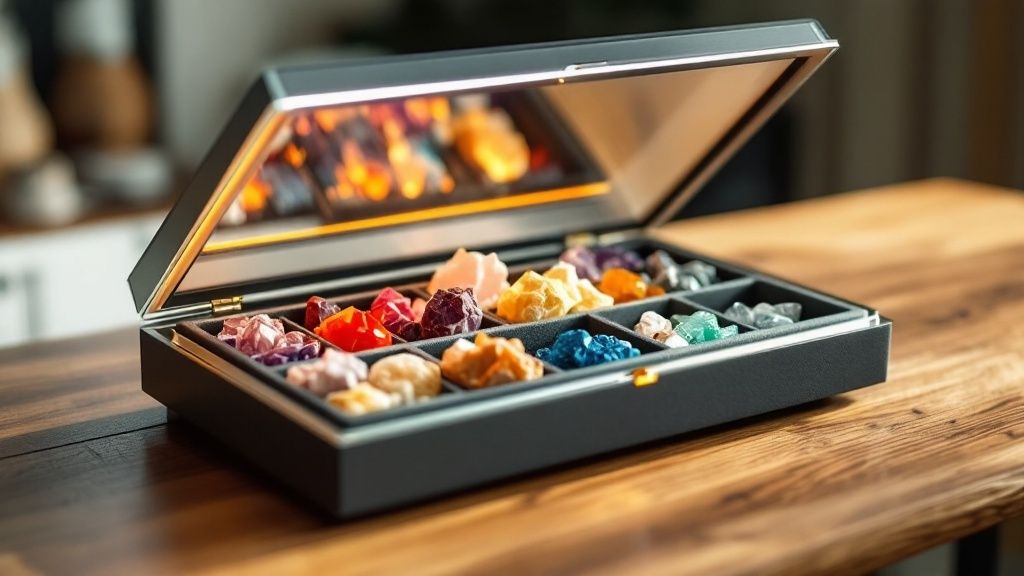
Think about the materials first. There's a timeless appeal to a wooden cabinet; its warm, classic feel offers a beautiful contrast to the raw, earthy textures of most minerals. On the other hand, the sleek, transparent walls of an acrylic case give you an unobstructed 360-degree view, which is perfect for showing off intricate crystal formations from every angle.
You can find everything from teak wood boxes with 28 compartments to custom-sized acrylics. The options for collectors have really exploded, especially on platforms where you can find unique, handmade solutions.
Of course, practicality is just as important as looks. Think about the specific needs of your collection:
Velvet linings are a must for delicate minerals like calcite or fluorite. They prevent scratches and provide a soft, secure bed that keeps your specimens from shifting around.
Shadow boxes are fantastic for creating themed displays. Imagine grouping together all the finds from a memorable collecting trip or arranging specimens by color.
Glass-top cases versus solid drawers is a common debate. A glass top gives you an instant, beautiful view of your collection, but solid drawers offer superior protection from UV rays, which can fade light-sensitive specimens like amethyst over time.
For a dedicated space that gives you the best of both worlds, a functional glossy white display cabinet with drawers offers both visibility and protected storage in one elegant piece.
To make the choice a bit easier, here’s a quick rundown of the most common options and what they’re best for.
Display Case Features at a Glance
Case Type
Best For
Protection Level
Aesthetic
Wood Cabinet
Classic minerals, fossils, larger specimens
High (great UV protection)
Traditional, warm, natural
Acrylic Box
Intricate crystals, 360° viewing
Medium (can scratch, UV varies)
Modern, minimalist, clean
Shadow Box
Themed groups, smaller flat specimens
High (fully enclosed)
Versatile, creative, decorative
Glass-Top Drawer
Delicate or light-sensitive pieces
High (excellent dust & UV protection)
Collector, organized, professional
Ultimately, the right display case is the one that works for you. By weighing these options, you'll be able to pick a case that not only protects your treasures but truly enhances their natural beauty and the story behind them.
Matching Case Size to Your Collection's Needs
Every collector eventually faces the classic dilemma: choosing a display case that fits what you have now while leaving room for what you'll find later. It's less about storage and more about planning for your collection's future. The right case should grow with your hobby, not hold it back.
First things first, take a practical look at what you’ve got. Your collection isn't uniform—it’s probably a mix of tiny tumbled stones, chunky raw mineral clusters, and everything in between. That variety is what will really dictate the kind of compartments you need.
A common misstep is buying a case that perfectly fits your current collection today. That's a recipe for needing another case in six months. Think honestly about your collecting habits. Are you adding new pieces every week, or just a few special finds a year? Your answer is the key to figuring out just how much extra space you should plan for.
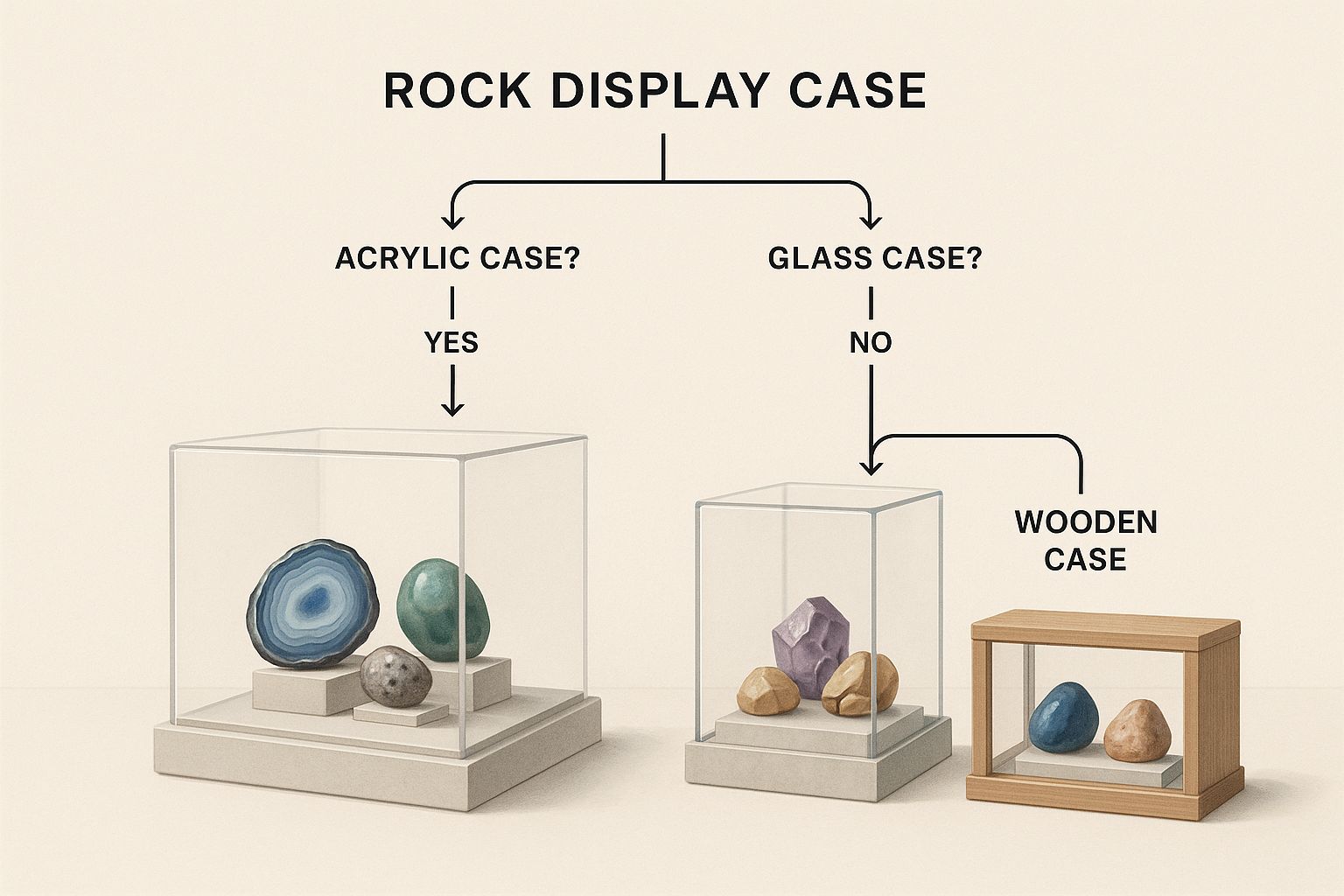
This is where you can start visualizing how different case styles work for various collections.
As you can see, your choice really comes down to balancing visibility, protection, and the overall look you're going for—whether that's showcasing a few stunning statement pieces or neatly organizing hundreds of smaller stones.
Considering Compartment Design and Modularity
The inside of your display is just as crucial as its overall footprint. Cases built with a uniform grid system, for example, are fantastic for wrangling large numbers of similarly sized items. Think of a sprawling tumbled stone collection—a grid is your best friend.
Some modern designs get really efficient, offering something like 5 drawers with a total of 90 grids. This kind of high-density setup is perfect for collectors who love to categorize everything by type, origin, or color. It makes finding and showing off specific specimens a breeze. You can get a good feel for how this layout maximizes space by checking out examples of multi-grid rock display cases.
But what if your collection is a beautiful mess of small gems and giant, eye-catching minerals? You'll want to look for a more flexible solution.
Pro Tip: Modular, stackable systems are a game-changer. They let your display grow organically right alongside your collection. You can just add new units as your hobby expands, without ever having to ditch your original setup.
At the end of the day, the best rock collection display case is one that serves both your current treasures and your future collecting ambitions. By thinking ahead about size, compartment style, and scalability, you can find a home for your minerals that you’ll love for years to come.
Taking It to the Next Level: Features for the Serious Collector
When your collection starts to outgrow its humble beginnings and becomes a real passion, the display case you choose becomes far more than just a box. Standard cases are fine for basic storage, but for the truly special pieces, you'll want to look at advanced features that offer specialized protection and a much better way to show them off.
These are the thoughtful details that separate a decent case from a great one. For anyone invested in the long-term beauty and safety of their minerals, these premium features are absolutely worth it.
Keeping Your Treasures Safe but Accessible
For those fragile or particularly valuable specimens, security is everything. A simple box with dividers is one thing, but a specialized case with custom foam inserts is on another level. It provides serious shock absorption, cradling each mineral to prevent devastating chips and fractures. This is a non-negotiable for delicate crystal formations or minerals that can easily cleave under the slightest pressure.
Another game-changer is being able to get to one piece without disturbing everything else. Some fantastic designs use dozens of small, removable containers all housed within a single glass-topped case. This setup is brilliant—it lets you pull out an individual specimen for a closer look or to take a photo, while the rest of your collection stays locked down, each in its own precision-cut foam jar. You can see some great examples of these innovative rock collecting boxes that nail this balance between access and security.
Investing in a case with advanced protective features is like buying insurance for your collection. It safeguards the time, effort, and passion you've poured into finding each unique piece.
Perfecting the View and Preserving for the Future
Beyond just physical protection, the best cases also think about long-term preservation and visual pop.
UV-Protective Glass or Acrylic: This is a big one. So many beautiful minerals—amethyst, fluorite, and rose quartz, to name a few—will fade over time if they're blasted with direct sunlight. A case with built-in UV protection is like permanent sunscreen for your collection, preserving those vibrant, natural colors you fell in love with.
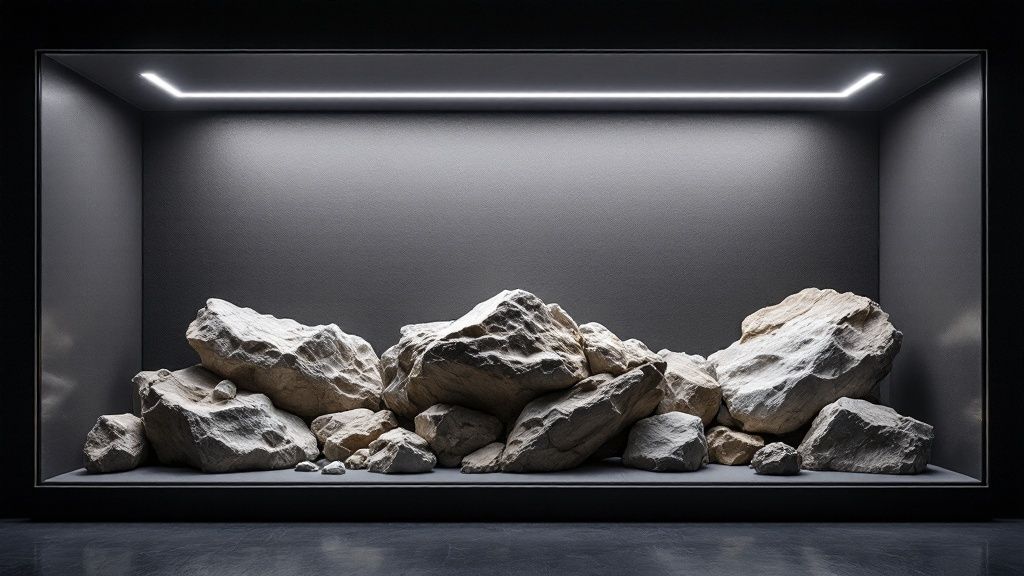
Integrated LED Lighting: The right light can make a collection absolutely sing. Cool-toned LED systems are the way to go because they produce almost no heat and, crucially, no damaging UV radiation. They make crystals sparkle and bring out subtle details you’d completely miss otherwise.
Airtight Seals: If you live anywhere with high humidity, moisture is your enemy. Airtight seals are a must-have for protecting minerals like pyrite from the dreaded "pyrite disease," where humidity literally causes it to decay. These seals create a stable little microenvironment inside the case, protecting your specimens from whatever the weather is doing outside.
How to Arrange Your Collection for Visual Impact
Alright, you've picked out the perfect case for your rock collection. Now for the fun part—making it look incredible. Arranging your specimens is really where the art of collecting comes alive. It's your chance to turn a simple assortment of stones into a curated exhibit that tells a story and shows off your passion.
How you organize your minerals can transform a static display into something dynamic and personal. Instead of just sorting them by type (which is fine, but a little predictable), think about crafting a narrative with your arrangement. This is where your unique style as a collector really starts to shine.
Creating Themes and Visual Flow
One of the most effective ways to arrange a collection is simply by color. Imagine creating a stunning gradient, flowing from fiery red jaspers and carnelians on one side to deep purple amethysts and rich blue sodalites on the other. It creates an immediate sense of harmony and draws the eye right across the display. It's a classic for a reason.
Another great approach is to build your display around a theme that means something to you. For instance, you could dedicate an entire drawer to showcasing all the finds from a favorite collecting trip. Your display case basically becomes a geological scrapbook, with each specimen tied to a specific memory. Or, you could group them by geographical origin, creating a mini-museum of a particular region's mineralogy.
The most captivating displays often strike a balance between variety and cohesion. Don't be afraid to mix textures, shapes, and sizes, but try to tie them all together with a common thread like color, locality, or mineral family.
Balancing Composition and Focus
Once you’ve settled on a theme, it’s all about composition. You’re aiming for visual balance, not necessarily perfect symmetry. A few key design principles can make a huge difference here:
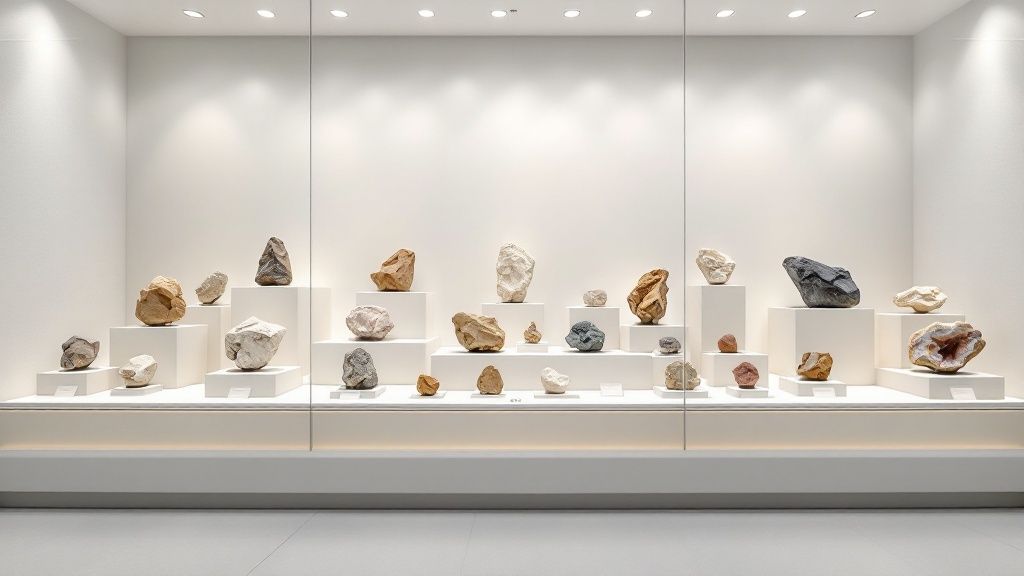
Vary Heights and Sizes: It’s usually best to place your larger, more dramatic specimens toward the back, with smaller pieces up front. Small, clear acrylic risers can be used to elevate certain pieces, giving them a bit of a spotlight.
Play with Texture: Alternate your rough, raw minerals with smooth, polished stones. That contrast is what creates visual interest and really highlights the unique character of each specimen.
Give Them Breathing Room: This is a big one. Avoid the temptation to overcrowd your compartments. A well-spaced arrangement lets each rock be appreciated on its own, making the whole display feel more intentional and valuable.
These techniques are fundamental to creating a display that really pops. If you're looking for more ideas, exploring different takes on how to display crystals can offer some fresh inspiration for showcasing your collection’s unique beauty. When you put a little thought into the arrangement, you elevate your display from simple storage to a genuine work of art.
Keeping Your Display Looking Its Best (and Protecting Your Specimens)
You’ve put in the work to create a beautiful display for your rock collection. Now, let’s make sure it stays that way. A little ongoing care for both the case and the specimens inside will keep your collection looking fantastic for years to come. It really just comes down to a few simple routines.
First things first, think about the case itself. How you clean it depends entirely on what it’s made of. If you have an acrylic case, stay far away from ammonia-based cleaners like Windex—they can cause the surface to get cloudy over time. Your best bet is a simple solution of gentle soap and water with a microfiber cloth to avoid scratches. For a classic wood case, a quick dusting or a good wood cleaner is all you need to maintain its shine.
Beyond cleaning, the real secret is managing the environment around your display. Direct sunlight is the number one enemy of many colorful specimens. Its UV rays can cause gorgeous minerals like amethyst and fluorite to fade. High humidity is another thing to watch out for, as it can damage moisture-sensitive minerals, especially sulfides like pyrite (the dreaded "pyrite rot" is a real thing!).
A stable environment is your best defense against specimen degradation. The goal is a consistent temperature and moderate humidity, far from sunny windows or drafty vents. This alone will do wonders to preserve your collection’s integrity.
Preservation and Labeling
Proper labeling is more than just a name tag; it’s about preserving a specimen’s story and its scientific value. A small, discreet label with the mineral name, where it was found, and when you got it adds a ton of context. Trust me, this info is crucial for keeping your collection organized and valuable down the road.
If you’re looking for some solid general advice, this guide on how to store collectibles has some great tips that apply here, emphasizing both careful handling and smart presentation.
Finally, you can’t protect what you don’t know. If you’re a little fuzzy on what some of the minerals in your display are, a detailed crystal identification guide is an indispensable tool. Knowing a specimen's identity helps you understand its specific needs. By combining regular cleaning, smart environmental control, and good documentation, your rock collection will remain a stunning and safe centerpiece for years.
Your Top Display Case Questions, Answered
Even after you've landed on the perfect display case, a few practical questions almost always come up. Getting these details right is the final step in creating a display that’s both beautiful and safe for your collection. Let’s tackle some of the most common queries from fellow collectors.
What Is the Best Lighting for a Rock Display Case?
Hands down, LED lighting is the way to go. Unlike old-school incandescent or halogen bulbs, LEDs generate almost no heat and, crucially, zero harmful UV radiation. This is non-negotiable for any serious collector, as UV rays are notorious for fading the color in light-sensitive minerals like amethyst, fluorite, and rose quartz over time.
For the best look, cool or neutral white LEDs are recommended. These tones show off the true, natural colors of your specimens without adding a weird yellow or blue cast. While a lot of modern cases have LEDs built right in, it’s also incredibly easy to add adhesive LED strips to an existing case. It’s a simple upgrade that makes a world of difference.
How Do I Keep Small Rocks from Shifting in Compartments?
Securing small or awkwardly shaped pieces is a common headache, but thankfully, the solutions are simple. A soft liner made of velvet or foam is your first line of defense—it provides a bit of grip and essential cushioning.
But for real stability, especially for rocks with uneven bottoms, museum putty (sometimes called mineral tack) is your best friend. A tiny, pea-sized ball is all it takes to gently anchor a rock in place without leaving any residue or causing damage. It holds strong but peels off cleanly when you want to rearrange things.
And if you’re displaying really tiny gems or micro-crystals? Pick up some small, clear acrylic boxes often called "gem jars." You can then arrange these little containers neatly inside the larger compartments of your case, keeping your tiniest treasures organized and safe from bumps.
Are Wooden Display Cases Safe for All Minerals?
For the most part, yes, but it’s smart to be a little cautious. The concern here is that certain untreated woods can release organic acid vapors over time, which can tarnish or react with specific minerals—especially sulfides like pyrite.
To play it completely safe, always go for a case made from a stable hardwood that has a sealed, inert finish. This creates a barrier and neutralizes any risk from the wood itself. If you’re ever unsure about an antique or unsealed case, just line the compartments with an archival-quality fabric or foam. It’s an easy fix that creates a safe buffer between the wood and your prized specimens.
Thinking through these final details—lighting, stabilization, and material safety—is what elevates a display from simple storage to a truly curated exhibit. It ensures your collection not only looks incredible but is also preserved for years to come.
At Astro West, we believe every collection deserves to be displayed with pride and care. For over 60 years, our family has helped collectors find the perfect minerals, fossils, and handcrafted jewelry to tell their unique stories. Explore our curated selection of fine specimens to find the next treasure for your display.