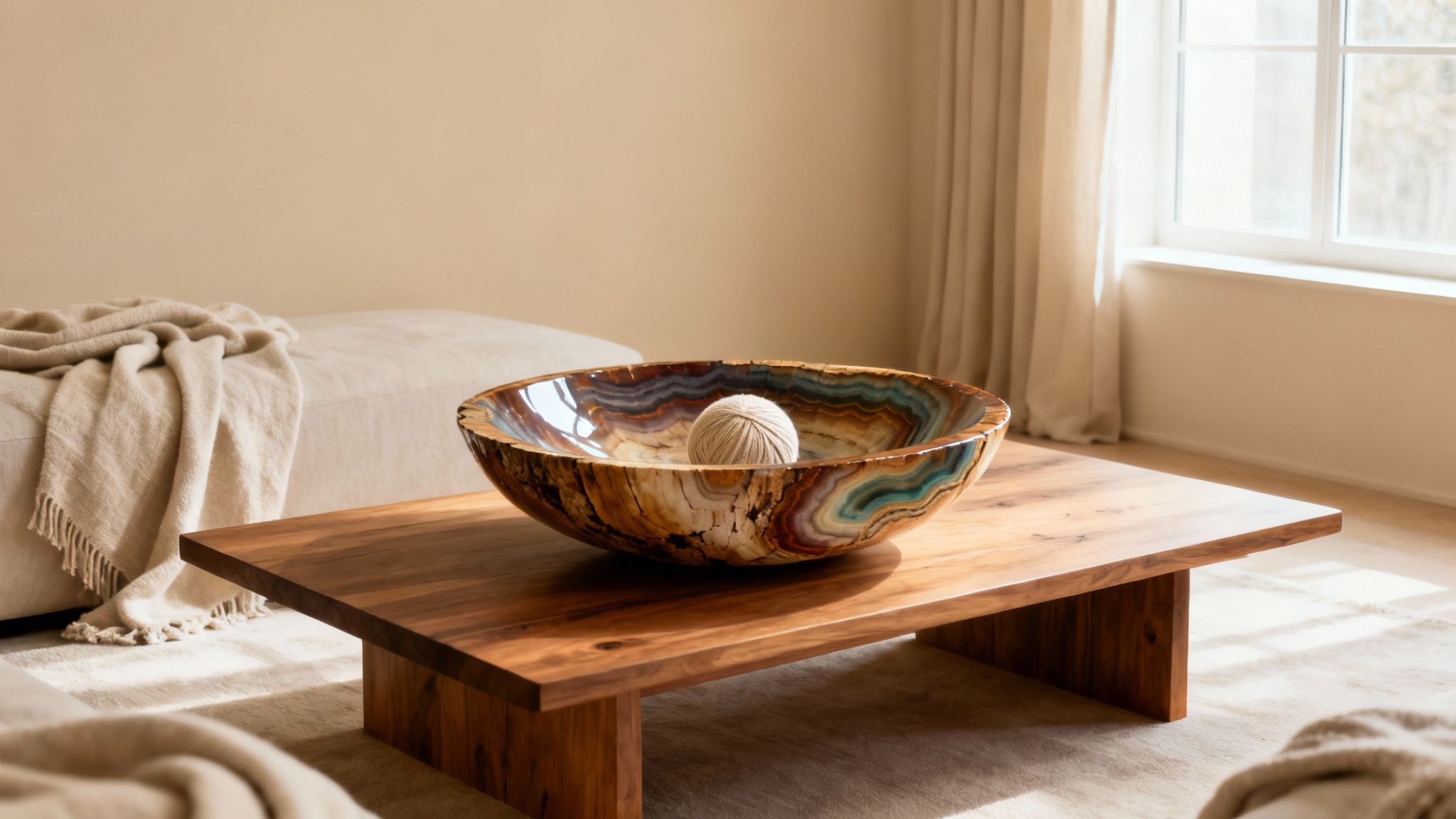
Petrified Wood Bowl: A Guide to Earth’s Ancient Art
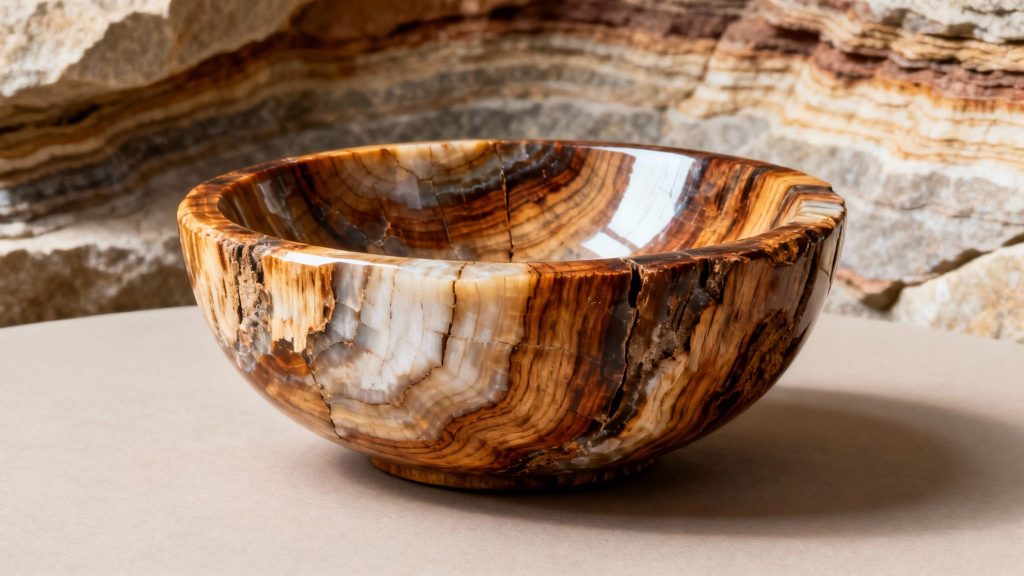
A petrified wood bowl is so much more than a simple decorative object. It’s a genuine fossil, capturing a sliver of time from an ancient forest that lived and died millions of years ago. Unlike a standard bowl carved from timber, this is a piece of natural history—a fallen tree that was slowly, patiently transformed into solid stone, preserving every last detail of its original structure. You could almost think of it as a collaboration between ancient biology and geology.
The Story Behind Your Petrified Wood Bowl
When you hold a petrified wood bowl, you’re holding a tangible piece of Earth’s deep past. These aren't carved from ordinary wood; they're sculpted by nature over an immense, almost unimaginable timescale. The whole process kicks off when a tree falls and is quickly buried under sediment—think volcanic ash or thick mud—which shields it from oxygen and stops it from decaying like it normally would.
But that burial is just step one in a remarkable transformation. For millions of years, mineral-rich groundwater seeps through the buried log. Slowly, molecule by molecule, the original organic wood fibers are replaced by minerals.
This incredible process is called permineralization. It’s like nature making a perfect, permanent cast of the wood, locking in the delicate details of the growth rings, bark, and even the cellular structure in solid stone.
From Prehistoric Tree to Polished Treasure
What you’re left with is a fossil that keeps the exact appearance of the original wood but is now composed entirely of stone. The amazing colors you see—those rich browns, deep reds, and striking blacks—come from trace minerals like iron, carbon, and manganese that were floating around in the groundwater during the fossilization process.
A petrified wood bowl is, quite literally, a fossil you can use every day. Many of the bowls you’ll find today come from Miocene-age logs discovered in Indonesia's Java region, with the fossilization estimated to have happened sometime between 5 and 25 million years ago. That geological context adds a pretty incredible depth to each piece’s story.
A Blend of Nature and Craftsmanship
Finally, skilled artisans take over. They carefully cut and polish these fossilized logs, unveiling the stunning patterns that have been locked inside for eons. They aren't just creating a bowl; they’re revealing a work of art that nature started millions of years ago. Each one is completely unique—a geological fingerprint that can never be replicated.
That journey, from a living tree to a polished artifact, is what makes these objects so special. They are more than just home décor; they are conversations with history. While bowls are a popular form, this ancient material is also shaped into other stunning display pieces, like this polished petrified wood slab that showcases the same incredible natural artistry.
From Ancient Forest to Timeless Fossil
Every petrified wood bowl started its life not as stone, but as a real, living tree in a prehistoric forest. Just imagine a towering giant—maybe a type of Dipterocarpus or an ancient palm—thriving millions of years ago in a world totally different from ours. Its life was remarkable, but its second life, its transformation into a fossil, is where the real story begins. The journey from organic wood to timeless fossil is a slow, multi-million-year epic, and it only happens under the most precise geological conditions.
This incredible change kicks off when a tree falls and is buried—and buried fast—by sediment. This isn't just a gentle dusting of soil; we're talking about a massive, sudden event, like a huge flood dropping layers of mud or a volcanic eruption smothering the landscape in mineral-rich ash. This quick burial is absolutely critical because it seals the wood off from oxygen, hitting the pause button on natural decay. Without oxygen, the bacteria and fungi that would normally break down the wood simply can’t survive.
The Slow Magic of Permineralization
With the tree protected from the elements, the next stage of its journey begins. Over countless millennia, groundwater saturated with dissolved minerals—mostly silica from volcanic ash—starts to seep through the buried log. This is where the magic really happens. Think of it as nature performing a microscopic, cell-by-cell replacement.
The silica-rich water flows through the wood’s porous structure, filling every tiny, empty space within its cells. As the original organic material—the tree's cellulose and lignin—slowly dissolves away, crystals of quartz, agate, or chalcedony form in its place.
This process is known as permineralization. It’s not just wood turning into stone; it’s a perfect mineral replica being built right where the original organic material used to be. The result is a fossil that preserves the tree’s internal structure with astonishing accuracy.
This geological process is so precise that it captures details you can't even see with the naked eye. The growth rings, the texture of the bark, and even the microscopic cellular structure are all perfectly immortalized in stone. It's nature creating a permanent cast, a geological fingerprint unique to that single tree.
A Palette Painted by Minerals
The stunning array of colors you see in a petrified wood bowl is a direct result of that mineral-rich water. The silica itself is often clear or milky, but other trace elements floating in the groundwater act like natural pigments, painting the fossil from the inside out. Each mineral brings its own distinct hue to the final masterpiece.
This is what gives every piece its unique character:
Iron Oxides: These common minerals create a warm palette of reds, oranges, yellows, and rich browns.
Carbon: The presence of carbon is responsible for the dramatic, deep blacks and smoky grays.
Manganese: This element often produces beautiful shades of pink, purple, or even inky black.
Copper and Cobalt: In rarer cases, these minerals can introduce striking greens and blues into the stone.
The final result is a solid stone object that holds onto the exact form and texture of its wooden ancestor. While a petrified wood bowl is a popular and functional form, this same process creates other remarkable fossils. Collectors and designers often seek out pieces like this petrified palm wood limb, which displays the distinct patterns of an ancient palm tree and offers another window into Earth's distant past. This slow, colorful transformation is what makes every bowl not just a piece of décor, but a one-of-a-kind artifact forged by the earth itself.
How to Spot a Genuine Petrified Wood Bowl
With so many convincing imitations on the market, knowing how to tell a genuine petrified wood bowl from a fake is an essential skill. An authentic piece is a true fossil—a beautiful fragment of Earth's ancient history, captured in stone. The good news is, you don't need a geology degree to spot the real deal. A few key physical tells can give you all the clues you need to distinguish a natural treasure from a mass-produced replica.
The Feel Test: Weight and Temperature
The first and most reliable test comes down to simple physics: weight and temperature. A genuine petrified wood bowl is solid stone, mostly quartz. When you pick it up, it should feel surprisingly heavy and dense for its size. It will also feel cool to the touch, much like a marble countertop, because stone is a natural heat sink.
Imitations, on the other hand, just don't feel right. They’re often unnaturally light and might feel room temperature or even have a slightly plastic-like texture. If a bowl feels flimsy or lacks that satisfying heft, it’s a major red flag.
Examining the Patterns and Texture
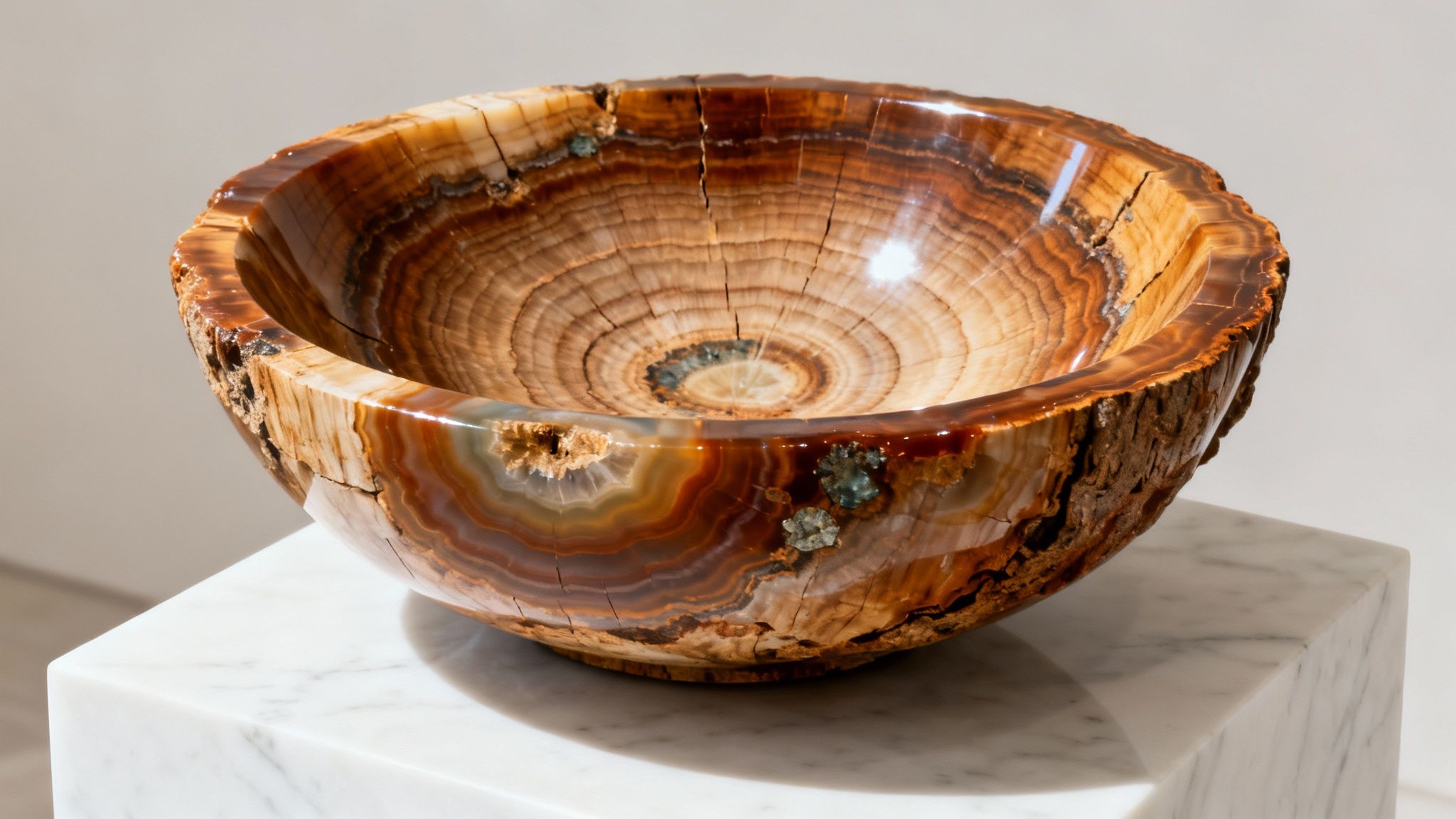
Next, get up close and personal with the grain patterns. Because petrified wood was once a living tree, its patterns are organic, chaotic, and beautifully imperfect. A genuine piece will show off unique, non-repeating growth rings, knots, and the faint cellular structures that tell the story of its former life. These details are the fossil's geological fingerprint.
You can get a great sense of these natural variations by looking at high-quality specimens, like this stunning petrified wood slab from Arizona, which beautifully showcases the kind of intricate, one-of-a-kind patterns you should be looking for.
Fakes often give themselves away with patterns that are just too perfect or oddly repetitive. If the grain looks painted on, digitally printed, or repeats in a uniform way across the surface, you’re almost certainly looking at an imitation. Real wood structure is beautifully messy, never perfectly symmetrical.
Key Takeaway: True petrified wood tells its story through its imperfections. Look for the unique rings, mineral inclusions, and subtle color shifts that could only be created by natural geological processes unfolding over millions of years.
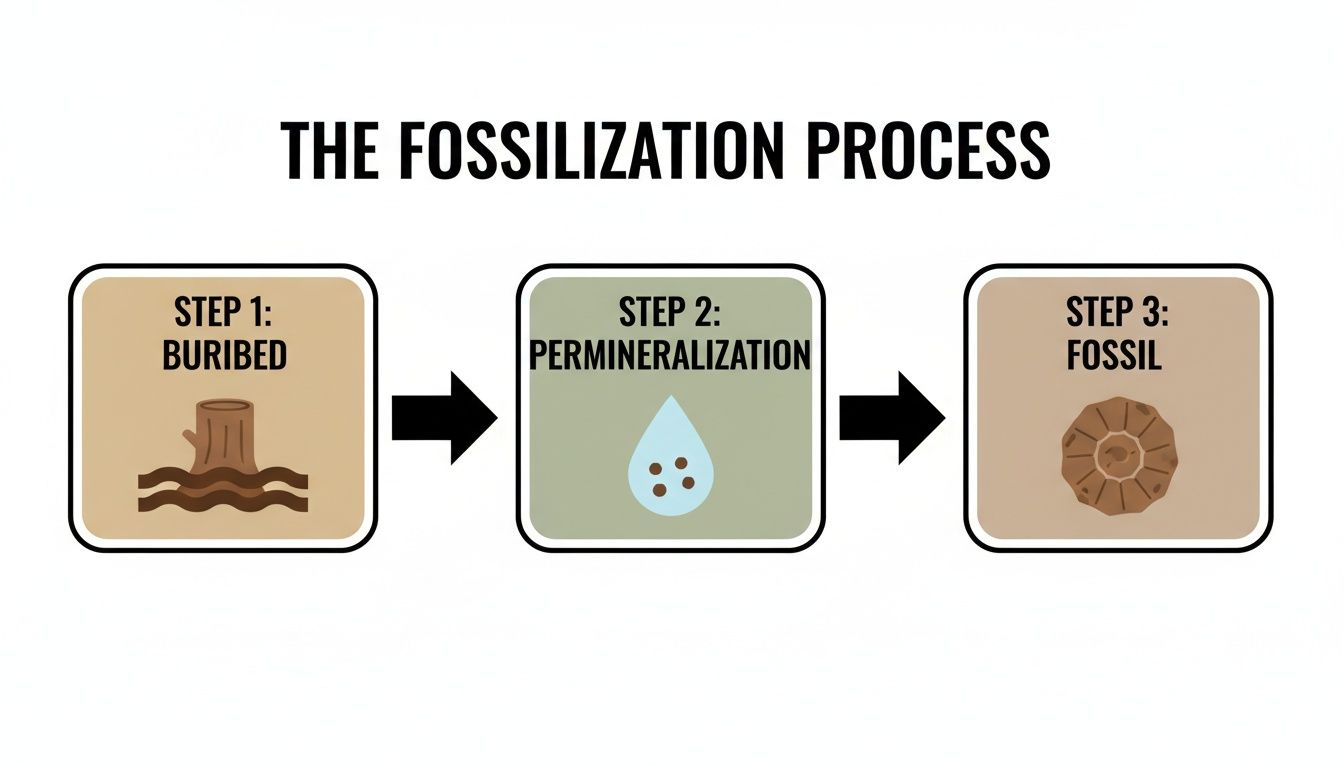
The diagram below gives you a peek into the incredible journey that creates these unique patterns.
This process of permineralization, where minerals slowly replace each individual cell, is what locks the original wood structure into stone forever.
Checking for Luster and Sound
Finally, trust your eyes and ears. When polished, authentic petrified wood has a deep, glassy (or vitreous) luster, much like high-quality agate. It should reflect light crisply and cleanly. An imitation might appear dull, have the overly glossy sheen of plastic, or feature a painted-on finish that lacks any real depth.
A simple tap test is also incredibly revealing. Gently tap the side of the bowl with your knuckle. A real petrified wood bowl will make a sharp, high-pitched clinking sound, almost like tapping a ceramic plate. A resin or composite fake will give off a dull, low-pitched thud. That distinct sound is a dead giveaway of the material's density.
To make it even easier, here's a quick checklist to keep in mind.
Authenticity Checklist for Your Petrified Wood Bowl
Characteristic
Authentic Petrified Wood
Common Imitation (e.g., Resin or Dyed Wood)
Weight
Surprisingly heavy and dense for its size.
Feels light, hollow, or flimsy.
Temperature
Cool to the touch, like natural stone.
Room temperature or slightly warm.
Pattern
Organic, non-repeating growth rings, knots, and cellular details.
Too perfect, repetitive, or appears printed/painted on.
Luster
Deep, glassy (vitreous) shine when polished.
Dull, overly glossy like plastic, or a superficial sheen.
Sound
Produces a sharp, high-pitched clink when tapped.
Emits a dull, low-pitched thud when tapped.
By combining these simple observation tricks—checking the weight, examining the patterns, and testing the sound—you can confidently identify an authentic petrified wood bowl and ensure you're investing in a genuine piece of natural art.
Understanding the Value of Your Bowl
What elevates a petrified wood bowl from a simple decorative piece into a prized collector's item? While size certainly plays a role, the real story of its value is told through a combination of geological rarity, visual appeal, and meticulous craftsmanship. Learning to spot these qualities is like learning the language of the stone itself—it helps you see what makes one bowl a good find and another a museum-quality masterpiece.
The first thing that will always catch your eye is the color. A bowl's worth is driven heavily by the vibrancy, rarity, and arrangement of its hues. Earthy browns and blacks are common and beautiful in their own right, but the pieces that command the highest value are those with rare and intense colors. Think deep reds from hematite, vibrant yellows from goethite, or the almost mythical blues and greens from copper traces. A bowl with a rich, multi-hued palette or a dramatic pop of color is always going to be more sought after.
The Clarity of Its Ancient Story
Beyond color, experts look closely at how well the original wood structure has been preserved. This is where the fossil truly tells its story. A top-tier petrified wood bowl will have crisp, well-defined growth rings and a clear cellular pattern. It’s like looking at a high-resolution photograph of an ancient tree; the more detail that survived the fossilization process, the more valuable the piece is today.
This clarity, often called "wood grain preservation," is a testament to the perfect fossilization conditions from millions of years ago. When you can easily trace the rings or see the intricate, honeycomb-like cell structure with your naked eye, you're looking at an exceptional specimen. A blurry or muddled pattern, while still beautiful, signals a less perfect preservation and is generally valued lower.
Craftsmanship and Finish
The polish is the final, crucial step that unlocks the fossil's inner beauty. A superior polish isn’t just about making it shiny; it’s about achieving a flawless, mirror-like surface that reveals the stone's depth and detail without any distortion. A master craftsman spends hours grinding and polishing the stone through progressively finer grades to get that high-gloss, liquid-like finish that feels impossibly smooth.
An expert finish should be free of:
Scratches: No visible lines or marks left over from the polishing process.
Pits: The surface should be perfectly smooth, without any tiny divots or imperfections.
Dull Spots: The luster should be consistent across the entire bowl, with no cloudy or matte areas.
This level of finishing requires immense skill and elevates the bowl from a raw fossil into a true piece of art. A flawless polish can dramatically increase a piece's value by maximizing its color, clarity, and visual punch.
The market for these unique items sits at the intersection of natural history and luxury décor. Some research projects the global petrified wood market will reach $1.1–$1.5 billion by the early 2030s, with over half of the demand driven by interior design applications. This highlights why beautifully finished bowls are so prominent in galleries. You can explore more market trends in this detailed petrified wood industry report.
Finally, where the petrified wood was found—its provenance—adds another layer to its story and value. Pieces from renowned and ethically sourced locations, like Arizona's Chinle Formation or the rich fossil beds of Indonesia, often carry a premium. Sourcing ethically also ensures the preservation of these important fossil sites and supports local communities, making your investment a responsible one. When you choose a petrified wood bowl, you aren't just buying an object; you're acquiring a carefully preserved piece of natural art with a story millions of years in the making.
Styling Your Home with Petrified Wood
A petrified wood bowl isn't just a fossil; it's a powerful design element that closes the gap between raw nature and refined luxury. Its incredible versatility lets it elevate almost any interior, acting as a statement piece that tells a story millions of years in the making. Bringing this piece of natural history into your home is all about using its unique texture, color, and form to add serious depth and character to your space.
The magic of a petrified wood bowl is its ability to be both a focal point and a subtle accent. It doesn’t just take up space—it commands it with a quiet, ancient authority. Whether your home is minimalist modern or warmly traditional, this unique artifact introduces an organic element that feels both timeless and grounding.
Matching a Bowl to Your Design Aesthetic
Every single petrified wood bowl has a distinct personality, shaped by its color, grain, and finish. The secret is to find a piece that speaks to your existing décor. A dramatic, dark bowl with bold, contrasting rings can be the perfect anchor in a minimalist or industrial setting, its raw texture playing beautifully off clean lines and neutral tones.
On the other hand, a bowl with warm, earthy reds and soft caramel hues can bring an organic warmth to a modern or Scandinavian-inspired room. If you're looking for visual inspiration on how a piece like this can work in different spaces, checking out an ultimate interior design styles guide can really get the ideas flowing.
The goal is to create a thoughtful contrast or a harmonious blend. The bowl can either stand out as a piece of sculptural art or tie together other natural elements in the room, such as wooden furniture or stone accents.
This versatility isn't just limited to bowls, either. Other forms, like this incredible hand-carved petrified wood sphere from Arizona, offer different ways to bring this ancient material's grounding energy into your home.
Practical and Creative Display Ideas
Beyond its good looks, a petrified wood bowl is a functional work of art. Its use is limited only by your imagination, but here are a few ideas to get you started:
As a Standalone Sculpture: Sometimes, the simplest approach is the most impactful. Place a beautiful bowl on a coffee table, bookshelf, or mantel as a standalone art object and let its natural patterns draw the eye.
A Sophisticated Catch-All: Position a smaller bowl on an entryway console. It instantly becomes an elegant and practical spot for keys and wallets, turning a potentially cluttered area into a curated display.
A Unique Vessel: Use your bowl to hold decorative objects that complement its texture. Think of things like moss spheres, smooth river stones, or even a collection of air plants to enhance its organic feel.
By thoughtfully placing your petrified wood bowl, you’re doing more than just decorating. You're inviting a profound piece of Earth’s history into your daily life, adding a powerful and timeless story to the heart of your home.
Caring for Your Piece of Earth's History
Your petrified wood bowl is literally a piece of stone, so it’s incredibly durable. But that beautifully polished surface? It deserves a little care to keep its deep luster for years to come.
The good news is, maintaining this piece of Earth's history is simple. You don’t need harsh chemicals or complicated routines; a gentle touch is all it takes to keep your fossil looking its best.
Treat it like you would any other fine, natural stone in your home. For routine cleaning, all you really need is a soft, damp cloth—microfiber works perfectly. If you’re dealing with minor smudges, a little bit of mild, pH-neutral soap mixed with warm water will do the trick. Just wipe the surface gently, then dry it immediately with another soft cloth to prevent water spots and bring back that natural shine.
What to Avoid During Cleaning
Preserving the flawless finish of your bowl is all about avoiding things that can scratch or dull its surface. Petrified wood is hard, yes, but its polish can be vulnerable to the wrong products.
Here’s a quick list of what to keep away from your bowl:
Abrasive Cleaners: Scouring powders, gritty creams, rough sponges, and steel wool are all off-limits. They will inevitably create tiny scratches that dull the surface over time.
Harsh Chemicals: Steer clear of anything acidic or highly alkaline. That includes common household products like vinegar, lemon juice, bleach, ammonia, and most bathroom tile cleaners. These can actually etch the stone and permanently ruin the polish.
A simple rule of thumb: If you wouldn't use it on a high-end marble countertop, don't use it on your petrified wood bowl. Mild and gentle is always the way to go.
Best Practices for Display and Use
While these bowls are certainly functional works of art, understanding their geological nature helps keep them pristine. Because petrified wood is still microscopically porous, prolonged contact with liquids or highly pigmented foods can risk staining the surface.
To keep your bowl in perfect condition, it’s best used as a decorative object or for holding dry items. Think twice before using it to serve acidic foods like salads with vinaigrette or a fruit platter loaded with citrus. If you want to use it for something like a floral arrangement, just be sure to place a protective liner inside first.
By following these straightforward tips, you can ensure your ancient treasure remains a stunning and timeless centerpiece in your home for generations.
Begin Your Collection with Astro West
Owning a petrified wood bowl is like holding a piece of Earth’s deep, ancient history right in your hands. It’s a remarkable fusion of natural art, prehistoric geology, and sophisticated design that’s hard to find anywhere else.
Each bowl is a direct connection to a world that existed millions of years ago, transformed by nature into a solid stone artifact that still preserves the intricate details of a once-living tree. This is so much more than just a decorative item; it’s a conversation piece, a functional sculpture, and a timeless testament to nature’s patient artistry.
Every petrified wood bowl in our gallery tells a story that started eons ago and has been carefully brought to light by skilled hands. We believe such profound pieces of natural history deserve to be presented with integrity and respect. This commitment is at the heart of everything we do at Astro West, from our careful sourcing practices to the final presentation in our New York City gallery.
Our Commitment to Quality and Authenticity
At Astro West, our legacy is built on a deep, genuine passion for the Earth's treasures. We are dedicated to curating a collection of petrified wood that is not only beautiful but also ethically sourced and authenticated by our own in-house experts.
We make sure every piece, from a small, affordable gift to a museum-quality statement bowl, meets the highest standards. Our team personally vets each item for its color vibrancy, the clarity of its wood grain, and the flawlessness of its polish.
This dedication means you can invest with confidence, knowing you’re getting a genuine, high-caliber fossil. The market for these stunning objects has become a global niche, connecting collectors and designers with specimens from all over the world. Trade statistics show a complex network of importers bringing these natural wonders from sources like Indonesia and Madagascar into major hubs like New York and Los Angeles. As documented by customs data, this aligns with a growing appreciation for a petrified wood bowl as an accessible, vetted fossil with clear provenance. You can learn more about these global trade patterns for petrified wood.
Find the Perfect Piece for Your Story
Whether you’re a seasoned collector hunting for a rare specimen or a design enthusiast looking for a powerful accent, our collection is curated to inspire. A petrified wood bowl is a timeless addition to any interior, grounding a space with its ancient energy and organic beauty. It serves as a stunning reminder of the planet's incredible history and its capacity to create enduring art.
We invite you to experience the powerful presence of these fossils firsthand. Each piece has a unique character and energy that’s best appreciated in person, where you can feel its weight, trace its growth rings, and see how the light plays across its polished surface.
We encourage you to explore our gallery online or visit us in person at our New York City location. Let our experts guide you through the collection and help you find the perfect petrified wood bowl—a piece of Earth’s history that will begin, or enrich, your own collection for years to come.
At Astro West, we connect you with the enduring beauty of natural history. Explore our curated selection of fine minerals, fossils, and unique decorative objects today.