A Guide to Collecting Investment Grade Mineral Specimens in 2026
Mineral collecting has evolved far beyond a simple hobby. Today, premier mineral specimens are tangible assets, evaluated alongside fine art and luxury watches. Their value is a powerful blend of rarity, aesthetics, and provenance. Therefore, the modern market focuses on acquiring curated, exceptional examples. This guide will provide the authoritative perspective needed to build a museum-quality collection with lasting worth.
The New Era of Mineral Collecting
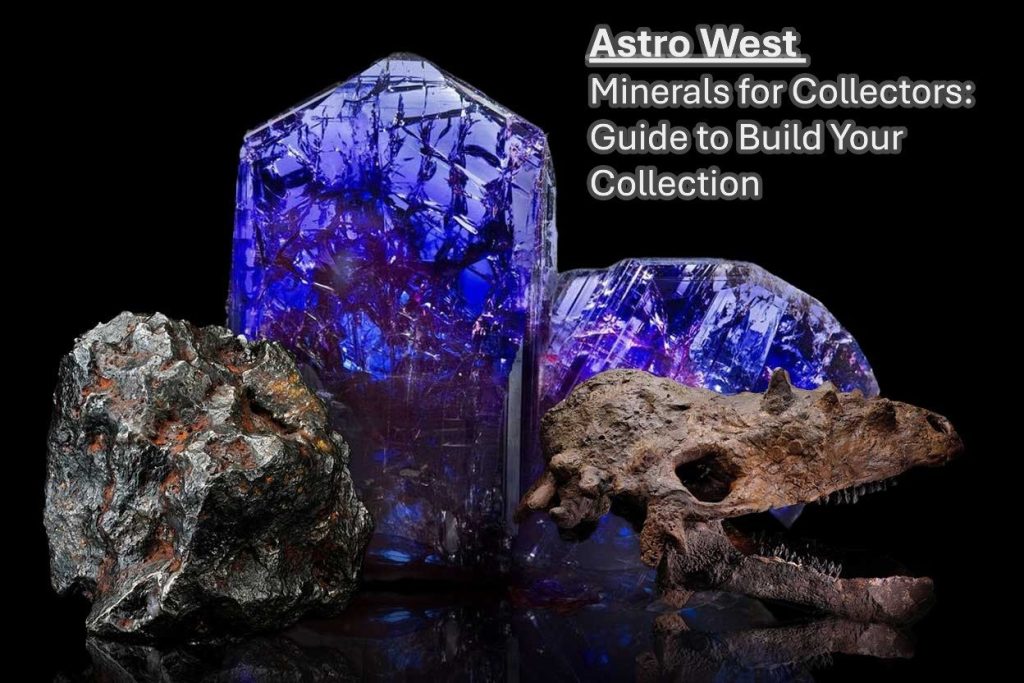
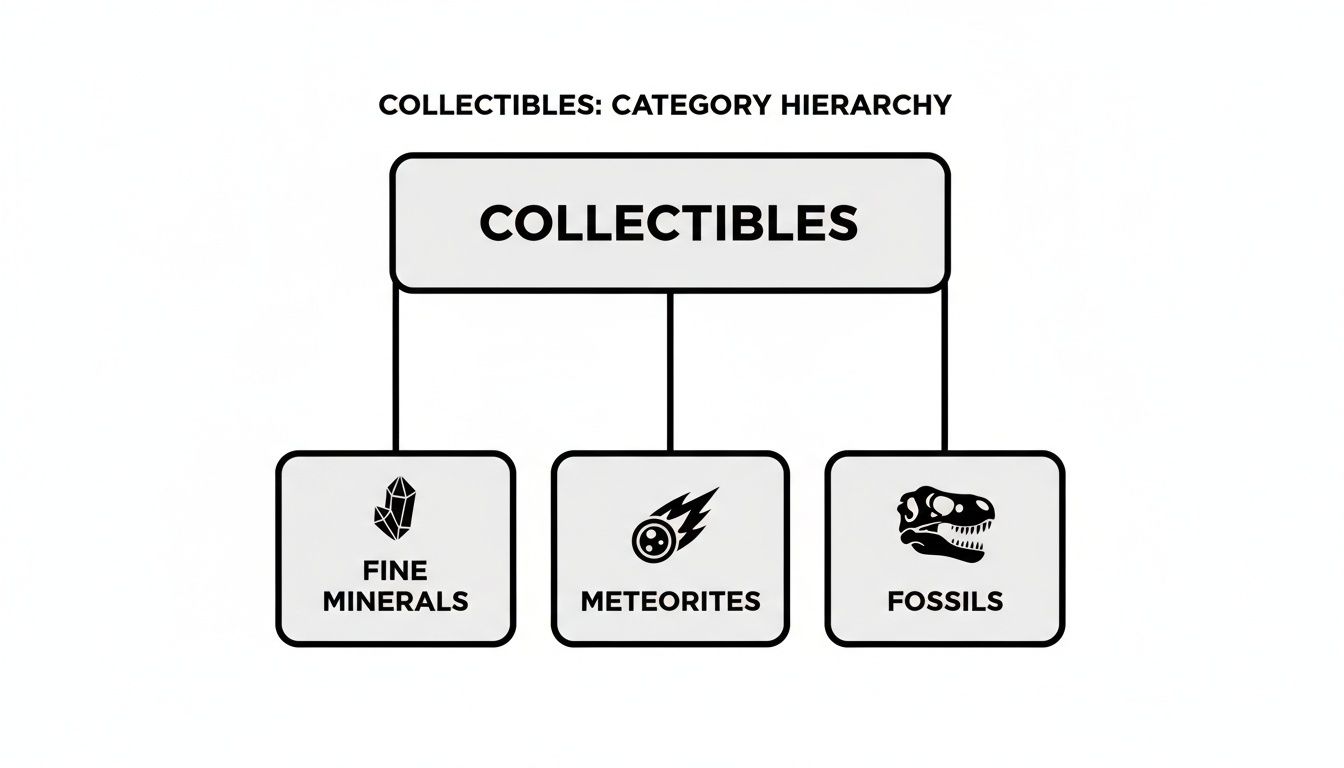
The market for fine minerals, fossils, and meteorites has matured into a sophisticated asset class. This shift mirrors the fine art world, where serious collectors pursue masterworks, not mass-produced prints. Likewise, mineral collecting is no longer about gathering common stones. It is about acquiring exceptional natural sculptures forged deep within the Earth.
This evolution stems from a growing appreciation for each specimen's unique story. Factors like a mineral’s specific mine of origin, its flawless crystal structure, or its journey through space as a meteorite directly increase its value. A collector, therefore, isn't just buying a stone; they are acquiring a verifiable piece of natural history.
A Market Fueled by Rarity and Demand
The demand for investment-grade natural history objects is climbing rapidly. The market is constantly shaped by new mining discoveries and rising collector interest in physical assets. When a famous mine becomes depleted, for example, specimens from that location become finite artifacts. As a result, their prices naturally appreciate over time.
The numbers confirm this trend. The global rare mineral collectibles market is projected to reach $5.5 billion by 2032, growing at a compound annual rate of 16.40% from 2026. North America leads this market with a valuation of $2.8 billion in 2026 alone, driven by collectors seeking museum-quality pieces. You can read the full research about these market trends to understand the scale of this opportunity.
Adopting an Authoritative Perspective
Navigating this market requires a trained eye. At Astro West, we provide an authoritative perspective built on decades of direct relationships with miners, paleontologists, and field experts. We evaluate every specimen using the same strict criteria as museums and seasoned investors. This ensures each piece in our gallery represents the pinnacle of quality for its type.
The modern approach to mineral collecting is akin to curating a portfolio of rare books instead of filling a shelf with paperbacks. Each acquisition should be a deliberate choice, selected for its unique character, historical significance, and potential for lasting value.
This guide provides the knowledge to build a collection with purpose. We will explain how to evaluate quality, identify categories with the highest collector demand, and verify authenticity. Ultimately, you will learn to think like a curator, making acquisitions that are not only beautiful but also sound stores of value.
1. Start With Quality Over Quantity
Beginning collectors often feel an urge to acquire many pieces quickly. However, the most successful collectors learn a crucial lesson: prioritize quality over quantity. One exceptional specimen will always hold more long-term value and visual power than a dozen average ones.
Think of it as building a small portfolio of blue-chip assets rather than amassing speculative penny stocks. Top-tier minerals demonstrate far more resilience to market shifts. Moreover, they have a proven history of appreciation. Adopting this mindset early is the single best way to build a collection that is both impressive and a sound investment.
Defining Top-Tier Quality
What separates an investment-grade specimen from a common decorative stone? The distinction lies in a few key attributes that seasoned collectors and premier galleries seek. These are the tangible markers of rarity and desirability that drive real value. They are the same principles that guide curation at Astro West.
For example, we look for top-tier color saturation, such as the deep purple of Uruguayan amethyst or the vibrant green of Congolese malachite. Equally critical is an exceptional form and aesthetic, like the delicate architecture of an apophyllite cluster or the sharp geometry of pyrite on quartz. You can explore our fine mineral collection to see these principles in action.
The ultimate takeaway for any serious collector is simple yet powerful: Buy fewer pieces, but buy the best examples of each species you choose to collect. This singular focus on quality is the most direct path to building a collection of lasting worth.
Collector-Grade Versus Commercial-Grade
Understanding the difference between collector-grade and commercial-grade minerals is a critical skill. While both can be beautiful, they occupy entirely different market tiers and serve different purposes. One is an asset; the other is a decorative commodity.
A commercial-grade piece may have good color, but it might also be damaged, repaired, or lack a distinct crystal structure. A collector-grade specimen, on the other hand, must clear a much higher bar. This distinction is crucial for anyone building a collection with an eye on long-term value.
Collector-Grade Versus Commercial-Grade Minerals
Attribute
Collector-Grade Specimen (Investment Focus)
Commercial-Grade Mineral (Decorative Focus)
Color
Top saturation, vibrant, and evenly distributed.
Good, but may be faded, patchy, or artificially enhanced.
Form
Well-defined, sharp, and undamaged crystal structures.
Often massive, poorly formed, or with significant damage.
Luster
Exceptional brilliance and reflectivity.
Dull, waxy, or unremarkable surface.
Matrix
Aesthetically balanced, providing contrast and context.
Awkwardly positioned or detracts from the main crystal.
Provenance
Fully documented and from a notable or rare locality.
Unknown or from a common, mass-market source.
Once you internalize these differences, you will start to see minerals through an expert's eyes. This disciplined perspective allows you to identify the specimens that will anchor your collection aesthetically. Additionally, it helps you select pieces that will serve as a reliable store of value for years to come.
2. Focus on High-Demand Categories
When first entering the world of natural history collecting, the sheer variety can feel overwhelming. For those seeking to build a collection that holds and grows its value, focus is key. Smart collectors learn that certain categories consistently attract the most serious attention and competition.
These categories represent a powerful trifecta of intense rarity, scientific importance, and undeniable aesthetic power. Because of this, they attract a dedicated following of collectors who understand the logic behind their value. As a result, these collectors are prepared to compete for the best-of-the-best examples.
Fine Minerals: The Pillar of the Market
Fine minerals are the bedrock of the collecting world. These specimens appear to be straight from a geology textbook, celebrated for perfect crystal structures, stunning color, and artistic presence. They are, quite simply, natural sculptures that define the quality of an entire collection.
Astro West’s offerings reveal which pieces consistently attract serious collectors. For example, investment-grade minerals for collectors include amethyst stalactites, malachite stalactites, apophyllite, and pyrite on quartz. Other prized examples are spessartine garnet clusters and morganite with tourmaline. These specimens hold value due to their rarity, aesthetics, and powerful display presence. You can explore our Fine Minerals Collection to see these market-proven categories.
Meteorites: The Allure of the Cosmos
Meteorites occupy a fascinating niche, attracting both science collectors and investors. These visitors from space carry a story that is literally billions of years old. Their value derives from a unique combination of their origin, composition, and arrival story. The Meteorites Collection contains some of the strongest long-term value pieces available.
The most sought-after meteorites possess a clear history and distinct visual appeal. Sikhote-Alin irons, for example, are treasured for the sculptural shapes formed while blazing through our atmosphere. Etched Muonionalusta cubes reveal stunning Widmanstätten patterns—an intricate metallic crystal structure impossible to form on Earth. Pallasite slices, with their gemmy olivine crystals in an iron matrix, are the crown jewels of the meteorite world.
Fossils & Natural History: The Power of Prehistory
High-impact fossils offer a direct, tangible connection to Earth's deep past. Unlike common or fragmented fossils, collector-grade specimens are valued for their completeness, preservation quality, and visual power. These are not just scientific curiosities; they are dramatic artifacts of ancient life.
Specimens with a powerful look and clear story are always the most desirable. A well-preserved Spinosaurus tooth or a sharp raptor claw, for instance, tells a compelling story instantly. Large, aesthetic ammonites and perfectly articulated trilobites are also perennial favorites. The value of these pieces is tightly linked to their rarity and display impact, making them cornerstones of many top-tier collections.
3. Choose Specimens With Investment Potential
Falling in love with a beautiful stone is one thing; knowing if it is a genuine asset is another. While the initial reaction to a stunning crystal makes collecting exciting, building a collection that appreciates requires a critical eye. Learning to evaluate a mineral like an investor means looking past the initial "wow" factor. You must deconstruct a specimen to understand the specific, measurable qualities that separate a pretty rock from a premium treasure.
Investment Indicators: Rarity, Size, and Aesthetics
If one factor trumps all others, it is rarity. A mineral’s rarity is often tied directly to its locality—the specific mine where it was unearthed. For instance, specimens from famous, depleted mines become finite artifacts. That scarcity is what drives their value upward over time.
While rarity sets the price floor, a specimen's physical attributes determine its position in the market hierarchy. Large, complete, and undamaged crystals will always be more desirable than smaller or broken ones. Therefore, a museum-scale amethyst slice or a complete cluster of quartz is a far greater store of value than fragments of the same quality.
Aesthetic perfection, however, is a significant value multiplier. This quality is not just about being "pretty"; it is a combination of specific visual factors. These include balance, symmetry, color zoning, and luster. A specimen that combines exceptional rarity with aesthetic perfection becomes a piece of natural art, justifying its top-tier market position. You can learn more about what makes a specimen extraordinary with our guide to this museum-grade Dioptase.
Examples of Investment-Grade Minerals
Astro West’s high-value listings show what drives price appreciation. Exceptional pieces like a Morganite with Tourmaline from Afghanistan ($100,000), large amethyst/calcite formations ($17,500–$95,000), and rare malachite stalactites ($25,000) are priced on this strict combination of rarity, size, and aesthetics. These are the types of pieces that tend to appreciate over time.
Finally, a specimen’s story can add a powerful layer of value. This is especially true for pieces with documented scientific or historical importance. A meteorite from a witnessed fall, for instance, is far more valuable than one discovered later. Its dramatic arrival is a recorded event. This added significance elevates a piece beyond its physical form, like this etched Aletai meteorite slice with its remarkable cosmic signature.
4. Buy From Trusted, Transparent Sources
Trust is the bedrock of any collectibles market. In the world of fine minerals, where value is welded to rarity and origin, trust is everything. Therefore, buying from transparent, authoritative sources is the only way to protect your investment. An unverified specimen, no matter how beautiful, is a serious financial gamble.
The most critical factor in building that trust is provenance—the documented history of a specimen's origin and ownership. Think of it as the service history for a vintage car or the ownership records for a famous painting. A clear, verifiable chain of custody confirms a mineral’s authenticity and its story, directly boosting its market value.
The Collector's Non-Negotiable Checklist
To safeguard your collection, you must demand specific documents with every significant purchase. Any reputable dealer or gallery understands this and views providing this information as a core responsibility. Your checklist should always include a certificate of authenticity, precise locality information, scientific classification, and clear provenance.
A gallery's willingness to provide comprehensive documentation directly reflects its confidence in its inventory. If a seller is evasive or cannot produce these records, consider it a major red flag. This is why a certified GIA color-change Alexandrite with full documentation is in a completely different asset class than an unverified stone. You can learn more about the importance of GIA certification for a natural color-change Alexandrite to see how this verification creates tangible value.
Sourcing with Confidence
At Astro West, our authority is built on trust and transparency. We foster direct relationships with miners, field experts, and respected suppliers worldwide. This direct access allows us to verify a specimen's origin at the source, ensuring its history is clear from the moment it leaves the ground.
We guarantee authenticity and provide a precise scientific classification for every piece in our gallery. You should never have to question the integrity of an acquisition. That is why we emphasize transparent sourcing and arm collectors with the documentation needed to buy with total confidence.
5. Build a Collection With Visual Cohesion
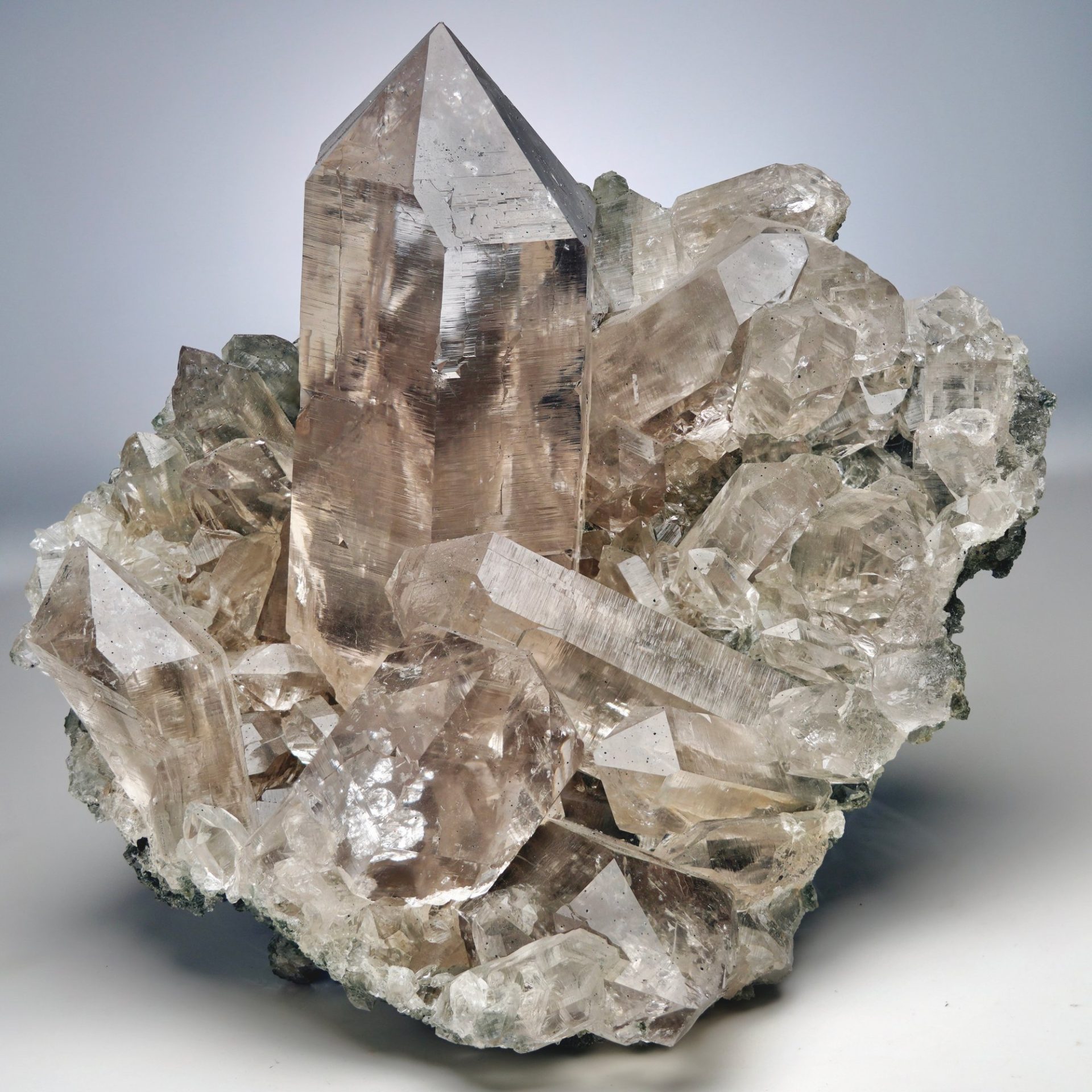
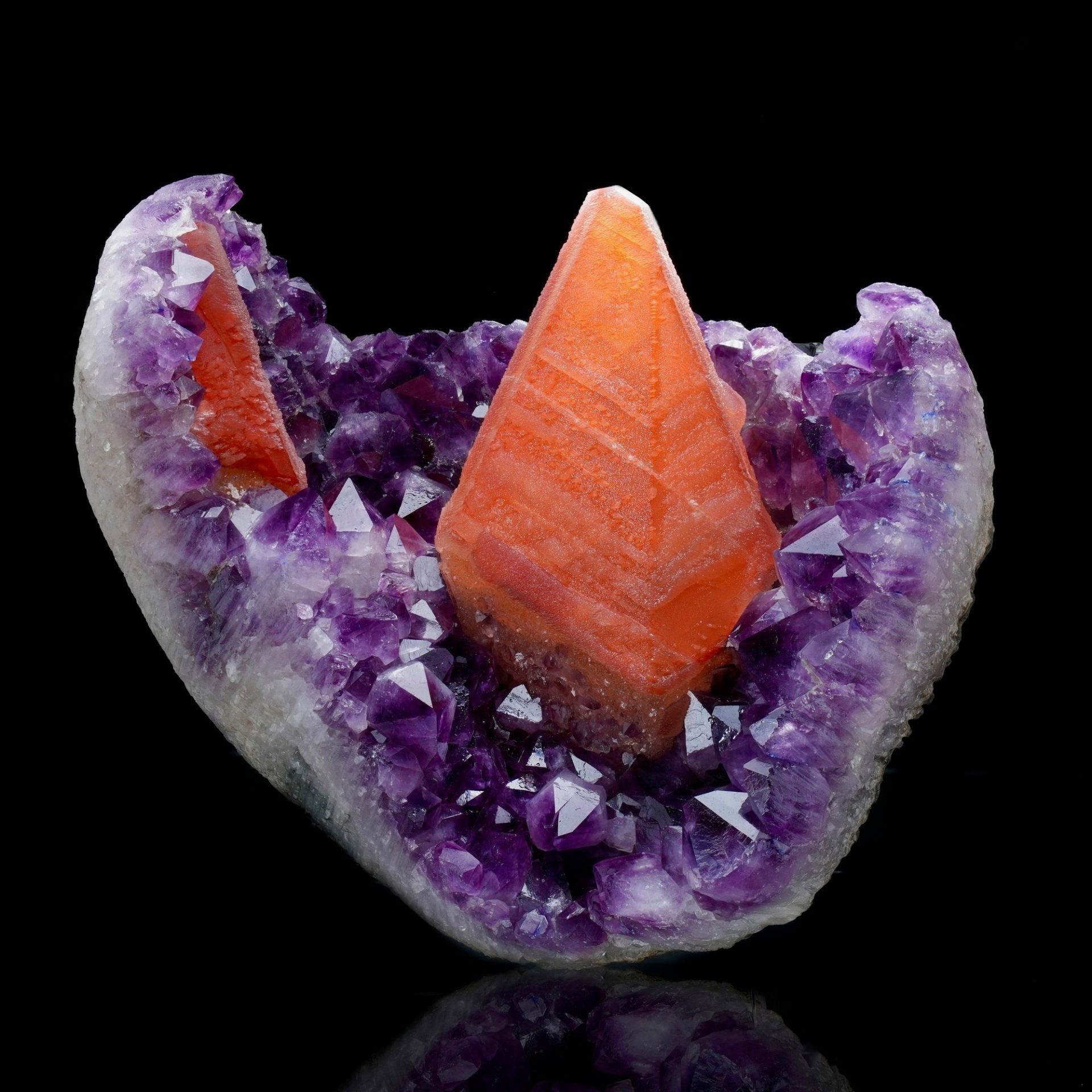
An exceptional collection of minerals for collectors is more than the sum of its parts, like the Calcite on Amethyst Cluster (pictured above) which features a striking, oversized calcite crystal rising from the center of the amethyst cluster. It tells a story and the combination of calcite and amethyst adds both aesthetic impact and educational value.
When you shift from simply buying individual specimens to curating a unified whole, you elevate a personal passion into a powerful statement of interior design.
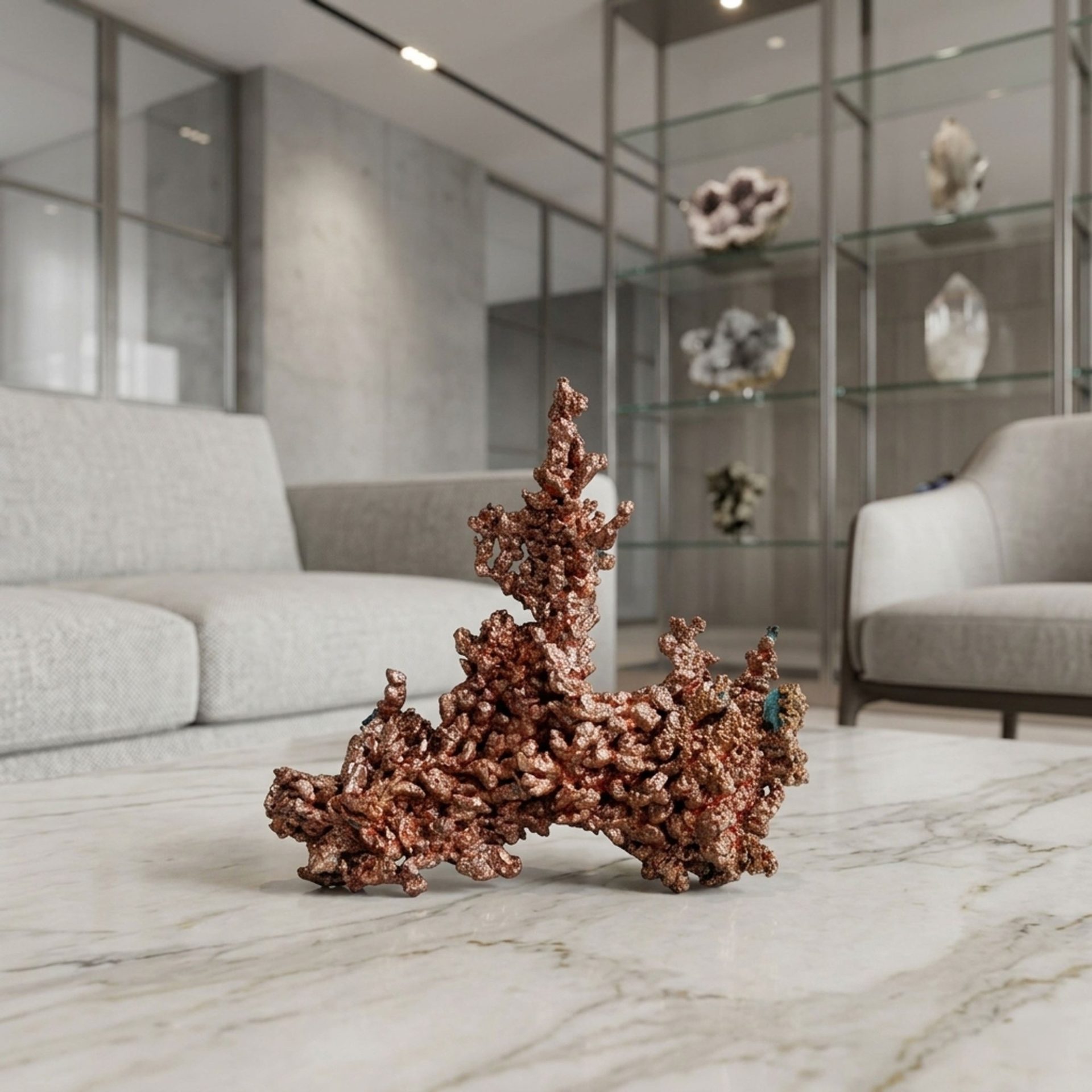
A well-arranged collection can transform a room, creating a museum-quality display in your home or office. The secret is to think like a curator, arranging your minerals to maximize their collective impact. This creates an environment that speaks of sophistication and a genuine appreciation for natural history.
Defining Your Collection's Theme
The first step in creating visual harmony is to choose a theme. A strong theme acts as your guide, giving clear direction for every future purchase and display choice. It is what separates a world-class collection from a random assortment of stones on a shelf.
Astro West curates pieces that look stunning together. You can build your collection around:
Color Palettes: Grouping minerals by color creates immediate visual impact. For example, a display of deep greens from malachite and chrysocolla or purples from amethyst and fluorite creates drama.
Geological Formations: You could also focus on a specific crystal growth, such as the perfect cubes of pyrite or the elegant forms of stalactites. This approach highlights the architectural beauty of the mineral kingdom.
Origin Stories: A collection themed around “cosmic metals” could feature an array of meteorites. This would showcase their unique textures and otherworldly Widmanstätten patterns.
A collection guided by a strong theme feels deliberate and curated. It demonstrates not only an eye for quality but also a sophisticated understanding of how individual pieces contribute to a larger artistic vision.
Arranging for Maximum Impact
Once you have a theme, the art of arrangement comes into play. Applying the right principles of scale and proportion can dramatically enhance your collection’s visual power. Start by placing larger "anchor" pieces first to establish strong focal points. Then, use smaller specimens to complement them, creating a natural sense of balance and rhythm.
Varying the heights and positions of your minerals gives a display dynamic energy. Use high-quality stands to elevate certain pieces, drawing the eye upward. This approach turns a simple shelf into a curated exhibit, where the beauty of every mineral contributes to a stunning and unified presentation.
Your Questions About Mineral Collecting Answered
Whether you are just starting or seeking to elevate your collection, questions are natural. The world of fine minerals can feel complex. Therefore, we have gathered common questions and answered them with practical, straightforward advice from a seasoned collector’s perspective.
Which Minerals Are Best for a Beginner Investor?
If you are new to collecting, start with high-quality examples of well-known species. Think beautiful amethyst geodes, classic quartz clusters, or perfectly formed pyrite cubes from reputable locations. These minerals have a stable market, are stunning to look at, and offer a fantastic entry point.
More importantly, they are the perfect training ground. Focusing on the best available specimens in this accessible price range helps you learn what to look for. For example, you will train your eye for vibrant color, sharp crystal formation, and good clarity from day one. This builds a strong foundation for acquiring rarer and more valuable pieces later.
How Do I Know If a Mineral Price Is Fair?
A fair market price is not a random number. It is determined by comparing a specimen to similar pieces that have recently sold. The key factors that drive price are always a combination of rarity, size, quality, and provenance. A damage-free crystal with exceptional color from a classic, mined-out location will always command a premium.
A reputable gallery like Astro West prices every specimen based on these established market criteria. Moreover, we are always transparent about what makes a piece worth its price. You should feel comfortable asking for details on comparable sales or for an explanation of the value behind any mineral you consider.
Is It Better to Specialize or Diversify My Collection?
Both paths offer unique rewards, and the right choice depends on your personality as a collector. Specializing—for instance, by focusing only on fluorite from different mines—allows you to become an expert in a specific niche. You can build a deeply respected and focused collection that tells a very specific story.
On the other hand, diversifying across minerals, fossils, and meteorites creates a visually dynamic display and spreads your investment. A fine amethyst, a slice of a meteorite, and a quality fossil, for example, tell a much broader natural history story. For most, a balanced approach is the most rewarding. Develop a few areas of deep interest while remaining open to exceptional pieces from other categories.
How Should I Display My Collection?
The presentation of your collection is almost as important as the specimens themselves. The right display not only protects your investment but also maximizes its visual impact. Investing in well-lit glass display units is the perfect way to showcase your prized minerals.
Lighting is also critical. LED lights that do not emit UV radiation are your best option, as they will not cause colors to fade over time. Thoughtful placement on custom stands and mounts can also transform individual pieces into a cohesive, artistic arrangement. Ultimately, your collection should be a source of constant joy and a beautiful reflection of your unique taste.
At Astro West, we are dedicated to helping you build a collection of lasting value and beauty. Our gallery offers a curated selection of fine minerals, fossils, and meteorites, each with verified provenance and a unique story. Explore our collections online or visit our Manhattan gallery to find an exceptional piece of natural history. https://astrowest.com