Your Ultimate Guide to the Mineral and Gem Show Tucson AZ
For a few weeks every winter, the entire city of Tucson, Arizona, transforms into the world's largest marketplace for natural treasures. It's an incredible event called the Tucson Gem and Mineral Showcase—a sprawling, chaotic, beautiful collection of over 40 independent shows, each with its own unique personality and specialization. This isn't just a market; it's the epicenter of the natural art world, where museum curators, interior designers, and discerning collectors gather to discover the extraordinary.
What Exactly Is the Tucson Gem and Mineral Showcase?
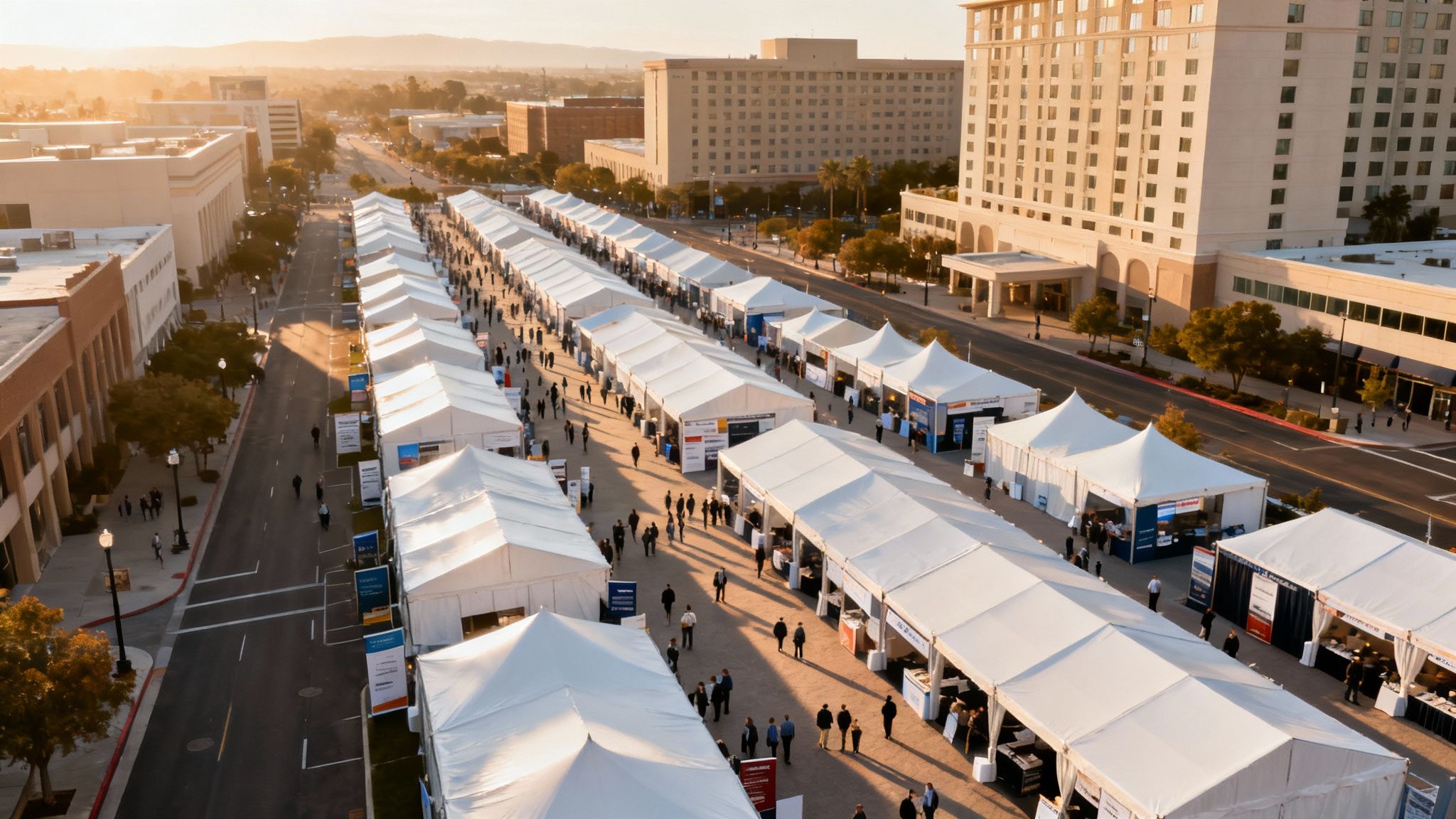
Imagine an entire city becoming the global headquarters for collectors, museum curators, high-end interior designers, and scientists all at once. That's the magic of the Tucson showcase. This isn't your typical event in a single convention center; it's a dynamic, city-wide phenomenon that takes over hotels, event halls, and massive tented villages, creating an unparalleled opportunity for discovery.
During this time, Tucson buzzes with an energy you won't find anywhere else. It becomes a temporary home to miners straight from the source, paleontologists with fresh fossil discoveries, meteorite hunters with verified falls, and master lapidary artists from every corner of the globe. They bring with them a stunning array of natural wonders, from investment-grade tourmaline to sculptural fossils perfect for luxury interiors.
More Than Just a Show
To really get a feel for the scale of it all, you have to understand its different layers. The Tucson showcase is a multi-faceted experience that caters to a huge range of interests.
A Global Marketplace: This is where international market prices for minerals, fossils, and gemstones are set for the coming year. Dealers and buyers from dozens of countries converge here, making deals that ripple across the industry.
A Pop-Up Museum of Natural Art: You’ll find specimens that would be right at home in a world-class museum, from perfectly formed fluorite crystals to awe-inspiring dinosaur skeletons. The quality is breathtaking.
An Educational Hub: It’s a place for genuine learning. You can speak directly with the people who unearthed a particular fossil or mined a specific mineral, getting firsthand knowledge about its origin and story that you just can't get from a book.
A Source of Design Inspiration: For interior designers and architects, the show is an absolute treasure trove of statement pieces. Think massive, sculptural stones and decorative objects that can transform a space into a gallery of natural history.
From the Earth to the Gallery
Think of the event as the crucial link between a raw discovery in the field and the polished, curated world of fine collectibles. It's the bridge that connects the dusty mines of Brazil to the elegant displays in a premier gallery.
The Tucson shows are the very foundation of the entire fine minerals and natural collectibles industry. It’s where provenance is established, new discoveries are unveiled, and relationships are forged that span decades.
This is exactly where galleries like Astro West come to source some of our most extraordinary pieces. The shows allow experts like us to hand-select specimens based on their exceptional quality, aesthetic beauty, and scientific importance. Navigating this vast, vibrant landscape requires a trained eye, a deep knowledge base, and a genuine appreciation for the stories embedded in each stone and fossil.
To see what becomes of these hand-picked treasures, you can explore the Astro West online collection of fine natural collectibles and see how raw beauty is presented as true art. This guide is designed to help you navigate the show with that same expert perspective.
How a Small Club Grew Into a Global Phenomenon
The sprawling, city-wide spectacle we know today as the Tucson Gem and Mineral Show didn't just appear out of nowhere. It actually has surprisingly humble roots, starting back in 1955 as a small public exhibit put on by the Tucson Gem & Mineral Society. The first show was held in a local elementary school—a simple, passionate gathering for local hobbyists to show off their latest finds.
It stayed that way for years, a beloved local affair. But the 1970s changed everything. Major mineral discoveries right there in Arizona—world-class wulfenite, vanadinite, and turquoise—suddenly put the state on the global map for collectors.
As word of these incredible finds got out, the show began to draw in professional dealers, museum curators, and serious buyers from around the world. It wasn't just a hobbyist meetup anymore; it was quickly becoming the place to be for anyone serious about the industry. The show’s reputation for having authentic, fresh-from-the-earth material began to build, setting the stage for the explosive growth that was to come.
From Local Meetup to International Institution
Watching this show grow from a school gymnasium into a global institution is a masterclass in organic expansion. It's a perfect example of how to create an event people actually want to attend—not through slick marketing, but by consistently offering something no one else could: direct access to brand-new discoveries and the very people who found them.
Today, the numbers are just staggering. What started with a handful of exhibitors has ballooned into a global powerhouse that pulls in over 50,000 visitors every year. By 2025, the event had exploded to 6,709 exhibitors spread across 46 different shows, attracting more than 113,000 unique buyers from outside Arizona. The massive 181,000-square-foot Tucson Convention Center is now just the anchor, with countless other venues popping up all over the metro area. You can learn more about this incredible journey from its official history.
The Legacy of Discovery and Provenance
For any serious collector, understanding this history isn't just trivia—it's essential. The show's legacy is built on a foundation of authenticity and direct-from-the-source access. This is the heritage that lets you walk away with a fossil that has documented provenance or a meteorite with a verified fall history. Those details are everything when it comes to determining an item's value and significance.
The evolution from a local club to a global phenomenon highlights a core truth of the collecting world: passion, when combined with incredible discovery, creates an unstoppable force. The Tucson show is a direct result of that synergy.
This history is woven into the very fabric of the pieces you find there. A classic Arizona azurite from the Morenci Mine, for example, tells a story not just of geology but of the moment Arizona minerals first captivated the world. It's that rich context that galleries like Astro West seek out, ensuring every piece we curate has not just aesthetic beauty, but a powerful story that connects its new owner to a tangible piece of natural history.
Planning Your Trip Like a Seasoned Pro
Navigating the Tucson gem and mineral shows is less about luck and more about strategy. A solid plan can turn what feels like an overwhelming marathon into a focused treasure hunt. The real key is to start preparing months before you even think about packing your bags, from locking in your lodging to mapping out your daily route.
The second you decide you’re going, your very first move should be booking a place to stay. Tucson’s population absolutely explodes during the show, and hotels, motels, and Airbnbs are often snapped up six to nine months in advance. If you wait, you’re not just risking having nowhere to stay—you’re guaranteeing you’ll pay a premium. Booking early gives you better options, better prices, and a home base that’s actually close to the action.
Mastering Logistics: Accommodations and Transport
Choosing where you stay isn't just about a bed; it's a strategic move that can save you hours of travel time. If you can, snag a spot near downtown or the University of Arizona. This puts you right in the hub, cutting down the time you spend in the car driving between the major venues. A lot of the big shows run shuttle buses from the larger hotels in this corridor, which is a fantastic way to skip the city's infamous traffic and parking headaches.
While a rental car offers freedom, it's not always the smartest choice. Mix and match these options to build a transit plan that works for you:
Show Shuttles: Many of the bigger shows run free shuttles between major venues and partner hotels. This is hands-down the most practical way to hop between key locations like the Tucson Convention Center and the 22nd Street Show.
Rideshare Services: Uber and Lyft are everywhere, but be prepared for surge pricing during peak hours, especially when shows are opening for the day or closing down.
Sun Link Streetcar: This is a gem for getting around the downtown area. It connects several key show locations and restaurant districts for just a few bucks.
A classic rookie mistake is underestimating how long it takes to get from one show to another. Tucson is spread out. What looks like a short hop on Google Maps can easily turn into a 30-minute crawl in show traffic. Plan your day geographically so you aren’t crisscrossing the city.
Crafting a Realistic and Effective Itinerary
Listen, no one can see everything the Tucson show has to offer—it’s just not physically possible. The most seasoned collectors know the secret isn't trying to do it all, but prioritizing. Before you even get to town, figure out your main goal. Are you hunting for a high-end, investment-grade mineral? Or are you looking for lapidary rough and unique beads from artisans? Your answer will point you to completely different venues.
For instance, a collector chasing a museum-quality tourmaline will be spending their time at very different shows than an interior designer searching for a statement piece of decor. Arizona is famous for its natural treasures, and knowing where to find them is everything. A designer might prioritize venues known for large, dramatic items, like a stunning polished petrified wood slab from Arizona that tells a geological story millions of years in the making.
Create a daily game plan that clusters venues by location. Spend one day exploring the downtown shows, another focusing on the hotel shows strung along the I-10 frontage road, and maybe a third hitting the massive tent shows. This approach cuts down on travel time and gives you more time for discovery. And don't forget to build in time for breaks and food. Show fatigue is a real thing, and a well-paced itinerary will keep you sharp and focused.
A Curated Guide to the Must-See Venues
Trying to navigate the Tucson gem shows without a plan is like wandering through a massive city with no street signs. You'll get lost. With over 40 different shows spread across town, each with its own personality and specialty, knowing where you're going makes all the difference.
The secret is to match your mission to the right venue. Are you a museum curator hunting for a world-class tourmaline? A designer looking for a statement fossil? Or maybe a meteorite fanatic chasing a piece of the cosmos? Whatever your goal, there’s a show that caters specifically to you. This guide is your compass.
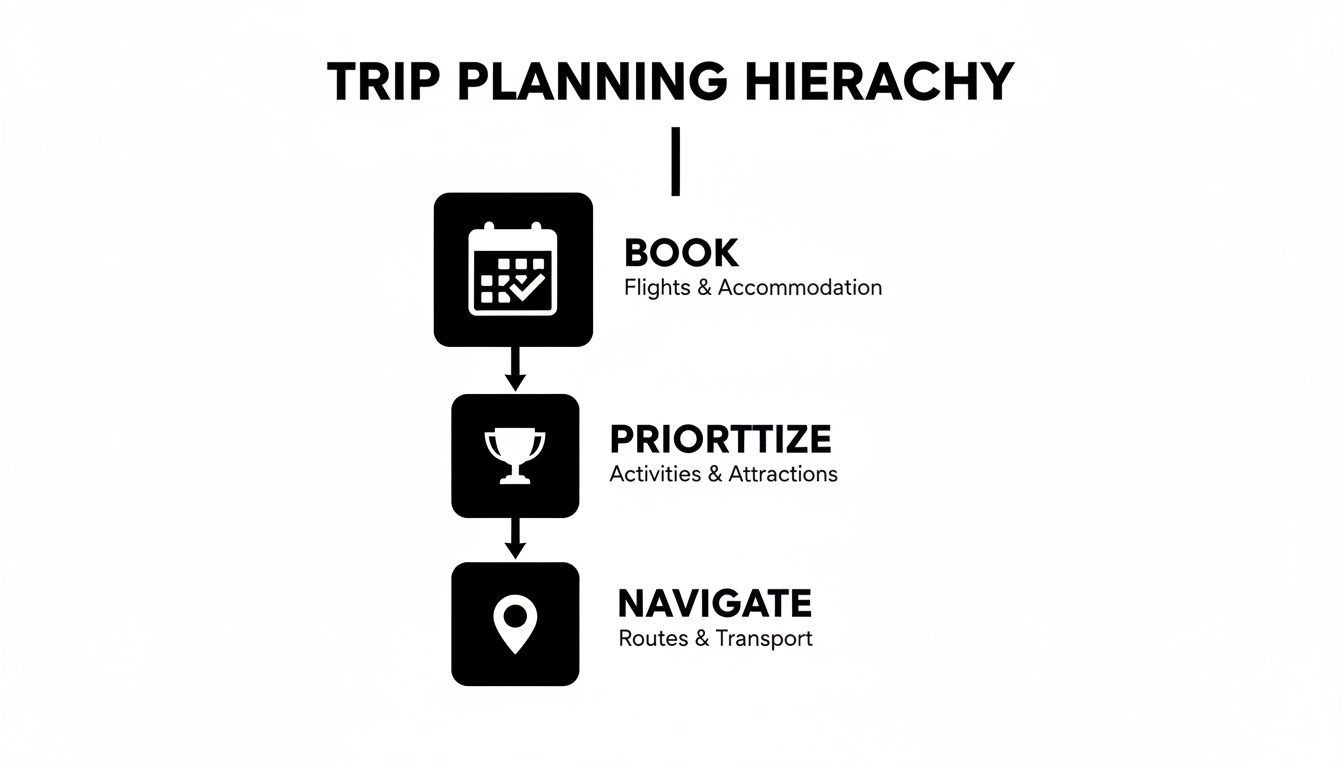
First things first, get the big picture sorted out before you even land in Tucson.
This hierarchy is simple but effective: lock in your logistics first. Once that's handled, you can focus on prioritizing the venues that matter most and actually enjoy the experience instead of scrambling.
The Prestige Shows for High-End Collectors
For those on the hunt for the absolute best in fine minerals and gemstones, a few shows stand head and shoulders above the rest. These are the hallowed grounds where top dealers, museum buyers, and serious collectors gather to see new discoveries unveiled and acquire true investment-grade pieces.
Tucson Gem & Mineral Show (TGMS Main Show): This is the original, the big one. Held at the Tucson Convention Center, it’s famous for its mind-blowing, museum-quality exhibits. If you want top-tier, documented minerals from the world’s most respected dealers, this is your destination.
GJX (Gem & Jewelry Exchange): Just across the street, GJX is a wholesale-focused powerhouse known for exceptional faceted gemstones, diamonds, and fine jewelry. The atmosphere is professional, and the emphasis is on precision cuts and impeccable quality.
Think of these shows less as a casual browse and more as a serious acquisition mission. The quality here is off the charts, and many specimens come with detailed provenance that tells their unique story.
The Hubs for Diverse Discoveries
If your interests are a bit broader—spanning fossils, meteorites, and unique decorative pieces—several sprawling shows offer an incredible treasure hunt. These venues are typically more accessible to the public and have a wonderfully eclectic vibe.
22nd Street Show: Housed in a truly gigantic tent, this show is a crowd-pleaser for its sheer variety and energetic atmosphere. You’ll find everything from impressive fossil displays and polished stones to artisan jewelry and one-of-a-kind home décor. It's a fantastic starting point for anyone new to the scene.
Pueblo Gem & Mineral Show: Taking over the entire Ramada hotel, this show turns individual rooms into mini-galleries. It’s known for its fantastic mix of fine minerals, large decorative fossils, and international treasures. You might stumble upon a stunning piece of Arizona turquoise one minute and a massive, sculptural ammonite the next.
These larger shows are perfect for getting a feel for the market and seeing a massive range of natural art all in one place. You could easily spend a full day at just one of them and still not see it all.
To help you strategize, here’s a quick breakdown of what makes each of the major venues tick.
Key Tucson Show Venues at a Glance
Show Name
Primary Focus
Ideal For
Typical Offerings
TGMS (Main Show)
Museum-quality fine minerals, educational exhibits
Faceted stones, diamonds, pearls, finished fine jewelry
22nd Street Show
Fossils, decorative minerals, artisan goods
Everyone, from novices to interior designers
Large fossils, polished stones, unique home décor, jewelry
Pueblo Gem & Mineral Show
Eclectic mix of fine minerals, fossils, international goods
Collectors, designers, treasure hunters
Hotel room galleries with varied international inventory
Kino Gem & Mineral Show
Rough materials, lapidary, rockhound supplies
Rockhounds, cutters, artists, wholesale buyers
Bulk rough stone, slabs, beads, tools, heavy equipment
This table is just a starting point, but it shows how different the focus can be from one venue to the next. Plan accordingly!
Niche Shows for Specialists
Beyond the major hubs, dozens of smaller shows cater to highly specific passions. These are the spots where you can talk directly with paleontologists, meteorite hunters, and lapidary artists who are true masters of their craft.
For instance, the Kino Gem & Mineral Show is a paradise for rockhounds searching for rough material and equipment. Other hotel shows become temporary meccas for dealers specializing only in meteorites, with specimens from famous falls like Sikhote-Alin or Campo del Cielo.
Given the state’s rich geology, you’ll also find miners selling exceptional local material directly, like beautiful blue Turquoise from Arizona, often with stories you won't hear anywhere else. A little research into these niche events can lead you to the most memorable finds of your trip.
How to Acquire Investment-Grade Specimens
Stepping into the Tucson shows with an eye for investment requires a whole different mindset. You're not just a casual browser anymore; you’re a curator building a collection. This is where a love for minerals meets a sharp, analytical eye, and grabbing a truly exceptional piece means looking past the initial wow factor to gauge its real, long-term value.
It all starts with training your eye to spot true quality. This is a skill that applies across the board, whether you’re sizing up the deep, saturated green of a world-class tourmaline or the razor-sharp cubes of a classic fluorite specimen. The best investment-grade pieces share a cocktail of key characteristics that elevate them from just pretty rocks to genuine works of natural art.
The Four Pillars of Mineral Value
Think of it like the four Cs for diamonds; fine mineral specimens have their own core set of criteria. Getting a handle on these is your first step toward making a smart purchase.
Crystal Quality and Condition: You're looking for well-formed, sharply defined crystals. Are the terminations—the natural ends of the crystal—perfectly intact? The less damage a specimen has, the more it’s worth. It’s that simple.
Color and Luster: The color should be deep, rich, and consistent throughout the crystal. Just as important is the luster, which is how light bounces off the surface. A piece with a bright, glassy shine will always be more sought-after than a dull one.
Aesthetics and Composition: This is the most subjective part, but it’s absolutely critical. How do the crystals actually sit on their matrix (the host rock)? A specimen with a balanced, visually stunning composition is basically a natural sculpture, and that commands a serious premium.
Rarity and Provenance: Rarity can mean a lot of things. It could be the mineral species itself, an unusual color for that mineral, or a classic location that’s been mined out for years. Provenance, the documented history of a specimen, adds a ton of value, especially for things like fossils and meteorites.
A documented Sikhote-Alin meteorite, with its known fall history, is not just a piece of iron from space—it is a tangible piece of a specific, recorded cosmic event. This documented history transforms it from a commodity into a collectible with a verifiable story.
Identifying Authenticity and Spotting Repairs
One of the most vital skills for any serious collector is learning how to spot alterations. While not all repairs are done to deceive, they absolutely have to be disclosed and should bring the price down significantly. Always carry a small flashlight or a jeweler's loupe to get a really close look at any piece you're considering.
Keep an eye out for surfaces that look unnaturally smooth, mismatched colors along what look like cracks, or that tell-tale glint of glue residue. Pay extra close attention to where the crystals meet the matrix, as that’s a classic spot for repairs. Any good, reputable dealer will be completely upfront about restoration work. If a deal feels too good to be true, it probably is. Don't be afraid to ask direct questions about the specimen's history and condition.
Navigating Negotiations with Confidence
Haggling over the price is a totally normal and expected part of the Tucson experience. But it’s a dance built on mutual respect and, most importantly, knowledge. Before you even think about making an offer, do your homework. Walk the show, see what different vendors are charging for similar-quality pieces, and get a feel for the market rate.
When you find something you love, start a conversation. Ask the dealer informed questions about where it came from and what makes it special. This shows them you're a serious buyer, not just a tire-kicker. Most dealers are willing to offer a modest discount, usually in the 10-15% range, especially if you’re paying with cash or buying several items.
Remember, the goal isn't to get a steal; it's to land on a fair price that reflects the specimen’s quality and value. An exceptional piece with paperwork, like a GIA-certified gem, naturally has less wiggle room because its quality is already documented. For instance, understanding what drives the value of a GIA Certified Natural Color-Change Alexandrite gives you a fantastic baseline for how rarity and certification set the price floor for high-end collectibles. That kind of knowledge gives you the confidence to negotiate effectively for other pieces of that caliber.
Understanding Tucson's Massive Economic Impact
The Tucson Gem and Mineral Showcase is so much more than a paradise for collectors—it's an economic behemoth that completely transforms Southern Arizona every single winter. The financial scale is just staggering, and it provides crucial context for why this event sets global market trends for everything from fine tourmaline to luxury home décor. This isn't just a gathering for hobbyists; it's a high-stakes marketplace with an enormous footprint.
You really get a sense of this economic influence when you look at the hard numbers. Study after study has confirmed the profound effect the shows have on the region. Direct spending generated by the showcase has seen explosive growth over the last decade, cementing its status as Tucson's single most important annual event.
A Financial Powerhouse
Recent analyses underscore just how vital these shows are. A study validated by the Seidman Research Institute projected an incredible $286 million in direct spending for 2025. That figure absolutely dwarfs the $120 million from 2014 and the $131 million from just 2019.
These aren't just fuzzy estimates; the numbers were analyzed with the same rigor used for massive events like the Super Bowl, highlighting an incredible trajectory. The impact is driven by a global flood of buyers, exhibitors, and collectors who spend heavily on hotels, restaurants, and, of course, acquiring new treasures. You can dive deeper into the show's impressive economic growth to see the full picture.
The Ripple Effect on Collecting
Understanding this financial backdrop is critical for any serious collector. The immense amount of capital flowing through Tucson directly influences the availability, pricing, and valuation of fine natural art across the globe.
The economic gravity of the Tucson shows means that a significant discovery unveiled here can redefine the market value for an entire mineral species overnight. It's where the intersection of supply, demand, and discovery is at its most raw and powerful.
This is precisely why collecting natural art is such a serious pursuit. The showcase reinforces the idea that an exceptional specimen isn't just a beautiful object—it's a valuable, investment-grade asset with a real market position. It’s this very philosophy of curating pieces with lasting value that guides us at Astro West. Each item in our collection is hand-selected for its beauty, rarity, and enduring significance in a dynamic global market.
Your Tucson Gem Show Questions Answered
We've covered a lot of ground, but you probably still have a few practical questions. To wrap up your guide to the world's greatest treasure hunt, here are some quick, clear answers to the things people ask us most often about the Tucson mineral and gem shows.
Are the Shows Open to the Public?
This is probably the most common question we hear, and the answer is a mix of yes and no. A lot of the shows, especially the massive tent venues like the 22nd Street Show, are absolutely open to the public and offer an incredible experience for everyone. It’s a fantastic day out, even if you’re just browsing.
However, some of the most prestigious shows, like GJX and AGTA, are strictly wholesale-only. To get in, you’ll need to prove you're in the trade with a valid business license. The golden rule? Always check the rules online for each specific show before you head out.
What's the Best Way to Get My Purchases Home Safely?
Don't sweat this part. The vendors in Tucson are pros at shipping fragile and valuable pieces all over the world. Most of the bigger venues even have on-site shipping services from companies like FedEx or UPS who specialize in securely packing minerals and fossils.
If you spring for an exceptionally large or high-value specimen, arranging for specialized freight is a smart move. Just be sure to confirm all the shipping options and costs with the dealer before you finalize the purchase. It keeps the whole process smooth and worry-free.
How Do I Know If I'm Getting a Fair Price?
In Tucson, knowledge is your best friend. Before you even pack your bags, do some research on the current market value for the minerals, fossils, or meteorites you’re hunting for. Once you're at the show, take your time. Wander around and compare the quality and pricing of similar items from a few different dealers.
Don’t be shy about asking sellers direct questions. Ask about a specimen's origin, if it's had any repairs, and its history (provenance). A reputable dealer will always be transparent—they appreciate an informed buyer.
When you're looking at making a significant investment, focus on pieces with a documented history and exceptional quality. These are the specimens that don't just look amazing on a shelf; they hold and even appreciate in value over time. That’s the true collector’s mindset.
What Are the Absolute Essentials to Bring?
Packing smart can completely change your experience. You'll be doing a ton of walking, and the days can be long. Here are a few things you absolutely shouldn't leave behind:
Comfortable walking shoes: Seriously. You'll be on your feet for hours and will easily walk several miles each day. This is non-negotiable.
A sturdy backpack or bag: Perfect for stashing water, snacks, business cards, and any small treasures you pick up along the way.
A small flashlight or jeweler's loupe: These tools are invaluable for getting a close-up look at specimens, checking for tiny details, damage, or repairs.
Cash and cards: While most dealers take credit cards, some smaller or international vendors might prefer cash—and sometimes offer a small discount for it.
At Astro West, we pour decades of experience from navigating shows like Tucson into curating our collection of the world’s finest natural art. We invite you to explore the results of that passion and discerning eye by visiting our gallery.