10 Hands On Learning Activities to Engage Students in 2025
In an era dominated by screens, the power of tangible experience in education has never been more crucial. Traditional learning often prioritizes passive information absorption, where students read and memorize facts. However, true understanding is forged through doing, creating, and problem-solving. This shift from passive reception to active participation is the core of effective education, building skills that last a lifetime. When students engage directly with materials and concepts, they develop deeper connections and retain information more effectively.
This guide moves beyond theory to provide a comprehensive list of powerful hands on learning activities designed to transform students into architects of their own knowledge. These methods don't just teach content; they build critical thinking, foster collaboration, and ignite a genuine passion for discovery. We will dive into the specifics of each approach, from project-based learning to inquiry-based science labs, offering practical implementation tips and real-world examples. To further explore various methods and concrete examples that exemplify moving beyond passive consumption, discover these 10 hands-on learning activities that can spark curiosity and engagement. This resource is curated to empower educators and parents to create more dynamic, memorable, and impactful learning environments for every type of student.
1. Project-Based Learning (PBL)
Project-Based Learning (PBL) is a dynamic instructional method where students actively explore real-world challenges and problems. Instead of memorizing facts for a test, learners engage in an extended process of inquiry, research, and creation, culminating in a public product or presentation. This approach transforms education into a more meaningful and engaging experience, making it one of the most effective hands on learning activities available.
Pioneered by thinkers like John Dewey and popularized by organizations such as PBLWorks, this model fosters deep understanding and develops critical thinking, collaboration, and creativity. For instance, students might tackle local environmental issues by designing a community recycling program or explore history by producing a documentary on a local event.
How to Implement Project-Based Learning
To get started with PBL, focus on creating a structure that guides students without stifling their creativity.
Start with a Driving Question: Frame the project around a complex, open-ended question that sparks curiosity. Example: "How can we, as urban planners, redesign our school's outdoor space to support local biodiversity?"
Integrate Student Choice: Allow students to have a say in the project's focus, research methods, or final product. This autonomy significantly boosts engagement.
Schedule Checkpoints: Build in regular milestones for feedback. Use these moments for peer reviews and teacher guidance to ensure the project stays on track and meets learning goals.
Use Clear Rubrics: Develop and share a detailed rubric from the beginning. It should assess not only the final product but also essential skills like collaboration, research, and critical thinking.
2. STEM/STEAM Labs and Makerspaces
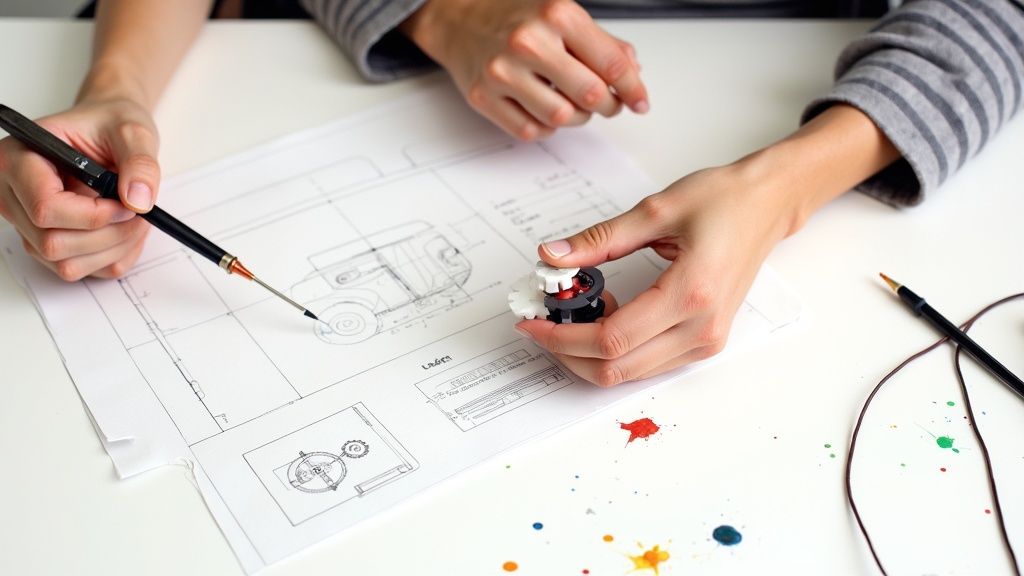
STEM/STEAM Labs and Makerspaces are collaborative workshops where students design, build, and invent using a wide array of tools and materials. These environments emphasize tinkering, iterative design, and creative problem-solving, making them a cornerstone of modern hands on learning activities. Instead of just consuming information, students become creators, applying concepts from Science, Technology, Engineering, Arts, and Mathematics in tangible ways.
Popularized by advocates like Dale Dougherty and the growth of MIT's Fab Lab Network, these spaces foster innovation and resilience. For instance, students can use 3D printers to create functional prosthetic hands for children, build arcade games, or code robots. This approach empowers students by turning abstract ideas into physical realities, bridging the gap between classroom theory and real-world application.
How to Implement a Makerspace
Creating an effective makerspace is about fostering a culture of curiosity and experimentation, regardless of budget.
Start Small and Grow: You don't need expensive equipment immediately. Begin with low-tech materials like cardboard, craft supplies, and basic tools before investing in 3D printers or laser cutters.
Balance Freedom and Structure: Offer structured challenges (e.g., "build a device that can carry a marble across the room") alongside open exploration time to cater to different learning styles.
Establish Clear Safety Protocols: Create and post clear procedures for tool use and safety. Consider training student experts who can then help their peers safely operate equipment.
Showcase Student Work: Display completed and in-progress projects prominently. This not only celebrates student achievement but also inspires others and demonstrates what's possible in the space.
3. Science Experiments and Inquiry-Based Labs
Hands-on science experiments and inquiry-based labs immerse students in the scientific method through direct observation, hypothesis testing, and data analysis. Instead of just following prescribed steps, this approach encourages learners to ask their own questions, design investigations, and draw evidence-based conclusions. This mirrors how scientists actually work, making it one of the most authentic hands on learning activities for STEM subjects.
This method, rooted in the "learning by doing" philosophy of John Dewey, fosters curiosity and critical thinking. It is championed by organizations like the National Science Teachers Association (NSTA) for its effectiveness. A great example is when students investigate the properties of different minerals, learning firsthand about geological sciences. This can even spark an interest in related fields, prompting them to use a crystal identification guide for further exploration.
How to Implement Inquiry-Based Labs
To successfully introduce inquiry-based science, create a supportive environment where students feel safe to explore and ask questions.
Start with a Phenomenon: Begin with an observation or event that sparks curiosity and questions. Example: "Why do some objects float while others sink, regardless of their size?"
Encourage 'Productive Failure': Frame unexpected results as learning opportunities, not mistakes. Guide students to analyze what went wrong and what they can learn from it.
Use Lab Notebooks for Thinking: Teach students to use notebooks to document their hypotheses, thought processes, and reflections, rather than just recording results.
Connect to the Real World: Explicitly link experiments to real-world applications, such as water quality testing in a local stream or building simple circuits to understand household electricity.
4. Role-Playing and Simulations
Role-playing and simulations immerse students in specific scenarios, allowing them to take on different perspectives, make decisions, and experience consequences in a controlled, safe environment. Instead of just reading about historical events or scientific processes, learners actively participate in them. This approach creates emotional engagement and a deeper understanding, making it one of the most memorable hands on learning activities.
Popularized by programs like Model UN and the "Reacting to the Past" curriculum developed at Barnard College, this method is highly effective. Students might act out historical debates like the Constitutional Convention, participate in a mock trial, or run a simulated business. For a deeper understanding of well-known role-playing and simulation activities, consider exploring A Beginner's Guide to Model United Nations for valuable insights into diplomatic simulations.
How to Implement Role-Playing and Simulations
To get started with simulations, focus on creating a well-defined structure that allows for authentic engagement while meeting educational goals.
Provide Clear Briefing Materials: Equip students with adequate background information, including their role's objectives, motivations, and constraints. This preparation is crucial for meaningful participation.
Establish Ground Rules: Set clear rules and boundaries for behavior to ensure a respectful and productive environment. Allow students a way to "drop character" if they become uncomfortable.
Assign Roles Thoughtfully: Consider assigning roles randomly to challenge preconceived notions and avoid stereotyping, pushing students to explore new perspectives.
Dedicate Time for Debriefing: The most significant learning often happens after the simulation. Schedule a structured debriefing session to help students reflect on their experiences and connect them to the core learning objectives.
5. Field Trips and Outdoor Education
Field Trips and Outdoor Education move learning beyond the four walls of the classroom, immersing students in authentic environments like museums, nature centers, historical sites, and local businesses. These experiences connect abstract academic concepts to the real world, providing tangible context that deepens understanding. As one of the most memorable hands on learning activities, this approach makes learning vivid and unforgettable.
Pioneered by educators like Kurt Hahn (founder of Outward Bound) and championed by advocates such as John Muir, this method uses direct experience to foster curiosity, develop critical thinking, and build personal skills. For instance, a trip to a local geology museum allows students to see and touch specimens, turning a lesson on rock cycles into a tactile adventure. This kind of experience is fundamental for anyone looking to curate a fine mineral collection with Astro West.
How to Implement Field Trips and Outdoor Education
To maximize the educational value of an off-site experience, careful planning and structured activities are key.
Start with Pre-Visit Activities: Prepare students by building background knowledge about the site. Introduce key vocabulary, show videos, or review relevant concepts to set the stage for discovery.
Provide a Clear Focus: Give students a specific mission. Use structured observation guides, scavenger hunts, or inquiry-based questions to direct their attention and engagement.
Balance Structure and Exploration: While guided activities are important, allow time for free, unstructured exploration. This freedom encourages personal curiosity and student-led discovery.
Plan Post-Trip Reflection: Extend the learning back in the classroom. Use photos, journals, or group discussions to help students process their experience, make connections, and share what they learned.
6. Manipulatives and Model Building
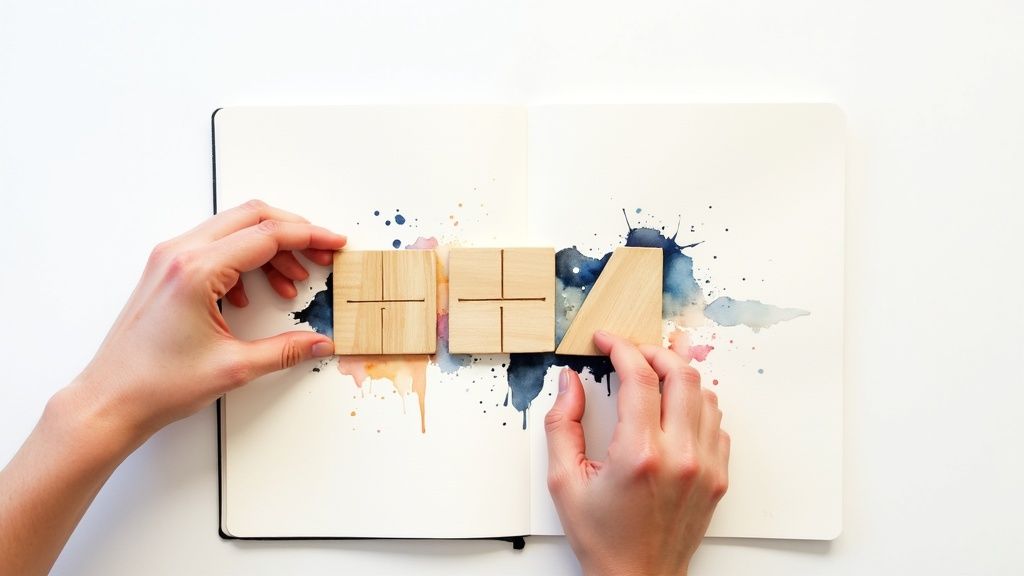
Manipulatives and model building transform abstract concepts into tangible, physical objects that students can see, touch, and move. This method involves using items like blocks, tiles, or construction kits to represent ideas, particularly in math and science. By physically engaging with these tools, students can explore complex relationships and internalize knowledge in a concrete way, making this one of the most foundational hands on learning activities.
Pioneered by educators like Maria Montessori and advanced by mathematicians like Zoltán Dienes, the use of manipulatives is proven to deepen conceptual understanding. For example, Montessori schools use golden beads to teach place value, while biology students might build a DNA model with candy to visualize its double helix structure. This tactile interaction helps bridge the gap between abstract symbols and real-world meaning.
How to Implement Manipulatives and Model Building
Effective implementation involves more than just handing out materials. A structured approach ensures these tools lead to genuine learning.
Start with Free Exploration: Before a structured lesson, allow students a brief period to freely explore the manipulatives. This satisfies their curiosity and helps them focus on the lesson's objective later.
Follow a C-R-A Sequence: Guide students through the Concrete-Representational-Abstract sequence. Start with the physical object (concrete), then connect it to a drawing or diagram (representational), and finally link it to the formal number or symbol (abstract).
Encourage "Thinking Aloud": Ask students to explain their reasoning as they use the manipulatives. This verbalization clarifies their thought processes for both themselves and the teacher.
Maintain Organized Access: Store manipulatives in clearly labeled, accessible containers. An organized system encourages students to use them independently and take responsibility for their care.
7. Cooking and Food-Based Learning
Cooking and food-based learning transforms the kitchen into a classroom, using meal preparation as a vehicle for interdisciplinary education. This approach allows students to learn math by measuring ingredients, science through chemical changes, and reading by following recipes. It produces tangible, delicious results, making it one of the most memorable and engaging hands on learning activities.
Popularized by visionaries like Alice Waters with her Edible Schoolyard Project, this model connects academic concepts to real-world life skills. For example, students might explore cultural studies by preparing traditional dishes from around the world or learn about biology by understanding the nutritional value of different foods. This method makes learning both practical and multisensory.
How to Implement Cooking and Food-Based Learning
To get started, focus on creating a safe and structured environment that encourages exploration and reinforces academic concepts.
Establish Clear Procedures: Prioritize safety by teaching proper knife handling, hygiene practices like handwashing, and kitchen rules. Always survey students for allergies and dietary restrictions beforehand.
Integrate Academic Concepts: Explicitly connect cooking tasks to learning goals. Use recipe measurements for math problems, discuss the science of state changes (like melting butter), or have students write about the cultural history of a dish.
Start Simple and Build Complexity: Begin with no-cook recipes to build confidence before introducing heat. As students become more comfortable, you can introduce more complex cooking techniques.
Encourage Sensory Exploration: Food engages all five senses. Prompt students to describe how ingredients look, smell, feel, and taste. This practice not only deepens their learning but also helps them connect with their food in a meaningful way, much like learning how to display crystals involves appreciating their unique physical properties.
8. Service Learning and Community Projects
Service Learning combines meaningful community service with academic instruction and structured reflection. It moves beyond simple volunteering by directly linking real-world community engagement to curriculum objectives. This powerful approach allows students to apply classroom knowledge to address genuine community needs, making it one of the most impactful hands on learning activities for fostering civic responsibility and deeper academic understanding.
This model, championed by educators like John Dewey and organizations such as Youth Service America, helps learners connect their education to their role as active citizens. For example, students can create community gardens that supply local food banks, applying lessons in biology and social studies. Service learning programs often tie immersive service experiences directly to students' fields of study.
How to Implement Service Learning
Effective service learning requires careful planning to ensure the experience is mutually beneficial for both students and the community.
Identify Authentic Community Needs: Partner with local organizations to understand their genuine challenges. Avoid imposing projects and instead co-create solutions.
Integrate Student Voice: Involve students in choosing, planning, and executing the project. This ownership is crucial for their engagement and learning.
Build in Structured Reflection: Use journals, group discussions, or presentations to guide students in connecting their service experiences to academic concepts and personal growth.
Connect to Curriculum Goals: Explicitly link the project to specific learning objectives. For instance, a stream cleanup project can be tied to lessons on ecosystems, pollution, and civic action.
9. Drama, Theater, and Creative Performance
Drama, theater, and creative performance are powerful instructional tools where students embody characters, stories, and ideas. Far beyond formal productions, these hands on learning activities include improvisation, tableau, and role-playing to help learners physically and emotionally connect with content. This approach builds empathy, communication skills, and confidence while deepening understanding of complex subjects like literature, history, and social issues.
Pioneered by educators like Dorothy Heathcote and Viola Spolin, this method turns abstract concepts into tangible experiences. For instance, students might role-play historical negotiations to understand different perspectives or use tableau to depict key scenes from a novel. The Educational Theatre Association champions these approaches, showing how performance solidifies learning and makes it memorable.
How to Implement Drama and Performance
To integrate drama effectively, focus on creating a safe and structured environment for creative exploration.
Start with Low-Stakes Activities: Begin with simple exercises like creating frozen scenes (tableau) or acting out short, scripted dialogues. This builds comfort and confidence before moving to more complex improvisation.
Establish a Supportive Environment: Create clear expectations for respectful collaboration. Emphasize that the goal is exploration, not a perfect performance, to encourage creative risk-taking.
Connect to Learning Objectives: Explicitly link every dramatic activity to a specific academic goal. For example, use improvisation to explore a character's motivations before writing a literary analysis essay.
Provide Multiple Roles: Offer various ways to participate beyond acting, such as directing, set design, or sound effects. This allows all students to engage according to their comfort levels and interests.
10. Game-Based Learning and Educational Games
Game-Based Learning (GBL) leverages the mechanics of games, both digital and physical, to teach academic content and skills. This method uses elements like points, levels, and narrative challenges to motivate students, transforming learning into an immersive and engaging process. It stands out among hands on learning activities by providing a safe environment for trial and error, immediate feedback, and sustained engagement through play.
Popularized by researchers like James Paul Gee, GBL is more than just entertainment; it's a structured instructional strategy. For example, Minecraft: Education Edition is used worldwide to teach subjects from history to coding, while platforms like iCivics use interactive games to explain complex government functions. These tools foster problem-solving, strategic thinking, and collaboration in a context students find naturally compelling.
How to Implement Game-Based Learning
To integrate GBL effectively, educators should focus on aligning game mechanics with clear educational goals.
Align Games with Learning Objectives: Choose games that directly support specific curriculum goals. For instance, use logic puzzle apps to build foundational algebra skills or online quizzes for lively formative assessments.
Balance Gameplay and Reflection: Dedicate time for students to discuss their in-game strategies and connect their experiences to the learning concepts. Ask questions like, "What strategy helped you succeed in that level, and how does that apply to our science lesson?"
Set Clear Expectations: Establish rules for gameplay, including time limits and behavioral norms, to ensure the activity remains focused and productive.
Empower Student Creators: Challenge students to design their own simple games. This advanced task requires them to deeply understand a topic in order to create rules, challenges, and goals, solidifying their knowledge.
Hands-On Learning Activities Comparison
Method
Implementation Complexity 🔄
Resource Requirements ⚡
Expected Outcomes 📊
Ideal Use Cases 💡
Key Advantages ⭐
Project-Based Learning (PBL)
High – requires extensive planning & training
Moderate – materials, time, collaboration
Deep understanding, critical thinking, collaboration
Long-term interdisciplinary projects, STEM, social studies
All subjects, digital natives, formative assessment
Immediate feedback, safe failure, adaptive learning, fun
Making Learning Stick: From Activities to Lasting Knowledge
Throughout this guide, we've explored a diverse landscape of hands on learning activities, from the structured inquiry of project-based learning and STEM labs to the creative expression of drama and the real-world impact of service learning. Each method, whether it involves building a model, simulating a historical event, or embarking on an outdoor expedition, shares a common, powerful thread: it transforms passive recipients of information into active participants in their own education. This shift is not just about making learning more fun; it’s about making it fundamentally more effective.
The journey from a worksheet to a workshop, or from a lecture to a lab, is a move towards creating knowledge that is deeply rooted in experience. When learners can touch, manipulate, and experiment, abstract concepts become tangible realities. This active engagement fosters critical thinking, problem-solving, and collaboration in ways that traditional methods often cannot. The true value of these approaches lies in their ability to build connections, not just between neurons, but between subjects, between learners, and between the classroom and the world outside.
Key Takeaways for Lasting Impact
As you move forward, the goal is to integrate these strategies thoughtfully, not just as isolated events, but as a core component of your educational philosophy. Remember these essential principles:
Purpose Over Play: While engagement is crucial, every activity must have a clear learning objective. Define what you want learners to know or be able to do before you select the activity.
Structure is Your Ally: Hands-on doesn't mean hands-off. Provide clear guidelines, necessary resources, and defined expectations to ensure the experience is productive and focused, not chaotic.
Reflection Solidifies Learning: The "doing" is only half the process. Always build in time for learners to reflect on their experience. What did they discover? What challenges did they face? How can they apply this new knowledge? This metacognitive step is where learning truly sticks.
Your Actionable Next Steps
Making the transition to more experiential learning can feel daunting, but it starts with small, deliberate steps. You don't need a state-of-the-art makerspace to begin.
Start Small: Choose one activity from this list that resonates with you and your learners. Try implementing a simple science experiment, a short role-playing scenario, or a game-based review session.
Adapt and Modify: You are the expert on your learners. Take the core idea of an activity and adapt it to your specific subject matter, age group, and available resources. A historical simulation can work just as well for a literature class as it can for a social studies lesson.
Gather Feedback: After the activity, ask for input. What did the learners enjoy? What did they find confusing? Use this feedback to refine your approach for next time.
By embracing the power of hands on learning activities, you are not just teaching a curriculum; you are cultivating curiosity, building resilience, and empowering individuals with the skills they need to navigate a complex, ever-changing world. You are turning lessons into experiences, and experiences into lasting knowledge.
Ready to bring the natural world into your learning environment? For museum-quality minerals, fossils, and geodes that serve as incredible hands on learning activities, visit Astro West. Explore their collection and discover tangible pieces of science and history that will inspire wonder and curiosity in learners of all ages. Astro West