The strongest fossil collections don't begin as decoration. They begin as asset selection. A serious collector approaches the top 10 fossils much like fine art, rare watches, or historical manuscripts. Each piece must carry scientific weight, visual authority, and documented legitimacy.
That's why fossils hold unusual power in the market for natural history specimens. They are finite. They are culturally recognizable. They also represent a timescale almost no other collectible can match. Fossils are often considered such once they are more than 10,000 years old, and the oldest known fossil evidence reaches roughly 3.48 billion to 4.1 billion years ago, making them central to reconstructing the history of life on Earth, as summarized in this overview of fossil age and scope.
For a collector, that scale changes the conversation. You aren't buying a decorative object alone. You're acquiring preserved evidence of deep time, often shaped by rare geological conditions and long chains of expert handling. Some fossils impress through drama. Others win on scarcity, preparation, or taxonomic importance. The best examples do all of it at once.
Building a Legacy with the World's Top Fossils
Collectors often assume the value of fossils depends on spectacle alone. In practice, the opposite is often true. The most important pieces combine scientific credibility, rarity, provenance, and display presence. That mix is why the top end of the fossil market behaves more like fine art than souvenir retail.
A world-class collection needs anchors. In fossils, those anchors are the specimens that define categories. A Tyrannosaurus tooth. A clean Megalodon tooth. A sharp trilobite with strong relief. A refined ammonite with architectural symmetry. These aren't random purchases. They establish range, taste, and curatorial intent.
Discerning buyers also understand the appeal of ownership at different scales. Some acquisitions are monumental statement pieces. Others are precise cabinet specimens that reward close study. Both matter. A collection with depth usually includes dramatic dinosaur fossils, elegant marine fossils, and foundational natural history specimens that teach the eye how quality works.
Collector's view: The finest fossils justify value in three rooms at once. The study, the living space, and the market.
That's where a considered top 10 fossils guide becomes useful. It narrows attention to categories that consistently matter, both scientifically and aesthetically, and it helps separate durable collector interest from passing novelty.
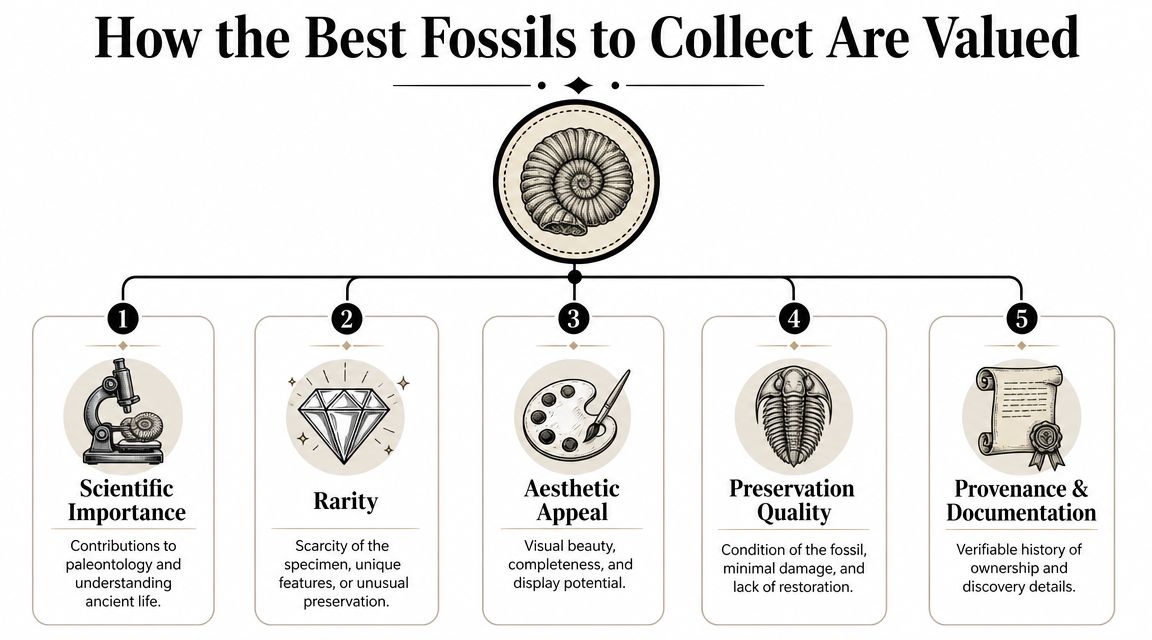
How the Best Fossils to Collect Are Valued
The best fossils to collect aren't always the biggest or the most famous. They're the ones that hold up under scrutiny. When I evaluate rare fossils for a serious buyer, I look at five factors first.
Scientific importance
A specimen tied to a famous animal or a meaningful anatomical feature carries broader demand. Dinosaur material has unusual strength here. The American Museum of Natural History notes that dinosaurs lived on Earth for about 245 million years, appeared during the Triassic around 250 to 200 million years ago, and non-avian dinosaurs went extinct about 66 million years ago. Dinosaur fossils have been found on all seven continents, and scientists recognize roughly 700 known species, which is why dinosaur material remains central to public and scholarly interest in Earth's history, as outlined by the American Museum of Natural History dinosaur facts.
Rarity isn't always what it seems
Collectors regularly confuse low visibility with true scarcity. That's a mistake. Some fossils are uncommon because the organism was rare. Others appear scarce because preservation favored certain sediments and destroyed others. Research discussed in this preservation bias overview shows that fossil quality can track geochemistry, including the ratio of organic carbon to clay, and that a sparse record may reflect preservation bias rather than the absence of life.
Sparse supply can be geological noise, not biological truth. Good curation separates the two.
Aesthetic quality and preparation
Strong lines, complete edges, balanced color, and stable matrix all matter. Two fossils can belong to the same species and live in different price tiers because one displays far better.
Provenance and documentation
Documentation protects value. A fossil with a clear chain of custody is easier to place, evaluate, and resell. Uncertain origin weakens confidence immediately.
Preservation quality
This point is often underestimated. A specimen may look impressive on the surface yet tell a different story internally. Here's the short version:
Surface beauty: Strong first impression helps demand.
Structural integrity: Cracks, fills, and repairs affect trust.
Research usefulness: Better-preserved anatomy supports stronger identification.
Long-term stability: Good preparation reduces future conservation issues.
Apex Predators The Ultimate Dinosaur Fossils
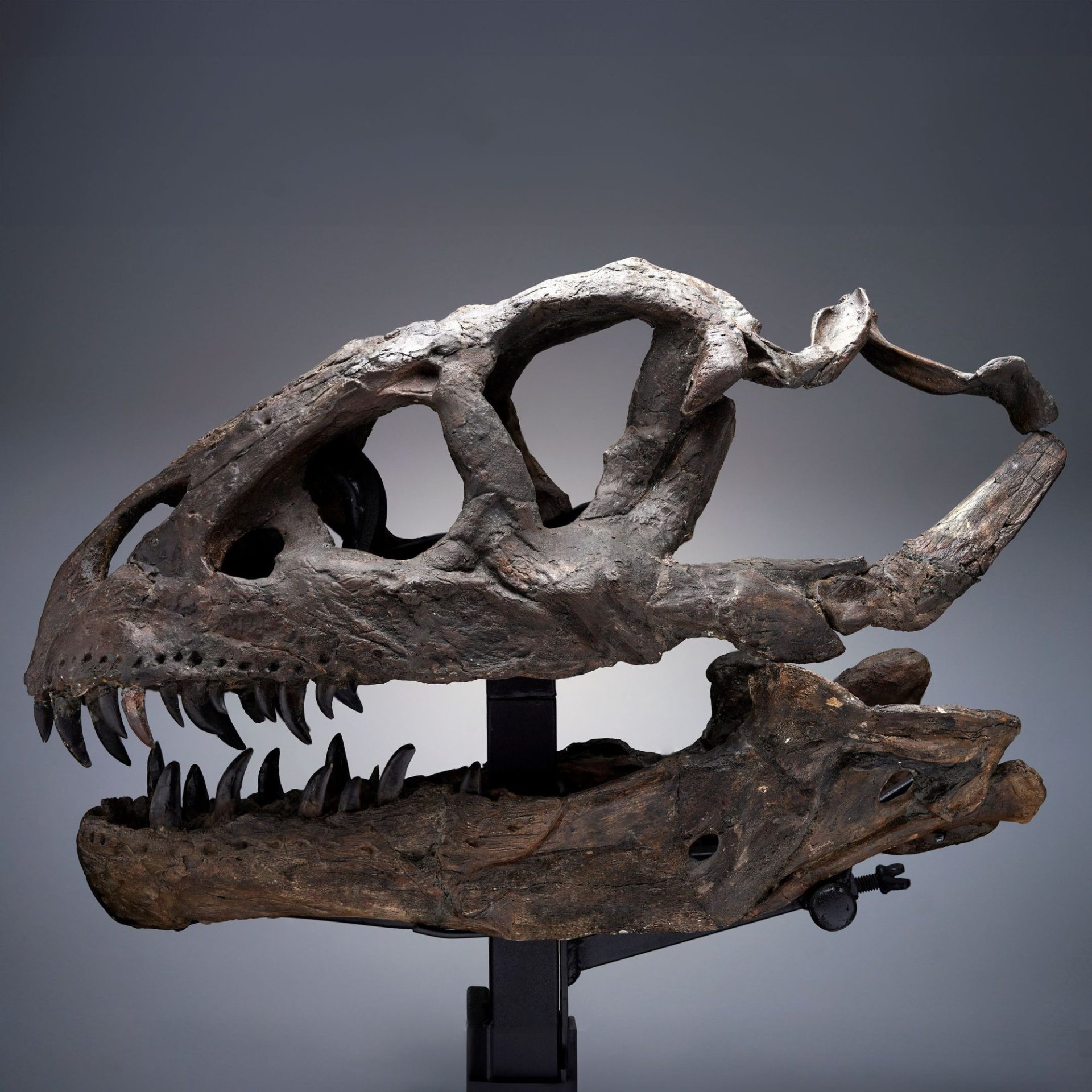
Predator teeth are the closest thing this market has to a blue-chip entry point. They carry instant recognition, read clearly in a room, and compress anatomy, drama, and rarity into a single object. For collectors who want a fossil that performs both as evidence of deep time and as a designed display piece, apex predator material usually sets the standard.
T. rex tooth
A Genuine T. rex Tooth on Custom Display – Late Cretaceous Fossil sits in one of the most established value categories in the fossil trade. The market responds to more than species name alone. Collectors pay for clean enamel, honest serration retention, stable root structure, and disclosure around repair. Size still matters, but only up to the point where restoration starts to dominate the specimen.
I advise buyers to treat Tyrannosaurus teeth the way they would treat a work on paper by a canonical artist. The headline name draws attention, yet condition and presentation determine whether the piece remains desirable over time. A smaller tooth with sharp definition and restrained preparation often holds interest better than a larger example with aggressive fill.
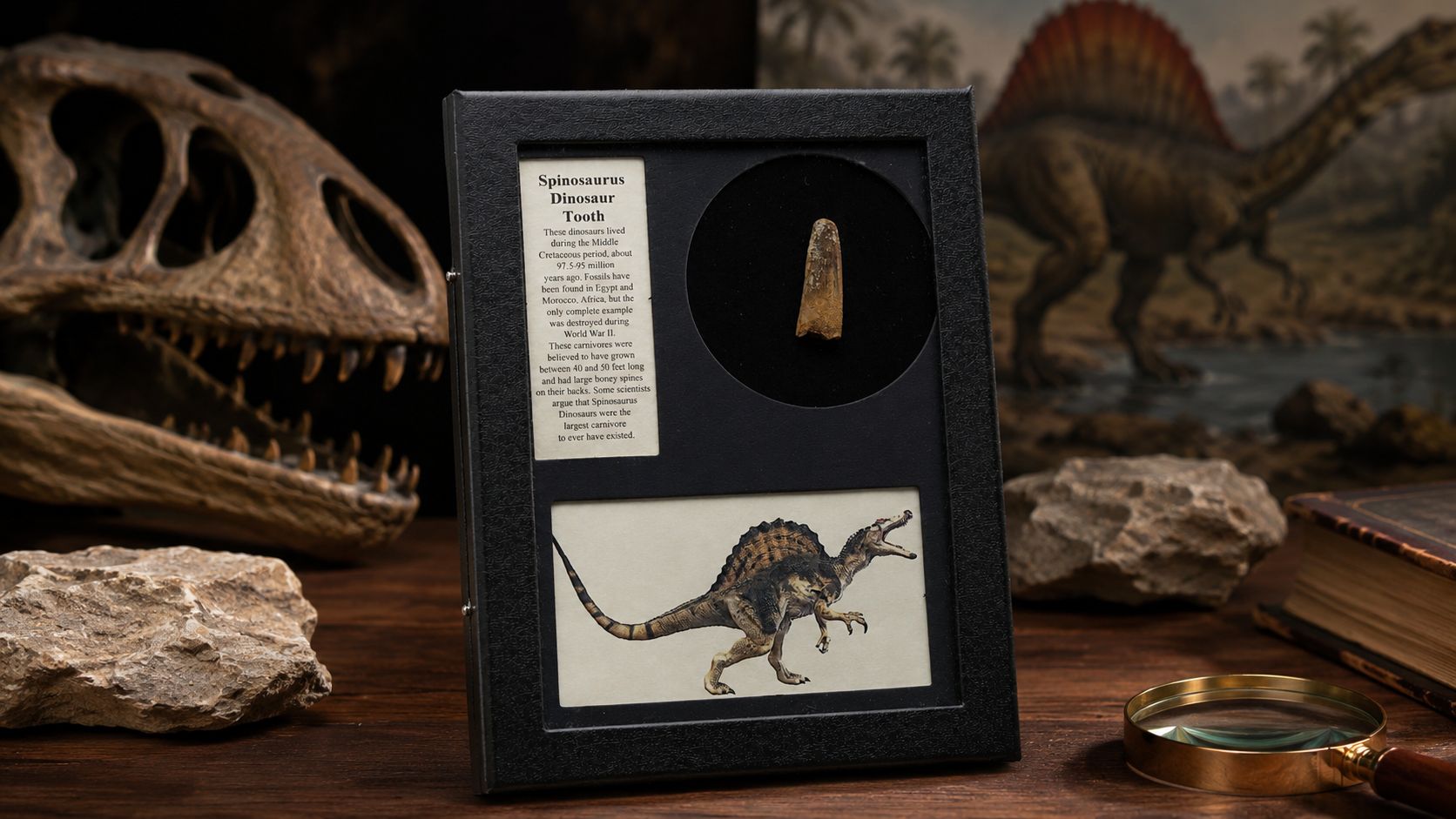
Spinosaurus tooth
A Spinosaurus Tooth Fossil – Genuine Cretaceous Predator Tooth in Collector's Display Box appeals on different terms. Spinosaurus teeth have a longer, more architectural profile, and that shape gives them unusual flexibility in display. In a cabinet, they read as sleek and directional. On a stand, they bring visual height without the visual weight of a tyrannosaur tooth.
That distinction affects value. Spinosaurus material is often more accessible than top-tier T. rex material, but the best examples still separate themselves quickly. Surface finish, symmetry, color, and an intact transition from crown to root are what I watch first. Collectors who buy carefully here can acquire a specimen with real predatory presence and strong decorative utility, without entering the highest pricing tier of dinosaur material.
Raptor tooth
Dromaeosaur teeth reward a more disciplined eye. They are smaller, usually subtler, and far less forgiving of poor preparation because every edge is exposed to scrutiny. Their appeal lies in precision. A fine raptor tooth brings tension and sharpness to a collection, especially when the buyer already owns broader, heavier forms.
This category often appeals to collectors who prefer connoisseurship over scale.
For range, I often place a dinosaur tooth against a marine predator in the same cabinet. A genuine Megalodon tooth example changes the visual rhythm immediately and shows how different feeding strategies produced very different forms of power. That kind of pairing strengthens a collection because it avoids repetition and makes each object work harder.
Families with younger collectors sometimes begin with educational material before purchasing a first fossil. For that audience, curated resources like top educational dinosaur games can build familiarity with species and anatomy before the collecting decisions become more serious.
Icons from the Cretaceous and Ancient Oceans
The strongest fossil collections are not built on celebrity species alone. They are built on contrast, provenance, and objects that hold the eye from across a room and reward scrutiny up close. Cretaceous herbivores and marine reptiles do that particularly well because they bring different kinds of authority. Less theatrical than a giant theropod, often more sculptural, and in many cases more usable in an interior.
Triceratops bone and jaw material
Triceratops remains have one advantage that serious collectors understand immediately. Recognition is instant, but the material is often calmer and more architectural than predator fossils.
Bone and jaw fragments appeal to buyers who care about density, surface, and anatomical credibility. A strong piece can anchor a library table or pedestal the way a weathered antiquity does. The value is not in spectacle alone. It comes from identifiable structure, honest preservation, and a clear sense that the specimen still reads as part of a real animal rather than a decorative fragment with an optimistic label.
That trade-off matters. Triceratops material is more available than the most prized carnivore specimens, which can keep pricing approachable, but the category is full of overworked pieces. Heavy filler, artificial color, and vague attribution weaken both confidence and resale appeal. I advise collectors to pay for stability and legibility, not for restoration meant to simulate importance.
Mosasaur teeth
Mosasaur teeth sit in a very attractive segment of the market. They carry predatory energy, but their form is cleaner and more hydrodynamic than most dinosaur teeth. In a cabinet, that difference reads immediately.
The best examples show intact enamel, a crisp taper, and a convincing transition from crown to root. Preservation drives value here more than size alone. A smaller tooth with glossy enamel and minimal repair will usually outperform a larger but compromised example because the object feels complete, and completeness is what collectors and designers respond to.
Placed beside a Spinosaurus tooth fossil in a collector's display box, a Mosasaur tooth makes the point clearly. One form suggests aquatic pursuit. The other carries the weight and asymmetry of a very different predator. For a collector, that pairing is not redundant. It creates range, and range gives a collection maturity.
Plesiosaur vertebrae
Plesiosaur vertebrae attract a more informed buyer.
They lack the immediate recognition of a named apex predator, yet strong examples often perform better in an interior because the form is self-contained, balanced, and eminently tactile. A well-prepared vertebra has volume, symmetry, and a sculptural logic that works on a stand, in a vitrine, or among mineral specimens and carved stone. It can read almost like modernist bronze, while remaining unmistakably paleontological.
Attribution requires discipline. Vertebrae can be visually persuasive even when documentation is weak, so provenance carries unusual weight in this category. Collectors should ask for locality, formation, preparation details, and any history of repair before paying a premium.
Specimen type
Collector appeal
Main value risk
Triceratops bone
Recognizable, weighty, architectural
Excess restoration
Mosasaur tooth
Sharp silhouette, strong display energy
Inconsistent preservation
Plesiosaur vertebra
Sculptural form, refined presence
Weak documentation
A single vertebra with clean preparation and strong provenance can be the more intelligent acquisition than a louder specimen with less integrity.
That is one of the clearest lessons in this part of the fossil market. Scientific interest matters, but price is often set by the same drivers that shape fine art collecting. Provenance supports confidence. Preservation supports value. Aesthetics determine whether the object stays memorable once the label is removed.
Foundational Specimens of the Fossil Market
The broadest and healthiest collections include specimens that are both accessible and capable of serious quality. That's where a practical fossil collector guide begins. Megalodon teeth, ammonites, trilobites, and fossil fish introduce the core habits of connoisseurship. You learn to compare edge quality, completeness, preparation, and matrix.
Megalodon teeth and ammonites
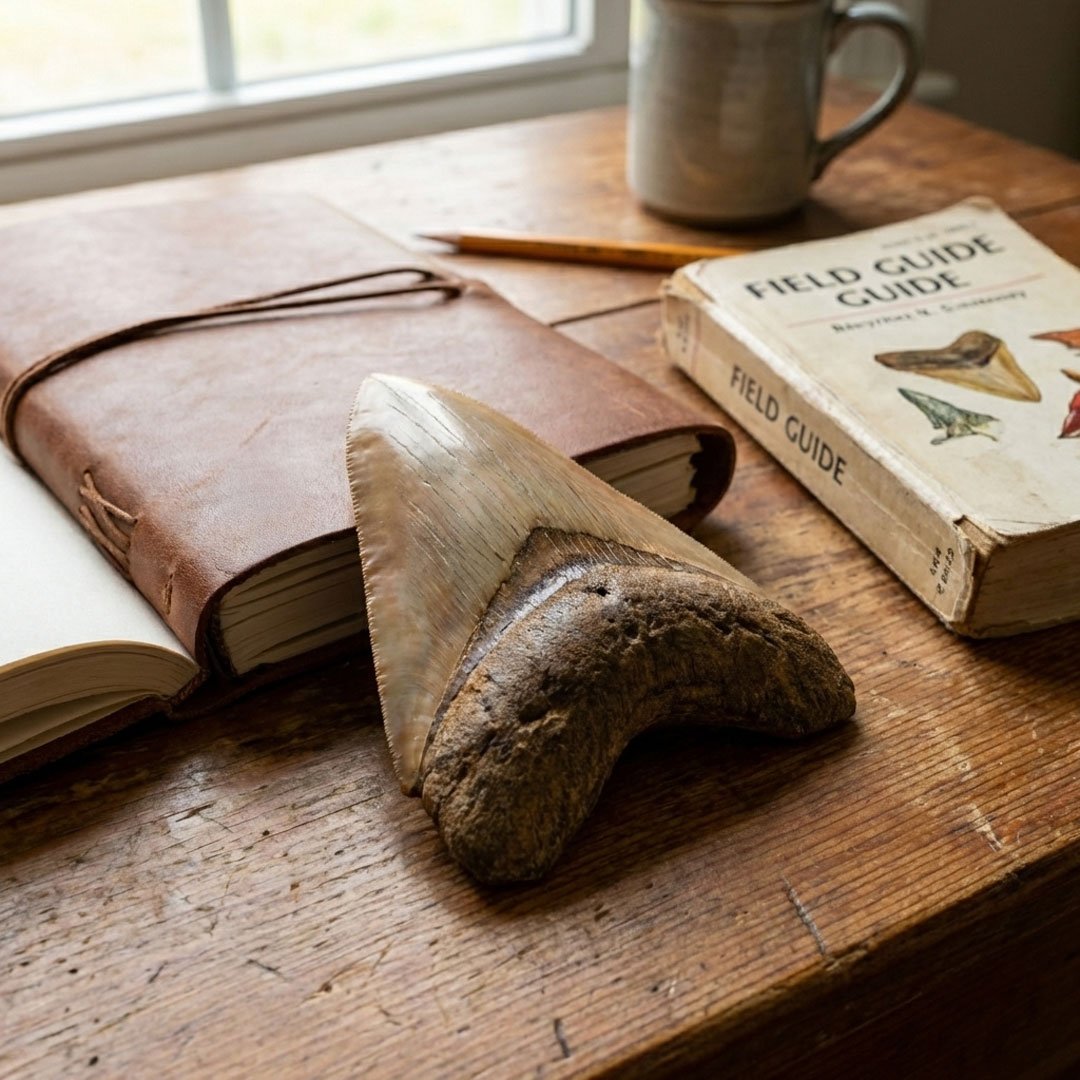
A Megalodon tooth is often a collector's first major fossil. The category is popular for good reason. It's bold, instantly legible, and tied to a marine predator that needs no explanation. Entry-level examples can be satisfying. However, premium examples separate themselves through symmetry, enamel preservation, serration quality, and color consistency. That's the difference between a common talking piece and a keeper.
Ammonites work differently. They attract collectors who want motion and geometry rather than aggression. A strong ammonite reads almost like a crafted object, yet it remains unmistakably natural. Some buyers also appreciate fossil material that crosses into functional or sculptural décor. A good example is a petrified wood bowl from Indonesia, which shows how fossil substance can live comfortably in a refined interior without losing its geological identity.
Trilobites and Green River fish
Trilobites teach discipline. Many are available. Only some are memorable. A collector should inspect relief, preparation marks, segmentation, and matrix balance. The strongest rare trilobite fossils feel crisp and intentional. They don't need excessive size if the detail is excellent.
Green River fish fossils serve a different taste. They appeal to buyers who enjoy composition. Fish, matrix, and negative space matter together. These pieces can be quiet and elegant, especially in rooms that favor neutral palettes and linear display.
This short visual reference helps new collectors compare categories before they buy.
A simple way to compare common categories
Genuine Megalodon teeth: Best for dramatic display and immediate recognition.
Museum-quality ammonites: Best for symmetry, polish, and design integration.
Rare trilobite fossils: Best for detail-focused collectors who value preparation.
Fossil fish: Best for wall display and compositional elegance.
The top 10 fossils list always includes these foundational categories because they teach judgment. They also give buyers room to scale upward without abandoning what first drew them to fossils in the first place.
Why Authenticity and Provenance Define Value
A fossil's value can collapse if the paperwork and preparation don't support the object. That's the hard line discerning buyers learn early. Surface appeal gets attention. Authenticity and provenance protect capital.
Why appearance can mislead
Taphonomy is the study of how remains decay and become fossilized. It matters because mineralization can preserve structure while also altering shape. During fossilization, original tissue may be replaced, and geological pressure can distort form before anyone studies the specimen. External appearance alone therefore isn't enough to judge fidelity, as discussed in this overview of taphonomy and mineralization.
That's why reputable sellers disclose restoration, stabilization, and compositing where relevant. A tooth with minor repair may still be a valid collectible. A heavily reconstructed specimen presented as near-complete is a different matter.
What serious buyers should demand
When evaluating authentic fossils for sale, I suggest a short checklist:
Documented provenance: Discovery or ownership history should be clear.
Honest preparation notes: Repairs and fills should be disclosed.
Credible attribution: Identification must match the anatomy.
Stable presentation: Mounts should support the fossil, not disguise it.
For collectors searching the top 10 fossils, the safest path is a curated one. Browse specimens that match your collecting goals, whether you want dinosaur fossils, marine fossils, or foundational natural history specimens for a first serious cabinet. Focus on preservation, provenance, and display presence before you focus on novelty.
Astro West offers fossils category browsing online, direct access to authentic fossils for sale, and in-person viewing in Manhattan across from the American Museum of Natural History. Every piece comes with expert authentication and documented provenance, and each is available for immediate acquisition online or in person. If you're building a collection with long-term intent, ask for guidance on category, condition, and fit within the rest of your holdings.
Browse Astro West for expertly authenticated fossils with documented provenance, explore the collection online, visit the Manhattan gallery for in-person viewing, or contact the team directly for acquisition guidance.