A dinosaur fossil can now sit in the same conversation as a major artwork or a rare watch. In 2024, Sotheby's sold the most complete Stegosaurus ever found, “Apex,” for $44.6 million, surpassing the prior fossil record of $31.8 million paid in 2020 for “Stan,” a Tyrannosaurus rex skeleton, according to Fortune's report on dinosaur bones as a luxury asset class. That kind of result clarifies something collectors have understood for years. The coolest dinosaur fossils aren't merely large. They unite science, beauty, rarity, and a story strong enough to hold attention across generations.
That's what separates a decorative object from a serious specimen. A fossil becomes memorable when preservation is exceptional, anatomy is unmistakable, and provenance is beyond doubt. Museums prize those qualities for research. Private collectors prize them for the same reason, then add display power and scarcity.
The list below moves past spectacle alone. Some fossils are iconic because they define a species. Others matter because they capture behavior, growth, feathers, eggs, or skin. From a collector's perspective, those distinctions matter. They shape desirability, long-term relevance, and the difference between a fossil that merely fills a shelf and one that anchors a collection.
1. Tyrannosaurus rex The Apex Predator as a Blue-Chip Asset
No dinosaur holds value in the public imagination like Tyrannosaurus rex. That recognition matters. In collecting, instant legibility often supports enduring demand, and few fossils read faster across a room than a serrated rex tooth or a sturdy tyrannosaur bone.
The top end of this category is out of reach for nearly everyone. Yet the species remains relevant at every level of the market. Serious institutions pursue major skeletal material. Private collectors often begin with teeth because the form is unmistakable, the display footprint is manageable, and the predatory anatomy is obvious even to a first-time buyer.
Why collectors keep returning to rex
A good rex specimen succeeds on three levels at once. It has scientific identity, sculptural presence, and broad market recognition. That combination is rare in natural history.
For isolated material, I'd focus on visual integrity first. Serrations, enamel quality, root completeness, and clean documentation matter more than sheer size. An oversized but compromised tooth often underperforms a smaller, sharper specimen with stronger preservation.
Practical rule: Buy the best-preserved example you can verify, not the biggest one you can afford.
Astro West's broader dinosaur fossil offering is useful here because it shows how collectors can enter the category without chasing a complete mount. Teeth, bones, and partial elements often carry more educational value per inch of shelf space than newcomers expect.
Serrations matter: Clear sharp borders help distinguish an authentic predatory tooth from a worn or over-restored piece.
Provenance matters more: A fossil with traceable collection history will always age better in a collection.
Repair is a trade-off: Stabilization can be necessary. Heavy reconstruction should lower enthusiasm, not increase it.
Among the coolest dinosaur fossils, rex material remains foundational. It's the benchmark against which many other predator fossils are judged.
2. Triceratops horridus The Power of Iconic Anatomy
Triceratops is one of the few dinosaurs whose market strength begins with silhouette alone. Three horns and a broad frill create instant recognition, and recognition has value. In collecting, that means a specimen can read clearly from across a room while still rewarding close study.
That visual clarity also changes the buying calculus. A predator fossil often sells on menace. Triceratops sells on structure. Ceratopsian skull material has mass, curvature, and texture, so even partial elements can feel complete in an aesthetic sense. A jaw section, in particular, carries more identity than many larger postcranial bones because the tooth row, bone density, and profile are specific to the animal.
The strongest category is still cranial material. Horn cores, frill sections, and jaws tend to attract sustained interest because they preserve the features that made Triceratops iconic in the first place. Teeth can work well as entry pieces, but they rarely carry the same sculptural authority as a substantial skull element.
Three factors usually separate a good buy from a forgettable one:
Immediate readability: The specimen should declare itself without explanation.
Surface integrity: Natural texture, clean sutures, and honest weathering matter more than aggressive polishing.
Measured restoration: Stabilization is common and often sensible. Heavy fill or rebuilt margins should reduce the price, not justify it.
There is also a practical advantage here. Much Triceratops material enters the market with clearer legal footing than some high-profile dinosaurs, especially when it comes from documented private land in the American West. That does not remove risk. It means provenance review, repair assessment, and anatomical identification can be handled with more confidence than in murkier categories.
For collectors building a coherent natural history portfolio, Triceratops occupies a strong middle ground. It offers museum-grade visual impact, broad public recognition, and better access than the rarest trophy taxa. That combination keeps it near the top of any serious list of coolest dinosaur fossils.
3. The Fighting Dinosaurs A Behavioral Snapshot in Stone
Most fossils preserve anatomy. Very few preserve action. The famous “Fighting Dinosaurs” specimen matters because it appears to arrest a violent encounter between Velociraptor and Protoceratops at the instant of burial. That kind of direct behavioral evidence changes how people respond to a fossil.
Collectors often talk about “story fossils.” This is the standard by which the term should be judged. The specimen doesn't rely on scale. It relies on narrative tension, positional drama, and scientific consequence.
Why story fossils often outshine bigger specimens
A mounted skeleton can dominate a room. A behavioral fossil can dominate a conversation. That difference matters in both museum interpretation and private collecting.
When a specimen records predator-prey interaction, nesting, feeding marks, feathers, or growth stages, it gains layers of meaning that simple skeletal completeness can't always match. That's one reason public interest has expanded toward “story fossils” such as baby dinosaurs, feathers, trackways, coprolite, and tooth-in-bone specimens, as discussed in Mini Museum's survey of incredible dinosaur fossils and what makes them compelling.
The most memorable fossils don't just show what an animal was. They show what it was doing.
This specimen is effectively priceless in cultural terms because replication is impossible. You can find another theropod tooth. You can't reasonably expect another fossilized death struggle with the same clarity and drama.
That's why “Fighting Dinosaurs” belongs among the coolest dinosaur fossils ever found. It turns paleontology into witness testimony.
4. Spinosaurus aegyptiacus The Reinvented River Monster
Spinosaurus may be the most marketable dinosaur shaped by scientific revision. Its value proposition is not brute size alone. It is narrative volatility combined with unmistakable form.
As reconstructions shifted, collector demand shifted with them. The animal moved from “another giant theropod” into a narrower and more interesting category: a river-hunting predator with a crocodile-like snout, conical teeth, and a sail that reads instantly even to non-specialists. That kind of silhouette matters in the market. Distinct anatomy creates faster recognition, and faster recognition usually supports stronger long-term desirability.
A good Spinosaurus tooth succeeds on three levels. It must read clearly as Spinosaurus, hold up as an object, and survive scrutiny on condition. If one of those fails, the specimen becomes easier to admire casually than to buy confidently.
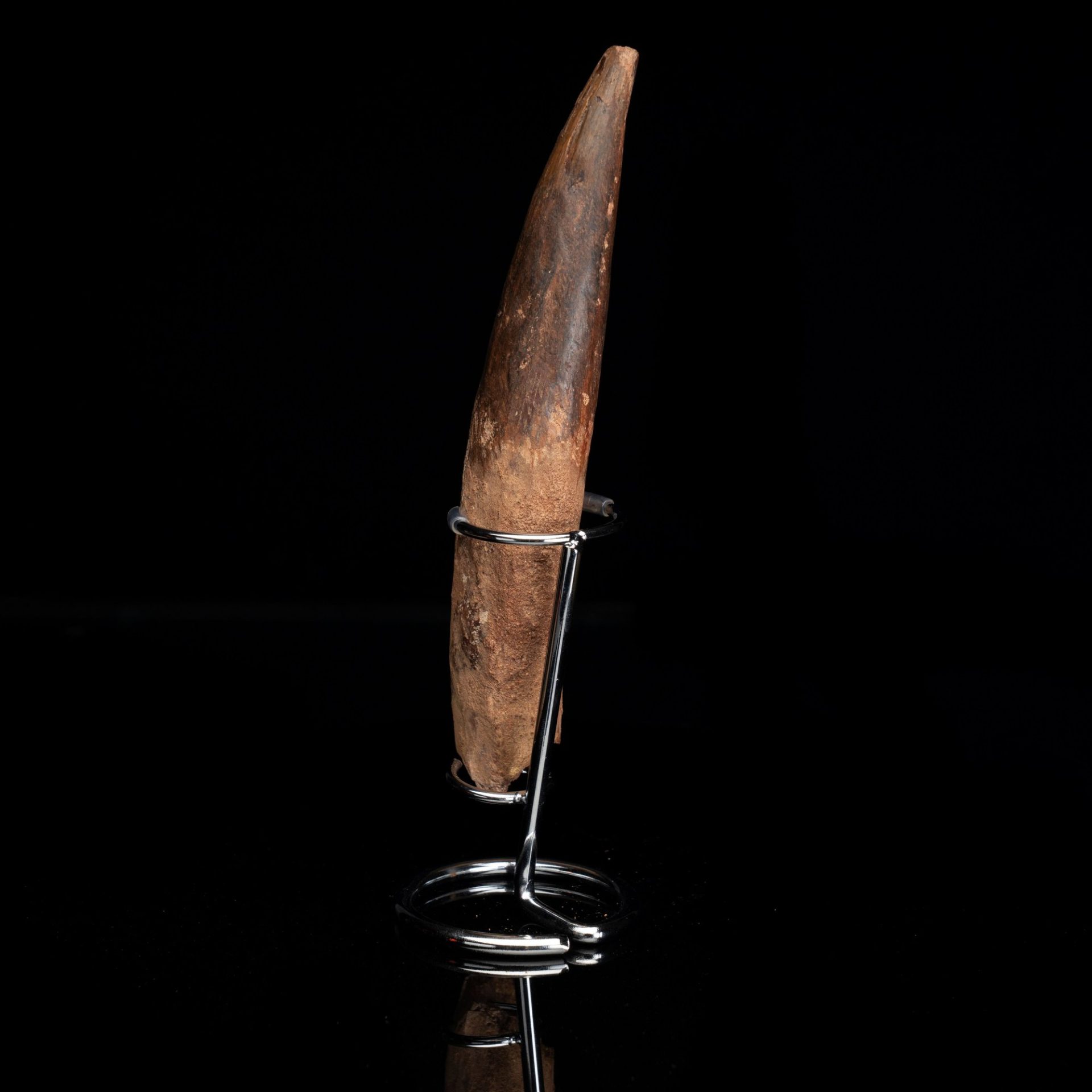
Conical teeth have an advantage here. They lack the dense, aggressive serration pattern that gives many theropod teeth their visual weight, so they present more like carved forms than weapons. For collectors building interiors with restraint, that difference is practical. The fossil keeps its prehistoric authority without overwhelming the room.
Selection still requires discipline.
Prioritize shape integrity: Minor wear is common. Crushed crowns, heavy restoration, or awkwardly rebuilt tips reduce both confidence and display quality.
Study surface and enamel: Clean texture, stable color, and believable wear matter more than exaggerated polish.
Assess the mount carefully: The stand should frame the tooth with discretion and proper support.
Ask about locality and preparation: North African fossils can be excellent, but the category includes wide variation in repair standards and documentation.
I often see Spinosaurus chosen as the second or third predator purchase in a collection. That is usually the right moment for it. After a collector acquires a more familiar theropod tooth, Spinosaurus introduces contrast in feeding ecology, geography, and visual language without leaving the high-recognition tier of dinosaur material.
Among the coolest dinosaur fossils, Spinosaurus earns its place because it offers rarity of design as much as rarity of survival. In collecting terms, that is a strong combination.
5. Archaeopteryx lithographica The Feathered Icon
Some fossils are famous because they're large. Archaeopteryx is famous because it changed how people think. It remains one of the most elegant examples of a fossil that bridges categories, combining avian feathers with unmistakably dinosaurian traits such as teeth and a long bony tail.
Its visual power is unusually refined. Solnhofen limestone preserves delicate outlines with a draftsmanship that almost resembles printmaking. That quality matters. A fossil can be scientifically important and still fail as an object. Archaeopteryx succeeds as both evidence and art.
Why fine preservation changes everything
With Archaeopteryx, the matrix isn't background. It's part of the specimen's beauty. The contrast between pale stone and dark skeletal detail gives these slabs a compositional balance that many larger fossils lack.
Collectors respond to that immediately, but the scientific value comes first. Feather impressions transform a skeletal remain into a record of texture, anatomy, and evolutionary transition. Few fossils make that much information visible at once.
From a market perspective, this is the kind of specimen where completeness alone isn't enough. Legibility matters more. A beautifully preserved partial can be more desirable than a muddier example with more bone but less clarity.
Collector's test: If the fossil teaches something at a glance, it usually displays well for decades.
This is also why feathered and developmental fossils have gained so much public fascination. They answer a more complex question than sheer size. They show how dinosaurs lived, grew, and connected to modern birds.
Archaeopteryx belongs on any list of coolest dinosaur fossils because it combines rarity, scientific gravity, and visual restraint. Few fossils look this quiet and say this much.
6. Hadrosaur mummies Fossils with Skin in the Game
Hadrosaur mummies are among the few dinosaur fossils that can shift both science and pricing with a single surface detail. Skin impressions turn a skeleton into a record of the animal's exterior, and that changes how collectors judge significance.
These specimens matter because they reduce guesswork. Scale pattern, body contour, and the relationship between skin and bone give paleontologists evidence that isolated skeletal material cannot provide. In market terms, that added information creates a stronger story, and strong stories support stronger demand.
The trade-off is straightforward. A larger hadrosaur with ordinary preservation may impress across a room, but a smaller specimen with clear integument can carry more intellectual weight and, often, more collector interest. Exceptional preservation changes the hierarchy.
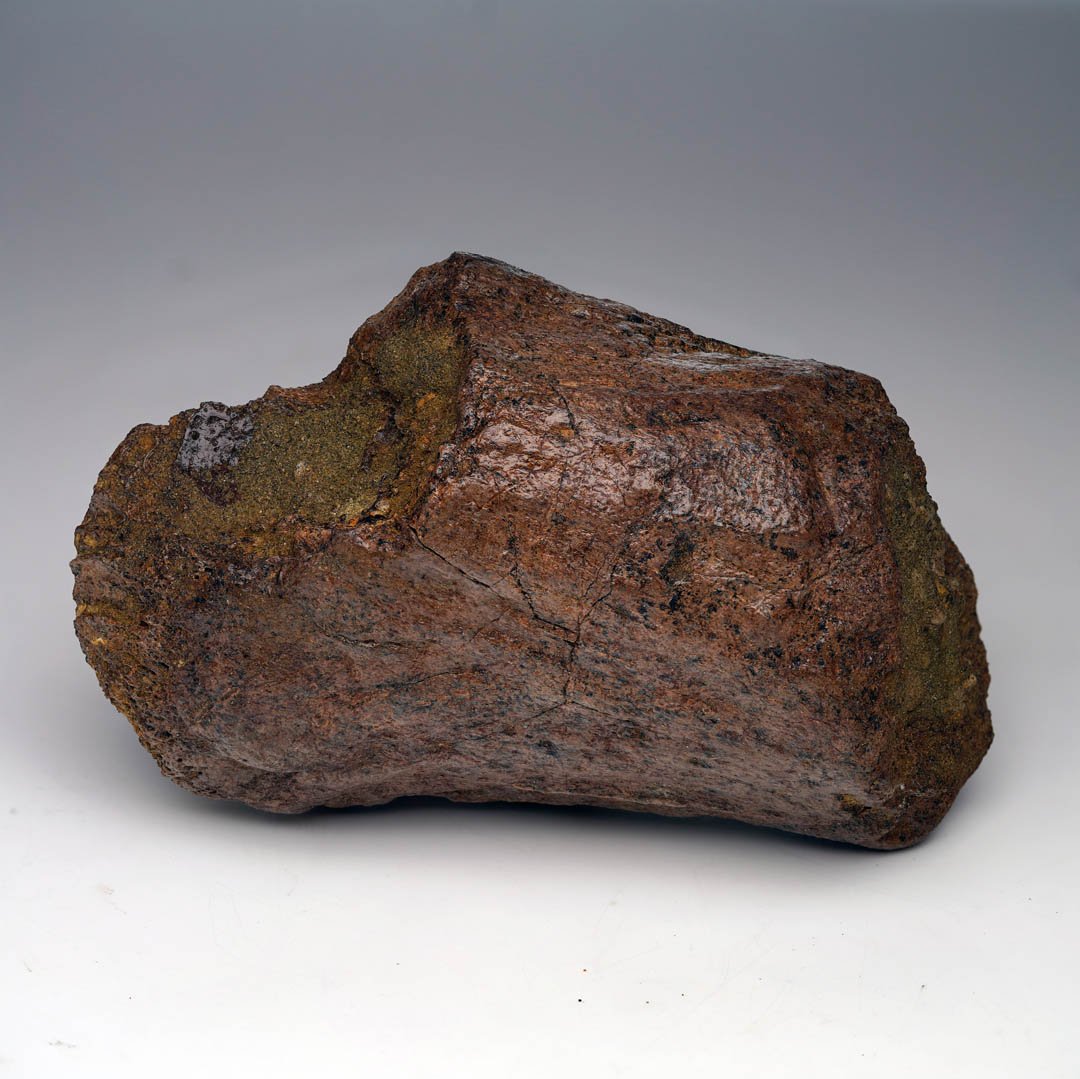
That principle extends beyond true mummies. Even without skin, ornithischian material can earn attention if the anatomy is clean, the preparation is restrained, and the provenance is sound. For example, this Dryosaurus altus dinosaur femur fossil from Astro West shows how a single limb element can hold real educational and collecting value when the morphology is readable and the cataloging is credible.
Serious buyers should look for three things:
Surface integrity: Skin impressions, pebbled texture, and natural contour must survive preparation intact.
Honest matrix relationship: The surrounding rock should support the specimen's story, not distract from repairs or reconstruction.
Documentation: Locality, stabilization history, and preparation records separate a notable fossil from an expensive uncertainty.
Hadrosaurs offer a useful correction to the trophy mindset. They are not apex predators, and they do not depend on spectacle alone. Their best specimens sell on a rarer currency: preserved evidence of how a dinosaur looked in life.
That is why hadrosaur mummies belong on this list. They bring collectors as close to the animal's living surface as the fossil record usually allows.
7. Fossilized dinosaur eggs A Glimpse into Prehistoric Life
Eggs attract a different kind of collector. They don't project violence or scale. Instead, they offer intimacy. A dinosaur egg points to origin, nesting behavior, and developmental biology, all within a form that's naturally sculptural.
That makes eggs unusually versatile. They work in educational collections, family settings, and stylish interiors because the shape is immediately readable. At the same time, serious buyers know this category demands caution. Repairs, composites, and misidentifications are common risks across the wider fossil trade.
What makes an egg specimen desirable
The best egg fossils do more than look complete. They preserve shell texture, matrix relationship, and believable structure. A lonely oval with no context may decorate a room, but a nest arrangement or a well-documented clutch has a very different intellectual weight.
This category also benefits from a practical collecting principle. Beginner-oriented fossil guides often favor teeth, amber, and coprolite because they're durable, displayable, and relatively approachable. One such guide notes that dinosaur teeth are “some of the most abundant and best-preserved fossils,” while coprolites offer scientific insight into behavior and diet, in Mini Museum's beginner guide to collectable dinosaur fossils. Eggs sit a bit differently. They can be beautiful entry points, but condition scrutiny must be higher.
Surface texture first: Shell detail is more persuasive than a perfect outline.
Matrix matters: Eggs divorced from matrix often lose context and confidence.
Documentation is essential: This category rewards patience more than impulse.
The coolest dinosaur fossils often capture a life stage rather than a famous species. Eggs do exactly that. They make prehistory feel less abstract and more immediate.
8. Carcharodontosaurus saharicus The African Shark-Toothed Lizard
If rex teeth feel blunt and crushing, Carcharodontosaurus teeth feel surgical. The name means “shark-toothed lizard,” and the comparison fits the collecting appeal. Long, blade-like crowns and fine serrations give the species an elegant lethality that many buyers find irresistible.
Geography adds another layer. North African fossils often carry warm desert tones that differ from the darker palette many collectors associate with North American material. When preservation is strong, the result can feel both ferocious and refined.
Why this predator has such strong shelf presence
A good Carcharodontosaurus tooth performs beautifully in a cabinet or on a stand because the silhouette is so clean. It's instantly recognizable as predatory material, yet it avoids the heavy visual mass of larger bones or composite mounts.
The category also benefits from broader demand for collectible fragments. Reporting on the fossil market notes that around five dinosaur skeletons are auctioned globally each year and that T. rex teeth reportedly moved from about $1,000 per inch to roughly $10,000 per inch in recent years, according to a market summary on dinosaur fossil pricing and auction activity. That doesn't set a direct price for Carcharodontosaurus. It does show why serious buyers now evaluate premium teeth as a distinct collecting segment rather than as leftovers from larger skeletons.
A single tooth can anchor a collection if the species is strong, the preservation is honest, and the story is clear.
For buyers who want apex-predator material without entering the rex lane, Carcharodontosaurus offers excellent contrast. It feels global, severe, and unmistakably Mesozoic.
That makes it one of the coolest dinosaur fossils to own in practical terms. It delivers identity, display quality, and collector appeal in one compact form.
9. The Duelling Dinosaurs A Private Land Treasure
“The Duelling Dinosaurs” matters because it changed the collecting conversation. This was not merely an impressive pair of skeletons. It was a test case in how science, title, preparation, and market access combine to create value.
Discovered on private land in Montana, the block preserved a tyrannosaur and a ceratopsian in direct association. That alone gives the specimen unusual force. Collectors pay a premium for fossils that preserve an event, not just an animal, and this piece carried that narrative before a preparator touched the matrix.
Why title and paperwork shape market value
For serious buyers, provenance is not administrative clutter. It is part of the asset.
A specimen of this caliber needs more than a dramatic mount or a persuasive species label. It needs lawful extraction, a clear chain of custody, preparation records, and documentation that will stand up to insurer, museum, and resale scrutiny. If any of those elements are thin, the buyer inherits friction. Donation becomes harder. Export and loan discussions get messy. Future resale narrows to buyers willing to accept uncertainty.
That is the essential lesson of “Duelling Dinosaurs.” Private-land discovery can create a lawful path into exceptional material, but legality is only the first threshold. The stronger value driver is clean institutional-grade documentation attached to a specimen with genuine scientific gravity.
The specimen also sharpened an uncomfortable trade-off in this market. Preparation can improve legibility and display power, yet every intervention must be disclosed. Collectors who understand fossil quality do not just ask whether a piece looks complete. They ask how much is original bone, how much is restored, and whether the reconstruction supports or softens the underlying science.
For buyers evaluating important fossils, a short checklist helps:
Confirm land status and find location: legal context starts at the quarry
Review preparation history: aggressive restoration can weaken both scholarly and market confidence
Request supporting records: invoices, collection notes, photographs, and prior labels help preserve resale and donation options
Judge the story carefully: interaction fossils command attention because the narrative is specific and hard to duplicate
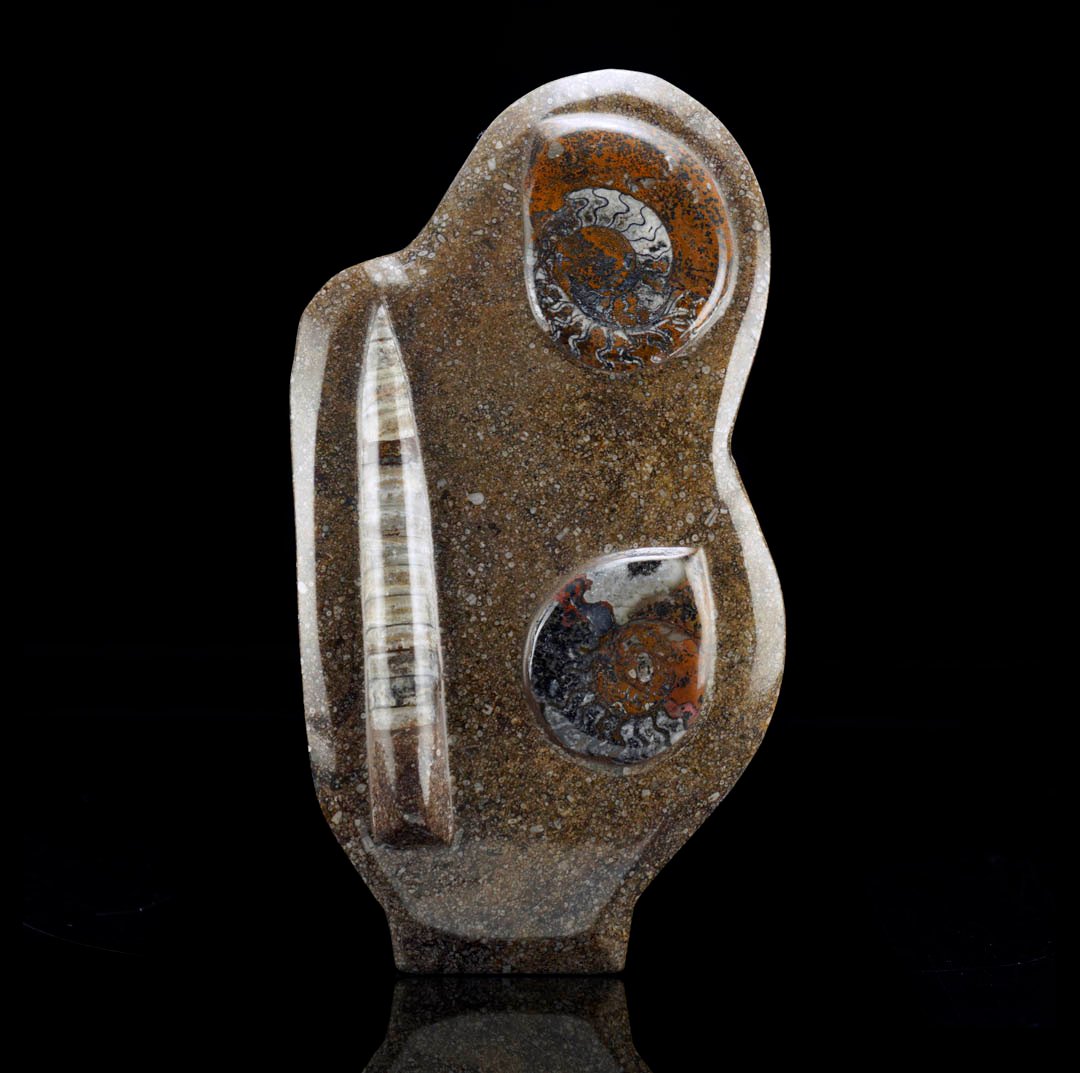
Even collectors drawn to decorative natural history objects can see the distinction. A polished marine display piece such as this hand-carved genuine ammonite and belemnite sculpture succeeds on form. “Duelling Dinosaurs” operates at a different level. It combines spectacle with legal clarity and a research-grade story, which is exactly why top-tier fossils begin to behave like rare cultural assets rather than curiosities.
Among the coolest dinosaur fossils, this one stands apart for a reason. It proved that in paleontology, ownership history can matter almost as much as the bones themselves.
10. Mosasaur-bitten ammonite A Trace Fossil Masterpiece
Few fossils convert damage into value as elegantly as a mosasaur-bitten ammonite. The specimen matters because it preserves an interaction, not just a shell, and that distinction changes both its scientific weight and its market position.
Collectors often underestimate trace evidence in marine fossils. They should not. A clean ammonite can be visually strong, but a shell carrying credible predator damage enters a different tier of desirability because the fossil records a specific event. In market terms, narrative density raises attention, and attention supports price.
A decorative marine fossil still helps clarify the baseline. For instance, this hand-carved genuine ammonite and belemnite sculpture from Astro West (pic below) shows the enduring appeal of ammonite form and symmetry. Add authenticated bite traces to that same visual appeal, and the object shifts from design-driven display piece to evidence-rich collectible.
The image above should show an ammonite specimen with visible bite damage. A Tarbosaurus skull is irrelevant to this section and weakens the editorial logic.
What separates a strong example from a merely broken shell is discipline in attribution:
Consistent bite geometry: Repeated punctures, crush zones, or patterned edge damage carry more weight than accidental fracture.
Plausible predator-prey relationship: The marks need to fit a marine reptile feeding scenario consistent with the matrix, age, and locality.
Minimal cosmetic intervention: Heavy grinding, infill, or over-polishing can erase the very evidence that gives the fossil its premium.
Clear provenance: Location data, prep history, and old labels support both scholarly confidence and future resale.
This category appeals to experienced buyers for a reason. It offers scarcity without relying on sheer size, and it rewards close reading over spectacle. For a serious collection, that is often a better long-term proposition than a louder specimen with less intellectual substance.
Top 10 Coolest Dinosaur Fossils Comparison
Specimen
Acquisition complexity
Resource requirements
Expected outcomes
Ideal use cases
Key advantages
Tyrannosaurus rex: The Apex Predator as a Blue-Chip Asset
Extremely high for skeletons; moderate for individual teeth
Very high cost for skeletons; moderate for high-grade teeth; strict provenance & documentation
Museum-level prestige or strong collectible/investment return for teeth
Museum centerpieces or private statement pieces (teeth for collectors)
Iconic recognition, high demand, strong resale value
Triceratops horridus: The Power of Iconic Anatomy
High for complete horns/frill; moderate for fragments/teeth
Significant funds for large elements; mounting and conservation required
High visual impact and steady appreciation for rare parts
Spectacular preservation plus a lesson in legal provenance
Mosasaur-Bitten Ammonite: A Trace Fossil Masterpiece
Moderate; rarer than unaltered ammonites
Low–moderate cost; provenance and interpretive labeling helpful
Elevated scientific and monetary value due to behavioral context
Museum storytelling displays, curated collector highlights
Trace fossil that preserves behavior; multiplies specimen value
Building a Collection of Lasting Significance
The coolest dinosaur fossils aren't always the biggest, and they aren't always the most expensive. The best ones hold three qualities in balance. They have scientific importance, visual authority, and a history you can verify. When those elements align, a fossil stops being a curiosity and becomes a serious object.
That standard matters more now because the market is broader and more visible than it once was. Media coverage, auctions, and private collecting have made fossil values easier to observe. Yet visibility also brings noise. Restored material can be overstated. Provenance can be vague. Decorative appeal can mask weak documentation.
Collectors should resist that pressure. Buy the specimen, not the story attached to it. Then test the story anyway. Ask where the fossil was found, who prepared it, what was restored, and how the identification was made. If the answers arrive slowly or imprecisely, move on.
A useful collection also benefits from range. A rex tooth may provide immediate recognition. A Triceratops jaw or horn fragment adds iconic anatomy. A Spinosaurus tooth introduces a different predatory design. Eggs, hadrosaur material, feathers, and trace fossils add life history and behavior. The strongest collections usually avoid repetition. They build contrast instead.
Condition deserves a refined reading. “Perfect” is not always best. Some repair is normal in fossils. Stabilization can preserve a specimen responsibly. What matters is honesty. Repair should support the fossil, not invent it. Collectors who learn to distinguish natural texture from fill and reconstruction usually make better decisions and keep their confidence over time.
Provenance remains the anchor. As with fine art or important watches, traceability affects scholarship, insurability, resale, and institutional interest. Legal collection on private land can be entirely proper. So can older collection history. What matters is that the chain is clear and defensible.
The practical lesson is simple. Build slowly. Choose fossils that still feel compelling after the first rush of novelty fades. Favor specimens that teach something the moment you see them. Those are usually the pieces that stay important.
Astro West is one relevant option for that kind of collecting because the gallery focuses on authenticated natural history material with an emphasis on provenance, classification, and display quality. For novice buyers and advanced collectors alike, that curation matters. It helps turn fascination into judgment, which is the essential foundation of a lasting collection.
If you're building a dinosaur fossil collection, or want one exceptional specimen with strong visual and scientific value, explore the curated natural history selection at Astro West.