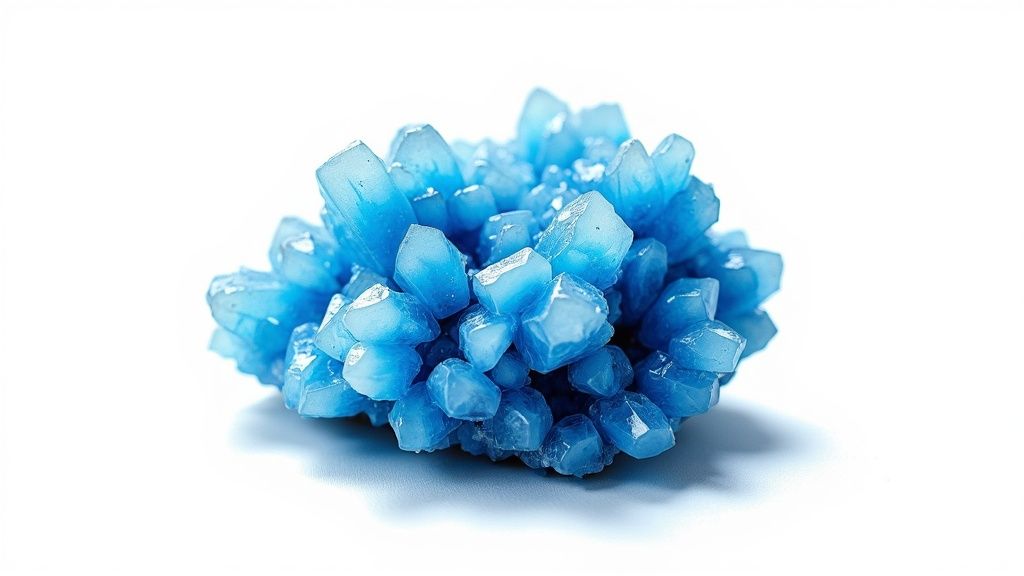
Picture a stone so electric blue it seems to glow from the inside out. That’s the magnetic pull of electric blue hemimorphite. This incredible mineral, a hydrous zinc silicate, is a true prize for collectors who seek out its rare and almost impossibly intense color. In a world full of beautiful gems, this one truly stands out as one of nature’s most spectacular works of art.
Unveiling the Beauty of Blue Hemimorphite
Blue hemimorphite is so much more than just a pretty stone; it's a geological marvel with a unique backstory. Its name comes from the Greek words hemi (meaning "half") and morph (meaning "form"), which hints at its bizarre crystal structure. Get this—each end of a single crystal actually terminates in a completely different shape. This wild characteristic is known as hemimorphism.
While hemimorphite can show up in white, green, or even colorless forms, it’s the vibrant blue specimens that everyone is after. This stunning color isn’t part of the mineral itself but is actually caused by tiny amounts of copper that sneak into the crystal structure as it forms. Imagine a painter adding just one potent drop of blue pigment to a clear base, transforming it into something breathtaking.
You'll typically find this mineral growing in bubbly, rounded clusters called botryoidal formations or as sprays of radiating crystals. It often has a glassy or slightly pearly luster, giving it a shine that's almost like a dusty pearl caught in the light.
Why Collectors Seek This Gem
For any serious enthusiast, blue hemimorphite’s appeal comes down to its one-of-a-kind combination of rarity, unique formation, and that jaw-dropping color. Very few other minerals can tick all those boxes. Key traits that make it a collector's favorite include:
Intense Coloration: The best pieces flash an "electric" or neon blue that you just don't see very often in the mineral kingdom.
Unique Crystal Habit: Its hemimorphic nature and bubbly botryoidal growth make it a fascinating piece for any display case.
Geological Significance: As a secondary mineral created when zinc deposits are altered over time, it tells a compelling story of our planet's slow, transformative power.
Here's another cool fact: Hemimorphite is also pyroelectric. That means it can generate a tiny electrical charge when heated. It's just one more layer of scientific curiosity that adds to its already impressive profile.
Setting the Stage for Deeper Exploration
To really understand blue hemimorphite, you have to go beyond just admiring its beauty. It’s about appreciating the complex geological journey it’s been on, from its formation deep inside the Earth to its discovery in just a few special places around the world. And with treatments and fakes becoming more common, knowing how to identify the real deal is absolutely critical.
On top of that, proper care is non-negotiable if you want to protect its delicate structure and vibrant color. With a Mohs hardness of only 4.5 to 5, it's softer than glass and can be scratched easily. This guide will walk you through all of it, giving you the knowledge you need to confidently collect, identify, and care for this remarkable blue treasure.
The Geological Story Behind the Blue Hue
Ever look at a mineral and wonder how on earth it got a color so vivid it almost seems unnatural? Blue hemimorphite's creation is a fantastic story of geological recycling, a slow-motion dance of elements happening just beneath our feet. It doesn't start out as the vibrant, bubbly gem we love; its journey begins with the breakdown of something else entirely.
Geologists call hemimorphite a secondary mineral, which is just a fancy way of saying it forms from the leftovers of another, older mineral. Picture a deposit of sphalerite, a primary source of zinc, just sitting in the ground. Over thousands, or even millions, of years, oxygen-rich water trickles through the rock, causing that original mineral to weather away and decompose.
As the sphalerite breaks down, it releases its zinc into the groundwater. This zinc-infused water then travels through cracks and pockets in the surrounding rock, where it mingles with silica. Given just the right temperature and pressure, this solution starts to crystallize, slowly building up the delicate, bubbly structures of hemimorphite, one microscopic layer at a time.
The Secret Ingredient for Blue
So where does that incredible blue come from? If hemimorphite were perfectly pure, it would actually be white or even colorless. The secret to its signature sky-blue to electric-blue shades is a tiny, almost accidental, addition to its chemical makeup: copper impurities.
Think of it like an artist adding a single, potent drop of blue ink to a clear glass of water. A minuscule amount of copper is all it takes to completely transform the otherwise plain mineral. The intensity of the final color, from a pale, dreamy blue to a deep, saturated teal, all comes down to the concentration of those copper ions during its formation.
This entire process is a perfect example of nature’s artistry. It takes a precise combination of a host mineral, water, oxygen, and just a trace of an impurity to create something truly exceptional. This geological alchemy is why top-quality blue specimens are so uncommon and treasured.
From Zinc Ore to Collector's Gem
Interestingly, hemimorphite's value wasn't always just in its looks. For a long time, it was an important secondary ore of zinc, mined extensively around the world. Major mining operations in the 19th and 20th centuries across the USA, Belgium, and China relied on these deposits.
The famous Wenshan Mine in China, for example, processed hundreds of thousands of tons of ore but became legendary in the early 1990s when it produced world-class, deep blue hemimorphite specimens. Similarly, the 79 Mine in Arizona was a significant zinc producer between 1849 and 1869, yielding plenty of hemimorphite in the process. These operations show the mineral's dual identity as both an economic workhorse and a source of breathtaking crystals. To see some of these stunning world-class examples, check out the galleries on Mindat.org.
Knowing this backstory adds a whole new layer of appreciation for any piece of blue hemimorphite. It's not just a pretty rock; it’s a tangible piece of Earth’s history—a story of transformation written in crystal form over immense spans of time. Each bubbly cluster tells the tale of its unique journey from a humble zinc deposit to a collector’s masterpiece.
How to Identify Authentic Blue Hemimorphite
Blue hemimorphite is a real showstopper, prized for its stunning color and unusual formations. But with its growing popularity, the market is unfortunately seeing more fakes and treated stones pop up. Knowing how to spot the real deal is a crucial skill for any collector, ensuring you're investing in a true natural wonder, not a clever imitation.
What to Look For: The Visual Telltales
Authentic blue hemimorphite has a few key visual traits that are like its signature. The easiest one to spot is its growth pattern. You'll rarely find it in sharp, distinct crystals like quartz. Instead, it typically grows in bubbly, rounded masses known as botryoidal formations. Think of a cluster of tiny blue grapes. You might also find it in radiating, needle-like clusters that almost look like tiny stalactites.
Next, check out its luster. Genuine hemimorphite has a vitreous, or glassy, shine to it. Sometimes it can lean a bit waxy or even pearly. When you hold a piece up to the light, it should have a gentle gleam, not a dull, chalky finish. This distinctive shine is a quick visual clue that can help you size up a specimen at a glance.
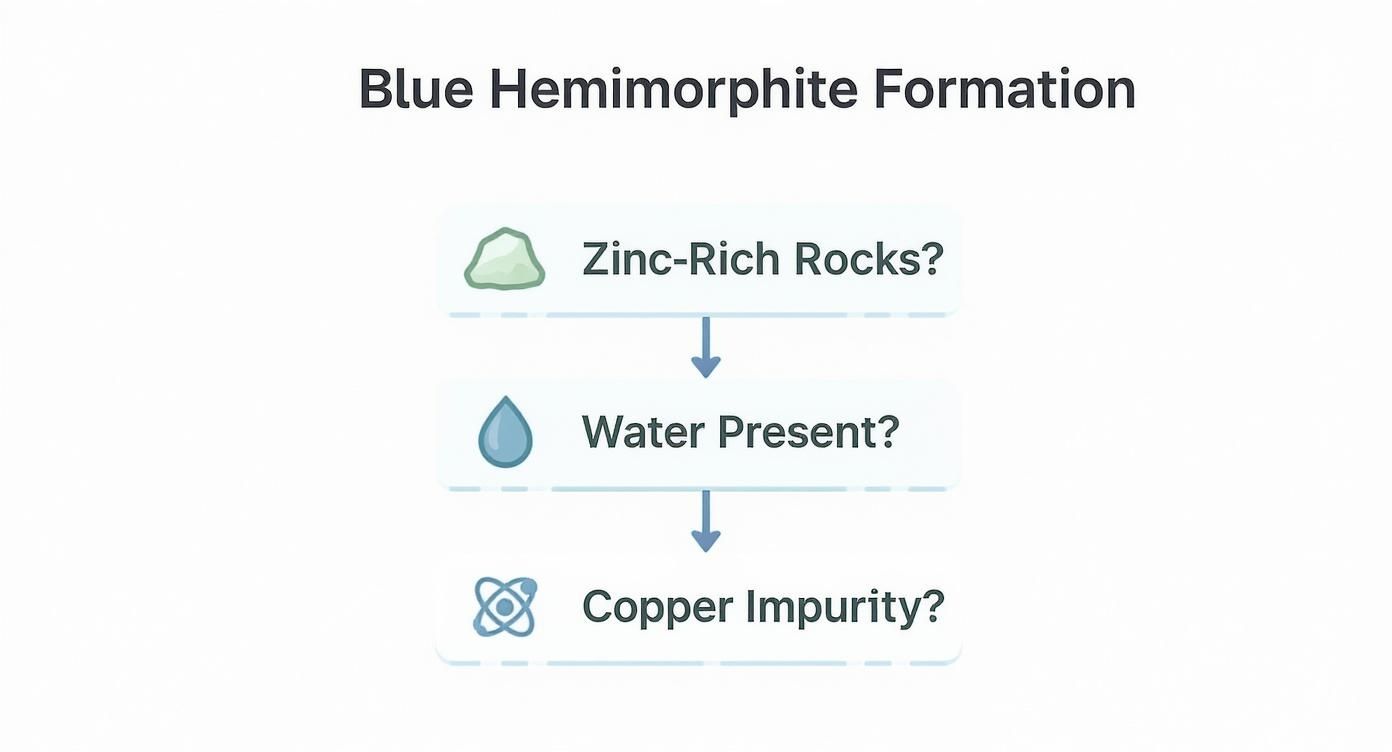
This flowchart lays out the specific environmental factors that have to line up perfectly for blue hemimorphite to form in nature.
As you can see, that beautiful blue color is entirely dependent on trace amounts of copper sneaking in during the formation process. No copper, no blue.
Understanding Its "Half-Formed" Nature
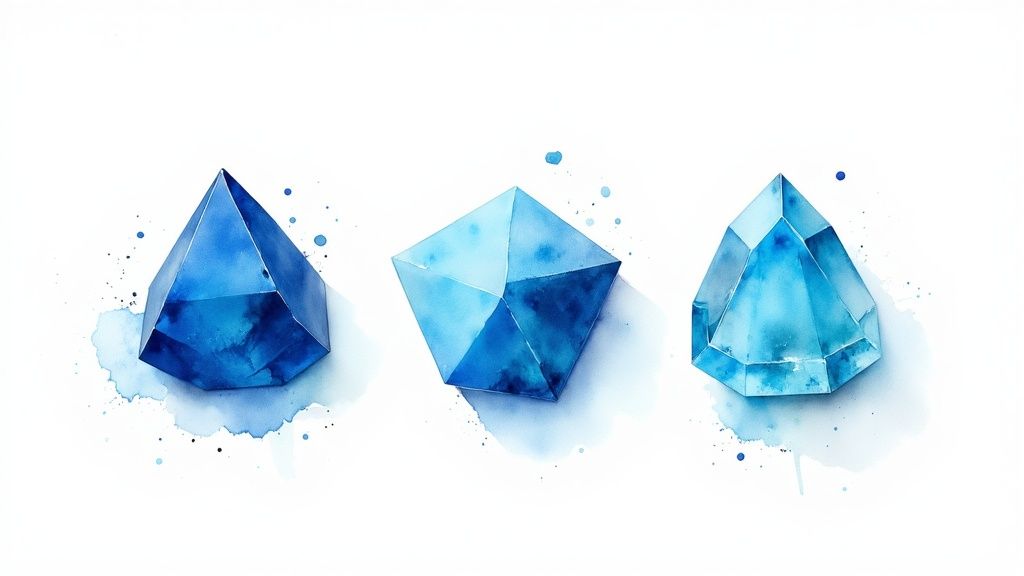
The mineral's name gives away one of its biggest secrets. "Hemimorphite" comes from the Greek words hemi (half) and morph (form), which points to its bizarre crystal structure. In a true hemimorphic crystal, the two ends terminate in completely different shapes—one end might be pointed and sharp, while the other is flat or dome-shaped.
While you won't always find a perfect, textbook-terminated single crystal, this asymmetrical nature is fundamental to the mineral. It’s a subtle detail that forgers often miss. If you're looking for a broader overview of identifying different types of crystals, our crystal identification guide offers great tips that apply across the board.
Spotting Artificially Dyed Fakes
One of the biggest headaches for collectors is the rise of artificially dyed stones. These fakes can be pretty convincing, but a careful eye can usually spot the signs of tampering. Natural blue hemimorphite's color comes from copper that's integrated right into its crystal lattice, meaning the color is part of the stone itself.
Dyed specimens, on the other hand, are usually porous, low-grade minerals that have been soaked in a coloring agent. Here’s what to look for:
Unnaturally Even Color: Real specimens often show subtle shifts in color saturation. A piece that is perfectly, intensely blue all over should make you suspicious.
Dye Pooling in Cracks: Get a closer look, preferably with magnification. If you see darker concentrations of color in tiny crevices or pits, that’s a dead giveaway that dye has settled there.
The Acetone Test: Gently rub a questionable spot with a cotton swab dipped in acetone (nail polish remover). If any blue color comes off, it's unequivocally a fake.
Blue Hemimorphite vs Common Lookalikes
Distinguishing blue hemimorphite from other similar-looking minerals—or outright fakes—is a key skill. This table breaks down the main differences to help you make a confident identification.
Characteristic
Blue Hemimorphite
Blue Smithsonite
Turquoise
Dyed Fakes
Growth Habit
Botryoidal, radiating crystals
Botryoidal, granular
Massive, vein-filling
Varies, often on porous rock
Luster
Vitreous to pearly
Vitreous to pearly
Waxy to dull
Often unnaturally matte or chalky
Hardness (Mohs)
4.5 – 5
4 – 4.5
5 – 6
Varies, depends on base material
Color Clues
Natural color variations
Often has a silky "chatoyance"
Opaque, often with matrix
Dye pools in cracks, rubs off
Using these comparisons, you can start to build a mental checklist for evaluating potential pieces for your collection, separating the genuine treasures from the lookalikes.
The Final Check: Hardness
One last physical test you can perform is a hardness test. Blue hemimorphite has a Mohs hardness of about 4.5 to 5, which makes it relatively soft. This means it can be scratched by a steel knife blade but it cannot scratch a piece of glass.
This simple test is a great way to differentiate it from harder lookalikes or fakes made from more durable materials. By combining these visual checks with a couple of quick physical tests, you can feel much more confident in identifying and investing in authentic blue hemimorphite.
Famous Localities for Top-Quality Specimens
For a serious collector, knowing where a mineral comes from is half the story. The subtle variations in a blue hemimorphite specimen can often act like a geological passport, hinting at its origin from one of the world's famous mines.
While blue hemimorphite is found globally, only a handful of locations produce the electric-blue, gem-quality material that collectors and jewelers prize. Historically, the story began in Europe at places like Vieille Montagne in Belgium and the Aachen area in Germany, both epicenters of zinc mining back in the 19th century. Today, fantastic specimens also come from Arizona and Montana in the USA, Durango in Mexico, and—most famously—the Wenshan Mine in China, the source of the most jaw-droppingly vibrant blue crystals on the market.
These top localities have truly set the standard for what makes a world-class hemimorphite:
Vieille Montagne, Belgium: One of the original historic sites where stunning pale-to-deep blue clusters first captivated collectors.
Aachen, Germany: Known for its classic botryoidal (grape-like) formations with a soft, pearly luster and gentle sky-blue color.
Arizona and Montana, USA: These classic American mines produce rich, saturated blue sprays and bubbly crystalline masses.
Durango, Mexico: A source of striking blue specimens with beautiful form. You can learn more about its mineralogical treasures in our guide to crystals from Mexico.
Wenshan Mine, China: The undisputed king for the most sought-after electric-blue crystals, which command top-tier prices.
Historic European Sites
The classic Belgian and German finds were often unearthed in limestone quarries that reached deep into the earth's oxidation zones. The specific mix of manganese and copper impurities in these areas created a unique color palette, subtly shifting the blues from a pale sky to a deeper teal.
Collectors prize the pieces from Vieille Montagne for their elegant, flowing botryoidal habit. Material from Aachen, on the other hand, often displays a slightly pearly sheen that seems to shimmer in the light.
Modern North American Sources
Out in the American West, veins of hemimorphite run through old zinc mines in Arizona and Montana. Here, you can expect to find robust, deeply saturated colors and dynamic sprays of crystals bursting from their matrix.
When looking at North American specimens, it helps to:
Check the matrix rock to confirm it’s a natural formation.
Look for slight color zoning, which often shifts from pale to vivid blue within the same piece.
Inspect the crystal terminations to make sure they are intact and not damaged.
The Famous Wenshan Electric Blue
The Wenshan Mine in China's Yunnan Province completely dominates the modern market for intense, electric-blue hemimorphite. Discoveries here in 1990 and 1999 introduced world-class examples that redefined what was possible for the species.
These Chinese specimens have an almost fluorescent glow, even under indirect light. Their unbelievable color and sharp, glassy crystals make them standouts in any museum or private collection. It’s no surprise that collectors worldwide chase these Wenshan pieces for their incredible luster and gem-like transparency.
Putting It All Together: Evaluating Provenance
So, how do you use this information? By matching the specific shades, crystal habits, and textures of a specimen to the profiles of these key regions. This is how experienced collectors refine their selections and build a truly world-class collection.
It’s a good practice to compare potential purchases against verified examples from museum collections or reputable dealer catalogs. Look closely at the tiny details—the micro-inclusions, the host rock, the luster. These are the signatures that tell a stone's story. In the world of mineral collecting, exceptional provenance is directly tied to value.
How to Find the Best Mineral Deals on Black Friday
Growing your mineral collection is a thrill, but let's be honest—it can get expensive. That's why timing your purchases around big sales, especially Black Friday, is a savvy collector's best move. It’s the perfect time to score high-quality blue hemimorphite and other must-have specimens without draining your wallet. A little strategy goes a long way in navigating the promotions to find incredible pieces from sellers you can trust.
Before you even think about discounts, you need a clear picture of what a good blue hemimorphite specimen actually looks like. A cheap price on a mediocre mineral isn't a bargain; it's a future regret. You should be hunting for pieces with vibrant, saturated color, impressive crystal formation, and minimal damage.
What to Look for in a Quality Blue Hemimorphite
When you're browsing, especially online, keep these key indicators in mind. They’re the difference between a collection-worthy centerpiece and a piece that just takes up shelf space.
Vibrant Color: You want a rich, sky-blue or even an "electric" blue hue. While some color variation is totally normal, be wary of specimens that look pale, washed-out, or have an oddly uniform color—that can be a red flag for artificial dyeing.
Good Crystal Form: The most sought-after blue hemimorphite often grows in these gorgeous bubbly, rounded clusters called botryoidal formations. Intact, well-defined structures are always going to be more valuable than messy or fragmented ones.
Minimal Damage: Take a close look for chips, cracks, or serious scuffs on the crystal surfaces. A little contact with the matrix rock is expected, but a lot of damage really detracts from a specimen's beauty and value.
Where the Real Black Friday Deals Are Hiding
Once you know what you’re looking for, it's time to start the hunt. Each place you look has its own pros and cons, so knowing where to focus your energy is key.
Your best bet is usually a reputable online dealer. Many of the established mineral shops run some pretty amazing Black Friday promotions. The biggest plus here is reliability. These sellers provide accurate descriptions, high-quality photos, and have a track record of happy customers. You can also be much more confident you're getting genuine, ethically sourced material.
Online marketplaces like Etsy or eBay can also be a goldmine, but you have to be more careful. You can find fantastic deals from smaller, independent sellers, but it’s on you to vet them thoroughly. Always dig into seller reviews, check their return policies, and scrutinize the photos before you even think about buying.
Pro Tip: A few weeks before Black Friday, get on the email lists for your favorite online mineral stores. It’s the single best way to get early access to sales and exclusive discount codes, letting you get first dibs on the best stuff.
And don't forget about local mineral shows that might happen to fall around the holidays. It's less common, but the advantage of seeing a specimen in person is huge. You can properly judge the color, luster, and quality of a blue hemimorphite piece without having to guess from photos. If you're also on the lookout for other popular minerals, our guide to quartz and amethyst crystals has some great info. Plus, building a relationship with dealers at shows can often lead to great deals down the road.
Caring for Your Blue Hemimorphite Specimens
A gorgeous blue hemimorphite specimen is a true prize, and with the right care, you can keep its stunning color and intricate structure looking perfect for a lifetime. This mineral is on the softer side, ranking just 4.5 to 5 on the Mohs hardness scale, so it definitely needs a gentle touch.
It also has what mineralogists call "perfect cleavage," which is a fancy way of saying it can split cleanly along its internal planes if it's handled too roughly. Because of this, knowing how to clean, store, and display your hemimorphite is essential to keeping it safe and sound.
Gentle Cleaning Techniques
When it comes to cleaning blue hemimorphite, the golden rule is "less is more." Forget about harsh chemicals, abrasive cloths, or ultrasonic cleaners—those are a definite no-go. They can easily dull the luster and damage the mineral's delicate surface for good.
The best approach is usually the simplest. A soft, dry brush, like a makeup brush or a small, clean paintbrush, is perfect for gently whisking dust out of all the little nooks and crannies. If you've got some more stubborn grime, you can use a cloth just slightly dampened with lukewarm water. Just be sure to never submerge the specimen, especially if it's still attached to its porous host rock.
Important Takeaway: The key to cleaning blue hemimorphite is to avoid anything that could scratch or chemically react with its surface. A light dusting or a careful wipe-down is all you need to maintain its natural beauty.
To keep your specimens looking vibrant and feeling energetically clear, it's a good idea to cleanse them from time to time. You can learn how to cleanse crystals for lasting energy using various methods that are perfectly safe for more delicate stones.
Best Practices for Storage and Display
Proper storage is just as important as cleaning. Blue hemimorphite can be easily scratched by harder, more common minerals like quartz, so you'll want to store it on its own. Tucking it away in a soft cloth pouch or a padded box is the ideal way to protect it from any accidental bumps or scrapes.
When you're ready to show off your collection, think carefully about placement. Direct, prolonged sunlight is the enemy of that beautiful blue color and can cause it to fade over time. To protect your investment, find a spot that gets plenty of indirect natural light or is lit with gentle, low-heat artificial lighting.
Keep these key points in mind for your display:
Avoid Direct Sunlight: Place your specimens away from windows where they might be baked by the sun for hours on end.
Maintain Stable Temperatures: Keep them clear of heat sources like vents or radiators, which can cause thermal stress and potential cracking.
Ensure Stability: Set them up on a sturdy shelf or inside a cabinet where they won't get accidentally knocked over.
Following these simple guidelines will create a beautiful and safe home for your collection. A thoughtful display doesn't just protect your minerals; it elevates your entire living space. For more inspiration on bringing natural elements into your home, see how you can transform your space with Astro West's natural home decor.
Got Questions About Blue Hemimorphite?
Even seasoned collectors have a few questions when they first encounter a new stone. To wrap things up, here are some quick answers to the most common things people ask about blue hemimorphite.
Is Blue Hemimorphite Safe to Handle?
Absolutely. Blue hemimorphite is perfectly safe to handle in its solid, polished, or raw form. It’s a zinc silicate, so there’s no risk from just touching or displaying it. That said, it's always a good habit to wash your hands after handling any raw mineral specimen, just to get any dust off. As with all minerals, it should never be ingested.
What's the Difference Between Hemimorphite and Smithsonite?
This is a classic point of confusion, since both can form beautiful, botryoidal blue masses. The key difference is their chemical makeup.
The easiest way to tell them apart is with a dilute acid test (best left to a professional). Smithsonite is a carbonate, so it will fizz when a drop of acid is applied. Blue hemimorphite, a silicate, won't react at all. Visually, their crystal habits and luster also differ, but the acid test is the definitive confirmation.
Can You Wear Blue Hemimorphite in Jewelry?
You can, but it needs to be treated with a bit of care. With a Mohs hardness of only 4.5-5, hemimorphite is on the softer side and can be scratched by everyday encounters.
Because of this, it’s best suited for jewelry that won't see a lot of bumps and scrapes, like pendants or earrings. If you absolutely love it for a ring, make sure it’s in a protective bezel setting that shields the stone’s edges from impact.
Discover the allure of natural history at Astro West, where every specimen tells a story. Explore our curated collection of fine minerals, including stunning blue hemimorphite, at https://astrowest.com.