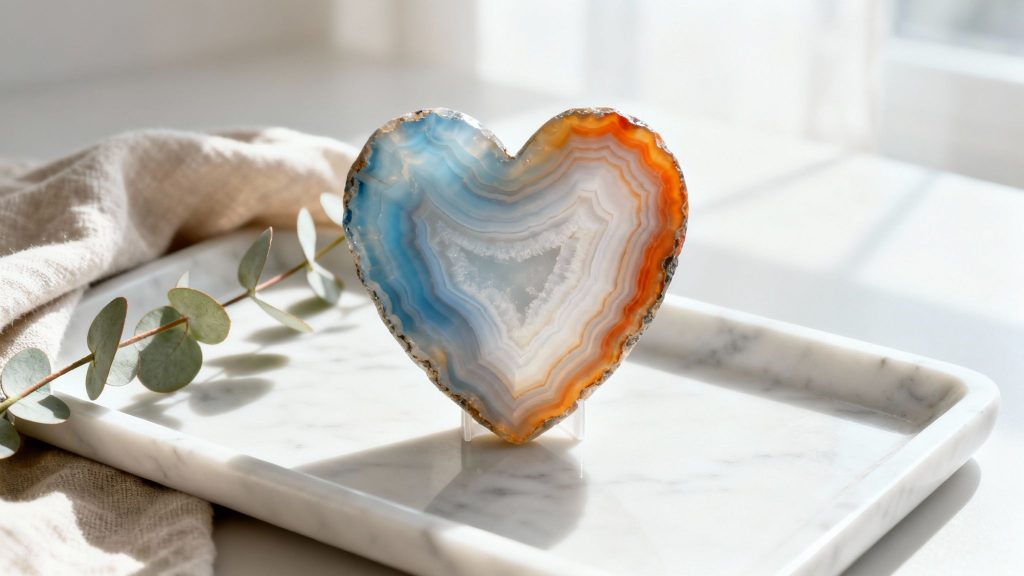
An agate heart is more than just a polished stone; it's a beautiful meeting point of natural geological art and the timeless, universal symbol of love. Each piece captures a unique, miniature landscape of swirling bands and colors, telling a story that is millions of years in the making.
The Unique Allure of the Agate Heart
An agate heart stands out as a special object that bridges the gap between Earth’s ancient history and deep human emotion. Unlike anything mass-produced, no two agate hearts are ever identical. Each one is carefully carved from a larger stone, revealing a one-of-a-kind pattern of concentric bands, crystalline pockets, and subtle shifts in color.
This built-in uniqueness makes it a deeply personal item for collectors, designers, and anyone looking for a thoughtful gift. Holding an agate heart is like holding a piece of history, where every layer represents a different moment in its slow, silent formation inside volcanic rock.
A Blend of Natural Art and Symbolism
The real appeal of an agate heart is in its dual nature. On one hand, it’s a work of natural art, putting the incredible beauty of geological processes on full display. The intricate patterns can look like anything from a cloudy sky to a miniature coastline, sparking the imagination. You can explore a huge variety of these natural patterns in our collection of agate slices.
On the other hand, its shape is loaded with powerful symbolism. The heart is universally recognized as a symbol of love, compassion, and connection, which makes an agate heart a particularly meaningful gift or decorative piece. It transforms a geological specimen into something with real emotional weight.
The real magic of an agate heart is how it combines these two elements. It’s a tangible piece of the natural world, shaped to represent one of our most profound feelings.
This captivating blend of natural artistry and symbolism has driven a lot of interest in these gemstones. In fact, the global agate market was valued at USD 369.09 million in 2024 and is expected to keep growing, thanks to its popularity in jewelry, home décor, and healing practices. You can learn more about the growing agate market trends and what makes these stones so sought-after.
How an Agate Heart Is Formed
The story of every agate heart is an ancient one, starting millions of years ago deep inside the Earth. It's a slow, deliberate process of creation, turning empty space into solid beauty. The journey doesn't begin with a stone at all, but with a void—an empty pocket left behind by gas bubbles trapped in cooling volcanic lava.
Think of these hollow chambers as tiny, protected caves buried within the rock. Over thousands, or even millions of years, groundwater loaded with dissolved silica (a natural compound of silicon and oxygen) starts to seep through the porous volcanic rock around it. This is where the magic really begins.
As this silica-rich water slowly drips into the empty cavity, it doesn't just flood the space. Instead, it patiently deposits microscopic quartz crystals onto the cavity walls, one impossibly thin layer at a time. This gradual layering is the secret behind agate's famous bands.
This visual breaks down how natural formation, human artistry, and symbolic meaning all come together to create the piece you hold in your hand today.
The Science Behind the Bands
This incremental layering process is what makes agate a type of chalcedony, which is a microcrystalline form of quartz. That simply means its crystals are so tiny they can't be seen with the naked eye, giving the stone its smooth, often waxy luster and dense feel.
Each distinct band inside an agate heart is like a geological fingerprint, marking a specific period when the water's chemical makeup or flow rate changed.
Think of it like the rings of a tree. Each band tells a story of a different environmental condition at the moment of its formation, capturing a snapshot of ancient geological history.
This is exactly why you see such incredible variety. Some layers are thick, others are paper-thin; some are translucent, while others are completely opaque. The unique personality of a stone is defined by these layers, which you can also see beautifully displayed in pieces like this incredible agate dish with druzy from Madagascar.
A Natural Palette of Colors
So, where do all those stunning colors come from? While the base material is a form of quartz—often clear or milky white—the vibrant hues in an agate heart are introduced by trace minerals hitching a ride in the water. These impurities act as nature’s paint palette, coloring the silica solution as it crystallizes.
The final colors depend entirely on which elements were present at the time:
Iron Oxides: These common minerals are behind the wide range of earthy tones, from fiery reds and oranges (like you see in Carnelian) to deep yellows and browns.
Manganese: This element is often responsible for creating lovely shades of pink, purple, or even inky black within the agate's layers.
Cobalt, Copper, or Chromium: Depending on their concentration, these can introduce blues, greens, and other cooler tones into the stone.
The final stone is a silent testament to this incredible natural process. Once unearthed, lapidary artists carefully cut and polish the rough agate, revealing its hidden world of color and pattern before shaping it into the heart you see today.
Exploring The Many Faces Of Agate Hearts
Just like no two love stories are the same, no two agate hearts are ever identical. Each variety has its own distinct personality, defined by a unique mix of color, pattern, and mineral inclusions. Getting to know these differences is like meeting the individual characters in a larger story, helping you find the one that truly speaks to your personal style.
Let's dive into some of the most beloved varieties you'll find carved into the classic heart shape. Think of this as your field guide, helping you recognize their defining features and appreciate their subtle, natural beauty.
Moss Agate: The Landscape Stone
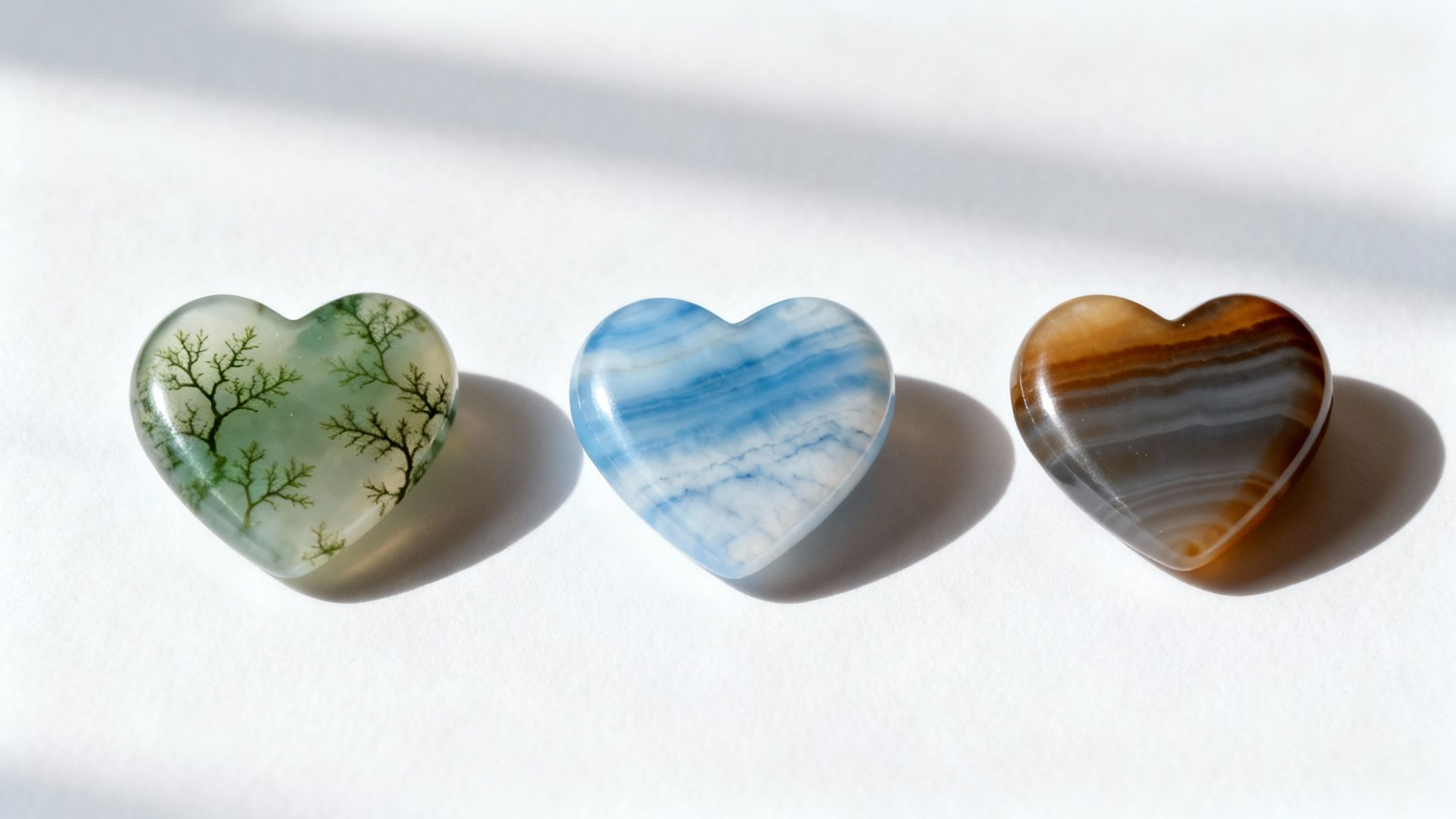
Holding a Moss Agate heart is like holding a miniature, captured forest. This variety isn't traditionally banded; instead, it’s known for its stunning dendritic inclusions—branching, moss-like patterns of green hornblende or manganese that seem to float within clear or milky chalcedony.
These inclusions create breathtaking scenes that look like tranquil, green landscapes, making each piece a true work of natural art. A Moss Agate heart is perfect for those who feel a deep connection to the outdoors and appreciate organic, untamed beauty.
Blue Lace Agate: The Calming Communicator
Known for its serene and gentle energy, Blue Lace Agate is one of the most sought-after varieties out there. Its delicate, sky-blue bands are layered with soft whites and sometimes even hints of lilac, creating a peaceful, wave-like pattern that’s incredibly easy on the eyes.
A Blue Lace Agate heart feels like a whisper of calm. Its soft, swirling lines are incredibly soothing, making it an ideal choice for anyone looking to bring a touch of tranquility and elegance into their space.
The consistent, parallel bands of Blue Lace Agate are a hallmark of its quality. The more defined and delicate the layers, the more prized the specimen. This variety showcases the classic agate banding in its most graceful form.
Botswana Agate: The Sunset Stone
Botswana Agate is celebrated for its incredibly fine and intricate banding, often in beautiful shades of pink, gray, white, and apricot. Its patterns are tight and complex, sometimes creating eye-like formations or swirling fortifications that draw you right in.
Often called the "Sunset Stone" for its warm, gentle hues, a Botswana Agate heart gives off a comforting and protective feeling. It’s an earthy yet sophisticated choice, perfect for someone who appreciates complex patterns and muted, warm tones. You can see similar soft, warm colors in some Flower Agate pieces, like this gorgeous Carnelian Flower Agate Heart.
The mesmerizing patterns of agate have captivated people for centuries, cementing their place in jewelry and decor as symbols of love and balance. To get a better sense of their global appeal, it's interesting to note that while China is a dominant source for varieties like Moss Agate, Gray Agate holds a huge market share and is often used in alternative medicine.
To make identifying these beauties a bit easier, here’s a quick rundown of some popular varieties you'll encounter.
Popular Agate Heart Varieties At A Glance
This table highlights the distinct features and common sources of popular agate varieties often found in heart shapes, helping you identify your favorite.
Agate Variety
Primary Colors
Key Patterns & Inclusions
Common Origins
Moss Agate
Green, White, Clear
Dendritic, moss-like green inclusions
India, Brazil, USA, Uruguay
Blue Lace Agate
Light Blue, White, Gray
Delicate, parallel, wavy bands
Namibia, South Africa
Botswana Agate
Gray, Pink, Brown, Apricot
Fine, tight, intricate banding
Botswana, Brazil, Mexico
Flower Agate
Pink, Cream, Red, Gray
Plume-like inclusions resembling blossoms
Madagascar
Carnelian Agate
Orange, Red, Brown
Solid color to subtle banding
Brazil, India, Uruguay
Crazy Lace Agate
Red, Yellow, Gray, Brown
Complex, chaotic, twisted bands and "eyes"
Mexico
This table is just a starting point, of course. The real joy of agate comes from discovering the endless variations that nature creates. Each heart tells its own geological story, waiting for the right person to come along and appreciate it.
How to Choose Your Perfect Agate Heart
Picking out an agate heart is a personal journey, a bit like finding a piece of art that just clicks with you. It’s easy to feel overwhelmed by the choices, but with a few things to look for, you can go from simply admiring them to confidently picking a treasure that feels like it was meant for you. The goal is to find a piece that isn't just beautiful but is also a top-notch example of nature's handiwork.
Most people are first drawn to the color, and for good reason. You’ll want to look for rich, saturated hues that are evenly distributed and vibrant. Whether you’re a fan of the deep, earthy greens in Moss Agate or the fiery oranges of Carnelian, the intensity of the color is often a good sign of a higher-quality stone.
Next, take a close look at the banding. The intricate, layered patterns are what make agate so iconic. Are the lines sharp and distinct, or do they blend softly into one another? Neither is necessarily better—it’s purely a matter of taste—but a complex, well-defined pattern is often what serious collectors are after.
Assessing Quality and Structure
Beyond the obvious beauty of color and pattern, the physical quality of the agate heart is what really counts.
A truly superior piece will have a smooth, high-gloss polish that feels almost liquid to the touch. Run your fingers over the surface; it should be completely free of dull spots or rough patches. Any imperfections in the finish could be a sign of a rushed polishing job.
You should also give the stone a careful inspection for any structural issues. Keep an eye out for surface-reaching cracks or significant chips, as these can affect the stone's durability over time. While internal fractures and inclusions are a natural part of the stone’s character—and often add to its beauty—external cracks are a weak point you want to avoid.
A key takeaway for any buyer is to differentiate between natural inclusions and damage. Inclusions are the stone's birthmarks—like the mossy plumes in Moss Agate—while cracks are signs of stress or mishandling.
Authenticity and Ethical Sourcing
Finally, the integrity of your purchase comes down to two things: authenticity and where it came from. As a natural material, an agate heart's value is tied to its size, weight, and the rarity of its pattern. But its true worth is also connected to its origin story.
Globally, the demand for ethical sourcing has grown as people increasingly want to know where their products come from. Agate's natural sustainability fits perfectly with this trend, and jewelry shops have become major hubs for these kinds of pieces. To see just how big this market is, you can check out detailed reports on the agate jewelry market.
Choosing a reputable seller like Astro West means you can trust that your piece has been vetted by experts for authenticity and sourced with integrity. It’s the best way to guarantee you’re investing in a genuine, high-quality natural treasure—not a synthetic look-alike or a stone with a questionable past.
Decorating and Gifting with Agate Hearts
An agate heart is so much more than a geological specimen; it's a versatile piece of style and sentiment. Its long journey from ancient volcanic rock to polished treasure isn't really complete until it finds a home in your life. Whether you're bringing a touch of nature indoors or searching for a deeply personal gift, there are countless ways to share its beauty.
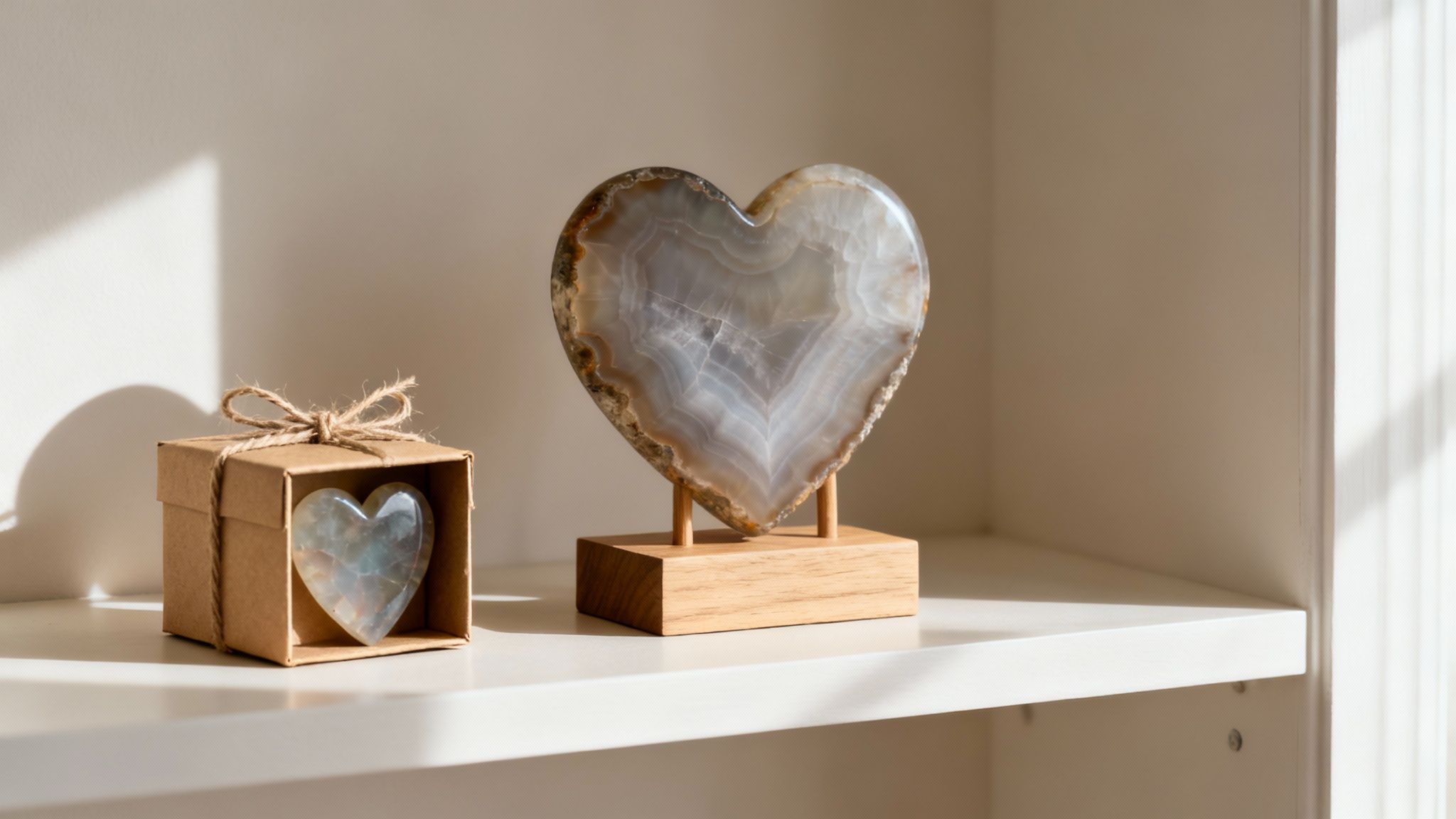
The natural artistry of an agate heart makes it a stunning addition to almost any room. Its organic patterns and rich colors can create a perfect contrast in modern, minimalist spaces just as easily as they can complement more traditional, eclectic interiors. It’s one of the simplest ways to add a sophisticated, earthy element to your decor.
Styling Agate Hearts in Your Home
Weaving these pieces into your space is refreshingly simple. The real key is just to let the stone's natural beauty be the main event.
As a Centerpiece: A larger agate heart, especially one with dramatic banding or a sparkling druzy pocket, can command attention on a console table, coffee table, or mantle.
On a Bookshelf: Tuck a smaller heart next to a stack of your favorite books or other cherished objects to create a visually interesting and personal vignette.
As a Functional Accent: Use a medium-sized, weighty heart as an elegant paperweight on your desk. It’s an easy way to turn an everyday item into a piece of art.
If you want to build on that natural aesthetic with larger statements, consider incorporating pieces like this beautifully handcrafted agate bowl from Madagascar to create a cohesive, grounded look.
The Perfect Gift of Meaning and Beauty
Beyond just decorating, agate hearts make incredibly thoughtful presents. The combination of their natural beauty and symbolic shape makes them a fantastic choice for celebrating milestones, expressing love, or simply showing someone you care. They're a timeless pick for anniversaries, Valentine's Day, or Mother's Day.
An agate heart is a gift that says, "You are one-of-a-kind." Because no two are alike, it’s a deeply personal way to honor someone’s unique spirit.
The secret to a great gift is always thoughtfulness. By choosing a specific variety of agate, you can tailor the heart to the recipient’s personality or style. For instance, a Moss Agate heart might be perfect for a nature lover, while a Blue Lace Agate heart could be a calming presence for a busy friend. If you need more inspiration for unique presents, you can find many general gift ideas that might help spark your creativity. This level of personalization is what transforms a beautiful object into a cherished keepsake that will be treasured for years to come.
Caring for Your Agate Heart
An agate heart is a surprisingly durable stone, clocking in at a solid 7 on the Mohs hardness scale. But like any natural treasure, a little care goes a long way in preserving its brilliant polish and rich color for a lifetime. These simple, practical steps will keep its beauty intact.
When it comes to cleaning, the best method is also the easiest. All you need is lukewarm water, a couple of drops of mild, pH-neutral soap, and a very soft cloth. Gently wipe the surface to clear away any dust or oils from handling, then give it a good rinse and pat it dry.
A word of caution: steer clear of harsh chemicals, ultrasonic cleaners, and anything abrasive like stiff brushes or scouring pads. Over time, these can strip away the polish, dull the surface, or even create tiny scratches that diminish its natural glow.
Smart Storage and Display
Where you keep your agate heart is just as important as how you clean it. Proper storage isn't just about avoiding dust; it's about protecting it from accidental damage and environmental factors that can dull its appearance.
Here are a few key tips to keep in mind:
Avoid Prolonged Sunlight: A little sun won't hurt, but keeping your agate in intense, direct sunlight for long periods can cause the colors in some varieties to fade.
Prevent Scratches: Store your agate heart away from harder gemstones like diamonds or sapphires. A simple solution is to wrap it in a soft cloth or place it in its own lined box to prevent jostling and scratches.
Display Securely: If you’re putting it on a shelf or table, make sure it’s in a stable spot where it can’t be easily knocked over.
Following these simple habits will ensure your agate heart remains a beautiful and cherished piece in your collection for years to come.
Got Questions? We've Got Answers
To round things out, let's tackle some of the most common questions people have about these beautiful stones. Think of this as your quick guide to feeling even more confident and knowledgeable about agate hearts.
Is an Agate Heart Fragile?
Not at all. You might be surprised to learn how tough agate really is. It scores a solid 7 out of 10 on the Mohs scale of mineral hardness, putting it right up there with quartz.
This means it’s more than capable of handling everyday life and is resistant to scratches from most common objects. Of course, it's not indestructible—a hard drop onto a concrete floor could still cause a chip or fracture. But with just a little bit of reasonable care, your agate heart is a treasure that will last a lifetime.
Are Two Agate Hearts Ever the Same?
Absolutely not. Every single agate heart is unique, and that’s a huge part of its charm. The intricate bands, dreamy colors, and swirling patterns are the result of a geological story that took millions of years to write, with countless tiny variables influencing the final masterpiece.
Each agate heart is a one-of-a-kind geological fingerprint. The specific blend of mineral deposits, water flow, and pressure changes that formed one stone can never be perfectly replicated.
How Much Does an Agate Heart Cost?
The price of an agate heart can swing pretty widely, from wonderfully affordable pieces to high-end collector's items. A few key factors really drive the value:
Rarity of the Variety: Prized types like a dreamy Blue Lace Agate or those with exceptionally clear inclusions will often command higher prices.
Color and Pattern: Stones with vibrant, deeply saturated colors and complex, well-defined banding are typically more sought-after.
Size and Weight: As you’d expect, larger, heavier hearts will naturally cost more.
Craftsmanship: The quality of the cut, shaping, and polish plays a massive role in its final price and overall beauty.
At Astro West, we take great pride in offering a curated collection of authentic, high-quality agate hearts to suit every taste and budget. Come explore our collection and find the unique piece that speaks to you at https://astrowest.com.