A Collector’s Guide to Agate Blue Banded Gemstones
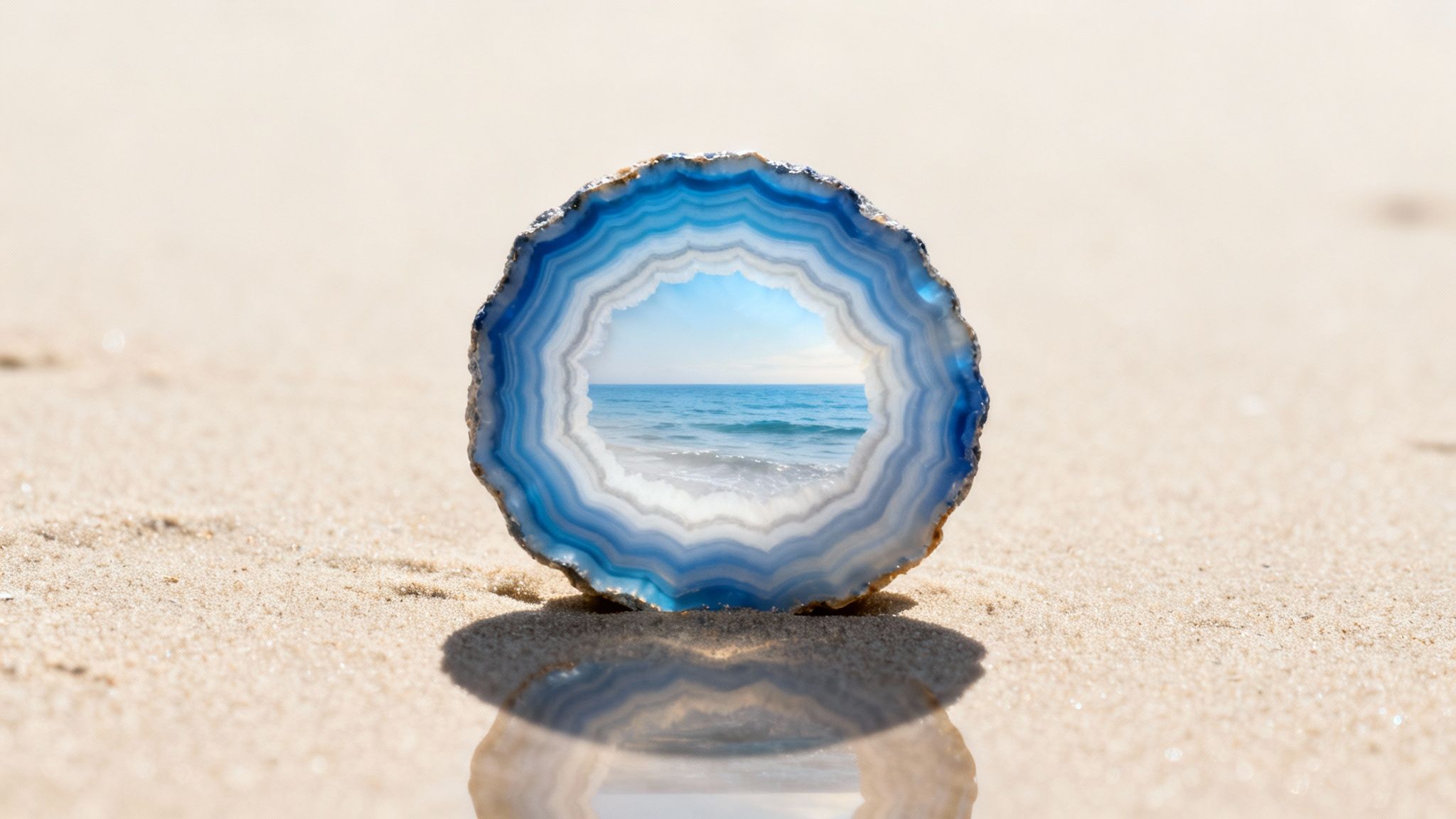
Step into the calming world of blue banded agate, a gemstone whose mesmerizing patterns bring to mind gentle seascapes and clear skies. Its soft blues and crisp whites, layered over millions of years inside volcanic rock, create a serene beauty that has captivated collectors and jewelry lovers for ages.
This guide is for everyone—from new collectors drawn to its unique patterns to seasoned enthusiasts looking to deepen their understanding of this remarkable stone.
The Enduring Allure of Blue Banded Agate
Think of this as your complete journey into appreciating, identifying, and investing in one of nature’s most elegant creations. We'll explore exactly what makes this variety of chalcedony so special, turning you into a confident and knowledgeable collector.
A Stone of Growing Prominence
The appeal of blue banded agate is more than just aesthetic; it's part of a significant and growing market. Its popularity in jewelry and home décor has captured the attention of a global audience, contributing to a thriving industry. This rising interest isn't just a feeling—it's backed by strong market forecasts.
The overall agate market, valued at USD 8,856.35 million in 2023, is projected to soar to USD 15,827.27 million by 2031. That reflects a robust compound annual growth rate of 7.5%. Within this trend, industry experts expect blue agate to show the fastest growth, largely thanks to its distinct visual appeal.
What You Will Discover
This guide provides a clear roadmap to understanding everything you need to know about blue banded agate. You'll leave with practical, in-depth expertise on the topics that matter most to any enthusiast:
Geological Origins: Learn how nature’s slow, patient artistry creates the stone's iconic bands.
Identification Skills: Gain the confidence to spot authentic blue banded agate from a mile away.
Valuation Factors: Understand what determines a specimen's quality, rarity, and price.
Authenticity and Care: Learn to identify fakes and properly care for your growing collection.
From polished decorative items like a stunning agate slice to intricate jewelry pieces, the applications for this stone are vast and beautiful. By the end of this guide, you'll have a full appreciation for its incredible journey, from a hollow cavity in volcanic rock to a treasured showpiece.
How Nature Creates Blue Banded Agate
The story of every blue banded agate begins millions of years ago, deep within the Earth. It's a tale of volcanic fury, followed by an incredibly slow and patient creative process. This natural artistry unfolds inside the cavities and fissures of ancient volcanic rocks, like basalt or rhyolite.
Imagine a volcanic eruption has just cooled. Gas bubbles trapped within the molten rock leave behind empty pockets, known as vesicles or geodes. Over immense spans of time, groundwater rich in dissolved silica—the same compound that makes up quartz—begins to seep through these porous rocks.
The Slow Painting Inside the Stone
This silica-rich water is the artist's medium. As it slowly percolates into the empty cavities, the environment changes. Maybe the temperature shifts, or the water's chemistry alters. These subtle changes trigger the silica to precipitate out of the solution, depositing microscopic quartz crystals onto the cavity walls.
This process doesn't happen all at once. It's a meticulous, layer-by-layer accumulation that can take thousands, or even millions, of years. Each new wave of silica-rich fluid deposits another delicate film of microcrystalline quartz, creating the distinct bands that define agate blue banded specimens.
Think of it like a slow-motion 3D printer, building the stone one infinitesimal layer at a time from the outside in. The shape of the initial cavity dictates the final form of the agate, which is why they are often found as rounded nodules.
The characteristic banding of an agate is a geological record. Each layer tells a story about the changing chemistry and environmental conditions present during its formation millions of years ago.
Nature's Pigments: The Source of the Blues
But where do those beautiful blues, whites, and greys come from? The color isn't from the quartz itself, which is naturally colorless. Instead, the hues are created by trace minerals that hitched a ride in the silica-rich water during deposition.
The presence of different elements acts as nature’s pigment, staining each layer as it forms:
Iron and Manganese: These are often the culprits behind the beautiful spectrum of blues and greys.
Titanium: Under just the right conditions, this element can also contribute to blue coloration.
Absence of Minerals: Layers with very few impurities crystallize into milky white, grey, or translucent bands, providing that classic contrast.
Because the mineral composition of the water fluctuated constantly over millennia, each layer received a slightly different "paint," resulting in the unique and mesmerizing patterns we see. No two stones are identical because no two experienced the exact same geological history. This beautiful and ancient process is what makes each blue lace agate slice a truly one-of-a-kind piece of natural art, and understanding it is key to appreciating why these gems are so treasured by collectors.
How to Identify Authentic Blue Banded Agate
Spotting a genuine blue banded agate versus an imitation or a low-grade piece is a skill any collector can pick up. It doesn’t take a geologist's toolkit—just a sharp eye and a little knowledge about the stone’s key signatures. By zeroing in on color, banding, and translucency, you can learn to confidently size up any specimen that comes your way.
Authentic blue banded agate isn't just one shade of blue; it's a whole spectrum. You'll see everything from a faint, almost ethereal sky blue to a rich, deep azure. The key thing to remember is that these colors are almost never uniform. Instead, they appear in distinct, layered stripes—a beautiful testament to how they slowly formed, layer by microscopic layer.
Analyzing the Bands and Color
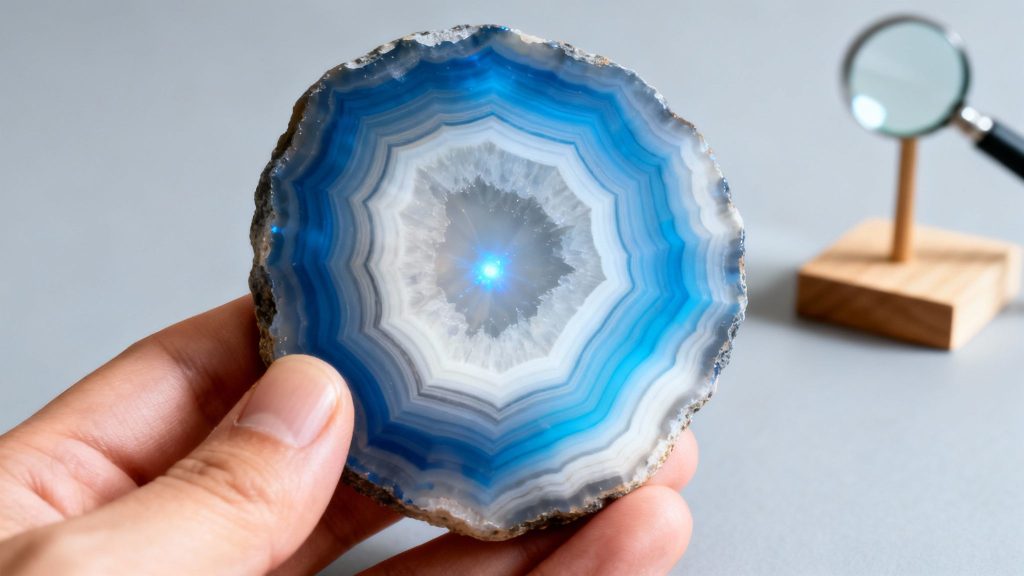
The most iconic feature of blue banded agate is, of course, its bands. In a genuine stone, these bands tell a story. Look for patterns that are parallel, concentric, or beautifully wavy. The lines should be crisp and well-defined, with clear separation between the layers of blue, white, and sometimes grey or even translucent quartz.
Natural variation is your best friend here. A real agate will have subtle imperfections, little shifts in color, and patterns that aren't perfectly symmetrical. If a stone’s blue looks too perfect, almost electric or unnaturally even all the way through, that’s a red flag. It’s often a sign of dyeing, a common treatment we’ll dig into later.
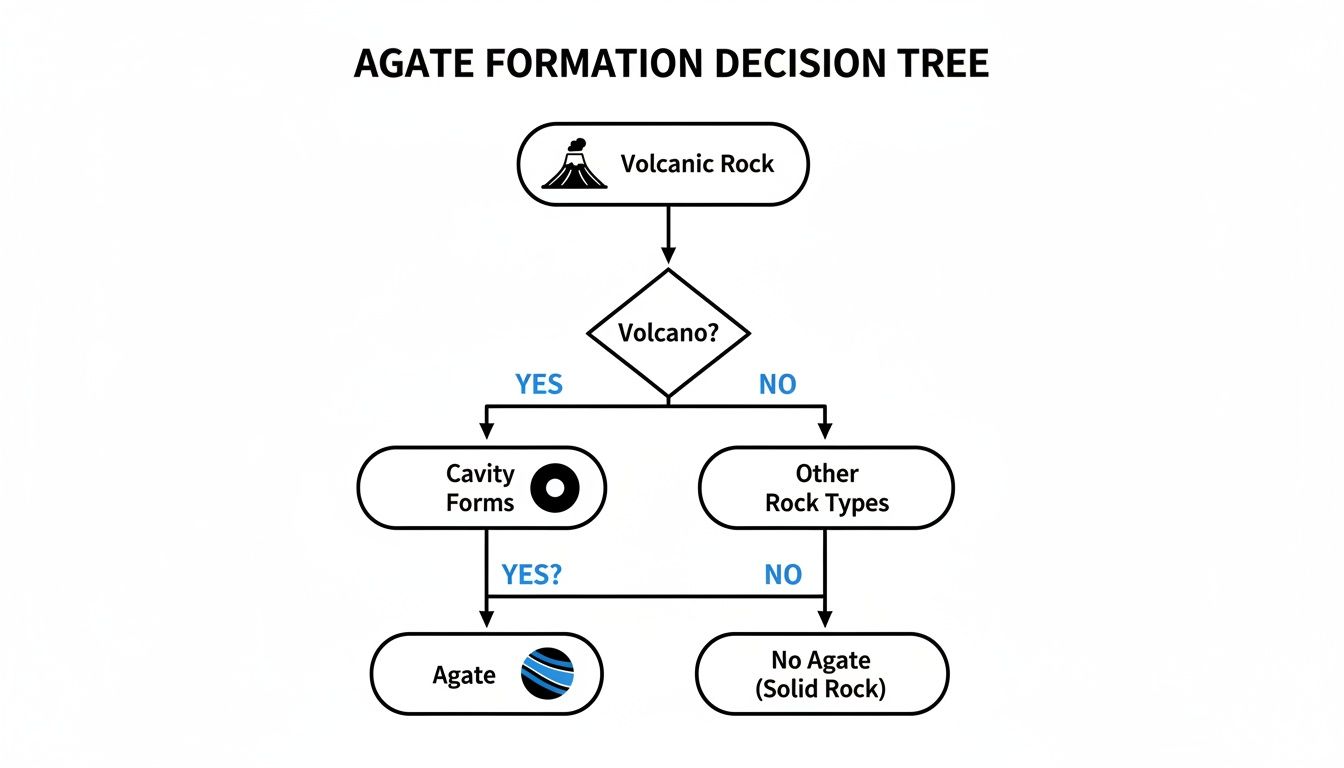
This flowchart gives you a great visual of how agate comes to life, starting with volcanic activity that creates the hollow pockets needed for silica-rich water to seep in and get to work.
As you can see, agate is a secondary mineral. It forms long after the initial volcanic rock has cooled and hardened, which is why its intricate patterns are so different from the host rock surrounding it.
The Translucency Test
One of the most reliable ways to identify genuine agate is to check its translucency. Agate is a variety of chalcedony, which is known for being semi-transparent to translucent. In simple terms, this means light should be able to pass through it, at least a little bit.
To try this yourself, just hold the stone up to a light source—a bright window or the flashlight on your phone will do. A true blue banded agate will seem to 'glow' from within, especially around its thinner edges. If the stone is completely opaque and blocks all light, you're likely looking at a different mineral, like jasper, or a man-made fake.
To make things easier, here's a quick checklist to run through when you're examining a potential blue banded agate.
Blue Banded Agate Identification Checklist
Use this quick reference to check for the key visual and physical traits of genuine blue banded agate.
Characteristic
What to Look For
Color
Natural spectrum of blues, from pale to deep. Avoid unnaturally uniform or electric shades.
Banding
Well-defined, parallel, or wavy bands of blue, white, and sometimes grey. Imperfections are a good sign.
Translucency
Should allow some light to pass through, especially at the edges. It will have a subtle inner "glow."
Surface
Often has a waxy or vitreous (glassy) luster after polishing.
Feel
Feels cool and solid to the touch, consistent with natural stone.
This isn't an exhaustive list, but if a stone ticks all these boxes, you can be much more confident that you're holding the real deal.
Considering the Stone's Origin
Finally, knowing where a stone was mined can offer some great clues. Different locations are famous for producing agates with their own unique personalities.
Namibia and Malawi: These African sources often produce agates with stunningly vibrant and clearly defined blue and white bands. They are highly sought after for a reason.
Brazil and Mexico: Also major players, but specimens from these locations can vary wildly in their patterns and the intensity of their color.
United States: States like Oregon and Washington have their own deposits, known for producing agates with unique color combinations and fascinating patterns you won't see anywhere else.
Understanding a stone's provenance doesn't just add to its story; it helps you anticipate its specific visual traits. Armed with this knowledge, you can become a much more discerning buyer, ready to pick out high-quality, authentic pieces for your collection.
Understanding the Value of Blue Banded Agate
So, what makes one piece of blue banded agate catch a collector's eye while another sits on the shelf? Unlike diamonds with their rigid grading system, agate is judged more on its artistry and visual impact. But don't let that fool you—there's a consistent set of criteria that experts, jewelers, and collectors use to determine a stone's quality and, ultimately, its price.
Think of it as a modified version of the classic "Four Cs" used for gemstones: Color, Clarity, Cut, and Carat. Each of these elements plays a role, but for agate, it's the beautiful interplay between them that tells the full story. The most prized pieces are the ones where all these factors come together in perfect harmony.
The Four Cs of Agate Valuation
Color is usually the first thing that grabs your attention. The most sought-after specimens boast a rich, vibrant blue that feels deep but completely natural. Pale, washed-out blues are typically less valuable than those with bold, saturated layers of azure and sky blue. The real magic happens when you get a high contrast between those blues and crisp, clean white bands—that's what really makes a piece pop.
Next up is Clarity. For an opaque stone like agate, this isn't about seeing through it, but rather its translucency and how free it is from distracting cracks or inclusions. A top-quality piece will let some light pass through, giving it a soft, inner glow. Stones that are completely opaque or riddled with fractures are considered lower grade.
The historical significance of these stones also bolsters their modern value. Blue banded agate isn't a new discovery; it's been admired and used for millennia, and that legacy fuels today's market. The global agate market hit USD 367 million in 2023 and is projected to climb to USD 582 million by 2033, with rare blue varieties like this being major contributors. You can dig into more of this data on the agate market growth at DataHorizzonResearch.com.
Cut is all about the artistry. A skilled lapidary knows exactly how to orient the raw stone to show off its banding to its best advantage. Whether it's shaped into a smooth cabochon for jewelry or a polished slab for display, the cut is designed to highlight the stone's natural pattern. The polish itself should be glassy and flawless, with no scratches or pits.
Finally, Carat weight—or just the overall size—definitely matters. As with most gems, bigger is often better, especially when the quality is high. Large, top-tier pieces are much rarer than smaller ones. An impressive, beautifully patterned decorative item like this seven-pound agate bowl from Madagascar commands a premium price simply because of its sheer size and the quality of the massive raw stone needed to create it.
Why Banding Is the Most Critical Factor
While the Four Cs give you a solid framework for evaluation, the banding pattern is often the single most important factor. In many cases, the definition, complexity, and aesthetic of the bands can trump everything else.
The ultimate measure of a blue banded agate's value lies in its pattern. Collectors prize stones with exceptionally sharp, intricate, and visually pleasing bands—patterns that tell a unique geological story.
When you're looking at a piece, keep an eye out for these key banding characteristics:
Definition: Are the lines between colors crisp and distinct, or are they blurry and muddled? Sharp lines are always more desirable.
Complexity: Does the stone just have simple, parallel lines? Or does it feature more intricate and rare patterns, like concentric circles or fortification bands?
Visual Flow: Does the pattern create a sense of movement or look like a tiny, captivating landscape? Some patterns just have a natural appeal that draws you in.
Ultimately, a stone with a slightly less-than-perfect color might still be incredibly valuable if it has a breathtakingly unique and well-defined pattern. This combination of factors is why every piece of blue banded agate is judged on its own singular merits.
Spotting Fakes and Common Treatments
As the popularity of blue-banded agate grows, so does the number of imitations and treated stones hitting the market. Protecting your investment starts with learning to tell the difference between natural beauty and a clever alteration.
The single most common treatment you'll run into is dyeing. This is often done to enhance a pale, low-grade agate or to create a blue hue where none existed in the first place.
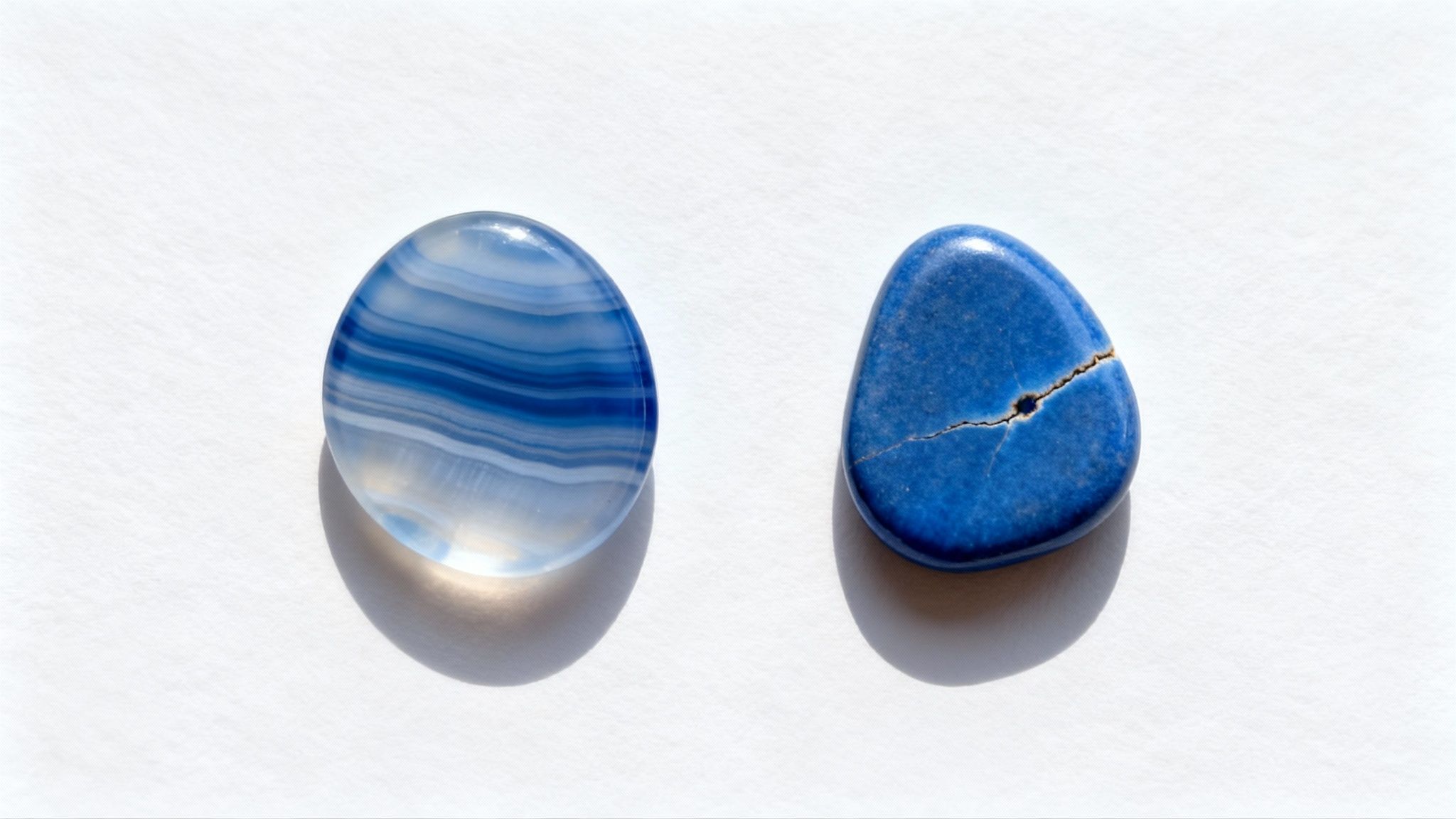
Luckily, dyed stones often leave behind some tell-tale clues. Natural blue-banded agate has a subtle, layered color that shifts and varies. In contrast, dyed agate frequently shows off an unnaturally vibrant, electric blue that just looks too uniform and intense to be real.
Another dead giveaway is where the pigment settles. Take a close look at the stone, especially any tiny cracks or fissures. In a dyed piece, the color often seeps into these imperfections, showing up as dark, concentrated lines of pigment that don't flow with the natural banding.
Identifying Common Imitations
Beyond treatments, you might also find outright fakes made from completely different materials. Glass and resin are the usual suspects used to mimic the look of agate.
To spot these, you can rely on a few simple physical tests:
Check for Bubbles: Look very carefully at the stone, preferably with a magnifying glass. Tiny, perfectly round air bubbles trapped inside are a hallmark of manufactured glass, not a natural stone.
Test the Temperature: Like other quartz varieties, natural agate feels cool to the touch. Fakes made from plastic or resin will often feel warmer and noticeably lighter.
Listen to the Sound: Gently tap the specimen against a tooth (a classic jeweler's trick). A real stone will make a sharp "clink," while plastic or resin will just give a dull, muted thud.
The market's focus on authenticity is growing, even as high costs impact 25% of small firms. The top five manufacturers, holding a 15% market share, are launching facilities with eco-friendly polishing techniques to preserve the natural banding, responding to what buyers want.
A genuine blue-banded agate will almost always show some level of translucency, especially around its edges. If a stone is completely opaque and feels unnaturally light, it warrants a much closer look.
This attention to detail is crucial. While many treatments are perfectly acceptable if they're disclosed, some sellers aren't so transparent. Some pieces, like this colorful dyed crackle agate bracelet, are intentionally altered for a specific look and sold honestly as such. The problem comes up when these treatments are hidden from the buyer.
By learning these simple identification techniques, you empower yourself to make informed decisions and build a collection of authentic, high-quality treasures.
Looking After Your Blue Banded Agate
Keeping the tranquil beauty of your blue-banded agate in top shape is pretty straightforward. While agate is a tough stone—ranking a solid 7 on the Mohs hardness scale—it still needs a bit of mindful handling to keep that gorgeous luster for years to come. A little care goes a long way.
When it comes to cleaning, a gentle touch is always the right move. All you really need is a soft cloth or a gentle brush with some warm, soapy water to wipe away any dust or oils.
It’s really important to steer clear of harsh chemicals like bleach or ammonia, as they can easily mess up the stone's surface. Same goes for ultrasonic and steam cleaners; they're a definite no-go, especially for any pieces that have been dyed or have internal fractures. The intense vibrations can cause some serious damage.
Proper Storage and Display
How you store your blue banded agate is just as crucial as how you clean it. Harder gemstones can and will scratch agate. To keep those beautiful bands flawless, always store your pieces away from gems like diamonds, sapphires, or even topaz.
Here are a few simple but effective storage ideas:
Soft Pouches: Tuck individual pieces into their own separate fabric pouches.
Lined Jewelry Boxes: A jewelry box with dedicated, fabric-lined compartments is perfect.
Separate Displays: For bigger decorative items, just make sure they aren’t bumping up against harder minerals.
Remember: Smart storage is your best defense against accidental scratches. A moment of care now prevents a lifetime of regret later.
Finally, think about where you display your collection. While a bit of sun is harmless, leaving your agate in direct sunlight for long periods is a bad idea. The heat and UV rays can cause the colors to fade over time, which is especially true for treated or dyed agates.
Pick a spot that gets plenty of indirect light. This will keep your blue banded agate looking just as stunning as the day you brought it home.
Got Questions? We’ve Got Answers.
Let's tackle some of the most common questions people have about blue banded agate. Think of this as a quick-reference guide to round out your understanding of this incredible stone.
Is Blue Banded Agate The Same as Blue Lace Agate?
It's a common point of confusion, but no, they aren't the same—though they are close cousins in the chalcedony family. The key difference is in the style of their bands.
Blue lace agate, as its name suggests, is known for its delicate, intricate, almost frilly bands. Its color is typically a very pale, soft periwinkle blue. On the other hand, blue banded agate usually shows off bolder, more defined, and often parallel bands. You'll often find a wider spectrum of blues and much sharper contrast between the layers.
Where Is The Best Blue Banded Agate Found?
Some of the most sought-after blue banded agate comes from Namibia and Malawi. These regions are famous for producing stones with exceptionally vibrant, saturated colors that collectors go wild for.
Of course, you can also find beautiful specimens from other major sources like Brazil, Mexico, Madagascar, and even parts of the United States. A stone's origin can really influence its look—from the depth of its color to the specific pattern of its bands—making its provenance a fascinating part of its story.
Provenance matters in the mineral world. Just like Lake Superior Agates are prized for their unique iron-rich red bands, certain regions become famous for specific traits, adding another layer of interest for collectors.
What Is The Spiritual Meaning of Blue Banded Agate?
In the world of crystal healing and metaphysical practices, blue banded agate is widely seen as a stone of calm and tranquility. It's believed to be a powerful soother of anxiety, helping to encourage clear, thoughtful communication and restore emotional balance.
Its gentle, cool energy is often used to temper fiery emotions and foster a state of peaceful self-expression. This makes it a popular choice for meditation aids, worry stones, or personal talismans meant to keep you centered.
Can I Wear Blue Banded Agate Jewelry Every Day?
Absolutely. With a Mohs hardness of 6.5 to 7, it's a pretty tough stone that's more than durable enough for daily wear. It's especially well-suited for pieces that don't take a lot of direct hits, like pendants and earrings.
For rings and bracelets, which are naturally more exposed to bumps and scrapes, the stone is still quite resilient. Just be mindful and try to avoid hard knocks against countertops or other surfaces. A little care goes a long way in preventing accidental chips and fractures, ensuring your jewelry stays beautiful for years to come.
Ready to find your own piece of natural artistry? At Astro West, we offer a curated collection of ethically sourced minerals and gemstones, each vetted for authenticity by our in-house experts. Explore our selection and discover a treasure that tells a story millions of years in the making. Visit Astro West today.