Meta description: Explore the best Upper West Side shopping destinations and discover unique natural décor and gifts inspired by AstroWest.com.
You're on the Upper West Side with a few open hours, good walking shoes, and the sense that the right purchase should feel more personal than transactional. That instinct serves you well here. Upper West Side shopping works best when you treat it as a neighborhood ritual, not a sprint between chain stores.
This part of Manhattan has the scale and purchasing power to support serious retail. The Upper West Side counted approximately 193,867 residents in the 2010 Census, up 0.9% from 2000, and by 2024 it ranked as the city's third largest neighborhood by population among 59 neighborhoods, with an average individual income of $122,222 and 75,648 households averaging two people each, according to the Upper West Side demographic profile. As a result, the local shopping culture rewards curation, expertise, and objects with staying power.
Beyond the brownstones, this is a district of legacy food halls, independent bookstores, cultural retail, and design-minded specialty shops. It also suits collectors. A neighborhood anchored by the American Museum of Natural History naturally makes room for fossils, minerals, meteorites, and natural décor that feel at home in both prewar apartments and contemporary interiors.
If you want a better NYC shopping guide than the usual roundup, start here. These are the stops that deliver character, not just inventory.
1. Astro West
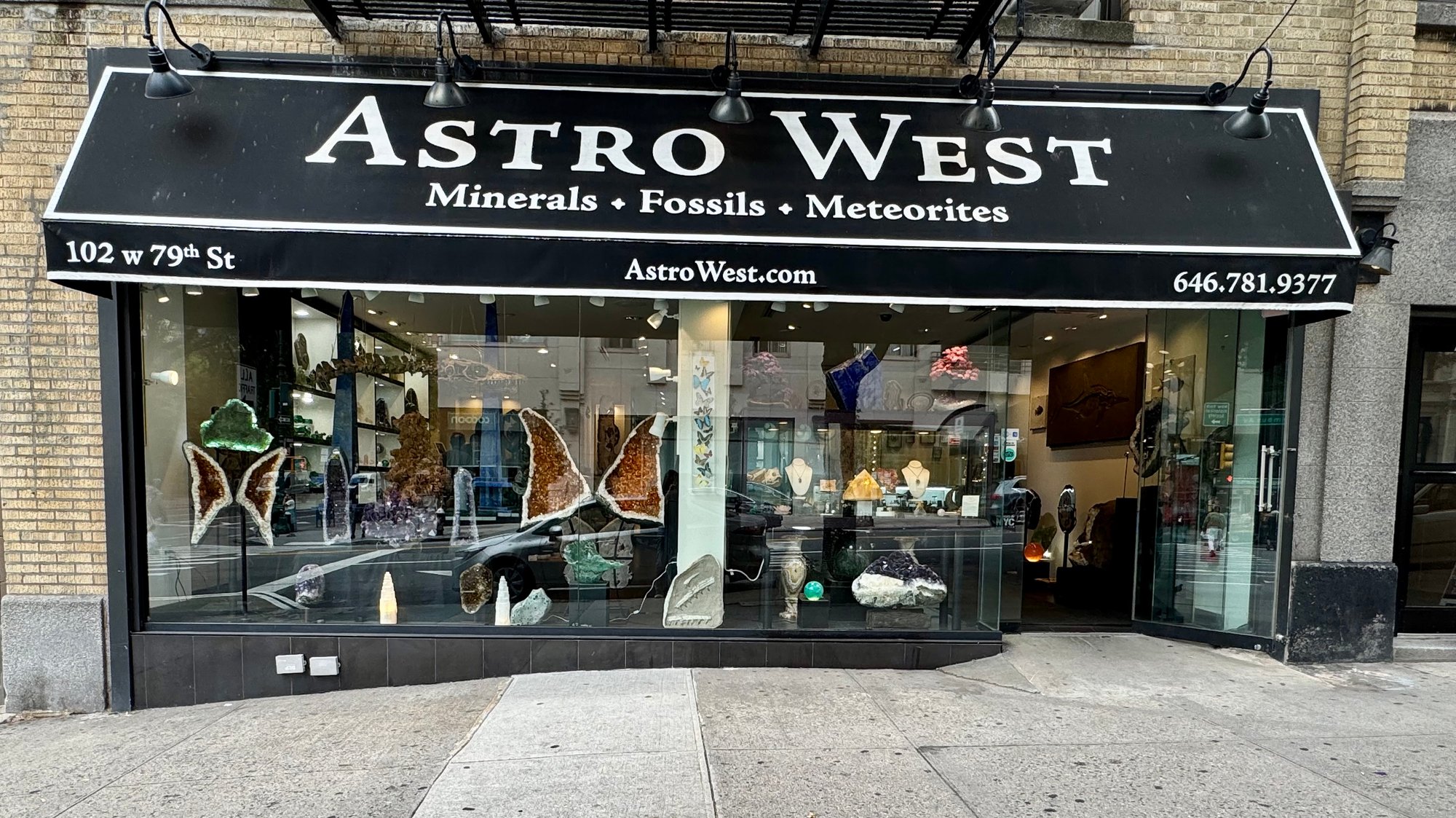
You leave the American Museum of Natural History still thinking about scale, age, and classification, cross the street, and suddenly those ideas are no longer academic. At Astro West, they become objects you can live with. Few Upper West Side shops connect the neighborhood's intellectual life to its interiors this clearly.
Established in 1961, the gallery sits near Central Park and directly across from the museum. The location shapes the experience. You can study institutional displays, then walk into a retail space where fossils, minerals, meteorites, and natural forms are presented with a collector's logic and a decorator's eye.
That balance is what sets Astro West apart. Many specialty shops can sell you something striking. Far fewer can explain why one specimen matters more than another, how origin affects value, or why surface condition changes the equation for both display and resale.
Why it stands apart
Astro West treats each piece as material culture, not novelty. That distinction matters on the Upper West Side, where buyers tend to care about provenance, longevity, and whether an object can hold its place in a well-considered room. A specimen has to work on both fronts. It should reward close looking, and it should still make sense beside art books, vintage wood, good lighting, and prewar architecture.
A strong example is this large genuine amethyst geode natural crystal decor. In a living room, it does the work of a sculptural focal point. In collector terms, the key questions are less decorative and more technical: crystal color, formation, repairs, damage, and source.
That is the trade-off here. The more serious the object, the less useful it is to shop by silhouette alone.
Practical rule: Buy natural décor with the same discipline you would bring to art or jewelry. Ask about origin, condition, and why this example earned its place over a similar one.
The range is unusually broad without feeling unfocused. Entry-level pieces let new buyers start small. Higher-grade minerals, dinosaur fossils, marine life remains, iron and pallasite meteorites, stony chondrites, moldavite, and jewelry give experienced collectors plenty to examine. A refined jewelry piece can also bridge the gap between natural history and personal style, as seen in this white gold oval emerald halo pendant, which shows how gemstone buying on the Upper West Side often comes down to material quality and restraint rather than flash.
What works and what doesn't
What works is the level of edit. The inventory has breadth, but it does not read as tourist retail. Designers can source a statement object with geological credibility. Collectors can focus on authenticated material. Curious first-time buyers can ask basic questions without feeling out of place.
What does not work for every shopper is the price curve. Museum-quality pieces can move well beyond casual gift territory, and large specimens almost always read better in person than online. Scale, matrix, luster, and color shifts are hard to judge on a screen. That is a real limitation, not a flaw.
For a half-day Upper West Side shopping route with substance, use Astro West as the centerpiece:
Start at the American Museum of Natural History: It sharpens your eye for structure, taxonomy, and display.
Walk to Astro West: The shift from public institution to private collecting makes provenance feel concrete.
Pause for lunch nearby: A measured stop keeps the outing in neighborhood rhythm instead of turning it into errand shopping.
Finish with a bookstore or café: The day lands better when the last stop gives you time to consider what you saw and what deserves a place at home.
For readers approaching Upper West Side shopping through a design and collector's lens, Astro West is the clearest expression of the neighborhood's deeper character. It turns cultural curiosity into a buying decision with real standards behind it.
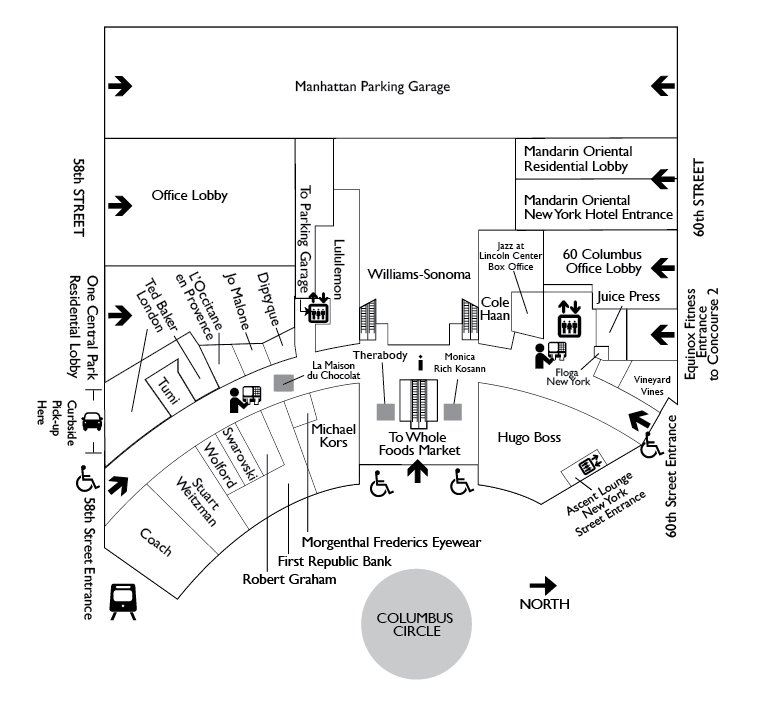
Not every day of shopping UWS calls for slow browsing. Sometimes you need reliable range, polished presentation, and weatherproof convenience. The Shops at Columbus Circle deliver exactly that, with a multi-level mix of fashion, beauty, home, and accessory brands at the southern edge of the neighborhood.
This is the practical counterpoint to the Upper West Side's smaller storefronts. If your list includes a host gift, a wardrobe update, and something for the apartment, a single stop can cover all three. That efficiency is the draw. The trade-off is atmosphere. It feels more metropolitan retail hub than local secret.
Best for polished one-stop shopping
The strongest use case here is cross-category gift hunting. A refined jewelry piece, for example, fits naturally into the center's premium mix. Astro West's white gold oval emerald halo pendant offers a useful comparison point. It shows how Manhattan shopping often works at the higher end. Buyers want craftsmanship, clear materials, and a design that feels refined without looking generic.
For that reason, Columbus Circle works well when you want consistency. It doesn't work as well when you want serendipity.
Crowds are the cost of convenience. Go early if you care more about browsing than crossing items off a list.
A few practical trade-offs stand out:
Best strength: Consolidated shopping across several premium categories.
Main weakness: Peak hours flatten the experience.
Smartest use: Pair it with Central Park or Lincoln Center, not a full boutique day.
This is Manhattan shopping in its most efficient form. Clean, efficient, and easy to get around. If your idea of the best stores Upper West Side adjacent includes transit access and broad selection, it belongs on the list. If you're chasing character, keep moving north once you're done.
3. American Museum of Natural History Museum Shops
For cultural retail, few neighborhood stops are more coherent than the museum shops at the American Museum of Natural History. The Museum Shop, Dino Store, and Gilder Gift Shop are strongest when you want educational gifts that still feel well designed. They're especially useful for families, visiting relatives, and anyone who likes their souvenirs to carry actual intellectual content.
That's also why these shops pair so well with collector-minded browsing nearby. A gift from the museum store often begins as an idea. A specimen from a specialist gallery turns that idea into something with material permanence.
Where education becomes acquisition
A fossil is the clearest example. A museum-themed dinosaur book or model has obvious appeal. However, an authenticated specimen has a different kind of gravity. This authentic 5" megalodon tooth from South Carolina shows the distinction well. It is decorative, educational, and tied to real natural history rather than interpretation alone.
That difference matters more as buyers become more selective. Rising prices for rare meteorites and fossils have pushed museums to pay record-breaking sums for exceptional material, including the famous Sue dinosaur fossil, according to this University of Notre Dame summary of museum acquisition pressure. As a result, provenance and quality matter far beyond aesthetics.
The museum shops still excel within their lane. They are dependable, thematic, and easy to fold into a museum visit. Yet they remain museum retail, not a collector source.
Go here for: Science gifts, books, and exhibit-linked merchandise.
Skip it if you want: Deep specimen selection or acquisition guidance.
Pair it with: Astro West across the street for a stronger natural history shopping circuit.
For visitors building an NYC shopping guide around culture, this is one of the smartest stops on the UWS.
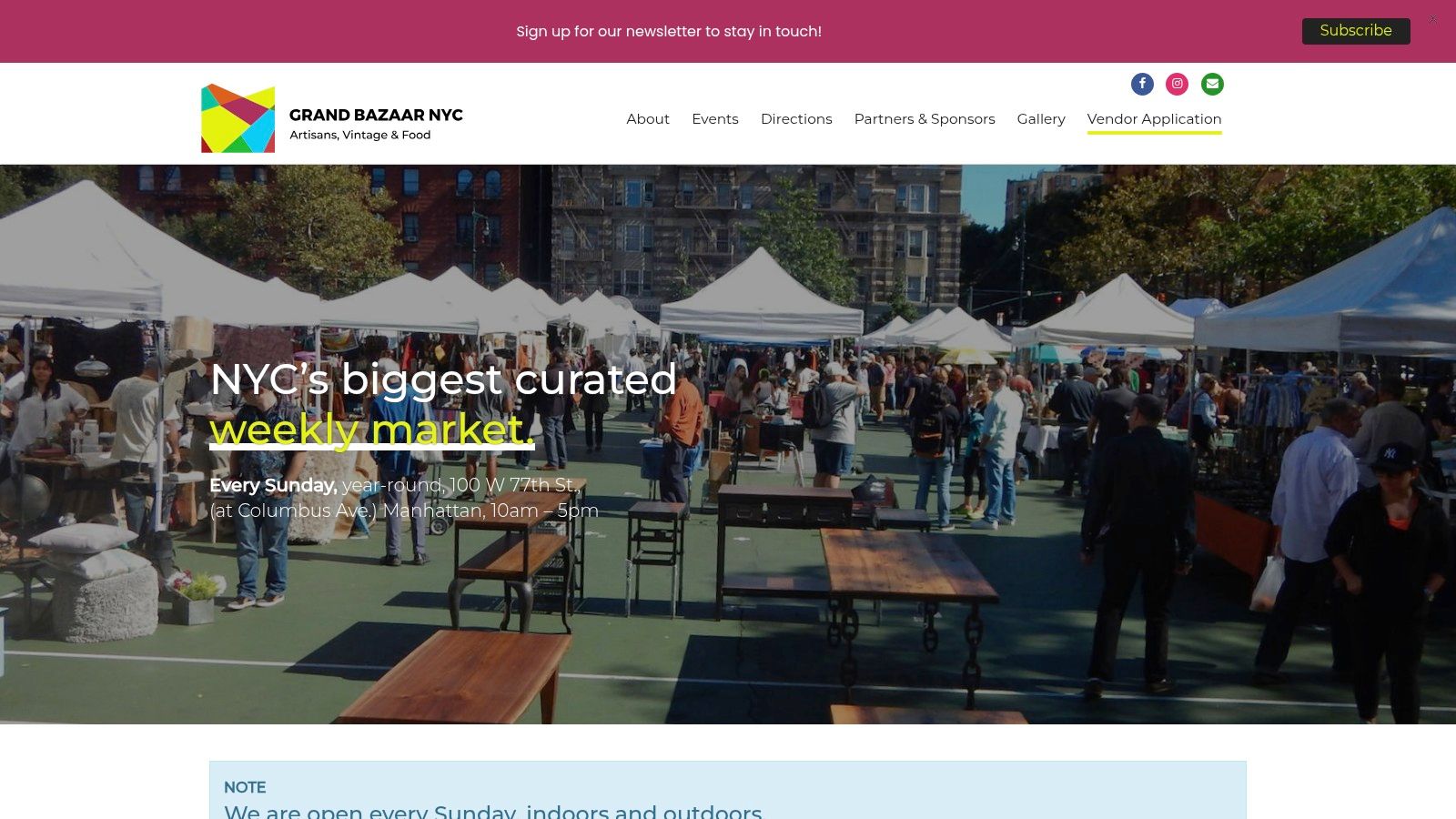
A Sunday at Grand Bazaar NYC rewards a certain kind of shopper. The person who slows down at a tray of old brass, checks the underside of a ceramic lamp, and knows that one strong object can carry a room. For Upper West Side shopping, it is the neighborhood's most open-ended hunt.
That freedom is the draw. It is also the trade-off. Inventory turns constantly, so the market suits discovery far better than mission-based buying.
Best for one-off finds
Grand Bazaar works best through a collector's lens. You can compare scale, wear, material, and finish on the spot, then decide whether a piece has decorative charm or actual staying power. That distinction matters on the UWS, where good shopping often sits at the intersection of design, history, and provenance.
Stone objects are a strong example. A substantial piece such as this hand-carved malachite lion sculpture, 27.5 lb shares the same appeal as the better bazaar finds. It reads as sculptural décor first, but its mineral character gives it more depth than a purely decorative object.
The same logic applies to jewelry. Shoppers drawn to unusual adornment would likely respond to the Muonionalusta Meteorite Saddle Ring // Adjustable, priced at $799 and currently in stock. It brings natural history into the wardrobe in a way that still feels disciplined enough for a design-minded buyer.
Collector's note: Grand Bazaar is excellent for visual comparison. It is less reliable for scientific verification, so ask direct questions about origin, restoration, and documentation before you buy.
That is what makes this stop useful in a broader Upper West Side shopping itinerary. Grand Bazaar covers the improvisational side of collecting. It gives the neighborhood a lively counterpoint to more fixed retail, and it fits especially well for shoppers who want their day on the UWS to feel like a cultural tour rather than a simple run of stores.
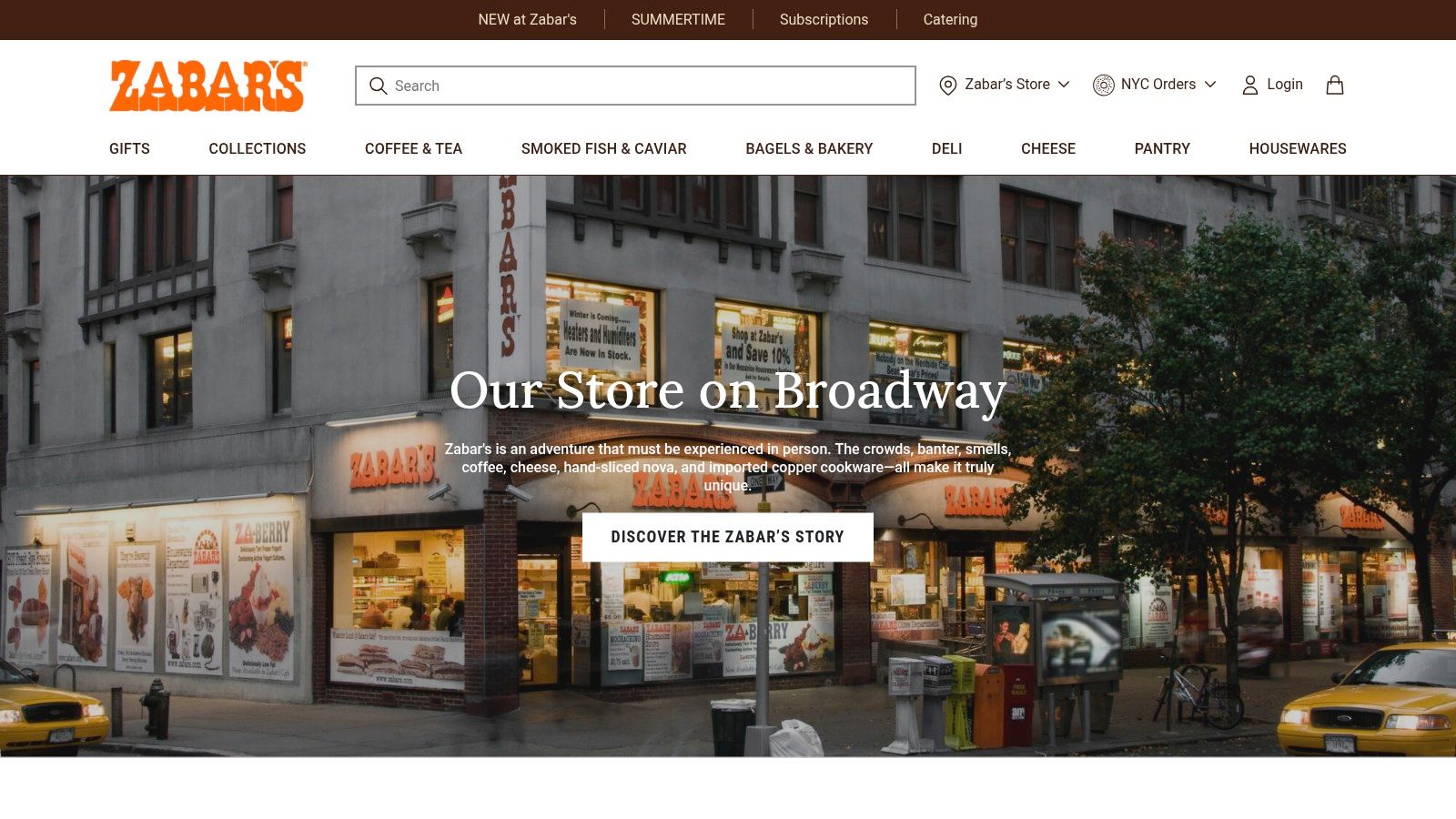
Zabar's is proof that Upper West Side boutiques don't need to be small to feel personal. The store remains one of the neighborhood's great institutions because it still rewards expertise. You can shop for smoked fish, coffee, cheese, baked goods, and kitchen tools in one run, yet each department still feels anchored by people who know the merchandise.
For Upper West Side shopping, that mix matters. Many visitors come searching for fashion or décor and forget that edible gifts often travel better and land more gracefully.
The strongest stop for edible gifts
Zabar's works when you need something generous but not vague. A well-chosen food gift feels local. It also avoids the generic polish of mass retail. The upstairs housewares floor extends that logic into practical design. It's full of kitchen-minded objects people will use.
What doesn't work is leisurely pacing. On busy days, the store moves with purpose, and you should too.
A few neighborhood truths apply here:
Best move: Shop with a category in mind before you enter.
Most common mistake: Browsing without a plan during peak hours.
Smart pairing: Pick up provisions, then walk Columbus Avenue toward smaller storefronts.
Columbus Avenue remains one of the most useful corridors for shopping UWS because it captures the neighborhood's range. Small business stops and food detours give the avenue its rhythm. Levain Bakery, lululemon, and Solid State Cafe all make sense on the same walk, especially if you want a day that mixes acquisition with pause.
Zabar's isn't where you go for hidden gems. It's where you go for durable Upper West Side identity. That has value of its own.
Every good Manhattan shopping neighborhood needs at least one bookstore that still trusts readers to browse. Book Culture does. Its shelves lean literary and academic, and that gives the store a stronger personality than larger-format booksellers often manage.
Upper West Side shopping feels most aligned with the neighborhood's intellectual style. It offers staff picks, children's books, thoughtful gifts, and the pleasure of finding a title you weren't looking for.
A better stop for thoughtful gifting
Book Culture suits shoppers who want a gift with point of view. That can mean a serious art title, a children's science book, or a novel chosen by a bookseller rather than an algorithm. The experience is slower, and that's the advantage.
The same preference for considered buying shows up in adjacent specialty categories. In online retail, 75% of U.S. respondents who had shopped online cited price advantage as the main attraction, while 53.0% of total respondents reported being highly satisfied with products purchased online, according to this comparative analysis of USA and UAE shoppers. However, bookstores like this remind you that not every good purchase starts with price.
For homes with an interest in books and objects, pairing a title from Book Culture with something from Astro West's Minerals Collection or Fossils & Natural History collection creates a gift with both narrative and physical presence.
A well-bought book has the same appeal as a well-bought specimen. Both hold attention longer than trend items.
If you want the best stores Upper West Side shoppers return to out of habit rather than hype, Book Culture belongs in the conversation.
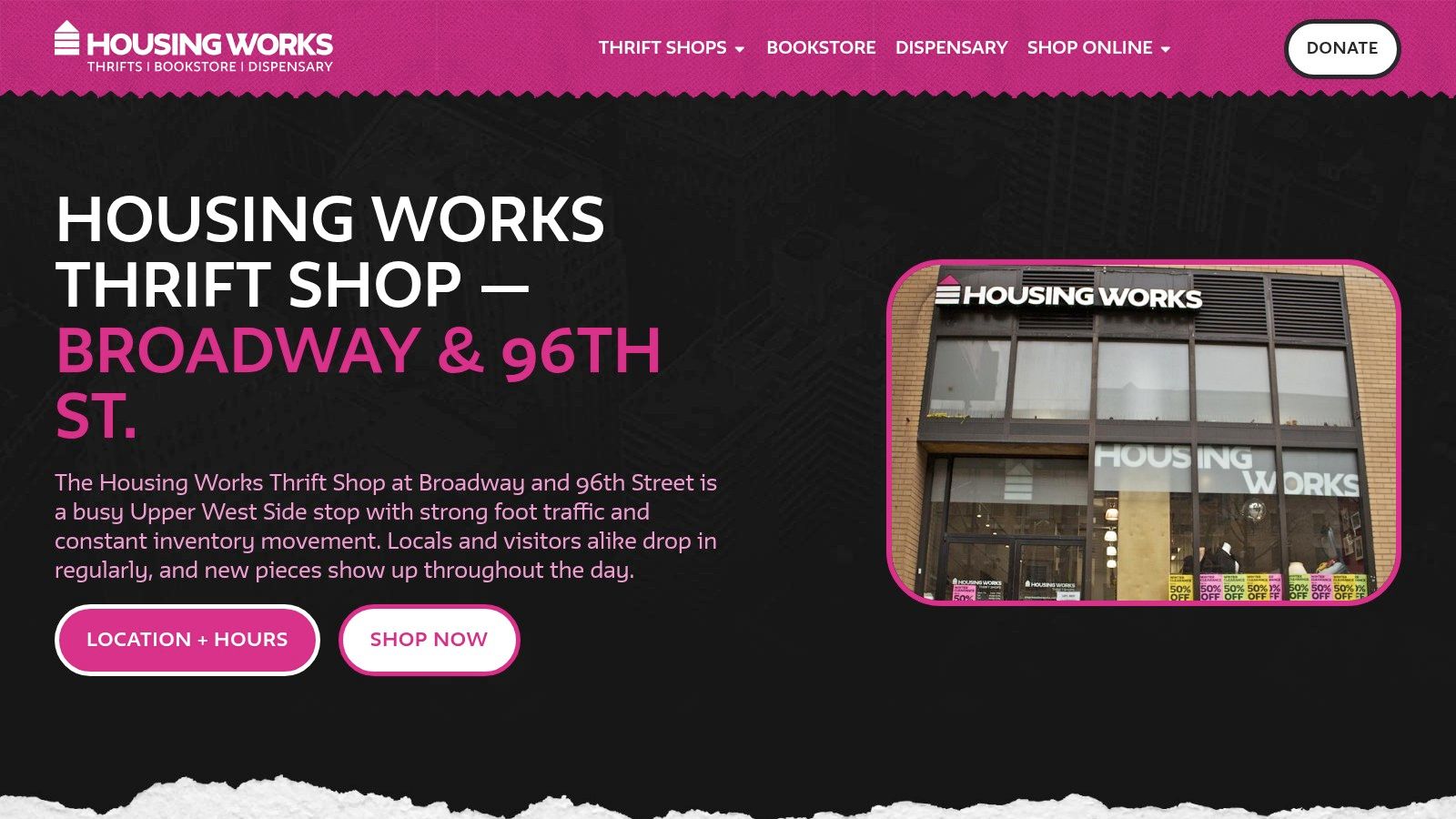
Housing Works on Broadway and 96th Street is the stop for shoppers who like surprise more than control. Inventory turns over quickly, and the mix can include clothing, furniture, books, art, and housewares. That makes it one of the more democratic forms of Upper West Side shopping. Taste matters more than budget.
The mission-driven model adds another layer. Buying here supports Housing Works' broader work in care, housing, and advocacy, which gives the purchase more civic weight than a standard thrift run.
Best for flexible shoppers
This shop works when you're willing to edit ruthlessly. It doesn't work when you need a specific size, exact style, or guaranteed stock. The right mindset is part treasure hunt, part design exercise.
Authentication also matters more once you move from secondhand décor into collectible natural objects. In meteorites, for example, approximately 95% of authentic specimens attract a cheap ceramic magnet because of their iron-nickel content, according to this Washington University meteorite reference. That kind of simple verification test highlights the difference between decorative resemblance and scientific authenticity.
If you enjoy the sustainability side of Manhattan shopping, this stop makes sense alongside broader secondhand research such as Goodwill bin stores across New York. Still, Housing Works offers the stronger neighborhood feel.
A few honest trade-offs define it:
Best strength: Real possibility of unusual finds at approachable prices.
Main limitation: Inventory is unpredictable.
Best shopper profile: Flexible, patient, and visually decisive.
For design-minded browsers, thrift works best when you know how to spot proportion, material quality, and condition fast. That skill translates surprisingly well across every category in this NYC shopping guide.
Mission‑driven shopping, potential designer/vintage finds, supports social services
Curate Your Own New York Story
Upper West Side shopping is an act of discovery. It's less about volume than discernment. The neighborhood rewards people who want objects with context, whether that means a loaf from a storied bakery, a first-edition book, a kitchen tool with decades of reputation behind it, or a specimen formed far beyond human timescales.
That's what makes the UWS different from more transactional retail districts. Historic streets and cultural institutions shape buying habits here. People don't just shop for utility. They shop for meaning, atmosphere, and objects that hold up under repeat attention. Therefore, the best purchases often sit at the intersection of design, knowledge, and personal memory.
Several stops on this list offer exactly that in different forms. Zabar's turns food and housewares into neighborhood ritual. Book Culture gives intellectual life a storefront. Grand Bazaar NYC keeps chance in the mix. The museum shops translate curiosity into beautifully packaged gifts. Astro West goes further by connecting natural history to collecting, interior design, and long-term value.
That last point matters. U.S. customer satisfaction scores rose to 79 for general merchandise retailers and 80 for specialty retailers, up 1% from the previous year, with online retail satisfaction remaining stable, according to this American Customer Satisfaction Index coverage. In practice, shoppers still reward trust. They return to stores that know their inventory, respect provenance, and present quality clearly.
If you're building your own route, keep it simple:
Begin with culture: The museum sharpens your eye.
Add a specialty stop: Choose a place with expertise, not just stock.
Leave room for serendipity: A market or thrift detour changes the day.
Finish with something local: Food, books, or a small object makes the memory stick.
The best Upper West Side boutiques and cultural retailers don't ask you to buy more. They ask you to buy better. Wander a little. Notice materials. Ask questions. The right object will usually tell you why it belongs with you.
Shop Upper West Side Shopping at Astro West
For readers drawn to the most distinctive side of Upper West Side shopping, Astro West offers the neighborhood's clearest meeting point of science, design, and collectibility. Explore the Home Décor Collection, browse the Meteorites Collection, or visit the Manhattan gallery across from the American Museum of Natural History to see specimens in person. Every piece comes with expert authentication, documented provenance, and is available for immediate acquisition online or in person. For a more meaningful keepsake, a stronger design object, or a collector-grade addition, contact Astro West directly or browse the collection at Astro West.
For a refined natural history stop on your Upper West Side route, visit Astro West online or in the Manhattan gallery. You'll find authenticated minerals, fossils, meteorites, jewelry, and natural décor selected for beauty, provenance, and lasting value.