Meta description: Refined table décor ideas for coastal interiors using natural stone coasters, minerals, and sculptural accents with lasting value.
Most coastal table decor advice starts in the wrong place. It starts with motifs. Shell prints, rope knots, novelty starfish, and seasonal props may signal a theme, but they rarely create a lasting interior.
A stronger approach starts with materials that belong to the shoreline. Stone, crystal, fossil limestone, weathered wood, glass, and woven fiber carry the coast more convincingly than themed ornament ever can. They also age better. The result feels collected rather than decorated.
When considering refined table décor ideas, that distinction matters. A table can function like a curated surface. It can hold objects with geological depth, scientific integrity, and visual restraint. In that context, coaster décor becomes more than a finishing touch. A coaster can be a slice of banded onyx, a mineral accent can replace disposable filler, and a centerpiece can read like natural art rather than event decor.
That shift also changes how value works. A synthetic beach accessory usually depreciates the moment a trend passes. A well-chosen mineral specimen, fossil object, or carved stone form holds interest because its appeal doesn't depend on a seasonal motif. Buyers return to rarity, provenance, surface quality, color, and craftsmanship. Those are the same drivers that shape collecting in fine art, luxury watches, and other object markets.
Beyond the Beach House An Enduring Coastal Aesthetic
The strongest coastal interiors rarely read as themed rooms. They read as rooms shaped by tide, light, erosion, and material age. That distinction matters on a table, where small objects can either cheapen the composition or give it the authority of a collected surface.
A lasting coastal aesthetic begins with objects that could plausibly belong to a shoreline cabinet of curiosities. Shells, driftwood, woven fiber, weathered wood, recycled glass, and pale mineral forms all carry that association without slipping into souvenir decor. The result works year-round because it is grounded in natural history rather than a summer motif.
Curatorial view: The most convincing coastal table draws from the shoreline's geology, light, and texture.
This point deserves more attention. A table built around permanent materials adapts easily across seasons because the foundation stays stable. Linen can turn crisper in summer or heavier in winter. Vessel contents can shift from coral-toned florals to bare branches or stone fruit. The material logic remains intact.
A mineral specimen often accomplishes more than a themed figurine because it contributes actual structure, depth, and surface complexity. A Celestite Geode from Madagascar 14 lb brings in pale sea color and crystalline light, but it still holds its ground in a formal dining room, a city apartment, or a traditional interior far from the coast.
Why permanent materials matter
Refined coastal styling depends on restraint. The table needs objects with enough presence to justify their place. Natural stone, fossil matrix, and crystal do that well because they carry visual weight even in a soft palette, and they reward close looking instead of delivering their message at a glance.
Three practical advantages set this approach apart:
Longevity: Mineral and stone objects still make sense after the season changes.
Authenticity: Natural variation produces color shifts, banding, fractures, and inclusions that manufactured decor cannot copy convincingly.
Collectibility: Provenance, formation, and condition give an object lasting interest beyond immediate tabletop use.
There is a trade-off. Authentic specimens require more selectivity than buying a set of matching accessories, and the wrong piece can feel heavy-handed or overly precious. Good coastal curation depends on scale, tone, and placement.
Astro West works through direct relationships with miners, paleontologists, worldwide suppliers, and field experts. In interiors, that context matters. A credible source can explain what an object is, where it came from, and why its material character deserves a place on the table.
Establishing a Foundation of Palette and Texture
A polished coastal table begins with control. For a coherent coastal tablescape, design guidance consistently recommends a restrained palette of soft blues, whites, and sandy neutrals. The look is then built in layers using natural textures like rattan, jute, driftwood, and weathered wood to preserve a shoreline effect while maintaining a light and airy composition, as detailed in this seaside dinnerware styling reference.
That palette sounds simple. It isn't. The challenge lies in balancing softness with enough material contrast to keep the table from looking flat. Linen handles diffusion. Woven fiber adds dryness and tactility. Stone introduces permanence.
Build the table in layers
Use the table the way a painter uses a ground.
Start with linen in white, oat, pale sand, or washed blue.
Add woven texture through a rattan charger, jute runner, or weathered wood tray.
Introduce stone or crystal so the surface doesn't dissolve into softness.
Keep heavy dark tones limited unless you're adapting the look for a colder season.
An Aquamarine Cluster from Nagar Valley works beautifully in this framework because aquamarine often carries the clearest version of coastal color. It doesn't shout. It cools the composition.
What works and what weakens the effect
Many tables fail because every object repeats the same idea. Too much rope, too many shells, and too many distressed finishes flatten the result into a store display. A stronger composition mixes porous, woven, polished, and crystalline surfaces.
Keep the palette narrow, then vary the surface character. That's how a light table still feels rich.
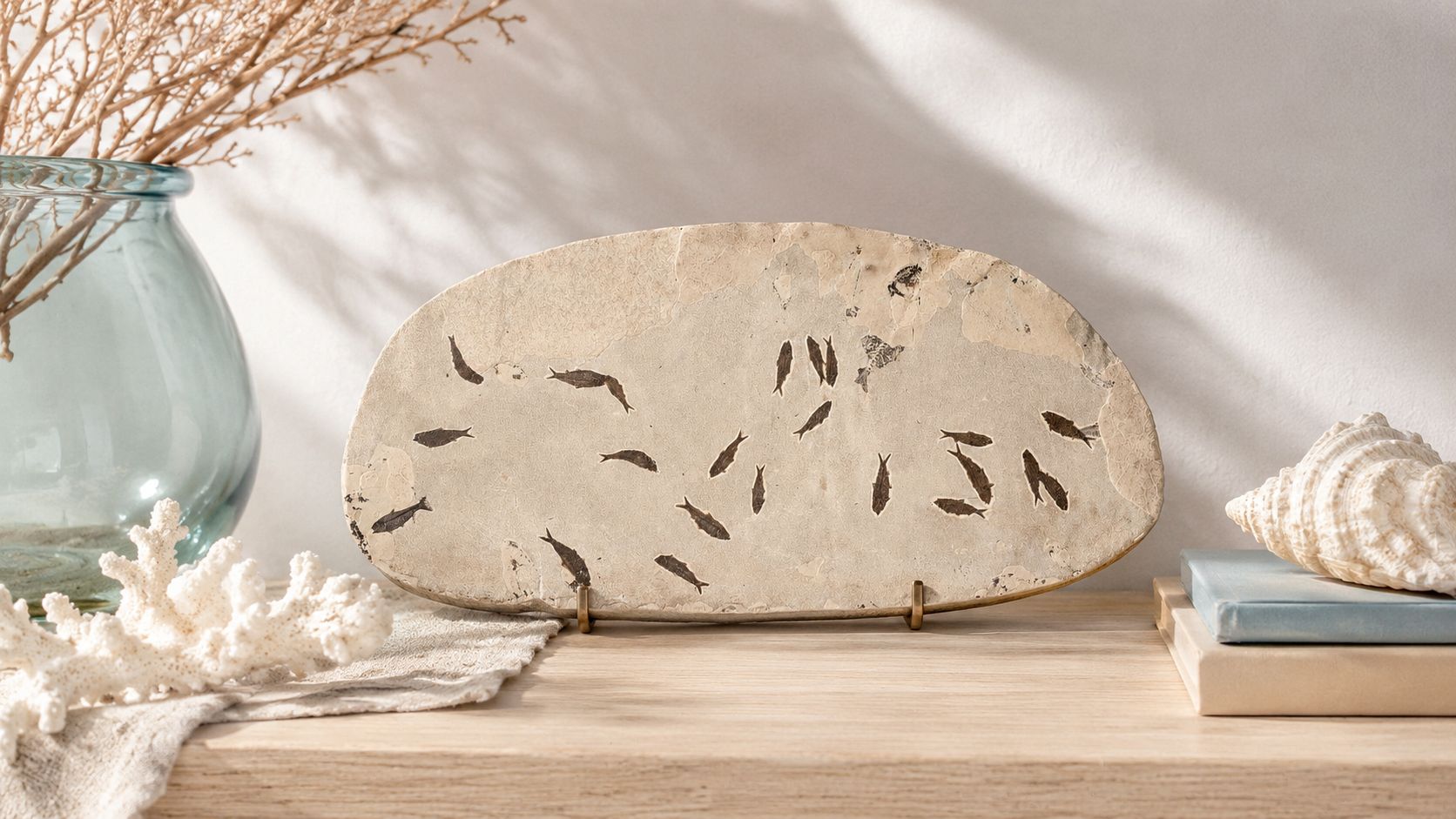
A fossil can also ground the scheme with unusual authority. Fossilized School of Knightia Fish in Limestone presents an approximately 50 million year old fossilized scene in limestone featuring a beautifully preserved school of Knightia fish accented by the partial remains of a larger form. Used on a console or side table near the dining area, it shifts coastal styling away from theme and toward natural history.
Element
Best use in coastal table decor
Common mistake
Linen
Softens and unifies the base
Fabric with loud nautical prints
Rattan or jute
Adds shoreline texture
Using too many woven pieces
Stone or crystal
Gives permanence and visual depth
Choosing colors outside the palette
Driftwood
Brings irregular natural form
Letting rough texture dominate every layer
Selecting Functional Art Natural Stone Coasters
The coaster is where refined coaster décor begins. It protects the table, of course, but that isn't its highest function. A good coaster anchors a drink with color, pattern, and material presence. It acts like a small editioned work of nature.
That role has grown more important as coastal decor has shifted from informal seaside souvenirs to a more curated, interior-design-led approach. Current guidance emphasizes cohesive palettes and layered, reusable tabletop objects rather than novelty motifs, as discussed in this coastal centerpiece guide.
Why onyx works especially well
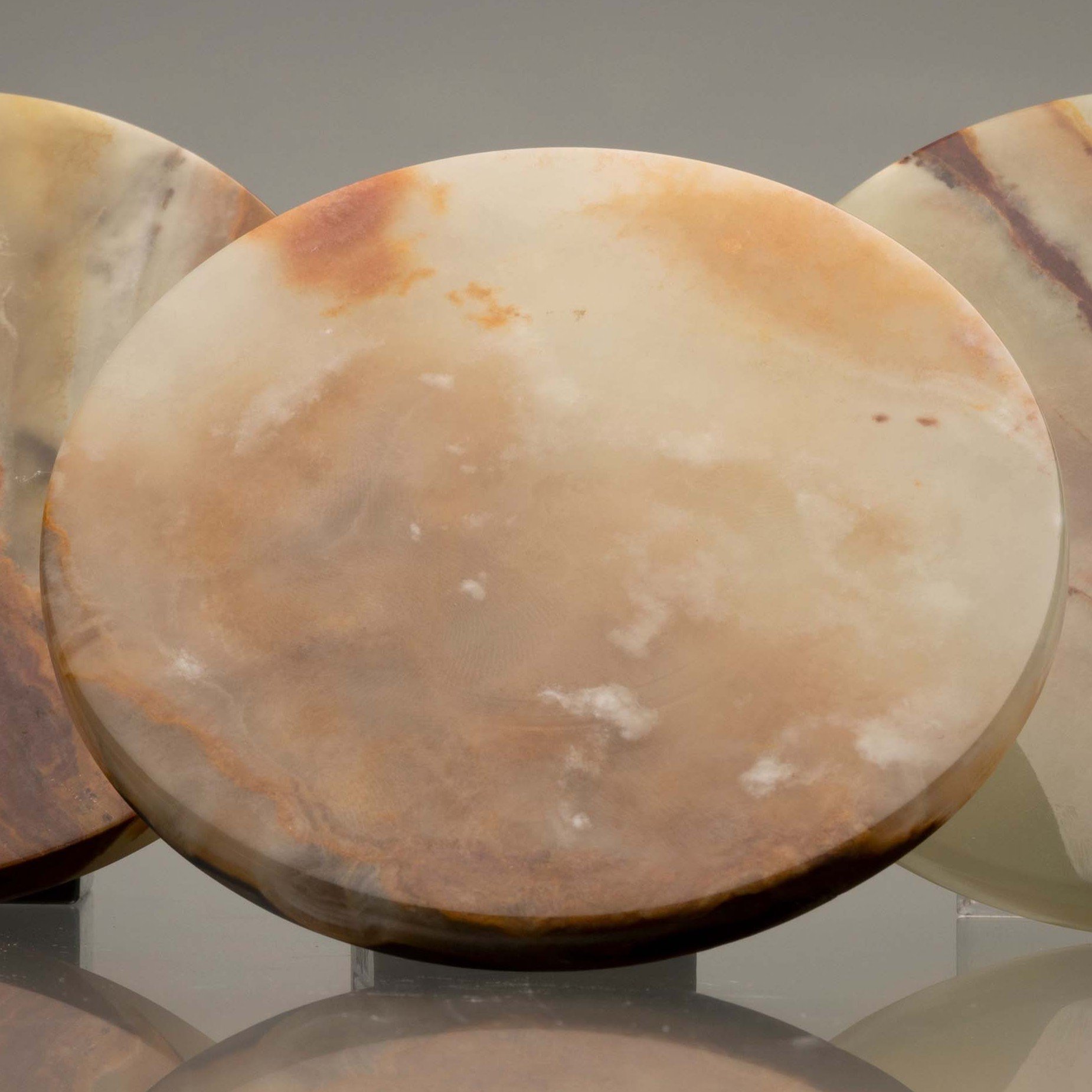
Onyx is ideal for coastal table decor because it often carries bands that resemble sediment, surf, and tidal color transitions. A polished set also reflects light in a controlled way. That polish sharpens the object, while the stone's natural variation keeps it from feeling sterile.
Example: A polished onyx coaster set from Astro West adds organic patterning and coastal color to a restrained coffee table.
The Round Banded Onyx Coaster Set of Six from Pakistan shows why natural stone coasters outperform disposable tabletop accessories. Each piece brings variation. That uniqueness matters in collecting and in design. Repetition gives order, but natural banding preserves individuality.
For readers comparing finishes and durability across the home, Original Mission Tile offers useful expert advice on natural stone for homes. The broader lesson applies here as well. Stone rewards thoughtful placement and material compatibility.
How to style coasters without making them look incidental
Coasters shouldn't float aimlessly across the table. Give them a job.
At a place setting: Pair one coaster with a ceramic tumbler or a low glass to introduce stone into the dining rhythm.
On a tray: Stack a few beside a candle and a mineral accent so they read as part of the composition.
On a side table: Let a coaster sit beneath a glass vessel, not just a beverage. It becomes a platform, not a spare part.
The smallest object often sets the quality standard for the entire table.
Value diverges. A synthetic coaster bought for trend alone loses relevance quickly. A hand-selected stone set can remain in use for years because utility and visual interest stay aligned.
Building a Centerpiece with Light and Geological Form
A coastal centerpiece shouldn't block conversation. It should organize the table's light. That's why crystal forms perform so well. They respond to daylight, candlelight, and reflective surfaces in ways that flowers alone often can't sustain.
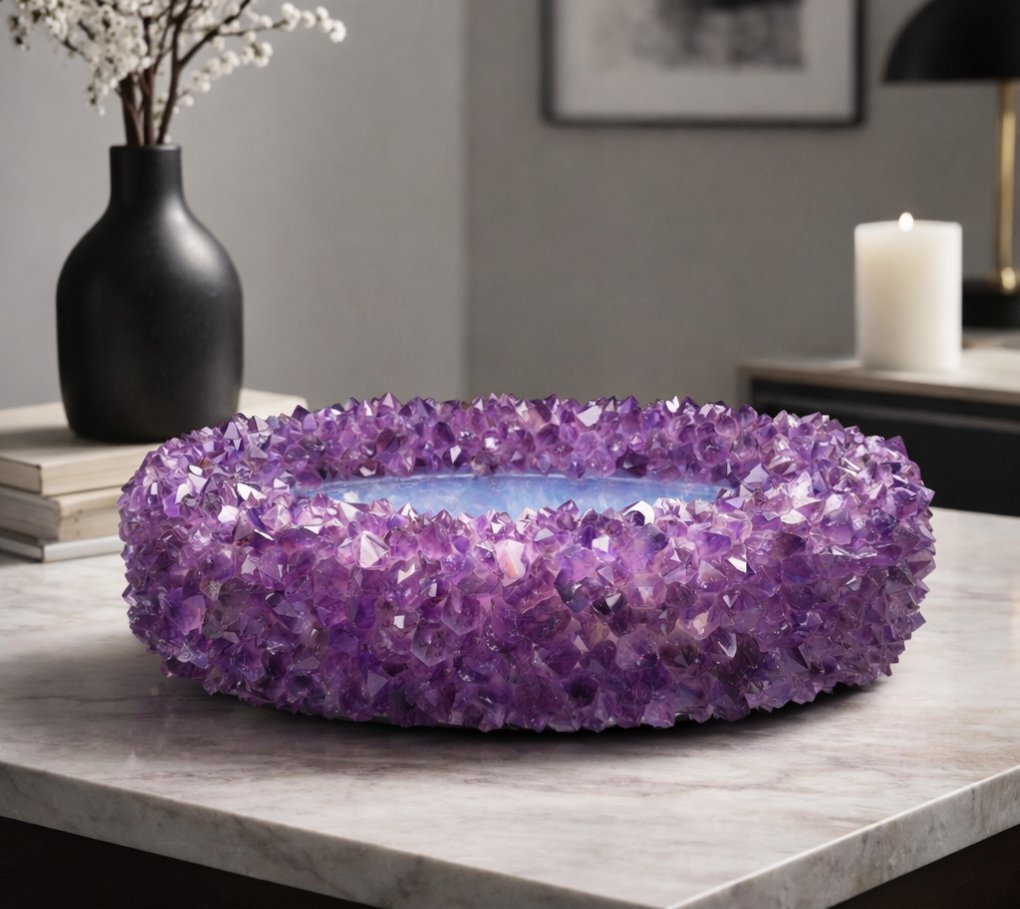
In coastal styling, I keep returning to three materials. Onyx coaster sets bring natural color with a coastal cast. Amethyst geodes add sparkle and vertical energy. Quartz crystal catches the sun and brightens the scene. Together they create a geological shoreline rather than a literal beach vignette.
Use the hurricane method with discipline
A practical centerpiece formula works especially well here. A high-performing method involves stacking elements within a glass hurricane. Place a central object on a base of sand, then surround it with smaller accents such as shells or minerals to create layered texture and height without visual noise, as shown in this beach table decor styling tutorial.
That formula becomes more refined when the central object has mineral depth. An amethyst geode or crystal tree gives the arrangement a defined focal point. Sand then reads as geological context rather than filler.
A strong composition looks like this
Center: one vertical mineral object with enough height to hold attention
Base: pale sand or small neutral pebbles inside clear glass
Perimeter: limited accents such as seaglass, a few shells, or clear quartz points
Outer ring: open space, so the table still functions for dining
An Amethyst Tree with Light fits this approach because it adds both mineral color and illumination. That combination matters in evening settings, when a centerpiece has to carry mood without becoming bulky.
Light should move through a coastal centerpiece. If the arrangement absorbs light, it's too dense.
The room around the table matters too. Side lighting can sharpen crystalline surfaces and prevent the centerpiece from disappearing after sunset. Slone Brothers Furniture has useful Quality home lighting options that show how driftwood-based lighting can reinforce the same natural vocabulary without repeating the exact tabletop materials.
A short visual reference helps here:
Why some centerpieces hold value better
Collectors don't evaluate a mineral centerpiece the way they evaluate a seasonal craft object. They look at formation quality, color saturation, clarity, scale, preservation, and provenance. Designers also care about silhouette, reflective behavior, and compatibility with the room's palette.
That overlap is important. A beautiful geode isn't just decoration. It can function as a design object, a scientific specimen, and a collectible asset at once. Some pieces appreciate through scarcity and collector demand. Others hold steadier decorative value because they remain useful in interiors. Lesser pieces can depreciate when color is weak, finishing is poor, provenance is unclear, or the object looks overly processed.
Layering Sculptural Accents and Mineral Tones
A coastal table usually weakens at the finishing stage. People add shells, rope, or small themed objects, and the surface starts to read as seasonal styling instead of a collected interior. A stronger approach is to layer a few sculptural pieces with weight, contour, and mineral color. The table gains depth without losing restraint.
For a year-round coastal scheme, keep the permanent objects geological and let the temporary changes happen in linens, branches, or flowers. Stone and mineral forms hold the shoreline reference in a quieter, more lasting way. They read less like décor purchased for a season and more like specimens chosen over time.
Bowls, spheres, and carved forms
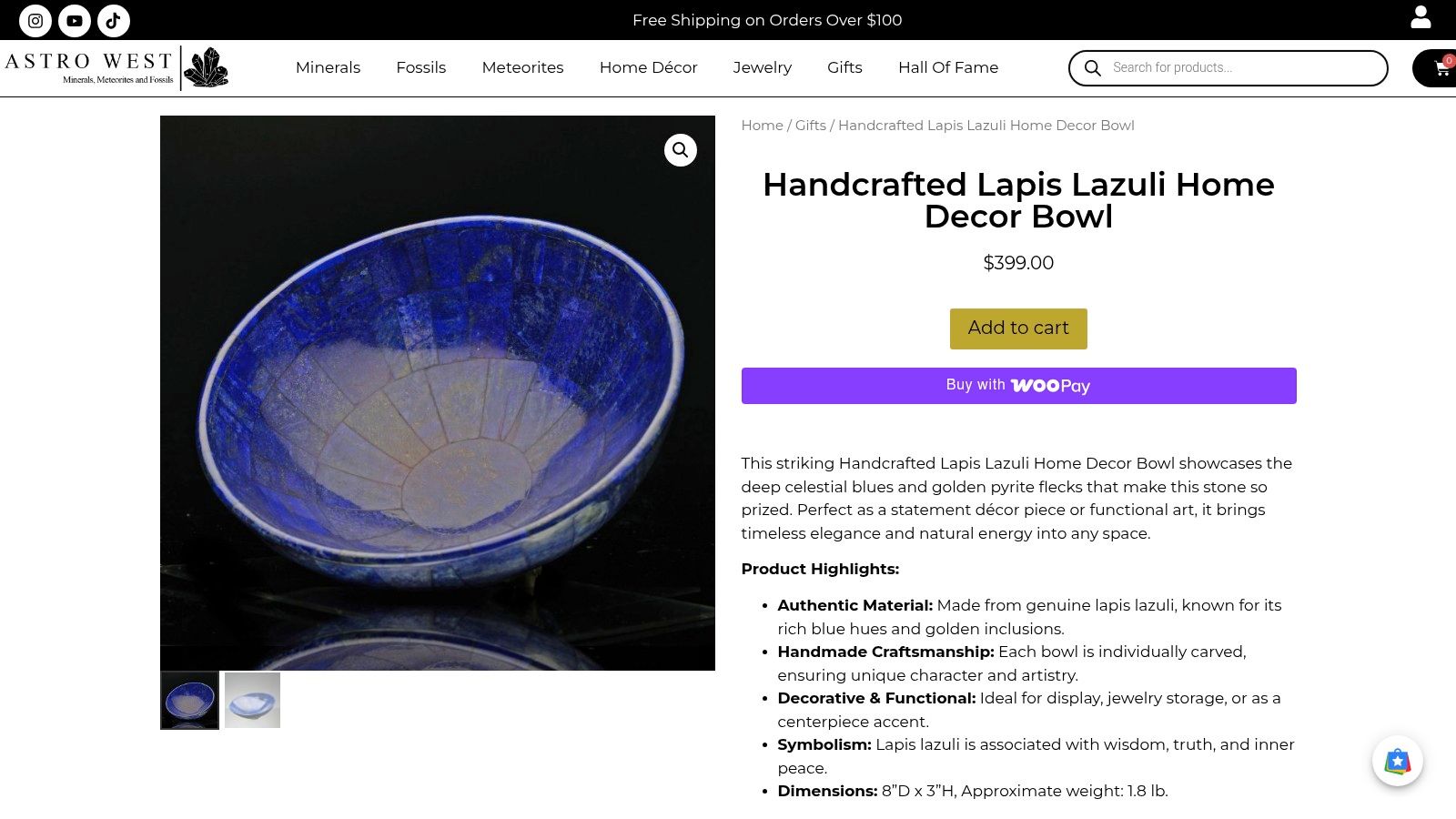
A lapis bowl introduces a darker register of blue than many coastal rooms use. That tension is useful. Against chalky whites, pale oak, limestone, or sand-toned linen, lapis gives the composition a horizon line. The pyrite inclusions add warmth and keep the blue from feeling cold or overly polished.
Example: A handcrafted lapis lazuli bowl from Astro West adds carved form and saturated color to a neutral entry console.
Spheres bring order because the eye reads them instantly. Carved freeform pieces do something else. They create directional movement and keep the arrangement from feeling static. On most tables, one stable geometric object paired with one irregular piece is enough. More than that, and the surface starts to look stocked rather than edited.
A useful styling sequence
Try this order when developing luxury table décor with mineral objects:
Start with the working pieces: Place coasters, a tray, or a bowl first so the table still functions in daily life.
Add one sculptural object: Use a sphere, carving, or vessel with enough visual weight to break the flat plane of the tabletop.
Control the palette: Sea-glass blue, celadon, mineral white, smoky gray, and sand tones usually sit together without strain.
Keep open space visible: Small tables benefit from margin and breathing room more than from one more accent.
A table looks expensive when every object has a reason to stay.
That standard matters on coffee tables, side tables, and consoles, where every piece is inspected at close range. Good mineral décor earns its place because it contributes function, silhouette, and material interest at once. It also supports the article's larger idea of coastal decorating as natural history collecting. A polished stone bowl, a carved sphere, or a specimen-grade object carries geological character that outlasts themed accessories and remains relevant well beyond summer.
For readers browsing broader categories, the Home Décor Collection, Minerals Collection, and Crystal Décor offer a useful sense of how these forms move across interiors.
Shop Coastal Table Decor at Astro West
The strongest table décor ideas don't depend on novelty. They depend on material truth. Coastal table decor lasts when it draws from the shoreline's real vocabulary. Stone, crystal, fossil limestone, woven fiber, glass, and weathered wood create a surface that feels calm, layered, and enduring.
That approach also justifies acquisition. Authentic natural objects carry more than visual charm. They hold geological history, traceable origin, and a level of individuality that synthetic decor rarely offers. Over time, those qualities shape desirability. Serious buyers and thoughtful decorators tend to look for the same signals. They want beauty, provenance, preservation, and relevance beyond a single season.
Astro West approaches this category as a curated acquisition source, not a mass retailer. The gallery works directly with miners, paleontologists, trusted suppliers, and field experts, which supports authenticity, scientific respect, and traceability. That matters whether you're buying natural stone coasters, a crystal centerpiece, or a sculptural mineral object for a console.
If you're refining a dining table, coffee table, or entry surface, start with fewer pieces and better materials. Choose an object that anchors color. Add a coaster set that brings pattern and utility. Then introduce one specimen that catches light. The result feels collected because it is.
Every piece comes with expert authentication and documented provenance, and each is available for immediate acquisition online or in person. You can explore the collection digitally, visit the Manhattan gallery across from the American Museum of Natural History, or contact the team directly for guidance on pairings, scale, and placement.
Browse Astro West to explore coastal table decor through authentic minerals, fossils, crystal décor, and coasters selected for beauty, provenance, and lasting design value. Visit the Manhattan gallery, shop online, or contact Astro West directly for expert guidance. Every piece includes expert authentication, documented provenance, and immediate availability for acquisition in person or online.