A client once picked up a meteorite in the gallery and went quiet. The reaction wasn't about size. It was about weight, surface, and the sudden understanding that this object began its history far from Earth.
That shift matters. When clients search for rare meteorites for sale, they often begin with curiosity and end with a valuation question. They want to know what they're holding, why it matters, and whether the piece will still feel important a decade from now.
A serious meteorite acquisition sits at the intersection of science, connoisseurship, and asset logic. It shares more with fine art and rare watches than most first-time buyers expect. The strongest pieces combine verified origin, visual presence, and a documented path from recovery to collection.
At gallery level, I point out three features first. The first is the specimen's physical evidence of travel and formation. The second is its space age and fall age, which shape its story and desirability. The third is authenticity, because value starts there and ends there.
Acquiring a Piece of the Cosmos
The first significant meteorite purchase rarely feels like buying a rock. It feels closer to acquiring a relic with a measurable place in planetary history. That's why experienced buyers slow down at the start.
A meteorite can function in several roles at once. It can anchor a collection, hold its own in a refined interior, and serve as a tangible store of value. However, those roles don't always point to the same specimen. The dramatic sculptural iron that works in a library may not be the same acquisition an investor wants for scientific rarity.
The first decision is intent
Buyers usually fall into one of three camps.
The collector wants classification, context, and a specimen with a story worth repeating.
The design buyer wants scale, surface, and a form that reads immediately in a room.
The asset-minded client wants rarity, traceability, and a market category with lasting demand.
Those motives often overlap. Still, the priority matters because it changes how you evaluate trade-offs. A polished slice may reveal internal structure beautifully, while a natural individual may carry stronger sculptural presence. Neither choice is wrong. The right choice depends on what the piece needs to do.
Practical rule: Buy the best combination of authenticity, provenance, and visual strength you can comfortably hold for the long term.
Why this market rewards discernment
The rare meteorite market isn't built on size alone. Discerning buyers look at classification, condition, origin, and documentation. They also look at how the specimen presents itself. Some pieces command attention because their surfaces show atmospheric entry. Others win on internal pattern or crystalline structure.
Guidance is essential. A first-time buyer can easily overvalue mass and undervalue paperwork. That's a common mistake. In this market, a smaller specimen with strong documentation can be more important than a larger one with a weak paper trail.
The strongest acquisitions tend to justify themselves from more than one angle. They make scientific sense. They present well. They carry credible provenance. As a result, they hold up better in private collections, museum conversations, and estate contexts.
What Defines a Rare Meteorite
I often see the same hesitation with first-time buyers. They stand in front of two specimens, one larger and more obviously metallic, the other smaller with better paperwork and a more unusual classification, and they assume the larger piece must be the better acquisition. In this market, that assumption usually costs money.
Rarity starts with supply, but serious valuation depends on a narrower question. What, exactly, is scarce here? A meteorite can be rare because it comes from an uncommon parent body, because its class appears infrequently in the market, or because a well-documented example survived in unusually strong condition. Those are different forms of scarcity, and they do not carry the same weight.
Origin drives the highest premiums
Parent body sits at the top of the hierarchy. Lunar and Martian meteorites trade in a different tier because confirmed planetary origin is limited, scientifically important, and difficult to replace once absorbed into established collections. Buyers in the art and luxury worlds already understand this logic. A signed work from a major hand commands more than an attractive anonymous piece. Meteorites follow a similar pattern, except the signature is geochemical.
That distinction matters whether the buyer is building a study collection, placing a statement object in a residence, or treating the acquisition as a long-term tangible asset. A verified planetary specimen carries scarcity that is easy to explain and hard to duplicate. Markets tend to reward that.
Classification changes value faster than appearance
Type matters because the market does not price meteorites by visual drama alone. Achondrites, oriented individuals, etched irons with strong Widmanstatten pattern, and top-grade pallasitic material each attract different buyers for different reasons. The deeper question is not whether a specimen looks impressive across a room. It is whether its classification puts it in a category with persistent demand and limited supply.
Inexperienced buyers frequently misread value. Metallic weight and size can feel reassuring, but some of the strongest pieces on paper look restrained until you understand what they are. A serious collector pays for classification. A designer pays for visual effect. An investor should want both, but classification usually sets the floor.
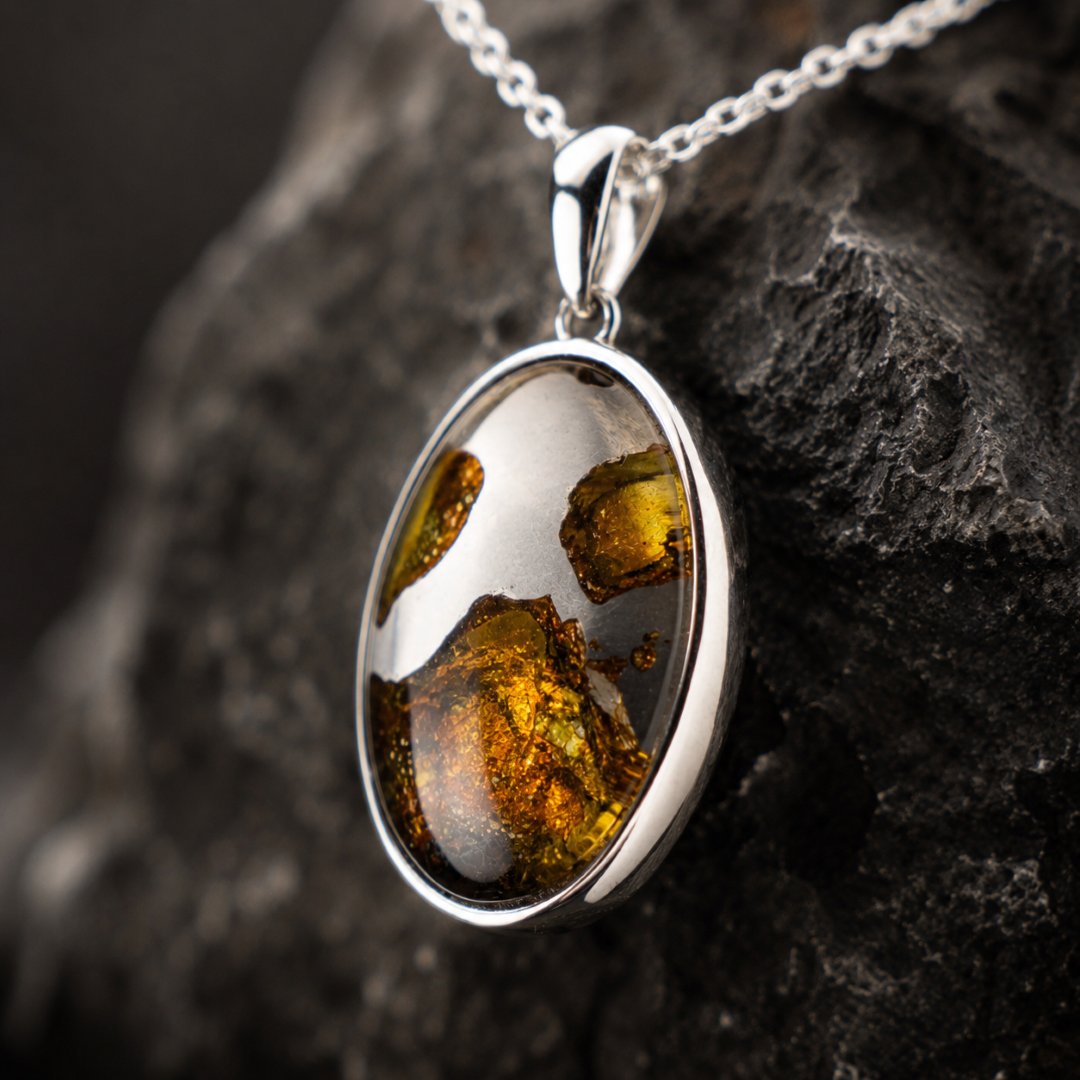
Jewelry offers a useful example of how rarity can still matter at a smaller scale. A piece such as the Muonionalusta Meteorite Saddle Ring // Adjustable carries appeal because the material itself is recognized, traceable, and visually distinct. A refined pallasite jewel, such as this pallasite meteorite pendant with rare olivine crystal (Pictured above), shows the same principle from another angle. The object may be wearable, but the value still begins with the underlying material and its documented identity.
Size matters less than buyers expect
Large mass helps when presentation is the goal. It does not, by itself, create rarity.
A common iron in an impressive size can outperform a rarer specimen in decorative impact. The rarer specimen may still be the better acquisition if your priority is collection quality, scientific interest, or resale resilience. That is the trade-off. Surface presence serves one kind of buyer. Source, class, and provenance serve another.
For practical buying, ask a more disciplined question than “is it rare?” Ask why it is rare, who competes for material in that category, and whether the documentation supports that claim. That is how a specimen moves from curiosity to collectible asset.
Key Types of Investment Grade Meteorites
Collectors often speak about meteorites as one market. In practice, the field behaves more like several adjacent markets. Iron meteorites, pallasites, and high-grade stony material each attract different buyers and hold value for different reasons.
Pallasites for beauty and scarcity
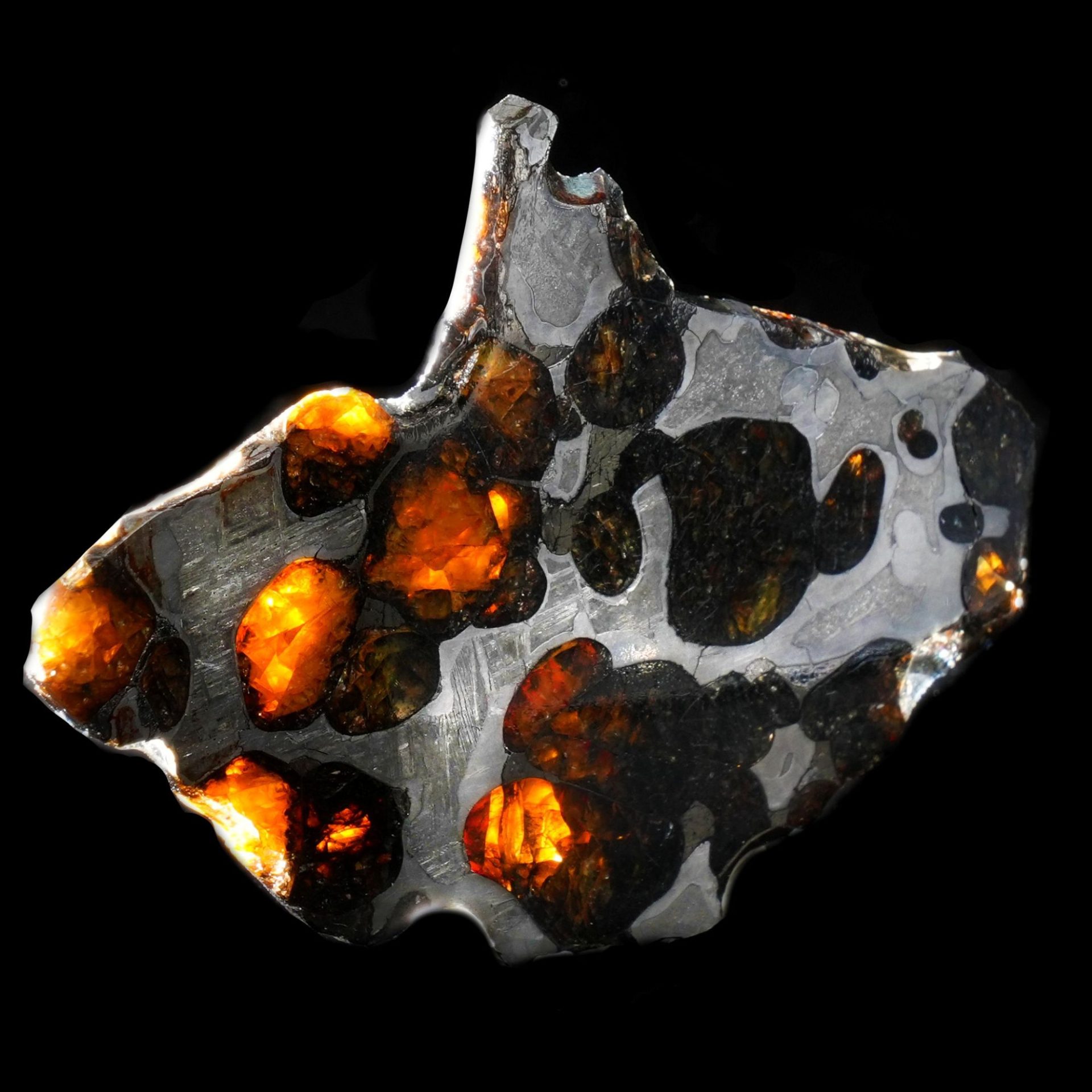
Pallasites consistently command attention from serious buyers. They combine iron-nickel metal with olivine crystals, which creates one of the most striking visual effects in the entire meteorite category. In a gallery setting, few materials bridge science and design more elegantly.
That combination explains why pallasites often sit at the top of a private client's shortlist. They appeal to collectors who want rarity, and they appeal to interior designers who need beauty without sacrificing authenticity. A strong pallasite slice can read as natural history, sculpture, and luxury object at once.
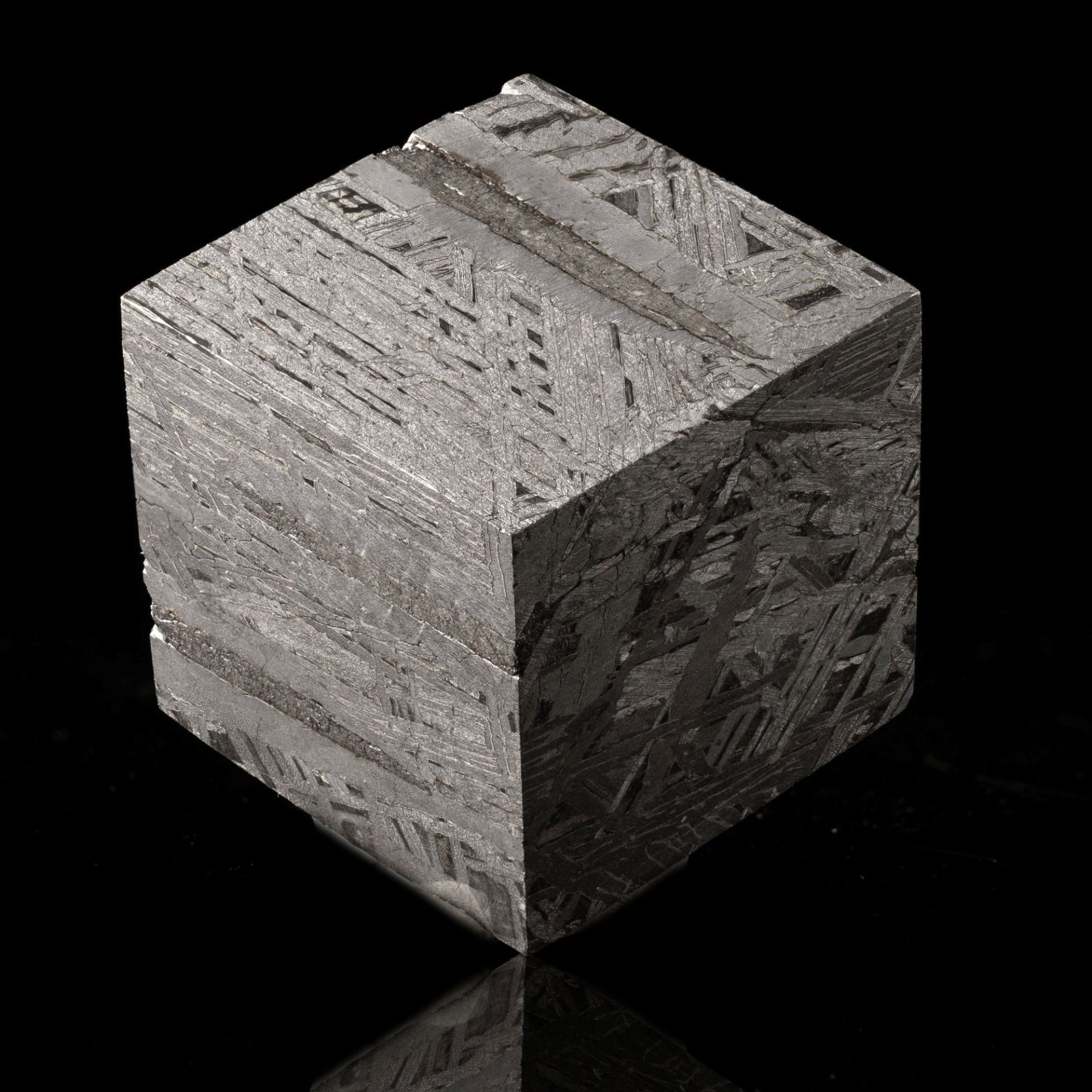
Iron meteorites tend to work exceptionally well for first acquisitions because they are durable, tactile, and visually assertive. They carry obvious density, often display strong surface character, and fit naturally into display-driven collections. They also translate well into interiors because they don't disappear in a room.
Campo del Cielo remains especially popular with buyers. That popularity comes from recognizability, bold appearance, and steady collector interest. It isn't the rarest category, but rarity alone doesn't define demand. In luxury collecting, buyers often return to forms that are legible and satisfying to live with.
A major iron can behave much like a bronze sculpture in a room. It creates gravity. It also tends to photograph well, which matters more than many buyers admit.
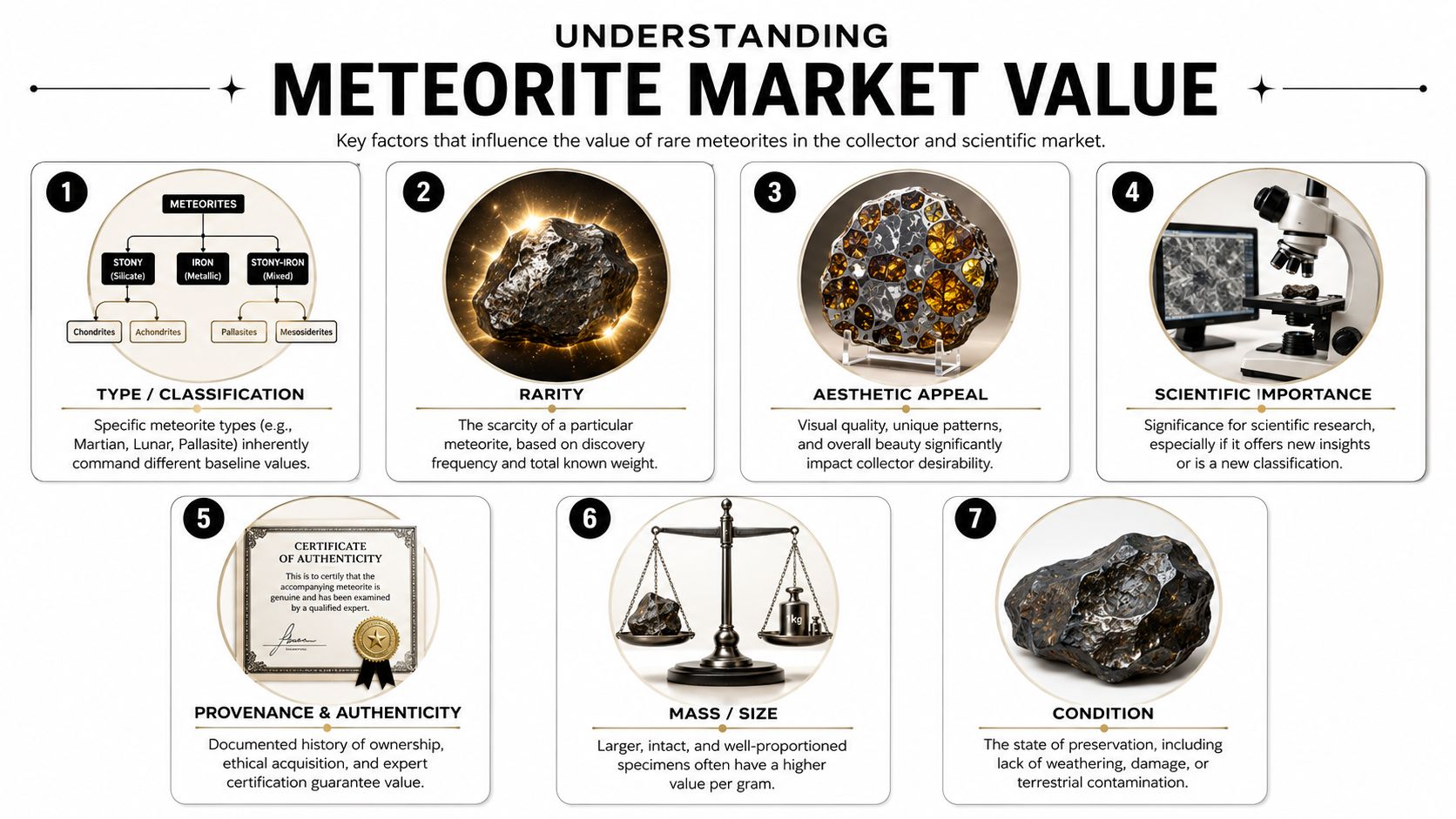
Here's a useful visual reference for how collectors often compare categories in practice.
Stony meteorites for scientific prestige
Stony meteorites require more guidance because the visual cues can be subtler. Yet this category contains some of the most scientifically important and financially significant material. Lunar and Martian specimens sit here, as do rare achondrites and other highly specialized classifications.
This is the category where provenance and paperwork do the heaviest lifting. A buyer may not see planetary origin at a glance, so confidence must come from expert identification and documentation. That's why this tier often appeals to museum-minded collectors and asset-focused buyers.
According to Astro West's overview of what meteorites are worth, rare meteorites for sale are often priced by type and provenance, with ultra-rare Martian meteorites reported at over $1,000 per gram. The same source notes that rare-lot estimates in major auction markets can range from roughly $700 to $500,000, which reinforces a central truth of this market. Classification and documented origin drive value more reliably than size alone.
Tektites and adjacent material
Some buyers also explore impact-related material such as tektites. These pieces occupy a related collecting lane because they connect directly to impact events and often carry strong display appeal. Libyan Desert Glass is a good example of a material that attracts both collectors and design clients for its color and story.
That said, I always separate adjacent impact glass from meteorites in valuation discussions. They can be excellent acquisitions, but they answer a different collecting question. Serious buyers should know exactly which category they are entering before they compare values.
Verifying Authenticity and Provenance
I have seen clients fall in love with a specimen in under a minute, then walk away from the purchase once the paperwork failed scrutiny. In this market, that is good discipline. A meteorite can be visually impressive and still be a poor acquisition if its identity and ownership history are thin.
Authenticity supports the science. Provenance supports the value. Serious buyers need both.
Start with physical evidence
A first inspection should answer a basic question. Does the piece present like a meteorite at all. The University of Arizona's Lunar and Planetary Laboratory outlines the core markers in its guide to meteorite physical characteristics, including a thin fusion crust, high density, and internal chondrules or metallic structures. The same guide notes that meteorites usually do not show vesicles, bright earth-mineral colors, or large visible crystals.
That matters because new buyers often overvalue drama. Terrestrial rocks can look exotic. Investment-grade meteorites tend to earn confidence through texture, weight, weathering pattern, and internal structure.
Confirm identity with laboratory work
Visual review is the first filter. It is not the final word, especially for higher-value pieces where misidentification can erase both resale confidence and scientific importance.
The same University of Arizona guide describes methods such as nickel-content checks, XRF elemental analysis, and SEM microstructure imaging. Those tests establish what professionals need to see before assigning serious value. They tie the specimen to a recognized class and give future buyers, curators, and insurers something firmer than a seller's description.
For a collector, that protects the integrity of the collection. For a designer, it confirms that the story attached to the object is real. For an investor, it reduces one of the biggest risks in this category: owning a striking object that cannot hold up under due diligence.
Buy the certificate, the chain of custody, and the specimen together.
Demand a paper trail that would survive resale
Good provenance reads like a clean title history. Where was the meteorite found. Who recovered it or first sold it. When was it classified. How did it pass from one owner or dealer to the next.
A documented specimen such as this authentic Gebel Kamil nickel iron meteorite fragment from Egypt, 105g shows the level of specificity buyers should expect. The seller should be able to identify the material, state the find location, and provide documentation that connects the object in hand to that description.
This is the same discipline used in fine art. A strong object with weak provenance trades at a discount. A well-documented object can outperform a larger or flashier one because the next buyer does not have to solve the authenticity question all over again.
I advise clients to avoid vague listings, recycled photos, and unsupported claims like “museum quality.” Strong specimens do not need inflated language. Clear documentation, consistent identification, and a credible chain of custody are what preserve long-term value.
Navigating Market Prices and Value
Meteorite pricing looks chaotic from the outside. It isn't random. The market rewards a different set of attributes than new buyers expect.
The clearest example comes from the top end of the auction world. Christie's reported that its online-only sale Deep Impact: Martian, Lunar and Other Rare Meteorites totaled $4,351,750, with 100% of the lots sold, according to its published auction results. In that sale, a 140-kilogram Gibeon iron meteorite sold for $437,500, while a crystal ball from the shattered core of an ancient asteroid achieved $350,000 after being estimated at $14,000 to $18,000.
Those results tell you something important. The market doesn't price meteorites like industrial material. Buyers pay for rarity, provenance, story, and visual impact. Weight matters, but it isn't the whole equation.
What moves a piece upward
I usually ask clients to evaluate value through a collector's lens rather than a commodity lens.
Value driver
Why it matters
Classification
It places the specimen in a known scientific category.
Provenance
It protects legitimacy and supports resale confidence.
Aesthetics
Strong form, pattern, or crystal content increases desirability.
Condition
Weathering, restoration, or damage can weaken appeal.
Presentation
Some pieces work as display objects immediately.
A large specimen with ordinary character may underperform a smaller specimen with superior history and visual presence. This is familiar territory in art, watches, and rare books. Meteorites follow the same broad logic.
Why first-time buyers overpay
New buyers often focus on one metric. Usually it's weight. Sometimes it's polish. Occasionally it's the seller's story.
That approach leads to weak acquisitions. A specimen can be big and still be ordinary. It can be polished and still be poorly documented. It can have a dramatic narrative and still lack scientific support.
A more reliable entry point is a documented collector piece, such as the Muonionalusta meteorite ancient iron nickel space rock in collectors display box. The practical value there isn't only the object itself. It's the fact that the presentation aligns with collector behavior: display, identification, and traceable context.
The strongest meteorite purchases feel expensive only once. Weak purchases keep getting more expensive because you need to replace them.
Meteorites appreciate and depreciate in ways collectors already understand from adjacent luxury categories. Scarce, well-documented, visually compelling pieces tend to attract durable interest. Weak provenance, heavy weathering, and generic material tend to limit upside. This is why disciplined buyers treat paperwork as part of the object, not an accessory to it.
Your Acquisition Checklist
A first purchase should fit the buyer, not just the market. The right meteorite for a novice collector may be the wrong one for an investor or designer. Use the checklist below to keep the decision practical.
For the collector
Choose a specimen with identity. Look for a clearly named meteorite with documentation, not an anonymous “space rock.”
Favor story plus evidence. A piece with known collection history and a certificate will hold your interest longer.
Buy for display as well as study. If you won't want to look at it every day, the acquisition probably isn't right.
For the investor
Prioritize provenance first. Verified chain of custody and classification should come before surface beauty.
Stay inside recognized categories. Established collector demand usually supports long-term confidence better than novelty.
Think in holding periods. Meteorites reward patience. Quick flips often favor sellers, not buyers.
For the designer
Select for silhouette and texture. Meteorites succeed in interiors when their form reads clearly from across a room.
Consider stability. Some specimens suit open display better than others, especially in changing humidity.
Plan transport and storage early. For shipment, secure internal padding matters. If you need packing supplies for secondary storage or relocation, a practical option is to buy bubble wrap from a packaging specialist rather than improvise with thin household material.
Final checks before you commit
Use these questions at the point of purchase.
What exactly is it. Ask for the formal identification.
Where did it come from. Origin should be stated plainly.
What supports the claim. Request documents, not just assurances.
How will it live. Decide whether it belongs in a study collection, display setting, or safe storage.
Can you explain it in one sentence. If the seller can't, the listing probably isn't ready for a serious buyer.
Collectors protect value through handling as well as selection. Keep specimens clean, stable, and well documented. Save every invoice, certificate, and note that accompanies the purchase. Over time, that file becomes part of the asset.
Shop Rare Meteorites at Astro West
Astro West approaches meteorites as scientific artifacts first and collectible objects second. That order matters because it protects value. A curated acquisition should arrive with expert authentication, documented provenance, and enough clarity that a collector, designer, or advisor can understand exactly what the piece is.
That's especially important in a category where visual beauty can distract from weak paperwork. At gallery level, the better standard is simple. The specimen should stand up scientifically, present well aesthetically, and make sense as a long-term holding. When those three qualities align, the purchase feels coherent from day one.
For buyers exploring rare meteorites for sale, the collection can include everything from entry-level authenticated pieces to stronger collector examples and meteorite jewelry. A factual example is this genuine Campo del Cielo meteorite necklace authentic meteorite jewelry, which shows how even wearable forms can remain tied to identified meteorite material.
Astro West's value in this category comes from curation and traceability, not volume. The gallery works with trusted suppliers and field experts, and every piece is available for immediate acquisition online or in person. That gives first-time buyers a cleaner path into the market and gives experienced collectors the documentation they expect.
If you want a meteorite that will hold its meaning after the excitement of the first purchase fades, start with a specimen whose identity is beyond doubt.
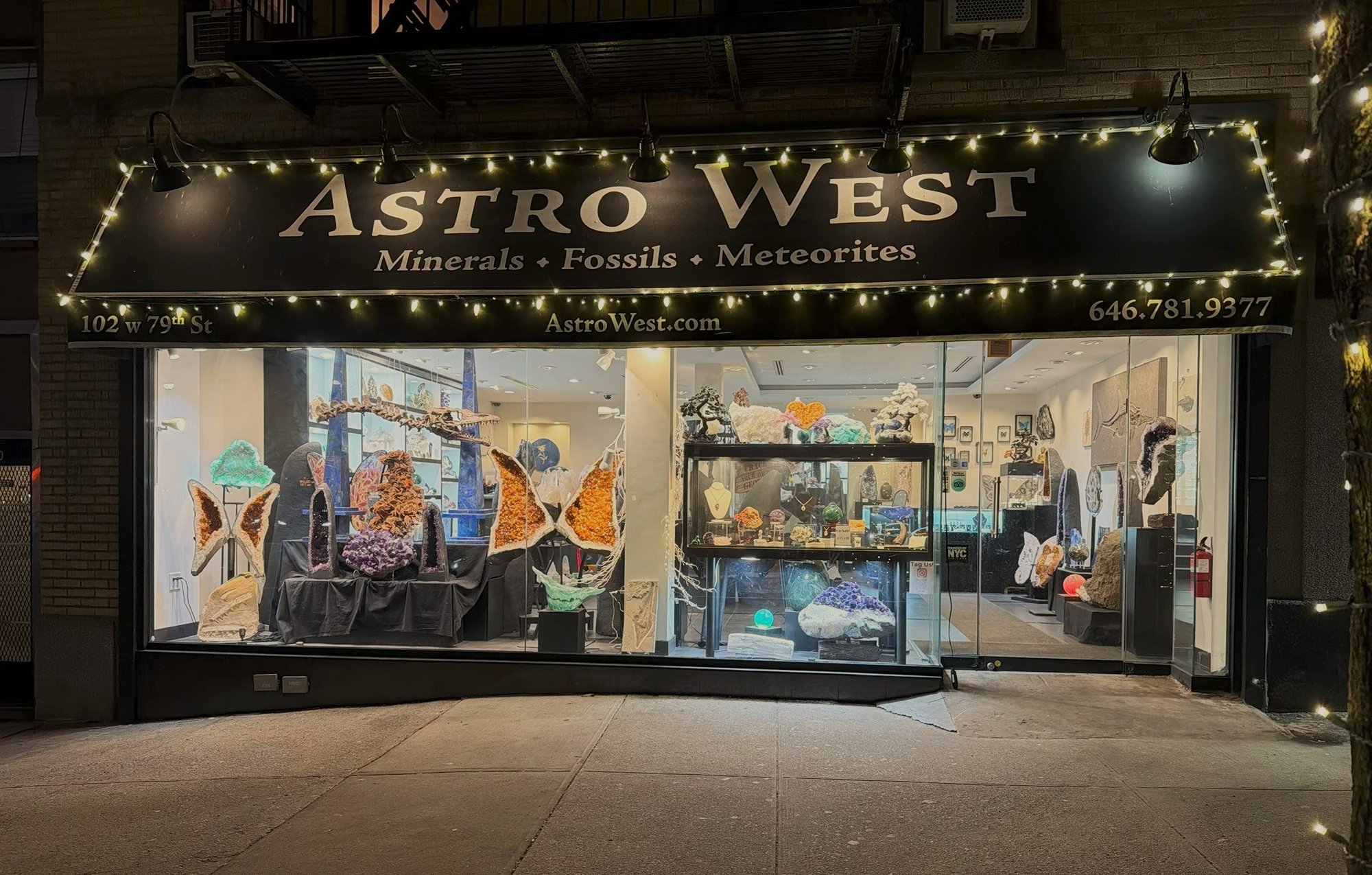
Browse the curated meteorite collection at Astro West, visit the Manhattan gallery, or contact the team directly for guidance on your next acquisition. Every piece comes with expert authentication, documented provenance, and is available for immediate acquisition online or in person.