For thousands of years, civilizations have been captivated by amethyst. It's the world's most beloved purple gemstone, prized for a stunning spectrum of hues that dance from a delicate pinkish-violet all the way to a deep, royal purple. Its beauty is so profound that it has been a staple in jewelry, décor, and spiritual traditions for centuries.
Your Guide to the World of Amethyst
Welcome to your complete guide to amethyst, a gemstone that holds a story millions of years in the making. From its fiery origins inside ancient volcanoes to its modern place in fine jewelry and home décor, this incredible variety of quartz has fascinated humanity since the beginning. This guide is built to give you the confidence to select the perfect piece—just in time for our incredible Cyber Monday event at Astro West.
While amethyst is our star today, its story is part of a much larger family of natural wonders. The world of minerals is incredibly diverse, and understanding amethyst opens the door to appreciating other spectacular specimens. Imagine the golden glow of citrine, the intricate bands of agate, or the earthy beauty of petrified wood—each tells its own unique geological tale. Our collection showcases this incredible diversity, offering a journey through Earth’s most stunning artistic creations.
More Than Just a Pretty Stone
Amethyst is far more than just the birthstone for February; it's a mineral with a rich history and a fascinating science behind its famous color. It rates a solid 7 on the Mohs scale of hardness, making it durable enough for everyday wear in rings, pendants, and earrings. This resilience is a key reason why it became a favorite of royalty and clergy, who saw it as a symbol of power, clarity, and spiritual connection.
As we dive deeper, you'll learn all about the different types of amethyst, what gives each piece its unique value, and how to properly care for your treasures. This knowledge is your best tool for navigating our Cyber Monday sales, where you can find truly exceptional pieces like:
Sparkling Geodes: Natural "cathedrals" of amethyst crystals that make for breathtaking home décor.
Polished Points and Spheres: Perfect for adding a touch of natural elegance to any space.
Expertly Cut Gemstones: Ready to be set in a custom piece of jewelry that tells your personal story.
This guide will empower you to not only choose a beautiful amethyst but to understand its journey from the Earth to your collection. Prepare to discover the perfect specimen during our biggest sale of the year.
How Amethyst Gets Its Famous Purple Color
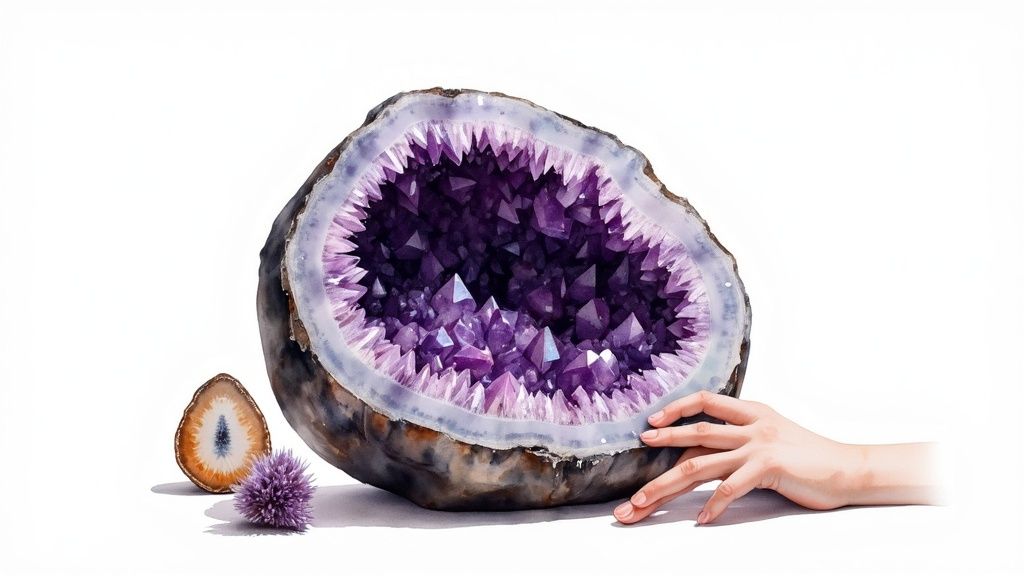
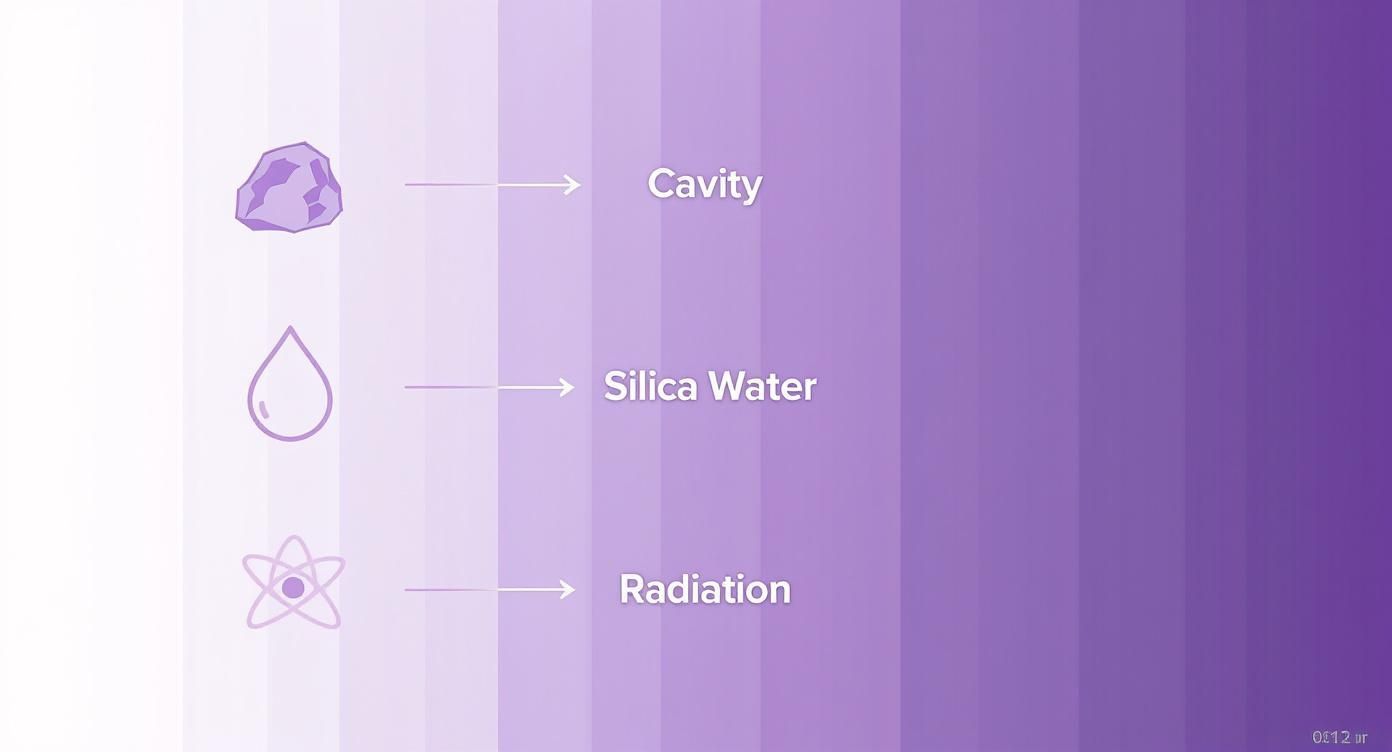
The story of an amethyst crystal is a dramatic one, born deep within the Earth from the fiery aftermath of volcanic eruptions. Millions of years ago, as lava cooled, it left behind hollow pockets and gas bubbles trapped in the rock. These empty cavities, called vesicles, became the perfect geological cradles for crystals to grow.
Over unimaginable stretches of time, superheated water rich in silica started seeping into these empty spaces. Think of it like a natural, slow-motion mold being filled. This mineral-packed water carried dissolved silicon dioxide—the basic ingredient for all quartz crystals, from amethyst and citrine to rose quartz.
As this hot solution slowly cooled inside the protected cavity, the silica molecules began arranging themselves into the classic six-sided pyramid shape of quartz. This gradual process allowed large, beautifully defined crystals to form, lining the inside of the vesicle to create the stunning geodes we see today.
The Secret Ingredient for Purple
So what turns ordinary, clear quartz into that brilliant purple amethyst? The magic happens in a precise, two-part natural recipe that involves a trace element and a little bit of radiation.
While the quartz crystals were forming, tiny amounts of iron got trapped inside their crystal structure. At first, these iron impurities are colorless and don't change the stone's appearance at all. The real transformation happens when this iron-infused quartz is exposed to natural gamma radiation from the surrounding rock over millions of years.
This low-level, long-term irradiation changes the iron atoms, causing them to absorb certain wavelengths of light. Specifically, this process makes the crystal absorb yellow light while letting shades of purple and violet pass through to our eyes. The final color—from a pale lilac to a deep, royal purple—all depends on how much iron is present and how intense the radiation was.
Why Location Matters in Color and Formation
The specific geology of a region has a huge impact on how its amethyst looks. Take the massive, world-famous geodes from Brazil and Uruguay. They formed in enormous basaltic lava flows that created the perfect large cavities for them to grow. The slow cooling and stable conditions there allowed for the deep, consistent colors that collectors prize.
In other places, the geological story is different. You can find smaller but equally gorgeous amethyst crystals in areas like the Keweenaw Peninsula of Michigan, where ancient lava flows also set the right stage. Every location has its own unique mix of minerals and radioactive signature, which gives its amethyst a distinct character.
This incredible process means every single amethyst is a snapshot of Earth's history. When you browse our collection, from a towering Brazilian geode to a sparkling Zambian gemstone, you’re not just looking at a beautiful mineral. You're seeing the result of a multimillion-year collaboration between volcanoes, water, iron, and time.
Decoding Amethyst Quality and Value
Not all purple stones are created equal. When it comes to amethyst, understanding the subtle differences is what separates a good purchase from a great one. Much like diamonds, an amethyst’s value boils down to a familiar set of criteria: Color, Clarity, Cut, and Carat weight. Getting a handle on these "4 Cs" will give you the confidence to spot a truly exceptional gem.
The Big Four: What Defines a Great Amethyst?
Color is king. It's the first thing you notice and the single most important factor driving an amethyst's worth. The color can range from a delicate, pale lilac—often called "Rose de France"—all the way to a deep, vibrant purple with tantalizing flashes of red or blue.
This top-tier color, historically known as ‘Siberian’ purple, was named for the original Russian mines that produced these incredible gems. Today, the term refers to that specific top-grade color, not where the stone was mined.
This signature color doesn't just happen by accident. It's the result of a perfect geological recipe: a cavity in volcanic rock, silica-rich water seeping in, and just the right amount of natural radiation over millennia.
Next up is clarity. This is all about what’s going on inside the stone. While most amethyst you’ll find for sale is "eye-clean," meaning you can't see any imperfections without a jeweler's loupe, some stones might have tiny mineral crystals or fractures. For big, decorative pieces like geodes, these natural inclusions are part of their story. But for a faceted gem in a ring or necklace, higher clarity is always better.
The cut isn’t about the shape of the amethyst, but rather how well its facets have been angled and polished to play with light. A masterfully cut gem will sparkle and dance, reflecting light evenly across its surface and making that rich purple hue pop. A clumsy cut, on the other hand, can make even the most beautifully colored stone look dull and lifeless.
Finally, there’s carat weight, which is simply the measure of the stone’s size. It’s easy to assume bigger is always better, but it's not that simple. While larger stones are rarer, the price per carat doesn't just climb—it multiplies based on the quality of the other three Cs. A small, perfectly colored and brilliantly cut amethyst can easily outshine (and out-value) a much larger stone of mediocre quality.
From Quality Grades to Price Tags
All these factors come together to determine an amethyst's grade and, ultimately, its price. It’s a system that helps bring clarity to the market, ensuring you know what you’re paying for.
Here's a quick look at how the different quality grades stack up in the real world:
Amethyst Quality Grading and Price Guide
Quality Grade
Color Description
Clarity
Typical Price Per Carat (1-5 ct)
AAA
Deep, rich purple with red or blue flashes
Eye-clean (no visible inclusions)
$30 – $50
AA
Saturated, medium-to-dark purple
Eye-clean or very slightly included
$20 – $30
A
Light to medium, often paler lilac or violet
May have slight, visible inclusions
$10 – $20
As you can see, the jump in price between grades is significant, and it’s almost entirely driven by the intensity of the color and the perfection of the stone.
This knowledge gives you the tools to assess any amethyst, whether you’re looking at a small, sparkling gem for a custom ring or a magnificent geode for your living room. By looking closely at its color, clarity, and cut, you can confidently choose a piece that fits both your style and your budget.
Understanding these grades is key to making a smart buy. It ensures you're not just buying a purple stone, but investing in a quality gem that offers true, lasting value. For a deeper dive, check out our guide on the amethyst price per carat.
Exploring Amethyst Varieties From Around the World
When you hear the word "amethyst," you probably picture a classic purple gem. But the truth is, amethyst is a huge, wonderfully diverse family of minerals. Each one has a unique personality, shaped by its specific corner of the globe.
While the basic geology is similar, subtle shifts in mineral content and environmental conditions create an incredible range of colors and patterns. That variety is what makes collecting amethyst so thrilling.
This Cyber Monday, you can explore this global diversity right from home. From the legendary deep purples of South America to the artistic patterns of African varieties, each piece tells a different story of our planet's creativity.
The South American Giants
If you've ever seen one of those enormous, sparkling amethyst "cathedrals," you were almost certainly looking at a specimen from Uruguay or Brazil. These two countries are titans in the amethyst world, famous for producing massive geodes packed with exceptionally deep, saturated purple crystals.
Uruguayan amethyst is especially prized for its uniform, royal purple color and fantastic clarity. Brazilian amethyst, while also found in huge geodes, often has a slightly lighter tone but can feature breathtaking formations and inclusions, offering a different kind of beauty.
Unique Patterns and Blends
Beyond the classic deep purple, nature has whipped up some truly artistic variations of amethyst. These unique types are often snapped up by collectors who appreciate rare and unusual formations, and each one tells a fascinating geological story of different minerals mixing under pressure.
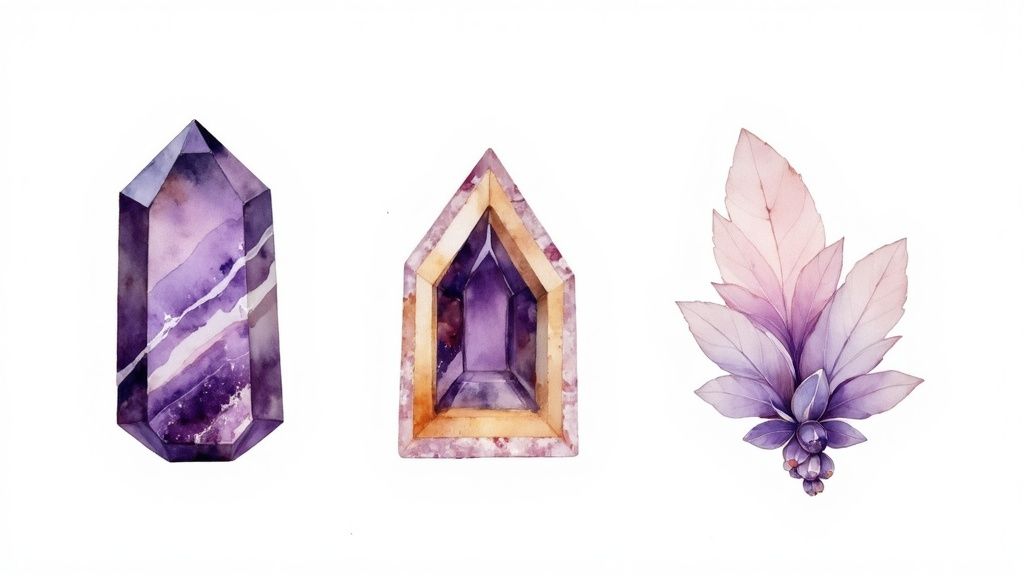
Chevron Amethyst: This variety is a showstopper, featuring bold, V-shaped bands of milky white quartz layered with deep purple amethyst. It’s like a natural work of abstract art, formed as the mineral-rich solutions changed composition during the crystal's growth.
Ametrine: A breathtaking natural wonder, ametrine is a single crystal that holds both purple amethyst and golden citrine. This happens when temperature changes during the crystal’s formation cause some of the iron in the amethyst to transform, creating distinct zones of color. Bolivia is the world's primary source for this rare bi-color gem.
Rose de France Amethyst: Not a distinct variety but a color grade, Rose de France is known for its delicate, pale lavender or lilac hue. Its subtle, romantic color offers a softer alternative to the deep purples and is a favorite in fine jewelry.
Exploring these different types reveals that amethyst is not a single entity but a global family of related stones. Understanding where a specimen comes from adds another layer of appreciation for its unique character and journey.
Discovering the origins of these stones can be a rewarding part of any collector's journey. You can learn more about the diverse geological environments and where to find amethyst in our detailed guide. From massive geodes to intricate patterned stones, the world of amethyst offers something for every taste—making it a perfect focus for your Cyber Monday treasure hunt.
Styling Your Life With Amethyst
The stunning beauty of amethyst goes far beyond raw crystals, offering countless ways to bring a touch of natural elegance into your life. It’s remarkably versatile, moving seamlessly from personal style to statement home décor, which is why it's a favorite for both jewelry lovers and interior designers alike.
Thanks to its excellent durability—a solid 7 on the Mohs scale of hardness—amethyst is perfectly suited for all kinds of jewelry. It's tough enough for daily wear, making it a practical yet gorgeous choice for everything from eye-catching rings and timeless pendants to elegant earrings.
Amethyst in Jewelry
The deep, luxurious purple of amethyst has long been tied to royalty and sophistication. An amethyst ring adds a perfect pop of color to any outfit, while a delicate pendant offers a touch of understated grace. The global appreciation for this gem is undeniable; the amethyst ring market alone was valued at roughly USD 4.5 billion in 2023.
That market is projected to climb to USD 6.8 billion by 2032, driven by a growing demand for unique, colored gemstones among younger consumers looking for affordable luxury. Right now, North America and Europe are leading the charge, holding over 55% of the market share and showing a strong preference for personalized and distinctive jewelry designs.
Keep an eye out for these popular amethyst styles:
Statement Rings: Often featuring large, beautifully cut amethyst stones that demand attention.
Elegant Pendants: From single polished points to intricate settings, these are truly timeless classics.
Drop Earrings: The gem's rich color beautifully frames the face, making them perfect for both casual and formal wear.
Amethyst in Home Décor
Beyond jewelry, amethyst makes a powerful statement in home décor. Its organic beauty can completely transform the feel of a room, turning a simple space into a sanctuary of natural art. Just imagine the visual impact of a large, sparkling amethyst geode serving as a stunning centerpiece on a coffee table or bookshelf.
A polished amethyst point or sphere can bring a focused touch of color to a desk or mantelpiece. For a piece that blends beauty with function, look no further than the elegant Aurora Crystal Diffuser Amethyst, which is a perfect example of practical aesthetics.
The key to decorating with minerals is to let their natural form shine. Place an amethyst cluster where it can catch the light to reveal its intricate crystalline structure and deep, mesmerizing color.
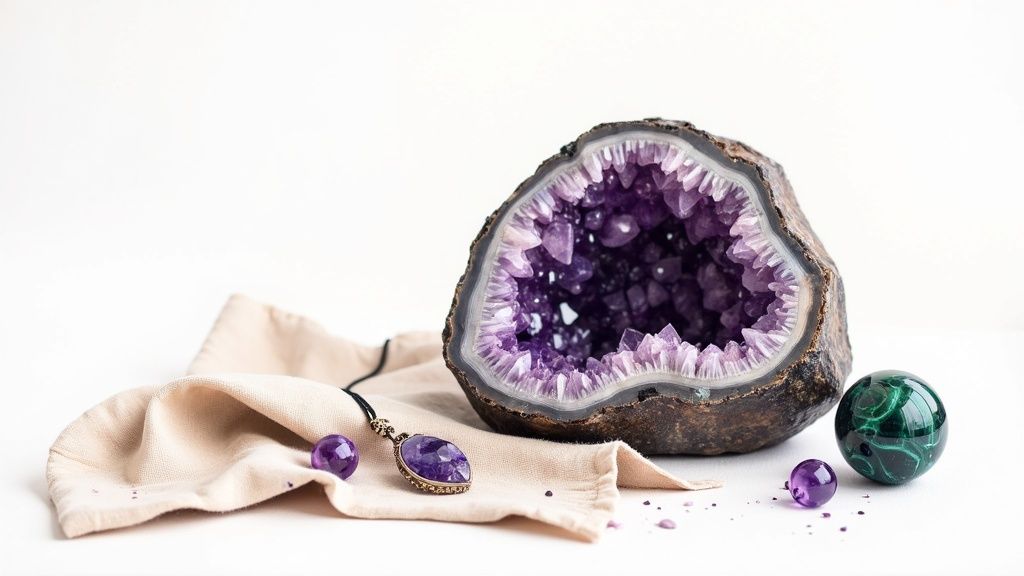
Think about creating curated displays. An amethyst specimen can be beautifully paired with other treasures from the natural world. Picture a deep purple cluster placed next to the swirling green bands of a polished malachite sphere or alongside the ancient, earthy patterns of a unique fossil plate. Learning how to display crystals effectively can help you create a setup that is both visually stunning and personally meaningful, turning your collection into a true work of art.
Your Cyber Monday Shopping Guide to Astro West
Now that you’ve got a solid handle on amethyst, it's time to put that expertise to good use. The Astro West Cyber Monday sale is the perfect moment to find a piece you’ll love at a price that’s just as remarkable. A little planning here will go a long way.
The real secret to making the most of Cyber Monday is getting a head start. Spend some time browsing our collections before the sale goes live and build out a wishlist of your favorites. When the deals finally drop, you’ll be ready to move fast and grab the pieces you've had your eye on before they're gone. Being prepared is the best strategy, whether you're after a massive amethyst geode or another one-of-a-kind natural treasure.
What to Look for This Cyber Monday
While our brilliant amethysts are always a highlight, our Cyber Monday event is a full-blown celebration of the Earth’s artistry. We're featuring a huge range of minerals and fossils that speak to every type of collector and decorator. This is your chance to bring something truly special home.
Keep an eye out for these incredible categories:
Iridescent Labradorite: Find pieces that come alive with flashes of electric blue, green, and gold as they catch the light.
Authentic Meteorites: Here’s your chance to own a genuine piece of outer space—specimens that have traveled across the solar system to get here.
Stunning Fossil Plates: Capture a frozen moment from prehistoric times with beautifully preserved marine or plant life.
Diverse Quartz Selections: Beyond classic amethyst, you can explore the entire world of quartz and amethyst crystals, from smoky quartz wands to brilliant clear quartz clusters.
The growing fascination with these natural wonders isn't just a hunch. Just look at the global amethyst market, which is projected to climb to USD 1,652.21 million by 2034, growing at a steady clip of 4% annually. This boom is driven by people wanting unique, authentic gemstones for both jewelry and home décor. You can dive deeper into the amethyst market growth on marketgrowthreports.com.
Your Map to Finding the Perfect Piece
Think of this guide as your treasure map for navigating the sale. Whether you're looking to expand your own collection or find an unforgettable holiday gift, our Cyber Monday deals make it easier than ever to invest in a genuine piece of natural history.
Use this sale as an opportunity to finally acquire that high-quality specimen you've always wanted. From a statement amethyst to a rare fossil, the perfect piece is waiting to be discovered at an incredible value. Get that wishlist ready and prepare to explore the wonders of Astro West.
Answering Your Amethyst Questions
As you get to know the world of amethyst—whether you're picking out the perfect geode during our Cyber Monday sale or deciding where to display it—you're bound to have a few questions. We get it. Here are some straightforward answers to the most common things people ask, helping you understand and care for your crystal treasures.
How Can I Tell if My Amethyst Is Real?
Spotting a genuine amethyst is much easier once you know the tell-tale signs. Real amethyst almost always has subtle variations in its color, sometimes appearing in zones or stripes. If you look closely, you might also spot tiny natural imperfections inside the crystal, which mineralogists call inclusions. It should also feel cool and reassuringly solid to the touch.
A common fake is just purple-colored glass. The dead giveaway? It often looks too perfect and might have tiny, perfectly round air bubbles trapped inside. Of course, the most reliable method is simply to buy from a source you trust.
At Astro West, we guarantee the authenticity of every single specimen. Our in-house experts personally vet each piece, so you can be completely confident that your amethyst is a genuine treasure pulled from the Earth.
Why Does Amethyst Fade in the Sun?
This is a great question. The gorgeous purple color in amethyst is surprisingly sensitive to heat and long-term exposure to direct sunlight. The sun's UV rays can actually break down the chemical structure responsible for that vibrant hue, causing the color to slowly bleach out to a much paler shade.
To protect your amethyst's rich color, it's best to keep it away from windows that get blasted with intense, direct sun all day. It’s a simple step, but it will preserve its beauty for many years to come.
What Is the Difference Between Amethyst and Citrine?
It's easy to see why this comes up so often—amethyst and citrine are chemically almost identical. Both are just different colored varieties of quartz. The real difference is all about color and how it got there. Amethyst gets its signature purple from iron impurities that were activated by natural irradiation deep within the Earth.
Citrine, on the other hand, is the yellow or orange variety. Here’s the interesting part: the vast majority of citrine you see on the market today is actually amethyst that has been heat-treated. This man-made process changes the iron's oxidation state, transforming the crystal's color from purple to a warm, golden yellow. Naturally occurring citrine is much, much rarer.
How Should I Clean My Amethyst Jewelry?
Keeping your amethyst clean is simple and safe. The best way to do it is with a little warm, soapy water and a soft brush—an old toothbrush works perfectly. Gently scrub the stone and its setting to lift away any dirt or oils that have built up from daily wear.
When you're done, just rinse it thoroughly with clean water and pat it dry with a soft, lint-free cloth. You'll want to avoid using harsh chemicals or ultrasonic cleaners. While tough, amethyst can sometimes be damaged by these methods, and they can definitely compromise the integrity of the jewelry setting.