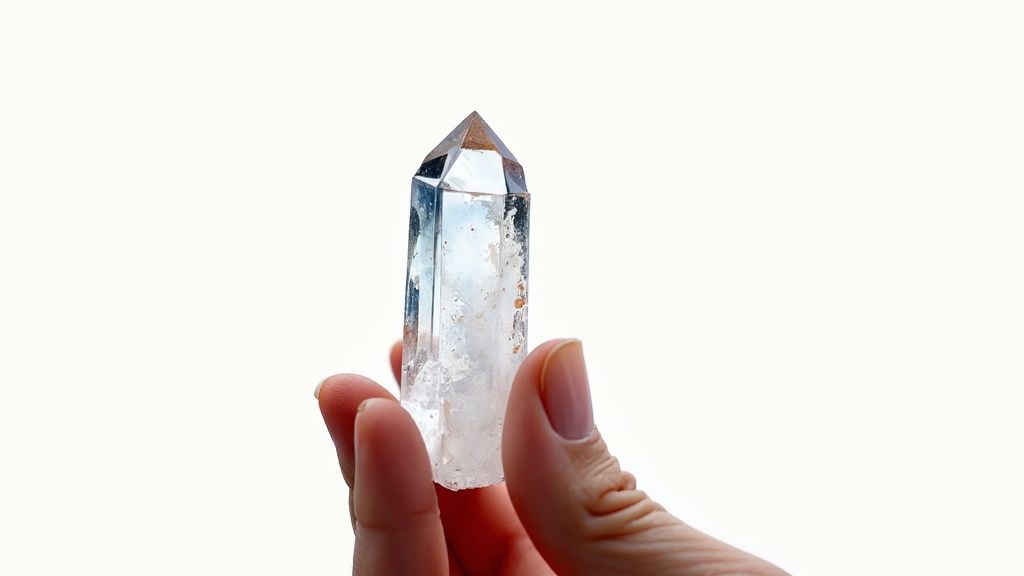
Imagine holding a crystal so clear it looks like a piece of frozen light, or an amethyst so deeply purple it seems to glow from the inside out. There's a very good chance that stone came from Brazil. Brazilian quartz isn't just another pretty mineral—it's the gold standard, a piece of Earth's artistry that took millions of years to perfect.
The Global Standard for Crystal Excellence
When serious collectors, high-end designers, and energy workers look for the absolute best, their search almost always leads to Brazil. This South American country isn't just a source for crystals; it's the heartland of the entire quartz world. Thanks to its unique geology, Brazil became the perfect nursery for growing exceptionally large, clear, and intensely colored quartz crystals. They’re the benchmark against which most other quartz is measured.
The quality and sheer scale of what's found here is just astounding. We're talking about everything from massive, water-clear points to the deepest purple amethysts you can imagine. This incredible diversity is a direct result of the mineral-rich ground, an environment that allowed crystals to form with fewer distracting inclusions and much greater structural integrity. The result? Specimens that are both breathtakingly beautiful and energetically potent.
Why Variety and Quality Matter
The reputation of Brazilian quartz isn't just talk; it's based on real, tangible qualities that make these stones stand out. Here’s what sets them apart:
Unmatched Clarity: Many clear quartz pieces from Brazil have a glass-like transparency that's incredibly rare. This makes them highly sought after for both their beauty and their use in metaphysical practices.
Vibrant Saturation: Colored varieties like Amethyst and Citrine from Brazil are legendary for their deep, consistent hues. The color doesn't fade or wash out, even in huge formations.
Impressive Size: The geological conditions in Brazil allow for the growth of enormous crystal points and geodes, creating spectacular statement pieces that can anchor an entire room.
To really understand the excitement these stones generate, imagine an event like the Black Friday sale at a renowned gallery like Astro West. It's not just a sale; it's an experience. One year, the gallery doors opened to reveal a treasure trove of Brazilian wonders at prices that had collectors buzzing. Massive amethyst cathedrals, normally commanding premium prices, were suddenly accessible, their deep purple crystals sparkling under the gallery lights. People who had only dreamed of owning such a statement piece were able to make it a reality. Flawless quartz spheres and giant, clear points were also part of the event, offering incredible deals that allowed both new enthusiasts and seasoned collectors to acquire world-class specimens. The atmosphere was electric as people discovered pieces of Brazilian quartz that were once out of reach, making it a truly unforgettable day for the crystal community.
Brazilian quartz is not merely a stone; it is the culmination of a perfect geological recipe. Its reputation is built on millions of years of slow, uninterrupted growth in one of the most mineralogically blessed regions on the planet.
This story really gets to the heart of what makes these gems so special. Whether you're a seasoned collector on the hunt for a museum-quality specimen or a newcomer simply drawn to a crystal's beauty, the journey often starts with Brazilian quartz. It represents the absolute pinnacle of what nature can create, offering a tangible connection to the Earth's deep, slow magic.
How Brazil Became the World's Quartz Capital
Brazil's reputation as the quartz capital of the world wasn't built overnight. It's a story written in stone, the result of an incredible geological history that played out over millions of years. The secret is buried deep in its ancient, mineral-rich earth, especially in states like Minas Gerais—which literally translates to "General Mines." The name says it all. This region is a world-famous treasure chest.
To get a picture of how Brazil produces such amazing quartz, think of the Earth's crust as a gigantic, slow-cooking pressure cooker. Millions of years ago, intense heat and pressure cooked silica-rich fluids deep underground. This superheated, mineral-infused water was then forced into cracks and cavities in the bedrock, creating the perfect nursery for crystals to take shape.
This geological process is the key to both the sheer variety and quality of Brazilian quartz. It wasn't some fast and furious event, but a slow, methodical masterpiece of nature. Over eons, as this mineral solution cooled down ever so gradually, the silicon and oxygen atoms started arranging themselves into the perfect, six-sided structures we instantly recognize as quartz crystals.
The Perfect Ingredients for Crystal Formation
The stunning quality of Brazilian quartz really boils down to a few key geological factors that came together in perfect harmony. Think of it like a recipe where every single ingredient was measured just right, leading to crystals of unbelievable size and clarity. Simply put, the conditions in Brazil were ideal for long, uninterrupted growth.
This slow-cooling process allowed crystals to form with far fewer imperfections and internal fractures. On top of that, the presence of various trace minerals floating around in the geological soup is what gave rise to the incredible spectrum of colors, from the deep purple of Amethyst to the warm, sunny hues of Citrine.
So, what made Brazil’s geological environment so special?
Hydrothermal Activity: Superheated, mineral-rich water solutions—known as hydrothermal veins—provided all the raw materials needed for quartz to grow.
Stable Geological Environment: Brazil's ancient and stable landmass let these crystals grow slowly and to massive sizes without being disturbed by major geological events.
Rich Mineral Deposits: The presence of elements like iron, aluminum, and manganese infused the forming quartz, creating its famous colored varieties.
Minas Gerais: The Heart of Quartz Country
When people talk about Brazilian quartz, they're often talking about crystals that came from Minas Gerais. This legendary region is home to some of the most productive and famous quartz mines on the planet. For centuries, the crystals pulled from these mines have set the global standard for quality.
The geological formations here, known as pegmatites, are coarse-grained igneous rocks that often contain large pockets, or "vugs." These empty spaces acted as natural wombs where breathtaking crystal clusters could form completely undisturbed. It’s inside these hidden chambers that miners uncover the incredible geodes and massive single points that Brazil is so famous for.
The geological stability of the Brazilian Shield, one of the planet's oldest geological formations, provided the immense timescale necessary for quartz crystals to reach their full, magnificent potential in size and clarity.
This deep history is physically present in every single crystal. When you hold a piece of quartz from Brazil, you’re not just holding a beautiful stone; you’re holding a tangible piece of Earth’s ancient history. It’s a direct link to a slow, powerful creative process that has been quietly at work for longer than we can possibly imagine, making Brazil the undisputed king of the quartz world.
A Visual Guide to Brazilian Quartz Varieties
Brazil's geology is like an artist's palette, producing a spectrum of quartz so diverse it feels like wandering through a gallery curated by nature itself. Every variety tells a story—a unique history of trace minerals, pressure, and heat that gave it a distinct personality. Learning to tell them apart is a bit like appreciating fine wine; each has its own character, notes, and origin story.
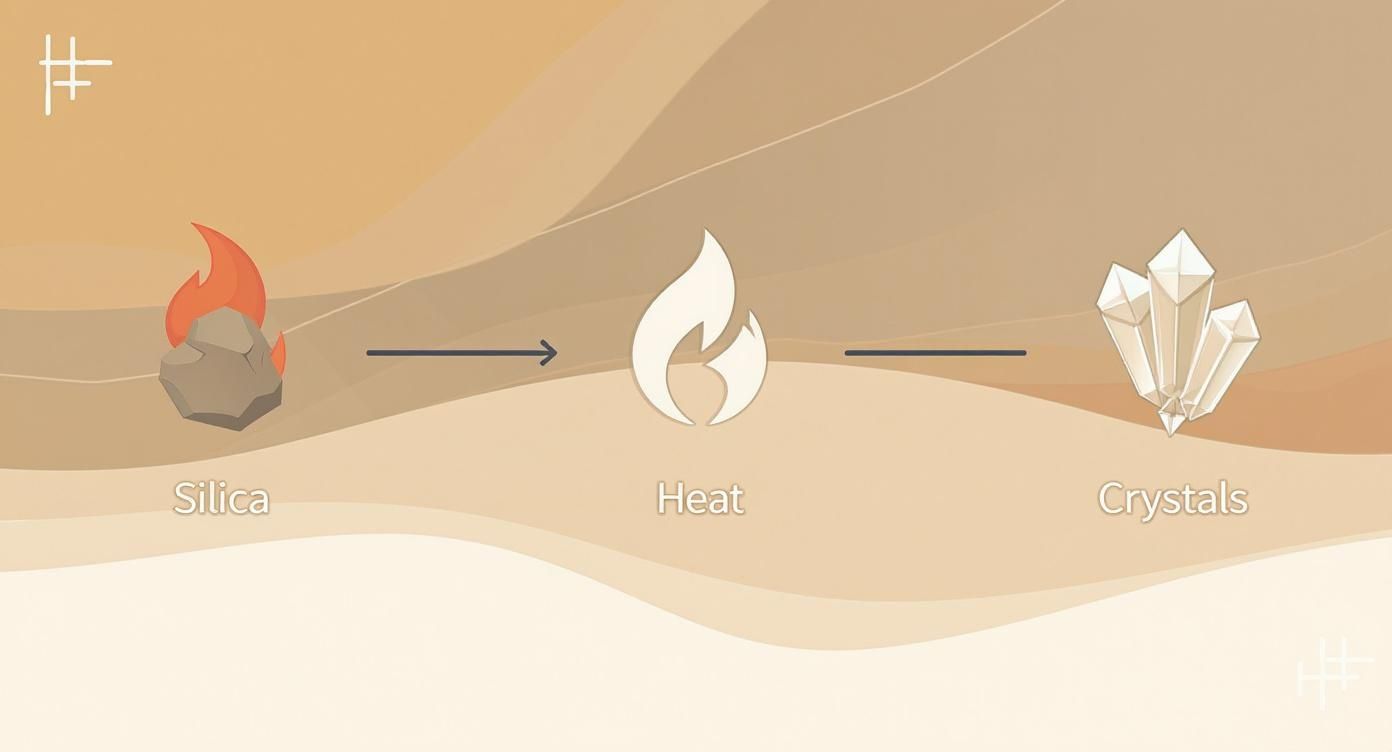
From the crystalline perfection of Clear Quartz to the royal purple of Amethyst, these stones are Brazil's most famous mineral exports. This simple diagram shows the fundamental process of how these natural treasures are born from silica, heat, and time.
This process highlights how simple ingredients—silica, immense heat, and pressure—are the building blocks for creating the complex and beautiful crystal structures we admire. This geological recipe is the secret behind the breathtaking variety of Brazilian quartz.
The Titans of Brazilian Quartz
While countless quartz variations exist, five titans truly stand out as the pillars of Brazil’s mineralogical fame. Each one is instantly recognizable and sought after for its unique beauty and energetic signature.
Clear Quartz: Often called the "Master Healer," Brazilian Clear Quartz is prized for its exceptional clarity and size. It forms in large, often flawless points and clusters that look like frozen light. Its purity makes it a cornerstone for collectors and spiritual practitioners alike.
Amethyst: This purple quartz is the undisputed queen of Brazilian gems, famous for its deep, saturated color. Brazilian Amethyst often forms in large geodes, creating breathtaking "cathedrals" lined with thousands of sparkling points.
Citrine: Authentic Brazilian Citrine is a true marvel, known for its natural, honey-to-golden-yellow hue. Unlike the heat-treated amethyst often passed off as citrine, natural specimens from Brazil possess a gentle, consistent color that radiates warmth.
Rose Quartz: Sourced from the pegmatites in Minas Gerais, Brazilian Rose Quartz is the global benchmark for this variety. It's known for its soft, translucent pink color, often with a gentle, glowing quality that makes it perfect for carvings and polished pieces.
Smoky Quartz: This variety gets its dusky, translucent brown-to-grey color from natural irradiation deep within the earth. Brazilian Smoky Quartz is valued for its grounding energy and comes in forms ranging from light, wispy points to deep, near-black crystals.
The immense variety of Brazilian quartz isn’t just a geological coincidence. It’s a testament to a stable, mineral-rich environment that allowed for millions of years of uninterrupted crystal growth, resulting in specimens of unmatched quality and diversity.
To truly appreciate how different cuts bring out the best in these stones, it helps to have a good grasp of the basics, much like understanding various gemstone cuts can reveal the hidden beauty in a diamond.
Comparing Popular Brazilian Quartz Varieties
To help you get a feel for these five powerhouses of the quartz world, here is a quick side-by-side comparison. It breaks down their key features, common applications, and the metaphysical associations people connect with them.
Quartz Variety
Primary Color
Key Characteristics
Common Uses
Metaphysical Association
Clear Quartz
Colorless
High clarity, often large points
Jewelry, decor, meditation tools
Amplification, clarity, healing
Amethyst
Purple to Violet
Deep saturation, often in geodes
Statement decor, jewelry, wellness
Calm, intuition, spiritual awareness
Citrine
Yellow to Orange
Natural golden hues, good clarity
Jewelry, wealth attraction charms
Abundance, positivity, manifestation
Rose Quartz
Pink
Soft, translucent, gentle glow
Carvings, spheres, facial rollers
Unconditional love, compassion
Smoky Quartz
Brown to Grey
Translucent, smoky appearance
Grounding stones, jewelry, decor
Grounding, protection, dispelling negativity
Ultimately, choosing a piece of Brazilian quartz often comes down to a personal connection. Whether you're drawn to its aesthetic beauty, its metaphysical properties, or the sheer geological wonder of its formation, each variety offers something unique.
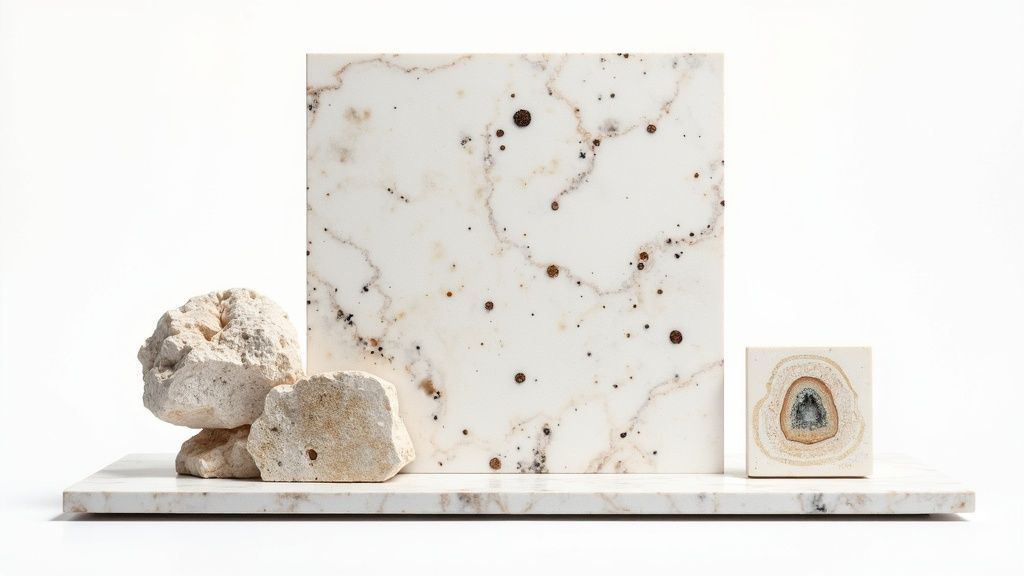
While Brazil is famous for its breathtaking natural crystals, its influence also shines in the modern world of design through Brazilian engineered quartz. This isn't some synthetic imitation, but a true technological marvel that blends the soul of natural stone with advanced manufacturing.
Engineered quartz is a composite material made mostly from crushed natural quartz—often over 90% of its total volume—which is then bonded together with polymer resins and pigments.
This clever process allows Brazil to tap into its huge natural quartz reserves in a completely new way. Instead of needing perfectly formed crystals, the industry can use smaller or fragmented quartz, transforming raw geological treasures into stunning, high-performance surfaces. The result is a material that gives you the look of natural stone but with far greater durability and consistency.
You’ll find this material everywhere, from sleek kitchen countertops and elegant bathroom vanities to heavy-duty flooring. It’s a perfect example of how human ingenuity can enhance natural resources to create products that are both beautiful and practical for modern life.
The Science Behind the Surface
Making engineered quartz is a precise science. The whole thing starts with sourcing and crushing high-quality natural quartz. This rocky aggregate is then carefully mixed with resins and pigments to get just the right color and pattern.
This mixture is poured into molds, compressed under incredible pressure, and then cured at high temperatures. The process creates a dense, non-porous slab that is exceptionally resistant to scratches, stains, and heat.
Key advantages of Brazilian engineered quartz include:
Exceptional Durability: With a Mohs hardness of around 7, it easily stands up to the demands of daily life without chipping or scratching.
Non-Porous Surface: Unlike natural stone, it never needs sealing. It’s highly resistant to stains from things like wine, coffee, or oil.
Design Versatility: The manufacturing process opens up a huge world of colors and patterns, from clean, solid whites to intricate veining that mimics exotic marble.
This fusion of strength and style has made Brazilian engineered quartz a major player in the global market. The industry has seen massive growth by supplying these materials to designers, architects, and builders all over the world.
The rise of Brazilian engineered quartz showcases a brilliant fusion of nature and technology. It harnesses the intrinsic strength of one of the earth's hardest minerals and elevates it into a consistent, resilient material designed for modern living.
A Story of Global Success
Brazil’s smart use of its quartz resources has really paid off. The country has become a top exporter of engineered stone, turning a natural advantage into a huge economic win. This isn't just a fleeting trend; it’s a direct response to global demand for beautiful, long-lasting materials.
The numbers tell a powerful story. For example, Brazil's engineered quartz export sector has seen an incredible surge. In just the first six months of a recent year, Brazilian exports of this material hit $344.1 million, a massive 49.5% jump from the previous year. You can explore more about Brazil's natural stone export performance to get more insight into this booming industry.
This success shows how Brazilian quartz, in both its natural and engineered forms, continues to shape industries and capture imaginations around the globe. It's a journey from deep within the earth to the heart of our modern homes.
How to Find and Choose Your Own Piece of Brazilian Quartz
Diving into the world of Brazilian quartz is an incredible experience, whether you’re a seasoned collector hunting for a specific specimen or a newcomer just drawn in by the sparkle. To find a piece that truly speaks to you, it helps to think a bit like a gemologist, focusing on the key qualities that make each stone unique and valuable.
It’s a lot like the system used for diamonds. We can break it down using the "4 Cs"—color, clarity, cut, and carat. Getting a feel for these elements will give you the confidence to spot high-quality crystals and choose the right one. This isn't about finding a "flawless" stone, but about discovering the one that's perfect for you.
Mastering the 4 Cs of Quartz
The 4 Cs are a straightforward, effective way to assess any piece of Brazilian quartz, from a tiny tumbled stone to a massive cathedral geode. Each "C" plays a big part in the crystal's overall look and feel.
Color: For varieties like Amethyst, Citrine, and Rose Quartz, color is everything. You're looking for rich, even saturation without distracting patches or zones. A deep, royal purple in an amethyst or a warm, honey-gold in a natural citrine is always going to be more sought-after than a pale, washed-out version.
Clarity: This is all about the crystal's transparency and any internal features, which we call inclusions. While a perfectly clear, water-like quartz is a rare prize, some inclusions are actually desirable. Think of delicate rutile needles or mesmerizing phantom growths—they can add incredible character and a one-of-a-kind story to a piece.
Cut: Cut is how the crystal plays with light. For faceted gemstones in jewelry, a precision cut is designed to maximize sparkle. But for natural points and clusters, the "cut" is really about the quality of the crystal's own formation. Are the terminations sharp and well-defined? That's what you want to see.
Carat: This is simply the weight of the stone. And while it's true that bigger stones are often rarer and more expensive, carat should never be looked at alone. A smaller stone with phenomenal color and clarity can easily be more valuable than a larger one of lesser quality.
An Unforgettable Black Friday at Astro West
To see how this all comes together, let's picture a real-world treasure hunt. Imagine walking into the Astro West gallery in New York City on Black Friday. The energy in the room is electric—a mix of pure awe and the thrill of opportunity. This is no ordinary sale; it's a collector's dream come true.
One visitor described it as stepping into another dimension. Towering amethyst cathedrals from Brazil, which usually carry premium price tags, were displayed around the gallery at incredible discounts. Their deep purple points glittered under the lights, drawing crowds of people who just had to get a closer look. Nearby, flawless quartz spheres sat on pedestals, so clear they looked like solid orbs of frozen light—each one a perfect example of Brazil's geological artistry.
The magic wasn't just in the deals, but in the access it gave everyone. New collectors were standing right next to seasoned experts, and everyone was finding their perfect piece. A young enthusiast might have picked up their very first high-quality Brazilian amethyst point, its color deep and true. An interior designer could have finally scored that show-stopping geode they’d been dreaming of for a client's home.
The experience at a trusted dealer like Astro West on Black Friday transforms the abstract principles of buying crystals into a tangible adventure. It’s a rare chance to see, touch, and connect with world-class specimens that are suddenly within reach.
This story really drives home why it's so important to buy from reputable sources. A place like Astro West doesn't just guarantee authenticity; they provide the expertise and context that help you truly appreciate what you're looking at. They've already done the hard work of curating their collection, making sure every piece of Brazilian quartz meets a high standard.
For anyone looking to sharpen their own identification skills, our comprehensive crystal identification guide is a fantastic place to start. This is how a simple shopping trip can become a memorable chapter in your collection’s story.
Caring for Your Brazilian Quartz Crystals
Once you bring a piece of Brazilian quartz into your home, you'll want to keep it looking as stunning as the day it was mined. A little bit of care goes a long way, ensuring its natural beauty and energetic vibe can last a lifetime. This means keeping it physically clean, and for many, energetically clear as well.
Thankfully, quartz is a pretty tough stone. It scores a solid 7 on the Mohs hardness scale, so you don't have to be overly delicate with it. Still, you’ll want to avoid harsh chemicals or abrasive scrubbers that could scratch the surface or get into the crystal's natural fissures.
Simple Steps for Physical Cleaning
For most Brazilian quartz, whether it's a raw cluster or a polished point, a simple bath is all it needs to bring back its sparkle. The process is gentle, easy, and surprisingly effective.
Warm Water and Mild Soap: Fill a bowl with warm water and just a drop of mild dish soap. Stay away from anything with acids or ammonia.
Soft Brush: An old, soft-bristled toothbrush is perfect for gently scrubbing away dust and grime. This is especially handy for getting into all the nooks and crannies of a raw cluster.
Thorough Rinse: Hold the crystal under cool, running water until all the soap residue is gone. Any leftover soap can leave a dull film behind.
Air Dry: Set your quartz on a soft towel and let it air dry completely. This is the best way to avoid water spots and make sure no moisture gets trapped inside.
This simple routine is really all you need to keep your collection looking pristine. Once it’s clean and dry, it’s ready to be shown off. For some great ideas, check out our guide on how to display crystals and make your piece a true conversation starter.
Energetic Cleansing and Recharging
For those who connect with the metaphysical side of crystals, energetic care is just as vital as a physical cleaning. The idea is to clear out any old, stagnant energy the stone might have picked up and tune it back to its natural frequency.
Many collectors and spiritual practitioners feel that regularly cleansing a crystal is like hitting a reset button, allowing its inherent properties to shine through without interference.
There are a few popular methods for this, and each has its own unique feel. Some of the most common and safest techniques include:
Moonlight: Leaving your quartz out under a full moon overnight is a classic for a reason. It's a gentle but powerful way to cleanse and recharge.
Selenite: Selenite is famous for its ability to cleanse other stones. Just place your quartz on a selenite charging plate or next to a selenite wand to purify its energy field.
Smudging: The smoke from burning sage, palo santo, or incense is traditionally used to wash over a crystal and clear away any lingering energies.
A word of caution: while sunlight can be cleansing, it’s best to avoid it for some varieties. Stones like Amethyst and Rose Quartz can actually fade if left in direct sun for too long. Stick to the methods above, and your Brazilian quartz will remain a stunning and vibrant treasure for years to come.
Answering Your Top Questions About Brazilian Quartz
As we wrap up our deep dive into the world of Brazilian quartz, a few questions naturally pop up. Think of this as a quick-reference guide to satisfy your final curiosities, so you can feel totally confident in your knowledge of these incredible natural treasures.
Whether you're just starting a collection or simply admiring their beauty from afar, these insights will help round everything out.
Why Is Brazilian Quartz Considered the Gold Standard?
It all comes down to geology. Brazil’s ancient and incredibly stable geological conditions created the perfect, undisturbed environment for quartz crystals to grow—slowly, steadily, and to enormous sizes. This patient process resulted in crystals with a level of clarity and deeply saturated color that is almost impossible to find anywhere else.
Mines in areas like Minas Gerais are legendary for consistently yielding world-class specimens. That’s why Brazilian quartz isn't just another type of quartz; it's the benchmark against which crystals from other locations are often measured. The sheer quality and impressive size of these formations truly set them apart.
Should I Choose a Raw or Polished Crystal?
Honestly, there's no right or wrong answer here—it really depends on what you love and how you plan to use it. Each style offers a completely different way to appreciate the stone’s character.
Raw Crystals: Collectors often prefer these for their untouched, natural geometry. They showcase the crystal exactly as it formed deep within the Earth. Many also believe raw stones have a more potent, unfiltered energy, making them a top choice for metaphysical practices.
Polished Quartz: Cutting and polishing a stone is like opening a window into its soul. This process reveals the internal world of the crystal—its clarity, color, and fascinating inclusions. Polished forms are perfect for jewelry, home décor, and shaped tools like spheres or wands.
If you're curious to learn more about telling similar minerals apart, our guide comparing Calcite and Quartz offers some great context for new collectors.
Will Sunlight Make My Quartz Fade?
Yes, it absolutely can. Certain colored varieties of Brazilian quartz are a bit like fine fabrics; they're sensitive to prolonged, direct sunlight. The UV rays can break down the mineral impurities that give these stones their gorgeous colors, causing them to fade over time.
Amethyst and Rose Quartz are especially known for this. To keep their rich purples and soft pinks from washing out, it's best to display them somewhere that doesn't get hit with constant, direct sun.
This one simple step will keep your treasured crystals looking as brilliant as the day you brought them home.
At Astro West, we take immense pride in sourcing the finest and most authentic minerals from every corner of the globe. We invite you to explore our curated collection of Brazilian quartz and other natural wonders to find the perfect addition to your home or collection. Discover your own piece of Earth's artistry today at https://astrowest.com.