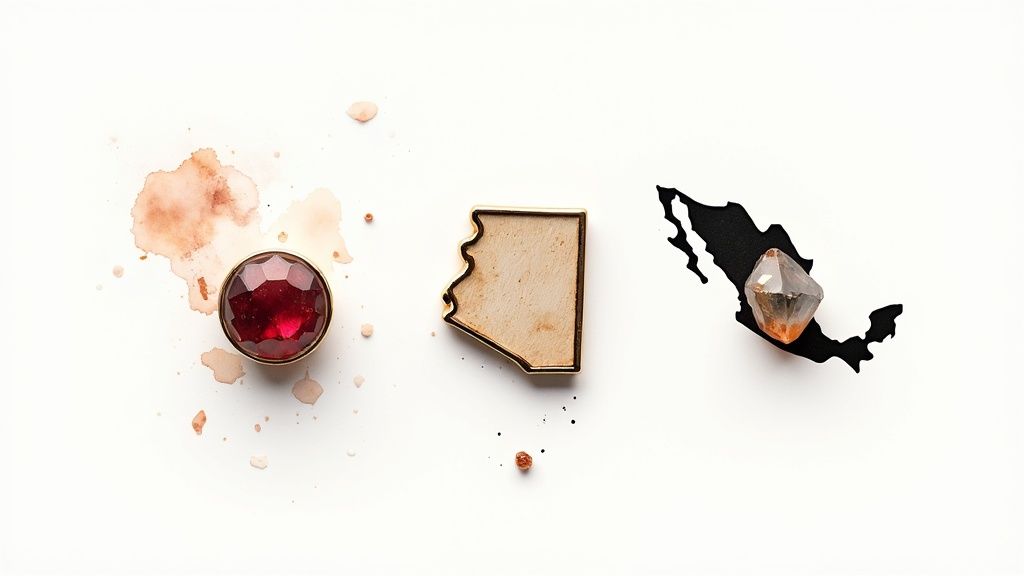
When it comes to vanadinite pricing, there’s no simple, one-size-fits-all answer. The market is incredibly broad, with prices stretching from just $10 for a small, raw crystal cluster to well over $3,000 per gram for a rare, high-quality faceted gemstone.
This huge gap in value comes down to a mix of color vibrancy, crystal perfection, and overall visual appeal. It’s better to think of vanadinite less like a standard commodity and more like a unique piece of art—every single specimen has its own story, character, and price tag.
Understanding the Vanadinite Value Spectrum
Figuring out the price of vanadinite isn't about finding one fixed number. It's about learning to read a diverse market that has something for everyone, from a curious beginner just starting out to a seasoned connoisseur looking for a showstopper. The journey from a simple stone to a prized gem involves a close look at a few key characteristics that create this wide spectrum of value.
Just like fine art, no two vanadinite specimens are ever identical. One piece might be an affordable $20 crystal, perfect for kicking off a new collection. Another could be a thousand-dollar cabinet specimen, showing off flawless hexagonal crystals and a fiery red color that instantly makes it the centerpiece of any room.
Let's take a look at the typical price ranges for different forms of vanadinite.
Vanadinite Price At A Glance
The table below gives you a quick snapshot of what you can expect to pay for vanadinite, from common raw pieces to the much rarer cut gemstones.
Vanadinite Form
Typical Price Range
Small Raw Specimen
$10 – $80
Cabinet-Sized Specimen
$100 – $1,500+
Specimen with Barite
$500 – $700
Faceted Gem (per carat)
$115 – $680
Exceptional Museum-Grade Gem (per gram)
Up to $3,000+
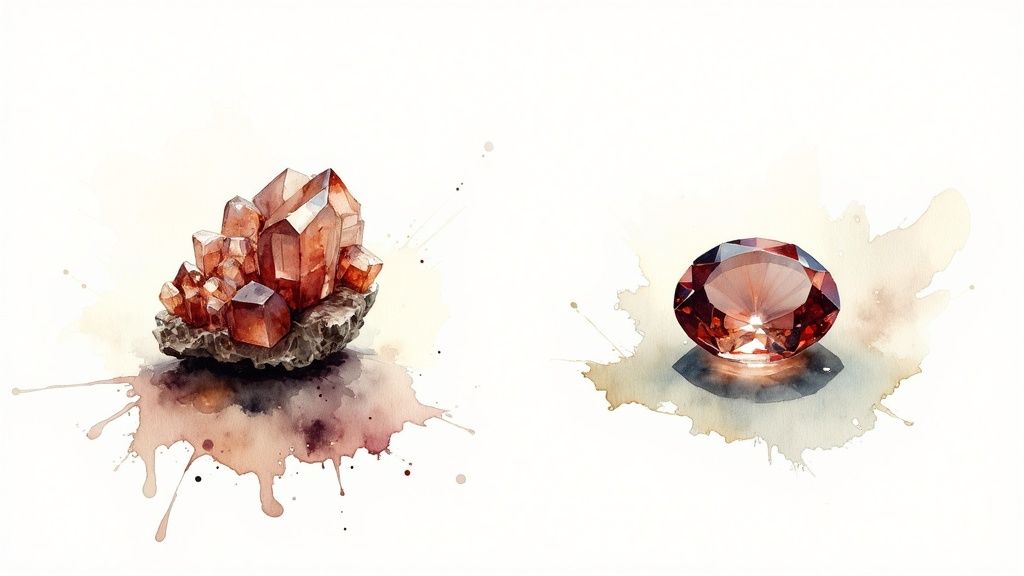
As you can see, the form a specimen takes dramatically impacts its market value. Raw crystals are accessible to almost any collector, while faceted gems are in a league of their own due to their extreme rarity.
Key Factors Influencing Price
So, what exactly dictates where a particular specimen falls on this scale? Understanding these core elements is the first step for any potential buyer.
Color Saturation: The absolute best pieces have a deep, vibrant red-orange hue. Paler or brownish specimens are far more common and, as a result, much less expensive.
Crystal Form and Integrity: You want to see perfect, sharp, and undamaged hexagonal crystals. Anything with broken or malformed crystals will see a significant drop in value.
Clarity and Luster: A brilliant, resinous luster that lets light shine through the crystal's edges is a hallmark of high quality. Dull or opaque pieces are less desirable.
Overall Aesthetics: How the crystals are arranged on their matrix is a huge deal. The composition of the cluster plays a massive role in its visual punch and, ultimately, its price.
Geographic Origin: Specimens from famous locales, especially Morocco, often fetch a higher price simply because they're known for producing top-tier quality.
From Raw Crystals to Precious Gems
The market is overwhelmingly made up of raw mineral specimens, but a tiny fraction exists as faceted gems. These gems are incredibly rare because vanadinite is soft and notoriously difficult to cut, making the process a real challenge for even skilled lapidaries.
This rarity is what drives the massive price difference. A beautiful raw specimen might sell for anywhere between $10 and $80, but a faceted vanadinite can command $115 to $680 per carat. Some specimens are also found with other minerals, like barite, creating a beautiful natural pairing that can push the price up to between $500 and $700.
Just as the value of the vanadinite itself is shaped by specific factors, it's also important to understand the other costs involved. When buying online, remember to learn how to accurately calculate shipping charges, as this will always be part of the final price.
The Four Factors of Vanadinite Value
So, how do you figure out what a vanadinite specimen is actually worth? To really get a handle on vanadinite price, we can borrow a classic concept from the diamond world—the 'Four Cs'—and give it a mineral collector's twist. Forget cut and carat. For vanadinite, we're zeroing in on four visual traits that make or break a specimen's value: Color, Crystal Form, Clarity, and Cluster Composition.
Think of these as the building blocks of value. Each factor adds another layer to the final price tag, turning a common rock into a prized collector's piece.
The Importance of Color and Crystal Form
Just like a painter’s choice of pigment defines a masterpiece, the color of vanadinite is its most immediate and powerful feature. The specimens that everyone wants are the ones with a fiery, deeply saturated red that seems to glow from within. These top-tier pieces will always command a premium. On the other hand, pieces with duller, brownish, or muted orange tones are much more common and, as a result, more affordable.
Color is the first thing that grabs your eye, but crystal form is what holds a true collector’s attention. Vanadinite naturally grows in stunning hexagonal (six-sided) crystals. A specimen's value absolutely skyrockets when these crystals are sharp, perfectly formed, and free from any nicks, chips, or damage.
A perfect, razor-sharp hexagonal crystal is the signature of high-quality vanadinite. Malformed, broken, or incomplete crystals drastically reduce a specimen's value, no matter how great its color is.
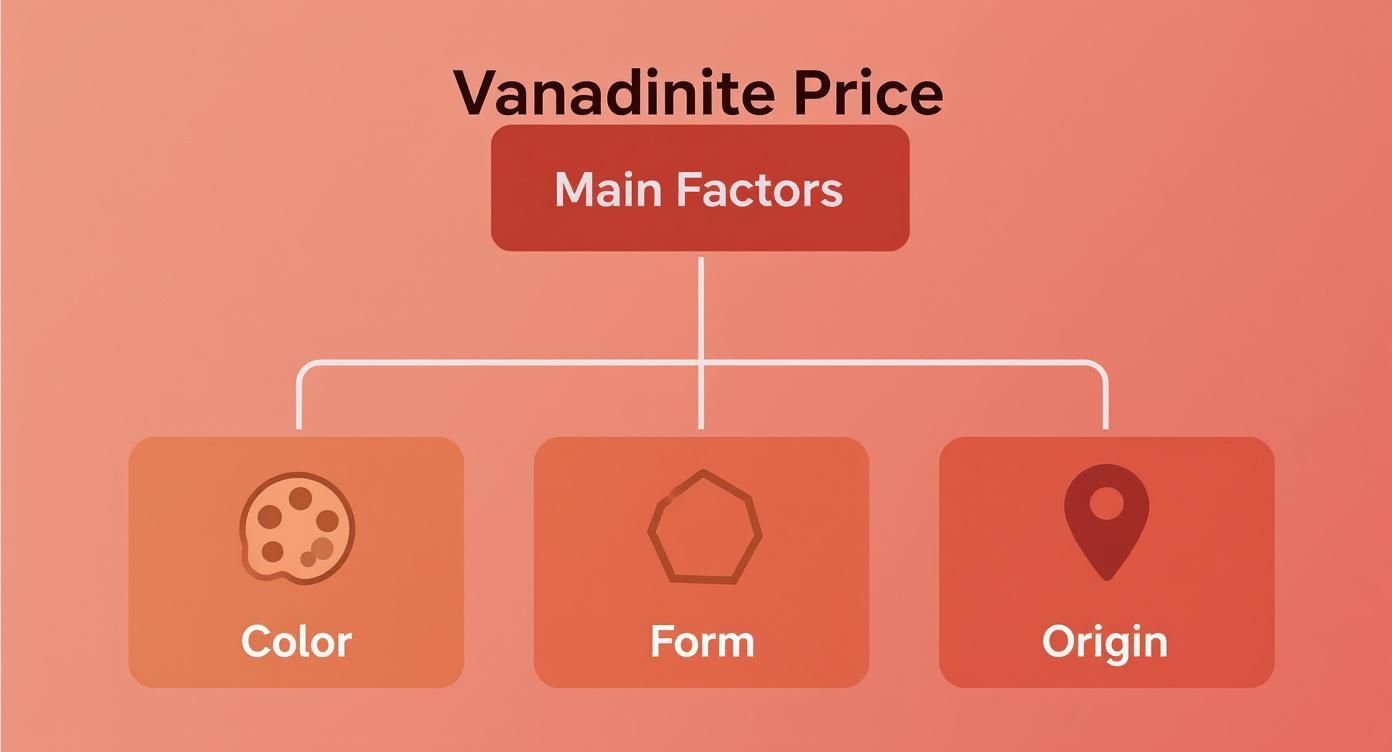
This infographic lays out the key factors that come together to determine a vanadinite specimen's price.
As you can see, the combination of brilliant color, sharp crystal form, and a desirable origin forms the foundation of what any piece is worth on the market.
Defining Clarity and Cluster Composition
Next up is clarity, but for an opaque mineral like vanadinite, this really means its luster and translucency. The best pieces have a brilliant, resinous shine that gives them an almost gem-like quality. When you hold a great specimen up to the light, the edges of the crystals will appear translucent, letting that rich internal color shine through. Opaque or dull-looking pieces just don't have the same visual pop, so they’re priced much lower.
Finally, there’s cluster composition, which is all about the overall artistry of the specimen. It’s not just about the individual crystals, but how they all grew together on the host rock, or matrix. A few things really matter here:
Aesthetic Arrangement: A balanced, visually pleasing spray of crystals is always more desirable than a jumbled, chaotic, or sparse cluster.
Crystal Size and Coverage: Bigger crystals are rarer. A piece with large, well-formed crystals spread generously across the matrix is going to be far more valuable.
Matrix Contrast: The rock the crystals are growing on can make a huge difference. A dark matrix, for example, makes those fiery red vanadinite crystals pop, which adds a ton to its display appeal.
These aesthetic points are a bit subjective, but they're absolutely critical to a specimen's final value. While this framework is perfect for minerals, the factors driving the price of extraterrestrial materials are a whole different ballgame. To see what I mean, check out our guide on the price of meteorite specimens.
When you start looking into vanadinite prices, you'll quickly find the market is split into two completely different worlds: raw, natural mineral specimens and the much rarer faceted gemstones.
These two camps have totally different audiences, pricing, and ideas about what makes a piece valuable. Getting a handle on this split is the first step to really understanding the vanadinite market.
The biggest of these two worlds belongs to raw mineral specimens. This is where most collectors and enthusiasts live, drawn to vanadinite for its raw, untouched beauty. These pieces are all about the natural artistry—the crystal structure, the fiery color, and how the crystals sit on their host rock.
The World of Raw Vanadinite Specimens
In the raw specimen market, prices swing wildly based on quality and size. You can find small, affordable "pocket" pieces perfect for someone just starting a collection, all the way up to huge, museum-worthy "cabinet" specimens that are true showstoppers. For these natural crystals, the vanadinite price is all about visual impact.
This is where things like color intensity, crystal shape, and the overall composition of the cluster really come into play. A quick look at any specialized dealer or online marketplace makes this crystal clear. Retail prices for vanadinite specimens can range from about $12 to nearly $700 per piece, a massive spread that reflects the spectrum of quality out there. Smaller clusters or those with a paler, less intense color will be on the lower end, while big, dramatic specimens from top-tier locations like Morocco will always command the highest prices.
The Niche Market of Faceted Vanadinite
The second, much smaller world is that of faceted vanadinite gemstones. This is a high-stakes, extremely niche market. We're not talking about your average jewelry store gem here; these are exceptionally rare collector's items that only serious gem connoisseurs typically chase after. The main reason for their sky-high price? Faceting vanadinite is an incredible challenge.
The mineral is just plain soft. With a Mohs hardness of only 3-4, it's notoriously difficult to cut and polish without scratching or completely fracturing it. For a little perspective, a diamond sits at a 10 on that same scale. This physical weakness, combined with the fact that large, gem-quality crystals are hard to come by in the first place, makes any successfully faceted vanadinite a genuine rarity.
Due to its softness and the typically small size of its crystals, cutting a clean, brilliant vanadinite gem is an expert-level feat. This rarity is why the per-carat price can soar into the hundreds or even thousands of dollars.
This explains the sticker shock you might feel when comparing prices. A gorgeous raw specimen might set you back $50, but a tiny faceted gem of just one or two carats could easily be priced over $1,000. The intense labor, the risk of shattering the stone, and the sheer scarcity involved in turning a fragile crystal into a sparkling gem create a completely separate—and much more expensive—market.
How Origin and Location Impact Value
Think about how a fine wine's value is tied to a specific vineyard. The same principle applies in the mineral world. A vanadinite specimen's origin—its provenance—is a huge part of its story and a major driver of the vanadinite price. The specific mine or region it came from acts like a brand name, signaling a certain level of quality and character that collectors will pay a premium for. You're not just buying a rock; you're acquiring a piece of geological history from a famous place.
This is why two vanadinite specimens that look quite similar can have wildly different price tags. An experienced collector can instantly recognize the story a location tells—a story of rarity, crystal habit, and unique color.
Morocco: The Undisputed Champion
When it comes to top-tier vanadinite, one location stands head and shoulders above the rest: the Mibladen district of Morocco. This area is legendary among collectors and is the undisputed source of the world's finest vanadinite. For good reason, Mibladen specimens set the global benchmark for both quality and price.
What makes them so special? These pieces are famous for their exceptionally large, thick, and perfectly formed hexagonal crystals. Even more importantly, they boast a deep, saturated, fiery-red color that is simply unmatched anywhere else. This is the iconic look that collectors dream of.
The combination of large crystal size, pristine form, and intense red color makes Moroccan vanadinite the gold standard. A high-quality specimen from Mibladen will almost always carry a significant premium over a comparable piece from anywhere else in the world.
Other Notable Vanadinite Locations
While Morocco wears the crown, other locations produce fantastic vanadinite with their own unique personalities and market value. Knowing these differences is key to navigating the global market.
Arizona, USA: The mines here are known for producing a unique arsenic-rich variety of vanadinite called 'Endlichite'. These crystals often have a more rounded or barrel-like shape and can range in color from a deep reddish-brown to a bright, buttery yellow.
Mexico: Vanadinite from Mexico often features smaller but incredibly lustrous crystals. They might not have the sheer size of their Moroccan cousins, but their brilliant shine and distinct formations have earned them a dedicated following.
New Mexico, USA: This region also produces quality specimens, often with a distinct orange-brown hue and well-defined crystal structures that are highly prized by collectors.
Ultimately, a specimen’s origin provides the context and pedigree that directly influences how desirable it is. If you're looking to add a truly classic example to your collection, exploring an exceptional vanadinite on barite from Morocco is the best way to see firsthand why location matters so much. This knowledge empowers you to evaluate a piece not just for its beauty, but for its place in the mineral world.
The Industrial Link to Vanadium Markets
To really get a handle on vanadinite pricing, you have to look beyond the collector’s cabinet and peek into the world of global industry. It’s a beautiful mineral, no doubt, but vanadinite is also an ore of vanadium—a metal that’s absolutely critical for strengthening steel and developing new battery technologies. This means your passion for pretty red crystals is tied, however indirectly, to some powerful economic forces.
The global commodity market for vanadium can subtly ripple through to the availability and price of collector-grade vanadinite. Think about it: when industrial demand for vanadium is high, mining activity ramps up. This can sometimes shake loose more high-quality mineral specimens, which become a valuable byproduct of the main industrial operation.
Supply, Demand, and Your Collection
Now, the connection between a steel mill's needs and a collector's shelf isn't always a straight line, but it adds another fascinating layer to the pricing puzzle. Vanadinite's fate has always been tied to the market for vanadium, the very element that gives the mineral its name and industrial might. This market is known for its price swings, which often follow industrial demand and production trends, as documented by the United States Geological Survey (USGS).
What does that mean for you? The availability of new vanadinite specimens can be influenced by these much larger market movements. A great resource for seeing this in action is the vanadium historical market statistics from the USGS.
Take a look at this chart from the USGS, which shows the historical price fluctuations of ferrovanadium, a key vanadium alloy used in steelmaking.
You can see some serious volatility there, with sharp peaks and valleys that line up with global economic cycles, particularly in the steel industry. For collectors, these long-term trends can be a signal. A dip in industrial demand might slow down mining, making new finds scarcer. On the flip side, a spike in demand could potentially unearth fresh pockets of collector-quality material.
This industrial backdrop gives you the bigger picture, connecting your personal collection to the massive, powerful forces of global supply and demand.
Smart Buying Tips for Every Collector
Navigating the vanadinite market gets a lot easier once you know how to spot a quality specimen. When you're thinking about a purchase, especially online, let this be your guiding principle: buy the best quality you can comfortably afford. This simple rule changes everything. It shifts your focus from just acquiring rocks to thoughtfully building a meaningful collection.
It might be tempting to go for a massive, showy piece, but a smaller, high-grade specimen with killer color and pristine crystals is almost always the better long-term investment. While size can be impressive, it's the quality that holds both the visual magic and the value. Sticking to this strategy ensures every new addition genuinely elevates your collection.
Assessing a Specimen Like a Pro
To make a smart buy, you have to start thinking like a seasoned collector. That means looking past the initial sparkle and digging into the details that really determine a specimen's quality and vanadinite price.
Before you pull the trigger, make sure you do these things:
Request Multiple Photos: Always ask for high-resolution images from every angle—don't forget the back and bottom. This is your best defense against hidden damage or flaws that a single "hero shot" might conceal.
Confirm Exact Dimensions: Photos can play tricks on your eyes. Always double-check the listed dimensions (height, width, and depth) to get a true sense of the specimen's size and avoid any surprises when it arrives.
Inspect for Crystal Damage: Get in there and zoom in on those photos. Look for chipped crystal edges, fractures, or signs of repair. Even a tiny bit of damage can knock a significant amount off a specimen's value.
Compare with Similar Pieces: Do a little market research. Search for specimens of a similar size, color, and origin from a few different dealers. This is the single best way to feel out whether the asking price is fair.
The most satisfying collections are built with patience and knowledge. Don't rush a purchase. Take the time to research, compare, and wait for a piece that truly speaks to you and meets your quality standards.
Finding a reputable dealer is probably the most important step of all. A trustworthy seller will give you accurate descriptions, transparent pricing, and crisp, honest photographs. That's what gives you the confidence to invest in a piece you’ll be proud to own for years.
If you're just starting out on this journey, getting the basics down is a game-changer. You can learn more about how to start a collection of rare rocks and minerals in our detailed article. Building that foundational knowledge is the best tool you'll have for making smart, confident buying decisions.
Frequently Asked Questions
So, you’ve learned the ins and outs of what makes one vanadinite specimen more valuable than another. But navigating the market still brings up a lot of practical questions. Let's tackle some of the most common ones that come up for both new and seasoned collectors.
Why Is Some Vanadinite So Much More Expensive?
The huge price gap in vanadinite really comes down to three things: quality, rarity, and form. The pieces that command the highest prices are the supermodels of the mineral world—large, undamaged clusters of crystals with that iconic, fiery red color, often hailing from a famous Moroccan locale.
On the absolute highest end of the spectrum, you’ll find faceted vanadinite gemstones, which are exceptionally rare. The mineral is soft and notoriously tricky to cut, which is why a well-cut gem can fetch hundreds or even thousands of dollars per carat. On the other end, small, brownish, or less visually impressive raw specimens are far more common and can often be picked up for under $50.
Is Vanadinite a Good Financial Investment?
While a top-tier mineral specimen can certainly appreciate in value, vanadinite is something you should buy first and foremost for the love of it. The market is driven by collector demand, not a formal investment system like you see with gold or stocks.
The absolute best specimens from well-known localities are the ones most likely to hold or increase their value over time. For most people, it’s healthier to see your purchase as an investment in your passion and the beauty of your collection, rather than a strict financial play.
How Can I Judge Vanadinite Quality Online?
Shopping for minerals online requires a sharp eye. Always look for listings with high-resolution photos from every possible angle. You want to see sharp, well-defined hexagonal crystals with minimal damage—things like chips or breaks along the edges are red flags. The color should be a rich, saturated red or orange, not a dull, muddy brown.
A crucial tip: always double-check the dimensions listed in the description. Photos can be incredibly misleading about a specimen's true size. Most importantly, stick with reputable mineral dealers who have positive reviews and clear return policies. That's your best insurance for getting an authentic piece that's been accurately represented.
What Is a Good Price for a Beginner?
A beginner can get their hands on a fantastic small-to-medium vanadinite specimen without breaking the bank. A budget of $25 to $75 is a great starting point and will usually land you a beautiful piece with good color and distinct crystal formations that looks great on a shelf.
You can definitely find smaller bits for under $20, but spending just a little more often gets you a specimen that is significantly more impressive and satisfying to own. This price range is the sweet spot for getting a quality piece that feels substantial without a major investment.
At Astro West, we take pride in offering a curated collection of vanadinite for every type of collector, from accessible entry-level pieces to stunning, museum-grade treasures. You can explore our ethically sourced and expertly vetted minerals today and find the perfect piece for your collection.