Every piece in our gallery tells a story, and Specimen 233773 is no exception. This isn't just a rock; it's a unique geological artifact, carefully selected and identified by its SKU for precise tracking, authentication, and reference. This guide will walk you through its distinct characteristics, its journey from the Earth, and what makes it a worthy addition to any collection, whether you're a seasoned enthusiast or just starting your journey.
Specimen 233773 At-a-Glance
For collectors, the first step in appreciating a new piece is getting to know its vital statistics. This quick reference table is designed to give you all the fundamental details about Specimen 233773 in a single, scannable format.
Think of it as the specimen's passport—a snapshot of its identity that gives you an immediate sense of its physical and geological context before you dive into its deeper story. Understanding these key data points is the first step for anyone looking to curate a fine mineral collection with Astro West.
Attribute
Details
Mineral Species/Type
To be detailed in the next section.
Dimensions
To be detailed in the next section.
Weight
To be detailed in the next section.
Origin/Locality
To be detailed in the next section.
This summary gives you the foundational knowledge of the piece. Now, let's explore each of these attributes in greater detail to truly understand what makes this specimen special.
Detailed Mineralogical Characteristics
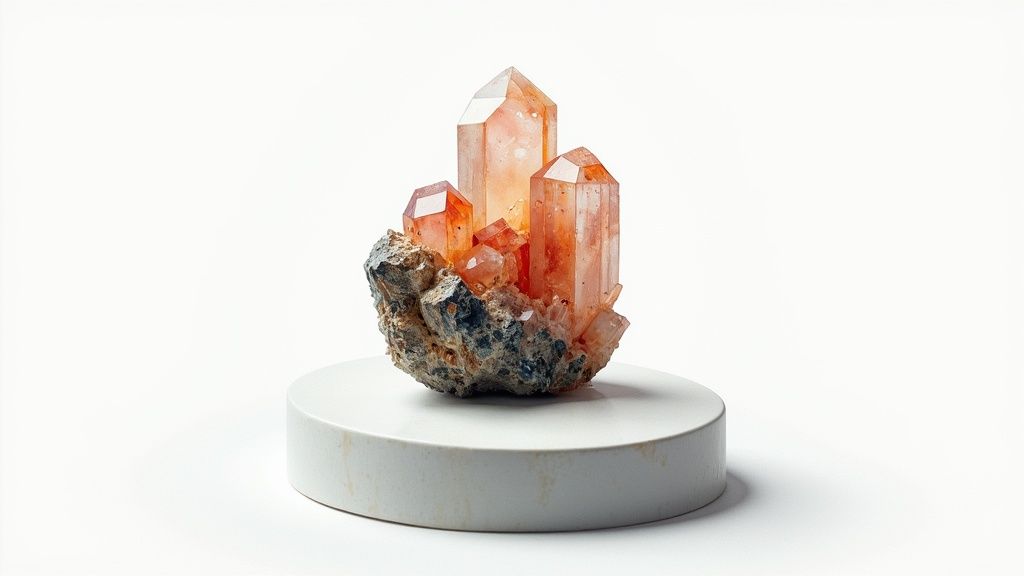
This particular specimen, 233773, is a really striking example of Quartz, standing out for its incredible color saturation and crisp, well-defined crystal habit. The piece is a captivating cluster of prismatic crystals, and each one radiates a rich, fiery orange-red. This vibrant color most likely comes from microscopic hematite inclusions scattered finely throughout the quartz matrix, a feature that distinguishes it from more common varieties like smoky quartz or citrine.
What really enhances the aesthetic appeal here is the superb vitreous luster. This gives the crystal faces a glassy, reflective quality that catches the light beautifully from any angle. The clarity is also interesting—it varies across the cluster. Some crystals are perfectly transparent, while others are more translucent, which adds a wonderful depth and complexity to its overall look.
Crystal Formation and Structure
The main crystals show off a classic hexagonal prismatic form, ending in sharp, distinct points. This arrangement creates a dynamic, multi-faceted surface that's visually engaging no matter how you turn it. The crystals are tightly intergrown, forming a solid, cohesive cluster that tells the story of its formation in a stable geological pocket.
You'll also notice several smaller, secondary quartz crystals scattered about. These add a nice textural contrast and help make the primary terminations pop even more. This interplay between the dominant and smaller crystals is a key feature that really boosts the specimen’s appeal for collectors.
A specimen’s crystal habit—the signature external shape of its crystals—offers invaluable clues about the geological conditions where it formed. The sharp terminations we see in 233773 suggest it grew in an environment with plenty of space and a steady supply of mineral-rich fluids.
Learning to spot features like this is one of the most rewarding parts of mineralogy. For anyone looking to deepen their knowledge, a good crystal identification guide can be an excellent resource for understanding the nuances of different mineral species. This quartz specimen serves as a perfect case study in both color and form.
Where This Specimen Came From
Every mineral specimen tells a story, and the story of 233773 begins deep underground at the famous Elmwood Mine in Carthage, Smith County, Tennessee. For collectors in the know, Elmwood is a legendary name, celebrated for producing some of the world's finest sphalerite, fluorite, and calcite. Finding any top-tier mineral from this location is a big deal.
This particular mine is what geologists call a Mississippi Valley-Type (MVT) deposit. In simple terms, this means that millions of years ago, hot, salty water (brines) moved through cracks and cavities in ancient limestone and dolostone. As these brines cooled, they dropped the minerals they were carrying, slowly forming the incredible crystals we see today. It's this unique geochemical recipe that created the exceptional specimens Elmwood is known for.
The Elmwood Mine Environment
The formation of 233773 happened under very specific conditions. The distinct orange-red color you see on the quartz is caused by hematite, which tells us that the fluids flowing through the rock were rich in iron during the crystal's growth phase.
The specific mineral associations and crystal quality from a classic locality like Elmwood are a direct reflection of its unique geological history. The value of a specimen is often tied to this provenance, as it represents a finite and often inaccessible chapter of Earth’s story.
For collectors, owning a piece from a classic and now-closed locality adds a whole other layer of significance. You can learn more about the incredible minerals from the Elmwood Mine in our detailed guide. When you acquire a specimen like 233773, you're not just buying a rock; you're preserving a small piece of a celebrated mining legacy.
When it comes to serious mineral collecting, a specimen's backstory is just as important as its beauty. We call this its provenance—the documented history of ownership that confirms its authenticity and tells its unique story. For specimen 233773, we take this process very seriously, meticulously tracing its history through previous collection records and any original labels that have traveled with it.
Our verification process is designed to give you complete confidence in the specimen's origin. It establishes a clear chain of custody, turning a beautiful object into a documented artifact with a verifiable past. The SKU 233773 isn't just a stock number; it’s a permanent identifier that locks in the specimen’s identity within our catalog, ensuring its history is forever tied to it.
Why Unique Identifiers Matter
Think of a specimen’s provenance as its biography. It tells the story of where the mineral has been, from the moment it was pulled from the Earth to its arrival in your collection. A well-documented history can significantly increase a specimen's value and desirability.
To put it in perspective, consider how numbers provide critical context in other fields. Back in 1934, the total population of the United States was around 126,373,773. A smaller number, like 233,773, could have represented a crucial piece of data in a vital statistics report—perhaps state-level immigration figures or deaths from a specific cause. Just as historians use these figures to understand societal shifts (as detailed in historical records like the CDC's official 1944 report), a specimen's unique identifier helps collectors and curators trace its journey through time and hands.
Here at Astro West, our commitment is to ensure this biography is as complete and accurate as possible, especially for cornerstone pieces like 233773.
Assessing Condition and Collector Grade
When you’re considering a new piece for your collection, nothing is more important than a completely transparent evaluation of its condition. Here, we'll walk through a professional assessment of specimen 233773, using the kind of straightforward, industry-standard language we'd use in our own collecting decisions.
Overall, the condition of this specimen is excellent, with only the most minimal imperfections you'd expect from a natural piece. Its primary quartz crystals have incredibly sharp, well-defined terminations with no significant damage to speak of. We always make sure to document any natural contact points or minor blemishes, and you can see them for yourself in the high-resolution photos. Crucially for discerning collectors, this piece is entirely free of repairs or restorations.
Quality and Grade Analysis
A specimen's collector grade isn't just one thing—it’s a combination of several key factors that all contribute to its quality and desirability. For this piece, it breaks down like this:
Crystal Definition: The hexagonal crystal habits are just textbook examples. They're sharp, distinct, and beautifully formed.
Color Vibrancy: The hematite inclusions are what give this piece its magic, providing a consistent and deeply saturated orange-red hue that runs through the entire cluster.
Overall Aesthetics: This isn't just a cluster of crystals; it's a dynamic, balanced composition. It has fantastic visual appeal from multiple angles, which is a huge plus for display.
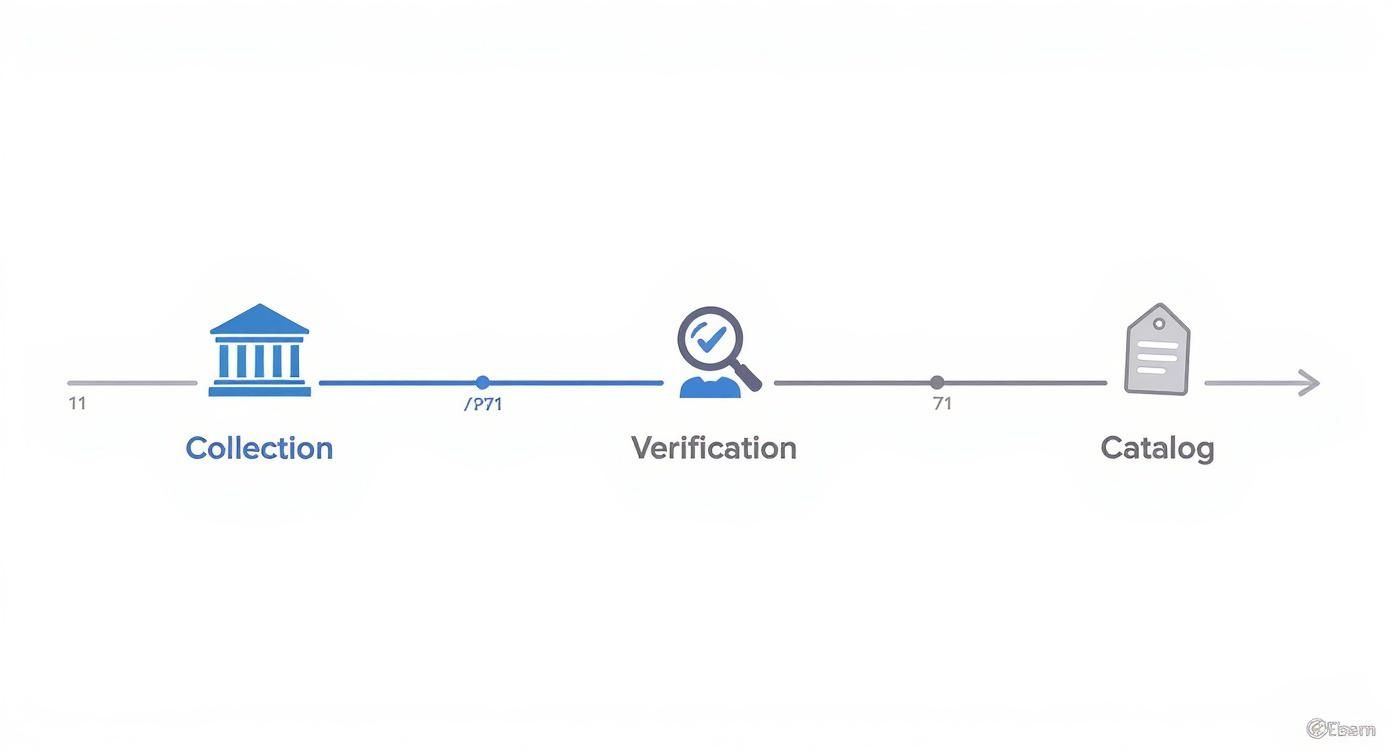
This simple timeline shows the main stages this specimen went through to ensure its quality and authenticity before being offered here.
This diagram highlights the rigorous collection, verification, and cataloging process that every piece, including specimen 233773, must pass. Based on these strict criteria, we’ve rated this specimen as a high-quality collector's piece—one that would be right at home in any serious mineral collection.
Investment Value and Purchase Information
A striking mineral specimen like 233773 isn't just a beautiful object—it's a tangible asset and a noteworthy addition to any serious collection. The value of a piece like this comes down to a few critical factors: its superb crystal quality, the sheer vibrancy of its color, its exceptional condition, and its origin from the prestigious Elmwood Mine. These are the hallmarks that drive desirability and secure its long-term value on the collector's market. Whether as a Valentine's Day gift that truly lasts forever or a personal acquisition during a holiday sale, its value is undeniable.
We believe in making the acquisition process as clear as a quartz crystal. Please reach out to us directly for the current price of specimen 233773. We're always happy to discuss payment possibilities, including potential payment plans, to help you add this incredible piece to your collection.
Strategic Collecting
Building a strong collection means understanding what makes certain assets unique. For collectors looking to diversify beyond traditional markets, exploring alternative investment strategies can offer perspective on how a world-class mineral specimen fits into a broader portfolio.
It's interesting how the principle of unique identification crosses different fields. In public finance, for example, a number like 233,773 might be used in municipal reports to track the costs of a specific infrastructure project, ensuring every dollar is accounted for. You can see this in detailed fiscal reports, like those from Salt Lake County on their official site. In the same way, the SKU 233773 provides a precise, undeniable identity for your specimen, securing its provenance and its place in your collection.
Caring For and Displaying Your Specimen
Owning specimen 233773 means you’re the current steward of a remarkable piece of natural history. Proper care ensures its beauty and value will last for generations. As a quartz specimen, it’s relatively tough, ranking a solid 7 on the Mohs hardness scale. Still, its vibrant hematite inclusions are what make it special, and they need a little thoughtful care to prevent fading.
The key to preserving that stunning red color is keeping the specimen out of direct, prolonged sunlight. You'll also want to avoid big swings in temperature, which can stress the internal crystal structure over time. When it comes to cleaning, less is more. A gentle dusting with a soft brush or a quick blast of compressed air is all it needs—definitely stay away from harsh chemicals or ultrasonic cleaners.
Finding the Perfect Display
The right presentation does more than just protect your investment; it elevates it, showing off its best features. For a piece like 233773, exploring professional display cabinet solutions with controlled lighting can truly make its unique qualities pop.
Good display is an art. It's about finding that perfect balance between protecting the specimen and making it a showpiece. The goal is to safeguard it from everyday hazards like dust, UV light, and humidity while still letting everyone appreciate its beauty.
If you’re looking for more ideas on arrangement and lighting, our guide on how to display crystals is packed with tips for creating a stunning, safe exhibit for your home or office.
Finding Related Specimens
For most collectors, one great specimen is never enough—it's the spark that ignites the hunt for the next one. Think of specimen 233773 as a new cornerstone for your collection, a piece that invites you to explore other treasures that share its story, whether through geology, color, or pure aesthetics. We've built our collection at Astro West to help you make those connections and build a narrative piece by piece.
For example, if the intense orange-red of this quartz is what drew you in, you might find yourself captivated by our fiery Moroccan Vanadinite or the brilliant orange glow of Spessartine Garnets. Placing them together creates a stunning visual conversation built around warm, earthy tones. On the other hand, if you're a collector who loves a good story, you could focus on building a suite from the legendary Elmwood Mine by seeking out its iconic purple Fluorite or mirror-like Sphalerite.
How to Build a Thematic Collection
We intentionally use our SKU system to link specimens together, much like how museum curators meticulously catalog artifacts to uncover hidden relationships and stories.
This principle of detailed cataloging is absolutely essential in the world of high-value artifacts. Scholars, for instance, rely on precise numeric systems to document the thousands of individual fragments of the Dead Sea Scrolls. This careful work is what allows them to piece together ancient history. You can see how these crucial manuscripts are managed by visiting Britannica.com.
Whether your goal is to pair 233773 with a cool-toned Aquamarine for a dramatic, high-contrast display, or to find a complementary petrified wood piece for a more subtle and harmonious arrangement, our gallery is full of pathways to deepen and enrich your collection’s story.
Your Questions Answered: Specimen 233773
Acquiring a piece as significant as specimen 233773 is a big decision, and it’s natural to have questions. Here are some direct answers to the most common queries we receive, ensuring you feel completely confident in adding this piece to your collection.
Shipping and Security
How is a valuable specimen like this shipped and insured? We treat every high-value specimen with the gallery-level care it deserves. Your piece will be shipped via a trusted carrier, secured inside custom-fit, archival-quality packaging designed to prevent any movement or damage while it’s on its way to you.
Of course, every single shipment is also fully insured for its total value. This gives you complete peace of mind from the moment it leaves our gallery until it arrives safely at your door.
Purchase Policies
What is the return policy for one-of-a-kind collector pieces? We stand behind the quality and expert representation of every specimen we offer. Because pieces like 233773 are truly unique, they are eligible for return under specific conditions, which we are always happy to discuss with you directly. Our main goal is to make sure you are absolutely thrilled with your acquisition.
What documentation is included with the purchase? Your purchase comes with a formal Certificate of Authenticity that meticulously details the specimen's identity, precise locality, and other key characteristics. We will also provide any known provenance or historical collection labels associated with the piece, securing its documented history for years to come.
Can additional photos or a video be provided upon request? Absolutely. We know how important it is to examine a potential acquisition from every angle. We are more than happy to provide additional high-resolution images or a short video to help with your evaluation. Just contact our gallery with your request, and we’ll take care of it.
Ready to make this exceptional specimen part of your collection? Explore the unique beauty of specimen 233773 and other world-class natural treasures at Astro West.